

What if the “establishment lag” that stalls your crop after transplanting isn’t an inevitable weather problem, but a biological disconnection? Most New Zealand growers accept high seedling mortality and slow early growth as an unavoidable cost of doing business in our volatile climate. You’ve likely watched your seedlings struggle to find their feet in the paddock, even when using synthetic fertilisers that often fail to provide a meaningful response during those critical first weeks of stress. Understanding how to reduce transplant shock in seedlings is the difference between a crop that hits the ground running and one that spends its first month merely trying to survive.
It’s possible to eliminate this lag and protect your commercial yields by using BioGro-certified microbial technology to bridge the gap between the nursery and the paddock. By pre-colonising root systems with beneficial microbes, you can ensure your plants are equipped to handle the transition to the field. This guide explores how Quantum-VSC® and other microbial strategies create uniform crop establishment and a higher ROI through faster growth cycles, reducing your reliance on expensive synthetic rescue treatments.
Key Takeaways
- Understand the true economic cost of establishment lag and why the first 14 days post-transplant are the most critical for your final harvest quality.
- Learn how to reduce transplant shock in seedlings by establishing a “biological bridge” in the rhizosphere before they hit the paddock.
- Compare the limitations of traditional hardening off with the superior nutrient uptake provided by modern biological priming.
- Master a practical two-phase drenching programme designed to safeguard seedlings from the nursery tray to the planting hole.
- Discover why BioGro-certified solutions like Quantum-VSC® provide the high-concentration microbial support needed to navigate New Zealand’s climatic volatility.
The True Cost of Transplant Shock in Commercial Horticulture
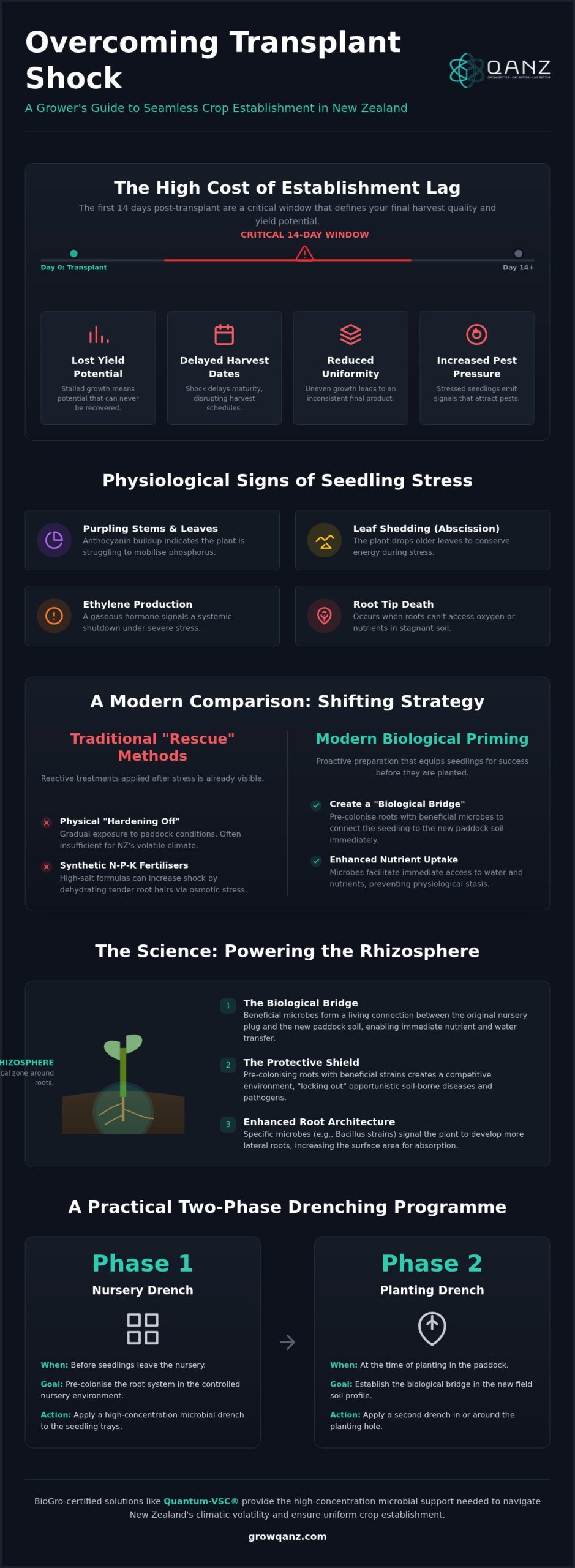
Establishment lag is often dismissed as a temporary setback, yet for commercial growers, it represents a significant drain on profitability. When a seedling stalls, it doesn’t just lose time; it loses yield potential that can never be recovered. The first 14 days post-transplant are the most critical window in the crop cycle. During this period, the plant must transition from a controlled nursery environment to the unpredictable conditions of a New Zealand paddock. If the root system fails to engage with the soil immediately, the plant enters a state of physiological “stasis” that delays harvest dates and reduces the uniformity of the final product.
Understanding what is transplant shock is vital for any professional operation. It’s a complex biological response to root damage and environmental change. In New Zealand, our variable spring weather, characterised by sudden temperature drops and high winds, exacerbates this issue, leading to higher mortality rates. Beyond the immediate loss of plants, stressed seedlings emit chemical signals that attract pests, effectively turning a weak crop into a target for infestation. Learning how to reduce transplant shock in seedlings is therefore a matter of protecting your bottom line and ensuring harvest windows are met.
Physiological Signs of Seedling Stress
Visible symptoms like anthocyanin buildup, which appears as a distinct purpling of the stems and leaves, indicate that the plant is struggling to mobilise phosphorus. This is often accompanied by leaf abscission, where the plant sheds older leaves to conserve energy. Internally, the plant produces ethylene, a gaseous hormone that signals a systemic shutdown under stress. Even in well-watered soils, root tip death can occur if the soil biology is stagnant, as the plant cannot access the oxygen or nutrients required for rapid cell division. Developing a strategy for how to reduce transplant shock in seedlings involves more than just irrigation; it requires a focus on soil-root connectivity.
Beyond the Nursery: The Paddock Reality
Seedlings are raised in a “luxury” environment with consistent moisture and precise nutrient delivery. Moving them into harsh field soils is a violent transition. Many growers attempt to compensate by applying synthetic N-P-K fertilisers, but high-salt fertilisers can actually increase shock by dehydrating tender root hairs through osmotic stress. To protect your investment, you must focus on improving seedling establishment naturally. This requires a shift from chemical “rescue” treatments to biological priming that prepares the plant for the paddock’s reality. By addressing the root cause of the disconnection, growers can ensure a seamless transition and more resilient crops.
The Science of the Rhizosphere: Why Microbes are the Key to Survival
The rhizosphere is the thin layer of soil directly influenced by root secretions and associated microorganisms. It’s the most active biological zone on any farm. When a seedling is transplanted, this delicate interface is often disrupted, leading to the establishment lag discussed previously. Beneficial microbes act as a “biological bridge”, facilitating the immediate transfer of nutrients and water from the new soil profile to the plant. This is a crucial step in how to reduce transplant shock in seedlings, as it prevents the root system from becoming isolated within the original nursery plug. Photosynthetic bacteria play a unique role here, assisting in carbon cycling and providing a steady stream of energy that helps the plant recover from the physical trauma of moving.
Pre-colonising roots with high-concentration microbial solutions creates a competitive environment where pathogens struggle to gain a foothold. By filling the available niches around the root zone with beneficial strains, you effectively “lock the door” against opportunistic soil-borne diseases. This biological shield is particularly important in New Zealand’s diverse soil types, where the native microbial balance may not always favour the rapid establishment of sensitive vegetable or fruit crops. For those looking to implement these biological bridges, exploring specialised microbial inoculants can provide the necessary concentration of beneficial strains to ensure success.
Microbial Signalling and Root Architecture
Specific Bacillus strains communicate with the plant to trigger the development of lateral roots and fine root hairs. This expansion of the root architecture increases the surface area for water absorption almost immediately. This “priming” effect also alerts the plant’s systemic acquired resistance, preparing its immune system for the pathogens it will inevitably encounter in the paddock. By outsourcing specific metabolic tasks to these microbes, the plant significantly reduces its own energy expenditure during the critical establishment phase.
Nutrient Solubilisation Under Stress
In many New Zealand soils, phosphorus is present but chemically “locked” and unavailable to young plants. Beneficial microbes produce organic acids that solubilise this phosphorus, providing the ATP required for new root growth. This ensuring of micronutrient uptake is vital when the root system is still limited and the plant is at its most vulnerable. Integrating beneficial soil microorganisms to enhance root development naturally ensures that the transition to the field is a period of growth rather than a struggle for survival.
Hardening Off vs. Biological Priming: A Modern Comparison
Traditional hardening off focuses on the physical toughening of the plant’s cuticle to withstand wind and sun. While this passive adaptation is a staple of nursery management, it often fails to address the underlying metabolic crisis that occurs during establishment. Physical toughness alone doesn’t solve the problem of nutrient uptake in a new soil environment. In contrast, biological priming is an active intervention. It involves pre-loading the seedling with specific microbial strains that immediately begin work once the plant hits the paddock. This modern approach is a vital component of how to reduce transplant shock in seedlings, as it focuses on the root-soil interface rather than just the leaf surface.
The commercial implications are clear. Manual hardening off requires significant labour and space, often adding hidden costs to every tray produced. Moving seedlings in and out of controlled environments is a logistical challenge that many large-scale operations find difficult to scale. Liquid microbial application offers a more streamlined alternative. By applying solutions like Quantum-VSC® through existing irrigation or drenching systems, growers can achieve superior results with a fraction of the manual handling. When combined, these methods create “bulletproof” seedlings that possess both the physical resilience to survive the elements and the biological engine to thrive in them.
The Biological Priming Advantage
Biological priming can reduce the establishment stalling period from two weeks down to just a few days. By increasing cellular osmotic pressure, microbes help the plant resist wilting during the heat of the day. This is particularly effective for managing heat stress in crops naturally, ensuring that the plant’s vascular system remains functional even under high transpiration demand. This internal resilience allows the seedling to continue photosynthesising and growing while its neighbours are still in a state of shock. It’s a proactive way to maintain momentum in the crop cycle.
Strategic Application for NZ Conditions
In New Zealand, the timing of biological priming must account for regional climatic differences. Across New Zealand’s varied growing environments, growers may prioritise different aspects; some areas might focus on moisture retention in volcanic soils, while others contend with harsher winds and diverse soil textures. Priming schedules should be adjusted to ensure microbes are fully established before the local planting window opens. Choosing BioGro-certified priming agents ensures that these strategies remain compliant with organic standards while providing the high-concentration microbial support necessary for New Zealand’s diverse and often challenging field conditions. Managing moisture retention in sandy versus clay-heavy soils becomes much simpler when a robust microbial community is already in place to regulate the rhizosphere.
A Step-by-Step Programme to Minimise Transplant Shock
A systematic approach is required to ensure that biological priming translates into field success. To understand how to reduce transplant shock in seedlings on a commercial scale, growers must view the process as a multi-phase operation rather than a single application. The goal is to maintain a continuous microbial presence from the nursery to the established paddock. This starts with Phase 1: a pre-transplant drench in the nursery tray. By saturating the root plugs 24 to 48 hours before they leave the nursery, you ensure the beneficial bacteria are already active and colonising the root hairs before they encounter field stress.
Phase 2 involves optimising the planting hole itself. Applying biological inoculants during the planting process ensures that as the roots expand, they immediately move into a “primed” soil environment. This is followed by Phase 3: a post-transplant rescue fertigation within the first seven days. This secondary dose reinforces the microbial population and provides a metabolic boost during the plant’s most vulnerable week. Finally, Phase 4 requires monitoring soil temperature and moisture. Most beneficial microbes require soil temperatures above 10 degrees Celsius to remain active; therefore, timing your planting windows to align with biological activity is as important as the application itself.
Application Techniques for Commercial Scale
Professional operations can easily integrate liquid biologicals into existing infrastructure. Modern boom sprayers and dripper systems are ideal for delivering consistent doses across large areas. When managing dilution rates, it’s essential to follow the high-concentration specifications to ensure enough colony-forming units (CFUs) reach the root zone. For broadacre operations, following a specific guide for microbial solutions for field crops ensures that application is both efficient and effective across diverse terrain. Correct calibration prevents product waste and ensures every seedling receives the necessary biological support.
Optimising Soil Health for Long-Term Success
The integrity of your soil depends on the quality of the inputs you choose. Using BioGro-certified products ensures that you aren’t introducing synthetic contaminants that could disrupt the natural soil balance. When evaluating the investment, a Quantum Organic-Total cost-benefit analysis reveals that the reduction in seedling mortality and faster growth cycles provide a significant return on investment. Regular microbial re-inoculation maintains the biological momentum throughout the entire growing season. To start protecting your next rotation, you can view our full range of microbial solutions to find the best fit for your specific crop requirements.
Quantum-VSC®: The Professional Solution for Seedling Vigour
Quantum-VSC® represents the culmination of microbial research designed specifically to solve the establishment lag that hampers commercial productivity. While many products offer temporary stimulation, this solution provides a robust, high-concentration delivery of colony-forming units (CFUs) directly to the root zone. This concentration is critical because it ensures that the beneficial bacteria can outcompete native soil pathogens and establish a dominant presence in the rhizosphere immediately. For growers searching for how to reduce transplant shock in seedlings, the ability of Quantum-VSC® to target abiotic stress through rapid root regeneration is the primary reason it has become a professional standard in New Zealand. Growers looking to enhance root development naturally will find that this biological approach delivers measurable improvements in root architecture and long-term crop resilience.
Practical results from New Zealand vegetable and fruit operations demonstrate that pre-colonised seedlings maintain their growth trajectory even when faced with the climatic volatility of a typical Kiwi spring. In apple and pear orchards, where exports were projected to exceed NZ$1 billion for the first time in the 2025 season, the use of targeted microbial strains has helped maintain uniform establishment across variable soil blocks. These results aren’t just anecdotal; they’re the result of a deliberate strategy to replace synthetic “rescue” treatments with biological resilience that functions in harmony with the plant’s natural processes.
Why BioGro Certification Matters
Maintaining 100% natural inputs is a strategic decision that goes beyond meeting organic requirements; it ensures the long-term integrity of the soil and the safety of the final harvest. As New Zealand’s horticulture export revenue is forecast to reach $9.2 billion by June 2026, meeting international residue-free standards is essential for maintaining market access. BioGro certification provides a verified guarantee of purity, allowing growers to use advanced microbial technology without compromising their environmental stewardship or their ability to meet strict global trade regulations.
Getting Started with GrowQanz
The most effective way to see the impact of biological establishment is to trial these solutions on your most sensitive or high-value crops. Starting with a small block allows you to observe the difference in root architecture and leaf vigour firsthand. Our team provides technical support to help you develop customised application programmes that fit your existing infrastructure and planting schedules. Whether you are managing broadacre vegetables or looking for professional turf biological products, the transition to a microbial strategy is the most reliable way to secure your yields against the uncertainties of the field. Learning how to reduce transplant shock in seedlings is simply the first step in a larger journey toward long-term soil vitality and increased return on investment.
Securing Your Crop’s Future from the Roots Up
The transition from nursery to paddock shouldn’t be a gamble with your commercial yields. By shifting focus from physical hardening to biological priming, you can eliminate the establishment lag that typically stalls crop cycles. We’ve explored how the rhizosphere acts as the critical junction for nutrient uptake and how proprietary photosynthetic bacteria technology provides the energy necessary for rapid root regeneration. This systemic approach ensures your seedlings aren’t just surviving the move; they’re actively thriving from the moment they hit the soil.
Mastering how to reduce transplant shock in seedlings requires a reliable partnership with the soil’s own natural processes. Using BioGro New Zealand certified solutions like Quantum-VSC® allows you to deliver 100% natural and sustainable results without the risks associated with synthetic rescue treatments. This evidence-based strategy protects your investment and secures a higher return through more uniform, resilient harvests.
Enquire about BioGro-certified microbial solutions for your seedlings today and ensure your next rotation hits the ground running. We’re here to help you build a more resilient and productive future for your land.
Frequently Asked Questions
What is the fastest way to reduce transplant shock in seedlings?
The fastest method to ensure a smooth transition is through pre-transplant drenching in the nursery tray. This proactive approach is the most effective strategy for how to reduce transplant shock in seedlings because it ensures beneficial microbes are already active in the rhizosphere before the plant leaves the nursery. By saturating the root plug 24 to 48 hours before planting, you create a biological bridge that facilitates immediate nutrient and water uptake once the seedling hits the paddock.
Can I use microbial solutions alongside my regular fertiliser programme?
You can successfully integrate microbial solutions with most standard fertiliser programmes. These beneficial bacteria actually improve the efficiency of your existing inputs by solubilising locked-up nutrients and making them more available to the plant. It’s best to avoid mixing high-concentration synthetic fertilisers directly with the microbes in the same tank to prevent osmotic stress on the bacteria. Applying them as separate passes or through fertigation ensures both systems function at peak performance.
How long does it take for microbes to start helping a transplanted seedling?
Microbes begin the colonisation process almost immediately upon contact with the root system. While the biological activity starts within hours, visible results in plant vigour and leaf turgidity typically appear between 3 and 7 days after transplanting. This rapid response is why pre-priming is so effective; the microbes are already established and ready to support the plant’s metabolic needs during its most vulnerable window in the field.
Are GrowQanz products like Quantum-VSC® safe for all types of vegetables?
Yes, Quantum-VSC® is formulated for broad-spectrum compatibility and is safe for all vegetable categories grown in New Zealand. Whether you are producing brassicas, leafy greens, or nightshades, the microbial strains are selected to support natural metabolic pathways common to all higher plants. This makes it a versatile tool for diverse horticultural operations across both the North and South Islands, regardless of the specific crop rotation.
Do I need to re-apply microbial treatments after heavy rain?
Re-application isn’t typically necessary after standard rainfall once the microbes have successfully colonised the root zone. The bacteria bond to the root hairs and soil particles within the rhizosphere, which makes them quite resistant to leaching. If you experience extreme flooding in very sandy soils shortly after planting, a secondary “rescue” application through fertigation can help maintain the necessary population density to ensure continued growth momentum.
What is the difference between a biostimulant and a microbial inoculant?
A biostimulant is a broad category including substances like seaweed or humic acids that trigger plant growth, whereas a microbial inoculant specifically introduces live, beneficial organisms. While biostimulants provide a temporary physiological boost, inoculants establish a living, self-sustaining community. These microbes perform ongoing metabolic tasks such as nitrogen fixation and phosphorus solubilisation, providing a long-term biological engine for the soil rather than a one-off stimulant effect.
How do I know if my seedlings are suffering from transplant shock or nutrient deficiency?
Identifying the difference depends largely on the timing and progression of the symptoms. If you’re investigating how to reduce transplant shock in seedlings, watch for immediate wilting, leaf drop, or purpling within the first 48 to 72 hours of planting. Nutrient deficiencies usually manifest more slowly as the plant develops over several weeks. Shock is an acute physiological response to environmental change, while deficiency indicates a chronic lack of specific minerals.
Is BioGro certification necessary for non-organic commercial farms?
While not a legal requirement for conventional farms, BioGro certification serves as a critical guarantee of product purity and quality. Many commercial growers in New Zealand use certified products to satisfy the strict residue-free requirements of international export markets. Choosing BioGro-certified microbial solutions ensures that you aren’t introducing synthetic contaminants into your soil, which helps to maintain long-term soil health and productivity regardless of your organic status.
Disclaimer
Important: This article provides general agricultural information only. Product performance can vary according to crop, soil, climate, management practices and application conditions. Trial or research results discussed may have been obtained under specific conditions and should not be interpreted as a guarantee of equivalent results. Always follow current product directions and confirm suitability for your crop, growing system and organic certification requirements. Contact QANZ for current product and application information.
