
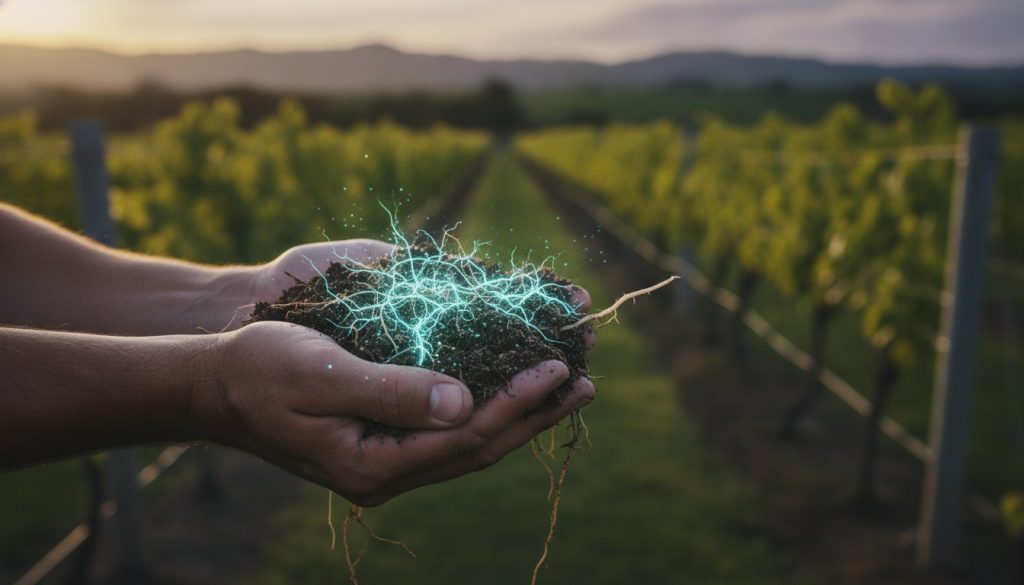
The most expensive input on your orchard or farm might actually be the fertiliser you’ve already paid for but your crops cannot access. Many New Zealand growers currently find themselves trapped in a cycle of rising synthetic prices while battling soil compaction and stubborn nutrient lock-up that restricts export-grade yields. It’s an exhausting reality, especially when strict BioGro compliance is the baseline for reaching high-value international markets. This Quantum Organic-Total cost-benefit analysis examines why shifting toward biological soil management is no longer just an environmental preference, but a calculated financial strategy for commercial operations across Aotearoa.
We’ll evaluate the genuine investment value of this microbial technology, looking beyond the initial outlay to understand the biological ROI found in improved soil structure and measurable increases in brix levels. You’ll gain a clear understanding of how these photosynthetic and heterotrophic bacteria function to unlock existing mineral wealth, helping you reduce reliance on increasingly volatile synthetic inputs. We will also preview the path to aligning your soil health with the mandatory standards of the Organic Products and Production Act 2023, ensuring your operation remains both profitable and compliant as the 2028 deadline approaches.
Key Takeaways
- Learn how the multi-strain “Total” formulation restores soil biology to decrease your reliance on increasingly expensive synthetic inputs.
- Understand why a Quantum Organic-Total cost-benefit analysis must prioritise long-term cost-per-hectare ROI over the initial price-per-litre.
- Discover the mechanism by which photosynthetic bacteria act as a biological engine to unlock legacy phosphorus and potassium reserves in your soil.
- Master application techniques tailored for New Zealand conditions, including the critical importance of low-UV timing for microbial survival.
- Explore the benefits of securing BioGro-certified supply directly from GrowQanz to leverage local trial data and ensure product integrity.
What is Quantum Organic-Total and Why Does the “Total” Formulation Matter?
Quantum Organic-Total represents a departure from traditional, narrow-spectrum soil additives. It is a high-concentration microbial consortium, meticulously engineered to function as a complete biological ecosystem within a single application. For New Zealand growers, this “Total” approach is critical. Our landscapes, from the volcanic loams of the Bay of Plenty to the stony alluvial soils of Marlborough, require more than just a single-strain boost to overcome years of synthetic dependency and soil compaction.
The shift toward regenerative agriculture across Aotearoa has highlighted the necessity of biologicals that can integrate seamlessly into existing operations. When you perform a Quantum Organic-Total cost-benefit analysis, the primary value lies in this systemic restoration. You aren’t just applying a temporary fix; you’re reintroducing the foundational microbes that drive natural nutrient cycling. These biofertilizers are becoming the backbone of a more resilient primary sector.
The Consortium Advantage vs. Single-Strain Inoculants
Single-strain inoculants often struggle to establish themselves when faced with the diverse environmental pressures of New Zealand’s varied climates. In contrast, the multi-strain consortium in Quantum Organic-Total provides a resilient network of microbes that support one another. Photosynthetic bacteria act as the primary energy producers, while spore-formers specialise in breaking down complex organic matter. A microbial consortium is a self-supporting biological community that outperforms individual strains. This synergy ensures that the microbes you apply actually survive and thrive in the rhizosphere, providing consistent results regardless of your specific soil type or local weather patterns.
BioGro Certification: Protecting Your Export Premium
For the commercial grower, biological efficacy must be matched by regulatory compliance. Quantum Organic-Total holds BioGro New Zealand certification (#5462), which is a non-negotiable prerequisite for anyone targeting high-value export markets. This certification ensures that your soil health strategy aligns perfectly with the strict standards required for organic fruit and vegetable production. By using a BioGro-approved solution, you protect the “New Zealand Made” brand integrity that international buyers demand. This reduces the risk of synthetic contamination in your supply chain and provides a clear, verified path toward meeting the mandatory requirements of the Organic Products and Production Act 2023. In any thorough Quantum Organic-Total cost-benefit analysis, the ability to maintain premium market access is a significant factor in the final ROI.
The “Total Price” Equation: Calculating Your Investment per Hectare
Assessing the financial impact of a new input requires looking past the invoice total. For many, a Quantum Organic-Total cost-benefit analysis begins with the price-per-litre, yet this metric is often misleading. The true value is found in the application rate and the resulting efficacy in the field. Because this is a high-concentration consortium, a small volume covers a significant area, making the cost-per-hectare a much more accurate reflection of the investment than the unit price alone.
Standard packaging for New Zealand growers typically ranges from smaller 1-litre bottles for trials up to 20-litre containers and bulk IBCs for broadacre operations. Your initial investment may vary based on your soil’s baseline condition. Soils that have been heavily treated with synthetics often suffer from biological depletion. In these cases, an initial “loading dose” is often required to jump-start the ecosystem, followed by lower maintenance applications once the microbial population is established. This front-loaded approach ensures the biology takes hold quickly, leading to faster results in crop resilience and nutrient availability.
Variables Affecting the Cost of Application
Different crops demand different strategies. Intensive horticulture often requires more frequent, targeted applications compared to broadacre field crops. However, the ability to integrate these microbes into existing fertigation systems significantly reduces labour costs. It’s also vital to consider water quality. High chlorine levels in municipal water can harm soil microbial health, so neutralising agents or specific tank-mixing adjustments might be necessary to protect your biological investment. Ensuring the water is a hospitable carrier is a small but critical step in protecting your margin.
Synthetics vs. Biologicals: A Comparative Look
Synthetic fertilisers carry hidden costs that rarely appear on a balance sheet. Nutrient leaching, surface runoff, and long-term soil degradation eventually lead to expensive “rescue” chemical treatments that further erode margins. Quantum Organic-Total works to reverse this by improving soil structure and nutrient retention. By fostering a self-sustaining ecosystem, you’re investing in soil infrastructure rather than just buying a temporary growth spike. For growers weighing up their options, understanding how a liquid microbial soil treatment compares to granular and synthetic alternatives can clarify exactly where the long-term financial advantages lie. For current NZD pricing and to see how these factors apply to your specific land, it’s best to contact GrowQanz directly for a tailored quote.
Biological ROI: How Microbes Unlock Existing Soil Wealth
The true value of a biological program isn’t found in the volume of product applied, but in the liberation of legacy minerals already present in your soil. Many New Zealand orchards and farms sit on significant reserves of phosphorus and potassium that remain chemically “locked” and unavailable to plants. A comprehensive Quantum Organic-Total cost-benefit analysis must account for the microbes’ ability to convert these insoluble minerals into plant-available ionic forms. By re-establishing these biological pathways, you’re effectively mining your own land for nutrients you’ve already paid for in previous seasons.
This process extends beyond simple nutrient availability. The complex consortium of microbes works to build soil aggregates, which directly improves carbon sequestration and long-term soil structure. In the context of Aotearoa’s increasingly volatile climate, this structural improvement is a critical insurance policy. Enhanced soil carbon levels lead to superior water retention, significantly reducing plant stress during the dry New Zealand summer months. When your soil can hold more moisture naturally, your irrigation requirements drop, and your crops maintain productivity even under heat pressure.
Photosynthetic Bacteria: Capturing Solar Energy for the Soil
The inclusion of photosynthetic bacteria (PSB) sets this formulation apart from standard inoculants. While most soil microbes rely on existing organic carbon for energy, PSB can capture light energy directly. Photosynthetic bacteria act as primary energy producers, stimulating the entire soil food web. By functioning in the root zone, they provide a steady energy supply to other beneficial microbes, ensuring the consortium remains active and effective. This surge in biological activity is often reflected in increased brix levels in fruit and vegetable crops, as the plant is better equipped to synthesise sugars when its microbial partners are thriving.
Digesting Thatch and Improving Water Infiltration
Organic build-up, often referred to as thatch or the “black layer” in turf and high-density orchards, can become a physical barrier to success. This layer restricts gas exchange and prevents water from reaching the root zone, leading to anaerobic conditions and disease pressure. The spore-forming microbes within Quantum Organic-Total specialise in recycling this dead organic matter, turning a problematic waste layer into a source of plant-available nutrients. The financial benefits of this process are tangible. Improved drainage reduces the risk of root rot and other water-logging issues, while better water infiltration means every millimetre of rainfall or irrigation is utilised more efficiently. This biological “cleaning” of the soil profile is a vital component of the overall Quantum Organic-Total cost-benefit analysis, protecting your crop’s health and your operation’s bottom line.
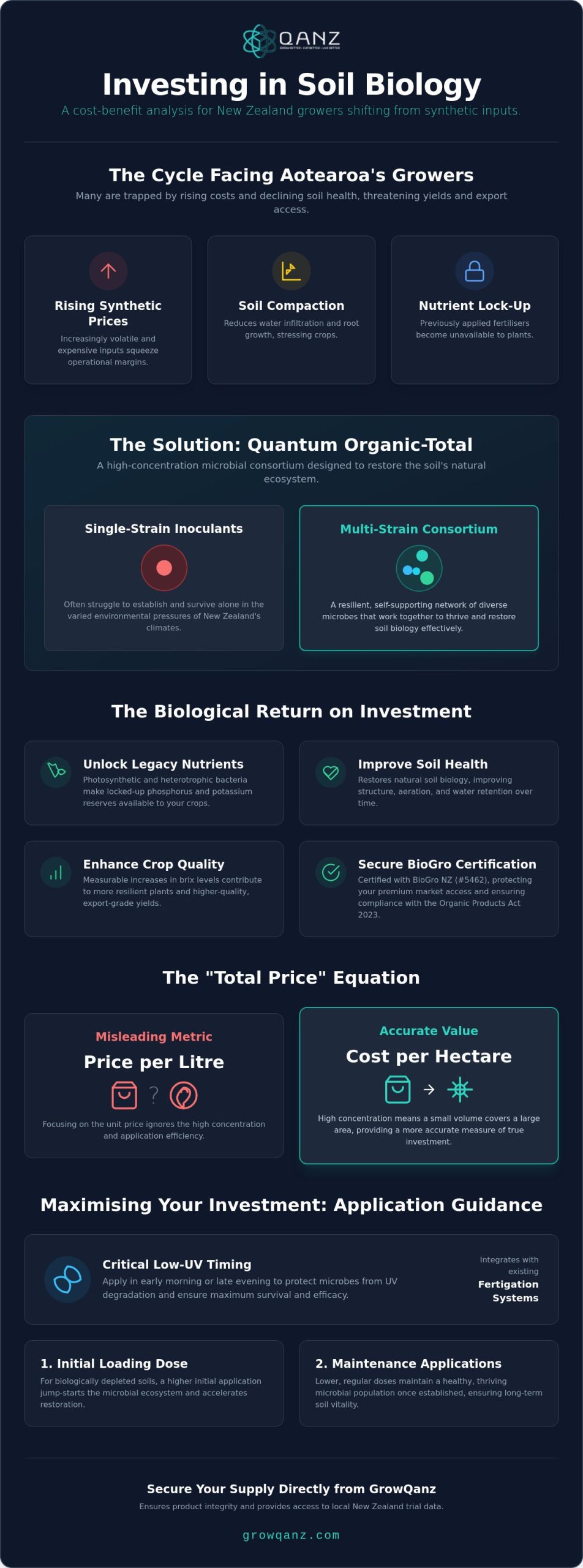
Maximising Your Investment: Application Guidance for NZ Conditions
Achieving the projected returns outlined in your Quantum Organic-Total cost-benefit analysis depends heavily on the precision of your application. Unlike inert synthetic fertilisers, microbial consortia are living communities that require specific environmental conditions to colonise the rhizosphere effectively. If these microbes are mishandled during the mixing or delivery phase, the biological ROI will be compromised before the product even hits the paddock. Success in the New Zealand climate requires a shift in timing and preparation to ensure these beneficial bacteria survive and thrive.
Timing is the most critical variable for microbial survival. The high UV intensity across Aotearoa can quickly sterilise surface-applied bacteria, so applications should always be scheduled during low-UV periods, specifically early morning or dusk. This allows the microbes to move into the soil profile or establish themselves on leaf surfaces without the stress of direct midday sun. Additionally, water quality cannot be overlooked. If you’re using municipal water, it must be de-chlorinated or treated, as chlorine is specifically designed to eliminate the very bacteria you’re trying to introduce. Quantum Organic-Total is fully compatible with other BioGro-approved inputs, allowing you to streamline your programme without risking microbial viability.
Best Practice for Fertigation and Soil Drenching
Establishing a robust microbial population in the soil requires a methodical approach. Follow these three steps to ensure effective delivery:
- Step 1: Calibration. Ensure your fertigation equipment is calibrated for precise delivery. Because this is a high-concentration product, even small errors in flow rate can lead to significant waste or under-application.
- Step 2: Soil Moisture. Apply to pre-wetted soil. Microbes require a film of moisture to migrate through the soil pores and reach the root zone. Applying to bone-dry ground often leads to microbial desiccation.
- Step 3: Monitoring. Use sap analysis or brix testing to track progress. These tools provide real-time data on how effectively the microbes are liberating nutrients and improving plant health.
Foliar Application: Rapid Delivery for Plant Health
While soil drenching builds long-term infrastructure, foliar application offers rapid support, particularly for fruit trees during peak growth stages. This method delivers microbes directly to the phyllosphere, the leaf surface ecosystem, where they help protect against environmental stressors. When applying foliarly, nozzle selection is paramount. Avoid high-pressure settings that can cause mechanical shearing of the bacterial cells. Instead, use a coarser spray that provides thorough coverage without physically damaging the live cultures. To ensure your equipment is correctly configured for biologicals, you can consult with the technical team at GrowQanz for specific nozzle and pressure recommendations.
Securing Your Supply: Why Buying Direct from GrowQanz Protects Your Margin
The success of a biological programme is inextricably linked to the integrity of the supply chain. When you purchase through international resellers, you risk receiving product that has sat in uncontrolled environments, potentially compromising the microbial count. Buying direct from GrowQanz ensures that the consortium you receive is fresh, viable, and ready to colonise your soil. This direct relationship is a fundamental pillar of any accurate Quantum Organic-Total cost-benefit analysis, as it guarantees that the biological engine you’re paying for arrives in peak condition.
Beyond the product itself, a New Zealand-based technical partner understands the specific pressures of our local primary sector. We provide access to field-proven results from trials conducted right here in Aotearoa, covering viticulture in Marlborough to horticulture in the Waikato. This local data allows you to move forward with confidence, knowing the technology has been validated against New Zealand’s unique climatic challenges and soil compositions. We view ourselves as long-term partners in your regenerative journey, helping you navigate the shift from high-input synthetics to a more balanced, biological approach.
Technical Support and Local Expertise
Transitioning from a chemical-heavy programme to a biological one requires more than just swapping jugs. It demands a shift in management strategy. Our team provides professional consultation to help you tailor application rates to your specific regional soil profile. Whether you’re working the fertile volcanic loams of the North Island or the stony alluvial plains of the South Island, the microbial requirements differ. Implementing a Quantum Organic-Total cost-benefit analysis for a large-scale vegetable or nut operation allows you to see exactly where biologicals can replace or augment existing inputs for better fiscal outcomes.
Ordering and Bulk Supply Logistics
Logistical efficiency is vital for maintaining your margin. By holding local inventory, we ensure rapid delivery across both the North and South Islands, minimising downtime during critical application windows. This local presence also means we can offer streamlined ordering for commercial volumes, including 20-litre containers and bulk IBCs for broadacre use. Maintaining microbial viability through a managed cold chain is our priority, ensuring every litre performs as expected. To see how these efficiencies can transform your bottom line, you can request a cost-benefit analysis and commercial quote from GrowQanz.
Investing in the Future of Aotearoa’s Soil
Transitioning from synthetic dependency to a biological framework is a strategic move toward long-term land stewardship and commercial resilience. By reintroducing a 100% natural, multi-strain microbial consortium, you aren’t just feeding the plant; you’re rebuilding the soil’s capacity to sustain itself. This Quantum Organic-Total cost-benefit analysis demonstrates that the real value lies in unlocking legacy nutrients and improving water retention, specifically for New Zealand’s unique vegetable, fruit, and broadacre crops. With BioGro New Zealand Certification (#5462), your operation stays compliant while meeting the growing global demand for export-grade organic produce.
This commitment to natural systems often extends beyond the farm gate to personal health and vitality. For growers who apply the same rigorous standards to their own nutrition as they do to their crops, you can discover My Wellness and their comprehensive guide to men’s natural health supplements, which offers insights into maintaining peak physical condition.
Success in regenerative agriculture requires a stable partner who understands local conditions and supply chain integrity. Whether you’re managing a boutique orchard or a large-scale commercial operation, the shift toward biological soil health is a proven path to higher brix levels and reduced input costs. It’s time to move beyond temporary fixes and invest in the biological infrastructure of your land. Enquire about Quantum Organic-Total pricing for your operation to start your transition today. Your soil is your most valuable asset; it’s time to let it work for you again.
Frequently Asked Questions
How much does Quantum Organic-Total cost per hectare for NZ growers?
The investment per hectare depends on your specific crop requirements and current soil health. Because application rates vary between intensive horticulture and broadacre field crops, we recommend a consultation to determine your exact needs. This ensures you aren’t over-applying and that your Quantum Organic-Total cost-benefit analysis remains accurate for your specific land and production goals.
Is Quantum Organic-Total compatible with my existing fertiliser programme?
It is compatible with most standard fertilisers and BioGro-approved inputs. You should avoid mixing the microbes directly with harsh biocides, fungicides, or concentrated synthetic salts, as these can reduce microbial viability. When integrated correctly, it enhances the efficiency of your existing nutrients by improving uptake through the rhizosphere and reducing chemical dependency.
How soon can I expect to see a return on investment after application?
Visible improvements in soil structure and water infiltration often appear within the first few weeks of application. For tangible financial returns, such as increased brix levels or higher export-grade yields, most NZ growers see definitive results by the end of their first full growing season. The long-term ROI continues to grow as the soil ecosystem becomes more self-sustaining.
Does BioGro certification increase the price of the product?
BioGro certification (#5462) is a mark of verified purity and does not artificially inflate the product’s price. Instead, it adds value by ensuring your produce meets the strict compliance standards required for premium international markets. This certification is a critical component for those preparing for the mandatory MPI organic standards arriving in 2028.
Can I use Quantum Organic-Total in hydroponic or glasshouse systems?
Yes, it is perfectly suited for hydroponic and glasshouse environments. In sterile growing media, the lack of natural biology can lead to nutrient lock-up or pathogen outbreaks. Introducing this microbial consortium creates a balanced biological environment that supports root health and nutrient cycling in soilless systems, leading to more resilient indoor crops. Growers often find that pairing these biologicals with professional-grade supplies from specialists like Discount Hydro ensures the best possible results in controlled environments.
What are the storage requirements to keep the microbes alive in NZ conditions?
The product should be stored in a cool, dry area away from direct New Zealand sunlight. While the microbes are resilient, extreme temperature fluctuations can affect the long-term shelf life. Keeping the containers in a standard farm shed or warehouse out of the sun is usually sufficient to maintain high microbial counts for the duration of the season.
What is the difference between Quantum Organic-Total and Quantum-VSC?
The primary difference lies in certification and formulation focus. Quantum Organic-Total is specifically BioGro-certified for use in organic production systems. When performing a Quantum Organic-Total cost-benefit analysis, growers should note that while both products use similar microbial technology, the “Total” version is tailored for those requiring verified organic inputs for export compliance.
Is this product safe for use around livestock in a mixed farming operation?
It is entirely safe for use in mixed farming operations where livestock are present. The formulation is 100% natural and non-toxic, meaning there is no withholding period for grazing animals. It can be applied to pastures or field crops without any risk to sheep, cattle, or the surrounding ecosystem in Aotearoa.
