
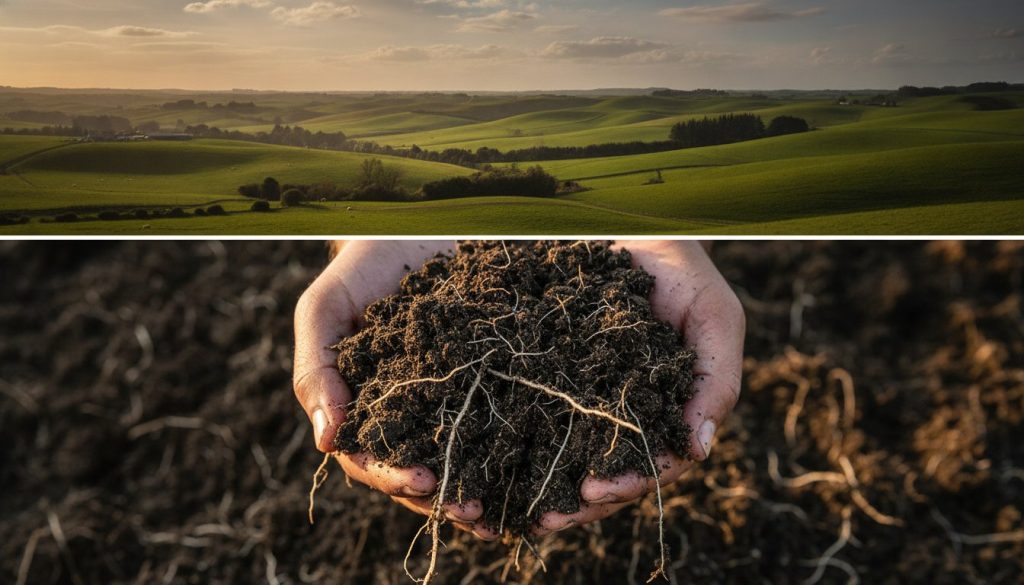
The most effective way to restore your land isn’t found in a machinery shed; it lives within the complex biological network right beneath your boots. For many New Zealand growers, the traditional cycle of heavy cultivation and synthetic inputs has led to a frustrating plateau where soil feels like concrete in summer and a swamp in winter. If you’re looking to improve soil structure naturally, the solution lies in fostering a high-performing microbial workforce rather than relying on steel or chemistry.
You’ve likely seen how compaction limits root depth and sends expensive nutrients washing away during the next big Tasman storm. This is a common struggle, but it’s one that can be reversed by focusing on the soil’s natural architecture. In this 2026 guide, you’ll discover how to restore pore space and enhance water infiltration using proven biological strategies. We’ll examine how liquid-based, BioGro NZ certified microbial solutions like Quantum Organic-Total® and Quantum-VSC® work to build stable aggregates, creating a resilient environment that holds moisture and cycles nutrients efficiently across your paddocks.
Key Takeaways
- Understand why soil structure, rather than just texture, is the critical foundation for farm productivity and long-term land resilience.
- Discover the power of ‘biological tillage’ and how specific microbes like fungal hyphae physically bind soil particles into healthy aggregates.
- Learn practical, low-impact management techniques to improve soil structure naturally while protecting your paddocks from compaction and runoff.
- Navigate the unique challenges of New Zealand landscapes, from free-draining pumice soils to the surface sealing risks of high-rainfall events.
- Explore how to scale these biological benefits across broadacre operations using BioGro NZ certified microbial technologies like Quantum Organic-Total®.
What is Soil Structure and Why is it the Foundation of Your Farm?
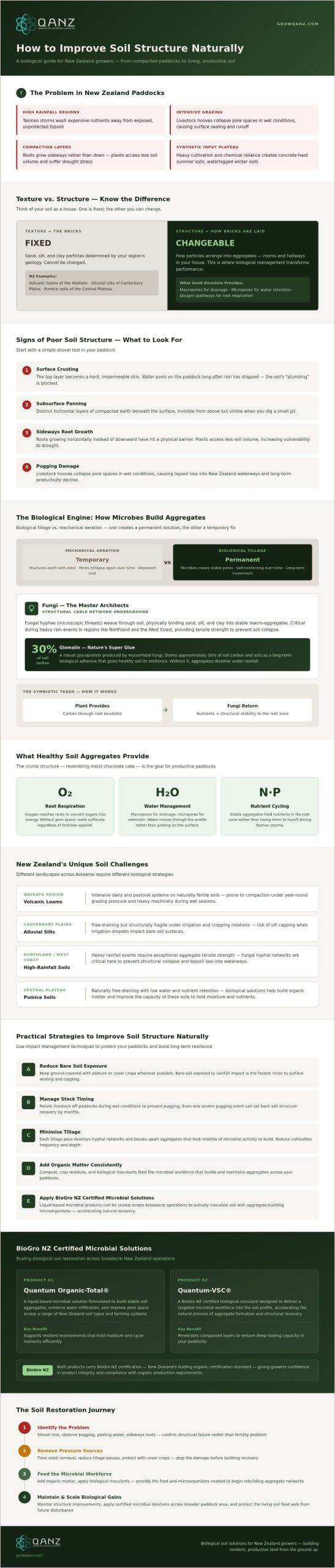
Soil structure is the physical architecture of your land. It refers to how individual particles of sand, silt, and clay arrange themselves into larger clusters known as aggregates. While these mineral particles provide the raw materials, it’s the space between them that dictates the health of your pasture or crop. When these aggregates hold together firmly, they create a “crumb” structure that resembles moist chocolate cake. This porous network is essential because it allows oxygen to reach the roots and provides a pathway for water to move through the profile rather than sitting on top.
In the New Zealand context, maintaining this structure is a matter of economic survival. Our high-rainfall regions and intensive grazing systems put immense pressure on the ground. If your soil lacks structural integrity, it becomes highly susceptible to “pugging,” where livestock hooves collapse the pore spaces in wet conditions. This leads to surface sealing, increased runoff, and the loss of valuable topsoil into our waterways. When you take steps to improve soil structure naturally, you are essentially building a more resilient foundation that can withstand the weight of machinery and animals alike.
The Difference Between Texture and Structure
Visualise your soil as a house. The texture represents the bricks; the sand, silt, and clay particles. You cannot change your soil texture; it is a permanent characteristic determined by the geology of your specific region, whether you’re working the volcanic loams of the Waikato or the alluvial silts of the Canterbury Plains. However, the structure is the way those bricks are laid out to create rooms and hallways. While you can’t change your soil type, you can certainly change its performance.
A well-structured soil has a balance of macropores for drainage and micropores for water retention. This balance is vital for root respiration. Roots require oxygen to convert sugars into energy; without adequate pore space, they essentially suffocate. This leads to poor nutrient uptake and stunted growth, regardless of how much fertiliser you apply.
Signs of Poor Soil Structure in the Paddock
Identifying structural issues often starts with a simple shovel test. One of the most obvious signs is surface crusting, where the top layer becomes a hard, impermeable skin that prevents water infiltration. If you notice water pooling in the paddock long after the rain has stopped, your soil’s “plumbing” is likely blocked. You might also recognise “panning,” which are distinct horizontal layers of compacted earth beneath the surface.
You can spot this by examining root architecture. If you dig a small pit and find that roots are growing sideways rather than down, they have hit a physical barrier. These compacted zones limit the volume of soil your plants can access, making your farm far more vulnerable to drought. Efforts to improve soil structure naturally focus on biological solutions that penetrate these layers, restoring the deep-rooting capacity your plants need to thrive.
The Biological Engine: How Microbes Create Soil Aggregates
While mechanical aeration offers a temporary fix for compacted ground, “biological tillage” provides a permanent solution for New Zealand growers. This natural process involves a diverse community of microorganisms that physically and chemically re-engineer the soil profile. Instead of fracturing the earth with steel, these microbes create stable, lasting pores that allow your pasture to breathe. To improve soil structure naturally, we must shift our focus from the physical weight of machinery to the microscopic activity of the soil food web. These organisms are the primary engineers responsible for turning raw mineral particles into a productive, living medium.
Fungi: The Master Architects of the Soil
Fungal hyphae act as the structural cables of the underground world. These microscopic threads weave through the soil, physically binding sand, silt, and clay together into macro-aggregates. This network is particularly vital during heavy rain events in regions like Northland or the West Coast, as it provides the tensile strength needed to prevent soil collapse. The relationship is a symbiotic trade; the plant provides carbon through root exudates, and the fungi return nutrients and structural stability to the root zone.
Glomalin is a robust glycoprotein produced by mycorrhizal fungi that stores approximately 30% of soil carbon and acts as a long-term biological adhesive. This “super glue” is what gives healthy soil its resilience. Without it, soil aggregates easily dissolve when they become wet, leading to the surface sealing and erosion issues often seen on over-worked land. By fostering these fungal networks, you create a soil structure that remains stable under pressure.
Bacteria and the Formation of Biofilms
While fungi handle the large-scale architecture, bacteria focus on the micro-aggregates. They produce sticky polysaccharides, creating biofilms that glue the smallest silt and clay particles together. These biofilms are not just adhesives; they are protective environments that help the soil retain moisture during dry spells in the Hawkes Bay or Canterbury. Photosynthetic bacteria play a unique role here by capturing light energy and converting it into carbon compounds that fuel the rest of the soil food web, even in lower-light environments beneath the pasture canopy.
Applying microbial inoculants for regenerative farming can jumpstart this entire cycle by introducing high-performance strains directly into the system. For broadacre farmers who cannot logistically apply tonnes of compost, liquid solutions like Quantum Organic-Total® offer a scalable way to deliver these master architects to the soil. This targeted approach bypasses the need for massive bulk applications, allowing the biological engine to restore your land’s natural architecture from the inside out.
Practical Strategies to Improve Soil Structure Naturally
Transitioning from mechanical intervention to biological management requires a fundamental shift in how we treat the soil surface. Conventional wisdom often suggests digging or ploughing to loosen the earth, but these actions actually shatter the delicate fungal networks required for long-term stability. To improve soil structure naturally, growers should prioritise no-till or low-till systems that preserve existing architecture. By leaving the soil undisturbed, you allow the natural “biological engine” to maintain its pore space and structural integrity over multiple seasons.
Protecting the surface from the hammering effect of New Zealand’s heavy rainfall is equally critical. Bare soil is vulnerable to the kinetic energy of raindrops, which collapses surface aggregates and causes immediate sealing. Using organic mulches or maintaining a living canopy prevents this degradation. Additionally, integrating livestock through managed, high-density grazing can stimulate soil biology. The short-term impact of hooves, when managed correctly, pushes organic matter into the surface layer and triggers a biological response that further strengthens soil aggregates across your paddocks.
Liquid Microbial Treatments vs. Bulk Compost
While compost is a traditional choice for adding organic matter, the logistics of broadacre application are often prohibitive. Spreading 20 tonnes of compost per hectare is a massive undertaking that requires specialised machinery and significant labour. In contrast, a liquid microbial soil treatment can be applied through existing spray rigs or irrigation systems with minimal effort. This efficiency makes it a superior choice for large-scale operations looking to improve soil structure naturally without the heavy overheads of bulk solids.
Microbial solutions offer a colonisation advantage that compost cannot match. While compost is eventually consumed by the soil food web and must be reapplied, beneficial microbes reproduce and establish themselves within the soil profile. They become a self-sustaining workforce that continues to engineer the soil’s architecture long after the initial application. This provides a more permanent structural benefit for your land, as the microbes actively maintain the pore spaces that compost simply fills.
Cover Cropping for Structural Support
Diverse cover crops act as living drills that penetrate compacted layers. Species such as tillage radish are particularly effective; their thick taproots can punch through hardpans that would stop a traditional plough. As these roots grow, they create permanent channels for water and air. When the cover crop is terminated, these channels remain, providing a pre-built pathway for the roots of your next cash crop to follow deep into the profile.
These crops do more than just physical work. The root exudates they release into the rhizosphere provide a constant food source for the microbial architects discussed earlier. This steady supply of sugars and proteins keeps fungal and bacterial populations active, ensuring the glomalin “glue” is constantly replenished. Transitioning to your primary crop can be achieved through rolling or crimping, which lays the organic matter flat to protect the soil without the need for destructive tillage.
Managing New Zealand’s Unique Soil Challenges Naturally
New Zealand’s diverse geology presents a range of specific challenges that require more than a one-size-fits-all approach. From the free-draining pumice of the Central Plateau to the stony alluvial gravels of the South Island, each region demands a tailored biological strategy. To improve soil structure naturally in these environments, we must address the specific mineralogy at hand. In pumice soils, the lack of natural clays means that biological adhesives like glomalin are the primary mechanism for holding moisture and nutrients in the root zone. Without these microbial “glues,” inputs simply wash through the profile, leading to wasted investment and environmental leaching.
Managing high-rainfall events is another critical factor for Kiwi growers. When heavy rain hits poorly structured soil, the surface aggregates often explode, leading to a hard crust that prevents air and water from entering. This surface sealing is particularly problematic in our silty loams. Restoring the soil’s natural architecture through biological means ensures that these aggregates remain stable under pressure. This allows the ground to absorb moisture quickly, reducing the risk of runoff and protecting the integrity of your topsoil during the Tasman storms that frequently sweep across the country.
Restoring Life After Chemical Intervention
Intensive use of synthetic fertilisers often results in a “lazy” microbial community. When plants are fed directly with high-salt synthetics, they reduce the production of root exudates that support the soil architects discussed in earlier sections. This lack of biological support eventually causes the structural collapse of the soil profile. If you have used chemical fumigants, the biological slate is effectively wiped clean, leaving the soil vulnerable to structural “crashes” and rapid compaction.
Re-inoculation is the most effective way to prevent this decline. Using BioGro NZ certified microbial technologies helps restore the balance after heavy chemical use, providing the necessary workforce to rebuild pore spaces. For growers looking to transition, exploring biological crop protection solutions offers a reliable alternative to toxic inputs. This approach allows you to protect your crops while simultaneously repairing the foundation of your farm.
Climate Resilience: Structure as a Buffer
A robust soil structure acts as a vital insurance policy against our increasingly volatile climate. During dry spells in the Hawkes Bay or North Canterbury, soils with high aggregate stability can hold significantly more plant-available water. This increased capacity provides a buffer that keeps pasture green for longer. Conversely, in wet winters, well-structured soil allows excess water to drain through macropores rather than pooling on the surface. This reduces the risk of “pugging” and protects the land from long-term damage caused by livestock hooves or heavy machinery.
Building soil carbon is central to this resilience. Carbon-rich soils are more elastic and stable, making the entire paddock more resistant to extreme weather events. Maintaining BioGro certification throughout this process ensures that your management practices meet the rigorous standards required for premium market access. To begin restoring your land’s natural resilience, consult our team about Quantum-VSC® and other certified microbial solutions tailored for New Zealand conditions.
Scaling Soil Vitality with GrowQanz Microbial Solutions
Implementing biological principles at a commercial scale requires a shift from bulk additions to precision microbiology. For many New Zealand stations and orchards, the logistical burden of traditional soil amendments makes them impractical for broadacre use. GrowQanz addresses this by providing high-concentration, liquid microbial solutions that are designed to integrate seamlessly into existing management programmes. When you choose to improve soil structure naturally with these technologies, you’re not just adding a product; you’re introducing a self-replicating workforce that actively repairs the land’s physical architecture.
Using BioGro NZ certified inputs like Quantum Organic-Total® and Quantum-VSC® provides more than just environmental peace of mind. It ensures that your produce meets the rigorous standards required for premium export markets, where soil health and chemical-free production are increasingly valued. These solutions can be applied through standard boom sprays, fertigation systems, or even aerial applications. This makes it possible to treat large areas without the soil compaction risks associated with the heavy spreading equipment required for solid fertilisers or compost.
Quantum Organic-Total®: The All-in-One Inoculant
Quantum Organic-Total® stands out as a foundational tool for restoring soil vitality. It contains a proprietary blend of microorganisms, including photosynthetic bacteria that capture light energy and convert it into carbon compounds. These compounds act as a primary energy source for the soil food web, fueling the fungal and bacterial “architects” that build stable aggregates. This process is a core component of our microbial solutions for field crops, providing a scalable way to enhance productivity across diverse topographies.
For orchardists and vegetable growers, the ease of application is a significant advantage. The liquid formulation ensures that the microbes reach the root zone quickly, where they can begin colonising the rhizosphere. To see the impact on your own land, we recommend starting with a small-scale trial on a single block or paddock. This allows you to assess crop outcomes and observe the shift in soil friability and water infiltration firsthand before rolling the programme out across your entire operation.
A Partner in Regenerative Agriculture
At GrowQanz, we view ourselves as more than a supplier; we are a technical partner in your transition to regenerative practices. Our focus is on helping you move away from managing isolated symptoms, such as surface sealing or nutrient lock-up, and toward building a self-sustaining biological system. This systemic approach is the most reliable way to improve soil structure naturally while reducing your long-term reliance on expensive synthetic fertilisers.
Our team provides the scientific expertise and field-tested data needed to verify your progress. By monitoring changes in soil architecture and plant performance, we can help you fine-tune your application rates for maximum efficiency. If you’re ready to restore the natural architecture of your soil and boost the resilience of your farm, contact GrowQanz today for a tailored soil restoration plan that fits your specific needs.
Securing the Future of Your New Zealand Soil Architecture
Improving your farm’s productivity starts with respecting the biological engine beneath the surface. We’ve explored how transitioning from mechanical tillage to microbial management can restore the stable aggregates your land needs to thrive. By fostering fungal networks and protecting your soil from the hammering effects of high-rainfall events, you build a foundation that is resilient against both drought and winter pugging. These biological engineers work around the clock to ensure your soil remains porous, fertile, and structurally sound.
It’s possible to improve soil structure naturally without the logistical hurdles of bulk compost or the long-term damage of synthetic chemicals. Our 100% organic microbial technology is BioGro NZ Certified and has been proven across New Zealand broadacre and horticulture sectors to deliver tangible results. Enquire about Quantum Organic-Total® for your station today to begin your journey toward a more efficient, biologically active system. Your land is your most valuable asset; treating it with scientific precision and ecological integrity ensures it remains productive for generations to come.
Frequently Asked Questions
How long does it take to improve soil structure naturally?
Biological changes begin within weeks of application, but physical structural improvements generally take one to two full growing seasons to become clearly visible. Building stable aggregates and deep-rooting channels is a cumulative process. The exact timeline depends on your starting soil condition and local New Zealand climatic factors, such as rainfall and temperature, which influence microbial activity levels.
Can I use microbial inoculants alongside my current fertiliser programme?
Yes, microbial inoculants can be integrated into most existing programmes, provided you don’t mix them directly with high-salt synthetic fertilisers in the same tank. These microbes actually improve the efficiency of your applied nutrients by solubilising minerals and making them more available to the plant. This synergy helps reduce overall input costs over time as the soil’s natural nutrient cycling improves.
What is the best cover crop for breaking up compacted NZ clay soil?
Tillage radish, often called Daikon, is widely considered the best choice for New Zealand’s heavy clay soils due to its powerful, deep-reaching taproot. These roots act as biological drills that penetrate compacted layers and hardpans. Once the crop terminates, the decaying roots leave behind open channels that significantly improve drainage and aeration for the following cash crop or pasture.
Will improving soil structure really reduce my irrigation needs?
Efforts to improve soil structure naturally increase the water-holding capacity of your land by creating a more porous, sponge-like architecture. This allows the soil to retain significantly more moisture during dry Canterbury or Hawke’s Bay summers. By reducing runoff and evaporation, you can often decrease the frequency of irrigation cycles while maintaining or even increasing your total crop yield.
Is BioGro certification necessary for microbial soil products in NZ?
While not legally required for every farm, BioGro NZ certification is the gold standard for growers who value organic integrity and premium market access. It provides independent verification that the microbial technology is free from synthetic contaminants. For many New Zealand exporters, using certified products is a critical requirement for maintaining their status in high-value international markets.
Can microbial treatments help restore soil after heavy chemical use?
Microbial treatments are highly effective at re-establishing life in soils that have been depleted by intensive chemical use or fumigation. By introducing specific, high-performance strains, you jumpstart the biological processes that were previously suppressed. This allows the soil to begin rebuilding its natural architecture and resilience, even after years of conventional management that may have collapsed the original pore space.
How do I know if my soil structure is actually improving?
The simplest way to monitor progress is through a visual shovel test to check for a “crumb” structure and increased earthworm activity. You’ll also notice faster water infiltration during heavy rain events and roots that grow straight down into the profile rather than growing sideways. If your paddocks no longer pool water as they once did, it’s a clear sign your structure is recovering.
What is the difference between soil structure and soil fertility?
Soil fertility refers to the chemical presence and availability of nutrients, whereas soil structure is the physical arrangement of particles that allows those nutrients to be accessed. You can have high fertility, but if you don’t improve soil structure naturally, your plants won’t be able to reach those nutrients. Structure provides the “house” where roots, air, and water can move freely to support plant growth.
Disclaimer
Important: This article provides general agricultural information only. Product performance can vary according to crop, soil, climate, management practices and application conditions. Trial or research results discussed may have been obtained under specific conditions and should not be interpreted as a guarantee of equivalent results. Always follow current product directions and confirm suitability for your crop, growing system and organic certification requirements. Contact QANZ for current product and application information.
