

What if the most effective way to safeguard your yield isn’t a heavy-duty synthetic chemical, but a precision-engineered colony of microbes that works in harmony with the land? For many growers across Aotearoa, the reliance on intensive chemical fumigation has led to a visible decline in soil structure and vitality. It’s a difficult position to be in when you’re facing the double pressure of rising input costs and a retail market that’s increasingly demanding residue-free produce. You’ve likely felt that traditional tools are no longer providing the same level of protection, which is why more professionals are turning to biological crop protection solutions to restore their land’s natural resilience.
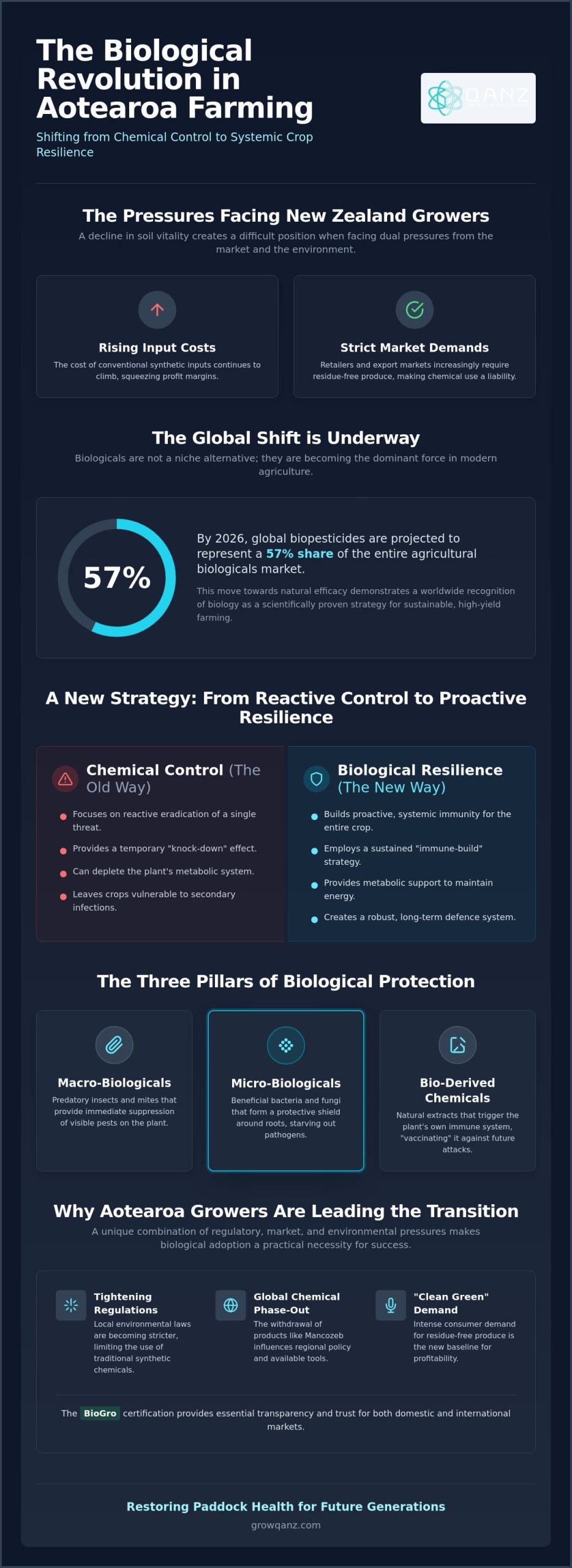
We’re here to show you that these advanced microbial technologies aren’t just a “soft” alternative for the environmentally conscious; they’re a scientifically proven strategy for building systemic immunity that synthetics simply can’t match. With global biopesticides now representing a 57% share of the agricultural biologicals market in 2026, the shift toward natural efficacy is well underway. This article explores how these solutions restore soil health and outperform conventional inputs. We’ll examine the evidence-based transition from chemical reliance to biological precision, ensuring your farm remains productive and compliant in a changing global landscape.
Key Takeaways
- Understand why modern biologicals represent a fundamental shift from reactive pest control to building systemic immunity across your entire crop.
- Learn the truth about the efficacy and speed of biological crop protection solutions in broadacre and commercial settings compared to synthetic alternatives.
- Discover how fostering a healthy rhizosphere through competitive exclusion creates a natural barrier that starves out soil-borne pathogens before they take hold.
- Identify the practical steps for integrating microbial inoculants into your existing programme, from baseline soil assessments to early-season drenching.
- Explore the correlation between microbial soil health and nutrient density, ensuring your produce meets the high standards of the Aotearoa retail market.
What Are Biological Crop Protection Solutions in 2026?
Understanding the difference between various biological categories is vital for effective farm management. While biostimulants focus on enhancing plant growth and biopesticides target specific pathogens, soil enhancers like Quantum Organic-Total® serve a broader purpose. These solutions improve the foundational health of the land, creating a robust ecosystem where plants can thrive without the constant need for synthetic intervention. The adoption of biological crop protection solutions is no longer a niche choice for small-scale gardens; it’s a precision-engineered strategy for commercial agriculture.
The Three Pillars of Biological Protection
Modern biological crop protection solutions integrate three distinct operational pillars to ensure crop safety. Traditional Biological pest control has historically focused on macro-biologicals, such as predatory mites or parasitic wasps that provide immediate suppression of visible pests. However, the focus has expanded. Micro-biologicals involve the use of beneficial bacteria and fungi that colonise the rhizosphere, forming a protective shield around the roots. Finally, bio-derived chemicals use natural extracts to trigger the plant’s own systemic acquired resistance, essentially “vaccinating” the crop against future fungal or bacterial attacks.
Why Aotearoa Growers are Leading the Transition
New Zealand’s agricultural sector faces unique pressures that make biological adoption a practical necessity. Local environmental regulations are tightening as the global phase-out of chemicals like Mancozeb continues to influence regional policy. This regulatory environment, combined with intense consumer demand for “clean green” produce in markets like Australia and Europe, has made residue-free farming the new baseline for profitability. To meet these standards, the implementation of microbial solutions for field crops is proving essential for restoring paddock health. By focusing on biology rather than chemistry, growers can maintain high yields while ensuring their land remains viable for future generations.
Busting the Top 5 Myths About Biological Crop Protection
The transition toward biological crop protection solutions often meets resistance rooted in outdated perceptions. Many professional growers hesitate because they believe these tools are too slow or only suitable for small-scale organic hobbyists. This skepticism is understandable but ignores the technical reality of modern microbiology. Advanced microbial technology is currently being deployed across massive broadacre operations to restore soil vitality that has been stripped by decades of intensive chemical use. It isn’t just for the local market gardener; it’s a scalable, robust solution for professional agriculture across Aotearoa.
The ‘Speed of Efficacy’ Debate
A common concern is that biologicals cannot handle a sudden pest or pathogen outbreak. While synthetic chemicals offer an immediate “knock-down” effect, they often leave the plant metabolic system depleted and vulnerable to secondary infections. Biologicals focus on an “immune-build” strategy. Photosynthetic bacteria provide immediate metabolic support, helping the plant maintain energy production even under high environmental stress. This isn’t a slow process; it’s a systemic one that prevents the initial infection from taking hold. A detailed Quantum Organic-Total cost-benefit analysis demonstrates that while the initial shift requires foresight, the resulting crop stability prevents the erratic yield swings common in chemical-heavy systems.
Growers also worry that microbes won’t survive in the harsh, variable soil conditions of New Zealand or Australia. In the past, raw microbial cultures were often fragile. Today, stabilised liquid formulations protect the efficacy of the microbes, ensuring they remain active despite UV exposure or fluctuations in soil pH. Similarly, the idea that previous chemical use makes land “incompatible” with biology is a misunderstanding. Integrated programmes allow for a phased transition where biologicals and synthetics work together to reduce the total chemical load over time without sacrificing immediate protection.
Economic Viability on the Modern Farm
The perceived high cost of biologicals is often cited as a barrier to entry. This view focuses solely on the price per litre while ignoring the hidden expenses of traditional farming, such as soil compaction and nutrient lockout. By improving fertiliser efficiency and unlocking bound nutrients already present in the soil, these microbes reduce the need for expensive, high-input applications. This metabolic efficiency directly impacts the bottom line by lowering the total cost of production per hectare. By building a naturally resilient environment, high-quality microbial solutions reduce the frequency of rescue sprays required during the growing season. If you are looking to optimise your input strategy, you can explore our full range of microbial solutions to see how they integrate with your current programme.
The Microbial Mechanism: How Beneficial Bacteria Protect Your Yield
The rhizosphere is a battleground. Within this narrow band of soil surrounding the root system, a complex exchange of biochemical signals determines the plant’s ultimate health and productivity. Unlike synthetic fungicides that target specific pathogens after they’ve established themselves, biological crop protection solutions function through competitive exclusion. By physically occupying the space around the root hairs and consuming available nutrients, beneficial bacteria effectively starve out harmful pathogens before they can cause damage. This proactive approach ensures that the root zone remains a sanctuary for growth rather than a gateway for infection.
Beyond physical barriers, these microbes trigger Induced Systemic Resistance (ISR). This process primes the plant’s internal alarm system, allowing it to respond more rapidly and aggressively to future threats. It functions much like an immune system, where the presence of beneficial organisms “teaches” the plant how to defend itself. Additionally, the inclusion of photosynthetic bacteria in these consortia provides an essential energy boost. These specialised microbes enhance the plant’s energy reserves by assisting in carbon fixation, ensuring the crop has the metabolic fuel required to maintain its defences while continuing to produce high-quality yields.
Quantum-VSC® and the Science of Stress Resilience
Abiotic stressors like drought and soil salinity can weaken a crop’s natural resistance. Quantum-VSC® utilises a diverse microbial consortium designed specifically to help plants withstand these environmental pressures. These microbes assist in the breakdown of complex organic matter, converting it into plant-available nutrients that are easily absorbed even under stress. Liquid-based treatments provide superior coverage compared to traditional granules, as they allow for more immediate migration into the root zone. This ensures that the beneficial colonies are established exactly where they are needed most.
Restoring Soil After Chemical Fumigation
Decades of heavy chemical use often result in the “sterile soil” problem. While fumigation successfully kills target pests, it also wipes out the beneficial microbial life essential for nutrient cycling. This leaves paddocks struggling to recover and increasingly dependent on synthetic inputs. Reintroducing essential microbes is the only way to kickstart the natural nutrient cycle and restore long-term paddock health. Using microbial inoculants for regenerative farming ensures that you are adding pure, verified biology back into your land, providing a safe and effective pathway for soil restoration across Aotearoa.
Integrating Biologicals into a Conventional Farming Programme
Transitioning from a chemical-reliant system to an integrated model requires a methodical approach rather than an abrupt change. The goal is to weave biological crop protection solutions into your current operations, allowing natural processes to eventually reduce the need for synthetic intervention. This transition follows a logical sequence of five steps designed to build and maintain soil vitality. For growers considering a full BioGro conversion, our detailed guide on the transition to organic farming NZ provides a biological-first framework specifically designed to sustain yields throughout the three-year certification window.
- Step 1: Conduct a baseline soil health assessment. Identifying existing microbial deficiencies ensures your applications are targeted and effective.
- Step 2: Apply seed treatments or early-season soil drenching. Establishing beneficial colonies during the initial growth stages provides a protective foundation for the crop.
- Step 3: Monitor pest thresholds closely. Use biologicals as your first line of defence, reserving synthetics for high-pressure scenarios that exceed manageable limits.
- Step 4: Gradually reduce synthetic inputs. As your soil’s natural resistance improves, you’ll find that fewer chemical applications are required to maintain the same yield.
- Step 5: Maintain the microbial ‘bank’. Post-harvest soil conditioning ensures that beneficial populations remain viable through the off-season.
Compatibility and Tank Mixing
Successful integration depends on understanding chemical compatibility. While many modern herbicides are manageable, certain broad-spectrum fungicides can be detrimental to live microbial populations. It’s essential to check the ‘microbe-friendliness’ of your tank mix before application. Timing also plays a critical role. Applying liquid biologicals during the cooler parts of the day or under overcast conditions maximises survival rates in the paddock. Additionally, water quality and pH must be monitored; highly alkaline water can shock sensitive microbes, rendering the application less effective.
Scaling for Broadacre and Horticulture
Adapting these programmes for large-scale operations is straightforward with modern equipment. Liquid formulations are easily integrated into existing pivot irrigation systems or boom sprayers, ensuring consistent delivery across hundreds of hectares. This scalability isn’t limited to field crops. Managers often utilise professional turf biological products to maintain high-traffic areas like golf courses or sports paddocks where chemical residues are a concern. Managing storage is equally important in regional Aotearoa. Keeping liquid microbial products in a cool, dark environment maintains their shelf-life and ensures they remain potent until the moment they hit the soil. To begin your transition with a proven system, view our full range of field and vegetable crop solutions.
The Future of Farming: Why Biologicals are the Only Sustainable Path
The global transition toward regenerative agriculture is no longer a distant ideal; it’s a measurable shift in how we value our natural resources. With the global biological crop protection market projected to reach $11.53 billion by 2030, the primary sector is clearly moving away from heavy chemical reliance. This change is driven by a growing understanding of carbon sequestration and the critical role soil biology plays in mitigating environmental stress. In Aotearoa, this means adopting biological crop protection solutions that do more than just manage pests; they actively restore the land’s ability to function as a living, breathing ecosystem.
As the primary sector moves away from extractive models, leaders often require guidance to align their vision with these sustainable realities. Working with a regenerative business mentor like Jannine Barron can provide the strategic insight needed to transition toward nature-aligned business practices.
Microbial health directly correlates with the nutrient density of our food crops. When soil is vibrant and biologically active, plants can access a wider array of trace minerals and compounds that are often locked away in chemically suppressed systems. This creates a superior product for the consumer and a more resilient crop for the grower. GrowQanz stands at the intersection of this scientific innovation and practical, on-the-ground farming. By providing 100% natural, BioGro certified solutions, we ensure that the next generation of New Zealand growers has access to tools that are both effective and ecologically responsible.
Building Long-Term Soil Equity
Professional growers are increasingly viewing soil health as a capital asset rather than a disposable resource to be mined. Every application of beneficial microbes is an investment in the long-term equity of the paddock, reducing the future need for expensive corrective measures. This focus on kaitiakitanga, or stewardship, ensures a productive legacy for those who will work the land after us. The mission of GrowQanz is to empower the primary sector in Aotearoa with scientifically verified microbial solutions that restore ecological balance and ensure long-term farm profitability. By prioritising soil vitality today, we secure the viability of our agricultural exports for decades to come.
Final Recommendation for Growers
Moving toward a biological model doesn’t require an all-or-nothing commitment from day one. We recommend starting with a trial block to witness the efficacy of these microbial consortia under your specific local conditions. This evidence-based approach allows you to compare yield stability and soil structure against your conventional paddocks without significant risk. The GrowQanz team is available to provide technical support, sharing data from across New Zealand to help you optimise your application timing and strategy. Proven results are the best way to move past the myths and embrace a more efficient way of working. To begin your transition toward a more resilient farm, explore the full range of Quantum Organic-Total® solutions today.
Securing the Resilience of Your Land
Adopting biological crop protection solutions is a strategic investment in the long-term viability of your farm. We’ve established that modern microbial technology isn’t a slow or weak alternative; it’s a sophisticated system that builds systemic immunity while restoring the natural nutrient cycle. By shifting from a reactive chemical model to a proactive biological one, you’re protecting your current yield and building soil equity for the future of Aotearoa’s primary sector.
Whether you’re managing broadacre field crops or high-value horticulture, the move toward 100% natural, BioGro certified inputs ensures your produce meets the highest retail and export standards. Our technology has delivered proven results across fruit, nut, and field crops, providing a reliable path for growers who value both productivity and environmental integrity. Taking the first step toward a biologically active farm doesn’t have to be a leap into the unknown; it’s a methodical transition toward a more resilient and profitable future.
Request a technical consultation for your farm with GrowQanz to see how our proven microbial technology can enhance your specific crop programme. The transition toward sustainable excellence starts with a single paddock; we’re here to help you lead that change.
Frequently Asked Questions
Can biological crop protection solutions be used alongside traditional fertilisers?
Yes, biological crop protection solutions are compatible with most traditional fertiliser programmes and often enhance their efficiency. By unlocking bound nutrients in the soil, these microbes reduce the risk of nutrient lockout and allow plants to better utilise synthetic inputs. It’s best to avoid mixing live microbes directly with high-salt fertilisers in the tank; however, sequential applications are highly effective for building long-term soil vitality.
How long does it take to see results after applying microbial soil treatments?
Visible results typically manifest within four to eight weeks, though metabolic activity begins as soon as the microbes colonise the rhizosphere. You’ll likely notice improved seedling vigour and leaf colour first, followed by more robust root development as the season progresses. Because these solutions focus on building systemic resilience rather than providing a temporary chemical spike, the benefits become more pronounced with each subsequent application.
Are GrowQanz products safe for use on dairy pastures and livestock grazing areas?
Our microbial solutions are completely safe for dairy pastures and livestock grazing, as they contain no synthetic chemicals or toxic residues. There are no withholding periods required after application, meaning stock can return to the paddock immediately. This makes them an ideal choice for New Zealand dairy farmers looking to improve pasture density and soil health without compromising the safety of their animals or the purity of their milk.
What is the difference between a biostimulant and a biopesticide?
A biostimulant focuses on enhancing plant growth, nutrient uptake, and stress tolerance, whereas a biopesticide is specifically designed to manage or suppress pests and pathogens. While their functions overlap, biostimulants improve the overall “fitness” of the crop. Biopesticides act as a targeted biological control. Many of our consortia provide both benefits by creating a rhizosphere environment that is hostile to pathogens while being highly supportive of plant development.
Do I need special equipment to apply liquid microbial solutions like Quantum-VSC®?
You don’t need specialised equipment to apply Quantum-VSC®; standard boom sprayers, pivot irrigation, and fertigation units are perfectly suitable. The liquid formulation is designed to flow easily through most nozzles and irrigation lines without causing blockages. We recommend using a filter size of at least 50 mesh to ensure smooth delivery. This allows professional growers to integrate biologicals into their existing infrastructure with minimal disruption to their daily operations.
How do biological solutions perform during extreme weather events like droughts or floods?
Biological solutions significantly enhance a crop’s ability to withstand extreme weather by improving root depth and soil water-holding capacity. During a drought, beneficial microbes help plants maintain turgor pressure and access moisture from deeper soil profiles. In the event of heavy rain or flooding, the improved soil structure and aggregation facilitated by microbial life allow for better drainage and faster recovery of the root zone, reducing the risk of anaerobic rot.
Are these products certified for use in organic farming in New Zealand?
Yes, our core range is BioGro New Zealand certified, ensuring it meets the strict standards for organic production in Aotearoa. This certification provides growers with the assurance that our products are 100% natural and free from restricted synthetic substances. Whether you’re a fully certified organic operation or a conventional grower looking to meet residue-free retail requirements, these solutions provide a verified pathway to sustainable high-performance farming.
What happens to the microbes in the soil during the winter months?
Microbial activity naturally slows down as soil temperatures drop during winter, though the populations remain present in a dormant or semi-active state. They don’t die off; instead, they wait for the warmth of spring to resume full metabolic function. Applying a post-harvest soil conditioner helps maintain this microbial “bank” over the colder months. This ensures that a robust colony is ready to support your next crop as soon as the ground begins to warm.
Disclaimer
Important: This article provides general agricultural information only. Product performance can vary according to crop, soil, climate, management practices and application conditions. Trial or research results discussed may have been obtained under specific conditions and should not be interpreted as a guarantee of equivalent results. Always follow current product directions and confirm suitability for your crop, growing system and organic certification requirements. Contact QANZ for current product and application information.
