
Table of Contents
-
Mastering Glasshouse Tomato Production on Stonewool in New Zealand
-
Why Stonewool is the Preferred Substrate for Hydroponic Tomatoes
-
Implementation: Integrating GrowQanz Solutions into Your Glasshouse
Mastering Glasshouse Tomato Production on Stonewool in New Zealand
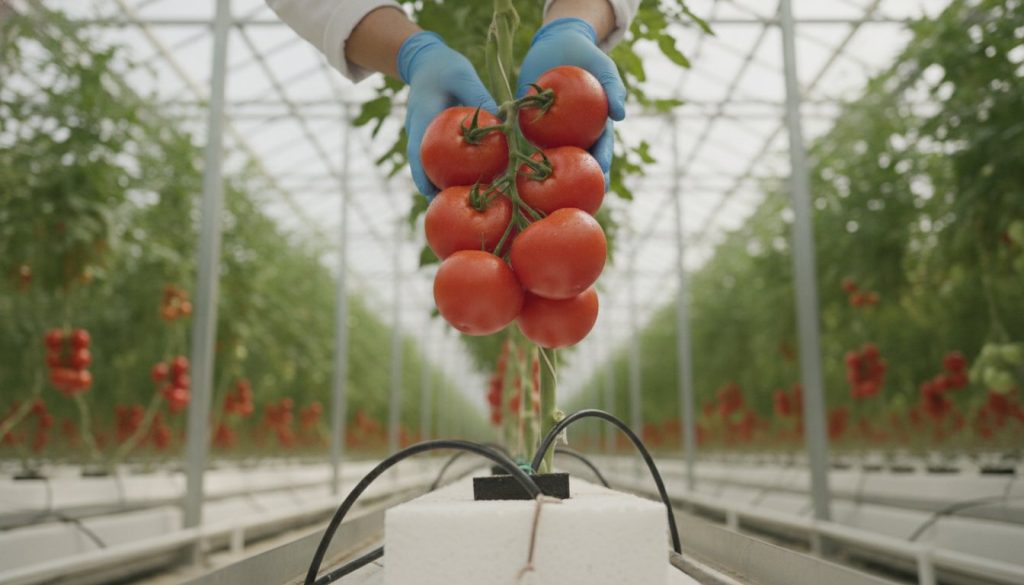
The New Zealand glasshouse industry has undergone a significant transformation, moving decisively toward intensive, high-control stonewool systems. For commercial tomato growers from the Waikato to Canterbury, this shift represents a leap in precision horticulture. However, achieving peak performance in 2026 demands more than a simple chemical NPK balance. The very sterility that makes stonewool a consistent substrate also creates a biological vacuum, leaving crops vulnerable and dependent on synthetic inputs.
Stonewool, a mineral fibre medium, offers unparalleled advantages in water and nutrient retention, forming the cornerstone of environmentally responsible, closed-loop fertigation systems. Yet, the unique challenges of New Zealand’s high-UV, high-humidity climate place immense pressure on plant vigour. Maintaining a healthy, resilient crop throughout a long growing season requires a more holistic approach—one that bridges the gap between sterile Hydroponics and living soil biology.
The Shift to Soilless Media in NZ Horticulture
Historically, New Zealand growers utilised media like pumice or sawdust bags. While effective, these substrates lacked the consistency and control offered by modern horticultural stonewool (often called rock wool). Today, stonewool is the gold standard for commercial tomato production, enabling growers to steer crops with precision and achieve uniform yields. This control is vital as the industry faces increasing regulatory and sustainability pressures, demanding more efficient use of water and fertilisers. The challenge now is to enhance the biological vitality of these inert systems to build natural resilience.
Key Performance Indicators for Glasshouse Tomatoes
Success in the competitive national market is measured by more than just tonnage. Key performance indicators (KPIs) such as brix levels (sugar content), fruit firmness, and shelf life are critical for securing premium prices. These quality traits are directly influenced by the health of the plant’s root zone. Within stonewool slabs, maintaining optimal root zone temperature and high levels of oxygenation is fundamental. Increasingly, leading growers recognise that microbial health is the missing link, profoundly influencing how efficiently plants absorb nutrients and resist stress, thereby impacting every core yield metric.
Why Stonewool is the Preferred Substrate for Hydroponic Tomatoes
Understanding the unique properties of stonewool reveals why it has become the substrate of choice for intensive hydroponic tomato production. Manufactured by melting basaltic rock and spinning it into fine fibres, horticultural stonewool is engineered to provide an ideal physical environment for root growth. Its structure delivers an exceptional balance between Water Holding Capacity (WHC) and Air-Filled Porosity (AFP), ensuring roots have simultaneous access to water, nutrients, and oxygen.
This precise control over the rhizosphere (the immediate root zone) is stonewool’s greatest strength. However, the manufacturing process renders it completely sterile. This creates a biological vacuum—an environment devoid of the beneficial microorganisms that protect and support plant roots in natural soil. Without a healthy microbial community, the rhizosphere is vulnerable to colonisation by opportunistic pathogens.
Physical Properties and Nutrient Management
The fibrous nature of stonewool allows growers to manage Electrical Conductivity (EC) with remarkable precision. By regularly flushing and replenishing the nutrient solution, a grower can maintain the perfect EC within the slab, preventing salt build-up. The structure also promotes excellent vertical and horizontal drainage, which is critical for preventing waterlogged conditions that can lead to root diseases like Pythium. Through careful water management—adjusting the frequency and volume of irrigation—growers can "steer" tomato plants, encouraging either vegetative (leaf and stem) or generative (fruit and flower) growth as needed throughout the season.
The Longevity of Stonewool Slabs
In New Zealand’s commercial glasshouses, stonewool slabs are often used for a single, intensive 10-month tomato cycle before being replaced. Some operations may reuse slabs after steam sterilisation, a process that effectively eliminates pathogens but also destroys any beneficial biology that may have established. This highlights a critical management principle: whether using new or sterilised slabs, the biological vacuum must be addressed. Any system flush or sterilisation protocol resets the microbial clock to zero, making it essential to re-inoculate the root zone with beneficial microbes to restore its natural defensive and nutrient-cycling capabilities.
The Biological Gap: Why Inert Media Needs Microbial Support
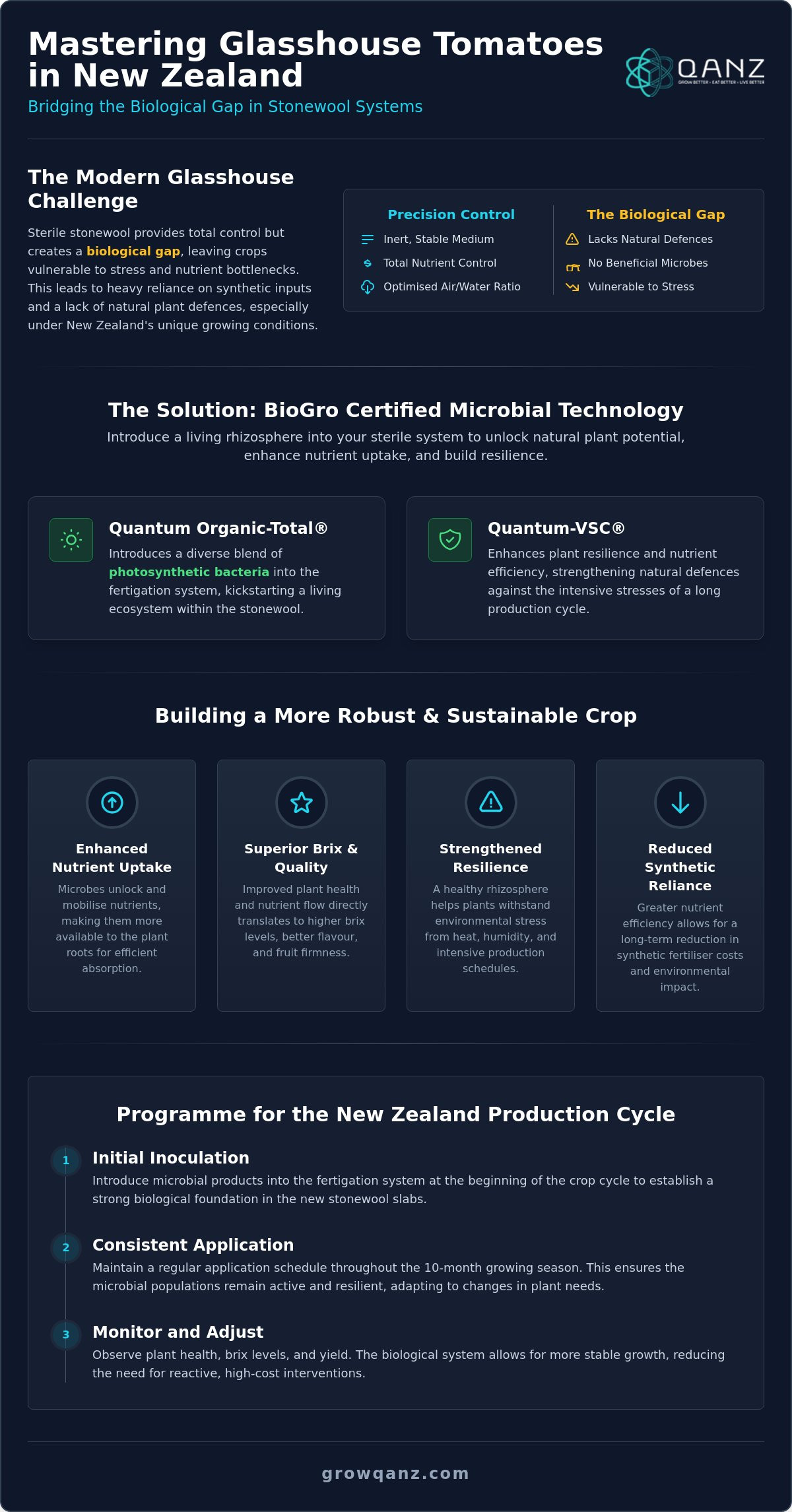
The "biological gap" describes the fundamental difference between a sterile stonewool slab and a living, thriving rhizosphere. In nature, soil is teeming with billions of beneficial microorganisms that form a complex web of life around plant roots. These microbes break down organic matter, solubilise minerals, protect against pathogens, and produce compounds that stimulate plant growth. Synthetic fertilisers can supply raw nutrients, but they cannot replicate this intricate, living system.
In a hydroponic context, beneficial microorganisms function just as they do in soil. Photosynthetic bacteria, a key component of advanced microbial inoculants, can even convert light energy and root exudates into plant-available nutrients directly within the stonewool. This is a level of efficiency that synthetic fertilisers alone can never achieve. Failing to bridge this biological gap means missing out on potential yield, quality, and resilience.
Quantum Organic-Total®: Restoring the Microbial Engine
Quantum Organic-Total® is a scientifically formulated liquid microbial inoculant designed to restore this missing biological engine to soilless systems. The science is clear: by introducing a diverse consortium of beneficial microbes, growers can repopulate the sterile stonewool environment and create a functioning, living rhizosphere. Liquid microbial treatments are particularly effective in hydroponics as they can be applied directly through fertigation systems, ensuring even distribution throughout the root zone, outperforming granular additives that can be difficult to apply uniformly. For growers aiming for top-tier market access, using sustainable horticulture solutions that meet BioGro certified standards is a significant commercial advantage.
Microbial Colonisation of Stonewool Fibres
When introduced into a stonewool system, beneficial microbes don’t just exist in the water; they actively colonise the inert fibres. They form protective biofilms on the stonewool surfaces and on the roots themselves. This living barrier serves two critical functions. Firstly, it protects the root zone from colonisation by opportunistic pathogens like Pythium and Fusarium through competitive exclusion. Secondly, it enhances the root-to-substrate interface, effectively extending the root system and improving its ability to absorb water and nutrients from the surrounding solution. This creates a more robust and efficient plant, better equipped to handle the stresses of intensive production.
Enhancing Tomato Resilience and Nutrient Efficiency
Integrating microbial solutions into a glasshouse programme is about more than just disease prevention; it’s a strategy for unlocking a plant’s full genetic potential. By improving nutrient uptake and bolstering natural defences, these biological tools make tomato crops more resilient and efficient, leading directly to higher quality yields and a more robust bottom line.
The synergy between a product like Quantum-VSC® and an intensive fertigation programme is particularly powerful. While the fertigation system delivers the raw nutritional elements, the microbes act as biological catalysts, ensuring those nutrients are in a form the plant can readily absorb. This is especially crucial during periods of high stress, such as New Zealand’s peak summer, when intense heat and high UV radiation can compromise a plant’s metabolic functions. A microbially-supported plant is better able to cope with these environmental pressures, maintaining vigour and productivity when others might falter.
Maximising Phosphorus and Micronutrient Availability
One of the most significant benefits of a healthy rhizosphere is enhanced nutrient solubilisation. Many essential nutrients, particularly phosphorus and micronutrients like iron and manganese, can become "locked up" in a hydroponic solution, making them unavailable to the plant. Specific strains of bacteria and fungi in products like Quantum Organic-Total® produce organic acids and enzymes that break the bonds of these locked-up minerals, converting them into a plant-available form. This process not only reduces nutrient lockout and salt build-up in the stonewool slabs but also optimises the grower’s investment in fertilisers, ensuring the crop gets the full benefit of every drop.
Building Resistance to Environmental Stress
A robust microbial community strengthens a plant from the inside out. Microbes produce signalling molecules that trigger the plant’s natural immune responses, a process known as Induced Systemic Resistance (ISR). This leads to stronger cell walls and a heightened state of readiness against environmental pressures. For glasshouse tomatoes, this translates to better management of humidity and transpiration, reducing the impact of sudden temperature shifts. Furthermore, microbes are essential for recovery from physical stress. After transplanting or pruning, a healthy root system, supported by products like Quantum-VSC®, can quickly repair damage and resume vigorous growth, a critical factor in improving seedling establishment and maintaining momentum throughout the long growing season.
Implementation: Integrating GrowQanz Solutions into Your Glasshouse
Successfully integrating a microbial programme into a commercial glasshouse operation is a straightforward process that complements existing fertigation infrastructure. The key is a consistent, systematic approach that establishes and maintains a healthy microbial population in the stonewool slabs throughout the entire 10-month tomato cycle in New Zealand.
A typical step-by-step guide for applying Quantum Organic-Total® begins with an initial inoculation and is followed by regular maintenance doses. For dosage and timing specific to your crop and conditions, it is always best to consult with a technical expert. GrowQanz solutions are designed for compatibility with common glasshouse systems, but it’s important to ensure they are not mixed with chlorinated water or harsh chemicals that could harm the live biology. Monitoring progress is simple: look for visible improvements in root health—thicker, whiter roots—and, over time, enhanced plant vigour and superior fruit quality.
Application Protocols for Stonewool Systems
The programme begins with an initial slab saturation before seedlings are planted. This ensures the stonewool is colonised with beneficial microbes from day one. Following this, a seedling drench at planting provides direct inoculation to the young root system, giving it the best possible start. Once the crop is established, regular maintenance doses are applied via the fertigation system. This is crucial because, in an inert media like stonewool, the microbial population must be consistently replenished to remain stable and effective. When mixing liquid organic inoculants, they should be added to the nutrient tank last, after all other fertilisers have been fully dissolved, to ensure maximum viability.
Conducting On-Site Trials and Optimising Dosage
Adopting any new biological programme requires a methodical approach. For professional growers, running small-scale, in-house trials is the most effective way to validate performance within your unique glasshouse environment without disrupting overall production. This allows you to observe the effects directly and determine the ideal application rate and technique for your specific crop and system.
A common and effective strategy involves setting up a small test block against a control group, exactly as a grower might do with a weekly application of Quantum-VSC® on a select number of plants. This approach minimises risk while generating valuable, site-specific data.
Key Dosing and Trial Techniques for Stonewool:
-
Direct Dosing (Doweling): This precision technique is ideal for small, controlled trials. It involves applying a precise, pre-mixed dose of the microbial solution directly into the dripper hole of the stonewool slab or at the base of the plant stem. Using a syringe or drench gun ensures each plant in the trial receives an identical volume, removing variables and providing clear results. This method bypasses the main fertigation system, making it perfect for testing products like Quantum-VSC® on a few rows without commitment.
-
Targeted Drench Application: For a slightly larger trial area, a dedicated watering can or backpack sprayer (used only for microbial products) can be used. Mix the required dose with non-chlorinated water and apply a consistent volume to the surface of each stonewool slab in your test group. Ensure the control group receives the same volume of plain water to maintain consistent moisture levels.
-
Isolated Line Injection: In larger glasshouse operations with sophisticated irrigation, it may be possible to isolate a specific fertigation line. This allows you to trial the microbial solution on an entire row or bay by injecting it into that specific line, providing a more scaled-up view of its performance and compatibility with your drippers.
When conducting trials, it is crucial to monitor key metrics. Keep detailed records of root development, leaf colour, plant vigour, and eventually, fruit set, size, and brix levels in both the test and control groups. This systematic approach allows you to build confidence in the programme and scale up application across the entire glasshouse with a proven, optimised protocol.
The GrowQanz Advantage for NZ Professional Growers
For New Zealand growers, partnering with GrowQanz offers distinct advantages. Our products, including Quantum Organic-Total®, are BioGro New Zealand certified, providing assurance of quality and compliance for domestic and export markets that prioritise sustainability. This certification is more than a label; it’s a mark of trust and a commitment to proven, natural solutions. To understand the financial benefits, growers can review our detailed Quantum Organic-Total cost-benefit analysis, which outlines the return on investment through improved yield and reduced inputs. We invite you to contact the GrowQanz team for technical support and to develop a tailored microbial programme that meets the specific needs of your glasshouse operation.
FAQs for Microbial Use in Glasshouse Tomatoes
Can I use Quantum Organic-Total® in a completely sterile hydroponic system?
Absolutely. In fact, sterile systems like new stonewool are the ideal environment. Quantum Organic-Total® is designed specifically to introduce and establish the beneficial biology that is naturally absent in these systems, creating a healthy, living rhizosphere from scratch.
Will liquid microbial treatments clog my glasshouse drippers or filters?
GrowQanz liquid products are formulated with highly soluble microbial cultures and are filtered to a fine particle size. When used as directed, they are fully compatible with standard commercial fertigation, drip, and micro-sprinkler systems and will not cause blockages.
How often do I need to reapply microbes to my tomato stonewool slabs?
Because stonewool is an inert medium with regular flushing (leaching), the microbial population needs consistent replenishment. We typically recommend an initial inoculation followed by regular maintenance applications through the fertigation system every 1-2 weeks throughout the crop cycle to maintain a stable and effective population.
Is GrowQanz technology compatible with BioGro organic standards in New Zealand?
Yes, our core products, including Quantum Organic-Total® and Quantum-VSC®, are BioGro New Zealand certified. This makes them suitable for use in certified organic production systems and for conventional growers looking to adopt more sustainable, market-friendly practices.
What is the difference between Quantum Organic-Total® and Quantum-VSC® for tomatoes?
Quantum Organic-Total® is a broad-spectrum inoculant designed to build a complete, diverse microbial ecosystem in the root zone for overall health and nutrient cycling. Quantum-VSC® is a more targeted solution focused on enhancing plant vigour and resilience against specific environmental stresses. They are often used together in a comprehensive programme for optimal results.
How do microbes help with nutrient lockout in intensive glasshouse production?
Microbes produce organic acids and enzymes that solubilise minerals like phosphorus and calcium, which can otherwise bind together and become unavailable to the plant. By breaking these chemical bonds, microbes keep nutrients in a plant-available form, preventing buildup and deficiency simultaneously.
Can these microbial solutions reduce the amount of synthetic fertiliser I need?
Yes. By significantly improving the efficiency of nutrient uptake, a healthy microbial population ensures your plants get more value from the fertilisers you apply. Many growers find they can gradually reduce their synthetic fertiliser inputs while maintaining or even improving yield and quality, leading to significant cost savings and a better environmental footprint.
Are these products safe to use alongside biological pest control (beneficial insects)?
Yes. Our microbial products are applied to the root zone and are completely safe for use with beneficial insects like predatory mites, lacewings, and parasitic wasps used for pest control in the glasshouse canopy. They are a core component of an integrated pest management (IPM) strategy, promoting plant health from the ground up to complement the work of biological crop protection above ground.
