

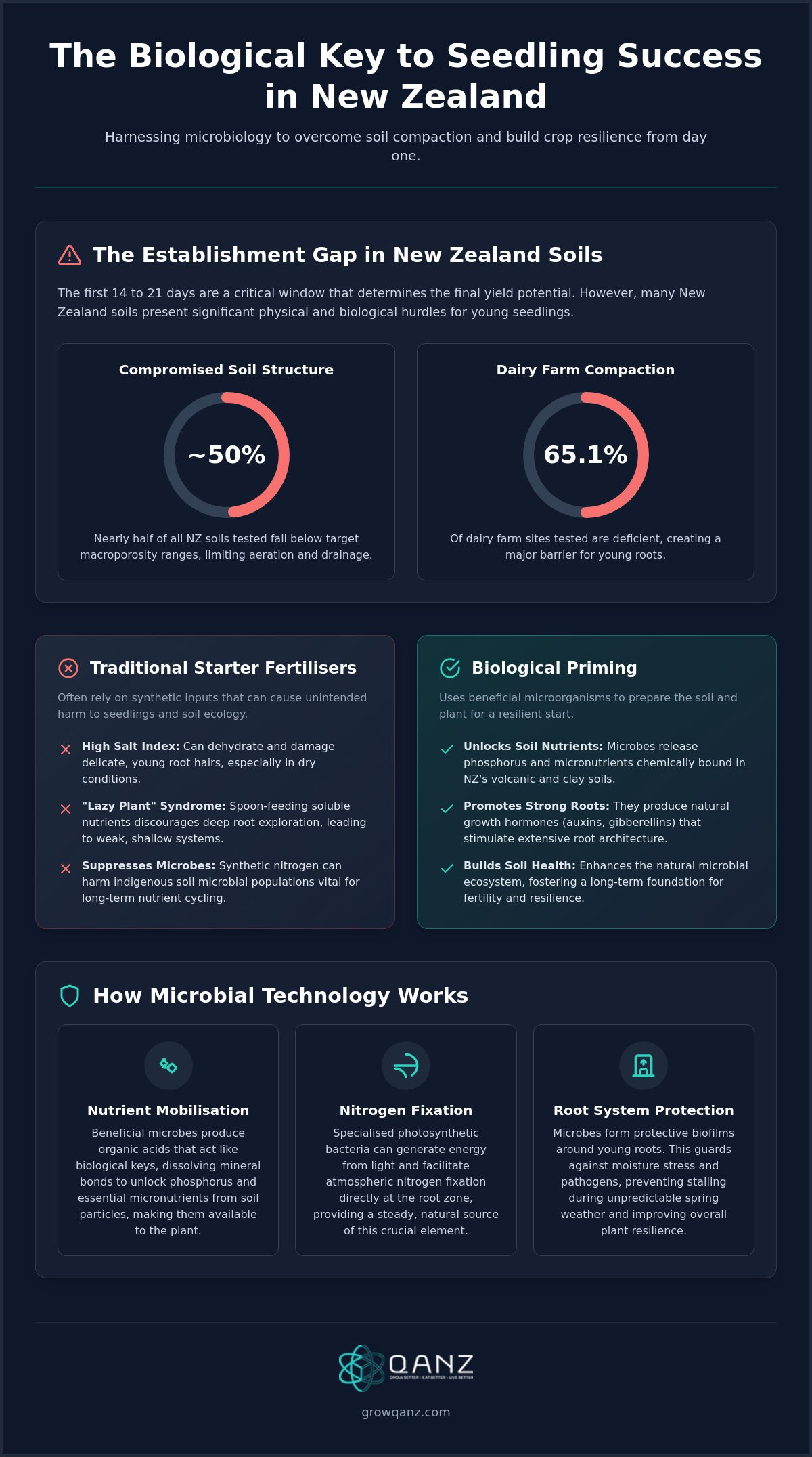
Nearly half of New Zealand’s soils tested for macroporosity are currently falling below target ranges, with dairy farm sites reaching a concerning 65.1% deficiency. When soil structure is this compromised, it’s incredibly difficult to improve seedling establishment naturally without addressing the underlying biological gap. You’ve likely experienced the frustration of watching a promising crop stall in the paddock because the ground simply isn’t providing the aeration or drainage those young roots need to survive the first critical weeks.
It’s a common challenge, but it doesn’t have to be your seasonal norm. We’re going to share the biological secrets to reducing transplant shock and ensuring vigorous growth using 100% natural methods that work with your land’s existing ecology. This guide covers everything from colonising the rhizosphere early to using liquid microbial solutions that build resilient plants capable of handling NZ weather variability while reducing your long-term input costs. By focusing on the scientific merits of microbiology, you can move away from synthetic fixes and toward a more stable, evidence-based way of working the land.
Key Takeaways
- Recognise the critical 21-day establishment window where biological activity determines the eventual yield potential and resilience of your entire crop.
- Discover how to improve seedling establishment naturally by utilising beneficial microbes to unlock phosphorus and micronutrients bound within New Zealand clays.
- Evaluate the practical differences between seed treatments and soil drenching to optimise your microbial inoculation programme for better paddock results.
- Learn how microbial biofilms and photosynthetic bacteria protect young root systems from spring stalling and moisture stress during unpredictable weather patterns.
- Explore how BioGro certified liquid microbials provide a stable, long-term alternative to synthetic fertilisers by restoring the natural biological foundation of your soil.
Understanding the Establishment Gap in New Zealand Soils
Establishing a seedling is the critical transition where a young plant shifts from relying on stored seed energy to becoming a self-sustaining organism. To truly grasp what is a seedling? in a professional context, we must view it as the biological foundation of your entire seasonal investment. The first 14 to 21 days are non-negotiable. This narrow window determines the final yield potential of the crop because it sets the physiological trajectory for root architecture, nutrient uptake, and stress tolerance.
In New Zealand, growers face a specific set of hurdles that create an “establishment gap”. Stats NZ data indicates that nearly half of our soils suffer from low macroporosity, with dairy farm sites reaching 65.1% compaction. This physical barrier, combined with depleted microbial diversity and the erratic spring temperatures typical of regions like Canterbury or Southland, makes early growth a struggle. Instead of relying on chemical interventions, many producers now look to improve seedling establishment naturally through biological priming. This approach uses beneficial microorganisms to prepare the soil and the plant for the challenges ahead, offering a stable alternative to synthetic starter fertilisers.
Why Traditional Starters Often Fail the Soil
While synthetic starter fertilisers provide an immediate hit of nitrogen, they frequently carry a high salt index. This can inadvertently dehydrate delicate root hairs, causing significant damage in dry conditions. These chemical inputs can also induce “lazy plant” syndrome. When a seedling is spoon-fed soluble nutrients, it often stops the natural exploration of the soil profile, leading to a shallow, weak root system. This reliance on synthetic nitrogen suppresses indigenous soil microbial populations, which are vital for maintaining long-term ecological balance and nutrient cycling.
The Economic Impact of Poor Establishment
Uniformity is the hallmark of a profitable paddock. Poor establishment leads to staggered emergence, which complicates harvesting schedules and increases the “days to market” for vegetable and field crops. The cost of replanting is only the beginning of the financial drain. There is a direct correlation between early vigour and late-season disease resistance; a plant that struggles in its first three weeks is far more susceptible to pathogens later in the cycle. For a commercial breakdown of how biological foundations affect your bottom line, you can review the Quantum Organic-Total cost-benefit analysis. Investing in early-stage biological health is a strategic decision that reduces the need for expensive mid-season rescues.
The Biological Mechanics of Seedling Vigour
The transition from germination to a thriving plant involves complex biochemical signalling. To truly improve seedling establishment naturally, we must look at the rhizosphere, the thin layer of soil directly influenced by root secretions. In this zone, seedlings release carbon-rich exudates, essentially trading energy for the services of beneficial microorganisms. This symbiotic relationship is a fundamental aspect of seed and seedling biology that determines the plant’s long-term health and its ability to withstand environmental pressure.
In many New Zealand regions, phosphorus is physically present in the soil but chemically locked within tight volcanic or sedimentary clays. Microbes act as biological keys, producing organic acids that dissolve these mineral bonds and make phosphorus available to the young plant. Beyond nutrient access, these organisms synthesise natural growth regulators like auxins and gibberellins. These hormones signal the plant to expand its root system and accelerate cell division, providing a biological head start without the risk of chemical burn. Using BioGro certified inputs like Quantum Organic-Total® ensures these processes occur within a framework of organic integrity, protecting the long-term health of your land.
The Power of Photosynthetic Bacteria
Standard soil biology often relies on breaking down organic matter for energy. However, photosynthetic bacteria are unique because they can generate energy from light, even in the low-light conditions of early spring or under a dense canopy. These specialised strains also facilitate atmospheric nitrogen fixation directly at the root zone, providing a steady supply of nitrogen in a non-leachable form. This process bypasses the need for synthetic urea, which often leaches into New Zealand’s sensitive waterways. Photosynthetic bacteria function as the engine room of natural establishment by providing a continuous energy source to the entire soil-plant system.
Enhancing Root Architecture Naturally
A seedling’s survival depends less on the length of its primary tap root and more on the density of its lateral root hairs. These fine structures are responsible for the vast majority of water and nutrient absorption. Microbes stimulate the production of these hairs, vastly increasing the total surface area of the root system. This expanded network allows the plant to scavenge for moisture more effectively during dry spells, which is critical to improve seedling establishment naturally across diverse New Zealand landscapes. You can learn more about how beneficial soil microorganisms boost plant health to understand the specific microbial interactions that drive this structural development. If you are looking to strengthen your crop’s foundation, consider integrating microbial solutions into your existing spray programme.
A Step-by-Step Guide to Natural Seedling Preparation
To improve seedling establishment naturally, growers must move beyond a “set and forget” mentality. Success in the paddock requires a methodical approach that prioritises biological colonisation from day one. This practical framework ensures your young crops have the support they need to navigate the transition from seed to self-sustaining plant.
- Phase 1: Pre-planting Hydration and Inoculation. Hydrate the soil profile before planting while simultaneously introducing beneficial microbes. This ensures the rhizosphere is “primed” and ready for the first root exudates.
- Phase 2: Application Choice. Seed treatment or soil drenching; which is more effective? Seed treatments offer a targeted microbial shield, but soil drenching provides a broader biological buffer that supports wider root exploration in New Zealand’s varied soil types.
- Phase 3: Strategic Timing. Apply inoculants during low-UV periods, such as early morning or late evening. This protects live cultures from solar radiation and allows them to settle into the soil moisture film.
- Phase 4: Moisture Monitoring. Microbes require consistent moisture to migrate and colonise. Monitor paddock levels closely during the first 14 days to ensure the biological “engine room” remains active.
- Phase 5: Foliar Momentum. Use follow-up foliar applications of liquid microbials to maintain growth momentum as the plant develops its first true leaves.
Optimising Liquid Microbial Application
The efficacy of live biological inoculants depends heavily on the delivery environment. Use non-chlorinated water wherever possible; if municipal water is your only option, let it sit in an open tank for 24 hours to allow chlorine to dissipate. Temperature is equally vital. Avoid applying microbials in freezing conditions or during extreme midday heat. When using standard spray equipment, ensure pumps are set to a lower pressure to avoid mechanical damage to the bacteria. Most BioGro certified solutions are compatible with other organic amendments, but always perform a jar test before mixing large batches.
Soil Restoration After Fumigation
Chemical sterilisation or heavy cultivation often leaves the soil in a “biological vacuum”. While these methods may clear pathogens, they also eliminate the beneficial organisms that drive nutrient cycling. Re-wilding the soil with microbial technology is essential to restore balance after such interventions. You can identify the health of your soil by looking for these key indicators of a living system:
- Presence of earthworms and visible fungal hyphae (fine white strands).
- A sweet, earthy aroma, indicating the presence of geosmin-producing bacteria.
- Friable soil structure that allows for easy root penetration.
- Uniform decomposition of previous crop residues.
If your soil feels “tight” or lacks these traits, it’s likely biologically depleted. Targeted microbial replenishment is the fastest way to improve seedling establishment naturally in these degraded environments.
Overcoming Environmental Barriers to Establishment
New Zealand’s spring weather is notoriously fickle. From the sudden frosts of Otago to the drying winds of the Canterbury Plains, young plants face a gauntlet of stressors before they’ve even developed their first true leaves. To improve seedling establishment naturally, we must provide the plant with a biological toolkit that functions when the environment doesn’t. This isn’t about forcing growth through chemistry; it’s about building a resilient organism capable of self-regulation under pressure.
Spring stalling is a common frustration for Kiwi growers. It occurs when air temperatures rise, but soil temperatures remain too low for efficient nutrient uptake. Beneficial microbes, particularly the proprietary strains found in Quantum-VSC®, help bridge this gap by maintaining metabolic activity in the root zone. These organisms produce microbial biofilms, which act as a biological sponge, retaining moisture and protecting delicate root tissues from desiccation during dry spells. This natural drought resistance is a direct result of improved soil structure and water-holding capacity, allowing seedlings to remain active rather than entering a defensive, dormant state.
For high-value vegetable and fruit crops, reducing transplant shock is a priority. The transition from a controlled nursery to the open paddock is often where the most significant mortality occurs. By colonising the rhizosphere with photosynthetic bacteria early, you strengthen the plant’s cell walls and enhance its natural resistance to both wind damage and early-season pest pressure. This biological “hardening off” process ensures that your crops don’t just survive the move; they thrive from the moment they hit the soil.
Climate Resilience in the Paddock
Environmental stress isn’t just about the weather. Fluctuating soil pH and salt spikes from previous fertiliser applications can also hinder early growth. Microbes act as a biological buffer, stabilising the immediate environment around the root and “priming” the plant’s immune system. This priming effect allows the seedling to react faster and more effectively to external threats. Integrating Quantum-VSC® into your establishment programme provides a stable foundation that mitigates these invisible barriers to success.
Bio-Stimulants vs. Fertilisers
It’s vital to recognise the distinction between “feeding” a plant and “stimulating” its natural systems. While fertilisers provide raw materials, bio-stimulants like liquid microbials act as the management team, ensuring those materials are used efficiently. A hybrid approach often yields the best results during a transition to organic practices, allowing you to maintain production while restoring the soil’s biological integrity. For those managing broadacre operations, exploring microbial solutions for field crops offers a proven strategy for achieving large-scale soil vitality. If you’re ready to secure your crop’s future, partner with a scientific innovator who understands the local landscape.
Integrating Microbial Technology for Long-Term Crop Success
Establishing a biological foundation is more than just a seasonal task; it’s a long-term investment in the land’s structural and microbial integrity. When you improve seedling establishment naturally, you effectively reduce the need for mid-season chemical rescues that often act as expensive band-aids for deeper soil health issues. This shift moves the grower from a “problem-response” cycle, where interventions are reactive and costly, to a “proactive-biological” management style that prioritises the plant’s inherent vigour. By colonising the soil early with beneficial organisms, you create a self-regulating system that maintains nutrient cycling and moisture retention throughout the entire crop cycle.
GrowQanz plays a pivotal role in this transition by providing BioGro certified, NZ-ready solutions tailored to our unique environmental pressures. These aren’t generic imports; they’re proprietary photosynthetic bacteria strains designed to function in local conditions. For those looking to take the first step, trialing microbial inoculants on a small scale provides the tangible proof of efficacy needed to justify a broader shift in management practices. It’s about seeing the results in your own soil before committing to a full-scale operational change.
The GrowQanz Difference: Science in the Field
GrowQanz distinguishes itself through a commitment to scientific verification and practical field support. We provide New Zealand growers with technical guidance to ensure microbial applications are optimised for their specific paddock conditions. Quantum Organic-Total® is engineered for high shelf-stability and ease of use, allowing it to be seamlessly integrated into existing spray or irrigation programmes without the need for specialised equipment. These solutions are 100% natural and non-toxic, which means they’re safe for the soil, the operator, and the surrounding ecosystem.
Starting Your Organic Transition
Incorporating biologicals doesn’t require an immediate or total overhaul of your current operation. Many successful transitions begin by adding liquid microbials to standard programmes to enhance nutrient efficiency and soil structure. Starting with a small block allows you to observe how these microbes improve seedling establishment naturally before scaling the technology across your entire farm. Consistent, long-term soil health management is the goal, as the benefits of microbial colonisation compound over successive seasons.
As New Zealand moves toward more stringent organic standards, such as the Organic Standards Regulations 2025 set to come into force on 31 March 2028, establishing these natural protocols now ensures your operation remains compliant and resilient. Moving away from synthetic reliance is a journey, but it’s one that leads to more stable yields and a healthier environment. For commercial growers seeking a comprehensive overview of biological alternatives to chemical inputs, the 2026 guide to sustainable agriculture inputs NZ offers a practical roadmap for reducing synthetic dependency while maintaining export-ready production standards. If you’re ready to secure your crop’s future, consult with GrowQanz for a tailored microbial programme that fits your specific agricultural needs.
Securing a Resilient Future for Your Paddock
Successful crop production in New Zealand’s volatile climate requires moving beyond reactive chemistry. By colonising the rhizosphere early and addressing the establishment gap during those first 21 days, you create a self-sustaining system that thrives regardless of seasonal variability. We’ve explored how photosynthetic bacteria and BioGro certified microbial solutions provide the energy and nutrient access necessary to improve seedling establishment naturally. This proactive biological approach doesn’t just reduce transplant shock; it builds the long-term soil architecture required for sustainable, low-input farming.
With proprietary photosynthetic technology and proven results across NZ broadacre and horticulture, GrowQanz is your scientific partner in this transition. Our liquid-based treatments are designed for easy integration into your existing spray programmes, ensuring you can restore soil health without disrupting your workflow. Optimise your crop establishment with GrowQanz Microbial Solutions and take the first step toward a more stable and efficient growing season. Your land has the potential to be more resilient than ever; it simply needs the right biological foundation to get started.
Frequently Asked Questions
Can I use microbial inoculants with existing fertilisers?
Yes, you can integrate microbial inoculants into most existing nutrient programmes. These beneficial organisms often enhance the efficiency of traditional fertilisers by improving nutrient uptake and cycling. If you’re using high-salt synthetic starters, it’s best to apply the microbials separately or ensure they are well-diluted to protect the live cultures from osmotic stress.
How soon after application will I see an improvement in seedling vigour?
Visible improvements in seedling vigour typically appear within 7 to 14 days of application. While the biological colonisation of the rhizosphere begins almost immediately, the physical results, such as deeper leaf colour and increased stem diameter, follow as the root system expands. Consistent soil moisture during this initial window helps accelerate the microbial activity and nutrient exchange.
Are GrowQanz products safe for use on all New Zealand crop types?
GrowQanz solutions are designed for broad application across the diverse agricultural sectors of New Zealand. Whether you are managing dairy pasture in Southland, pipfruit in Hawke’s Bay, or viticulture in Marlborough, these microbial technologies support the plant’s natural systems. The proprietary photosynthetic bacteria strains are highly adaptable to the specific biological needs of both horticultural and broadacre crops.
How do I store liquid microbial treatments to keep them effective?
Store your liquid microbial treatments in a cool, dark environment away from direct sunlight. Because these solutions contain live, active organisms, extreme heat or prolonged UV exposure can reduce their efficacy over time. Keeping the containers sealed and stored in a shed or temperature-controlled area ensures the bacteria remain stable and ready for paddock application when needed.
Will natural establishment methods work in heavy clay or sandy soils?
Biological methods are effective in both heavy clay and sandy soil profiles. To improve seedling establishment naturally in tight clays, microbes produce organic acids that help improve soil structure and aeration. In sandy environments, microbial biofilms act as a biological glue, enhancing water retention and preventing nutrients from leaching away before the young plant can access them.
What is the best time of day to apply microbial soil treatments?
Early morning or late evening is the ideal time to apply microbial treatments to your soil. Applying during these low-UV periods protects the live bacteria from solar radiation, which can be quite intense in the New Zealand spring. These cooler times also typically have higher ambient moisture, providing the liquid film necessary for microbes to migrate into the root zone.
Do I need special equipment to apply liquid biologicals in my paddock?
No, standard liquid application equipment such as boom sprayers, fertigation systems, or even simple backpack sprayers is perfectly suitable. You don’t need to invest in new machinery to improve seedling establishment naturally using these methods. Just ensure your tanks are clean of residual fungicides or biocides and keep pump pressures at a moderate level to avoid mechanical damage to the bacteria.
Is BioGro certification necessary for non-organic commercial farms?
While not a legal requirement for conventional operations, BioGro certification serves as a verified mark of quality and environmental safety. It guarantees that the microbial solutions are free from synthetic contaminants and genetic modification. For commercial growers, this provides a level of certainty that they’re introducing pure, beneficial biology into their soil without risking the long-term ecological health of their land.
