
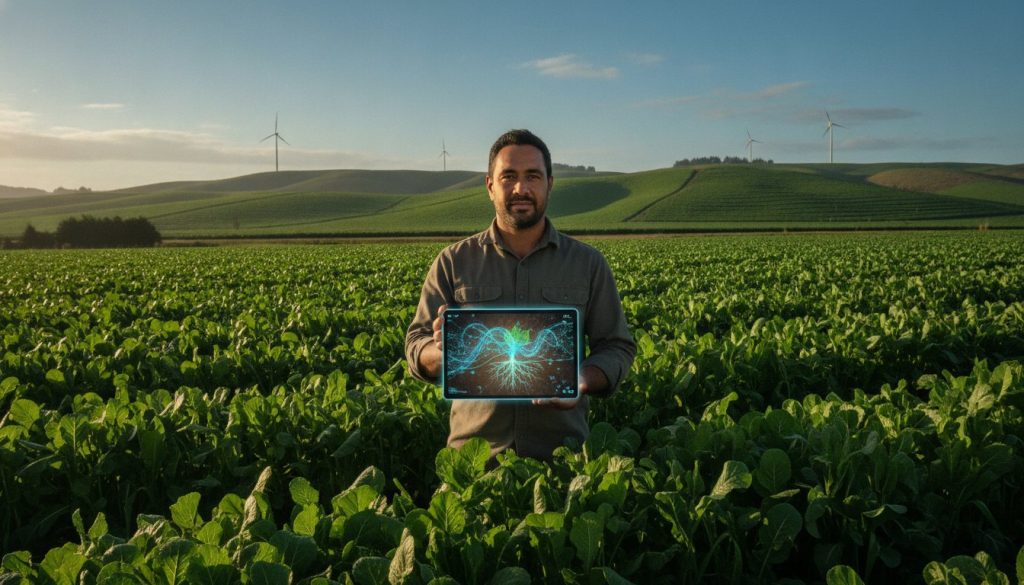
Continuing to apply synthetic fertilisers while expecting soil health to improve is no longer a viable strategy for those seeking the most effective sustainable agriculture inputs NZ has to offer. You’ve likely noticed that as chemical applications increase, the natural resilience of your soil often diminishes, leaving your crops more vulnerable and your margins thinner. It’s a frustrating cycle where traditional methods struggle to meet the strict “clean” produce requirements of our primary export markets.
This 2026 guide demonstrates how these biological solutions can break this cycle by shifting the focus from simple nutrient replacement to active biological restoration. You’ll discover how BioGro certified microbial technologies, such as Quantum Organic-Total® and Quantum-VSC®, work to re-establish the complex fungal and bacterial networks essential for nutrient cycling. We’ll outline a practical pathway to help you maintain high commercial yields and ensure export readiness, all while reducing your long-term dependency on synthetic chemicals through evidence-based soil science.
Key Takeaways
- Understand why transitioning from high-input synthetics to biological harmony is now critical for maintaining access to New Zealand’s premium “clean green” export markets.
- Identify how microbial technology serves as the engine room of a modern soil strategy, positioning these solutions as the most effective sustainable agriculture inputs NZ has for unlocking locked-up nutrients.
- Discover the importance of BioGro certification in verifying 100% natural ingredients, providing the transparency required for commercial security and international compliance.
- Learn the “bridge” strategy for reducing dependency on traditional fertilisers by systematically scaling up biological activity without sacrificing current yields.
- Explore the specific roles of Quantum Organic-Total® and Quantum-VSC® in restoring soil vitality and naturally enhancing crop resilience across various New Zealand sectors.
The Evolution of Sustainable Agriculture Inputs in NZ
New Zealand’s agricultural sector is undergoing a profound transformation. For decades, the reliance on intensive synthetic inputs defined productivity, but the paradigm is shifting toward biological harmony. Growers across the country now recognise that long-term land stewardship requires a more integrated approach. This transition isn’t just a trend. It’s a strategic response to changing global demands and the recognition that soil is a living asset rather than a sterile medium.
Our international trade partners now demand more than just high-quality produce; they require proof of environmental integrity. Meeting the “clean green” expectations of premium export markets is now a prerequisite for commercial success in every sector from viticulture to dairy. Simultaneously, addressing soil degradation and protecting freshwater quality have become urgent national priorities. By adopting regenerative practices, New Zealand farmers can maintain their competitive edge on the world stage while ensuring their land remains productive for future generations.
Why Traditional Inputs Are Facing Scrutiny
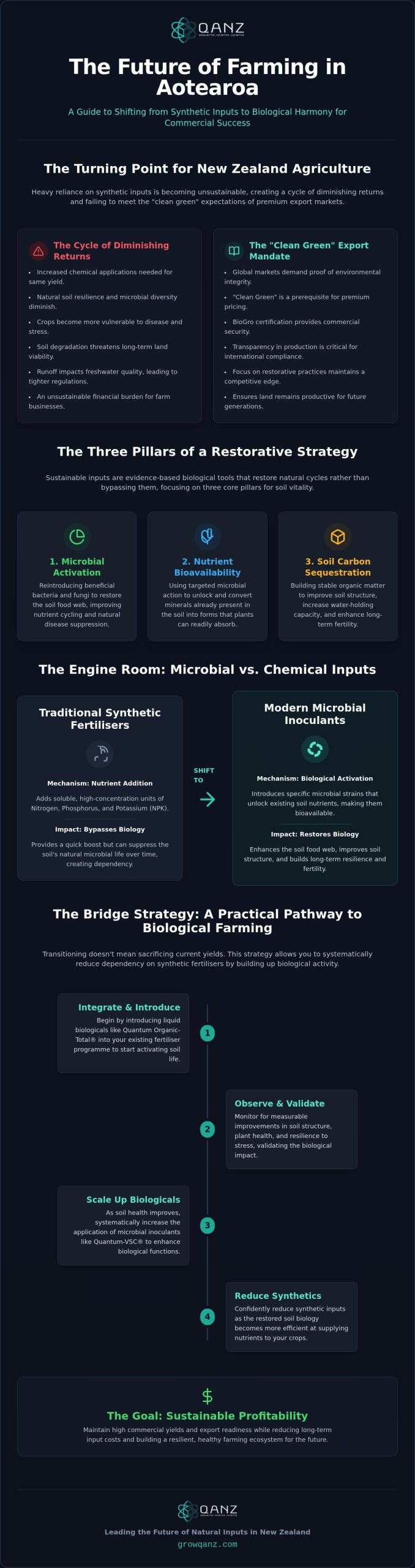
Heavy reliance on synthetic nitrogen has historically provided a quick boost to plant growth, but it has often come at the expense of the soil’s underlying structural integrity. Over time, these chemicals can suppress the very microbial diversity that plants rely on for natural nutrient uptake and disease resistance. In Aotearoa, regulatory frameworks are tightening around fertiliser runoff and carbon footprints, reflecting a broader societal demand for cleaner waterways and reduced emissions. Consequently, many growers find the cost-benefit gap of traditional chemical applications is widening. As soil resilience declines, the amount of input required to maintain the same yield often increases, creating an unsustainable financial burden that threatens the viability of the farm business.
The Definition of Sustainable Inputs in 2026
In 2026, the industry has moved beyond simple “organic” labels toward categories that are restorative and biologically active. These sustainable agriculture inputs NZ growers are now adopting are grounded in rigorous soil science rather than just ideology. They represent a sophisticated category of evidence-based biologicals that prove their worth in commercial horticulture and field crops through measurable improvements in soil vitality. Sustainable inputs are advanced tools that enhance natural biological cycles rather than bypassing them. This restorative approach focuses on three core pillars:
- Microbial Activation: Reintroducing beneficial bacteria and fungi to restore the soil food web.
- Nutrient Bioavailability: Using biological processes to unlock minerals already present in the soil profile.
- Soil Carbon Sequestration: Building organic matter that improves water holding capacity and structural stability.
By prioritising these elements, New Zealand growers can ensure their operations remain both ecologically sound and commercially profitable in an increasingly regulated global market.
Understanding Microbial Technology as a Primary Input
Microbial inoculants function as the engine room for any modern soil management strategy. Unlike traditional fertilisers that simply add units of nitrogen or phosphorus, these biological tools activate the life already present in the paddock. They work by secreting enzymes that break down mineral-bound nutrients, making them bioavailable for plant uptake. This is a critical distinction for New Zealand growers looking for high-performance sustainable agriculture inputs NZ, as it focuses on efficiency rather than sheer volume of application.
While generic composts provide valuable organic matter, targeted microbial formulations deliver specific strains of bacteria and fungi designed for precise functions. The delivery system also dictates efficacy; liquid biologicals often provide more immediate results than granular alternatives by moving directly into the root zone. This ensures the microorganisms establish themselves quickly, allowing them to begin the work of soil restoration without the lag time associated with breaking down solid materials.
The Role of Photosynthetic Bacteria
Specific bacterial strains, particularly photosynthetic bacteria, are unique because they convert solar energy into soil-available carbon. This process directly supports the rhizosphere, which is the critical interface between the roots and the soil. By strengthening this biological zone, plants develop significantly better resilience against environmental stressors. Whether it’s the biting frosts of the Waikato or the prolonged dry spells often seen in North Canterbury, a biologically active rhizosphere provides a natural buffer that keeps crops productive under pressure.
Soil Restoration After Chemical Use
The challenge of “dead soil” is a common reality following years of heavy fumigation or synthetic saturation. These practices often strip the soil of its natural diversity, leaving a sterile environment that requires ever-increasing chemical hits to produce a crop. Microbial inputs accelerate the return of natural biological cycles by jumpstarting the soil food web. This restoration is essential for maintaining commercial yields while transitioning away from chemical dependency. For those managing large-scale operations, you can find more detailed strategies in our guide to microbial solutions for field crops.
Choosing the right sustainable agriculture inputs NZ requires a move toward these evidence-based biologicals that prove their worth through measurable soil health gains. If you’re ready to see how these formulations can improve your specific soil profile, exploring our range of Turf & Horticulture Microbial Solutions is an excellent starting point for your transition.
Navigating BioGro Certification and NZ Standards
BioGro certification serves as the definitive benchmark for trust within the New Zealand agricultural sector. While various products may market themselves as “green” or “eco-friendly,” BioGro provides the rigorous, independent auditing required to substantiate those claims. For growers evaluating sustainable agriculture inputs NZ, this third-party verification ensures that every component is 100% natural and entirely free from synthetic contamination. This level of transparency goes beyond simple environmental ethics. It provides the commercial security needed to protect long-term investments. Using certified inputs significantly simplifies the compliance pathway for organic-certified operations, ensuring that farm-gate value remains high and market access is never compromised by accidental chemical exposure.
What to Look for on an Input Label
Authenticity begins with a careful examination of the product label. Professional growers should always identify the BioGro logo and the associated registration number, which provides a direct link to a verified audit trail. It’s equally important to understand the distinction between “Allowed” and “Restricted” categories. “Allowed” inputs can be integrated into an organic management plan without additional hurdles, whereas “Restricted” products often require specific justification or documented proof of need before application. Beyond the certification mark, technical data sheets are indispensable tools for verifying microbial counts. These documents provide the scientific evidence that a product contains the biological density required to achieve the restorative outcomes discussed in previous sections.
Compliance for Export Markets
Maintaining a presence in the European Union and North American markets requires meeting increasingly stringent residue-free requirements. Sustainable inputs offer a strategic advantage by allowing growers to support plant health without the risk of chemical detection during border testing. This alignment with global standards reinforces the “New Zealand Story” in international retail, positioning local produce as a premium, high-integrity choice. When selecting new technologies, it’s helpful to have a structured framework for assessment. You can refer to our guide on natural crop yield boosters for a professional evaluation checklist that covers these essential compliance and efficacy criteria. By choosing certified biologicals, you aren’t just feeding a crop; you’re securing your place in the global supply chain.
Strategic Integration: Moving to Biological Inputs
Transitioning from a purely synthetic regime to a biological one requires a methodical “bridge” strategy. Professional growers in New Zealand understand that a hard-stop on traditional fertilisers can lead to a temporary yield dip if the soil biology isn’t yet robust enough to take over the heavy lifting of nutrient cycling. Instead, the goal is to scale back chemical applications in tandem with the increasing health of your microbial populations. This managed shift allows you to maintain commercial margins while building the long-term resilience of your land. Integrating sustainable agriculture inputs NZ into your existing programme is about enhancing efficiency, ensuring that every unit of nutrient applied is actually utilised by the plant rather than lost to leaching or atmospheric gassing.
Timing and application methods are critical for biological success. Unlike inert chemicals, microbial treatments are living organisms that require specific conditions to thrive. Applying these solutions during the cool of the day or ahead of light rain protects the microbes from harsh UV radiation and helps them migrate into the rhizosphere. You must also consider water quality; high chlorine levels in treated water can neutralise beneficial bacteria before they even reach the soil. Ensuring your application equipment is free from residual fungicides and harsh detergents is a simple but vital step in protecting your biological investment.
Step-by-Step Transition Framework
The most successful transitions begin with a baseline biological soil audit to identify specific microbial gaps in your paddocks. Rather than a blanket change, we recommend starting with high-value blocks or nursery seedlings where the impact on plant health is most visible. As these areas show improved soil structure and natural nutrient availability, you can gradually taper off synthetic fertilisers across the rest of the operation. This evidence-based approach provides the confidence needed to scale your biological programme without risking your seasonal output.
Optimising Seedling and Plant Establishment
Using biologicals during the establishment phase is one of the most effective ways to ensure long-term crop performance. Microbial inputs help reduce transplant shock by immediately colonising the root zone, which facilitates better water and nutrient uptake from day one. This creates a powerful synergy with natural plant health boosters, leading to more uniform growth and stronger natural resistance to pests. If you’re looking for specific techniques to support young plants, our guide on how to improve seedling establishment naturally provides a technical roadmap for this critical stage.
Adopting these strategies ensures your transition is both scientifically sound and commercially viable. To begin your own soil restoration journey with verified microbial technology, you can explore our full range of professional biological solutions tailored for New Zealand conditions.
GrowQanz: Leading the Future of Natural Inputs
GrowQanz stands as a professional partner for those ready to move beyond conventional chemical reliance. As a scientific innovator for soil restoration in Aotearoa, we provide high-performance microbial technologies that are grounded in evidence and proven in the field. Our primary objective is to offer the most reliable sustainable agriculture inputs NZ has available, ensuring that every application contributes to the long-term ecological health of the land. Our commitment is principled and transparent; we provide BioGro certified, 100% natural formulations that help you restore natural soil biology while maintaining the commercial yields required for export success.
Quantum Organic-Total® serves as our flagship comprehensive solution for soil vitality. It functions by re-establishing the complex microbial networks that are often depleted by synthetic saturation, as discussed in our earlier sections. Complementing this is Quantum-VSC®, which is specifically engineered to enhance plant resilience and nutrient uptake naturally. By strengthening the rhizosphere, these formulations allow crops to better withstand environmental pressures while maximising the efficiency of existing soil minerals. This dual approach ensures your land remains a productive asset for years to come.
Solutions for Every Sector
Our microbial technology is not a one-size-fits-all approach. We provide tailored solutions across the primary industry to meet specific biological needs:
- Vegetable and Field Crop Microbial Solutions: These are designed to improve soil structure and nutrient bioavailability in broadacre and intensive cropping environments.
- Fruit and Nut Crop Microbial Solutions: These formulations focus on root health and plant longevity for perennial systems and orchards.
- Turf and Horticulture Microbial Solutions: We provide high-performance biologicals for commercial nursery growers and golf course management.
- Pasture and Dairy Focus: We support the active restoration of soil biology to improve forage quality and long-term paddock health.
The GrowQanz Advantage
The practical application of our technology is a core priority for our technical team. Our proprietary liquid formulations are designed for seamless integration into existing irrigation and fertigation systems, removing the logistical hurdles often associated with biological inputs. We focus on building long-term soil wealth rather than chasing temporary growth spikes that leave the land exhausted. This principled approach ensures that your transition to biological farming is both stable and profitable. We invite professional growers to view our recent trial results and technical data to see the measurable impact of our formulations on New Zealand soils. Our experts are available to help you develop a customised agricultural management plan that aligns with your specific production goals.
Securing Your Soil’s Commercial Future
Building long-term soil wealth requires a deliberate shift from short-term chemical fixes to evidence-based biological restoration. As we’ve explored, the integration of high-performance microbial technology allows you to unlock existing soil minerals and strengthen plant resilience against the increasingly unpredictable New Zealand climate. Adopting the most effective sustainable agriculture inputs NZ has to offer ensures your operation remains compliant with BioGro standards while maintaining the premium farm-gate value required for global export markets.
Our scientific “claim-and-verify” approach, supported by national technical experts, provides the confidence you need to transition your land toward a more natural and efficient future. By focusing on the health of the rhizosphere and the vitality of the soil food web, you aren’t just improving this season’s yield; you’re protecting your land’s productive capacity for decades to come. We’re here to provide the technical support and certified formulations necessary to make this transition both stable and profitable.
Explore the GrowQanz range of BioGro certified microbial inputs to begin your soil restoration journey today. Your commitment to principled land stewardship ensures a more resilient and prosperous harvest for the seasons ahead.
Frequently Asked Questions
What are the most common sustainable agriculture inputs used in NZ?
The most common sustainable agriculture inputs NZ growers utilise include microbial inoculants, liquid seaweed extracts, and high-quality organic soil conditioners. These tools focus on activating the soil food web rather than just delivering raw nutrients. In regions like the Bay of Plenty or Hawke’s Bay, growers increasingly rely on these biologicals to maintain soil vitality under intensive production schedules.
Is BioGro certification required for all sustainable inputs?
BioGro certification isn’t a legal requirement for all inputs, but it’s the essential benchmark for commercial security and export compliance. Without this independent verification, it’s difficult to guarantee that a product is 100% natural and free from synthetic residues. For those targeting premium international markets, using BioGro certified inputs provides the necessary audit trail to satisfy strict global biosecurity and organic standards.
Can microbial inputs be used alongside traditional fertilisers?
Microbial inputs can be integrated into a traditional fertiliser programme as part of a managed transition strategy. This “bridge” approach allows you to reduce synthetic nitrogen or phosphorus applications gradually while the soil biology recovers its natural nutrient-cycling capacity. It’s important to ensure that high-salt fertilisers don’t come into direct contact with concentrated microbial inoculants, as this can suppress the beneficial bacteria before they establish.
How long does it take to see results from biological soil treatments?
Visible improvements in plant vitality can often be seen within a single growing season, though long-term soil structural changes typically take one to two years to manifest. The speed of results depends heavily on the baseline health of your soil and the environmental conditions at the time of application. Consistent use of biological treatments helps re-establish the fungal and bacterial networks required for lasting soil resilience.
Are liquid microbial inputs more effective than granular organic fertilisers?
Liquid microbial inputs are often more effective for immediate soil restoration because they deliver active organisms directly to the rhizosphere. Granular organic fertilisers are valuable for building long-term organic matter, but they require time to break down before their nutrients become bioavailable. Liquid formulations like Quantum Organic-Total® offer better precision and ease of use when integrated into existing irrigation systems across New Zealand farms.
What is the cost-benefit of switching to sustainable inputs in NZ?
The cost-benefit of switching to sustainable inputs is found in reduced chemical dependency and the ability to access high-value “clean green” export markets. While the initial investment in biologicals may be similar to traditional fertilisers, the long-term gains include improved soil structure, better water retention, and reduced nutrient leaching. These factors combine to lower your overall input costs over multiple seasons while protecting the land’s productive value.
Do sustainable inputs help with drought resistance in field crops?
Sustainable inputs significantly improve drought resistance by increasing soil organic matter and enhancing the water-holding capacity of the soil profile. Microbial inoculants encourage deeper root penetration and the development of mycorrhizal networks, which allow field crops to access moisture from deeper soil layers during dry spells. This natural resilience is particularly critical for broadacre growers in regions like Canterbury that face seasonal water restrictions.
How do I store microbial products to ensure they remain viable?
Microbial products must be stored in a cool, dark place away from direct sunlight and extreme temperature fluctuations to ensure the organisms remain viable. Most liquid formulations should be kept between 5°C and 25°C and used within their specified shelf life for maximum efficacy. Proper storage prevents the premature activation or degradation of the beneficial bacteria, ensuring they’re at peak strength when applied to your paddocks.
