

Your paddock isn’t just a substrate for fertiliser; it’s a complex, living ecosystem that has likely been silenced by years of intensive synthetic inputs. You’ve probably noticed the symptoms: compacted ground that resists the spade, crops that require more nitrogen just to maintain the status quo, and a natural resilience that vanishes the moment the weather turns. With New Zealand losing an estimated 182 million tonnes of soil to erosion in 2022, the need to move beyond a biological desert has never been more urgent. Rebuilding soil biology after chemicals requires more than just stopping the sprays; it demands a methodical re-colonisation of specific microbial strains to kickstart the engine of natural fertility.
This guide outlines the precise steps to restore your soil structure and improve nutrient uptake efficiency while ensuring compliance with the transitioning National Organic Standard. We will examine how targeted microbial technologies provide the foundational biology needed to break the cycle of synthetic dependency. By focusing on verified, BioGro certified solutions, you can begin the journey toward premium market access and long-term productivity through a scientifically grounded approach to land stewardship.
Key Takeaways
- Understand how years of synthetic fertilisers have “lazied” your soil by disrupting natural nutrient cycles and creating a dependency on external inputs.
- Learn why targeted microbial inoculants are more effective for commercial recovery than traditional compost when rebuilding soil biology after chemicals.
- Discover a methodical four-step plan to audit, detoxify, and re-inoculate New Zealand paddocks to restore natural fertility and soil structure.
- Explore how BioGro certified liquid technologies like Quantum Organic-Total® provide a professional, scalable solution for orchard restoration after fumigation.
- Position your farm for the new National Organic Standard by improving nutrient uptake efficiency and reducing reliance on synthetic compounds.
The Impact of Synthetic Chemicals on New Zealand Soil Biology
Soil is far more than a physical anchor for roots. It is a biological engine powered by a complex web of bacteria, fungi, protozoa, and beneficial nematodes. This field of science, known as the study of microbial and faunal activity and ecology in soil, reveals that these organisms perform the heavy lifting of nutrient cycling and carbon sequestration. When we rely heavily on synthetic inputs, we inadvertently dismantle this engine. The process of rebuilding soil biology after chemicals begins with understanding how these substances have altered the underground landscape.
Synthetic fertilisers often make the soil “lazy”. In a healthy system, plants release carbon-rich sugars through their roots to feed microbes in exchange for minerals. When high doses of soluble nitrogen or phosphorus are applied, the plant stops this exchange. The microbial populations, suddenly deprived of their primary food source, begin to crash. Over time, this leads to the “sterile soil” effect where the land can no longer sustain growth without constant, increasing chemical intervention.
In New Zealand paddocks, the signs of this biological collapse are often visible to the naked eye. You might see persistent surface ponding after rain, indicating poor water infiltration, or soil that feels like concrete under a spade. A healthy paddock should be teeming with life, yet many chemical-heavy blocks show alarmingly low worm counts and a lack of crumbly, friable structure. Restoring these populations is the core challenge of rebuilding soil biology after chemicals on previously intensive sites.
The Problem with High-Salt Fertilisers
Many conventional fertilisers are essentially salts. When these are applied in high concentrations, they create significant osmotic stress in the rhizosphere. This process literally dehydrates beneficial microbes, pulling water out of their cellular membranes. Beyond immediate microbial death, these salts disrupt the delicate communication loop between plant roots and the soil. The long-term consequence for NZ growers is a steady decline in soil organic carbon, as the microbes that normally build stable humus are no longer present to do their work.
Fumigation and the “Biological Desert”
Soil fumigation represents a “scorched earth” approach to land management. While it effectively targets pathogens, it also eliminates the beneficial photosynthetic bacteria and mycorrhizal fungi essential for early plant vigour. This creates a biological desert. Without these functional groups, new plantings often struggle to establish; they become vulnerable to the very diseases the fumigation was meant to prevent. Identifying these signs of depletion is the first step toward a restorative strategy that moves away from total chemical reliance.
The Science of Biological Re-colonisation
Re-establishing life in a degraded paddock is a race against time. While many growers turn to compost as a first response, the sheer volumes required to shift the biological baseline of a commercial operation are often prohibitive. Compost is an excellent long-term amendment, but it lacks the targeted concentration of functional microbial groups needed for immediate recovery. Rebuilding soil biology after chemicals requires a more surgical approach, introducing specific organisms that can survive and thrive in harsh, high-salt environments.
Targeted inoculants provide these functional groups, with photosynthetic bacteria acting as the engine room of the restoration process. These unique organisms utilise light energy and carbon dioxide to synthesise complex carbohydrates. These sugars are then exuded into the soil, providing a high-energy food source for the wider microbial community. This process jumpstarts the natural nutrient cycle, allowing the soil to begin functioning as a self-sustaining system once more without the need for constant synthetic intervention.
As these microbial populations expand, they play a critical role in remediating the physical damage caused by years of intensive chemical use. Beneficial microbes produce organic glues, or exudates, that bind individual soil particles into stable aggregates. This process, known as flocculation, is essential for restoring soil structure. It creates the pore space necessary for oxygen and water to reach the root zone, effectively reversing the compaction issues common in “dead” soils and improving overall paddock resilience.
Why Liquid Microbial Treatments are Essential
Liquid biologicals offer a significant delivery advantage over bulky granular conditioners. They can be applied through existing irrigation or fertigation systems, moving with the water directly into the root zone where biology is needed most. For New Zealand growers, BioGro certification is a non-negotiable marker of quality. It ensures that the inoculant contains viable, active populations that haven’t been compromised by poor manufacturing or stabilisation processes. Using a BioGro certified liquid treatment provides the confidence that you are introducing active life rather than just a dormant product.
Restoring Nutrient Uptake Efficiency
Restoring biology is the most effective way to unlock the bank of minerals already present in your soil. Specific microbes are expert at solubilising phosphorus that has become fixed to soil particles, making it available to the plant once again. This natural nutrient delivery system is particularly vital during the establishment phase. By improving early-stage nutrition and microbial support, growers can significantly understand how to reduce transplant shock in seedlings, ensuring a more resilient start for new crops in previously intensive blocks.
Case Study: Soil Restoration After Fumigation in NZ Orchards
In intensive apple and kiwifruit growing regions across the country, replant disease remains a significant hurdle for growers. Mandatory fumigation protocols are frequently employed to manage soil-borne pathogens, yet this process inevitably leaves the soil in a sterile, “dead” state. Without a proactive strategy for rebuilding soil biology after chemicals, new plantings often struggle to establish in this biological vacuum, leading to uneven blocks and delayed production. A systematic approach using targeted microbial inoculants has proven to be the most reliable method for restoring productivity to these sites.
The core strategy involves the systematic re-introduction of Quantum Organic-Total®. By applying this BioGro certified microbial solution immediately after the fumigation safety period, growers can ensure that beneficial organisms are the first to occupy the newly available niche. This prevents opportunistic pathogens from re-colonising the area and provides the young trees with the biological support they need for nutrient uptake and stress resilience from day one.
Observations from NZ orchard trials indicate a marked difference in seedling establishment when a biological recovery plan is followed. Trees in treated blocks show significantly improved root development and a more rapid transition into the vegetative growth phase. This accelerated start translates into faster canopy closure, which is a critical metric for commercial viability. These orchards also demonstrate a heightened ability to withstand environmental stressors, such as the erratic rainfall patterns and dry spells increasingly common in many of the country’s horticultural regions.
Phase 1: Immediate Post-Fumigation Inoculation
Timing is the most critical factor in the recovery process. The first application should occur as soon as the fumigant has dissipated to ensure a diverse microbial baseline is established before the first growth flush. Photosynthetic bacteria play a pivotal role during this early phase by providing a stable energy source for other beneficial microbes. This early inoculation effectively “primes” the soil, turning a sterile substrate back into a functioning ecosystem capable of supporting life.
Phase 2: Supporting Root Architecture Naturally
Once the baseline is established, the focus shifts to expanding the root system. Microbial treatments stimulate the production of fine root hairs, which are the primary sites for water and nutrient absorption. The synergy between Quantum-VSC® and the existing soil biology helps to break down residual organic matter and improve soil porosity. Growers looking to enhance root development naturally will find that this biological approach creates a more robust and expansive root architecture than synthetic stimulants alone.
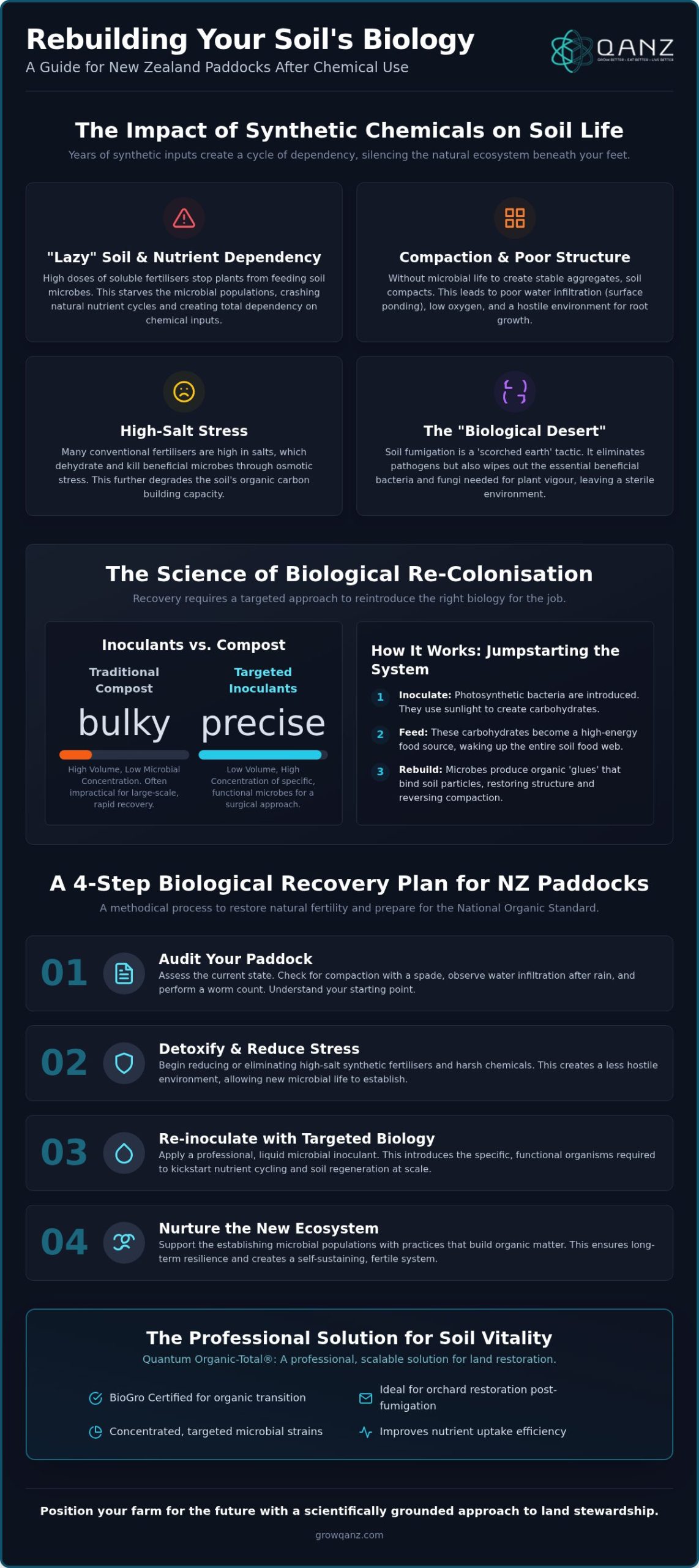
A 4-Step Biological Recovery Plan for NZ Paddocks
Rebuilding soil biology after chemicals is a structured process that requires moving from passive observation to active management. It isn’t enough to simply “rest” a paddock; you must actively reintroduce the functional groups that have been lost to years of intensive synthetic cycles. This four-step plan provides a framework for New Zealand growers to transition toward a more resilient, biologically driven system that reduces reliance on high-cost inputs.
The transition begins with a shift in mindset. Instead of treating the soil as a sterile medium for chemical delivery, we must view it as a living asset that requires specific conditions to thrive. By following a methodical approach, you can restore the natural engine of fertility that has been suppressed by conventional management practices.
Step 1: Assessing the Damage
Traditional soil tests focus heavily on chemical N-P-K levels, yet they often ignore the biological activity required to make those nutrients plant-available. A true biological audit involves looking at microbial respiration and biomass to understand the current baseline. Identifying physical compaction layers is equally vital, as these anaerobic zones act as barriers to microbial movement and root penetration. By establishing clear soil health goals, you can measure the success of your restoration efforts against tangible productivity gains rather than just chemical thresholds.
Step 2 & 3: Implementation and Protection
Once the baseline is understood, the next phase involves the strategic application of liquid biologicals to override the legacy of salt stress. Quantum Organic-Total® can be easily integrated into existing operations through boom sprayers or fertigation systems. This allows for a uniform distribution of beneficial microbes across the paddock. During this transition, crops often face increased vulnerability while the natural system recalibrates. Learning about managing heat stress in crops naturally is essential for protecting your investment during summer dry spells, as healthy biology significantly improves a plant’s internal cooling mechanisms.
Step 4: Monitoring and Maintenance. Tracking your progress requires a shift in how you observe the paddock. Monitoring plant brix levels provides a real-time indicator of nutrient density and microbial efficiency; higher brix typically correlates with better pest resistance and improved crop quality. Physically, you should notice a marked improvement in soil structure, with increased friability and better water holding capacity. Consistency is the key to rebuilding soil biology after chemicals, and regular, small applications of microbial inoculants help maintain the momentum of recovery. To start your restoration journey, view our specialised microbial solutions for New Zealand agriculture.
Quantum Organic-Total®: The Professional Solution for Soil Vitality
Quantum Organic-Total® is a high-concentration microbial consortium designed specifically for the rigours of commercial agriculture. For growers engaged in rebuilding soil biology after chemicals, this formulation provides a stable, diverse population of beneficial organisms that can survive the transition from synthetic to biological management. It’s not a temporary fix; it’s a foundational tool for long-term ecological health. By reintroducing functional groups that have been suppressed, you can begin to restore the natural engine of your paddock’s productivity.
In the New Zealand market, BioGro certification remains the gold standard for trust and verification. It provides an independent assurance that our solutions are 100% natural and sustainable. For growers targeting premium export markets or preparing for the mandatory National Organic Standard, using certified inputs is a critical step in ensuring compliance. This certification guarantees that you are applying a product that supports, rather than hinders, the delicate balance of your land’s ecosystem.
Whether you are managing broadacre field crops, intensive horticulture, or high-performance turf, the biological requirements for health remain consistent. Quantum Organic-Total® improves nutrient uptake efficiency across all soil profiles. In horticulture, it supports healthier canopy development and fruit set; in pasture and dairy settings, it helps restore the natural nitrogen cycle that synthetic urea often suppresses. This versatility makes it an essential component for any professional operation looking to reduce its synthetic dependency.
The Quantum Advantage
Unlike traditional granular conditioners that require significant moisture and time to break down, this liquid microbial consortium is shelf-stable and easy to apply. It is designed to integrate seamlessly into your existing management programmes. This ease of delivery ensures that active biology reaches the root zone immediately, providing consistent performance across diverse New Zealand landscapes, from the volcanic soils of the North Island to the alluvial plains of the South. It offers a practical, scalable way to introduce life back into “dead” soil structures.
Taking the Next Step in Soil Health
Integrating microbial solutions into a seasonal plan doesn’t require a total overhaul of your operations. It begins with a strategic application during key growth stages or immediately following chemical interventions. GrowQanz technical experts are available to provide tailored paddock advice, ensuring the microbial strains used match your specific crop needs and soil challenges. Before beginning, it’s worth reviewing the Quantum Organic-Total cost-benefit analysis to understand the long-term value of investing in your soil’s biological capital. Rebuilding soil biology after chemicals is an investment in the future productivity and resilience of your land.
Securing the Future of Your Land’s Productivity
Transitioning away from intensive synthetic dependency is a strategic investment in the long-term viability of your operation. We’ve established that while chemical inputs provide short-term gains, they often come at the expense of the soil’s natural engine. By adopting a methodical approach to rebuilding soil biology after chemicals, you can restore essential nutrient cycles and improve paddock structure. This process relies on introducing functional microbial groups that work in harmony with your crops to build natural resilience against environmental stressors.
Our BioGro New Zealand Certified solutions utilise proprietary photosynthetic bacterial strains to jumpstart recovery across diverse NZ soil profiles. With professional technical support for NZ growers, you don’t have to navigate this biological transition alone. We provide the expertise and the technology needed to turn sterile paddocks back into thriving, productive ecosystems. Restore your soil vitality with Quantum Organic-Total®; contact GrowQanz today to discuss a tailored plan for your land. The journey toward a more sustainable and profitable future begins with the life beneath your feet.
Frequently Asked Questions
How long does it take to rebuild soil biology after chemical use?
Initial changes in microbial respiration and activity can often be detected within weeks of the first application. Full ecosystem restoration typically requires one to three growing seasons to achieve a stable, self-sustaining biological baseline. Rebuilding soil biology after chemicals is a cumulative process where each strategic inoculation builds upon the previous one to restore stable humus levels and natural nutrient cycling.
Can I use microbial inoculants while still using some synthetic fertilisers?
Microbial inoculants can be integrated into a programme that still includes some synthetic inputs, provided you avoid high-salt concentrations that might dehydrate the microbes. Many New Zealand growers use a hybrid approach to maintain yield stability. This allows the biological engine to recalibrate while you gradually reduce synthetic dependency as the soil’s natural fertility begins to return.
Is soil restoration after fumigation possible in a single season?
Establishing a functional microbial baseline after fumigation is achievable within a single season, even if full biological complexity takes longer to develop. By re-inoculating sterile ground immediately after the safety period, you ensure that beneficial organisms occupy the biological niche before pathogens. This proactive strategy significantly improves first-year seedling vigour and helps prevent the “biological desert” effect often seen in intensive orchards.
What are the first signs that soil biology is returning to my paddocks?
The first indicators are typically physical, such as improved water infiltration and soil that feels more friable under a spade. You’ll likely observe higher brix levels in your crops, indicating better nutrient uptake efficiency. As the underground food web strengthens, you’ll also see an increase in earthworm counts and a reduction in surface ponding after heavy rainfall events.
Are BioGro certified products required for all soil restoration projects?
BioGro certification isn’t strictly mandatory for conventional growers, but it serves as a critical guarantee of product purity and microbial viability. For those transitioning to organic standards or preparing for the mandatory National Organic Standard, using certified inputs like Quantum-VSC® is essential. It ensures your soil restoration efforts remain compliant and avoids the accidental introduction of prohibited synthetic residues.
How does Quantum Organic-Total differ from standard compost teas?
Quantum Organic-Total® is a laboratory-grown microbial consortium with guaranteed strain counts and a stable shelf life, whereas compost teas often vary wildly in quality. Our liquid treatments provide a professional, consistent solution that eliminates the risk of pathogen contamination. Because it’s a refined liquid, it’s also much easier to apply at scale through existing agricultural irrigation systems.
Will rebuilding soil biology help with drought and heat stress?
Rebuilding soil biology after chemicals is one of the most effective ways to enhance drought resilience. Beneficial microbes improve soil structure and pore space, which significantly increases the land’s water-holding capacity. Active biology also helps plants produce natural stress-response compounds, allowing them to maintain better internal hydration during the increasingly dry summers common in regions like Canterbury and Hawke’s Bay.
What equipment do I need to apply liquid microbial treatments?
You don’t need any specialised or expensive machinery to apply our liquid biologicals. These treatments are designed for compatibility with standard agricultural equipment, including boom sprayers, fertigation units, and overhead irrigation systems. The primary requirement is ensuring that the lines have been thoroughly cleaned to remove any residual fungicides or biocides that could compromise the live microbial populations.
