

What if the most critical factor for your 2026 yield isn’t the volume of nitrogen you apply, but the biological timing of your soil’s recovery? Many New Zealand growers recognise that relying solely on synthetic inputs is no longer a sustainable path, which is why following a precise Quantum Organic-Total application guide is essential for a successful transition to biological farming. You might worry about microbes clogging your spray equipment, or perhaps you’re unsure if these living organisms can truly coexist with your current fertiliser programme. It’s a valid concern; a microbial consortium requires a different level of management than a standard chemical input.
We understand that reliability is everything when you’re out in the paddock. This guide provides the clarity you need to master application protocols and restore your soil’s natural vitality with confidence. By following these evidence-based steps, you’ll learn how to colonise the rhizosphere effectively and enhance nutrient uptake across your pasture or crops. We’ll explore the ideal windows for inoculation, foolproof mixing techniques to protect your gear, and how to integrate this BioGro certified technology into your existing irrigation systems. You’ll gain a professional framework for achieving results while meeting the latest New Zealand organic standards.
Key Takeaways
- Understand the role of photosynthetic bacteria in driving soil energy and how BioGro certification ensures your inputs meet the rigorous 2026 New Zealand organic standards.
- Master the precise preparation protocols within this Quantum Organic-Total application guide to maintain a well-suspended microbial consortium for consistent paddock coverage.
- Optimise your equipment setup by using 50-mesh filtration and appropriate nozzle sizes to ensure a smooth, clog-free application through boom sprayers or irrigation.
- Learn to time your applications within the ‘biological window’ of low UV light to maximise the colonisation of the rhizosphere and protect your microbial investment.
- Develop a seasonal framework that integrates biologicals into your existing spray programme to enhance long-term nutrient uptake and plant resilience.
Understanding Quantum Organic-Total: The Science of Microbial Inoculation
Quantum Organic-Total represents a fundamental shift from traditional chemical inputs toward biological soil restoration. It is a BioGro certified liquid microbial consortium, engineered to re-establish the complex biological networks that intensive farming often depletes. Understanding The Science of Microbial Inoculation is the first step in using this technology effectively. Unlike granular alternatives that can be slow to integrate or prone to leaching, this liquid formulation provides immediate microbial activity. It allows the consortium to move through the soil profile and colonise the root zone where it’s needed most.
This Quantum Organic-Total application guide highlights the necessity of biological diversity for modern agriculture. A “Total” approach means providing a community of microbes that can adapt to New Zealand’s diverse climates and soil types. Whether you’re managing extensive pastures or intensive horticultural crops, this liquid treatment offers a level of consistency and soil penetration that granular products struggle to achieve in our varied conditions.
The Role of Photosynthetic Bacteria
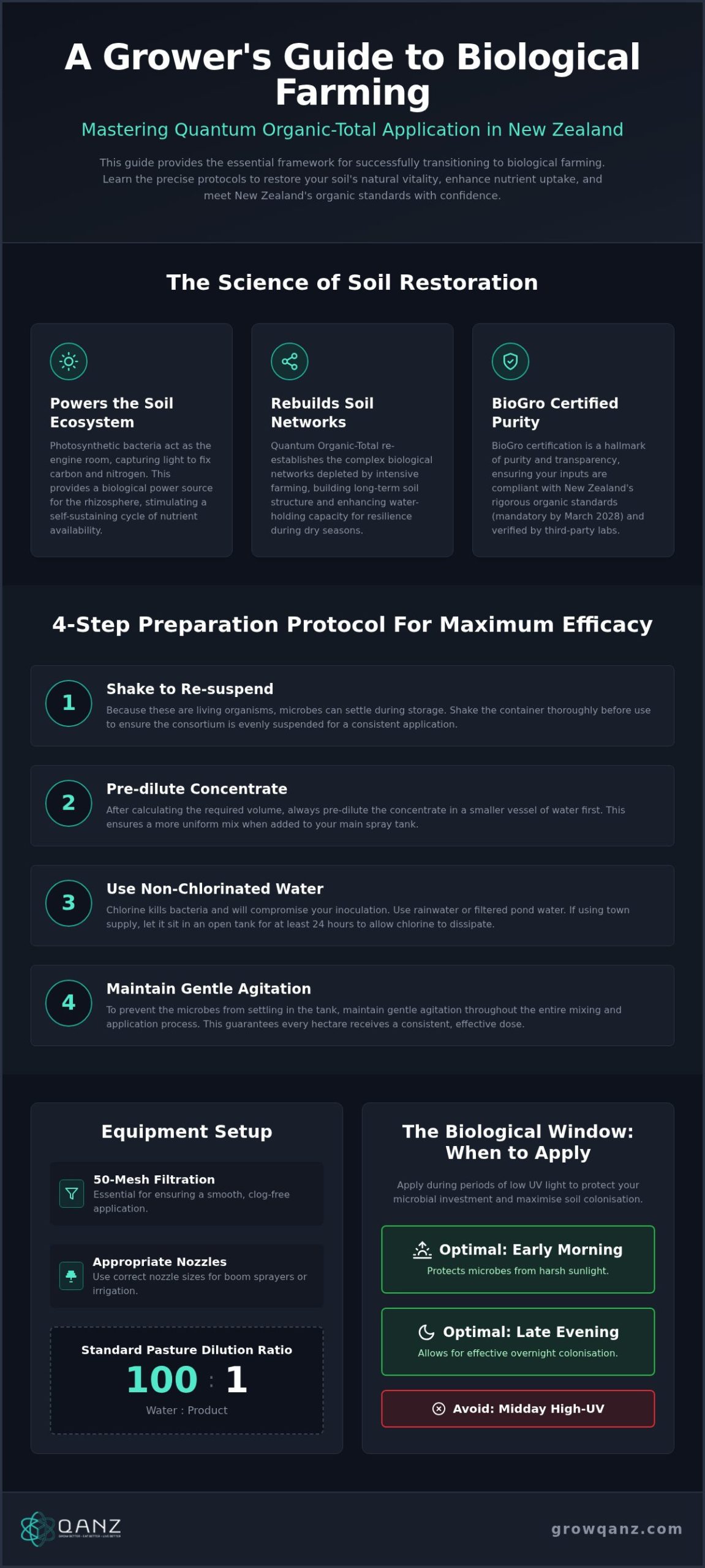
These microbes serve as the engine room of the soil ecosystem. They capture light energy to fix both carbon and nitrogen, effectively providing a biological power source for the rhizosphere. By increasing root exudate production, they stimulate other beneficial soil microorganisms for plants, creating a self-sustaining cycle of nutrient availability. This process doesn’t just feed the crop; it builds long-term soil structure and enhances water-holding capacity, which is vital for maintaining resilience during drier New Zealand summers.
BioGro Certification and NZ Standards
For New Zealand growers, BioGro certification is a hallmark of purity and transparency. As the industry moves toward mandatory organic standards by March 2028, using certified inputs ensures your operation remains compliant with local environmental regulations. Every batch of Quantum Organic-Total undergoes third-party lab verification. This provides a guarantee of microbial counts that synthetic alternatives simply cannot offer. It’s a reliable choice for those transitioning to regenerative practices or maintaining high-value organic exports, ensuring that what you put into your soil is as clean as the land itself.
Preparation Protocols: Mixing and Dilution for Maximum Efficacy
Precision in the shed is just as important as precision in the paddock. To ensure the highest efficacy, this Quantum Organic-Total application guide prioritises the physical state of the microbial consortium before it ever reaches your spray tank. Because these are living organisms, they can settle during storage. You must shake the container thoroughly to re-suspend the microbes. Once you’ve calculated the required volume for your specific paddock size and crop type, pre-dilute the concentrate in a smaller vessel. This ensures a more uniform mix when added to the main tank.
Water quality is a critical, often overlooked factor. Chlorine is designed to kill bacteria, so using municipal water without treatment can compromise your inoculation efforts. Where possible, use non-chlorinated sources like rainwater or filtered pond water. If you must use town water, let it sit in an open tank for at least 24 hours to allow the chlorine to dissipate. Maintaining gentle agitation throughout the mixing and application process prevents the consortium from settling, ensuring every hectare receives a consistent dose. For broader context on handling these biologicals, this Microbial Inoculants guide offers excellent foundational advice on maintaining viability.
Optimal Dilution Ratios
This Quantum Organic-Total application guide suggests that your delivery method dictates your dilution strategy. For soil drenching, a higher water volume helps the microbes penetrate the soil profile, whereas foliar applications require a finer mist with slightly higher concentrations. For standard pasture application, we recommend a water-to-product ratio of 100:1 to ensure even coverage across the sward. If you’re working with heavily stressed soils or areas recently treated with fumigants, increasing the concentration can help jump-start the restoration process.
Compatibility with Other Inputs
Many New Zealand growers find success tank-mixing with organic fertilisers or biostimulants, but caution is necessary. Never mix the concentrate directly with undiluted synthetic fungicides or bactericides, as these will significantly reduce the microbial count. We always recommend a ‘Jar Test’ before large-scale mixing. Simply combine a small amount of the intended products in a glass jar to check for curdling, heat generation, or precipitation. If the mixture remains stable, it’s generally safe for the main tank. For those looking to integrate these protocols into a wider regenerative strategy, exploring professional microbial solutions can provide the technical support needed for a seamless transition.
Application Methods: Integrating Biologicals into Your Infrastructure
Successful integration of biologicals depends on your existing infrastructure and how well it protects the living consortium. Whether you’re managing a dairy run-off in Southland or a high-value kiwifruit orchard in the Bay of Plenty, your delivery method must ensure microbial survival. This Quantum Organic-Total application guide emphasises that while these microbes are remarkably shelf-stable, they require specific mechanical conditions during the transit from tank to soil. Understanding the science of soil inoculants helps growers appreciate why maintaining low-pressure environments is essential for microbial viability. Choosing the right delivery system is a balance between operational efficiency and biological preservation.
Boom Spray and Ground Rig Setup
Precision is vital when using ground rigs. We recommend using a minimum 50-mesh filtration system to allow the microbial consortium to pass through without clogging. If filters are too fine, you risk stripping the larger microbial aggregates from the solution. Nozzle selection should favour larger droplet sizes to ensure the microbes reach the soil surface rather than drifting. To avoid “microbial shear,” keep your spray pressure below 40 psi; excessive pressure can physically damage the bacterial cell walls. Cleanliness is mandatory. Always flush your equipment with clean, non-chlorinated water before and after application to remove any residues from previous synthetic treatments.
Fertigation and Irrigation Delivery
Integrating Quantum Organic-Total into centre-pivot or drip irrigation systems is an efficient way to maintain soil vitality throughout the growing season. This method allows for consistent, low-concentration dosing that keeps the rhizosphere active. When using fertigation, manage your injection rates to ensure the product is evenly distributed across the entire paddock or orchard block. Biofilm management is a common concern for growers using biologicals in drip lines. To prevent buildup, always follow the application with a fresh water flush. This simple step clears the lines and pushes the microbes deeper into the root zone where they can begin fixing nitrogen and cycling nutrients. Following this Quantum Organic-Total application guide for irrigation ensures your infrastructure remains clear while your soil biology thrives.
Soil drenching remains a preferred technique for high-value horticulture and orchard establishment. By applying the diluted consortium directly to the base of the plant, you ensure immediate contact with the root system. This targeted approach is particularly effective during the planting phase or when treating individual trees that show signs of stress. It provides a concentrated boost of photosynthetic bacteria exactly where the plant needs it most, fostering a resilient microbial community from the ground up.
Strategic Timing and Seasonal Application Frameworks
Timing is the bridge between a simple application and true soil colonisation. This Quantum Organic-Total application guide identifies the ‘Biological Window’ as a primary factor in microbial success. Because the consortium consists of living organisms, direct exposure to intense midday UV radiation can reduce initial population counts before they reach the safety of the soil profile. We recommend applying in the early morning or late afternoon when light intensity is lower and ambient temperatures are milder. This approach allows the microbes to settle into the rhizosphere and begin their symbiotic work without the stress of extreme heat or desiccation.
Seasonal strategy is equally vital for New Zealand’s diverse agricultural sectors. Spring applications focus on activation, jump-starting nutrient cycling as soil temperatures rise and root growth begins. This is the ideal time to support the plant’s peak energy demands. Conversely, an Autumn application serves as a soil preparation phase. It helps decompose organic matter and builds a robust microbial foundation that persists through the winter months, ensuring the soil is primed for the following season’s requirements. Consistency across these seasonal windows leads to the cumulative soil health gains that regenerative systems rely on.
Growth Stage Specific Applications
Applying the consortium at the point of planting is one of the most effective ways to reduce transplant shock in seedlings. By inoculating the root zone immediately, you provide the young plant with a supportive biological community that facilitates easier nutrient access during its most vulnerable period. For nutrient-heavy crops like maize or brassicas, a mid-season boost can sustain growth momentum through peak demand phases. Finally, post-harvest applications are excellent for soil recovery, helping to break down crop residues and return vital carbon to the soil structure instead of leaving it to oxidise on the surface.
Environmental Factors in New Zealand
New Zealand’s temperamental weather patterns require a flexible approach to application. Soil moisture is the primary vehicle for microbial movement; applying to bone-dry soil can lead to microbial dormancy or death. Ideally, you should apply when the soil is already moist or just before a light rain event to help wash the microbes into the root zone. High winds should be avoided as they increase the risk of drift and rapid evaporation of the carrier water. Remember that soil temperature also dictates the speed of colonisation; while the consortium remains stable, activity levels will naturally be slower in the cold soils of the deep south compared to Northland’s warmer conditions. To ensure your timing aligns with your local climate, you can speak with our technical team to refine your 2026 application schedule.
The GrowQanz Advantage: Certified Purity for NZ Growers
GrowQanz stands as a technical innovator with a deep connection to the field. We understand that New Zealand’s agricultural landscape is undergoing a significant transition toward biological-first management. This Quantum Organic-Total application guide serves as a roadmap, but the real value lies in the ongoing support and local expertise we provide. As a serious professional partner, we prioritise reliability and evidence-based results over commercial hype. Our commitment to 100% natural results ensures that your farm remains a productive, ecological asset for generations to come.
Investing in soil biology is a decision that impacts your balance sheet as much as your paddock. A thorough Quantum Organic-Total cost-benefit analysis reveals that the long-term gains in nutrient efficiency and plant resilience far outweigh the initial input costs. By reducing the reliance on high-salt synthetic fertilisers, you’re building soil equity that pays dividends in reduced leaching and improved water-holding capacity. We provide bespoke application advice tailored to your specific infrastructure, ensuring that every drop of the consortium works toward your farm’s unique goals.
Proven Results in Local Soils
Our focus on New Zealand dairy farms and orchards has provided a wealth of data on how photosynthetic bacteria perform in our specific environment. Whether you’re managing intensive pasture in the Waikato or high-value horticulture in Canterbury, the results are consistent: improved root architecture and more efficient nutrient cycling. The efficacy of Quantum Organic-Total is proven across diverse soil profiles, from the volcanic loams of the North Island to the alluvial plains of the South. GrowQanz supports this transition by providing the technical framework needed to move away from chemical dependency without risking a “yield cliff” during the conversion period.
Next Steps for Your Farm
Preparing for the 2026 season requires more than just ordering inputs; it requires a structured biological programme. We recommend ordering your Quantum Organic-Total well in advance of your primary root growth flushes to ensure you have the required volumes for consistent application. Our technical experts are available to consult on customised programmes that integrate with your existing spray schedules and soil types. We can help you refine the protocols found in this Quantum Organic-Total application guide to suit your specific paddock conditions. Ready to restore your soil? Contact GrowQanz for a tailored application plan and take the first step toward a more resilient, naturally productive farm.
Securing Your Soil’s Future in 2026
Mastering the protocols in this Quantum Organic-Total application guide is about more than just coverage; it’s about fostering a living ecosystem. By prioritising precise mixing and respecting the biological window for application, you ensure the photosynthetic bacteria can colonise the rhizosphere effectively. This methodical approach transforms your existing infrastructure into a powerful tool for soil restoration, allowing your farm to move away from chemical dependency without sacrificing yield. It’s a principled investment in the long-term health of your land.
You aren’t just applying a product; you’re partnering with a BioGro NZ certified solution trusted by leading orchards and broadacre farms across the country. With a guaranteed 3-year shelf stability and proven results in diverse New Zealand soil profiles, you have the reliability needed to plan for consistent productivity. Transitioning to a biological-first approach is a practical step toward a more resilient agricultural future. We’re here to provide the technical support you need to succeed.
Optimise your soil health with Quantum Organic-Total – Order now
Your land’s vitality is the foundation of your success. We look forward to helping you build a more sustainable and productive farm through the power of advanced microbiology.
Frequently Asked Questions
Can I mix Quantum Organic-Total with my regular fertiliser programme?
Yes, you can integrate this consortium into most existing programmes, provided you take specific precautions. While it’s compatible with many organic inputs, you must avoid direct contact with undiluted synthetic fungicides or high-salt fertilisers that could harm the living microbes. Always perform a jar test first to ensure physical compatibility. This Quantum Organic-Total application guide recommends pre-diluting the consortium before adding it to a tank containing other fertilisers to maintain maximum microbial viability.
How soon after application can I graze livestock or harvest crops?
There is no mandatory withholding period for grazing or harvesting after applying this BioGro certified treatment. Since the product is 100% natural and free from synthetic chemicals, livestock can safely return to the paddock as soon as the spray has dried on the pasture. For horticultural crops, you can harvest immediately. We simply recommend a standard water rinse for any foliar-applied produce, allowing for seamless integration into intensive grazing rotations or tight harvest schedules.
What is the shelf life of Quantum Organic-Total once the container is opened?
Once opened, Quantum Organic-Total remains effective for up to one year, as long as the container is sealed correctly after each use. The product is remarkably stable and doesn’t require refrigeration, though you should store it in a cool, dark place away from direct sunlight. Unopened containers have a guaranteed shelf life of three years. This stability is a significant advantage for New Zealand growers who need reliable microbial counts throughout a fluctuating growing season.
Will rain immediately after application wash away the microbes?
Light rain after application is actually beneficial as it helps move the microbes into the soil profile. Because the goal is to colonise the rhizosphere, moisture acts as a vehicle to transport the consortium from the surface down to the root zone. However, you should avoid applying the product immediately before heavy, torrential downpours that might cause surface runoff. Ideally, apply to moist soil or during periods of light, intermittent showers for the best results.
Do I need to use a surfactant or sticker with this product?
You generally don’t need to use a surfactant or sticker when applying this product as a soil drench or through irrigation lines. The liquid formulation is designed to penetrate the soil profile naturally without additional help. If you’re using it as a foliar spray to target specific leaf-borne issues, a certified organic wetting agent might improve coverage, but it isn’t mandatory. Always ensure any added surfactants are compatible with living biologicals to avoid harming the photosynthetic bacteria.
Is Quantum Organic-Total safe for use around waterways and sensitive environments?
Yes, it’s completely safe for use near waterways and sensitive environmental zones. As a BioGro certified microbial consortium, it contains no synthetic chemicals or harmful pathogens that could lead to nutrient leaching or water contamination. In fact, restoring soil biology helps improve soil structure and water retention, which can reduce the runoff of other inputs. It’s an ideal solution for farms operating under strict environmental regulations or those located near protected New Zealand catchments.
How many applications per season are typically required for pasture?
For most New Zealand pastures, we recommend two to three applications per season to maintain peak soil vitality. A typical programme includes an early spring activation spray, a mid-season boost during peak growth, and an autumn application to prepare the soil for winter. This Quantum Organic-Total application guide suggests that consistent, smaller doses are often more effective at maintaining a dominant microbial population than a single, heavy application once a year.
Can I use this product in a hydroponic or soilless system?
You can certainly use this product in hydroponic or soilless systems to introduce beneficial biological activity to the root zone. In these environments, the microbes help cycle nutrients and can protect root systems from opportunistic pathogens. Because the humates have been removed from the current formulation, it won’t clog fine drippers or emitters in recirculating systems. It provides a natural way to enhance plant resilience and nutrient uptake in controlled environment agriculture.
