

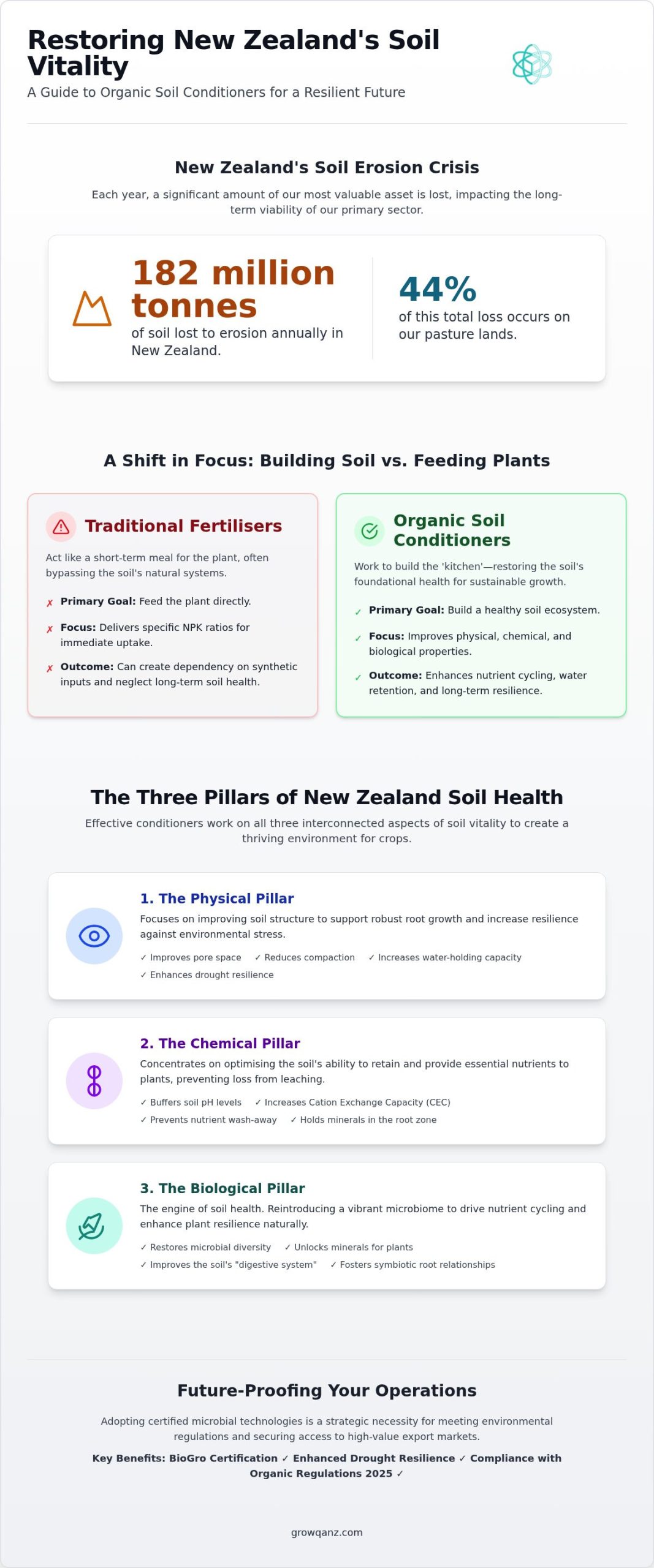
Did you know that New Zealand loses an estimated 182 million tonnes of soil to erosion every year, with 44% of that loss occurring on our pasture lands? It’s a sobering figure for any grower who understands that the true wealth of our primary sector lies beneath our feet. If you’ve noticed your land struggling with degraded structure or skyrocketing input costs, you’re not alone. Many professionals are now moving away from synthetic reliance to meet strict BioGro requirements and the evolving Organic Products and Production Regulations 2025. Choosing the right organic soil conditioners NZ is no longer just an environmental choice; it’s a strategic necessity for long-term viability.
We understand that restoring soil health requires more than just physical fillers. It requires a biological engine. In this 2026 guide, you’ll discover how to select and apply microbial technologies that improve nutrient uptake and drought resilience for field crops. We’ll examine the technical advantages of liquid-based treatments like Quantum Organic-Total® and Quantum-VSC®, providing you with a clear roadmap to restore soil vitality while ensuring your operations remain compliant for high-value export markets. By focusing on the long-term ecological health of your land, you can secure better yields and a more resilient future for your farm.
Key Takeaways
- Understand the functional distinction between NPK-focused fertilisers and organic soil conditioners NZ to prioritise long-term biological health over temporary chemical boosts.
- Explore how photosynthetic bacteria and microbial inoculants serve as the primary engine for restoring soil structure and enhancing nutrient cycling.
- Identify the most effective conditioning agents—including humates and microbial solutions—tailored specifically for the unique requirements of New Zealand fruit, nut, and field crops.
- Learn professional application techniques for liquid-based conditioners to achieve maximum coverage and efficiency through existing irrigation and spray setups.
- Future-proof your operations against evolving environmental regulations by adopting BioGro certified microbial technologies that enhance drought resilience and export compliance.
What are Organic Soil Conditioners in the New Zealand Context?
A true soil conditioner is a fundamental amendment designed to improve the physical, chemical, and biological properties of the earth. Unlike traditional organic fertilisers, which primarily focus on delivering a specific NPK (nitrogen, phosphorus, potassium) ratio for immediate plant uptake, organic soil conditioners NZ aim to restore the soil’s foundational health. They create a sustainable environment where plants can thrive without heavy synthetic interference. As we move closer to the implementation of the Organic Standards Regulations 2025, many New Zealand growers are shifting their focus from simple nutrient replacement to total soil regeneration.
The distinction between feeding the plant and building the soil is critical. Fertilisers act as a meal, but conditioners build the kitchen. By enhancing the soil’s inherent ability to hold water, cycle nutrients, and support life, these substances reduce the long-term dependency on external inputs. For those targeting high-value export markets, ensuring these inputs are BioGro certified is essential. This certification provides the verification required to meet international standards, ensuring your soil management practices align with the highest levels of environmental integrity.
The Three Pillars of NZ Soil Health
To understand the efficacy of organic soil conditioners NZ, we must look at the three pillars of soil vitality. First, the physical pillar involves improving the structure of our diverse soils, particularly in silt and clay-heavy areas where compaction often limits root growth. Effective conditioners increase pore space and water-holding capacity, making crops more resilient to the dry spells that are becoming increasingly common.
Second, the chemical pillar focuses on buffering pH levels and increasing the Cation Exchange Capacity (CEC). A higher CEC allows the soil to hold onto essential minerals, preventing them from washing away during heavy rain. Third, and perhaps most importantly, is the biological pillar. This involves the soil microbiome. A healthy population of microbes drives nutrient cycling, making locked-up minerals available to the plant through natural biological processes that synthetic systems often bypass.
Why New Zealand Soils Require Specific Conditioning
New Zealand’s unique mineral profiles and varied climatic conditions present specific challenges for growers. Years of intensive farming have often depleted natural microbial populations, leaving the soil structurally weak and biologically stagnant. This degradation makes it harder to meet the 2026 environmental standards for nitrogen leaching, as compromised soil cannot efficiently process or retain nutrients.
Modern biological conditioners address these issues by reintroducing the microbial diversity needed to restore natural balance. By integrating these solutions, growers can improve their soil’s “digestive system,” ensuring that every input is utilised effectively. This approach doesn’t just meet compliance; it builds a more resilient, productive asset for the future of New Zealand agriculture.
The Biological Advantage: Why Microbes are the Engine of Soil Health
While physical amendments like biochar provide a structural home for life, microbial inoculants represent the life itself. These living organic soil conditioners NZ act as a catalyst for every chemical and biological reaction in the paddock. By introducing specific, beneficial strains, growers can accelerate the breakdown of organic matter into plant-available nutrients. This process doesn’t just feed the crop; it strengthens the plant’s natural resilience against pathogens and environmental stressors by fostering a more diverse and active underground ecosystem.
The Ministry for Primary Industries highlights that we must maintain soil health to protect our economic and environmental future. A vibrant microbiome is the most efficient way to achieve this. Microbes colonise the rhizosphere, stimulating root development and creating a symbiotic relationship where the plant provides carbon in exchange for essential minerals. This biological synergy is what ultimately drives yield and long-term land stability.
Quantum Microbial Technology Explained
Traditional granular conditioners often suffer from uneven distribution, leaving gaps in soil protection and nutrient availability. In contrast, liquid microbial treatments like Quantum Organic-Total® ensure consistent coverage across the entire root zone, allowing the biology to establish itself rapidly. A standout feature of this technology is the inclusion of photosynthetic bacteria. These unique organisms function as miniature solar panels, converting sunlight into energy that fuels the wider microbial community even in carbon-depleted soils. For professional horticulture, using BioGro certified solutions ensures these high-performance strains meet the rigorous standards required for international export markets.
Improving Nutrient Uptake Naturally
Many New Zealand soils contain significant mineral reserves that remain “frozen” and inaccessible to plants due to a lack of biological activity. Beneficial microbes produce enzymes and organic acids that unlock these bound nutrients, particularly phosphorus and trace elements. This natural synergy reduces the reliance on synthetic inputs while improving the efficiency of existing soil minerals. Using advanced organic soil conditioners NZ helps to re-establish these cycles, making your fertiliser applications more effective. If you’re looking to optimise your land’s natural potential, exploring microbial soil solutions can provide the biological edge needed for sustainable growth.
Microbial nutrient cycling is a self-sustaining biological process that converts complex organic compounds into accessible plant food, ensuring long-term fertility without depleting the land’s natural capital.
Choosing the Right Organic Soil Conditioner for Your Crop
Selecting the correct amendment is a process of matching the specific needs of your land with the functional benefits of the product. New Zealand’s Ministry for the Environment defines soil health as a living ecosystem, which means our choices must support, not disrupt, this delicate biological balance. While biochar offers a long-term physical scaffold and humates provide essential chemical buffering, microbial organic soil conditioners NZ act as the immediate engine for nutrient cycling. For many professional operations, the speed of results and ease of application make liquid biologicals the most effective choice for restoring vitality.
Biochar is often viewed as a permanent physical improvement, but it requires significant volume and high upfront investment to see measurable change. Humates are excellent for increasing Cation Exchange Capacity, yet they still rely on existing soil biology to be truly effective. Microbial solutions provide the active organisms needed to drive these processes immediately. Choosing products that integrate seamlessly with existing biological cycles prevents the “bottleneck” effect often seen with heavy, inert amendments that can temporarily lock up nutrients while they stabilise.
Microbial Solutions for Field Crops and Broadacre
In large-scale operations, cost-effectiveness and ease of integration are paramount for success. Utilising microbial solutions for field crops allows growers to apply high-performance biology through standard spray programmes or fertigation systems. This approach improves crop uniformity and enhances drought resistance by encouraging deeper root penetration into the subsoil. Liquid inoculants are particularly effective here, as they provide superior coverage compared to bulky granular alternatives, ensuring every hectare receives the same biological boost without the need for specialised machinery.
Conditioning for High-Value Fruit and Nut Orchards
Permanent crops require a long-term approach to fertility management that prioritises tree health over many seasons. Implementing microbial soil amendments for nut orchards and fruit developments helps to mitigate transplant shock and establish a robust rhizosphere early in the tree’s life. These organic soil conditioners NZ have a direct impact on fruit quality and shelf life by ensuring a steady, biologically regulated supply of micronutrients. By fostering a healthy soil microbiome, orchardists can reduce the stress on their trees, leading to more consistent yields and better resistance to seasonal pressures.
Best Practices for Applying Organic Conditioners in NZ
Applying high-performance organic soil conditioners NZ involves more than just spreading product; it requires a methodical approach to ensure the living biology reaches the root zone intact. Liquid formulations offer a distinct advantage over granular bulk bags because they can be precisely metered through existing fertigation lines or spray setups. To achieve maximum efficacy, you must ensure your equipment is free from residual synthetic fungicides or harsh cleaners that could compromise microbial viability. A thorough flush of tanks and lines is a non-negotiable first step when transitioning from traditional chemical programmes to a biological-first strategy.
Timing is equally critical for success. Beneficial microbes are most active when soil temperatures are above 10°C and there is sufficient moisture to support their movement through the soil profile. Applying conditioners during a drought or in freezing mid-winter conditions will likely lead to poor establishment. We recommend application during early morning or late afternoon to avoid high UV levels, which can be detrimental to certain microbial strains before they find shelter in the soil.
Soil Restoration After Chemical Fumigation
Chemical fumigation is a standard practice for many intensive operations, but it leaves behind a biological vacuum. By sterilising the soil, you remove the pathogens but also destroy the beneficial organisms that maintain natural balance. This void is often filled by the fastest-growing organisms, which are frequently opportunistic pests. Reintroducing organic soil conditioners NZ immediately after the required withholding period is essential to kickstart soil life and occupy the ecological niche before pathogens can return. This rapid re-colonisation provides a protective shield for the next crop cycle.
Maximising Efficiency in Seedling Establishment
The transition from nursery to paddock is a high-stress period for any plant. You can significantly reduce transplant shock in seedlings by creating a microbial buffer around the new root system. This early-stage biological intervention ensures that as soon as roots begin to explore the soil, they are met with a community of microbes that facilitate nutrient uptake and water absorption. Using a liquid drench at planting provides the immediate support needed for higher survival rates and more uniform crop development. To find the right product for your next planting, explore our microbial solutions designed for New Zealand conditions.
The Future of NZ Soil: Quantum Organic-Total® and Sustainable Growth
The agricultural sector is currently navigating a significant transition. For too long, land management has relied on reactive fertilisation, where inputs are applied only after a deficiency manifests in the crop. The future of our primary sector requires a proactive shift toward foundational soil health. By adopting a microbial-first conditioning strategy, you build a resilient asset that performs consistently across seasons. Quantum Organic-Total® stands as the premier choice for this transformation, offering professional NZ growers a sophisticated, biological tool that restores the soil’s natural vitality.
Integrating these organic soil conditioners NZ into your programme ensures that your land remains productive and compliant as environmental standards tighten. The economic value of using BioGro certified products cannot be overstated, especially for export-focused businesses targeting high-value international markets. Certification provides the transparency and verification that global consumers now demand, securing your place in a competitive marketplace while fostering long-term ecological harmony.
A Cost-Benefit Analysis for Professional Growers
Moving toward biological solutions is a strategic commercial decision. When you examine the Quantum Organic-Total cost-benefit analysis, the return on investment is evident through enhanced marketable yields and a gradual reduction in synthetic chemical expenditure. As soil structure improves, water infiltration and retention increase, leading to tangible savings on irrigation costs during dry periods. These efficiencies, paired with reduced nutrient leaching, ensure that high-performance organic soil conditioners NZ provide a robust financial return alongside environmental gains.
Partnering for Success in 2026
Achieving sustainable growth in the field requires more than just high-quality products; it’s about a partnership grounded in science and practical experience. GrowQanz acts as a scientific innovator with a deep connection to the land, providing the technical support and evidence-based data you need to make informed decisions for your specific environment. We’re committed to supporting New Zealand’s transition to regenerative agriculture by offering stable, proven technologies that speak the language of those who work the land.
The path forward involves moving away from temporary fixes toward a holistic, long-term vision for your farm. We invite you to begin with a consultation to evaluate your current soil microbiology, followed by a targeted trial implementation. Seeing the results on your own land is the most reliable way to verify the efficacy of our microbial technologies. By investing in the biological health of your soil today, you’re securing the productivity and viability of your land for the generations to come.
Secure Your Land’s Viability Through Biological Innovation
Restoring the natural vitality of your soil is a strategic investment that pays dividends in both crop performance and environmental compliance. By prioritising the biological engine of the land, you move beyond temporary fixes to create a self-sustaining ecosystem capable of withstanding climatic pressures. High-performance organic soil conditioners NZ provide the necessary foundation for this shift, offering a scientifically proven path to enhanced nutrient uptake and superior soil structure.
Our proprietary microbial technology is specifically refined for the unique conditions of the New Zealand landscape. With the peace of mind provided by BioGro certification and the guidance of our technical experts, you can implement these biological solutions with absolute confidence. It’s about building a legacy of healthy, productive land that meets the rigorous demands of the modern export market. We’re here to help you navigate this transition with reliable data and proven results.
Enquire about Quantum Organic-Total® for your New Zealand operation today and take the first step toward a more resilient and productive future for your farm.
Frequently Asked Questions
What is the difference between a fertiliser and an organic soil conditioner?
A fertiliser delivers immediate nutrients, specifically NPK, directly to the plant. In contrast, organic soil conditioners NZ focus on the long-term health of the soil environment. They improve the physical structure, chemical buffering, and biological activity of the earth. While fertilisers act as a temporary meal for the crop, conditioners build a sustainable biological engine that allows the soil to cycle its own nutrients and support robust plant growth naturally over multiple seasons.
Can I use microbial soil conditioners with my existing irrigation system?
Yes, our liquid-based microbial solutions are specifically designed for easy integration into existing fertigation and spray systems. Because products like Quantum Organic-Total® are liquid, they provide superior coverage compared to granular alternatives. You should ensure that your lines and tanks are thoroughly flushed to remove any residual synthetic chemicals before application. This prevents any leftover fungicides or harsh cleaners from compromising the viability of the beneficial microbes as they move through your irrigation setup.
How long does it take to see results from organic soil conditioners in NZ?
Biological results often manifest within weeks as improved root development and seedling establishment. However, structural changes such as better water-holding capacity and increased pore space typically take a full growing season to become fully evident. The speed of these results depends on your specific soil type, moisture levels, and ambient temperatures. Consistent application helps to rebuild the microbial populations required to drive these natural processes, leading to cumulative improvements in soil health and crop resilience.
Are GrowQanz products BioGro certified for organic export markets?
Yes, GrowQanz products are BioGro New Zealand certified, which is the gold standard for organic verification in this country. This certification ensures that our microbial technologies meet the rigorous standards required for high-value organic export markets. By using BioGro certified inputs, professional growers can maintain full compliance with international regulations while restoring soil vitality. This provides the necessary transparency for global consumers who demand verified, natural production methods for fruit, nuts, and vegetables.
What happens if I apply microbial conditioners after using synthetic chemicals?
Applying microbial conditioners after synthetic treatments is actually a critical step in soil restoration. Chemical fumigants often leave a biological vacuum by destroying both pathogens and beneficial organisms. Reintroducing high-performance biology helps to re-colonise the soil before opportunistic pests can return. You must wait until any chemical withholding periods have passed and ensure your equipment is clean. This proactive approach helps to re-establish the natural balance needed for a healthy, productive rhizosphere in the next cycle.
Do organic soil conditioners help with drought resistance in field crops?
Yes, organic soil conditioners NZ play a vital role in enhancing drought resilience for field crops. By improving soil structure and increasing pore space, these conditioners allow roots to penetrate deeper into the subsoil to access moisture reserves. Additionally, specific microbial strains help plants manage environmental stress more effectively. This biological support, combined with better water infiltration and retention in the soil profile, ensures that your crops remain more stable and productive during periods of low rainfall.
How often should I apply Quantum Organic-Total® for best results?
For optimal results, we typically recommend an initial application at the start of the planting season to establish a robust microbial community. Follow-up booster applications during high-growth phases or periods of environmental stress can further enhance crop performance. The exact frequency depends on your specific crop type and the current state of your land. Our technical experts can help you design a tailored programme that ensures your soil biology remains active and effective throughout the entire growing cycle.
Is it necessary to test my soil before using microbial conditioners?
While a soil test can provide a helpful baseline of your current mineral levels, it isn’t a strict requirement for starting a microbial programme. Microbial conditioners work by restoring the natural biological processes that are often depleted in many agricultural soils regardless of their mineral profile. These organisms help to unlock existing nutrients that are already present but inaccessible to the plant. You can begin restoring soil vitality immediately to improve nutrient cycling and structural health across your operation.
Disclaimer
Important: This article provides general agricultural information only. Product performance can vary according to crop, soil, climate, management practices and application conditions. Trial or research results discussed may have been obtained under specific conditions and should not be interpreted as a guarantee of equivalent results. Always follow current product directions and confirm suitability for your crop, growing system and organic certification requirements. Contact QANZ for current product and application information.
