
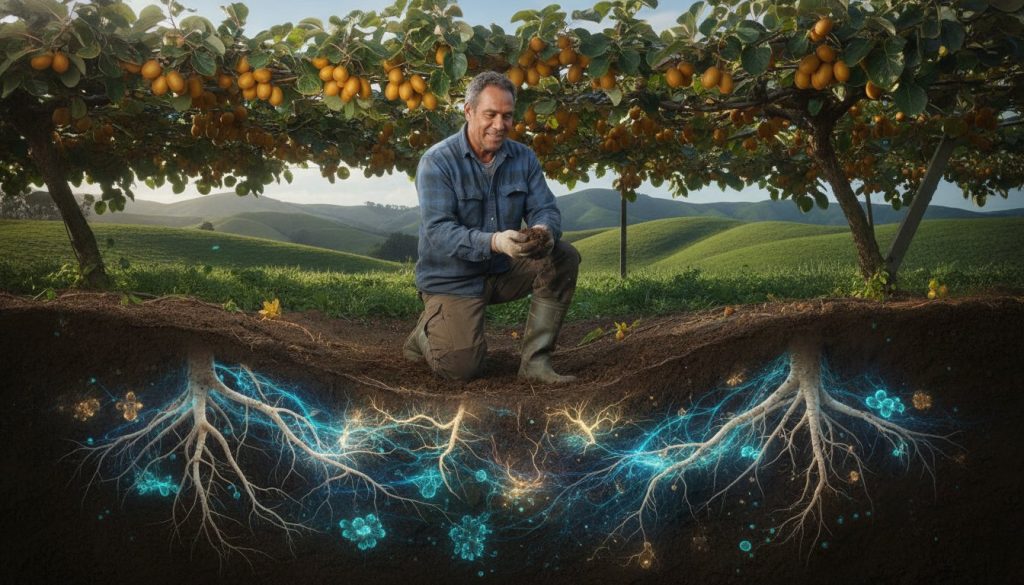
What if the key to achieving the record forecast returns of $181,234 per hectare for Organic SunGold isn’t found in a synthetic fertiliser bag, but in the microscopic life already present in your orchard? As a New Zealand grower, you’re likely facing the dual pressure of rising operational costs and the strict transition toward the mandatory Organic Products and Production Act 2023. It’s frustrating to watch soil vitality wane under intensive cycles while trying to meet the rigorous standards required for BioGro certification.
This guide demonstrates how a targeted organic kiwi fruit soil treatment using advanced microbial technology can restore balance to your land. You’ll discover how to optimise nutrient uptake and improve fruit dry matter content by fostering a living ecosystem rather than treating soil as a sterile substrate. We’ll explore the science of photosynthetic bacteria and practical application strategies that ensure your orchard remains both productive and compliant as we approach the 2028 mandatory organic standards. By focusing on microbial vitality, you can build a resilient foundation that withstands environmental stress while securing long term sustainability for your business.
Key Takeaways
- Understand why a holistic organic kiwi fruit soil treatment is essential for maintaining a highly active rhizosphere and ensuring efficient nutrient transport within the vines.
- Learn how beneficial microbes solubilise locked-up minerals and enhance root architecture to improve water uptake and overall vine resilience.
- Discover the strategic advantages of using functional liquid biology over traditional bulk amendments to achieve faster nutrient availability and more uniform distribution.
- Identify the optimal timing for soil applications to align with the kiwi fruit growth cycle, ensuring maximum microbial activity during periods of peak vine demand.
- Explore how BioGro certified technologies like Quantum Organic-Total® support the transition to regenerative practices while helping you meet New Zealand’s mandatory organic standards.
The Importance of Organic Kiwi Fruit Soil Treatment
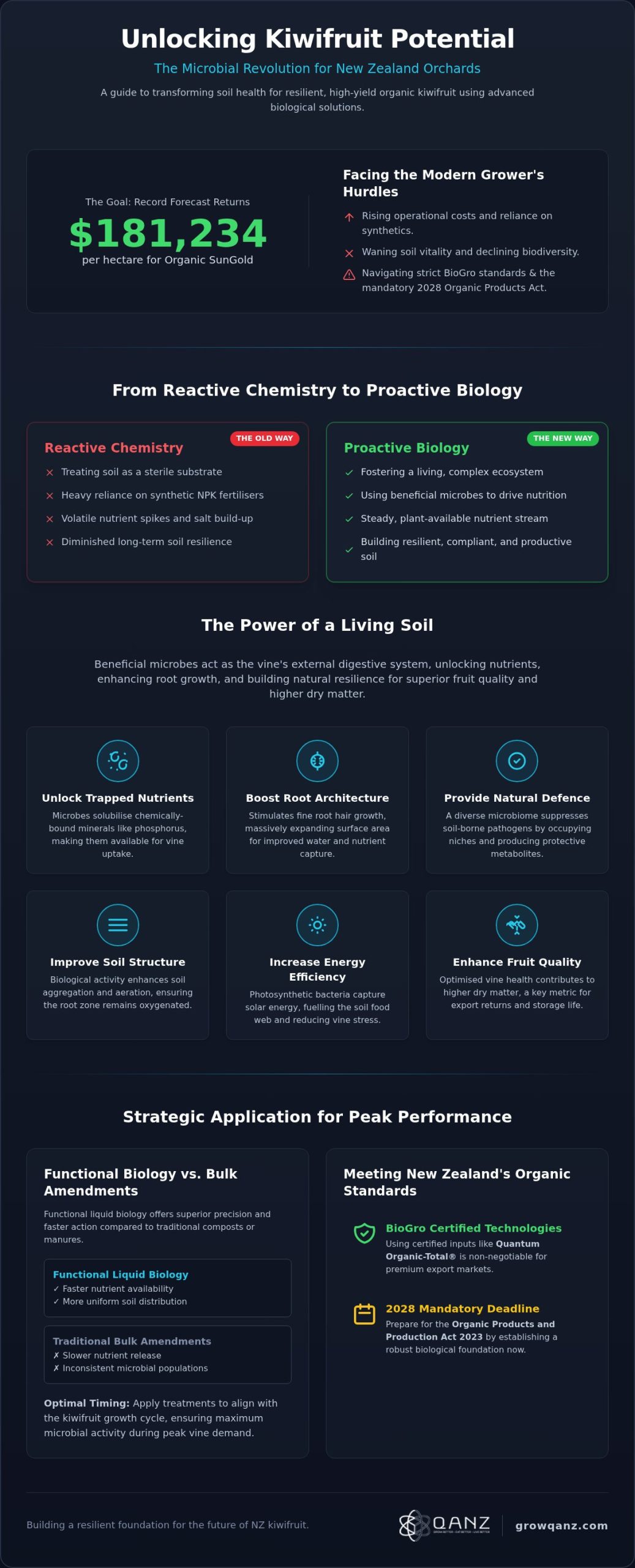
Organic kiwi fruit soil treatment represents a fundamental shift from reactive chemistry to proactive biological management. It isn’t merely about nutrient replacement; it’s about fostering a complex ecosystem where the soil functions as a living organism. In New Zealand, professional growers are increasingly moving away from the heavy reliance on synthetic NPK fertilisers that historically dominated the sector. This transition is driven by a need for long-term orchard resilience and the pursuit of superior fruit quality through natural processes.
The genus Actinidia possesses a vigorous root system that requires a highly active rhizosphere to facilitate rapid nutrient transport. Successful kiwifruit cultivation depends on these intricate underground interactions. When soil microbiology is optimised, the plant can achieve higher dry matter content, which remains a critical metric for export returns and fruit storage life. Biological soil management ensures that nutrients are delivered in a steady, plant-available stream rather than through the volatile spikes often associated with synthetic salts.
Why Microbial Diversity Matters for Vine Health
Healthy soil isn’t a static medium. It’s a living network where symbiotic relationships between roots and beneficial fungi or bacteria drive productivity. These microbes act as the vine’s external digestive system, breaking down complex organic matter into forms the plant can actually absorb. A diverse microbial population also provides a natural defence mechanism. By occupying ecological niches and producing natural metabolites, beneficial organisms suppress soil-borne pathogens, which reduces vine stress during disease pressure. This biological activity also improves soil structure and aeration, ensuring that the root zone remains oxygenated even during high-growth periods.
Compliance and Certification for NZ Growers
Maintaining high yields while adhering to strict organic standards requires a disciplined approach to orchard inputs. For New Zealand growers targeting premium export markets, using BioGro certified treatments is a non-negotiable requirement. This certification ensures that your organic kiwi fruit soil treatment doesn’t introduce prohibited substances into the orchard ecosystem. With the industry transitioning toward the mandatory requirements of the Organic Products and Production Act 2023, establishing a robust biological foundation now is essential. It’s about protecting the integrity of the soil over multiple seasons, ensuring your land remains productive and compliant as we approach the 2028 regulatory deadline. Relying on verified microbial technology allows you to maintain the high standards required by international consumers without compromising on vine health.
How Beneficial Microbes Enhance Kiwi Fruit Orchards
Beneficial microbes function as a biological refinery within the orchard. While traditional fertilisers provide raw elements, an organic kiwi fruit soil treatment focuses on the biological conversion of these elements into plant-available forms. Many essential minerals, particularly phosphorus and trace elements, often remain chemically bound to soil particles. Microbes, through the secretion of organic acids and enzymes, unlock these nutrients; this ensures the vine can access them during critical growth stages.
Root architecture undergoes a significant transformation in the presence of a diverse microbiome. Research into beneficial microbes in kiwi orchards indicates that specific bacterial strains stimulate the production of fine root hairs. This expansion of surface area doesn’t just improve nutrient capture; it fundamentally changes the vine’s ability to regulate water uptake. By integrating Fruit & Nut Crop Microbial Solutions into your management plan, you can support this vital root development from the early season.
Photosynthetic Bacteria and Energy Efficiency
Specific strains of photosynthetic bacteria act as a secondary energy source for the soil ecosystem. These organisms capture solar energy and convert it into carbon-based compounds that fuel other beneficial soil life. This process is particularly valuable during the flowering stage when the vine’s energy demands are at their peak. By increasing the available energy in the rhizosphere, you reduce the metabolic stress on the plant during the intensive fruit-set period. This energy efficiency translates directly into better vine vigour and more consistent fruit sizing across the orchard.
Microbial Strategies for Drought Resilience
Water management is a primary concern during dry New Zealand summers. Beneficial microbes assist by producing extracellular polymeric substances, commonly known as biofilms. These natural polymers act like a biological sponge, coating soil particles and significantly improving the soil’s moisture-retention capacity. A comprehensive organic kiwi fruit soil treatment helps establish these sponge-like structures. Products like Quantum-VSC® are specifically designed to bolster these microbial populations, providing a natural buffer against drought. This biological approach allows vines to maintain turgor and photosynthetic activity even when irrigation resources are stretched.
The long-term health of the orchard relies on building soil carbon through microbial turnover. As microbial populations grow and recede, their remains contribute to the stable organic matter pool. This microbial necromass is a highly efficient way to sequester carbon and improve the physical structure of the soil. It creates a self-sustaining cycle where the soil becomes increasingly fertile and resilient with every passing season.
Comparing Microbial Inoculants with Traditional Organic Amendments
Distinguishing between passive organic matter and active functional biology is a crucial step for any commercial orchard manager. Traditional amendments like compost or mulch provide the structural framework for soil, but they don’t necessarily provide the specific microbial workforce required to drive rapid nutrient cycling. An effective organic kiwi fruit soil treatment utilises targeted inoculants to activate the existing organic matter, turning a static resource into a dynamic nutrient source. By focusing on the biological “engine” rather than just the fuel, growers can achieve more predictable growth patterns across their orchard blocks.
Liquid vs. Granular: The Commercial Advantage
Commercial growers face the logistical challenge of applying amendments across extensive orchard blocks. While granular organic fertilisers are common, they often suffer from uneven distribution and slow decomposition rates. In contrast, liquid microbial soil treatments integrate seamlessly into existing fertigation systems. This allows for precise, uniform delivery directly to the root zone, ensuring every vine receives the same biological support. The speed of action is significantly higher with liquid formulations, as the microbes are already in an active state and ready to colonise the soil upon application. This efficiency translates to a better ROI, as labour costs for application are minimised compared to the heavy machinery and handling required for bulk granular spreading.
Targeted Biological Action
Raw manure and generic organic fertilisers are inherently inconsistent. Their nutrient profiles and microbial populations vary wildly between batches, which introduces an element of unpredictability into orchard management. Professional-grade inoculants utilise lab-grown, strain-specific bacteria that are selected for their proven performance in New Zealand conditions. These BioGro certified soil inoculants provide a level of quality control that raw amendments simply cannot match. By using a verified organic kiwi fruit soil treatment, you ensure that you aren’t introducing weed seeds or potential pathogens into your soil ecosystem.
These biologicals function as a precision tool that complements your existing mulch programmes. While the mulch provides the habitat and carbon source, the inoculant provides the specific biological functions, such as phosphorus solubilisation or nitrogen fixation, needed to maximise vine productivity. This targeted approach ensures that the biological activity in your soil is aligned with the specific nutritional requirements of the kiwi fruit vine throughout the season.
Application Protocols for Organic Soil Treatments
Precision is the cornerstone of a successful organic kiwi fruit soil treatment programme. Simply applying microbes to the orchard floor isn’t enough; they must be delivered in a way that ensures survival and rapid colonisation. For New Zealand growers, this means aligning applications with the specific physiological demands of the vine while accounting for local soil temperatures and moisture levels. Effective protocols ensure that your investment in biological technology translates into tangible improvements in vine health and fruit quality.
Before application, ensure the soil has adequate moisture. Microbes require a film of water to move and establish themselves within the soil matrix. Applying to parched ground can lead to high mortality rates before the organisms reach the root zone. Similarly, soil temperature plays a critical role. Microbial activity generally slows significantly below 10 degrees Celsius, so timing your applications when the soil is warming ensures the beneficial strains can begin working immediately.
Seasonal Timing for Maximum Impact
Spring activation is perhaps the most critical window for microbial intervention. By stimulating the rhizosphere just before bud break, you ensure that essential nutrients are mineralised and ready for the vine’s initial growth surge. This early-season boost supports stronger canopy development and more robust flowering. Post-harvest recovery is equally vital. After the intensive energy drain of fruit production, a late-autumn application helps restore the soil’s biological reserves. This prepares the orchard for the dormant season and ensures the soil ecosystem is resilient enough to withstand winter conditions. Always avoid applying during extreme weather events, such as heavy frosts or mid-summer heatwaves, as these conditions can stress the delicate microbial life before it becomes established.
Optimising Application Efficiency
Application through existing fertigation systems offers the highest level of efficiency for commercial orchards. This method ensures that the microbial solution reaches the same depth as the irrigation water, placing the biology exactly where the roots are most active. When mixing microbial concentrates, water quality is paramount. If you’re using chlorinated water, allow it to sit for 24 hours to let the chlorine dissipate, as even small amounts can harm live bacterial strains. For broad-spectrum results, follow this guide to improving nutrient uptake in plants to ensure your dosing levels are accurate for your specific block size.
Regular monitoring through visual assessments and soil biology testing allows you to fine-tune your approach. Look for improved leaf colour, more consistent shoot extension, and a visible increase in soil structure over time. If you’re ready to implement a professional biological programme, explore our range of Fruit & Nut Crop Microbial Solutions to find the right fit for your orchard’s needs.
GrowQanz Solutions for Professional Kiwi Fruit Growers
GrowQanz provides the technical bridge between complex soil science and practical orchard management. As the New Zealand industry moves toward more stringent regulations under the Organic Products and Production Act 2023, having a BioGro certified organic kiwi fruit soil treatment becomes a strategic asset rather than just an input. Our solutions are designed to support growers in securing the record returns forecast for organic varieties by ensuring every vine operates at its peak biological capacity. We provide a data-driven framework that prioritises long-term orchard sustainability over temporary yield spikes.
Quantum Organic-Total®: Science in the Field
Quantum Organic-Total® represents our most comprehensive biological intervention for high-value horticulture. It contains a proprietary consortium of photosynthetic bacterial strains that function as a living workforce within the rhizosphere. Unlike generic additives, this formulation addresses the specific physiological requirements of the kiwi fruit vine, particularly during the transition from flowering to fruit-set. By stabilising the microbial population, growers often observe improved fruit weight and enhanced vine longevity, even in older blocks. This consistency is vital for meeting the high standards of international export markets where dry matter and fruit size determine final orchard gate returns.
Partnering for Long-Term Orchard Success
Success in the field requires more than a one-size-fits-all approach. New Zealand’s diverse soil types require customised microbial programmes that account for local conditions and historical land use. Our team provides technical support to help you integrate these biologicals into your existing management systems without disruption. Whether you’re managing established vines or expanding your orchard, we help you build a resilient foundation. For instance, we provide specific strategies on how to reduce transplant shock in seedlings, which is essential for ensuring new blocks reach full production as quickly as possible.
The transition to regenerative organic practices is a journey that requires reliable data and verified inputs. By focusing on microbial vitality through our Fruit & Nut Crop Microbial Solutions, you aren’t just complying with the 2028 mandatory standards; you’re investing in the health of your land. We remain committed to providing the evidence-based tools necessary for New Zealand growers to lead the world in sustainable, high-quality kiwi fruit production.
Securing the Future of Your Orchard
Adopting a robust organic kiwi fruit soil treatment is no longer just an optional improvement; it’s a fundamental requirement for commercial success in New Zealand’s evolving regulatory landscape. By shifting your focus from reactive nutrient management to proactive microbial vitality, you’re building a resilient ecosystem that naturally suppresses pathogens and maximises nutrient uptake. This biological approach ensures your vines can reach the record dry matter levels required for premium export returns while maintaining full compliance with BioGro standards.
Our 100% natural and sustainable technologies are backed by expert technical support specifically for commercial growers. Whether you’re looking to enhance fruit weight or improve long term vine health, our solutions provide the data driven results your business needs to thrive. Don’t leave your soil health to chance as we approach the 2028 national organic deadline. It’s a critical time to transition toward a biological model that supports both your land and your bottom line.
Explore Quantum Organic-Total® and boost your orchard’s health today. It’s time to invest in the living foundation of your land and ensure your orchard remains productive for generations to come.
Frequently Asked Questions
What is the best organic soil treatment for kiwi fruit in New Zealand?
Quantum Organic-Total® is the most comprehensive biological treatment for NZ orchards because it combines multiple photosynthetic bacterial strains. These specific microbes are adapted to the unique demands of high-value fruit crops. By focusing on a “Total” approach, it enhances soil health, root development, and plant resilience simultaneously. This creates a more stable foundation than single-strain products, particularly in the diverse soil types found across New Zealand.
Can I use microbial inoculants with my existing organic fertiliser programme?
Yes, microbial inoculants are designed to work synergistically with your current organic fertiliser programme. While fertilisers provide the raw nutritional building blocks, the microbes act as the biological engine that mineralises these inputs for the vine. This combination ensures that the organic matter you apply is broken down efficiently. It prevents nutrient lock-up and ensures that your vines receive a steady supply of plant-available minerals throughout the growing season.
How often should I apply organic soil treatments to my orchard?
For optimal results, apply an organic kiwi fruit soil treatment at least twice during the growing season. The most critical windows are in early spring to activate the rhizosphere before bud break and post-harvest to restore soil biology for the dormant period. Some growers choose to apply smaller, monthly doses through fertigation during the peak growth phase. This consistent approach maintains high microbial populations and ensures the soil ecosystem remains active.
Are GrowQanz products safe for use on BioGro certified organic farms?
All GrowQanz microbial solutions, including Quantum Organic-Total® and Quantum-VSC®, are BioGro New Zealand certified. This certification confirms that our products meet the rigorous standards required for organic export markets. Using these verified inputs allows you to maintain the integrity of your organic certification while benefiting from advanced microbial technology. It is an essential tool for growers transitioning toward the mandatory national organic standards coming into effect by March 2028.
What are the benefits of liquid microbial treatments over compost?
Liquid microbial treatments offer superior distribution and faster nutrient availability compared to bulk compost applications. While compost provides valuable organic matter, it is often inconsistent and slow to release nutrients. Liquid inoculants deliver a concentrated, active workforce directly to the root zone via existing fertigation systems. This targeted delivery ensures even coverage across large orchard blocks. It allows you to address specific biological deficiencies with precision that bulk amendments cannot match.
How do soil microbes help kiwi fruit vines during a drought?
Beneficial microbes assist vines during drought by producing extracellular polymeric substances that improve soil moisture retention. These natural biofilms coat soil particles and act like a biological sponge, holding water in the root zone for longer periods. This helps the vine maintain turgor and photosynthetic activity even when water resources are limited. By strengthening the soil’s natural water-holding capacity, an organic kiwi fruit soil treatment provides a critical buffer against dry New Zealand summers.
Will organic soil treatments improve the dry matter of my fruit?
Healthy soil microbiology directly supports higher fruit dry matter by optimising the transport of nutrients and carbohydrates to the fruit. When microbes solubilise minerals like phosphorus and potassium, the vine can allocate more energy toward fruit development rather than searching for nutrients. This efficient nutrient cycling is key to achieving the premium dry matter content required by export partners. Consistent biological management helps ensure your fruit meets the highest quality specifications for the global market.
How long does it take to see results from a microbial soil treatment?
While some biological changes occur within days, visible improvements in vine health typically appear within four to six weeks. You might first notice subtle changes in leaf colour or improved soil structure and water infiltration. Over a full season, these early indicators translate into more consistent growth and better fruit sizing. The most significant benefits are cumulative; as the microbial population stabilises over multiple seasons, the orchard’s overall resilience and productivity continue to increase.
