
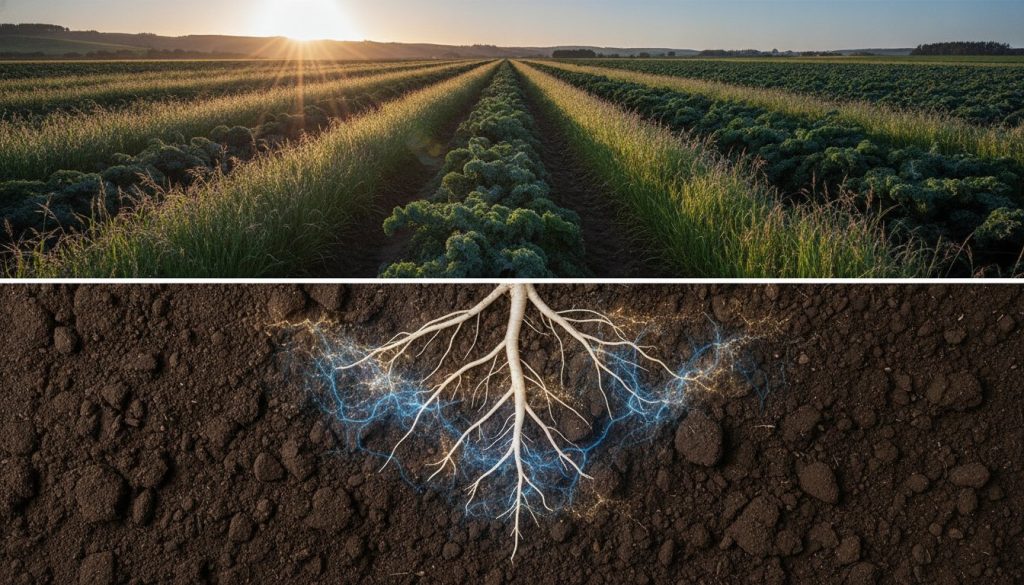
The genetics of your kale and goodness mix provide the potential for a high-performing crop, but it’s the invisible microbial biology within your soil that dictates the final performance. While high-yielding varieties like Sovereign Gold or Kea offer a solid foundation, even the best seeds can’t overcome the limitations of a degraded soil ecosystem or the stress of a typical New Zealand dry spell. You’ve likely felt the pressure of seasonal feed deficits and the rising costs of synthetic fertilisers, all while trying to maintain the scanning rates and animal body condition scores your operation depends on.
We understand that reliable forage is the backbone of your farm’s productivity. By shifting the focus from simple chemical inputs to a biologically-driven approach, you can unlock the full nutrient density and dry matter potential of your forage mixes. This article explains how to support the natural processes that drive plant vitality, using BioGro certified solutions like Quantum Organic-Total® and Quantum-VSC® to build resilient crops. We will examine the science of microbial inoculation and how enhancing the soil’s natural consortium leads to improved nutrient uptake, stronger root systems, and a more sustainable future for your land.
Key Takeaways
- Recognise how a kale and goodness mix creates a synergistic forage system and why supporting soil biology is essential to achieving its full genetic potential.
- Discover how photosynthetic bacteria enhance the efficiency of light conversion into plant sugars, leading to superior dry matter production and improved animal condition.
- Learn how to strengthen seedling establishment and drought resilience by using Quantum-VSC® to stimulate deep root development and natural plant defence.
- Understand the mechanism for unlocking phosphorus and nitrogen within the soil, allowing you to maintain high-performance forage while managing synthetic fertiliser costs.
- Access a structured, five-step protocol for integrating BioGro certified microbials into your seasonal forage rotation to ensure sustainable soil health.
What is a Kale and Goodness Mix and Why is it Trending?
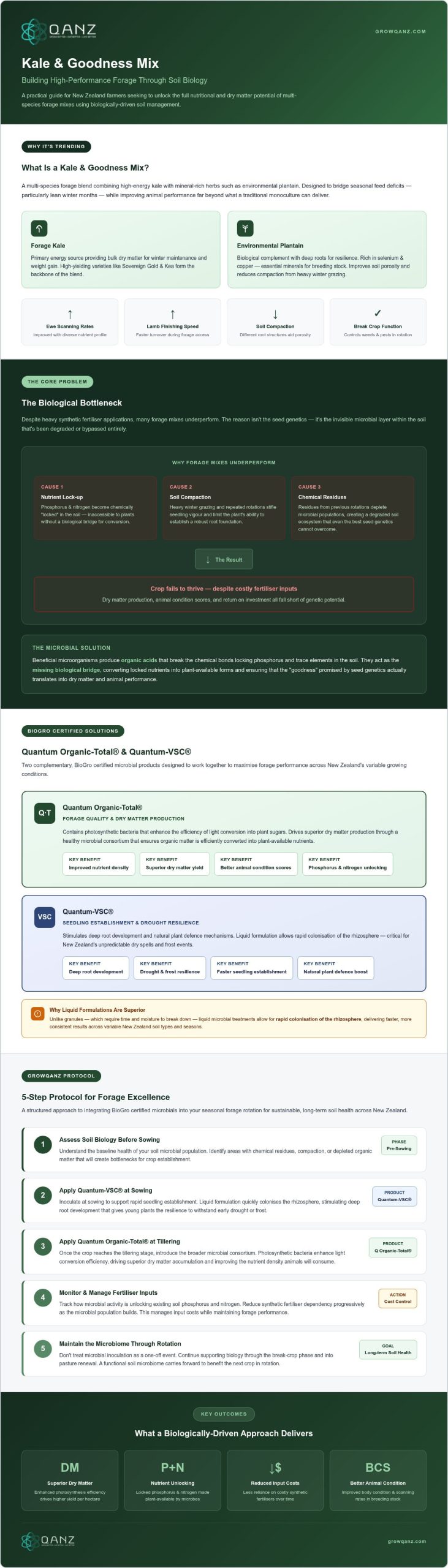
New Zealand’s agricultural landscape is seeing a marked shift towards multi-species forage systems. The kale and goodness mix has emerged as a preferred solution for farmers seeking to balance high dry matter production with superior nutritional profiles. This blend typically combines the robust, high-energy bulk of forage kale with mineral-rich herbs like environmental plantain. It’s a strategic choice designed to bridge the gap during seasonal feed deficits, particularly the lean winter months when pasture growth slows.
While traditional monocultures focus on volume, this mix prioritises animal performance. Farmers report noticeable improvements in ewe scanning rates and lamb finishing times when livestock have access to the diverse nutrient profile these blends offer. However, the true “goodness” of the crop isn’t just in the seed bag. It depends entirely on the plant’s ability to extract minerals and nutrients from the soil; a process driven by a healthy microbial ecosystem. Without active soil biology, even the best genetics can’t reach their full potential.
The Synergy of Kale and Environmental Plantain
Kale serves as the primary energy source, providing the bulk dry matter required for winter maintenance and weight gain. Plantain acts as a biological complement, offering deep-rooted resilience and high concentrations of essential minerals such as selenium and copper. This combination is particularly effective for improving body condition scores in breeding stock. Because plantain has a different root structure to kale, the kale and goodness mix also aids soil porosity and structure, preventing the compaction often seen in heavy winter grazing paddocks.
Meeting Seasonal Feed Deficits Nationwide
Securing a reliable feed source during summer droughts or winter frosts is a constant challenge for Kiwi farmers. A well-established forage mix provides the flexibility needed to manage these variable weather patterns. Fast establishment is critical; the faster these plants can develop a strong root system, the better they can withstand New Zealand’s unpredictable dry spells.
These mixes also serve a dual purpose as a “break crop.” They allow for the effective control of weeds and pests before a paddock returns to permanent pasture. To ensure this rotation is successful, the forage must be resilient. Supporting the soil biology during this phase doesn’t just help the current crop; it sets the foundation for the next pasture renewal by maintaining a functional soil microbiome that supports future plant growth.
The Biological Bottleneck: Why Forage Mixes Underperform
High-performance forage crops are inherently demanding. When you sow a kale and goodness mix, you’re asking the soil to support rapid, nutrient-dense growth over a short window. This intensity can inadvertently deplete the soil’s microbial population if management focuses solely on chemical inputs. We often see a biological bottleneck where, despite heavy applications of synthetic fertilisers, the crop fails to thrive. This happens because phosphorus and nitrogen become chemically “locked” within the soil profile, remaining inaccessible to the plant without the biological bridge required for conversion.
Soil compaction and chemical residues from previous rotations further complicate this issue. These factors stifle seedling vigour and limit the plant’s ability to establish a robust foundation. Understanding the role of beneficial microbes in agriculture is essential for breaking this bottleneck. These microorganisms act as the missing link, ensuring that the “goodness” promised by the seed genetics actually translates into dry matter and animal performance.
Nutrient Lock-up and the Role of Microbes
Beneficial microorganisms are the primary drivers of mineral solubilisation. They produce organic acids that break the tight chemical bonds holding phosphorus and other trace elements in the soil. By integrating beneficial soil microorganisms for plants, you ensure that organic matter is efficiently converted into plant-available nutrients. Liquid microbial treatments are particularly effective in this context. Unlike granules, which require time and moisture to break down, liquid formulations allow for rapid colonisation of the rhizosphere, providing immediate support to emerging seedlings during the critical establishment phase.
The Hidden Cost of Synthetic-Only Systems
Over-reliance on synthetic fertilisers can lead to “lazy” root systems. When plants are spoon-fed highly soluble nutrients, they lack the incentive to develop the deep, expansive root networks needed for drought resilience. This creates a fragile crop that is highly susceptible to New Zealand’s variable weather patterns. Using BioGro certified soil inoculants helps maintain a natural biological balance, encouraging the plant to forage deeper and interact with the soil’s native mineral bank.
Microbial inoculants serve as a precision tool to restore the natural biological cycle in commercial paddocks, ensuring that your kale and goodness mix remains productive even under environmental stress. Farmers looking to break the cycle of increasing inputs and diminishing returns should consider exploring biological alternatives to support their next forage rotation.
Maximising Forage Quality with Quantum Organic-Total®
Quantum Organic-Total® serves as a high-performance catalyst for the kale and goodness mix, ensuring that the crop’s genetic potential translates into measurable farm-gate results. The core of this technology lies in its unique consortium of photosynthetic bacteria. These specialised microorganisms improve the efficiency of light energy conversion into plant sugars, essentially supercharging the plant’s metabolic engine. When photosynthesis is optimised, the plant produces higher levels of complex carbohydrates, which directly correlates to increased Brix levels. This rise in nutrient density means every mouthful of forage provides more value to the animal, reducing the volume of feed required to maintain condition.
For professional growers, the investment in biologicals must be justified by more than just environmental sentiment. A thorough Quantum Organic-Total cost-benefit analysis reveals that the gains in forage quality often outweigh the costs of traditional synthetic boosters. By fostering a more efficient relationship between the root system and the soil, farmers can achieve superior results while building long-term ecological capital. This approach moves away from the “more is better” fertiliser mentality, focusing instead on the efficiency of every unit of nutrient applied.
Increasing Dry Matter (DM) and Energy Density
Microbial activity stimulates the production of natural plant hormones, such as auxins and cytokinins, which drive vigorous vegetative growth. This hormonal boost results in a significant increase in dry matter production per hectare. In a New Zealand context, where winter grazing must provide high energy to combat cold stress, the energy density of the forage is paramount. Higher metabolisable energy (ME) levels lead to superior animal performance, faster weight gains, and better resilience during the shoulder seasons. Quantum Organic-Total® is the preferred choice for broadacre forage crops because it delivers these performance gains without the growth slumps often associated with chemical-heavy regimes.
Improving Nutrient Uptake for Better Scanning Rates
The “goodness” in your kale and goodness mix is only as good as the minerals the plants can access. Zinc, copper, and selenium are vital for livestock health, particularly when aiming for high ewe scanning rates and successful lambing. Microbes facilitate the uptake of these trace elements, helping deep-rooted species like plantain reach their full nutritional potential. Quantum Organic-Total® contains multiple strains of microbes designed to function across diverse NZ soil types, ensuring that regardless of your location, your forage mix is pulling the maximum possible nutrition from the ground. This biological support ensures the mineral profile of the forage remains consistent, even when soil conditions are less than ideal.
Building Resilience: Quantum-VSC® for Stressful Seasons
Establishment is the most vulnerable phase for any forage crop. For a kale and goodness mix, the primary threats often appear as early-season drought or intense pest pressure during the late spring. These environmental stressors can stall growth, leading to patchy paddocks and reduced total yield. Quantum-VSC® is specifically formulated to address these challenges by targeting root development and natural plant defence mechanisms. Unlike products that focus only on top-growth, this microbial solution strengthens the plant from the ground up, ensuring it has the structural integrity to survive New Zealand’s variable weather patterns.
Beneficial microbes in the VSC formulation create a “biological shield” around the rhizosphere. This living barrier colonises the root surface, preventing pathogens from gaining a foothold while simultaneously facilitating the exchange of nutrients. For a comprehensive look at how these technologies support broadacre systems, you can explore our microbial solutions for field crops. Independent trials have shown that these formulations can lead to an 18% increase in plant biomass, providing a critical buffer against the “summer dry.”
Enhancing Root Architecture for Drought Tolerance
Resilience starts with the root system’s ability to forage for moisture. Quantum-VSC® stimulates lateral root growth, allowing the kale and goodness mix to tap into deeper soil moisture reserves that are often inaccessible during dry New Zealand summers. This is particularly beneficial for the plantain component of the mix. While plantain is naturally deep-rooted, microbial support accelerates the development of its fibrous network. This synergy ensures the crop remains viable when rainfall is scarce, protecting your investment in high-value seed genetics.
Managing Soil Health After Chemical Fumigation
Many farmers use chemical fumigants to clear old pastures, yet this often leaves the soil biologically depleted. It is critical to restore soil microbes after fumigation before sowing a high-value mix. Without this intervention, seedlings are more susceptible to transplant shock and lack the competitive edge needed to outpace weed growth. Quantum-VSC® reintroduces a diverse microbial consortium that helps young plants navigate these early hurdles. By establishing a robust biological presence early, you create a natural defence against soil-borne pathogens that might thrive in a sterile environment.
To protect your forage investment against the next dry spell, talk to us about our Field Crop Microbial Solutions.
The GrowQanz Protocol for Forage Excellence
Achieving the best results from a kale and goodness mix requires a transition from reactive inputs to a proactive biological schedule. High-performance brassica crops are notorious for their heavy nutrient demands, which can leave the soil microbiome depleted if not managed correctly. We’ve developed a structured protocol to ensure your soil remains a functional asset throughout the forage cycle and into the next rotation.
- Step 1: Soil Preparation. Apply a soil inoculant 2 to 4 weeks before sowing. This establishes a foundational microbial population to process organic matter and clear residual chemical inhibitors.
- Step 2: Sowing Support. Integrate Quantum Organic-Total® at the point of sowing. This ensures beneficial bacteria are present in the rhizosphere the moment the seed germinates.
- Step 3: Peak Growth Foliar. Apply a foliar treatment during the rapid vegetative phase. This supports the photosynthetic efficiency discussed earlier, boosting sugar production when the plant needs it most.
- Step 4: Grazing Management. Monitor stock density to prevent excessive soil compaction. Compacted soil suffocates aerobic microbes and restricts the deep-rooting potential of species like plantain.
- Step 5: Post-Grazing Restoration. Apply microbial treatments immediately after the final grazing. This is a critical step often missed in traditional systems; it accelerates the breakdown of crop residue and restores soil vitality before the next pasture renewal.
Application Rates and Timing for NZ Paddocks
Liquid microbial treatments are designed for ease of use within existing farm infrastructure. You can apply these formulations using standard boom sprayers or fertigation systems. To ensure microbial survival, always apply during the shoulder hours of the day. Early morning or late evening applications are best, as they avoid the high UV levels and extreme heat that can desensitise living bacterial strains. Our products are compatible with many liquid fertiliser programmes, allowing you to streamline your passes and maximise efficiency across large broadacre blocks.
Measuring Success: What to Look For
Evidence of a successful biological programme is visible both in the paddock and on the balance sheet. We recommend using a handheld Brix refractometer to monitor the sugar content of your kale and goodness mix. Higher Brix readings indicate a more nutrient-dense plant that will provide better energy conversion for your livestock.
Beyond the lab, look for physical changes in your soil. Treated paddocks typically show improved soil aggregation and friability, making the ground feel “spongy” rather than like set concrete. Ultimately, the most important metrics are your animal performance indicators. Tracking weight gain, body condition scores, and ewe scanning percentages will provide the final verification that your soil biology is working as hard as your genetics.
Securing Sustainable Forage Performance
Transitioning to a biologically focused management system is a strategic investment in your farm’s long-term productivity. By addressing the biological bottleneck, you ensure that every seed in your kale and goodness mix has the support required to reach its full genetic potential. We’ve explored how proprietary microbial technology doesn’t just increase dry matter; it builds a resilient soil structure that survives the “summer dry” and prepares the paddock for a successful return to permanent pasture.
Our BioGro Certified Organic solutions provide a verified pathway to higher Brix levels and improved animal performance. With nationwide technical support for NZ growers, you have a professional partner to help navigate the complexities of soil science. It’s time to move beyond the limitations of synthetic-only regimes and embrace a more natural, efficient way of working. Supporting your soil biology today creates a stable foundation for the seasons ahead.
Maximise your forage ROI with Quantum Organic-Total® today
Frequently Asked Questions
What is the best time to apply microbial treatments to my kale and goodness mix?
The best time to apply microbial treatments to your kale and goodness mix is during the shoulder hours of the day, specifically early morning or late evening. This timing protects the living bacterial strains from high UV levels and extreme heat, which can desensitise the microbes before they reach the soil. Applying during these cooler periods ensures maximum survival and allows the consortium to colonise the rhizosphere effectively during critical growth or establishment phases.
Can I mix Quantum Organic-Total with my standard liquid fertilisers?
You can integrate Quantum Organic-Total® with many standard liquid fertiliser programmes to improve application efficiency across your paddocks. Combining these biologicals with your existing nutrients allows for a single pass, saving significant time and fuel. It’s always best to perform a simple jar test first to ensure physical compatibility. This approach ensures your kale and goodness mix receives both immediate nutrition and the biological engine required to process those nutrients.
How does Quantum-VSC help with seedling establishment in dry soil?
Quantum-VSC® assists seedling establishment by stimulating lateral root growth, allowing young plants to access moisture deeper in the soil profile. This is vital during dry New Zealand summers when surface moisture evaporates quickly. By establishing a “biological shield” around the emerging roots, the treatment reduces transplant shock and helps the seedlings outpace weed competition. This early structural support is the foundation for a resilient, high-yielding forage crop that survives the summer dry.
Is Quantum Organic-Total BioGro certified for organic farming in New Zealand?
Yes, Quantum Organic-Total® is BioGro New Zealand certified, making it a trusted choice for organic farming operations across the country. This certification verifies that the product contains 100% natural microbial strains and meets strict environmental safety standards. For farmers focused on sustainable soil health or those operating under organic protocols, these microbial solutions provide a proven way to boost plant growth without the use of synthetic chemical fertilisers or interference.
Will microbes help my forage crop survive a drought?
While microbials cannot replace rainfall, they significantly improve a plant’s ability to withstand drought conditions through enhanced root architecture. By encouraging deeper and more fibrous root systems, these treatments allow the crop to tap into moisture reserves that are otherwise inaccessible. Independent trials have shown an 18% increase in plant biomass in treated crops, providing a critical buffer that helps your forage maintain its quality and volume during extended dry periods.
How much does it cost to treat a hectare of forage with GrowQanz products?
The cost of treating a hectare of forage depends on your specific soil requirements and the chosen application rate. Because every farm system is unique, we recommend contacting our technical support team for a tailored cost-benefit analysis. This ensures you receive a precise quote based on your paddock’s history and performance goals. Investing in soil biology often pays for itself through increased dry matter production and improved animal condition scores over time.
Do I need to reapply microbes every time I sow a new forage mix?
We recommend reapplying microbes with every new forage rotation to ensure the biological consortium remains at peak performance. High-performance crops like brassicas are demanding on soil biology, often leaving the microbiome depleted after grazing. Consistent reapplication helps restore natural cycles and prepares the soil for future pasture renewal. Maintaining this biological momentum is essential for achieving the high dry matter yields that modern New Zealand farming systems require for profitability.
Can these microbial solutions be used for other brassicas like swedes or rape?
These microbial solutions are highly effective for all forage brassicas, including swedes, rape, and turnips. The underlying biological principles of nutrient uptake and root development apply across all broadacre field crops. Whether you’re sowing a diverse mix or a single-species winter crop, supporting the soil’s natural microbiome will lead to better establishment and superior forage quality. Our Field Crop Microbial Solutions are specifically designed to function across diverse New Zealand soil types.
