

High-performance greens are complex biological engines that require microbial re-wilding to survive the intensity of modern management. Greenkeepers across New Zealand often face the frustration of “spongy” turf caused by persistent thatch and the escalating costs of synthetic fertilisers that offer diminishing returns. Adopting professional-grade microbial solutions for golf greens addresses these issues at the source by restoring the natural soil processes that synthetic inputs often bypass. It’s a necessary shift for those managing the pressure of stricter environmental regulations regarding chemical runoff and the need for more sustainable land stewardship.
By using these advanced inoculants, you can restore the natural vitality of your soil and maintain tournament-standard surfaces with fewer chemical interventions. This article examines how BioGro NZ certified technology accelerates thatch degradation and improves nutrient efficiency, providing your turf with the resilience needed to survive the drought and heat stress of a New Zealand summer. We’ll provide a scientific roadmap for restoring soil health and ensuring the long-term viability of your course through proven biological innovation.
Key Takeaways
- Understand why high-intensity synthetic inputs often lead to “sterile” soil and how reintroducing microbial life can reduce disease pressure.
- Learn how professional-grade microbial solutions for golf greens facilitate mineralisation, converting locked nutrients into plant-available forms to improve fertiliser efficiency.
- Discover how specific microbial consortia in Quantum-VSC® naturally degrade persistent thatch layers, eliminating “spongy” greens without aggressive mechanical intervention.
- Explore the role of photosynthetic bacteria in enhancing carbon fixation, which helps turf withstand the extreme heat and drought conditions of New Zealand summers.
- Gain practical insights into integrating BioGro NZ certified liquid treatments into your existing maintenance schedule for uniform coverage and environmental compliance.
The Sterile Green Problem: Why Modern Turf Management Needs Microbes
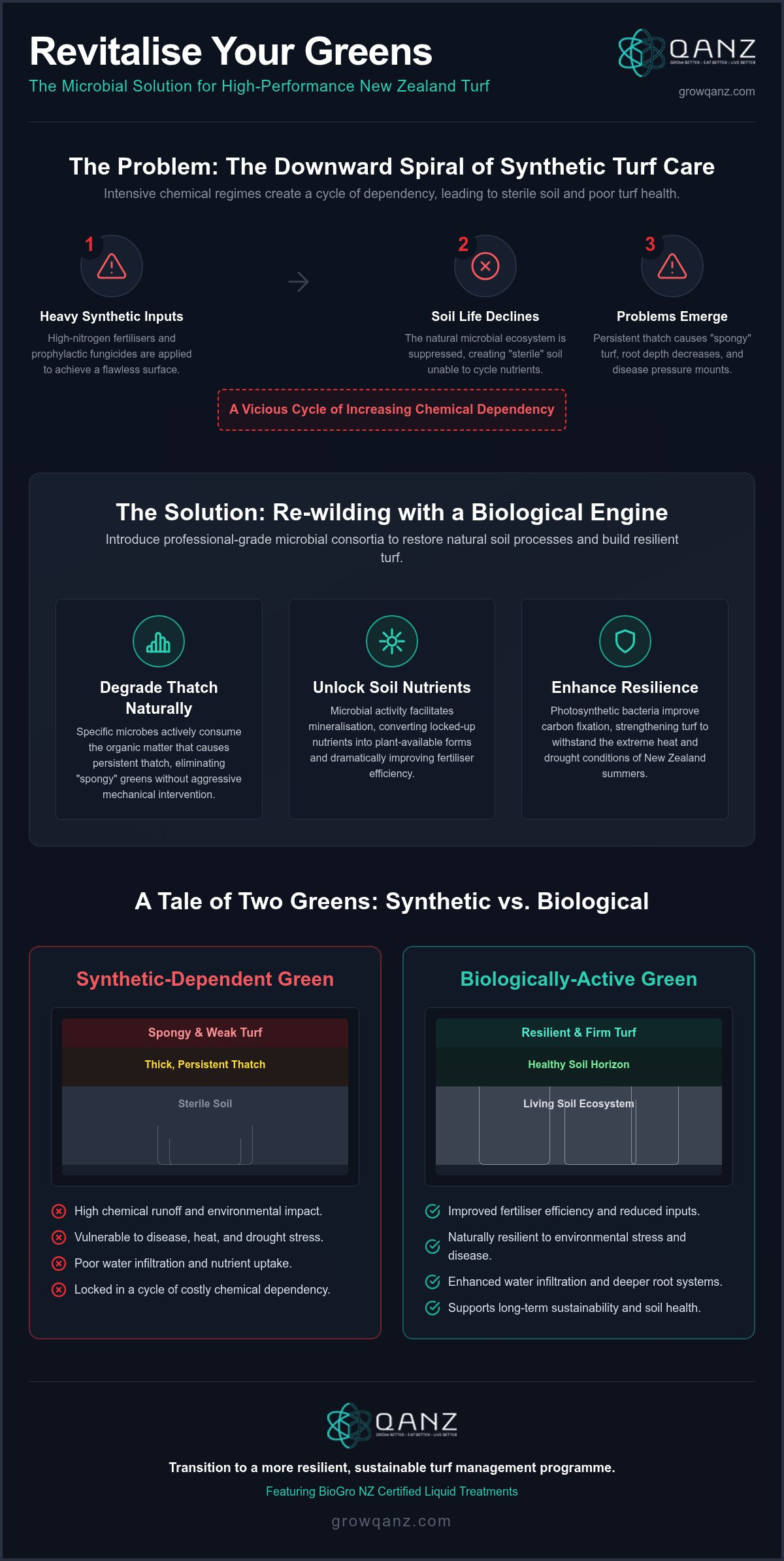
High-performance putting greens are often victims of their own management. In the pursuit of flawless, tournament-ready surfaces, greenkeepers frequently rely on intensive synthetic regimes that inadvertently strip the soil of its life. This creates what we call a “sterile green,” a condition where the complex ecosystem of Soil microbiology has been suppressed by years of high-nitrogen fertilisers and prophylactic fungicide applications. Without a functioning biological community, the turf becomes entirely dependent on the next chemical dose to survive, leaving it vulnerable to environmental shifts and disease.
Restoring this lost vitality requires more than just reducing chemical use; it demands a proactive “re-wilding” of the root zone. By integrating professional microbial solutions for golf greens, you can reintroduce the diverse consortia of organisms necessary to break down organic matter and cycle nutrients. This biological approach is particularly critical in New Zealand, where the Organic Products and Production Act 2023 reflects an increasing national focus on environmental integrity and verifiable sustainability.
The Impact of Synthetic Inputs on Soil Biology
Synthetic programmes offer immediate visual results, but they often come at a significant biological cost. High-nitrogen fertilisers provide a rapid flush of growth that can actually suppress the natural activity of nitrogen-fixing bacteria. When the soil is flooded with easily accessible synthetic nutrients, the indigenous microbes lose their ecological niche and go dormant or die off. This leads to a vicious cycle where greenkeepers must apply more chemicals to compensate for the soil’s lost ability to cycle nutrients naturally. Frequent fungicide use further complicates this by disrupting the delicate balance between beneficial fungi and bacteria, often leading to increased disease pressure as opportunistic pathogens fill the void left by a lack of microbial diversity.
Restoring Balance in High-Traffic Putting Greens
Identifying a sterile green is the first step toward restoration. You might notice persistent thatch build-up, a lack of root depth, or turf that struggles to recover from drought and heavy foot traffic. These are clear indicators that the biological foundation has eroded. Implementing professional-grade microbial solutions for golf greens allows for the systematic restoration of the root zone. By introducing a diverse consortium of beneficial organisms, you create a robust environment where the grass can thrive with less synthetic interference. This transition isn’t just about sustainability; it’s about building a resilient biological engine that maintains tournament standards while ensuring the long-term health of the soil under New Zealand’s unique climate conditions.
The Biological Engine: How Microbes Optimise Nutrient Uptake and Thatch
The soil beneath a putting green is not merely a medium for roots; it is a complex bioreactor. When functioning correctly, this system relies on mineralisation, a process where specialised microorganisms convert organic and inorganic compounds into ionic forms that plants can actually absorb. Research from Michigan State University emphasises the importance of soil microbial activities in maintaining this cycle, ensuring that nutrients don’t remain “locked” in the soil profile. By introducing professional microbial solutions for golf greens, greenkeepers can re-establish these natural pathways, reducing the reliance on high-salt synthetic inputs that often degrade soil structure over time.
Beyond simple nutrient cycling, advanced microbial consortia include photosynthetic bacteria. These organisms enhance carbon fixation, providing the turf with a more consistent energy supply even during periods of physiological stress. This biological activity supports significant root mass development, creating a more resilient plant that can better withstand the heavy traffic and environmental extremes common in New Zealand. A healthy microbial population provides several key benefits for high-performance turf:
- Enhanced Water Infiltration: Improved soil structure allows for better moisture movement.
- Pathogen Suppression: Beneficial microbes compete with harmful fungi for space and resources.
- Stress Tolerance: Robust root systems help turf survive drought and heat during New Zealand summers.
Accelerating Thatch Degradation Naturally
Thatch build-up is a primary concern for greenkeepers, often leading to “spongy” surfaces and poor water infiltration. Cellulose-degrading microbes, such as specific strains of fungi and bacteria, target the lignin and cellulose in organic matter, breaking it down into humus. This biological approach is often superior to aggressive mechanical scarification alone, as it provides a constant, gentle reduction of organic matter without the surface disruption that affects playability. By maintaining a balanced microbial population, you ensure surface firmness remains consistent throughout the season. This natural degradation process also recycles the nutrients contained within the thatch back into the soil, further supporting the plant’s growth without additional inputs.
Enhancing Nutrient Use Efficiency (NUE)
Many golf greens have high levels of phosphorus and potassium that are chemically bound to soil particles and unavailable to the plant. Microbes produce organic acids and enzymes that solubilise these minerals, effectively unlocking the “bank” of nutrients already present in your soil. This increases your Nutrient Use Efficiency (NUE), allowing for lower application rates of synthetic fertilisers and minimising the risk of nutrient runoff into local waterways. Quantum Organic-Total® improves nutrient uptake by utilising a diverse microbial consortium that facilitates atmospheric nitrogen fixation directly in the root zone. If you’re ready to transition toward a more biological approach, you can explore specialised turf and horticulture microbial solutions designed for the New Zealand market.
Biological vs. Synthetic: Transitioning Your Turf Management Programme
Transitioning from a purely synthetic regime to a biologically focused one is not an exercise in idealism; it is a strategic move toward operational resilience. While synthetic fertilisers provide an immediate growth response, they often fail to address the underlying causes of turf stress, such as poor soil structure or low microbial diversity. In contrast, professional microbial solutions for golf greens focus on building the soil’s natural capacity to support healthy turf. This is particularly relevant for New Zealand courses located near sensitive waterways or coastal ecosystems, where reducing chemical runoff is not just an environmental goal but a regulatory necessity.
The long-term resilience offered by biologicals creates a buffer against the unpredictability of the New Zealand climate. Instead of a “fast food” approach that leaves turf vulnerable once the nutrients leach away, microbes establish a self-sustaining cycle. This shift ensures that greens remain playable and aesthetically pleasing with fewer total inputs, aligning the course’s performance with modern sustainability standards.
Understanding the Cost-Benefit for NZ Superintendents
The financial argument for biologicals centres on long-term efficiency rather than a quick fix. By improving Nutrient Use Efficiency, greenkeepers can often reduce their total NPK applications, as the soil’s existing mineral reserves become available to the plant. This shift reduces the reliance on expensive, high-salt fertilisers and minimises the need for “rescue” fungicide treatments when the turf’s natural defences are compromised. For a detailed breakdown of the ROI, you can review this Quantum Organic-Total cost-benefit analysis, which explores how these inputs provide value in the professional NZ market.
The Hybrid Management Strategy
A successful transition rarely requires an immediate cessation of all synthetic inputs. Instead, many superintendents adopt a hybrid approach, using biologicals to buffer the soil against the harsh effects of necessary chemicals. Microbes play a vital role in detoxifying fungicide residues that can otherwise accumulate and stall natural soil processes. By incorporating microbial solutions for golf greens into a standard maintenance schedule, you begin to build a resilient soil profile that recovers faster from traffic and environmental extremes. This gradual integration allows the soil’s biological engine to restart, eventually reducing the frequency and volume of synthetic “shocks” needed to maintain tournament-standard playability.
Practical Implementation: Integrating Microbes into Your Maintenance Schedule
Successful integration of microbial solutions for golf greens depends on precision and consistency. Unlike synthetic fertilisers that provide a chemical “shock” to the plant, microbial inoculants work by colonising the root zone and establishing a living, self-sustaining population. This requires a shift from the “one-off” application mindset to a regular dosing schedule. Liquid formulations are the preferred delivery method for professional greenkeepers because they allow for exceptionally uniform coverage across the fine-textured turf of a putting green. Most importantly, liquid applications facilitate deep penetration into the soil profile, ensuring the microbes reach the rhizosphere where they can begin their symbiotic work with the grass roots.
Using your existing equipment makes this transition seamless. Most standard sprayers and fertigation systems are perfectly compatible with high-quality microbial liquids. However, the efficacy of these living products is influenced by environmental factors that greenkeepers must manage to ensure the best return on investment. It’s not just about what you apply, but how and when you apply it.
Best Practices for Liquid Microbial Application
Microbes are living organisms and are sensitive to extreme UV light and desiccation. Applying professional turf biological products during the early morning or late evening protects the consortia from solar radiation and ensures they remain viable. Once applied, it’s essential to water the product in immediately. This movement through the thatch layer protects the microbes from the drying effects of the wind and places them directly into the moist soil environment they need to thrive. Consistent moisture is the single most important factor in ensuring a successful colonisation of the root zone during the initial establishment phase.
Compatibility and Tank Mixing
While many microbial inoculants can be tank-mixed with biostimulants or liquid fertilisers, you must avoid mixing them directly with concentrated fungicides or biocides. These chemicals are designed to kill microorganisms and will significantly reduce the population density of your treatment. Water quality also plays a critical role; using non-chlorinated water is vital, as chlorine is a potent antimicrobial agent that can neutralise the beneficial bacteria before they even touch the turf. By choosing BioGro certified products, you ensure that your maintenance programme meets the highest New Zealand environmental standards while naturally restoring soil health. If you’re looking to upgrade your maintenance schedule with high-performance biology, you can view our full range of golf course microbial solutions.
GrowQanz Solutions: Quantum Organic-Total® and Quantum-VSC®
GrowQanz provides a scientifically rigorous approach to turf management through BioGro NZ certified technologies. These microbial solutions for golf greens aren’t simple additives; they’re precise consortia designed to restore the biological integrity of high-performance surfaces. For New Zealand greenkeepers, this certification ensures compliance with the Organic Products and Production Act 2023, providing a verified path toward reducing chemical dependency without sacrificing the aesthetic or playability of the course. By focusing on purity and verified efficacy, these solutions offer a reliable alternative to the traditional synthetic-heavy regime.
Quantum Organic-Total® for Comprehensive Soil Health
Quantum Organic-Total® serves as the essential foundation for any biological management programme. It contains a diverse range of microorganisms that work in synergy to improve soil structure and enhance the plant’s natural ability to cycle nutrients. This product is particularly effective for maintaining broadacre soil vitality in high-performance turf environments, where soil compaction and nutrient leaching are constant challenges. The same principles of biological restoration apply across various agricultural sectors, as detailed in our guide to microbial solutions for field crops, ensuring that the soil remains a productive asset rather than a sterile medium. Using this consortia helps to re-establish the microbial diversity that is often lost in high-traffic areas.
Quantum-VSC® for Stress Resilience and Thatch Control
While Organic-Total builds the foundation, Quantum-VSC® is engineered for the specific, high-pressure demands of the putting green. This formulation contains specialised strains of bacteria and fungi that target the complex polymers found in thatch, accelerating its natural decomposition into plant-available humus. It’s an invaluable tool for improving turf recovery after the intense foot traffic of tournament play or the physiological strain of a dry New Zealand summer. Quantum-VSC® aids in reducing transplant shock for new turf establishment, ensuring that newly laid sod or stolons colonise the root zone quickly and effectively. This targeted approach allows greenkeepers to manage organic matter build-up while simultaneously boosting the plant’s internal defence mechanisms.
GrowQanz provides the scientific expertise needed to navigate this biological transition. Our team understands the unique challenges of the New Zealand climate, from the humidity of the North Island to the dry heat of the South. We offer technical guidance to help greenkeepers calibrate application timings based on soil temperature and moisture levels, ensuring maximum microbial survival. This grounded, evidence-based approach ensures that every application of our microbial solutions for golf greens contributes to the long-term ecological health and operational efficiency of the course.
Securing the Future of New Zealand’s High-Performance Turf
The shift toward biological management represents a necessary evolution for New Zealand’s greenkeepers. By moving away from the “sterile green” cycle and embracing the natural efficiency of the soil’s root zone, you can achieve tournament-standard surfaces with significantly fewer synthetic interventions. Adopting professional microbial solutions for golf greens isn’t just about environmental compliance; it’s about building a resilient, self-sustaining biological engine that thrives under the unique pressures of our local climate.
GrowQanz provides the expertise and BioGro NZ certified technology needed to lead this transition. Our Quantum Organic-Total® proprietary technology offers a scientifically verified foundation for soil vitality, while our team provides dedicated technical support for NZ superintendents navigating these complex biological systems. Restoring the life of your soil is a long-term investment in the playability and reputation of your course.
Enquire about GrowQanz microbial solutions for your course today to begin your journey toward a more sustainable and resilient turf management programme. It’s time to let nature’s own technology work for you.
Frequently Asked Questions
How often should I apply microbial solutions to my golf greens?
For optimal results, apply these solutions every four to six weeks during the active growing season. This regular dosing ensures that the beneficial microbial populations remain high enough to colonise the rhizosphere effectively. While a single application provides a temporary boost, a consistent schedule is necessary to rebuild the biological foundation of your soil and maintain long-term turf resilience against environmental stress.
Can I use microbial inoculants alongside my regular fungicide programme?
You can integrate biologicals into a chemical programme, but you must avoid direct tank-mixing with fungicides. It’s best to wait at least 48 to 72 hours after a fungicide application before introducing live microbes. This buffer period allows the chemical residues to dissipate, ensuring the microbial solutions for golf greens aren’t neutralised before they can establish themselves in the root zone.
Will these products help with thatch build-up on my greens?
Quantum-VSC® is specifically formulated with cellulose-degrading microbes that target the organic matter in the thatch layer. By naturally breaking down lignin and cellulose, these microbes convert spongy thatch into plant-available humus. This biological process improves surface firmness and water infiltration without the need for aggressive mechanical scarification, which can often disrupt playability and damage the turf’s crown.
Is Quantum Organic-Total® safe to use near water hazards and sensitive areas?
Quantum Organic-Total® is entirely safe for use near water hazards because it is a 100% natural, BioGro NZ certified product. Unlike synthetic fertilisers that carry a risk of nutrient leaching and algal blooms, these microbial consortia support a balanced ecosystem. They are ideal for New Zealand courses situated in sensitive environments where strict environmental regulations govern chemical runoff and water quality.
How long does it take to see visible results in turf colour and density?
Visible improvements in turf colour and density typically appear within four to six weeks of the initial application. While the microbes begin cycling nutrients and improving soil structure immediately, the plant needs time to respond to this increased nutrient availability. You’ll notice a more consistent, deep green colour and improved recovery from foot traffic as the biological engine in the soil begins to function efficiently.
Do I need special equipment to apply GrowQanz liquid microbial treatments?
No special equipment is required to apply our liquid treatments. They are designed for easy integration into your existing sprayers or fertigation systems. The primary requirement is ensuring that your equipment is thoroughly cleaned of any antimicrobial residues before use. Using non-chlorinated water for the mix is also vital, as chlorine can significantly reduce the viability of the live microbial consortia.
Are these microbial solutions effective in the varied climates of New Zealand?
These solutions are highly effective across New Zealand’s diverse climatic zones. Whether you are managing the humidity of Northland or the dry, high-UV conditions of Central Otago, microbial solutions for golf greens provide the biological tools needed for turf survival. The key is adjusting your application timing to ensure adequate soil moisture and avoiding the peak heat of the day to protect the organisms during the initial establishment phase.
How do BioGro certified products benefit my golf course sustainability goals?
BioGro certification provides independent verification that your inputs meet the highest organic and environmental standards in New Zealand. This assurance is crucial for meeting the requirements of the Organic Products and Production Act 2023. Using certified products demonstrates a commitment to genuine sustainability, helping you reduce chemical dependency while providing a transparent, evidence-based report to members, stakeholders, and local environmental regulators.
Disclaimer
Important: This article provides general agricultural information only. Product performance can vary according to crop, soil, climate, management practices and application conditions. Trial or research results discussed may have been obtained under specific conditions and should not be interpreted as a guarantee of equivalent results. Always follow current product directions and confirm suitability for your crop, growing system and organic certification requirements. Contact QANZ for current product and application information.
