
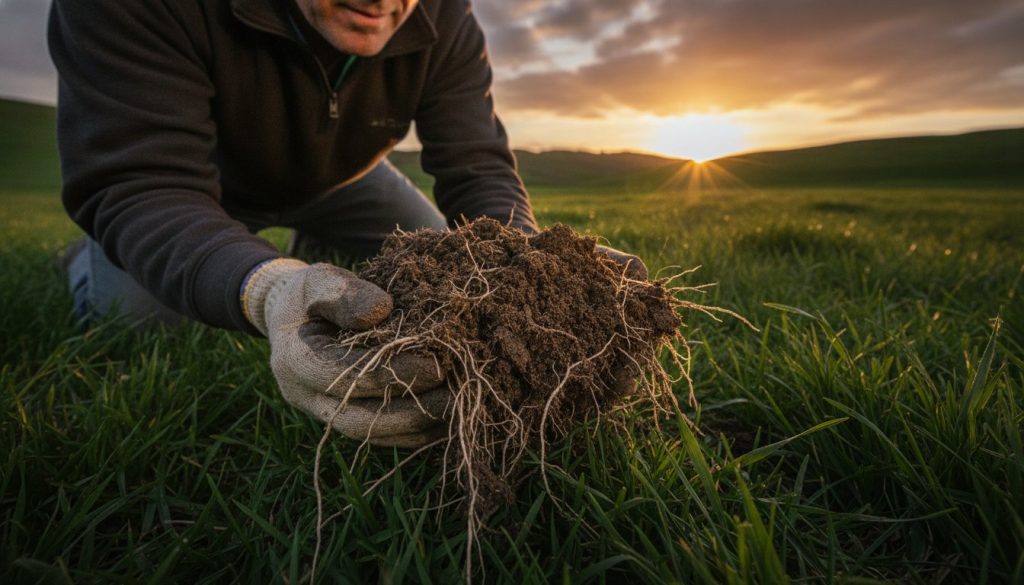
Did you know that industry data reveals a staggering 65 per cent of farming sites across Australia are currently operating with soil macroporosity below target levels? It’s a frustrating reality for many Australian growers who find themselves trapped in a costly cycle of mechanical ripping and rising diesel bills just to keep the paddock “open”. You’ve likely noticed how even the most targeted synthetic fertilisers struggle to perform when the ground is tight and water simply runs off the surface during challenging seasonal conditions.
This article explores how advanced microbial solutions for compacted soil function as biological engineers, restoring the natural crumb stability and porosity needed for deep root penetration without the constant reliance on heavy machinery. We’ll examine the specific role of microbial consortia in rebuilding soil structure and how GrowQanz’s ACO Certified technologies are helping Australian farmers reduce tractor passes while significantly improving crop resilience for the 2026 season. By shifting from mechanical force to biological synergy, you can restore the long-term productivity of your land naturally and efficiently.
Key Takeaways
- Beyond the Band-Aid: Discover why mechanical ripping alone often triggers a re-compaction cycle and why biological support is essential for maintaining long-term soil structure.
- Biological Engineering: Learn how to utilise microbial solutions for compacted soil to produce the natural extracellular glues that stabilise soil aggregates and improve water infiltration.
- Operational Efficiency: Identify how shifting to a biological strategy can lower on-farm costs by reducing tractor passes and fuel consumption across your paddocks.
- Strategic Application: Gain insights into the critical timing and soil assessment steps required to ensure microbial consortia penetrate deep into the compaction layer during moisture events.
- Certified Performance: Understand why professional New Zealand growers choose BioGro certified formulations like Quantum Organic-Total® for reliable and evidence-based soil restoration.
The Science of Soil Compaction: Why Mechanical Ripping is Only a Band-Aid
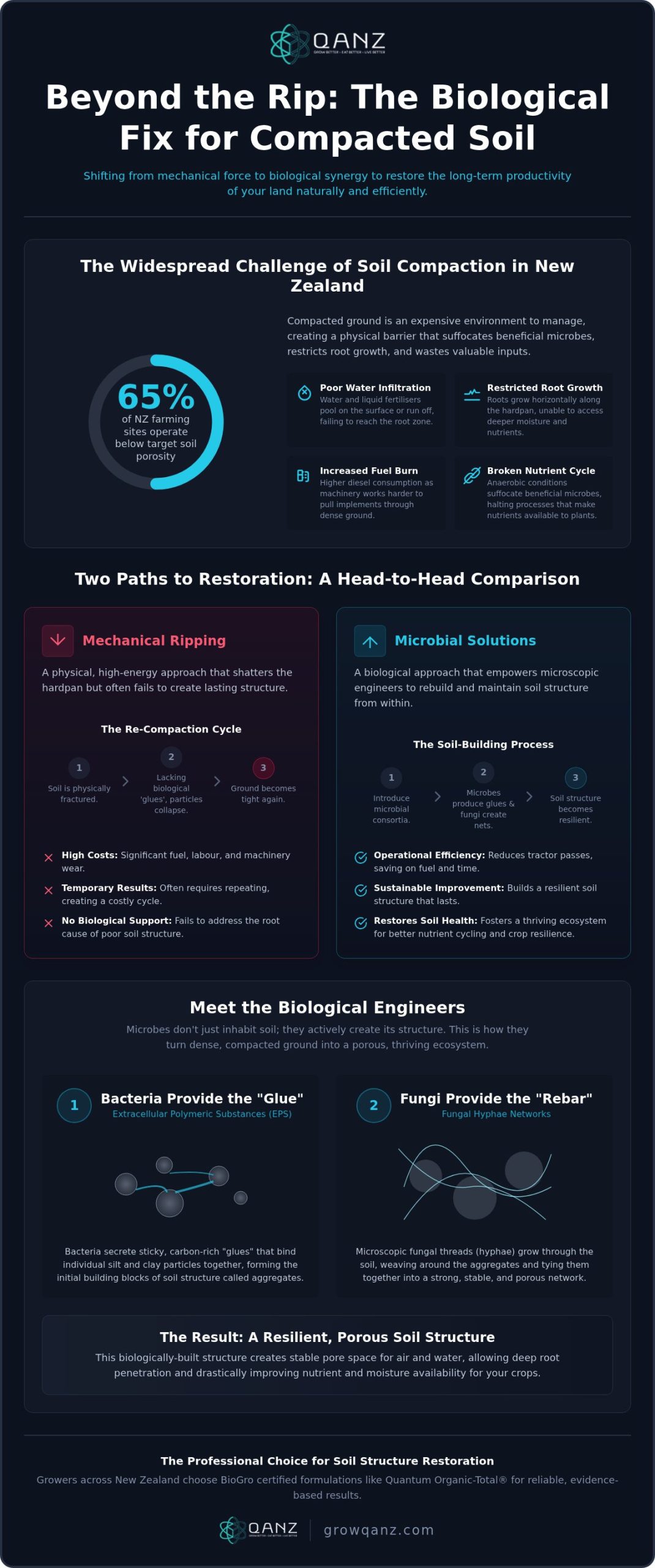
Soil compaction is fundamentally a collapse of soil architecture. It represents the loss of vital pore space where air and water should circulate freely. When soil aggregates break down, the resulting density creates a physical barrier that restricts root development and nutrient uptake. You might recognise the signs in your own paddocks; surface ponding after a light rain, horizontal root growth along a hardpan, or a noticeable increase in fuel burn when pulling implements through the ground. These physical symptoms indicate that the soil’s natural capacity to breathe has been compromised.
Many New Zealand growers attempt to solve this with mechanical ripping, yet this often triggers a frustrating re-compaction cycle. While a subsoiler can shatter a hardpan, the newly loosened soil lacks the biological “glues” required to hold those new channels open. Without these structural supports, the soil particles quickly settle back into a tighter, more restrictive state under their own weight or the pressure of the next tractor pass. This is why microbial solutions for compacted soil are gaining traction; they provide the biological engineering required to turn a temporary physical fix into a permanent structural improvement. By integrating these biological tools, growers can finally break the cycle of mechanical dependency.
The Hidden Cost of “Tight” Ground
Compacted ground is an expensive environment to manage. When pore spaces vanish, the soil becomes anaerobic, effectively suffocating the beneficial aerobic bacteria that drive nutrient cycling. This lack of oxygen forces the plant to spend more energy simply surviving rather than producing yield. Poor water infiltration also means that expensive irrigation and liquid fertilisers often run off the surface or pool in low spots, leading to significant waste. In a tight paddock, you’re essentially paying for inputs that your soil is physically incapable of absorbing, which diminishes the return on every dollar spent on nutrition.
The Biological Failure Behind Physical Hardpans
The transition from healthy, friable earth to a dense hardpan is rarely just a physical event; it’s a biological failure. Understanding The Science of Soil Structure reveals that microbes are the primary architects of porosity. They produce extracellular polymeric substances, or biological glues, that bind soil particles into stable aggregates. Over-reliance on synthetic chemicals can inadvertently sterilise these populations, leading to a structural collapse where the soil becomes physically heavier and more prone to “setting” like concrete. Restoring these microbial engineers is the only way to ensure the ground remains open, aerated, and productive over the long term.
Microbial Engineers: How Bacteria and Fungi Build Soil Porosity
While we often view soil as a static medium, it’s actually a dynamic environment shaped by trillions of microscopic architects. The role of soil organisms in maintaining structural integrity is profound. These microbes don’t just inhabit the pores; they actively create them. Through the secretion of complex compounds and physical manipulation of soil particles, microbial solutions for compacted soil act as a catalyst for these primary engineers of paddock porosity. This biological activity transforms “tight” ground into a functional, breathing ecosystem.
Central to this process are Extracellular Polymeric Substances (EPS), often described as “microbial glues”. These sticky, carbon-rich secretions bond individual silt and clay particles into stable aggregates. This aggregation is what prevents the ground from collapsing into a dense, impenetrable mass. When you apply microbial solutions for compacted soil, you’re reintroducing the manufacturing workforce responsible for these glues. Engineering requires energy, and photosynthetic bacteria within these consortia capture light or utilise root exudates to fuel the structural work of the wider microbial community, allowing them to penetrate even stubborn hardpans.
While bacteria provide the glue, fungi provide the rebar. Fungal hyphae act as microscopic nets, wrapping around soil crumbs and tying them together. This “netting” effect creates a diverse range of pore sizes, allowing for both rapid drainage during heavy rain and long-term moisture retention in the topsoil. Microbial movement also carves out microscopic “highways” for water and air, ensuring that vital resources reach the root zone even in historically difficult paddocks.
Extracellular Polymeric Substances (EPS) and Soil Aggregation
The chemistry of EPS is remarkably resilient. These biological bonds are far more durable than the temporary fractures created by a ripper blade. Because these bonds are organic and flexible, they can withstand significant pressure from heavy machinery and resist being washed away by high-intensity rainfall. This structural stability is the foundation of a healthy soil profile, ensuring that once pores are opened, they stay open. A diverse microbial population ensures a variety of pore sizes, which is essential for a balanced soil atmosphere.
The Symbiosis of Roots and Microbes in Compacted Zones
In tight ground, plant roots often struggle to find a path forward. Microbes assist by “lubricating” the root tip with specific secretions, making it easier for the root to navigate microscopic fissures. Mycorrhizal fungi further extend this reach, effectively acting as an external root system that can penetrate areas too dense for the plant itself. This partnership is vital for preventing the formation of “plough pans” over time. For growers looking to restore this natural balance, exploring specialised microbial technologies can provide the necessary catalyst to kickstart biological aeration.
Mechanical vs. Biological Restoration: Choosing the Right Strategy
Choosing between mechanical force and biological restoration isn’t just about speed; it’s about durability. Mechanical aeration offers an immediate physical change, shattering hardpans and allowing a sudden influx of air. However, this effect is often fleeting. Without the biological structures we’ve discussed to support these new openings, the soil frequently collapses back into a denser state within a single season. In contrast, microbial solutions for compacted soil work more gradually but offer a permanent structural shift. They build the internal resilience needed to keep the ground open year after year.
Transitioning to a biologically led programme significantly impacts the farm’s bottom line. Reducing the frequency of heavy tillage directly lowers fuel consumption and lessens the wear on expensive machinery. It also frees up valuable labour during the busy shoulder seasons. For many New Zealand growers, a hybrid approach proves most effective. By using light aeration to create initial pathways and following up immediately with microbial inoculation, you provide the “engineers” with a head start. This combination ensures the physical fractures are colonised and stabilised before they have a chance to settle.
Integrity is paramount when selecting biological inputs. BioGro certification ensures that the consortia you’re applying are 100 per cent natural and free from contaminants that could compromise your soil’s health. In a market where consistency varies, choosing a certified professional solution provides the peace of mind that your restoration programme is built on verified science and ecological safety.
The Problem with Heavy Tillage
Heavy tillage is a blunt instrument that often carries unintended consequences. While it breaks deep compaction, the sheer force of the steel can destroy the delicate fungal networks essential for long-term aggregate stability. In heavy clay soils, common in regions like Northland or Southland, ripping in sub-optimal moisture conditions can lead to “smearing”. This creates a glazed, impenetrable surface at the depth of the ripper tine, effectively replacing one hardpan with another. Most mechanical solutions are also depth-limited, typically addressing only the top 20cm and leaving deeper, more restrictive layers untouched.
The Biological Advantage: Deep Soil Penetration
Microbes aren’t restricted by the physical reach of a tractor’s three-point linkage. Liquid microbial consortia utilise water films to move naturally through the entire soil profile, reaching depths that mechanical rippers simply can’t access safely. These organisms colonise the microscopic fissures within the deep subsoil, expanding the rhizosphere and unlocking nutrients that were previously out of reach. For a deeper look at why these delivery methods matter, see our guide on Why Liquid Microbial Soil Treatments Outperform Granules. This mobility ensures a comprehensive restoration that encompasses the full depth of your paddock’s soil profile.
Implementing a Microbial Strategy for Compacted Paddocks
Successful soil restoration requires more than just the right product; it demands a methodical application strategy. When integrating microbial solutions for compacted soil, the goal is to ensure these living organisms reach the depth of the compaction layer where they can begin their engineering work. This process is not a simple “spray and forget” exercise. It is a structured transition from mechanical reliance to biological self-sufficiency.
The first step is a thorough soil assessment. Use a penetrometer or a simple spade test to identify the exact depth and severity of the hardpan across your paddocks. Once the problem zones are mapped, timing the application becomes the most critical factor. Coordinating your inoculation with moisture events, such as forecasted rain or scheduled irrigation, allows the liquid consortia to move deep into the soil profile. For professional results, selecting a broad-spectrum consortia like Quantum Organic-Total® ensures a diverse workforce is present to handle various soil types. Application is best achieved through standard boom sprays or fertigation systems, providing even distribution. Finally, monitoring via water infiltration tests and root depth observations will track your progress throughout the season.
Optimising Application for New Zealand Conditions
Environmental factors play a significant role in microbial survival. Managing water quality in the spray tank is essential; ensure the pH is balanced and avoid using heavily chlorinated water which can shock the consortia. Because microbes are sensitive to extreme heat and high UV levels, application should occur in the early morning or late evening to ensure they successfully colonise the soil before being exposed to harsh light. For broadacre systems, integrating these treatments with microbial solutions for field crops can streamline your management programme while enhancing overall soil vitality.
Maintenance and Long-Term Structure Building
Establishing a dominant microbial population is an ongoing process. Initial follow-up doses are often necessary to ensure the beneficial consortia maintain their position against less productive native species. These microbes also require a steady food source to continue building soil aggregates. Incorporating cover crops or maintaining diverse root systems provides the carbon exudates needed to feed your biological engineers. As your soil structure improves and natural porosity returns, you can begin to transition away from heavy tillage, allowing the biology to maintain the paddock’s “open” state naturally. To begin your soil restoration, view our range of BioGro certified microbial solutions and choose the formulation right for your land.
Quantum Organic-Total®: The Professional Choice for Soil Structure
Quantum Organic-Total® stands as the definitive microbial solution for compacted soil in the New Zealand market. It isn’t just another soil conditioner; it’s a precisely engineered consortia of 100 per cent natural microbes designed to restore the biological function of your land. For professional growers, the BioGro New Zealand certification provides essential peace of mind. It verifies that you’re applying a product that meets the highest standards of purity and ecological safety, ensuring no synthetic interference in your regenerative programme.
This proprietary formulation is specifically selected to thrive across the diverse soil profiles found throughout Aotearoa. Whether you’re managing the heavy, stubborn clays of Northland or the free-draining sandy loams of the coastal regions, these microbes possess the resilience to establish and perform. By reintroducing these biological engineers, you can effectively address the legacy of intensive management. This is particularly vital when restoring soil health after chemical stress, where the natural microbiome has been depleted by years of synthetic inputs.
The Power of Liquid Microbial Consortia
Quantum Organic-Total® delivers high-density microbial populations directly to the root zone and the compaction layer. Being a liquid formulation, it offers superior soil penetration compared to granular alternatives, ensuring the microbes move through the soil profile via water films. Integration is straightforward. It fits into your existing standard farming operations, requiring no specialised equipment beyond your usual boom spray or fertigation setup. When viewed as a core component of a cost-benefit analysis, the reduction in mechanical requirements and improved nutrient efficiency make it a robust financial choice for any professional operation.
Partnering with GrowQanz for Regenerative Success
Success in soil restoration isn’t just about the product; it’s about the partnership. Partnering with GrowQanz gives you access to the technical support needed to tailor a microbial programme to your specific paddock challenges. We understand that every farm has a unique history and structural profile. Investing in these microbial solutions for compacted soil is an investment in your soil’s permanent infrastructure. It’s a move away from the temporary fixes of the past and towards a resilient, self-aerating future. Organise a consultation with our team today to start your journey toward restoring paddock porosity and long-term productivity.
Restoring Paddock Productivity through Biological Innovation
The shift from mechanical force to biological synergy represents a significant advancement in modern paddock management. While traditional ripping provides a temporary reprieve, it’s the reintroduction of specific microbial engineers that ensures long-term crumb stability and water infiltration. By utilising microbial solutions for compacted soil, you’re investing in the living infrastructure of your land, allowing nature to maintain porosity without the constant expense of heavy machinery and rising diesel costs.
Quantum Organic-Total® offers a BioGro New Zealand certified path to structural restoration. This proprietary technology has delivered proven results across ANZ broadacre and horticulture, providing the scientific reliability professional growers require. Transitioning to a biologically led strategy doesn’t just lower operational overheads; it builds a more resilient soil profile capable of thriving through the unpredictable seasons of 2026. This evidence-based approach ensures your soil remains an active, productive asset rather than a physical barrier to growth.
Take the first step toward permanent soil health. Consult a GrowQanz Specialist for Your Soil Restoration Plan today. We’re here to help you unlock the full productive potential of your soil, ensuring your land remains open and fertile for generations to come.
Frequently Asked Questions
How long does it take for microbes to improve soil compaction?
Microbial activity begins immediately, though physical changes in soil structure typically become measurable within three to six months. You’ll likely notice improved water infiltration and softer ground during the first season of use. Because microbial solutions for compacted soil rely on the gradual accumulation of biological glues, the restoration is a cumulative process. Long-term structural porosity continues to build as the microbial consortia establish a stable, dominant presence within your paddock’s ecosystem.
Can I apply microbial solutions for compacted soil through my boom spray?
Yes, our liquid formulations are specifically engineered for ease of use through standard agricultural equipment. Quantum Organic-Total® is a proprietary liquid consortia that integrates seamlessly into your existing boom spray or fertigation programme. It’s important to ensure your spray tank is clean and that you manage water quality to maintain microbial viability. This delivery method allows for even distribution across the paddock, ensuring the biology reaches the soil surface efficiently before being washed into the profile.
Will these microbes survive in heavy clay soils with poor drainage?
Our microbial consortia are specifically designed to thrive in challenging environments, including heavy clay soils prone to anaerobic conditions. The diverse range of organisms in Quantum Organic-Total® includes strains that can function in low-oxygen zones, which are common in poorly drained paddocks. These microbes actively work to create the initial microscopic channels needed to restore drainage. Over time, their activity builds the aggregate stability required to prevent clay particles from collapsing back into a dense, impenetrable mass.
Is it necessary to use mechanical aeration alongside microbial treatments?
Mechanical aeration isn’t strictly required, but it can accelerate the restoration process in severely compacted blocks. Using a hybrid approach where light aeration creates initial fractures allows the microbes to penetrate deeper into the profile more quickly. However, microbial solutions for compacted soil are capable of working independently by utilising existing fissures and water films. If you choose a biology-only path, the results are often more durable because you aren’t disrupting the delicate fungal networks that maintain soil structure.
How do I know if my soil is compacted enough to need microbial intervention?
Look for clear physical indicators such as persistent surface ponding after rain or a noticeable increase in tractor fuel consumption during cultivation. You can also perform a simple spade test to check for “platy” soil structures or roots that grow horizontally rather than vertically. If you find a distinct hardpan layer within the top 20cm of your soil profile, it’s a strong sign that biological intervention is needed to restore natural porosity and improve overall paddock productivity.
Are GrowQanz products compatible with my current liquid fertilisers?
Quantum Organic-Total® is compatible with most liquid fertilisers, though we recommend a simple jar test before full-scale mixing. To ensure microbial survival, it’s best to avoid high-salt concentrations or extremely acidic mixes in the spray tank. We suggest adding the microbes as the final component to a diluted fertiliser mix. This approach allows you to streamline your application passes while still providing the biological kickstart your compacted paddocks require for long-term structural improvement.
Does BioGro certification mean these products are only for organic farmers?
BioGro certification confirms our products are 100 per cent natural, but they are widely used by both organic and conventional growers across New Zealand. Conventional farmers often integrate these solutions to improve fertiliser efficiency and reduce the need for aggressive mechanical tillage. The certification provides a guarantee of purity and verification, ensuring that you aren’t introducing synthetic contaminants into your soil. It’s a professional standard that appeals to any grower focused on sustainable, long-term soil health and paddock resilience.
How often do I need to reapply microbes to maintain soil porosity?
We typically recommend an initial intensive programme followed by annual maintenance doses to keep the microbial population dominant. While the structural changes are more permanent than mechanical ripping, the soil microbiome can be depleted by extreme weather events or intensive chemical use. Regular applications ensure a steady supply of biological glues are produced to keep pores open. Many growers find that as their soil structure improves, they can reduce the frequency of applications while still maintaining superior aeration and root penetration.
Disclaimer
Important: This article provides general agricultural information only. Product performance can vary according to crop, soil, climate, management practices and application conditions. Trial or research results discussed may have been obtained under specific conditions and should not be interpreted as a guarantee of equivalent results. Always follow current product directions and confirm suitability for your crop, growing system and organic certification requirements. Contact QANZ for current product and application information.
