

What if the secret to breaking the cycle of declining yields and rising input costs isn’t found in a bag of synthetic fertiliser, but in the complex biological engine already beneath your feet? Many New Zealand growers are finding that despite increasing their inputs, soil compaction and nutrient leaching continue to stall productivity. Learning how to increase nutrient uptake in plants naturally is no longer just an environmental preference; it is a commercial necessity for those facing stricter regulations and a changing climate. You likely recognise that a sustainable future requires a shift from simply feeding the crop to actively managing the living soil ecosystem.
This guide provides a professional framework for mastering the biological mechanisms that drive natural absorption and restore soil productivity across your property. We will show you how to achieve BioGro-compliant results and improve nutrient cycling without relying on synthetic interference. We’ll explore the role of specialised photosynthetic bacteria, the practical application of Quantum Organic-Total®, and how a biology-first approach builds genuine drought resilience in your paddocks. By the end of this guide, you will have the technical knowledge to turn your soil into a self-sustaining asset that supports both your bottom line and our local environment.
Key Takeaways
- Understand how to increase nutrient uptake in plants naturally by transitioning from a reliance on synthetic fertilisers to activating the biological processes within the rhizosphere.
- Discover how beneficial soil microbes drive nutrient mineralisation and carbon sequestration, forming the essential link between soil health and crop productivity.
- Compare the logistical efficiency of liquid microbial treatments against bulk compost, especially for large-scale New Zealand agricultural operations requiring precise application.
- Learn why protecting delicate fungal networks through reduced soil disturbance and biological benchmarking is critical for maintaining long-term drought resilience in local paddocks.
- Explore the role of BioGro-certified technologies like Quantum Organic-Total® in achieving sustainable, high-yield outcomes while meeting the latest 2026 environmental standards.
Understanding the Foundation: What Defines High-Quality Nutrient Uptake?
Nutrient uptake is the biological process where essential minerals move from the soil solution into the plant’s vascular system via the rhizosphere. It is not simply a matter of how much fertiliser you apply; it’s about how much the plant can actually utilise. When uptake is efficient, plants are more resilient to environmental stress and produce higher quality yields. High-quality uptake ensures that every unit of nutrition applied or naturally present in the soil is converted into plant growth rather than leaching into local waterways.
Many New Zealand stations suffer from “lazy” soil. When plants are fed a steady diet of synthetic NPK, they stop secreting the carbon-rich exudates that support microbial life. This breaks the natural cycle, leading to a dependency on chemical inputs that offer diminishing returns over time. Learning how to increase nutrient uptake in plants naturally involves restoring this biological dialogue between the root and the soil, ensuring the system functions as a living organism rather than a sterile medium.
Our national landscapes vary wildly and present specific challenges. From free-draining volcanic loams to heavy, pugging-prone clay paddocks and stony plains, each soil type presents unique barriers to efficiency. Improving these soils is a long-term investment in land value and station productivity. By focusing on natural mechanisms, you build a resilient foundation that pays dividends through reduced input costs and improved land health for future generations.
The Three Pillars of Soil Vitality
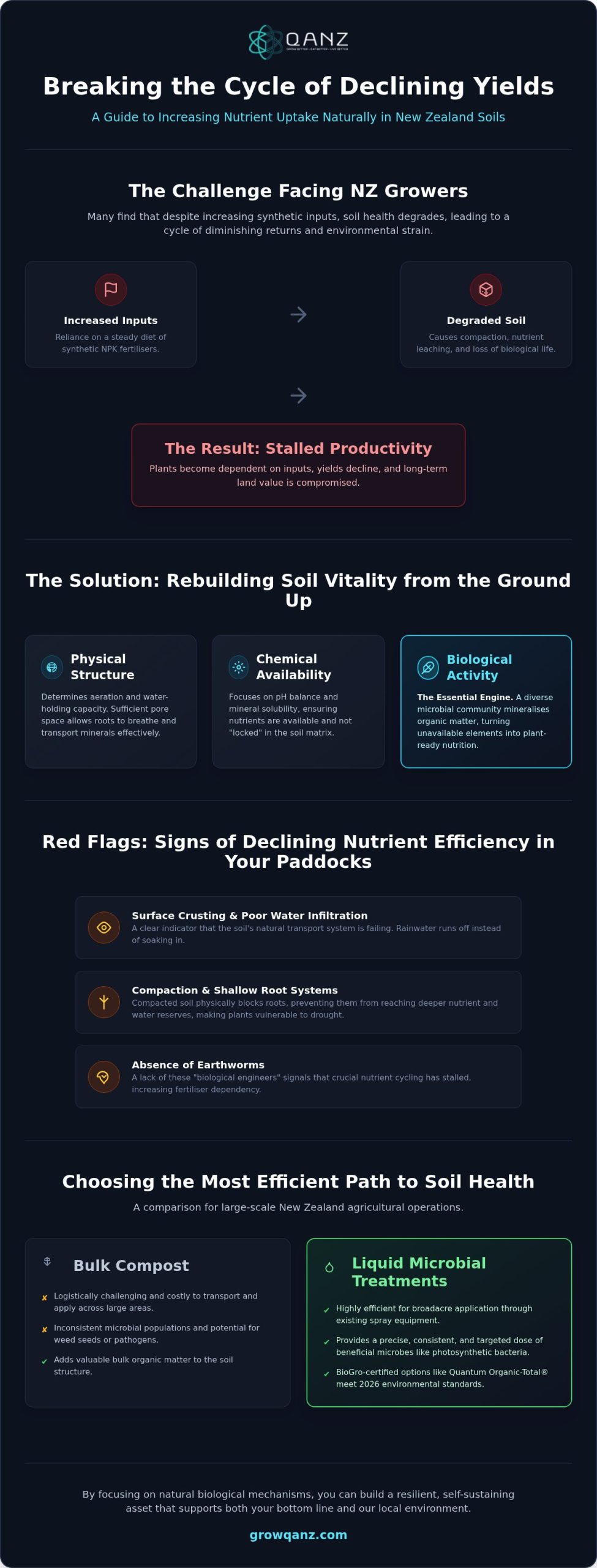
True soil vitality rests on a balance of three interconnected factors. The physical structure determines aeration and water-holding capacity; without sufficient pore space, roots cannot breathe or transport minerals effectively. Chemical availability focuses on pH balance and mineral solubility, ensuring that nutrients don’t become “locked” in the soil matrix. Finally, biological activity acts as the essential middleman. A diverse microbial community mineralises organic matter, turning unavailable elements into plant-ready nutrition that can be easily absorbed.
Signs of Declining Nutrient Efficiency
Identifying poor uptake starts with observing your paddocks. Surface crusting and slow water infiltration are clear indicators that the soil’s natural transport system is failing. When soil is compacted, roots are physically blocked from reaching deeper nutrient reserves, often resulting in shallow, weak root systems that cannot withstand dry periods. You should also monitor earthworm activity. A lack of these biological engineers suggests that nutrient cycling has stalled, leaving your crops entirely dependent on the next round of applied fertilisers.
The Microbial Engine: Why Biology is the Key to Natural Improvement
Soil is far more than a simple substrate; it is a complex biological engine where microorganisms act as the primary drivers of nutrient mineralisation and carbon sequestration. These microscopic partners form a sophisticated symbiotic relationship with plant roots, exchanging captured carbon for essential minerals. When you understand the mechanics of this exchange, you unlock the secret of how to increase nutrient uptake in plants naturally without relying on aggressive synthetic interventions. It’s a process of working with the land’s existing potential rather than forcing it with external chemicals.
The presence of photosynthetic bacteria is particularly transformative for New Zealand growers. These specialised organisms act like solar panels within the soil, capturing energy to fuel the wider microbial community even in the depths of the root zone. This energy boost allows for more efficient nutrient cycling and supports the long-term ecological stewardship of your property. For those looking to recover from years of intensive chemical regimes, microbial solutions for field crops provide a proven pathway to restore biological vitality and rebuild soil structure from the ground up.
How Microbes Unlock Bound Nutrients
Mineralisation is the vital process of converting organic nitrogen and phosphorus into inorganic forms that plants can actually absorb. Many New Zealand paddocks have high “total” nutrient levels that are technically “locked” in the soil matrix and unavailable to the crop. Microbes assist this by:
- Secreting organic acids that solubilise mineral-bound phosphorus.
- Producing enzymes that break down organic matter into inorganic nitrogen.
- Creating a competitive environment that suppresses harmful soil-borne pathogens.
Maintaining high microbial diversity ensures that root health remains uncompromised, allowing the plant to focus its energy on growth rather than defence. It’s a natural insurance policy for your yields.
Improving Soil Structure via Biological Glues
Microbes do more than just feed the plant; they build the house the plant lives in. Through the production of glomalin, a biological glue, they create stable soil aggregates that improve aeration and water infiltration. This improved structure is the primary reason why biologically active soils show greater drought resilience, as the pore spaces hold onto moisture more effectively during dry cycles. By fostering this engine, you reduce the necessity for heavy mechanical tillage, preserving the integrity of the soil’s fungal networks and maintaining a “total” approach to soil health. You might consider exploring Quantum Organic-Total® as a way to jumpstart these natural processes on your own station.
Compost vs. Microbial Inoculants: Choosing the Most Efficient Path
Professional growers often face a choice between traditional bulk amendments and modern biological technology. While adding organic matter is a fundamental practice, the method of application determines the efficiency of the result. When considering how to increase nutrient uptake in plants naturally, we must look beyond just adding “more” and focus on how the soil actually processes those additions. In many cases, the most effective path involves activating the biology that is already present rather than just burying the soil in new material.
The logistical reality of managing large New Zealand stations often makes bulk applications difficult. Moving tonnes of material across varied terrain requires significant labour and fuel. This is where the distinction between “feeding the soil” and “activating the soil” becomes critical for your bottom line. By using targeted biologicals, you can achieve superior results with a fraction of the physical volume required by traditional methods.
The Role of Bulk Organic Matter
Bulk compost serves primarily as a food source for existing soil life rather than a direct fertiliser. It’s excellent for building long-term soil carbon, yet sourcing high-quality, weed-free compost on a professional scale in New Zealand remains a significant challenge. Contaminated compost can introduce invasive species that compete with your crops for the very nutrients you’re trying to provide. Instead of relying solely on imported bulk matter, many successful growers use mulch and crop residues to protect the soil surface from erosion, while using microbial technology to accelerate the breakdown of this resident organic matter.
The Precision of Microbial Inoculants
In contrast to the variability of compost, targeted microbial strains offer a level of consistency that professional operations require. This is why liquid microbial soil treatment has become the precision choice for 2026. These inoculants “supercharge” the organic matter already present in your soil, activating the mineralisation processes discussed in previous sections without the need for massive physical applications.
Targeted inoculants provide several advantages for the modern NZ grower:
- Guaranteed microbial counts that deliver predictable results across different paddocks.
- Simplified logistics using existing liquid spray equipment, reducing the need for specialised spreaders.
- Full BioGro compliance, ensuring your production meets the strict standards required for high-value export markets.
The cost-effectiveness of these biologicals is most evident in broadacre and large-scale horticultural systems. A single liquid application can deliver a concentrated dose of proprietary microbes across hundreds of hectares. This targeted approach provides a verified, stable pathway to productivity that bulk amendments simply cannot match in terms of logistical ease and scientific reliability.
Five Practical Steps to Maximise Nutrient Absorption Naturally
Achieving consistent results across your property requires a structured, professional-grade framework. While nature provides the mechanisms, your management decisions determine the efficiency of the outcome. Understanding how to increase nutrient uptake in plants naturally is best approached through five practical steps designed to restore the biological balance of your land.
- Step 1: Conduct a biological soil test. Unlike traditional chemical analysis that only measures mineral levels, biological testing benchmarks the actual microbial activity that governs nutrient delivery.
- Step 2: Minimise soil disturbance. Fungal hyphae are fragile; reducing tillage protects these delicate networks and maintains the soil’s physical integrity.
- Step 3: Diversify paddocks with cover crops. A variety of plant species provides a continuous, diverse food source for microbes, ensuring the “engine” never runs out of fuel.
- Step 4: Maintain “armour” on the soil. Constant ground cover protects the rhizosphere from New Zealand’s high UV levels and prevents erosion during heavy rain events.
- Step 5: Reintroduce vital biology. Use high-quality, liquid microbial inoculants to re-seed the soil with the proprietary strains necessary for high-performance uptake.
Managing Tillage and Ground Cover
Transitioning to low-till or no-till systems is particularly beneficial for New Zealand pastoral and field crops. Constant mechanical disturbance shears fungal networks and collapses the pore spaces required for aeration. By keeping living roots in the ground year-round, you prevent nutrient leaching during high-rainfall winters. Selecting the right species mix for your cover crops can also help how to reduce transplant shock in seedlings by creating a biologically receptive environment before the main crop is even planted. This proactive approach ensures that young plants establish their microbial partnerships immediately upon entering the soil.
Strategic Inoculation for Rapid Recovery
Timing your biological applications is essential for maximum efficacy. Reintroducing microbes during planting or through irrigation allows the beneficial bacteria to colonise the rhizosphere when the plant is most active. For permanent plantings, such as those in microbial soil amendments for nut orchards, these treatments manage long-term fertility by ensuring minerals are constantly mineralised. You can monitor your progress through tangible metrics like increased plant vigour, higher brix levels in foliage, and a visible expansion of root mass. To begin restoring the natural productivity of your paddocks, you can enquire about our specialised microbial solutions today.
Scaling Success: Professional Biological Solutions for Long-Term Vitality
Transitioning to a biology-first management system requires more than just a change in philosophy; it requires a scientific partner capable of providing verified, professional-grade technology. GrowQanz positions itself as this partner for New Zealand growers moving toward regenerative systems. By focusing on the underlying microbiology of the land, we help you master how to increase nutrient uptake in plants naturally while restoring the long-term productivity of your soil. Our approach isn’t about temporary fixes but about building a self-sustaining ecosystem that thrives without synthetic dependency.
Quantum Organic-Total® serves as our comprehensive solution for total soil vitality. This proprietary blend of microbial strains, including photosynthetic bacteria, is designed to activate the mineralisation processes discussed throughout this guide. For growers facing the increasing frequency of dry cycles in 2026, Quantum-VSC® provides a specialised tool for enhancing plant resilience. It functions by improving root architecture and moisture retention, allowing crops to maintain productivity under environmental stressors like drought. Both solutions are BioGro certified, ensuring that your property meets the highest standards for organic integrity and sustainable progress.
The GrowQanz Approach to Soil Restoration
Our proprietary microbial blends are specifically designed for New Zealand conditions, acknowledging the unique mineral profiles and climatic challenges of our local landscapes. Unlike generic organic alternatives that often lack stable microbial counts, these professional-grade solutions deliver consistent, verified results. Integrating liquid biologicals into your existing station management is straightforward. These treatments are designed for ease of use, fitting seamlessly into standard spray or irrigation programmes. This logistical simplicity allows you to scale biological success across hundreds of hectares without the need for additional specialised machinery or labour-intensive bulk applications.
Building a Resilient Agricultural Future
The long-term benefits of adopting a microbial strategy extend far beyond the current growing season. By reducing chemical dependency, you allow soil carbon levels to rebuild, which improves both nutrient cycling and the overall land value of your property. This commitment to ecological stewardship is essential for maintaining consumer trust and securing market access for high-value exports. Every application of BioGro certified technology is a step toward a more stable and profitable agricultural future. To move beyond traditional inputs and begin your transition to a biology-led system, you can organise a consultation or view our product range at GrowQanz. Our team understands the technical complexities of microbiology and speaks the language of those who work the land, providing a tailored strategy for your property’s specific needs.
Activating the Biological Potential of Your Land
Restoring the natural dialogue between your soil and your crops represents the most reliable path to long-term productivity. By shifting focus from synthetic inputs to the microbial engine within the rhizosphere, you secure a system that is both resilient and cost-effective. You’ve seen that understanding how to increase nutrient uptake in plants naturally involves more than just adding organic matter; it requires the precision of verified biological strains that can thrive in our unique New Zealand conditions. This transition ensures your property remains productive while meeting the rigorous environmental standards of 2026.
GrowQanz provides the scientific technical support and BioGro New Zealand certified technologies necessary for professional growers to succeed in this biological shift. Our solutions have delivered proven results across NZ field and horticultural crops, offering a stable way to improve soil carbon and drought resilience. Whether you’re managing broadacre paddocks or intensive orchards, a biology-first approach protects your land’s value for the future. Explore our BioGro certified microbial solutions at GrowQanz and take the first step toward a more vibrant, self-sustaining agricultural system. We look forward to partnering with you on this journey toward excellence.
Frequently Asked Questions
How long does it take to see results from natural nutrient uptake improvement?
Initial biological activity typically begins within days of application, although visible changes in plant vigour usually manifest within three to six weeks. For comprehensive improvements in soil structure and total nutrient cycling, a full growing season is often required to benchmark significant progress. This timeline depends on your starting soil health and current chemical residues. Regular monitoring of root mass and foliage colour will confirm that the microbial engine is successfully restoring natural productivity.
Can I use microbial inoculants alongside my regular synthetic fertiliser?
Yes, you can integrate microbial solutions into a conventional programme to improve fertiliser efficiency. Many growers find that using Quantum Organic-Total® helps them master how to increase nutrient uptake in plants naturally, allowing for a gradual reduction in synthetic NPK inputs over time. It’s vital to avoid mixing concentrated microbial blends directly with high-salt fertilisers in the same tank. Applying them as separate passes ensures the beneficial bacteria remain viable to drive the mineralisation processes.
Is BioGro certification important for natural soil products in New Zealand?
BioGro certification is essential for ensuring product purity and maintaining access to high-value export markets. Under the Organic Products and Production Act 2023, any product claiming to be organic must be verified by an MPI-recognised body. Using certified technologies like Quantum Organic-Total® provides professional growers with the confidence that their inputs are 100% natural and compliant. This verification is a commercial prerequisite for producers targeting the NZ$600 million organic export sector.
How often should I apply microbial treatments to my paddocks?
Application frequency depends on your specific crop type and soil management goals. For broadacre pasture and field crops, a foundational application at the start of the growing season is typically recommended. Horticultural and vegetable operations often benefit from additional treatments during key growth stages, such as bud break or fruit set. Regular re-inoculation helps maintain a dominant population of beneficial microbes, ensuring you successfully implement strategies for how to increase nutrient uptake in plants naturally throughout the year.
Will natural soil improvement work on heavy clay or sandy volcanic soils?
Biological solutions are effective across all New Zealand soil types, from heavy, dense clays to free-draining volcanic or coastal sands. In heavy clays, microbes produce biological glues to create stable aggregates and improve aeration. In sandy environments, the increase in microbial activity helps build organic matter, which significantly improves mineral retention. Regardless of your soil’s physical limitations, reintroducing the correct microbial strains is a proven method for restoring long-term land value and station productivity.
What is the difference between Quantum Organic-Total® and standard compost teas?
The primary difference lies in scientific precision and stability. Standard compost teas are often variable in their microbial makeup and can accidentally harbour pathogens if not brewed correctly. Quantum Organic-Total® is a proprietary, laboratory-stable blend containing specific, high-performance strains like photosynthetic bacteria. This ensures a consistent microbial count and verified efficacy in every litre. For professional operations, this level of reliability is critical for achieving predictable yields and maintaining BioGro-compliant sustainable productivity.
Can these natural methods help my crops survive drought better?
Improving the biological health of your soil is one of the most effective ways to build genuine drought resilience. Products like Quantum-VSC® are specifically designed to enhance root architecture and moisture retention within the soil profile. By fostering a deeper, more robust root system, plants can access water reserves that remain unavailable in compacted, biologically dead soils. This natural strategy reduces reliance on irrigation and protects your paddocks during the increasingly frequent dry cycles seen across New Zealand.
Disclaimer
Important: This article provides general agricultural information only. Product performance can vary according to crop, soil, climate, management practices and application conditions. Trial or research results discussed may have been obtained under specific conditions and should not be interpreted as a guarantee of equivalent results. Always follow current product directions and confirm suitability for your crop, growing system and organic certification requirements. Contact QANZ for current product and application information.
