

High yields in New Zealand’s commercial vegetable sectors are often viewed through the lens of how much nitrogen or phosphorus we can push into the paddock, yet the true limiting factor isn’t the volume of inputs; it’s the microbial architecture of your soil. You likely feel the pressure of rising synthetic fertiliser costs and the tightening grip of environmental regulations, all while watching soil vitality plateau after years of intensive cropping. Integrating commercial vegetable microbial treatments into your rotation offers a way to break this cycle, moving beyond a reliance on synthetics to a system that prioritises soil biology. It’s a principled approach for growers who want to maintain high-grade uniformity without compromising the long-term health of their land.
This guide explores how BioGro certified microbial technologies restore the biological pathways necessary to optimise yields and enhance nutrient efficiency naturally. By reintroducing proprietary photosynthetic bacterial strains, you can bridge the gap between declining fertility and the demand for professional-grade produce. We will examine the technical merits of solutions like Quantum Organic-Total®, the ease of transitioning from synthetic-heavy regimes, and the practical steps required to comply with MPI’s ACVM regulations while restoring broadacre vitality.
Key Takeaways
- Learn how photosynthetic bacteria in the rhizosphere enhance nutrient efficiency by improving nitrogen fixation and phosphorus solubilisation.
- Compare the precision and shelf-stability of liquid commercial vegetable microbial treatments against traditional amendments to streamline broadacre application.
- Discover the strategic timing required to align microbial applications with critical vegetable growth phases for superior crop uniformity and grade.
- Identify the specific benefits of BioGro certified solutions like Quantum Organic-Total® and Quantum-VSC® for long-term soil restoration and plant stress management.
- Gain insights into reducing synthetic input costs while meeting New Zealand’s regulatory requirements for sustainable and principled land stewardship.
The Evolution of Commercial Vegetable Microbial Treatments
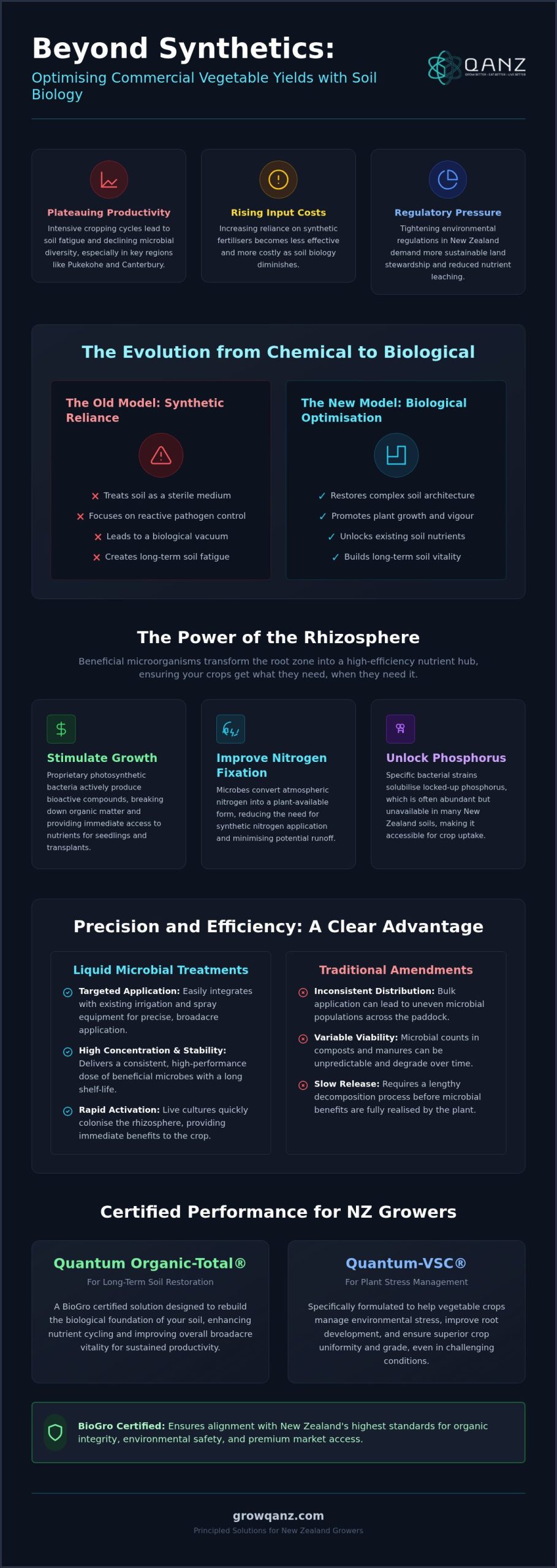
Professional vegetable production is moving away from the era of chemical sterilisation. For decades, the industry focused on reactive pathogen control, treating soil as a sterile medium where only synthetic inputs mattered. We now understand that this approach often leads to a biological vacuum. Commercial vegetable microbial treatments have emerged as high-performance microbial inoculants designed to restore the complex living architecture of the soil. These aren’t just additives; they’re targeted biological tools that replenish the beneficial populations lost to intensive cropping cycles.
In New Zealand, the push for sustainable land management is driven by both regulatory pressure and market demand. Growers face increasing scrutiny regarding nutrient leaching and soil health. Using BioGro certified treatments ensures that these biological inputs align with the highest standards of organic integrity and environmental safety. This certification is essential for maintaining market access, particularly for growers targeting premium export markets that value purity and verified sustainability. It’s a shift from merely “killing” threats to actively “optimising” the rhizosphere.
Beyond Pathogen Control: The Growth Promotion Model
Beneficial microbes do much more than just fight disease. While traditional methods focus on eliminating soil-borne pathogens through heat or chemicals, modern biologicals work through competitive exclusion and growth promotion. They colonise the root zone, creating a physical barrier against harmful organisms while simultaneously acting as biological catalysts. Specific bacterial strains excel at solubilising locked-up soil nutrients, particularly phosphorus, which is often abundant but unavailable in many Kiwi paddocks. This synergy increases vegetable crop yield naturally. By fostering this biological partnership, growers see improved plant vigour and a reduced reliance on the “hit and hope” approach of over-applying synthetic fertilisers.
Why Soil Microbes are the Foundation of Modern Horticulture
Soil fatigue is a common challenge in commercial vegetable blocks across regions like Pukekohe and Canterbury. When the same land is cropped intensively, microbial diversity plummets, leading to a plateau in productivity. You might notice that even with increased fertiliser, the crops don’t respond as they once did. This is because biology is the missing link in nutrient uptake. A diverse microbial population ensures that nutrients are cycled efficiently and delivered to the plant in a plant-available form. There’s a direct link between this microbial activity and the resulting nutrient density and uniformity of the produce. Rebuilding this foundation isn’t just about the current season; it’s about the long-term restoration of broadacre soil vitality for the next generation of growers.
How Beneficial Microorganisms Optimise Vegetable Nutrient Uptake
The rhizosphere is a highly active zone where commercial vegetable microbial treatments facilitate a constant exchange between plant roots and the soil. Unlike post-harvest treatments that focus solely on food safety, these biological inoculants work throughout the growing season to transform the root zone into a high-efficiency nutrient hub. By introducing beneficial microbes for soil management, growers can unlock the full potential of their existing soil reserves. This biological intervention ensures that the plant doesn’t struggle to find the elements it needs for cell division and crop development.
The Role of Photosynthetic Bacteria
Photosynthetic bacteria are a significant advancement for commercial growers. These unique microorganisms don’t just exist in the soil; they actively produce bioactive compounds that stimulate plant growth. They break down complex organic matter into plant-available nutrients, ensuring that seedlings have immediate access to the building blocks of life during establishment. This biological support is vital during early growth phases when root systems are still developing and vulnerable to environmental stress. By fostering these populations, you create a more resilient plant from the day it’s transplanted or drilled.
Improving Nutrient Efficiency and Reducing Runoff
Every kilogram of fertiliser applied to a paddock represents a significant investment. Microbial assistance ensures that more of that investment ends up in the vegetable rather than leaching into New Zealand’s sensitive waterways. Biologicals facilitate nitrogen fixation and phosphorus solubilisation, making “locked-up” nutrients available to the crop. Nutrient cycling in commercial horticulture is the continuous biological process where microorganisms decompose organic materials and minerals into simpler, soluble forms that plants can readily absorb.
This efficiency is particularly critical as regulatory pressure on nitrogen discharge increases across the regions. By improving the microbial architecture of the soil, growers can maintain high-grade uniformity with lower total inputs. If you’re looking to refine your current programme, exploring Vegetable Crop Microbial Solutions can provide the technical support needed for this transition.
Beyond nutrient uptake, microbial activity is a primary driver of soil physical health. Microorganisms produce sticky substances like glomalin that bind soil particles together into stable aggregates. This process is essential in heavy-use fields where intensive cultivation and machinery traffic often lead to compaction. Stable aggregates improve water infiltration and aeration, creating a resilient environment where root architecture can expand without restriction. This structural stability is the quiet hero of long-term broadacre productivity, ensuring the land remains viable even under the demands of year-round vegetable rotations.
Liquid Microbial Treatments vs. Traditional Soil Amendments
Traditional amendments like compost or granular manures have long been the standard for building organic matter. While they provide bulk carbon, they often lack the precision and concentration required for high-density, broadacre vegetable rotations. Commercial vegetable microbial treatments in liquid form represent a significant leap in application efficiency. They allow growers to deliver specific, high-count bacterial populations directly to the root zone without the logistical burden of moving tonnes of raw material. This liquid technology ensures more consistent colonisation because the microbes are delivered in a format that allows for immediate interaction with the rhizosphere.
Liquid biologicals offer a level of concentration that traditional amendments cannot match. A few litres of a high-performance inoculant can contain the same microbial diversity as several tonnes of standard compost, but without the risk of introducing weed seeds or pathogens. This concentration makes it easier to manage inventories and reduces the overall carbon footprint of your soil health programme. It’s a shift from a “bulk-handling” mindset to a “precision-biological” approach.
Precision Application in Commercial Systems
Liquid biologicals integrate seamlessly into existing New Zealand infrastructure. Whether you’re using boom sprays or sophisticated fertigation systems, these treatments offer a level of uniform distribution that granular products simply cannot match. In high-density crops like leafy greens or brassicas, even distribution is critical for achieving consistent crop uniformity and grade. Spreading bulky amendments often leads to “hot spots” of nutrient release or areas of deficiency. Liquid delivery eliminates this variability. Additionally, using controlled, laboratory-grown inoculants helps growers follow best practices, such as those outlined in the FDA Guide to Minimize Microbial Food Safety Hazards, by reducing the risks associated with raw or improperly aged animal manures.
Stability and Viability of Professional Inoculants
A common concern with biologicals is the viability of the living organisms within the container. Professional-grade products use advanced stabilisation techniques to ensure that the microbes remain active from the warehouse to the paddock. Quantum Organic-Total® is a prime example of this technology; it’s designed to maintain a high shelf-stability while ensuring the microbes are ready to function upon application. The cost-benefit analysis for this technology is compelling for broadacre operations. When you factor in the reduced transport costs, lower labour requirements for application, and the high concentration of active units per litre, liquid treatments often prove more economical than traditional amendments. You aren’t paying to move filler; you’re investing in a concentrated biological engine that drives yield and soil vitality.
Implementing a Microbial Programme for Vegetable Crops
Success with commercial vegetable microbial treatments depends on structured integration rather than ad-hoc application. Before the first litre hits the paddock, professional growers should establish a baseline of soil health. While standard NPK tests are necessary, assessing existing microbial activity levels provides a clearer picture of the biological “engine” already in place. This data allows for more precise dosing, ensuring that the reintroduced bacterial strains can effectively colonise the rhizosphere without being outcompeted by native populations in a poorly managed environment.
Step-by-Step Integration into Commercial Cycles
The programme begins with pre-planting inoculation to prime the soil bed. By applying biologicals during the final cultivation or through the irrigation system before drilling, you establish a beneficial microbial presence before the crop enters the field. Once the season is underway, the focus shifts to supporting early growth. This is a critical window for how to reduce transplant shock in seedlings, as robust microbial colonisation provides the hormonal and nutritional support necessary for rapid establishment. Maintenance doses should then be scheduled during peak growing phases, such as flowering or fruit set, when the plant’s metabolic demands are highest.
Best Practices for Application Success
Technical precision during application is what separates professional results from amateur attempts. Microbes are living organisms, and their survival depends on the quality of the carrier water. High chlorine levels or extreme pH can significantly reduce the viability of the inoculant. Aim for a neutral pH and, where possible, use tank-mixed buffers if your water source is suboptimal. UV degradation is another risk; applying biologicals in the early morning or late afternoon, or through fertigation, protects the bacteria from harsh New Zealand sunlight.
Maintaining a detailed audit trail is vital for BioGro compliance. Accurate record-keeping of application dates, rates, and batch numbers ensures you’re ready for annual audits while providing a data set to compare against performance. To verify efficacy, monitor your progress through regular sap analysis and final yield grading. This evidence-based approach confirms that the biologicals are functioning as intended, allowing you to refine your programme season after season. If you’re ready to start your transition, explore our Vegetable Crop Microbial Solutions to find the right fit for your operation.
GrowQanz Solutions: Certified Performance for NZ Growers
GrowQanz bridges the gap between scientific innovation and the practical needs of the vegetable sector. For growers navigating the complexities of modern horticulture, our commercial vegetable microbial treatments provide a verified pathway to higher productivity. Every solution we offer is BioGro New Zealand certified, ensuring your transition to biological-assisted programmes meets the strictest organic and environmental standards. We prioritise reliable, evidence-based results over market hype, positioning ourselves as a stable partner for the long-term health of your land.
Quantum Organic-Total: The Complete Biological Package
This formulation has become an industry standard for restoring broadacre soil vitality. It functions as a total biological engine, reintroducing the proprietary photosynthetic bacterial strains necessary to repair the microbial architecture mentioned in earlier sections. The results are tangible. New Zealand vegetable trials have demonstrated measurable yield increases and improved crop uniformity when this product is integrated into standard rotations. For a detailed breakdown of how this technology fits into your operational budget, see the full Quantum Organic-Total price New Zealand guide. This transparency ensures that professional growers can plan their soil restoration with complete confidence.
Quantum-VSC and Plant Resilience
While Organic-Total focuses on the foundation, Quantum-VSC® provides targeted support for plant resilience. This technology is particularly effective during periods of environmental stress, such as the dry spells common in Hawke’s Bay or the Canterbury Plains. By boosting root mass and enhancing nutrient scavenging capabilities, VSC ensures that your vegetable crops remain productive even when conditions are suboptimal. It’s an essential component when integrating a microbial solutions for field crops strategy into your wider farm management plan. The increased root surface area allows the plant to access moisture and minerals that would otherwise remain out of reach.
Our commitment to the New Zealand grower extends beyond the bottle. We provide technical support that’s grounded in the reality of the field, using data-driven results to help you optimise every application. Whether you’re managing a small vegetable block or a large-scale commercial operation, our commercial vegetable microbial treatments offer a stable and principled approach to soil health. We’re here to help you move beyond synthetic reliance toward a more natural, efficient, and profitable future.
Securing the Future of New Zealand’s Vegetable Productivity
The transition toward a biologically driven system is no longer a niche choice; it’s a strategic necessity for the professional grower. By prioritising the microbial architecture of your soil, you can effectively bypass the limitations of declining fertility and rising synthetic costs. We’ve explored how proprietary Quantum technology restores essential soil pathways and how liquid delivery systems provide the precision required for broadacre success. These commercial vegetable microbial treatments offer a principled way to balance high-grade uniformity with long-term ecological health.
Our solutions are BioGro NZ Certified #5345, ensuring your practices remain compliant while delivering proven results across NZ horticulture. This evidence-based approach provides the reliability you need to manage your land as a knowledgeable steward rather than just a commercial operator. Integrating these biological tools into your rotation is a commitment to both immediate yield and the enduring vitality of the land.
Explore our BioGro certified vegetable microbial solutions
Your soil is your most valuable asset. Investing in its biological vitality today ensures a more resilient and profitable harvest for years to come.
Frequently Asked Questions
Are commercial vegetable microbial treatments compatible with chemical fertilisers?
Yes, these treatments are compatible, but you should avoid direct tank-mixing with high-salt index fertilisers or concentrated acids. It’s best to apply them as a separate pass or through a diluted fertigation stream. This ensures the living bacterial strains aren’t shocked by extreme osmotic pressure. Maintaining a neutral pH in the carrier water is the most reliable way to preserve the efficacy of your commercial vegetable microbial treatments during application.
How soon after applying microbial treatments will I see a difference in my vegetable crops?
You’ll typically observe improved plant vigour and leaf colour within two to four weeks of the initial application. These early signs indicate that the photosynthetic bacteria are successfully colonising the rhizosphere. However, the most significant results appear at harvest through improved grade uniformity and better shelf-life. While individual crop responses vary, the cumulative effect on soil vitality builds over successive seasons as the microbial architecture of your paddock is restored.
Can these microbial products be used in hydroponic or greenhouse vegetable systems?
Absolutely. Liquid microbial solutions are highly effective in hydroponic and greenhouse environments where the biological diversity of the growing medium is often limited. Introducing beneficial strains helps manage the rhizosphere in soilless media, preventing the biological vacuums that allow pathogens to thrive. These treatments support nutrient uptake efficiency in high-intensity systems, ensuring that your indoor crops maintain the same resilience and nutrient density as those grown in healthy broadacre soil.
What is the best way to apply liquid microbial treatments to large-scale vegetable fields?
Large-scale application is most efficient through existing boom sprayers or fertigation systems. Because these products are liquid-based and shelf-stable, they don’t require the specialised spreading equipment needed for bulky composts. For broadacre vegetables, a uniform spray pattern ensures that every seedling receives biological support. To prevent UV degradation, we recommend applying the treatments during the early morning or late afternoon when the New Zealand sun is less intense, or injecting them directly into irrigation lines.
Are GrowQanz products safe for use in BioGro certified organic vegetable production?
Yes, our core technologies, including Quantum Organic-Total® and Quantum-VSC®, are BioGro New Zealand certified for organic production. This certification provides a guarantee that the products contain no synthetic chemicals or genetically modified organisms. Using certified commercial vegetable microbial treatments allows you to meet strict audit requirements while actively improving soil health. It’s a principled choice for growers who prioritise high-grade produce and long-term environmental stewardship without compromising on certification status.
How do microbial treatments help with soil restoration after chemical fumigation?
Chemical fumigation effectively eliminates pathogens, but it also strips the soil of beneficial biology, leaving a biological vacuum. Reintroducing microbial treatments immediately after the withholding period allows beneficial populations to colonise the soil before harmful organisms can return. This proactive restoration prevents “rebound” disease issues and helps the soil recover its natural nutrient-cycling capabilities. It’s a vital step in transitioning from a reactive, chemical-heavy regime to a more balanced and resilient biological system.
Do microbial inoculants require special storage conditions on the farm?
Proper storage is essential for maintaining the viability of the living organisms. You should store the containers in a cool, dark place away from direct sunlight and extreme temperature fluctuations. While our proprietary formulations are designed for shelf-stability, avoiding freezing conditions or temperatures above 35°C is best practice. Always keep the lids tightly sealed to prevent contamination. Following these simple steps ensures that the microbial engine remains primed and ready for action when you head out to the paddock.
Can I apply microbial treatments through my existing centre-pivot or drip irrigation?
Yes, our liquid formulations are specifically designed for ease of delivery through centre-pivot, lateral move, and drip irrigation systems. The microbes are finely filtered to prevent any clogging of emitters or nozzles. This method is often the most effective because it delivers the bacteria directly into the root zone with the water they need to thrive. It’s an efficient way to provide maintenance doses throughout the peak growing season without additional machinery passes or soil compaction.
