
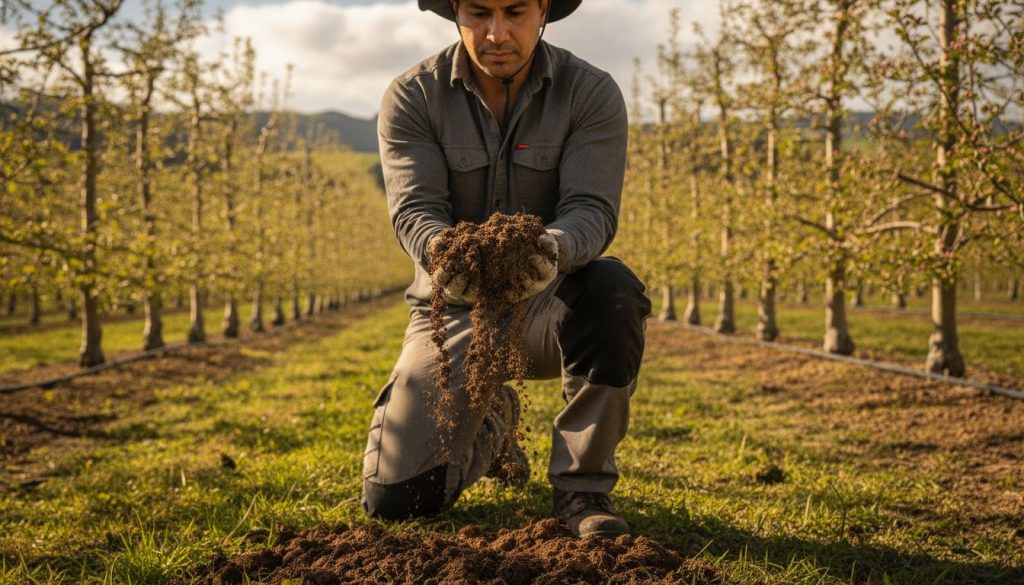
Most growers treat soil inputs like a simple meal for the tree, but successful microbial application is actually a strategic colonisation of the root zone. Identifying the best time to apply microbial soil enhancers to fruit trees is the difference between a wasted application and a thriving biological foundation that supports the plant for years. You’ve likely felt the pressure of rising synthetic fertiliser costs and the inconsistent fruit quality that often follows years of intensive chemical use. These challenges are increasingly common across New Zealand orchards, particularly as seasonal droughts test the limits of traditional management strategies.
In this 2026 guide, we reveal the precise seasonal windows and soil conditions required to ensure these beneficial organisms integrate effectively during natural root flush cycles. By aligning your applications with specific growth stages, you can maximise nutrient uptake efficiency and build the environmental resilience your orchard needs. We will explore how liquid treatments like Quantum Organic-Total® and Quantum-VSC® provide a BioGro-certified pathway to predictable harvest quality and long-term soil vitality, helping you transition from high-input reliance to a more stable, nature-centric production model.
Key Takeaways
- Understand why microbes act as the “digestive system” of your orchard, transforming locked-up minerals into bioavailable nutrients that trees can actually absorb.
- Identify the early spring “golden hour” as the best time to apply microbial soil enhancers to fruit trees, specifically when soil temperatures rise and buds begin to swell.
- Discover why the post-harvest autumn window is critical for building soil humus and ensuring your trees have the energy reserves to withstand winter stress.
- Learn the specific environmental triggers, such as the 10°C soil temperature threshold, that dictate when microbial treatments will be most effective.
- Explore how implementing a proactive biological programme with BioGro-certified solutions can reduce long-term synthetic fertiliser costs and improve crop consistency.
Microbial Soil Enhancers vs. Traditional Fertilisers: Understanding the Biological Shift
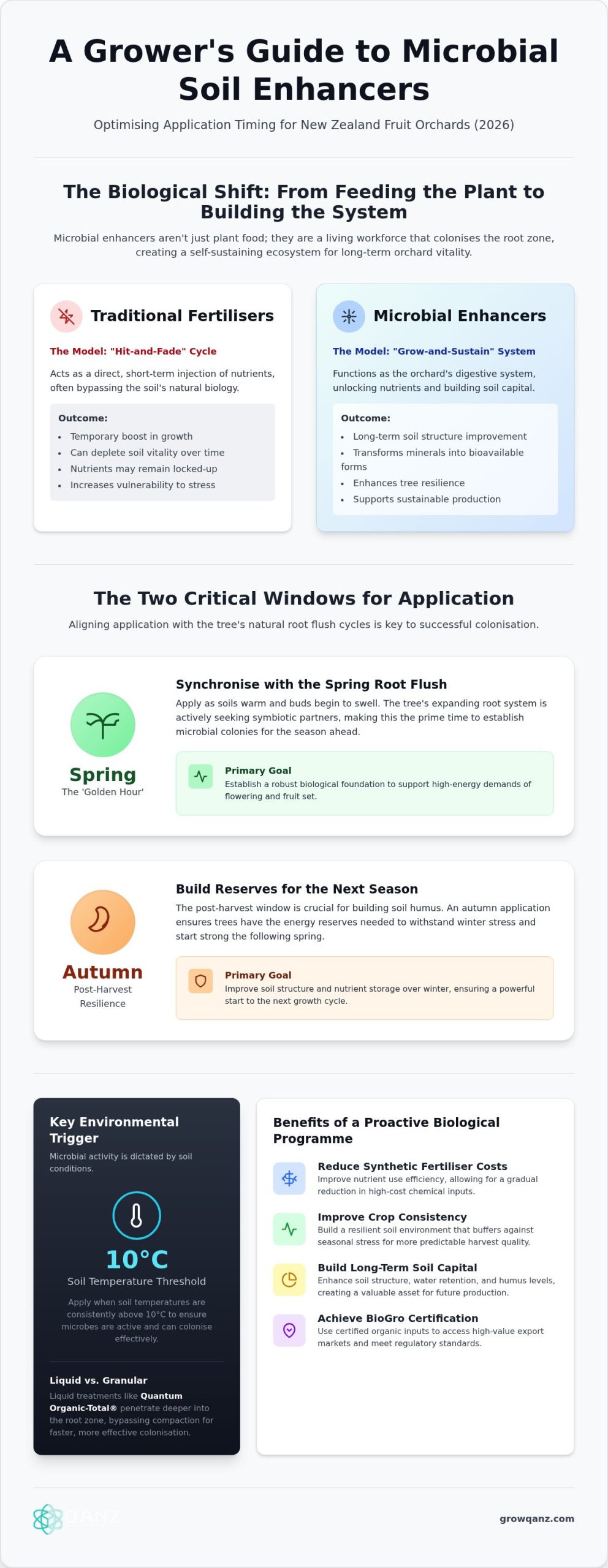
Understanding the best time to apply microbial soil enhancers to fruit trees begins with recognising that Microbial inoculants aren’t just another form of plant food. They are living organisms designed to restore the complex soil food web that many modern orchards have lost. Traditional NPK fertilisers act as a direct injection of nutrients, often bypassing the soil’s natural biological systems entirely. In contrast, microbial enhancers function as the orchard’s digestive system. These organisms actively process organic matter and minerals, converting them into bioavailable forms that the tree can readily absorb. Without this biological engine, many nutrients remain locked in the soil, unavailable to the roots regardless of how much synthetic fertiliser is applied.
While synthetic fertilisers provide a visible, temporary boost, they rarely address the root cause of soil degradation. Continuous chemical use often results in a “hit-and-fade” cycle that leaves the soil depleted of its natural vitality and increasingly vulnerable to environmental stress. Microbes build long-term orchard capital by improving soil structure and enhancing the tree’s internal resilience. For New Zealand growers, using BioGro-certified inputs is a critical component of a professional soil health strategy. Under the Organic Products and Production Act 2023, this certification ensures that your orchard maintains its organic status while accessing high-value export markets that demand sustainable, evidence-based production methods.
The Colonisation Concept
Biological management requires a fundamental shift in perspective. Unlike synthetics that provide an immediate but fleeting response, biologicals operate on a “grow-and-sustain” model. This is why identifying the best time to apply microbial soil enhancers to fruit trees is so important for commercial success. Microbes need a dedicated window to establish their populations before the tree enters high-demand phases like flowering or fruit set. Microbial colonisation is the process of beneficial bacteria establishing a symbiotic relationship with the rhizosphere. When you get the timing right, you aren’t just feeding the tree for a day; you’re installing a permanent workforce that supports the plant throughout the entire season.
Why NZ Soil Biology Requires a Specialised Approach
New Zealand’s unique environmental conditions present specific hurdles, including soil compaction and nutrient leaching. Many orchards struggle with low organic matter, which limits the effectiveness of traditional management. Photosynthetic bacteria play a key role in overcoming these challenges by supporting soil vitality across diverse New Zealand orchard types. Liquid treatments like Quantum Organic-Total® offer a distinct advantage over granular alternatives because they penetrate deeper into the root zone. This ensures the microbes reach the rhizosphere quickly, bypassing surface compaction to colonise the area where they can provide the most significant benefit to the tree’s health and yield.
The Spring Window: Synchronising Application with Root Flushes
The spring root flush represents the most critical physiological event for microbial colonisation. As New Zealand soils warm in early September, trees initiate a massive surge in fine root production. This is the best time to apply microbial soil enhancers to fruit trees because the rhizosphere is actively expanding and seeking symbiotic partners. By applying treatments during this “golden hour,” growers ensure that beneficial bacteria are present exactly when the tree requires peak nutrient delivery. Establishing these colonies early, before the canopy closes and restricts access to the understory, creates a robust biological buffer that supports the tree through the high-energy demands of flowering.
Maintaining high Orchard soil health requires more than just reactive feeding; it demands synchronicity with the tree’s internal clock. Early-season vigour and blossom set depend heavily on the availability of minerals that are often immobile in cold soils. Microbial inoculants bridge this gap by actively scavenging for nutrients and delivering them directly to the root surface. This proactive approach ensures that the tree isn’t struggling to find resources during the critical weeks of early development, leading to more consistent fruit size and quality across the block.
Timing for Pip Fruit vs. Stone Fruit
Stone fruit, such as cherries and plums, often wake up earlier than pip fruit, requiring application windows to be shifted forward. For stone fruit, the target is usually late August to early September, whereas apples and pears may wait until mid-September depending on the regional climate. Using Quantum Organic-Total® during the critical 4-week pre-bloom period provides the biological foundation needed for superior fruitlet retention. This early colonisation helps prevent the “spring slump” where trees run out of energy before the fruit has properly set, ensuring the tree has the resilience to carry a heavy crop through to harvest.
Maximising Early Season Nutrient Uptake
There’s a powerful synergy between microbes and phosphorus availability during the flowering stage. Beneficial bacteria produce enzymes that unlock soil-bound phosphorus, which is vital for the high-energy process of blossom development. By leveraging biological nitrogen fixation, growers can also reduce their reliance on early-season synthetic nitrogen, which often leaches away in spring rains. For those establishing new orchard blocks, this microbial approach is equally effective at helping young trees settle in; you can learn more about how to reduce transplant shock in seedlings using these biological strategies. Integrating these horticulture microbial solutions into your fertigation schedule ensures your orchard starts the season with a distinct competitive advantage.
The Post-Harvest Autumn Window: Building Resilience for Next Season
While the spring surge is vital for immediate growth, many New Zealand growers overlook autumn as the best time to apply microbial soil enhancers to fruit trees. This post-harvest period is a critical strategic window for securing the following year’s production potential. After the heavy energy demands of fruit development, trees shift their focus from canopy growth to carbohydrate storage and root maintenance. By introducing beneficial microbes during this transition, you help the tree sequester essential minerals and build the internal reserves necessary to survive winter dormancy and emerge with high vigour in the spring. Consistent autumn programmes are particularly effective at reducing biennial bearing, as they ensure the tree isn’t entering the cold months in a biologically bankrupt state.
A proactive autumn application serves as a biological head start. Instead of allowing the orchard floor to become a site for pathogen buildup, you can use specialised inoculants to cycle nutrients from fallen leaves and pruning debris back into the soil. This process doesn’t just “clean” the orchard; it actively builds stable soil humus, which improves water retention and nutrient availability for the seasons ahead. Establishing these microbial colonies while the soil is still warm ensures they are ready to work the moment temperatures rise again in late winter.
Soil Restoration and Nutrient Cycling
Post-harvest soil restoration involves more than just replacing what was taken; it requires a fundamental effort to feed the microbes that govern the decomposition cycle. Using Quantum-VSC® during this window is highly effective for breaking down residual organic matter on the orchard floor. This liquid-based treatment penetrates the mulch layer to accelerate the conversion of woody carbon into plant-available nutrients. By processing this organic load before winter, you reduce the habitat for overwintering pests and diseases while simultaneously enriching the rhizosphere for the next spring root flush.
Strengthening Root Systems Before Winter
Autumn application encourages late-season root development without the risk of pushing soft, frost-tender top growth. Microbes assist in mineral sequestration during these cooler months, ensuring that nutrients like phosphorus and potassium are stored safely within the tree’s vascular system. This biological activity keeps the soil “alive” even as the tree enters dormancy. For growers managing diverse operations, these principles of soil vitality are equally applicable across the farm; you can find further details in our guide on microbial solutions for field crops. Strengthening the root zone now provides the structural and biological foundation your orchard needs to withstand the unpredictable New Zealand winter.
Environmental Factors: When Weather Dictates Application
Soil temperature is a primary driver of biological efficacy. In the New Zealand context, waiting for the soil to reach a consistent 10°C threshold is essential for ensuring that the living inoculants are active upon application. If the ground is too cold, the microbes may remain dormant or fail to colonise effectively, wasting the investment. Moisture levels are equally significant. Applying these treatments to bone-dry soil is generally a waste of resources, as microbes require a thin film of water to move through the soil profile and reach the root zone. Ideally, the soil should be at field capacity or slightly below to facilitate deep penetration.
Environmental stressors like UV radiation and heavy rainfall also dictate the best time to apply microbial soil enhancers to fruit trees. High UV levels can quickly kill beneficial bacteria on the soil surface before they have a chance to settle. Applying liquid treatments during overcast days or late in the afternoon helps mitigate this risk. Similarly, while light rain can assist in carrying microbes into the soil, heavy downpours can lead to wash-out and leaching. Monitoring the forecast ensures your application stays exactly where the tree needs it most.
Optimising Fertigation and Spray Timing
Injecting liquid biologicals into existing irrigation systems allows for precise, automated delivery across the orchard. It’s vital to use enough water volume to carry the microbes into the top 15-20cm of the soil profile, ensuring they reach the primary root mass. The “drip line” strategy is particularly effective; by focusing application where the water naturally falls from the canopy, you target the area of highest root density and moisture availability. This ensures the microbes are placed exactly where the tree is most active and capable of forming symbiotic bonds.
Managing Drought and Heat Stress
During dry New Zealand summers, Quantum-VSC® helps trees maintain nutrient flow even when water is scarce. Microbial mucilage improves soil water-holding capacity during periods of low rainfall, creating a protective buffer around the roots that prevents dehydration. This biological hydration strategy keeps the tree’s vascular system functioning under heat stress, preventing the growth stalls often seen in degraded soils. To secure your orchard’s resilience against unpredictable weather, consider integrating our Fruit & Nut Crop Microbial Solutions into your seasonal management plan.
Implementing a Professional Biological Programme
When you understand the best time to apply microbial soil enhancers to fruit trees, the next step is moving from reactive fertilising to a structured, proactive biological programme. Traditional management often focuses on addressing immediate nutrient deficiencies after they appear, whereas professional microbial strategies aim to prevent those deficiencies from occurring in the first place. By restoring the soil food web, growers can significantly reduce long-term input costs while improving the efficiency of every kilogram of fertiliser applied. This economic case is built on the fact that healthy soil biology unlocks existing mineral reserves, making the orchard more self-sustaining and less reliant on volatile synthetic markets.
Integrating these solutions into your existing orchard management software or spray diaries is straightforward. Because liquid microbial treatments are compatible with most fertigation systems, they can be scheduled alongside regular irrigation cycles without requiring additional labour-intensive passes. Success in a biological programme isn’t measured overnight; instead, look for incremental improvements in soil friability, root mass, and leaf nutrient density over a 12 to 24 month period. These markers indicate that the microbial colonies have successfully established themselves and are actively supporting the tree’s physiological needs through every season.
The GrowQanz Advantage
Quantum Organic-Total® has become the preferred choice for New Zealand growers who prioritise evidence-based results and long-term soil health. Its BioGro certification is particularly valuable for export-oriented orchards, as it provides the third-party verification required to access premium international markets. Unlike variable organic amendments, these liquid inoculants offer a consistent, high-concentration dose of beneficial bacteria. Our team provides technical support to help you determine the best time to apply microbial soil enhancers to fruit trees based on your specific crop variety and regional soil conditions, ensuring you maximise the efficacy of every application.
Next Steps for Your Orchard
The first step in implementation is calculating the precise volume required for your specific acreage and tree density. For a detailed breakdown of the investment involved, we recommend reviewing our Quantum Organic-Total cost-benefit analysis. This guide helps professional growers understand the long-term value of biological soil management in the New Zealand context. To develop a tailored microbial strategy that addresses your orchard’s unique challenges, contact GrowQanz today to speak with a technical advisor who understands the complexities of New Zealand’s commercial horticulture sector.
Securing Your Orchard’s Biological Future
Transitioning to a professional biological programme is a commitment to the long-term vitality of your land. By synchronising your applications with the natural spring and autumn root flushes, you move beyond the “hit-and-fade” cycle of synthetic fertilisers and build a resilient soil foundation. You’ve seen how environmental triggers, such as the 10°C soil temperature threshold and consistent moisture levels, are critical to ensuring microbial success. Identifying the best time to apply microbial soil enhancers to fruit trees isn’t just about following a calendar; it’s about responding to the physiological needs of your trees to maximise nutrient uptake and harvest quality.
GrowQanz provides the BioGro New Zealand Certified technologies needed to achieve these results. With proven success in New Zealand fruit and nut orchards, our liquid-based treatments like Quantum Organic-Total® deliver superior root zone penetration for commercial productivity. Our technical support team of soil science experts is ready to help you refine your application strategy for the 2026 season. Explore Quantum Organic-Total® for Your Orchard today and take the first step toward a more sustainable, high-yielding future. Your orchard’s health is the engine of your success, and we’re here to help you maintain it.
Frequently Asked Questions
Is it possible to apply microbial enhancers too early in the season?
Applying too early is possible and often leads to reduced efficacy if the soil is below the 10°C threshold. While the microbes won’t necessarily die, they’ll remain dormant and won’t colonise the root zone effectively. For New Zealand growers, the best time to apply microbial soil enhancers to fruit trees is when the ground warms in early spring, ensuring the organisms are active and ready to support the first root flush.
Can I mix liquid microbial soil treatments with my standard fertilisers?
You can often integrate liquid treatments into existing fertigation schedules, but caution is required with high-salt synthetic fertilisers or biocides. Mixing microbes with harsh chemicals can reduce the living population before it reaches the soil. It’s best to check compatibility with our technical support team. When managed correctly, these biologicals enhance the uptake of the very nutrients you’re applying, making your overall fertiliser programme more efficient and cost-effective.
How often should I re-apply microbes to my fruit trees?
A professional programme typically involves two primary applications per year to align with the tree’s natural growth cycles. The spring application supports early vigour and fruit set, while the post-harvest autumn window focuses on soil restoration and carbohydrate storage. In some high-stress environments or degraded soils, a mid-season top-up might be beneficial to maintain population levels. Consistency over 12-24 months is key to establishing a stable, self-sustaining soil food web.
Will heavy rain wash away the beneficial bacteria after application?
Heavy rain won’t wash away beneficial bacteria once they’ve successfully colonised the rhizosphere. In fact, light moisture helps carry liquid-based treatments like Quantum Organic-Total® into the top 15-20cm of soil. However, you should avoid applying during extreme downpours to prevent initial surface runoff. Once these organisms attach to root surfaces and soil particles, they become a permanent part of the soil structure, resisting leaching far better than synthetic salts.
Do microbial enhancers work in sandy or high-clay New Zealand soils?
Microbial enhancers are effective across all New Zealand soil types, from free-draining sands to heavy alluvial clays. In sandy soils, microbial mucilage helps bind particles together, significantly improving water-holding capacity and nutrient retention. In compacted clay soils, the biological activity helps create pore space and improve aeration. This versatility makes them an essential tool for restoring soil health regardless of the underlying geological profile of your orchard.
What is the shelf life of liquid microbial products like Quantum Organic-Total®?
Liquid microbial products like Quantum Organic-Total® are designed for stability, but they are living solutions that require proper handling. When stored in a cool, dark place away from direct sunlight and extreme temperature fluctuations, they typically maintain their potency for up to two years. Always check the specific batch date on your container. Using fresh product ensures you’re introducing the highest possible concentration of active organisms to your orchard’s root zone.
Can I apply these products during the flowering stage?
While application during flowering is safe, the best time to apply microbial soil enhancers to fruit trees is the 4-week pre-bloom phase. Early application ensures the microbes have already colonised the roots and are actively delivering phosphorus when flowering begins. If you’ve missed the pre-bloom window, a flowering-stage application still provides value by supporting fruitlet retention and reducing the impact of early-season environmental stress.
How long does it take to see visible results in tree health?
Visible results in tree vigour and leaf colour can sometimes appear within a single growing season, but true soil restoration is a 12-24 month process. You’ll first notice improved soil structure and better water penetration. Over the longer term, this translates into more consistent fruit sizing and trees that show greater resilience during dry spells. Biological management is an investment in long-term orchard capital rather than a quick-fix chemical solution.
Disclaimer
Important: This article provides general agricultural information only. Product performance can vary according to crop, soil, climate, management practices and application conditions. Trial or research results discussed may have been obtained under specific conditions and should not be interpreted as a guarantee of equivalent results. Always follow current product directions and confirm suitability for your crop, growing system and organic certification requirements. Contact QANZ for current product and application information.
