
Why do some of the most sophisticated biological programmes fail to deliver their full potential, while others seem to revitalise the soil with effortless consistency? For many New Zealand growers, the answer isn’t the quality of the microbial input itself, but the precision of its delivery. Mastering Quantum Organic-Total application rates is the key to ensuring your investment translates into tangible soil health benefits. Calculating complex dilution ratios and worrying about wasting premium product through over-application are common frustrations that can hinder even the most well-intentioned regenerative efforts, especially when managing the unique seasonal pressures of the local climate.
We understand that achieving the right balance is essential for both your bottom line and your BioGro New Zealand certification. This guide provides the technical clarity needed to optimise soil health and support crop yields across your paddocks. We’ll examine the core principles of successful microbial colonisation, from the standard 100:1 dilution ratio for pasture to the specific filtration and timing needs of horticultural crops like kiwifruit and viticulture. You’ll gain a clear framework for integrating these biological solutions into your existing spray or fertigation programmes with professional confidence and scientific accuracy.
Key Takeaways
- Identify how Colony Forming Units (CFUs) serve as the technical foundation for calculating effective microbial dosing across different soil profiles.
- Apply the standard 100:1 dilution ratio for Quantum Organic-Total application rates to establish and maintain microbial activity in New Zealand pastures.
- Tailor application timing and placement for high-value horticultural crops to maximise nutrient uptake and support vigorous seedling establishment.
- Protect microbial viability by managing water quality factors such as chlorine levels and pH during the mixing and application process.
- Ensure your soil health programme remains compliant with BioGro standards while improving long-term nutrient cycling efficiency.
Understanding Quantum Organic-Total® and Precision Application
Quantum Organic-Total® is a high-concentration microbial soil inoculant designed to restore biological function to agricultural soils. It’s helpful to understand what are biofertilizers in a broader sense to appreciate how this specific liquid formulation works. Unlike traditional fertilisers that provide direct chemical nutrients, this technology introduces a diverse consortium of living microorganisms that work in synergy with the plant’s root system. These microbes are selected for their ability to improve nutrient availability and support soil structure over the long term.
When determining Quantum Organic-Total application rates, the primary technical metric is the concentration of Colony Forming Units (CFUs). A CFU represents a viable microbial cell capable of multiplying and establishing a colony within the soil matrix. Precise dosing ensures that the population introduced is sufficient to compete with indigenous microbes without overwhelming the available niche space. It’s a common misconception that “more is always better” with biological inputs. In reality, applying excessive volumes can lead to unnecessary waste, as the soil’s “carrying capacity” for new microbes is limited by available food sources and environmental conditions.
New Zealand’s unique environmental context, particularly our soil temperatures, significantly influences initial microbial colonisation speed. In cooler climates or during the early spring transitions across the country, microbial activity naturally slows. Recognising these seasonal variances allows growers to time their applications more effectively, ensuring the microbes are introduced when the soil is warm enough to support rapid establishment. This prevents the introduced colony from remaining dormant or being outcompeted by indigenous species better adapted to the cold.
The Role of Photosynthetic Bacteria
The presence of proprietary photosynthetic bacteria distinguishes the Quantum technology from standard microbial products. These specific strains act as a primary energy source for the rest of the microbial consortium, using light energy to fuel their metabolic processes. Because they don’t rely solely on existing soil carbon, they can thrive in degraded paddocks where organic matter is low. Photosynthetic bacteria facilitate the sequestration of atmospheric carbon into the soil, converting it into stable organic matter that fuels the broader subterranean ecosystem. Because these bacteria are so efficient, Quantum Organic-Total application rates are often lower than those required for less concentrated, non-photosynthetic alternatives.
BioGro Certification and Application Standards
Maintaining Quantum Organic-Total® as a BioGro certified input requires a commitment to precise record-keeping and audited application standards. For New Zealand growers, this certification is the gold standard for organic integrity and export market access. GrowQanz supports this process by providing clear guidance on dosing and mixing, ensuring that every litre applied meets the rigorous requirements of a certified organic programme. Precise dosing isn’t just about efficiency; it’s a core component of a verified, sustainable soil management strategy that stands up to international scrutiny.
Standard Application Rates for New Zealand Broadacre and Pasture
Successful pasture management in New Zealand relies on more than just standard NPK inputs. It requires a living soil matrix capable of cycling nutrients efficiently. Quantum Organic-Total application rates for broadacre systems are designed to transition paddocks from biological dormancy to active nutrient cycling. For degraded land or paddocks transitioning from intensive synthetic regimes, an initial establishment phase is necessary to build a robust microbial population. This process begins with a research-verified 100:1 water-to-product dilution ratio, providing the standard baseline for pasture application across diverse NZ soil types.
Integrating microbial solutions for field crops ensures that the biological foundation supports the specific demands of high-yield broadacre production. During the typical New Zealand spring flush, soil moisture levels are often high, creating an ideal window for microbial colonisation. However, application must be managed to avoid runoff during heavy rain events, ensuring the photosynthetic bacteria and their companion strains remain in the root zone where they are most effective.
Establishing the Microbial Foundation
Building soil health is a methodical process that requires an understanding of current biological activity. The first step involves a baseline soil assessment to identify areas of compaction or low organic matter. Once assessed, growers should calculate a priming dose for the first seasonal application. This dose is typically higher than maintenance rates to ensure the introduced microbes can successfully compete with existing soil biology. Timing this application to coincide with the onset of root growth cycles in early spring or autumn maximises the symbiotic relationship between the microbes and the plant, allowing the colony to establish before environmental stressors increase.
Seasonal Maintenance Programmes
As soil biology becomes more self-sustaining, application rates can often be refined. In high-intensity grazing systems, such as dairy or intensive sheep and beef operations, the frequency of application is more critical than the volume applied. Regular, lower-dose applications help maintain microbial diversity under the pressure of constant grazing and heavy stock traffic. Managing these applications during the dry summer months requires careful attention to soil moisture. Applying the liquid inoculant in the late afternoon or during periods of light rain helps protect the microbes from UV exposure and ensures they can migrate into the profile where moisture is more consistent. Talk to QANZ about whether Quantum Organic-Total® is appropriate for your crop, growing system and application programme.
Tailoring Dosage for Horticulture, Orchards, and High-Value Crops
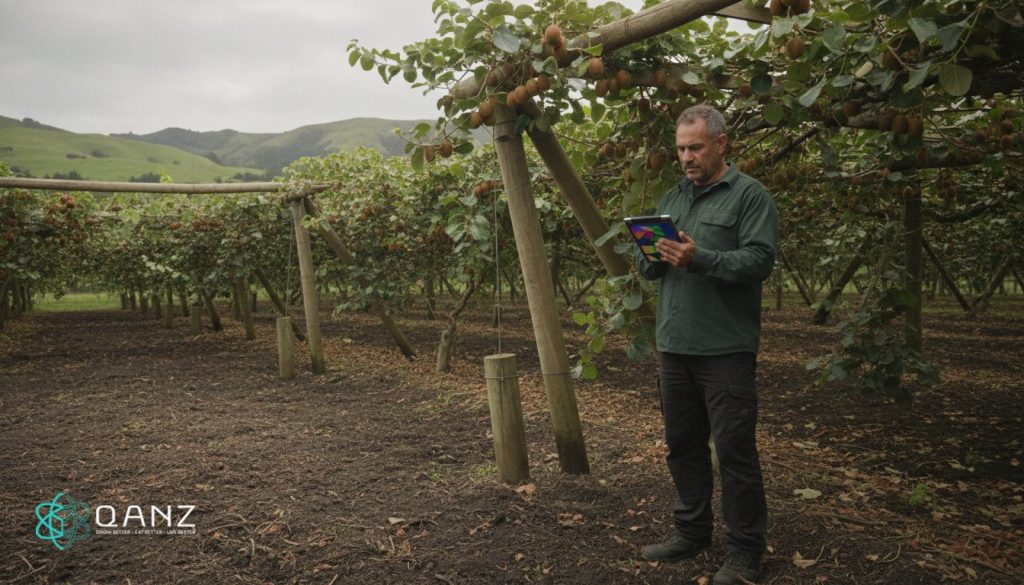
High-value crops like kiwifruit, viticulture, and vegetable production require a more nuanced approach than broadacre pasture. While the 100:1 dilution remains a useful benchmark, the method of delivery often shifts toward high-pressure fertigation or targeted root-zone drenching. Precise Quantum Organic-Total application rates in these sectors are determined by crop architecture and the specific biological needs of each growth stage, from seedling emergence to fruit set. It’s essential to match the delivery method with the crop’s root structure to ensure the microbial consortium reaches the rhizosphere effectively.
Vegetable and Horticulture Rates
In vegetable production, establishing early microbial dominance is essential for competitive advantage. For leafy greens, growers often compare drenching at planting with subsequent foliar applications. Drenching provides a high-concentration dose directly to the root zone, which is ideal for established root systems in potato crops. In contrast, foliar application rates for leafy greens focus on surface coverage, allowing the microbes to interact with the phyllosphere. For high-value export crops like onions and potatoes, targeted dosing helps manage the transition between growth phases.
A critical application window is during transplanting, where using a microbial strategy can significantly aid in how to reduce transplant shock in seedlings. This approach ensures the young plants have immediate access to a supportive microbial community as they adapt to field conditions. By focusing on the transplant stage, growers can support the plant’s natural vigour when it is most vulnerable to environmental stress.
Fruit, Nut, and Vine Dosages
Orchards and vineyards present a different challenge, as the microbial focus must remain on the long-term health of the perennial root system. For pipfruit and stonefruit, annual application cycles are typically timed to match the spring root flush and the post-harvest period, ensuring the soil remains biologically active through the winter. Nut growers often utilise microbial soil amendments for nut orchards to support the deep root systems of trees like walnuts and macadamias.
Application rates are frequently adjusted based on tree age and canopy size. Newly planted trees require concentrated root-zone applications to build an initial colony, whereas established orchards may move toward broader floor applications. In viticulture, protocols focus on building vine resilience and grape quality by ensuring the rhizosphere is populated with beneficial microbes that aid in nutrient uptake efficiency. This targeted delivery helps maintain soil vitality without the need for excessive product use. Talk to QANZ about whether Quantum Organic-Total® is appropriate for your specific orchard or vineyard management plan.

Best Practices for Mixing, Timing, and Application Methods
Applying the correct volume is only half the battle. If the water quality is poor or the timing is off, the efficacy of Quantum Organic-Total application rates will be compromised. Protecting these live cultures during the transition from the container to the soil is critical for establishing a functional colony. Unlike synthetic chemicals, these are living organisms that require specific conditions to survive the application process and thrive in the New Zealand environment. Precise delivery ensures the microbes reach the rhizosphere in a viable state, ready to begin the colonisation process.
Water Quality and Pre-Mixing
Chlorine is perhaps the greatest threat to microbial viability in the spray tank. Because chlorine is a biocide designed to eliminate bacteria, using untreated town water can significantly reduce the CFU count before the product even touches the paddock. Growers should “condition” their water by allowing it to sit in an open tank for 24 hours to allow chlorine to dissipate, or by using a suitable neutralising agent. The pH of the carrier water should ideally sit between 6.0 and 8.0. Extreme pH levels can stress the microbes, reducing their ability to colonise the soil matrix.
When tank-mixing, always add Quantum Organic-Total® to the water last, after any other organic amendments have been thoroughly incorporated. Constant agitation is necessary to maintain a uniform microbial suspension, preventing the organisms from settling at the bottom of the tank. If your programme includes Quantum-VSC®, these two formulations are designed to work in synergy and can be safely mixed in the same tank to streamline your operation.
The Golden Rules of Timing
Timing is a non-negotiable factor for success. The harsh New Zealand sun, with its high UV index, can be detrimental to microbes before they reach the safety of the soil profile. Applying in the early morning or late evening is the standard professional practice to avoid peak UV periods. This timing also coincides with higher humidity and lower temperatures, which helps prevent the liquid suspension from evaporating too quickly on the soil surface.
The “Rain Window” is another vital consideration for maximising infiltration. Applying just before light rain or during a period of high soil moisture helps the microbes migrate into the soil profile where they are protected from environmental extremes. However, avoid application during heavy downpours, as this can lead to surface runoff and product loss. Whether you are using a boom sprayer, fertigation, or aerial application, ensure your equipment is calibrated for a 50-mesh filtration level to protect the microbial structures. For personalised guidance on your setup, talk to QANZ about your application programme.
Maximising ROI with BioGro Certified Microbial Strategies
The economic viability of biological farming hinges on the transition from viewing microbes as a simple input to seeing them as a functional asset. When you refine Quantum Organic-Total application rates, you aren’t just following a label; you’re investing in the subterranean infrastructure of your farm. A BioGro New Zealand certified strategy ensures that your inputs align with international organic standards, providing a pathway to premium markets while simultaneously reducing long-term reliance on synthetic fertilisers. By improving natural nutrient cycling, the soil becomes more efficient at unlocking legacy phosphorus and nitrogen, which can lead to significant reductions in conventional input requirements over time. To understand the financial breakdown of these efficiencies, you can refer to analysis of the value proposition for professional growers.
Beyond food crops, these principles extend to commercial landscapes where performance and aesthetics are paramount. For those managing sports fields or high-use public spaces across the country, you can refer to turf guide for insights into maintaining high-performance surfaces through biological management. This holistic approach ensures that every hectare of your land, whether for production or recreation, benefits from a scientifically grounded microbial programme.
From Input Costs to Yield Gains
Investing in soil health produces measurable returns that go beyond simple yield figures. Improved soil structure and increased water holding capacity mean that crops are better equipped to handle the seasonal dry spells common in many drought-prone regions of New Zealand. Precise application rates also contribute to more uniform crop ripening, which simplifies harvest logistics and reduces waste in the packhouse. Commercial observations in the national vegetable sector have indicated that consistent microbial dosing supports better crop uniformity, particularly in root crops like potatoes and onions. Consistent monitoring and adjustment of Quantum Organic-Total application rates allow for the fine-tuning of this ROI over multiple seasons as the rhizosphere becomes increasingly stable.
Partnering with GrowQanz for National Support
Every farm has a unique biological signature. Accessing technical data sheets for specific New Zealand soil profiles allows you to tailor your approach based on local conditions rather than generic overseas data. GrowQanz provides the national support needed to transition from general recommendations to a custom application programme. Local knowledge is essential in a global microbial market; understanding how different soil types respond to biological inputs makes all the difference in achieving predictable results. Talk to QANZ about whether Quantum Organic-Total® is appropriate for your crop, growing system and application programme.
Advancing Your Soil Health Strategy
Integrating biological inputs into a modern agricultural system requires more than just high-quality microbes; it demands a precise, evidence-based approach to delivery. By mastering Quantum Organic-Total application rates and adhering to best practices for timing and water quality, you ensure that these 100% natural and sustainable microbial strains can effectively colonise the rhizosphere. This methodical strategy is already used by leading NZ commercial growers to improve nutrient cycling and support long-term soil vitality.
Maintaining BioGro New Zealand Certified standards while optimising your crop’s biological potential is a journey of continuous refinement. Whether you’re managing broadacre pasture or high-value horticulture, the key is to align microbial dosing with the specific needs of your land and growth cycles. We’re here to help you navigate these technical complexities with confidence. Request a tailored application programme for your farm from GrowQanz to ensure your soil health programme is perfectly calibrated for the seasons ahead.
Frequently Asked Questions
Can I over-apply Quantum Organic-Total to my soil?
While applying more than the recommended volume isn’t typically harmful to the soil or crop, it doesn’t lead to better results and can be an inefficient use of premium product. Soil has a limited number of biological niches for new colonies to inhabit. Applying excessive volumes beyond the established Quantum Organic-Total application rates may result in a surplus of microbes that cannot find adequate food sources or space to establish effectively.
What is the standard dilution ratio for a 1000-litre spray tank?
For a standard 1000-litre spray tank, the baseline dilution ratio for New Zealand pasture is 100:1, which involves mixing 10 litres of product with 1000 litres of water. It’s essential to ensure the carrier water is free from chlorine, as this can kill the live microbial strains before they reach the soil. For high-pressure fertigation or specific horticultural crops, different ratios may be required based on your equipment and specific crop programme.
How soon after applying can I graze livestock on the paddock?
Livestock can generally return to the paddock as soon as the liquid application has dried on the pasture. Because Quantum Organic-Total® consists of 100% natural microbial strains and is BioGro New Zealand certified, there are no withholding periods typically associated with synthetic chemical inputs. However, it’s best practice to allow the microbes sufficient time to migrate into the soil profile; grazing after a light rain or a short rest period is often preferred.
Will Quantum Organic-Total work if my soil is currently very dry?
Microbial activity requires moisture to thrive and move within the soil matrix. If the soil is extremely dry, the introduced microbes may remain dormant or struggle to establish a functional colony. To improve efficacy, we recommend applying the product when soil moisture levels are adequate, such as before or after light rain. This helps the microbes travel into the root zone where they are protected from UV exposure and extreme surface heat.
Can I mix this microbial treatment with liquid nitrogen fertilisers?
Mixing with high-salt synthetic fertilisers like liquid nitrogen can potentially harm or kill the live microbes in the formulation. While Quantum Organic-Total® is compatible with many organic amendments, you should avoid direct tank-mixing with concentrated synthetic fertilisers. If your programme requires both inputs, it’s safer to apply them separately or consult with QANZ technical support to verify compatibility with your specific fertiliser brand and the intended concentration levels.
How often do I need to re-apply to maintain the microbial colony?
Re-application frequency depends on your specific crop programme and the current biological health of your soil. For intensive grazing systems or high-value horticulture, more frequent, lower-dose applications are often used to maintain microbial diversity throughout the season. In broadacre systems, an initial establishment phase is typically followed by seasonal maintenance doses. Regular monitoring of soil biological activity can help you determine the ideal intervals for your particular growing environment.
Is there a different rate for aerial application vs. ground boom spraying?
The total amount of product applied per hectare generally remains consistent, but the dilution ratio may change based on the equipment’s water carrying capacity. Aerial applications often use a more concentrated mix due to lower water volumes per hectare compared to ground-based boom sprayers. Regardless of the delivery method, ensure that all equipment is properly calibrated and uses a 50-mesh filter to prevent damage to the microbial structures during the application process.
Do these application rates change if I am already using Quantum-VSC?
Using Quantum VSC® alongside Quantum Organic-Total® is a common practice in many biological growing programmes, as the two products are designed to work in synergy. While the presence of one doesn’t automatically reduce the required volume of the other, their combined use provides a broader spectrum of microbial activity. You should talk to QANZ to determine the most efficient combined Quantum Organic-Total application rates for your specific crop, soil conditions, and overall management goals.
Disclaimer
Important: This article provides general agricultural information only. Product performance can vary according to crop, soil, climate, management practices and application conditions. Trial or research results discussed may have been obtained under specific conditions and should not be interpreted as a guarantee of equivalent results. Always follow current product directions and confirm suitability for your crop, growing system and organic certification requirements. Contact QANZ for current product and application information.
