
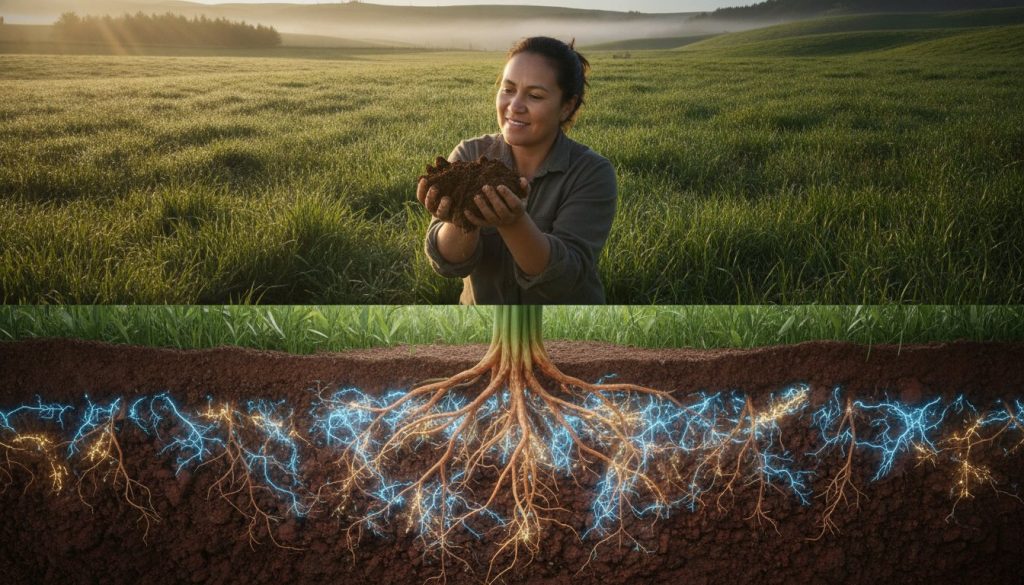
For too long, the prevailing approach to New Zealand agriculture has treated the paddock as a chemistry set rather than a living, breathing organism. You’ve likely noticed that despite increasing synthetic inputs, the soil structure feels depleted and crop resilience during dry spells isn’t what it used to be. It’s a frustrating cycle of rising fertiliser costs and diminishing returns that many Kiwi farmers are now looking to break. Integrating microbial inoculants for regenerative farming offers a principled way to restore this natural balance. These biological tools don’t just add nutrients; they reactivate the complex underground networks that define true soil vitality.
This 2026 guide explores how advanced microbial technology serves as the essential engine for a productive, sustainable farm. We’ll examine the specific roles of photosynthetic bacteria and BioGro NZ certified solutions in repairing degraded soil and lowering your reliance on synthetic chemicals. By understanding the technical science behind these liquid inoculants, you can make informed decisions that improve both your environmental footprint and your long-term paddock profitability. It’s about moving toward a system that works with nature, ensuring your land remains a productive asset for generations to come.
Key Takeaways
- Learn why shifting from feeding the plant to inoculating the soil is the fundamental first step in establishing a self-sustaining biological engine on your farm.
- Discover how microbial inoculants for regenerative farming utilise photosynthetic bacteria to unlock trapped nutrients and improve soil structure naturally.
- Compare delivery mechanisms to understand why liquid-based biologicals provide superior paddock coverage and higher microbial survival rates compared to granular alternatives.
- Gain practical insights into timing applications for the New Zealand climate and integrating microbial solutions with existing no-till or cover cropping programmes.
- Explore how BioGro NZ certified technologies like Quantum Organic-Total® provide a streamlined pathway to restore soil health and reduce reliance on synthetic fertilisers.
Understanding Microbial Inoculants in the Regenerative Landscape
The agricultural sector is currently witnessing a fundamental shift in how we perceive soil productivity. For generations, the focus remained squarely on “feeding the plant” through heavy applications of synthetic NPK. However, as we move through 2026, a more sophisticated understanding of soil biology has taken hold across New Zealand paddocks. Microbial inoculants are no longer viewed as alternative additives but as essential biological infrastructure. These products consist of live, beneficial microorganisms that, when applied to the soil or seeds, colonise the rhizosphere to enhance nutrient uptake and plant health. This transition marks a move away from chemical dependency toward a system that prioritises the restoration of the soil’s natural engine.
Statistics reflect this growing momentum. The global market for these biological tools is projected to reach $2.8 billion in 2026, driven by a collective push for sustainable and organic farming practices. In the New Zealand context, this growth is particularly relevant as growers face increasingly unpredictable weather patterns. Microbial diversity acts as a biological insurance policy. A diverse underground ecosystem creates a more porous, stable soil structure that can better withstand the drought cycles and extreme rainfall events that have become common across various regions throughout the country. Using microbial inoculants for regenerative farming allows land managers to build this resilience from the ground up, ensuring the paddock remains productive even when environmental conditions are less than ideal.
Regenerative Agriculture vs. Conventional Inputs
Conventional farming often relies on high-analysis synthetic fertilisers that can provide a temporary growth boost but may inadvertently suppress native soil biology. When soil is flooded with easily accessible synthetic nutrients, the symbiotic relationship between plants and microbes often shuts down. The plant stops “trading” carbon for nutrients, which leads to a decline in the very microbial populations needed for long-term health. Integrating microbial inoculants for regenerative farming helps break this cycle. By reintroducing specific bacterial and fungal strains, growers can kickstart the biological processes required for carbon sequestration and natural nutrient cycling, effectively weaning the land off its chemical crutch.
Core Benefits for the Modern Grower
The practical advantages of biological inputs extend far beyond environmental stewardship. For the modern grower, the primary goal is often unlocking the “banked” nutrients already present in the soil. Many New Zealand soils contain significant amounts of phosphorus and nitrogen that are chemically bound and unavailable to the plant. Specific microbes act as biological keys, converting these minerals into plant-available forms and potentially reducing the need for additional fertiliser applications. Improved microbial activity enhances the soil’s water-holding capacity. This means your paddocks can retain moisture longer during dry spells, which directly improves plant vigour and protects your bottom line during the height of summer.
The Biological Engine: How Microbes Drive Soil Vitality
Soil vitality is not a static state but a result of constant biological motion. Microbes function as the primary engineers of this system, converting raw minerals into the chelated, plant-available forms that crops require for optimal growth. Using microbial inoculants for regenerative farming facilitates this conversion by ensuring the right populations are present at the right time. This process is most active in the rhizosphere, the high-activity zone immediately surrounding the plant roots. Here, roots exude sugars to attract specific microbes, creating a biological trading floor where carbon is exchanged for essential nutrients. Understanding practical considerations for microbial inoculants is vital for any grower looking to transition away from heavy synthetic reliance.
Building soil organic matter (SOM) is a slow process that relies on the efficient decomposition of crop residues. Microbes break down complex lignins and celluloses, eventually turning them into stable humus. This humification process is what gives healthy New Zealand soil its dark, crumbly texture and high water-holding capacity. Without a robust microbial population, residue simply sits on the surface, oxidising and losing its carbon to the atmosphere rather than storing it in the paddock. By fostering a diverse biological community, farmers can ensure that every bit of organic matter is recycled back into the soil’s long-term fertility bank. For growers looking to improve soil structure naturally, understanding how microbial communities drive this humification process is the essential first step toward restoring pore space and water infiltration across your paddocks.
Photosynthetic Bacteria and Energy Production
Photosynthetic bacteria serve as the primary energy source for soil microbial communities. These unique organisms occupy a critical niche by capturing solar energy and converting it into chemical energy, even in the anaerobic conditions found deeper in the soil profile. They facilitate nitrogen fixation and carbon cycling, providing the fuel that other beneficial microbes need to perform their roles. By introducing these specific strains, land managers can effectively install “power plants” throughout their paddocks, driving the biological processes that maintain soil health. This energy production is the foundation upon which all other microbial activity is built.
Strengthening Plant Defences Naturally
Healthy soil biology does more than just feed the plant; it actively protects it. Beneficial microbes occupy the physical space on root surfaces, effectively outcompeting soil-borne pathogens for resources and moisture. This biological presence triggers Induced Systemic Resistance (ISR), a state where the plant’s internal defence mechanisms are primed to respond more rapidly to pests and diseases. Integrating these biological crop protection solutions into a standard management programme helps reduce the need for harsh fungicides. Solutions like Quantum Organic-Total® provide a diverse consortium of these protective strains, ensuring your crops are supported by a robust and natural biological shield.
Liquid Biologicals vs. Granular Inputs: Choosing the Right Path
Selecting the appropriate delivery format is a critical operational decision that directly impacts the efficacy of your biological programme. While granular inputs have long been a staple in traditional systems, liquid microbial inoculants for regenerative farming offer a level of precision and scalability that granular formats often struggle to match. The primary challenge with granular biologicals lies in the survival of the organisms during storage and the speed at which they can colonise the soil once applied. In contrast, liquid formulations provide a protective aqueous environment that maintains microbial viability, allowing for immediate activity upon contact with the paddock.
Scalability is a significant factor for New Zealand broadacre and dairy operations. Liquid biologicals integrate seamlessly into existing infrastructure, such as boom sprayers and fertigation systems, without requiring the specialised equipment often needed for precise granular distribution. This compatibility reduces labour requirements and ensures a more uniform application across large areas. Professional-grade liquid products are engineered for stability, often featuring a shelf-life that allows for flexible application windows. This reliability is essential for land managers who must coordinate biological applications with specific weather patterns or growth stages.
The Liquid Advantage for Soil Colonisation
Liquid carriers facilitate a more effective movement of microbes through the soil profile to the critical root zone. Because moisture is the primary vehicle for microbial transport, a liquid application provides the initial hydration necessary for these organisms to navigate soil pores and reach the rhizosphere. This delivery method ensures superior paddock coverage compared to granular pellets, which can remain isolated on the surface until significant rainfall occurs. By providing a direct path to the roots, liquid inoculants accelerate the establishment of beneficial colonies, leading to faster results in nutrient cycling and plant resilience.
BioGro Certification: Why Purity Matters
The integrity of your soil biology depends on the purity of the inputs you choose. Using uncertified or “home-brewed” biologicals carries a significant risk of introducing pathogens or heavy metal contamination into your paddocks. BioGro NZ certification serves as the gold standard for regenerative inputs in New Zealand, providing a verified guarantee that the product is free from synthetic interference and harmful contaminants. Ensuring your microbial strategy aligns with these standards protects your land’s health and maintains your eligibility for organic or sustainable market premiums. For growers actively pursuing BioGro conversion, understanding the full scope of the transition to organic farming NZ process is essential to protecting both your certification status and your bottom line. It’s a principled approach that prioritises long-term ecological safety over temporary, unverified gains.

Practical Implementation: Integrating Inoculants into Your Programme
Successful integration of microbial technology begins with a clear understanding of your paddock’s seasonal rhythm. In New Zealand, the optimal windows for application typically align with the moisture-rich periods of autumn and spring, when soil temperatures are conducive to microbial activity. Integrating microbial inoculants for regenerative farming into a no-till or cover cropping system enhances the natural decomposition of organic residues, effectively turning green manure into stable soil carbon. This transition requires a methodical approach. It’s often best to gradually reduce synthetic inputs as the biological engine gains momentum, ensuring the soil’s natural fertility can support crop demands without a sudden “hunger” period.
Monitoring progress is essential for documenting the return on investment. While laboratory biological testing provides deep insights into fungal-to-bacterial ratios, simple Visual Soil Assessments (VSA) offer immediate feedback for the land manager. You should look for increased worm activity, improved soil aggregation, and deeper root penetration as primary indicators that your biological programme is taking hold. These tangible changes in soil structure often precede the more significant yield and resilience benefits that define a mature regenerative system.
Application Strategies for Broadacre and Horticulture
Optimising soil health for microbial solutions for field crops requires attention to both timing and delivery method. Seed dressing provides an immediate biological advantage to the emerging seedling, while in-furrow applications ensure the rhizosphere is colonised from day one. For established horticulture or pasture, foliar applications can be highly effective when timed with growth flushes. It’s vital to consider water quality during these processes. Avoid using chlorinated town water or tanks with heavy chemical residues, as these can significantly reduce the viability of the live microbes before they even reach the soil.
Overcoming Common Implementation Hurdles
One of the most frequent concerns is the perceived “slow start” of biological systems. While chemical fertilisers provide a rapid green-up, microbial responses are cumulative. You can see early responses by ensuring soil pH is within a functional range and avoiding applications during periods of extreme frost or heat. A multi-strain approach is also more resilient than using single-isolate products. By introducing a diverse consortium of microbes, you ensure that at least some strains will thrive regardless of minor fluctuations in soil temperature or moisture. To begin tailoring a biological strategy for your specific farm conditions, you can explore the BioGro NZ certified range at GrowQanz.
Advancing Regenerative Success with GrowQanz Solutions
Transitioning to a biological system shouldn’t mean reinventing your entire operation. At GrowQanz, we’ve developed technologies that act as a bridge between conventional management and full regenerative health. Our microbial inoculants for regenerative farming are engineered to be stable, effective, and easy to deploy across diverse New Zealand landscapes, from the intensive dairying of the Waikato to the broadacre stations of the South Island. We provide the biological tools that allow you to restore soil vitality without sacrificing the operational efficiency you’ve spent years refining. It’s a professional partnership designed to deliver results that are both ecologically sound and economically viable.
Quantum Organic-Total® represents our most advanced, comprehensive biological soil treatment. It’s a multi-strain consortium that includes the photosynthetic bacteria discussed earlier, alongside other beneficial microbes that work in synergy to unlock nutrients and build soil structure. This isn’t a single-purpose additive; it’s a complete biological engine in a bottle. By introducing this diverse population, you’re not just adding microbes, you’re establishing a self-sustaining ecosystem that continues to pay dividends in soil health long after the initial application. It’s about building a legacy of fertility that reduces your long-term reliance on synthetic fertilisers.
For growers needing more targeted support, Quantum-VSC® focuses on plant resilience and vigorous root development. It’s particularly effective during the establishment phase or when plants are recovering from environmental stressors. By strengthening the root-microbe interface, Quantum-VSC® ensures your crops have the underground infrastructure needed to access water and nutrients even when conditions turn dry. This targeted approach allows for a more nuanced management strategy, giving you the flexibility to address specific paddock needs as they arise without complicating your overall programme.
The GrowQanz Difference: Science Meets the Soil
Our liquid formulations are specifically designed for the unique challenges of ANZ agriculture. Unlike many imported products, our treatments are stable and ready for immediate use in local spray and fertigation equipment. Purity is at the core of everything we do. Our BioGro NZ certification isn’t just a label; it’s a verified guarantee that our products meet the highest standards for organic and sustainable farming. For a detailed look at how these inputs translate to your bottom line, you can refer to the Quantum Organic-Total cost-benefit analysis for ROI data. This evidence-based approach ensures you can invest in your soil’s future with confidence.
Next Steps for Your Regenerative Journey
Starting your transition is best handled through evidence-based trials on your own land. We encourage growers to select a specific block or paddock to observe the biological response firsthand. Our technical team is available to help you design a customised microbial programme that accounts for your specific soil types and production goals. You don’t have to navigate this shift alone. Join the growing community of Kiwi growers who are prioritising soil vitality as the foundation of their long-term profitability. To learn more about our range, visit GrowQanz and discover how we can support your station’s future.
Securing the Future of Your Paddock
The shift towards biological agriculture represents a necessary evolution for New Zealand land managers facing rising costs and climate volatility. By acknowledging that soil is a living engine rather than a static medium, you can begin to harness the power of photosynthetic bacteria and nutrient-cycling microbes. This guide has demonstrated that choosing liquid-based microbial inoculants for regenerative farming provides the precision and scalability required for broadacre success. It’s about moving from a system of chemical dependency to one of biological self-sufficiency, ensuring your land remains productive for the next generation.
GrowQanz is committed to providing the technical expertise and BioGro NZ certified technology needed to make this transition seamless. With proven results in ANZ conditions and specialised technical support, we help you restore natural soil fertility while protecting your paddock’s long-term profitability. Our evidence-based approach ensures that every biological input contributes to a more resilient and efficient farming system.
Discover the GrowQanz range of BioGro certified microbial solutions and take the first step toward a more resilient, productive farm today. Your soil is your most valuable asset; it’s time to treat it like the living ecosystem it is.
Frequently Asked Questions
What exactly are microbial inoculants and how do they differ from fertilisers?
Microbial inoculants are living biological tools that introduce beneficial microorganisms into the soil to enhance natural processes. Unlike traditional fertilisers, which provide direct, often synthetic nutrients to the plant, inoculants focus on restoring the soil’s biological engine. They improve nutrient cycling and soil structure by colonising the rhizosphere; in contrast, fertilisers simply “feed” the crop without addressing underlying soil health or long-term paddock vitality.
Can I use microbial inoculants alongside my existing chemical fertiliser programme?
You can integrate microbial treatments into a conventional programme, but certain precautions are necessary to ensure microbial survival. High-salt synthetic fertilisers or harsh fungicides can suppress or kill the live organisms in the inoculant. Many growers use microbial inoculants for regenerative farming as a way to gradually reduce their chemical dependency by improving the efficiency of the fertilisers they do use, eventually lowering input costs as soil biology takes over.
How long does it take to see results in soil health after applying inoculants?
Biological activity begins immediately upon application, though visible changes in soil structure and plant vigour typically take one to two growing seasons to manifest. You may notice increased worm activity and better moisture retention within the first year. Because biological systems are cumulative, the most significant improvements in paddock productivity and resilience often appear as the microbial populations stabilise and the soil’s natural nutrient cycles are fully reactivated.
Are liquid microbial treatments better than granular ones for regenerative farming?
Liquid inoculants generally offer superior performance in regenerative systems due to better paddock coverage and higher microbial survival rates. The liquid carrier provides the necessary moisture for microbes to navigate soil pores and reach the root zone effectively. Granular biologicals often face challenges with uneven distribution and lower colonisation speeds, making liquid formulations like Quantum Organic-Total® the preferred choice for professional growers seeking reliable and scalable results.
What are photosynthetic bacteria and why are they important for soil?
Photosynthetic bacteria are unique microorganisms that capture solar energy to fuel soil biological processes, even in low-oxygen environments. They play a critical role in nitrogen fixation and carbon cycling, acting as the primary energy source for the wider microbial community. By introducing these strains, you effectively install a biological power plant in your soil that supports the growth of other beneficial microbes and enhances overall plant health.
Is BioGro certification necessary for microbial products used in regenerative farming?
BioGro NZ certification is essential for ensuring the purity and safety of the biological inputs you apply to your land. It provides a verified guarantee that the product is free from synthetic contaminants and harmful pathogens, which is critical for maintaining soil integrity. For growers targeting organic or sustainable market premiums, using certified products like Quantum-VSC® is a non-negotiable requirement to protect their certification status and farm reputation.
Can microbial inoculants help my crops survive drought better?
Microbial inoculants for regenerative farming significantly improve drought resilience by enhancing soil structure and increasing water-holding capacity. Beneficial microbes help create stable soil aggregates and produce glomalin, which improves the soil’s ability to retain moisture during dry spells. Additionally, a robust microbial community primes the plant’s internal defence mechanisms, allowing crops to maintain vigour and productivity even when environmental conditions become challenging.
What is the best time of year to apply microbial soil treatments in Australia or NZ?
The optimal times for application in New Zealand are autumn and spring, when soil moisture is high and temperatures are moderate. These conditions allow the microbes to colonise the soil and establish themselves before the extremes of summer or winter. Applying treatments during a growth flush or alongside cover cropping ensures the microbes have a ready supply of root exudates to fuel their initial establishment and long-term survival in the paddock.
Disclaimer
Important: This article provides general agricultural information only. Product performance can vary according to crop, soil, climate, management practices and application conditions. Trial or research results discussed may have been obtained under specific conditions and should not be interpreted as a guarantee of equivalent results. Always follow current product directions and confirm suitability for your crop, growing system and organic certification requirements. Contact QANZ for current product and application information.
