
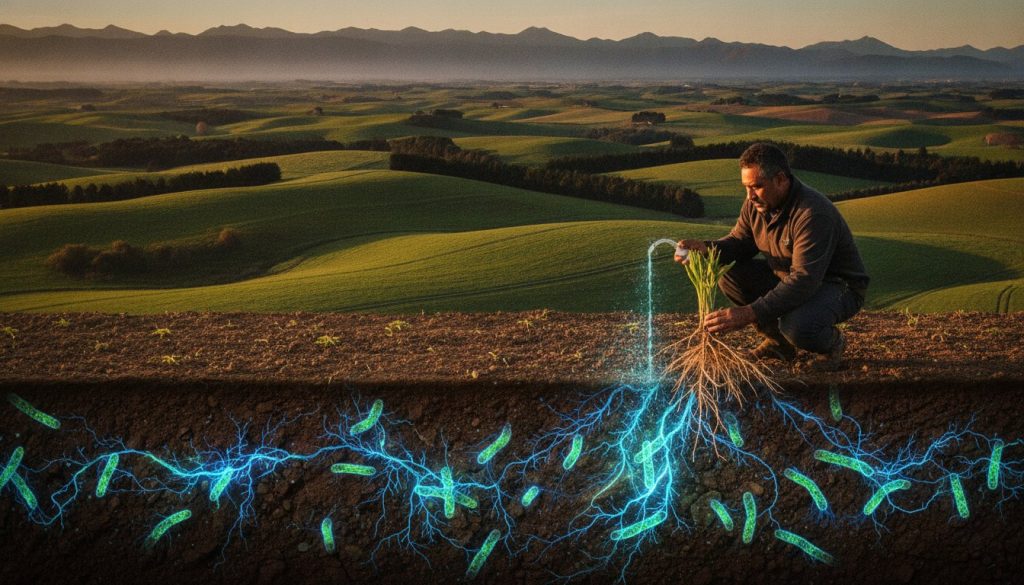
Is it possible that the intensive fertiliser programmes once credited with New Zealand’s agricultural success are now the primary cause of your plateauing yields? Many growers from Northland to Southland are finding that increasing synthetic inputs no longer guarantees a proportional return, often leaving paddocks compacted and less resilient to seasonal shifts. Transitioning to a high-consortia liquid microbial soil treatment represents a shift from merely feeding the plant to restoring the complex biological engine within the earth itself. It’s a move away from the diminishing returns of traditional chemistry toward a system that works in harmony with the natural environment.
You recognise that healthy soil is your most valuable asset, yet maintaining that vitality feels increasingly complex and expensive. This comparative guide clarifies how modern biologicals outperform granular alternatives by delivering stable, diverse microbial populations directly to the root zone. We’ll examine why these liquid solutions are redefining soil health standards in New Zealand agriculture and how they can simplify your management programme. You’ll discover how BioGro certified technologies like Quantum Organic-Total® provide the precise biological delivery needed to improve crop quality and build lasting drought resilience.
Key Takeaways
- Understand how moving beyond traditional fertilisers to biological management can reverse soil compaction and declining fertility across New Zealand’s diverse landscapes.
- Discover why a liquid microbial soil treatment offers superior nutrient mobility and microbial survival compared to granular inputs, especially in unpredictable weather conditions.
- Learn the technical differences between standard probiotics and high-consortia photosynthetic bacteria that drive superior plant resilience and soil vitality.
- Gain practical insights on how to seamlessly integrate BioGro certified biologicals into your existing farm rotation without disrupting your current management programme.
- Explore how prioritising natural soil health through verified microbial technologies supports the long-term viability of export-quality produce and dairy operations.
Liquid Microbial Soil Treatment: The Evolution of Modern Agronomy
The New Zealand agricultural sector is reaching a critical turning point. For decades, the primary strategy for increasing production focused on high-analysis synthetic fertilisers. While these inputs provided an initial surge in yield, the long-term impact on the land has become impossible to ignore. A liquid microbial soil treatment is no longer a niche experimental tool; it is a fundamental component of modern agronomy designed to repair the biological infrastructure that synthetic chemistry often overlooks.
Unlike a standard liquid fertiliser that merely delivers soluble NPK, these biological treatments introduce live, functional consortia of microorganisms directly into the rhizosphere. This process isn’t just about feeding the crop. It’s about restoring the natural cycles that allow soil to remain productive, porous, and resilient. In the New Zealand context, where export markets demand high environmental standards, using BioGro certified solutions like Quantum Organic-Total® ensures that growers are meeting rigorous benchmarks for purity and ecological integrity.
The Problem with Synthetic Over-Reliance
Continuous reliance on high-salt synthetic fertilisers has led to widespread soil degradation across many New Zealand regions. From the intensive dairy pastures of the Waikato to the cropping lands of Canterbury, growers are reporting increased soil compaction and a noticeable “burn-out” of indigenous microbial life. When soil biology is suppressed, the earth loses its ability to hold water and cycle nutrients naturally. This creates a cycle of dependency where more fertiliser is required to achieve the same result, leading to diminishing returns on investment. This excess chemistry often escapes the root zone, contributing to the environmental cost of nutrient leaching in our local waterways and sensitive catchments.
The Biological Solution: Restoring the Soil Food Web
Microbes are the engine room of nutrient cycling. They break down organic matter, unlock phosphorus tied up in the soil, and fix atmospheric nitrogen. By applying a high-quality liquid microbial soil treatment, you aren’t just adding a single strain of bacteria. You are introducing a diverse consortia that works as a cohesive biological community. This diversity is crucial for restoring the soil food web. A robust microbial population improves soil structure, reduces the need for mechanical aeration, and builds the long-term vitality required for farm profitability. Transitioning to a biological programme allows the land to return to a state of natural harmony, where plant health is a byproduct of a thriving, living ecosystem. Understanding how to increase microbial activity in soil is the first step toward breaking the cycle of diminishing returns that many New Zealand growers are currently experiencing.
Liquid vs. Granular: Why Fluid Delivery Dominates Soil Restoration
Choosing between liquid and granular formats isn’t just a matter of convenience. It’s a technical decision that dictates the survival rate of the biology you’re introducing to your land. In the volatile New Zealand climate, where North Island humidity can quickly shift to Canterbury’s drying winds, the physical state of a liquid microbial soil treatment provides a distinct advantage. While granular pellets sit on the surface waiting for sufficient rainfall to dissolve, liquid solutions move with the soil’s existing moisture. This ensures the microbial consortia bypasses the harsh UV exposure of the surface and reaches the safety of the root zone almost immediately.
Precision is another area where fluid delivery excels. Broadacre growers often struggle with the uneven distribution inherent in granular spreading, which can lead to “hot spots” of activity and neglected gaps. Liquid concentrates allow for a highly calibrated application through existing boom sprayers or fertigation lines. This level of accuracy means every square metre of your paddock receives the same biological density. It’s a more efficient way to manage large-scale operations, especially when targeting specific growth stages or correcting soil imbalances in real time.
Bioavailability and the Rhizosphere
Liquid treatments provide immediate hydration for dormant microbes the moment they hit the ground. This is a critical factor for successful colonisation. Granular biologicals require a slow breakdown process that can take weeks; during this time, the microbes are vulnerable to desiccation and temperature spikes. Fluid delivery integrates seamlessly into the rhizosphere, the thin layer of soil directly surrounding plant roots. By utilising a high-performance microbial concentrate, you ensure that the beneficial bacteria are active and functional from the first hour of application.
Economic Comparison for Professional Growers
The true cost of soil management is measured by the return on investment per hectare rather than the price per bag. While granular inputs involve significant bulk and transport costs, liquid concentrates offer high biological density in a smaller footprint. This reduces the carbon footprint associated with shipping and storage. Labour costs are also lower. Integrating biologicals into a standard spray programme or irrigation schedule removes the need for a separate pass with a spreader. Over time, the improved soil structure and water retention gained from effective liquid application reduce the total volume of synthetic inputs required, creating a leaner and more profitable farming system.
Evaluating Microbial Consortia: Photosynthetic Bacteria vs. Standard Probiotics
Not all biological inputs offer the same level of functional diversity. While many growers are familiar with standard probiotics, such as lactic acid bacteria or yeast, these often represent a limited anaerobic scope. A truly effective liquid microbial soil treatment should include a broader consortia, specifically photosynthetic bacteria (PSB). These organisms are often called the “gold standard” of soil microbiology because they don’t just occupy space; they actively drive energy production within the ecosystem. By using light and heat as energy sources, PSB facilitate nitrogen fixation and phosphorus solubilisation simultaneously, providing a multi-functional boost that standard aerobic or anaerobic blends cannot match.
The stability of these organisms is just as important as their function. Many “home-brewed” microbial teas suffer from extreme variability and a short shelf life, often becoming dominated by a single aggressive strain. In contrast, professionally formulated, shelf-stable concentrates ensure that the full consortia remains viable from the factory to the paddock. This reliability is essential for professional New Zealand growers who require consistent results across varying soil types and seasonal conditions. For growers wanting to go deeper on the science behind building a thriving underground ecosystem, our detailed resource on how to increase microbial activity in soil provides the practical strategies needed to revitalise your soil microbiome.
The Science of Quantum Organic-Total®
The proprietary microbial consortia found in Quantum Organic-Total® is engineered for resilience. These specific microbes are selected for their ability to remain dormant in the bottle and activate immediately upon contact with the soil. Unlike generic products, this consortia is designed to drive plant energy production at a cellular level. By increasing the efficiency of the plant’s metabolic processes, these bacteria help crops produce more carbohydrates, which are then exuded through the roots to feed the wider soil community. It’s a verified, scientific approach to building long-term soil health.
Beyond Basic Probiotics
Relying on a handful of “standard” probiotic strains is often insufficient for restoring depleted field soils that have seen years of intensive management. High-quality microbial treatments provide the exudates, the biological “glues”, necessary for building stable soil aggregates. These aggregates improve aeration and water-holding capacity, which are vital for surviving dry Kiwi summers. Additionally, these advanced consortia produce natural plant growth regulators (PGRs). These compounds stimulate root development and enhance the plant’s natural defence mechanisms against pathogens, moving beyond simple nutrient delivery to provide holistic biological support.
Implementation Strategies: Integrating Biologicals into Your Farm
Successful integration of a liquid microbial soil treatment into your existing farm rotation is a methodical process rather than a sudden shift. For most New Zealand growers, the transition begins by identifying specific paddocks where soil health has plateaued or where compaction is most evident. You don’t need to abandon your current programme immediately; instead, these biologicals are often introduced alongside reduced rates of synthetic inputs. This hybrid approach allows the soil biology to re-establish itself without causing a “withdrawal” shock to the crop. Over several seasons, as the microbial population becomes self-sustaining, the reliance on high-salt fertilisers can be systematically decreased.
Timing and environmental conditions are critical for ensuring microbial survival. Microbes are living organisms that require moisture to move and protection from extreme UV radiation. In regions like the Bay of Plenty or Canterbury, applying your treatment during the early morning or late evening is best. Soil temperature should ideally be above 7 degrees Celsius for active colonisation. Within the first 90 days, look for subtle shifts in soil structure, such as improved friability and deeper root penetration. Increased worm activity is also a reliable indicator that the biological engine is restarting.
Application Methods for NZ Growers
Efficiency in delivery determines the speed of your results. Fertigation remains the most streamlined method for delivering microbial solutions for field crops, as it places the consortia directly into the moisture profile where they are most protected. If you are boom spraying, ensure your equipment is thoroughly cleaned of residual fungicides and keep pump pressures below 60 psi to avoid damaging delicate cell walls. For those looking to give their season a biological head start, seed dressing is an effective way to coat the seed with beneficial bacteria, ensuring the first roots emerge into a supportive microbial environment.
Soil Restoration After Fumigation
Fumigation creates a biological vacuum that is highly susceptible to “pathogen rebound” if left untreated. When you sterilise the soil, you remove both harmful and beneficial organisms, leaving a blank slate for the first coloniser to dominate. Rapidly re-colonising the profile with a high-consortia liquid treatment ensures that beneficial microbes establish dominance before pathogens can return. This proactive restoration is essential for maintaining the long-term health of high-value horticultural land. To start restoring your soil’s natural balance, you can view our full range of BioGro certified microbial solutions here.
The Quantum Advantage: Why Growers Choose BioGro Certified Solutions
Integrity in the agricultural supply chain is paramount, especially for New Zealand growers eyeing premium international markets. Choosing a liquid microbial soil treatment isn’t just about immediate yield; it’s about verifying the safety and origin of every input. BioGro New Zealand certification provides this assurance, acting as a trusted seal of purity that aligns with the strict environmental standards of our export partners. GrowQanz positions itself not just as a vendor, but as a professional steward of the land, bridging the gap between advanced microbiology and practical, field-level application.
While previous sections explored the functional diversity of consortia, the real-world application of Quantum-VSC® demonstrates how these biologicals manage environmental stress. This specific formulation focuses on enhancing plant resilience against drought and temperature fluctuations, which are becoming increasingly common across the Canterbury Plains and the Hawke’s Bay. It’s a stable, evidence-based solution that prioritises long-term ecological health over temporary, synthetic-driven gains. By choosing a verified consortia, you’re investing in a system that protects your crops when the weather turns unpredictable.
Results-Oriented Soil Management
Professional growers require reliability. The shelf-stable nature of these liquid concentrates means you don’t have to worry about the rapid degradation common in uncertified biologicals. Practical insights from New Zealand horticulture show that consistent application leads to measurable yield increases and improved fruit quality. This success is supported by technical guidance, moving the relationship from a simple commercial transaction to a long-term partnership. Our team provides the expertise needed to customise farm programmes, ensuring the biological inputs complement your specific soil profile and crop requirements.
Securing the Future of Your Land
Building soil carbon and improving water-holding capacity are the pillars of a sustainable legacy. By fostering a diverse microbial environment, you’re naturally enhancing the earth’s ability to store moisture and cycle nutrients without heavy synthetic intervention. This approach secures the viability of your land for the next generation of Kiwi growers, ensuring the soil remains a productive asset rather than a depleted resource. It’s about working with nature to create a resilient, self-sustaining system that thrives under pressure. Explore the GrowQanz range of BioGro certified microbial solutions today.
Empowering Your Land Through Biological Innovation
Transitioning toward a biological management programme is a strategic investment in the long-term viability of your land. We’ve explored how a high-consortia liquid microbial soil treatment provides the mobility and stability needed to restore the soil food web, outperforming granular alternatives in the unpredictable New Zealand climate. By prioritising proprietary photosynthetic bacteria over standard probiotics, you’re not just adding inputs; you’re restarting the natural engine room of nutrient cycling and drought resilience.
The path to improved crop quality and reduced synthetic dependency is built on scientific integrity and verified results. With BioGro New Zealand certification and proven success in local field crops and horticulture, our technologies offer a reliable framework for modern growers. It’s time to move beyond the plateau of traditional fertilisers and embrace a system that prioritises soil vitality and environmental stewardship.
Ready to see the difference on your own paddocks? Enquire about Quantum Organic-Total® for your farm today and take the first step toward a more natural, efficient, and profitable future for your land.
Frequently Asked Questions
How often should I apply a liquid microbial soil treatment?
Application frequency depends on your specific crop cycle and current soil health, but most professional programmes involve two to four applications per season. For intensive horticulture, a treatment at planting followed by mid-season boosts is common. In dairy pastures, applications often align with spring and autumn growth flushes to maximise nutrient cycling when the soil is most active and moisture levels are reliable.
Can I mix microbial treatments with my standard liquid fertilisers?
You can often integrate biologicals with standard liquid fertilisers, provided the tank mix pH remains within a neutral range. It’s essential to avoid mixing microbes with concentrated high-salt fertilisers or caustic chemicals that might damage delicate cell walls. We recommend a jar test first to ensure physical compatibility and applying the mix promptly to maintain microbial viability throughout the application process.
How long does it take to see results in my soil health?
Biological activity increases almost immediately upon application, though physical changes in soil structure typically become visible within 60 to 90 days. You’ll likely notice improved water infiltration and increased root mass as the first indicators of success. Over a full season, a liquid microbial soil treatment leads to better nutrient availability and crop resilience, especially in paddocks that have historically relied on heavy synthetic inputs.
Are these microbial treatments safe for livestock and dairy pastures?
These 100% natural microbial treatments are completely safe for livestock and are frequently used on New Zealand dairy pastures. Because there’s no toxic residue or withholding period, stock can return to grazing soon after the application is complete. Restoring the soil food web in pastures often leads to better forage quality and improved mineral uptake for the animals grazing on the treated land.
Do liquid microbes require special storage to stay alive?
Shelf-stable liquid concentrates don’t require refrigeration, but they should be stored in a cool, dry area away from direct sunlight. High-quality formulations like Quantum Organic-Total® are designed to remain dormant in the bottle for extended periods. Keeping the containers sealed and protected from extreme temperature spikes ensures the consortia remains viable and ready to activate once it reaches your soil.
Will liquid microbial treatments work in heavy clay or sandy soils?
A liquid microbial soil treatment is effective across all soil textures, from the heavy clays of Northland to the stony sands of Canterbury. In clay soils, the microbes produce exudates that help create stable aggregates and improve aeration. In sandy soils, the increase in biological activity and organic matter helps to retain moisture and prevent nutrient leaching during heavy rain events.
Is Quantum Organic-Total® suitable for organic viticulture?
Quantum Organic-Total® is fully BioGro New Zealand certified, making it an ideal choice for organic viticulture and export-grade wine production. It supports the complex soil biology required for high-quality grape development without introducing synthetic chemicals. Vineyard managers use it to build long-term soil vitality while meeting the rigorous certification standards required for prestigious international organic markets and sustainability programmes.
How do these treatments help crops during a New Zealand drought?
Microbial treatments enhance drought resilience by improving the soil’s natural water-holding capacity and stimulating deeper, more robust root systems. Products like Quantum-VSC® help plants manage environmental stress by maintaining metabolic functions even when moisture is limited. This biological support is crucial for New Zealand growers facing increasingly dry summers, as it allows crops to access deeper moisture reserves throughout the soil profile.
