
The secret to a high-yielding backyard isn’t found in the latest bag of synthetic fertiliser, but in the invisible life teeming beneath the surface. Many New Zealand gardeners spend their weekends battling hard, compacted clay soil that seems to resist every effort, leaving vegetable patches looking tired and “sad” even with regular watering. Utilising a professional-grade microbial for home garden application allows you to stop fighting against nature and start working with it.
It’s understandable to feel hesitant about using harsh chemicals, especially when you want a safe space for your kids and pets to enjoy. This article will show you how advanced microbial technology can transform your garden into a resilient, nutrient-dense sanctuary that survives the driest Kiwi summer. You’ll discover how BioGro NZ certified solutions, such as Quantum Organic-Total®, restore the soil’s natural biological engine to provide you with 100% organic peace of mind and the vibrant, healthy harvest you deserve.
Key Takeaways
- Learn why moving beyond the traditional NPK bag to a biological-led approach creates a self-sustaining soil engine.
- Discover how applying a professional-grade microbial for home garden use unlocks essential nutrients like phosphorus and nitrogen that are already present in your soil.
- Understand the technical benefits of liquid inoculants over granular fertilisers, including faster delivery to the root zone and superior application precision.
- Master the seasonal timing and simple preparation steps required to successfully restore soil health during the critical Spring and Autumn windows.
- Explore how BioGro NZ certified solutions like Quantum Organic-Total® bring commercial agricultural science to your backyard for a safe, chemical-free harvest.
Understanding Microbes for the Home Garden: Beyond the NPK Bag
Soil isn’t just dirt; it’s a complex, living ecosystem. For many Kiwi gardeners, the traditional approach has been reaching for a bag of NPK fertiliser whenever plants look a bit peaky. However, true garden resilience comes from the “invisible workforce” beneath our boots. These microorganisms are the architects of soil structure and the gatekeepers of plant nutrition. Shifting from a chemical-dependent mindset to biological-led horticulture means focusing on the life within the soil rather than just the height of the plant. Integrating a high-quality microbial for home garden use is the first step toward breaking the cycle of external dependency.
A common hurdle for many is the misconception that bacteria are inherently harmful “germs”. In reality, the vast majority of soil-dwelling organisms are essential for life. This is most evident in the rhizosphere, the thin layer of soil directly surrounding plant roots. Understanding Soil Microbes helps us recognise this area as a critical “handshake” zone. Here, plants release carbon-rich exudates to attract specific bacteria, which in turn protect the roots and provide minerals in a form the plant can actually digest.
The Soil Food Web Simplified for Backyard Growers
The soil food web functions like a circular economy where nothing goes to waste. Bacteria and fungi act as the primary decomposers, breaking down mulch and organic matter into simpler compounds. This process is vital for several reasons:
- Nutrient Availability: Microbes convert locked-up minerals into plant-available forms.
- Soil Structure: Biological activity creates “glues” that bind soil particles, improving aeration in heavy clay.
- Waste Management: Dead plant material is recycled into rich humus.
When you view your soil as a living organism rather than an inert substrate, your management choices change. Using a professional-grade microbial for home garden health ensures this cycle remains robust even during a dry New Zealand summer. It’s about feeding the soil so the soil can feed the plant.
Why Synthetic Fertilisers Often Hinder Soil Biology
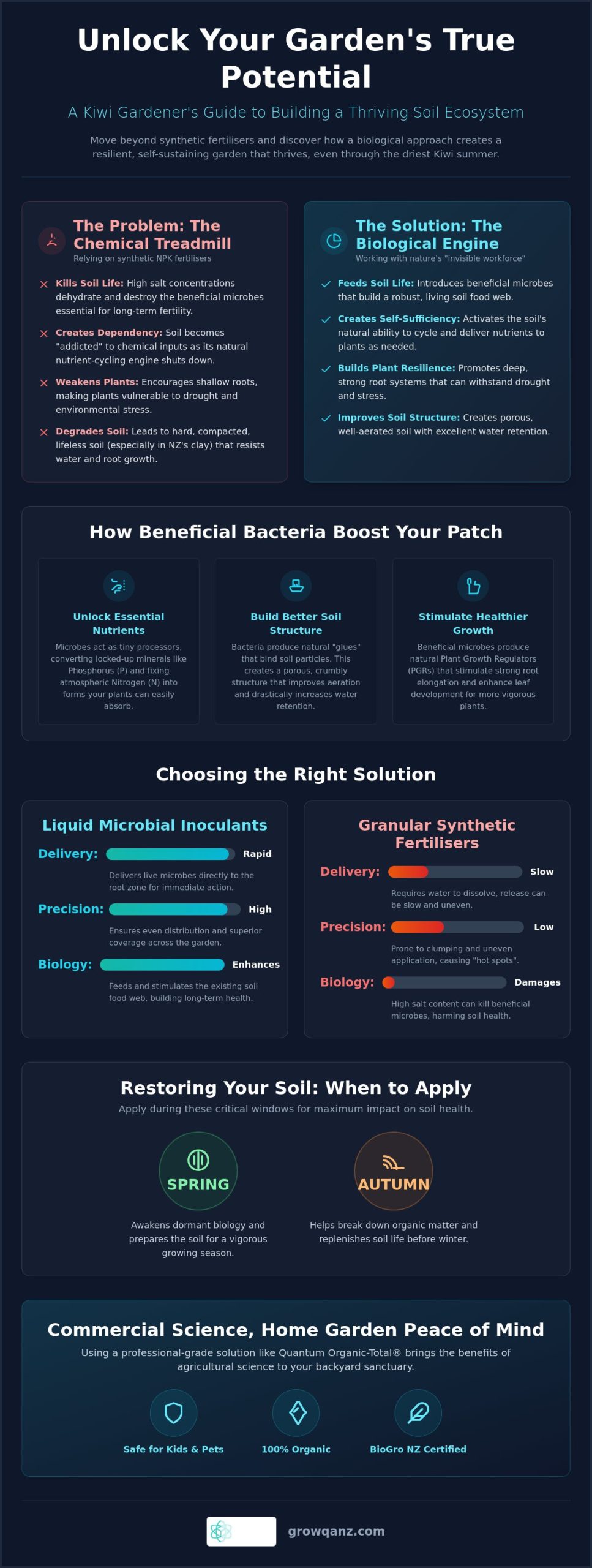
Synthetic fertilisers are essentially refined salts. While they provide a quick growth burst, high concentrations of these salts can dehydrate and kill the delicate microbes that sustain long-term fertility. This often leads to a “chemical treadmill” where the soil becomes addicted to external inputs because the natural nutrient-cycling systems have been suppressed. The plants become “lazy”, failing to develop the deep root systems needed to survive environmental stress. Soil degradation in a residential garden is the progressive loss of biological activity and structure, resulting in hard, lifeless earth that cannot support healthy growth without constant intervention.
The Biological Engine: How Beneficial Bacteria Boost Your Patch
Beneath the mulch of a thriving vegetable patch lies a biological engine that drives plant health far more effectively than any synthetic spray. While we often focus on what we can see above ground, the diversity found within garden soil microbiomes determines how well your plants can access nutrients. Finding the right microbial for home garden use allows you to tap into a natural system where bacteria act as tiny chemical processors. They “unlock” phosphorus that is often bound tightly to soil particles and “fix” nitrogen from the air, delivering these essential elements directly to the roots. This internal nutrient cycling reduces the need for external fertilisers and ensures your veggies have a steady supply of what they need, exactly when they need it.
Microbes also produce natural plant growth regulators (PGRs). These biochemical signals stimulate root elongation and enhance leaf development, essentially giving your plants a professional-grade head start. Beyond growth, these organisms improve the physical state of your backyard. By producing sticky substances called biofilms, bacteria bind soil particles together into stable aggregates. This creates a porous soil structure that allows air to reach the roots and significantly improves water retention; a vital factor for maintaining a resilient garden during a scorching New Zealand summer.
Photosynthetic Bacteria: Solar Power for Your Roots
Most soil bacteria rely on organic matter for food, but photosynthetic bacteria are unique because they use light energy to fuel their metabolic processes. These specialised organisms fix carbon and produce oxygen, creating a hospitable environment for other beneficial microbes to thrive. While this technology is a staple of microbial solutions for field crops, it is just as effective in a home garden setting. By providing this “solar-powered” boost, you can accelerate the restoration of tired soil and build a more robust biological foundation for your vegetable beds.
Strengthening Plant Resilience Against Environmental Stress
A healthy microbial population acts as a biological shield. During periods of extreme heat or dry spells, specific microbes help plants “hunker down” by regulating their internal water use. They also protect the root zone from soil-borne pathogens by outcompeting harmful fungi and bacteria for space and resources. This process triggers what scientists call “induced systemic resistance”. Think of it as a biological alarm system that primes the plant’s natural defences, making it much harder for pests or diseases to take hold. Investing in a high-quality microbial for home garden use is a practical way to ensure your patch stays green and productive, even when the weather turns harsh.
Choosing the Right Solution: Liquid Inoculants vs. Granular Fertilisers
Selecting the right delivery method is just as important as the biology itself. While granular pellets are a common sight in New Zealand garden centres, they often rely on mechanical breakdown and consistent rainfall to become even remotely effective. In contrast, a liquid microbial for home garden use provides an immediate infusion of life that doesn’t wait for the next storm to start working. This difference in delivery speed is fundamental when you want to restore our soils and see tangible results in your vegetable patch before the season ends. Professional-grade liquids are engineered to keep microbes in a stable, dormant state until they hit the soil, ensuring you get the same potency every time you apply them.
Why Liquid Microbial Treatments Outperform Granules
Liquid treatments offer a level of precision that granules simply cannot match. Because the microbes are suspended in a stable solution, they flow easily through soil pores to reach the root zone instantly. This uniform distribution ensures that every plant in your bed receives an equal share of beneficial bacteria, preventing the “patchy” growth often seen with scattered pellets. You can target specific areas with a watering can or sprayer, ensuring the biology reaches the rhizosphere where it’s needed most. Additionally, liquid applications eliminate the risk of “root burn” associated with concentrated synthetic granules. This makes them a much safer choice for delicate seedlings and established perennials that need a gentle but effective boost.
The Importance of BioGro Certification for Home Safety
When you are growing food for your family, the purity of your inputs is a non-negotiable factor. BioGro certification is New Zealand’s most trusted organic standard. It ensures that products are free from synthetic chemicals, heavy metals, and GMOs. Choosing a certified solution provides essential peace of mind for households with curious pets, local bee populations, and backyard wildlife. You aren’t just feeding your plants; you are protecting the entire ecosystem of your property. A professional-grade Quantum Organic-Total cost-benefit analysis highlights that the value isn’t just in the increased yield. It’s in the long-term safety and health of your home sanctuary. These advanced formulations are designed for stability, offering a reliable shelf-life that maintains microbial potency without the need for harsh preservatives.
Practical Application: Restoring Your Soil Step-by-Step
Integrating a microbial for home garden program is best approached with a seasonal mindset that aligns with the New Zealand climate. Spring and Autumn are the two most critical windows for inoculation. Applying beneficial bacteria in the Spring prepares the soil for the high demands of the growing season, while Autumn applications help the biology break down spent organic matter and store nutrients over the winter months. This consistent rhythm ensures that your soil biology remains active and ready to support the next crop cycle without the need for synthetic intervention.
Preparation is simple but essential for success. Before applying any microbial for home garden treatment, ensure the soil surface is moist. Dry, hydrophobic soil can cause the liquid solution to run off rather than penetrate the root zone where it is needed most. Clear away any heavy debris or thick layers of fresh, uncomposted mulch to ensure the solution makes direct contact with the earth. This allows the microbes to migrate into the soil pores quickly and begin colonising the rhizosphere of your plants.
Timing your application is a small detail that yields significant results. Always apply your microbial solutions during the early morning or at dusk. The harsh UV rays of the New Zealand sun can be lethal to sensitive bacteria before they have a chance to seek shelter underground. For mixing, professional-grade concentrates typically require a dilution of 1:100. Using a standard garden sprayer or a simple watering can is perfectly adequate, provided you ensure even coverage across the target area. Always use clean, non-chlorinated water if possible, as chlorine can inhibit microbial activity.
Fixing Common Soil Issues: Clay, Sand, and Compaction
Heavy clay soil, a common challenge in regions like Auckland and Northland, often suffers from poor drainage and low oxygen levels. Microbes help “fluff up” these tight structures by producing polysaccharides that bind tiny clay particles into stable aggregates, creating much-needed air pockets. In contrast, sandy soils in coastal New Zealand benefit from increased biological activity that holds onto moisture and nutrients that would otherwise leach away. If you are dealing with “dead” soil after heavy chemical use or recent construction, reintroducing a diverse microbial consortium is the fastest way to restore the natural biological engine of your backyard.
Microbial Care for Different Garden Zones
In the vegetable patch, high microbial activity directly correlates with better flavour and higher nutrient density in your harvest. For your lawn, these organisms support professional turf biological products by encouraging deeper root systems and a denser sward that can better withstand the dry Kiwi summer. Fruit trees and ornamentals also require long-term soil fertility; regular inoculation in the orchard zone ensures that the soil remains a productive environment for years to come. By tailoring your approach to each zone, you create a cohesive and resilient home ecosystem.
Ready to see the difference in your own backyard? Explore our BioGro certified microbial solutions and start your soil restoration journey today.
Quantum Organic-Total®: Professional Science for the Home Sanctuary
Achieving a high-performance garden shouldn’t require a degree in soil science, yet it does require the right biological tools. Quantum Organic-Total® serves as the flagship solution for Kiwi gardeners who want to move beyond basic maintenance and toward genuine soil restoration. By utilising a professional-grade microbial for home garden use, you are essentially inoculating your soil with the same technology used by commercial growers to ensure high yields and plant resilience. This product bridges the gap between large-scale agricultural efficiency and the aesthetic needs of a private backyard sanctuary, providing a reliable path to vibrant, nutrient-dense vegetables without the use of synthetic chemicals.
The efficacy of this formulation lies in its unique blend of photosynthetic and heterotrophic bacteria. While many off-the-shelf products contain only a handful of common strains, Quantum Organic-Total® features a diverse consortium designed to function across varying soil types and environmental conditions. These microbes work in harmony to cycle nutrients, build soil structure, and protect the rhizosphere. Because the GrowQanz range is 100% natural and BioGro NZ certified, you can apply it with total confidence, knowing your home-grown harvest is safe for your family and the local environment.
Why Quantum Organic-Total® is the Grower’s Choice
The “Total” in the name reflects a comprehensive approach to plant health that supports your garden from seedling establishment through to the final harvest. This isn’t a one-off stimulant; it’s a foundational soil treatment backed by rigorous testing and technical expertise. The Quantum difference lies in the sheer diversity of the microbial consortium, which allows the product to remain effective even when New Zealand’s weather becomes unpredictable. By supporting the natural biological processes of the soil, you create a self-sustaining system where plants are naturally more resistant to pests, diseases, and environmental stress.
Getting Started with GrowQanz in Your Backyard
Transitioning your garden to a biological-led system is a straightforward process that begins with moving away from the “quick fix” mentality of synthetic fertilisers. When you order the liquid concentrate, you receive a stable, easy-to-use solution that integrates seamlessly into your existing watering routine. The shift toward long-term soil health pays dividends in the form of deeper-rooted lawns, more flavourful veggies, and a garden that thrives with less water and fewer inputs. It’s time to stop treating symptoms and start feeding the engine that feeds your plants. Restore your soil with GrowQanz today and experience the professional standard of home gardening.
Reclaiming Your Soil’s Natural Potential
The journey toward a high-yielding, resilient garden begins with a fundamental shift in how we view the ground beneath our feet. By moving away from synthetic “quick fixes” and embracing the biological engine of the soil, you ensure your vegetable patch can thrive even through the challenging New Zealand seasons. Integrating a professional-grade microbial for home garden use is the most effective way to restore nutrient cycling and improve soil structure without introducing harsh chemicals into your family’s sanctuary.
Choosing advanced, BioGro New Zealand Certified Organic technology means you’re using solutions trusted by commercial growers across NZ and Australia. These 100% natural formulations are designed to be safe for your kids, pets, and the local ecosystem while delivering professional results in your own backyard. It’s time to stop fighting against hard clay or sandy soil and start working with the invisible workforce that nature provided.
Invest in your soil’s future with Quantum Organic-Total® and watch your garden transform into a vibrant, high-yielding sanctuary. You’ve got the tools to grow something extraordinary; now it’s just a matter of letting the biology do the heavy lifting.
Frequently Asked Questions
Are microbial soil treatments safe for my dogs and cats?
Yes, BioGro certified microbials like Quantum Organic-Total® are 100% natural and safe for all household pets. They contain no synthetic chemicals, toxins, or heavy metals. Because these solutions are biological rather than chemical, there is no “withhold period” required. Your dogs or cats can safely play on the lawn or in the garden beds immediately after you’ve finished the application.
Can I use microbial inoculants at the same time as my usual fertiliser?
You can use them in the same season, but it’s best to avoid mixing them directly with high-salt synthetic fertilisers. These harsh chemicals can inhibit or even kill the beneficial bacteria. If you are using organic fertilisers, they often work in synergy. For the best results, apply your microbial for home garden solution a few days after fertilising to ensure the microbes have a hospitable environment to colonise.
How often should I apply microbes to my vegetable garden?
A standard schedule involves a thorough inoculation during the Spring and Autumn windows. For high-performance vegetable patches, a light monthly “top-up” during the peak growing season helps maintain a robust rhizosphere. This ensures that as your veggies grow and deplete local nutrients, the microbial workforce is constantly replenished to unlock more minerals from the soil profile for the plants to use.
Will microbes help my garden survive a drought or water restrictions?
Yes, beneficial bacteria significantly improve water efficiency by building soil aggregates and producing biofilms. These biological structures help the soil retain moisture for longer periods and allow roots to penetrate deeper into the earth. A resilient garden with a healthy microbial population can often withstand dry spells or strict watering restrictions that would leave chemically-treated, compacted soil hard and cracked.
What is the difference between compost tea and a professional inoculant like Quantum Organic-Total®?
Compost tea is a variable DIY product that depends entirely on the quality of your compost, whereas Quantum Organic-Total® is a shelf-stable, scientifically formulated consortium. Professional inoculants provide a guaranteed count of specific, high-performance strains like photosynthetic and heterotrophic bacteria. This ensures consistent results and eliminates the risk of brewing harmful pathogens that can sometimes occur in uncontrolled home-brewed tea batches.
Do I need to reapply microbes every year, or do they stay in the soil?
While some microbes persist, environmental stressors like frost, extreme heat, and tilling can deplete their numbers over time. Reapplying at least twice a year ensures that the beneficial populations remain dominant over harmful soil-borne pathogens. Think of it as a seasonal “re-boot” for your soil’s biological engine. This maintenance ensures peak productivity and long-term soil health regardless of the weather conditions.
Can I use these products in a container garden or raised beds?
Absolutely, and it’s often more critical in these restricted environments. Potting mixes and raised bed soils are frequently sterile or lack the natural biological diversity found in healthy ground soil. Using a microbial for home garden application in containers helps prevent nutrient leaching and keeps the root zone aerated. It ensures your potted plants have the same biological support as those grown in a professional orchard.
How long does it take to see results after applying microbes to my soil?
Biological changes begin immediately at a microscopic level, but visible plant improvements typically appear within two to four weeks. You might first notice improved soil tilth and better moisture retention before seeing more vibrant leaf colour or increased flowering. Because this is a long-term soil restoration process rather than a temporary chemical stimulant, the most profound benefits become evident over a full growing season.
Disclaimer
Important: This article provides general agricultural information only. Product performance can vary according to crop, soil, climate, management practices and application conditions. Trial or research results discussed may have been obtained under specific conditions and should not be interpreted as a guarantee of equivalent results. Always follow current product directions and confirm suitability for your crop, growing system and organic certification requirements. Contact QANZ for current product and application information.
