
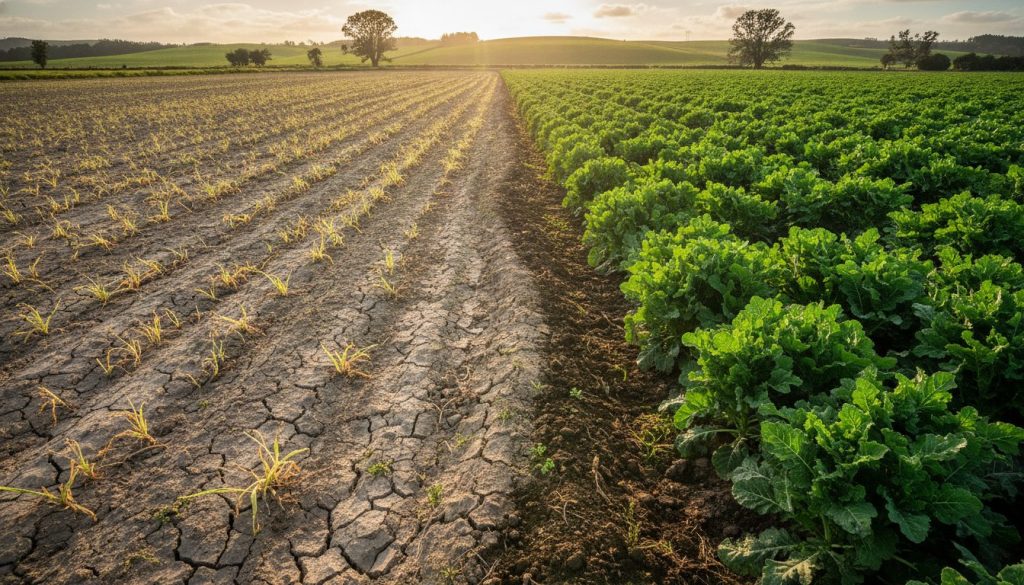
What if the solution to New Zealand’s increasingly unpredictable dry spells isn’t found in a more expensive irrigation system, but within the biology of your own soil? Many growers across the country are facing the reality of rising water rights costs and the visible degradation caused by decades of heavy synthetic inputs. It’s a common frustration to watch paddocks lose their resilience just when the season demands it most. By focusing on enhancing soil water holding capacity naturally, you can move away from the “stop-and-spray” cycle and toward a biological framework that actually works with the land.
This guide shows you how to fortify your yields against water stress using advanced microbial technologies that protect your crops without synthetic interference. We’ll explore how specific strains of photosynthetic bacteria, such as those found in Quantum-VSC®, restore the soil’s natural ability to retain moisture even during low-rainfall years. You’ll learn the technical foundations of biological soil health and gain a clear path toward reducing your reliance on costly inputs while maintaining stable, high-quality production. It’s time to transition from a passive approach to an active, evidence-based strategy for long-term ecological health.
Key Takeaways
- Understand the biological shift from mere drought survival to active yield maintenance by enhancing soil water holding capacity naturally.
- Discover how specific soil microorganisms produce osmoprotectants to prevent cellular collapse in crops during extended dry periods.
- Learn why traditional synthetic fertilisers can sometimes hinder plant resilience and how liquid microbial treatments offer a more efficient alternative.
- Follow a structured two-step programme to identify microbial depletion in your paddocks and select the right biological solutions for your specific land.
- Explore the benefits of BioGro certified technologies like Quantum-VSC® to future-proof your yields against the rising costs of water rights.
What is Natural Drought Resistance for Crops?
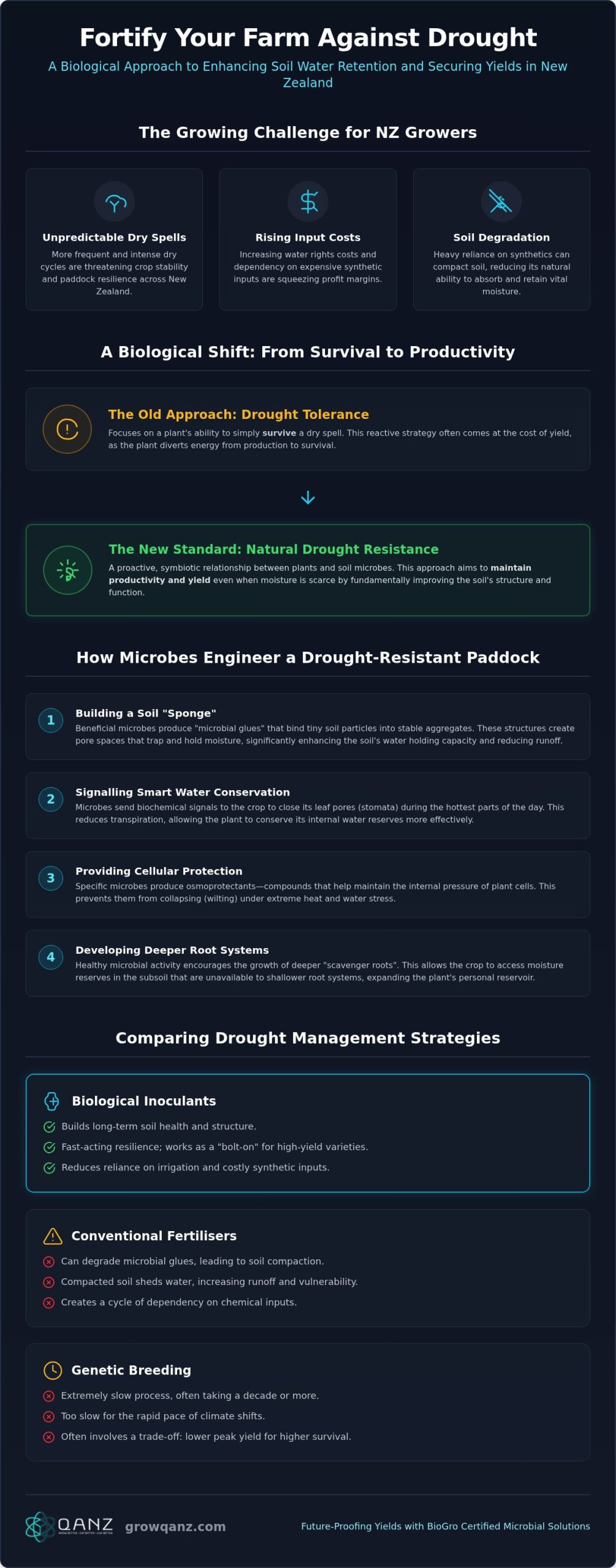
Natural drought resistance is a biological synergy that optimises water use efficiency. It isn’t a static trait programmed into a seed; rather, it’s a dynamic, symbiotic relationship between plant roots and the surrounding soil microbes. While many growers focus on drought tolerance, which is the plant’s ability to simply survive a dry spell, true resistance involves maintaining productivity and yield when moisture is scarce. In the current New Zealand agricultural landscape, where water rights are becoming more restrictive and costly, enhancing soil water holding capacity naturally has moved from a niche interest to a commercial necessity.
The 2026 climate outlook indicates a shift toward more frequent and intense dry cycles. This reality demands a transition from reactive irrigation strategies to proactive soil biology management. Moving toward a biological framework allows the paddock to function as a self-regulating system. By fostering these natural partnerships, growers can protect their bottom line and secure their yields without relying solely on the pump or synthetic interventions.
The Limitations of Traditional Breeding
Relying on genetic breeding for drought-resistant cultivars presents a significant challenge: speed. Developing a new variety that can withstand New Zealand’s specific environmental pressures often takes a decade or more. This timeline is far too slow for the rapid climate shifts we’re seeing today. There’s also a common physiological trade-off where cultivars bred for extreme survival often exhibit lower peak yield potential during standard years. Microbial solutions provide a tactical advantage by acting as a “bolt-on” resilience factor. They allow you to continue using high-yield varieties while providing the biological support needed to survive unexpected moisture stress.
The Role of Soil Structure in Water Retention
Effective water management begins with the physical architecture of your soil. Healthy microbiology is the primary architect of this structure, producing “microbial glues” and filaments that bind soil particles into stable aggregates. These aggregates act like millions of microscopic sponges across the paddock, enhancing soil water holding capacity naturally by trapping moisture in the pore spaces. When these biological structures are intact, they significantly reduce runoff during heavy rain and keep moisture available to the roots for much longer. Conversely, heavy reliance on synthetic fertilisers can inadvertently degrade these natural glues. This leads to compacted soil that sheds water rather than absorbing it, effectively making the crop more vulnerable to thirst even when water is applied.
The Microbial Mechanics of Soil Moisture Retention
Microbes act as the primary communication network within the soil-root interface. They don’t just exist passively; they actively send biochemical signals to the crop when moisture levels begin to dip. Specific beneficial soil microorganisms for plants signal the crop to close its stomata, which are the small pores on the leaves. This response reduces the rate of transpiration, allowing the plant to conserve its internal water reserves more effectively during the hottest parts of the day. It’s a sophisticated biological defense that prevents the plant from exhausting its resources before the next rainfall or irrigation cycle.
Beyond signaling, these microbes produce compounds known as osmoprotectants. These substances help maintain the internal pressure of plant cells, preventing them from collapsing or “wilting” under extreme heat. Simultaneously, healthy microbial activity encourages the development of deeper scavenger roots. By extending the root system further into the subsoil, the crop can access moisture reserves that remain untouched by shallower systems. This structural shift is a fundamental part of enhancing soil water holding capacity naturally, as it turns the entire soil profile into a functional reservoir for the crop.
Root Zone Colonisation and Protection
The rhizosphere is the narrow region of soil directly influenced by root secretions and associated microorganisms. When this zone is colonised by beneficial bacteria, it creates a biological buffer that retains water right where the plant needs it most. This colonisation is particularly effective at how to reduce transplant shock in seedlings, as the microbial buffer protects young, vulnerable roots from sudden moisture loss. Growers should distinguish between bio-fertilisers, which primarily provide nutrients, and bio-stimulants, which focus on triggering these natural pathways to manage abiotic stress and environmental pressure.
Photosynthetic Bacteria: The Hidden Engine
Specific strains of photosynthetic bacteria for soil serve as a hidden engine for crop resilience. These unique organisms help plants maintain energy production and photosynthesis even when water is scarce and traditional metabolic processes begin to slow down. They also play a critical role in reducing oxidative stress, providing an antioxidant effect that protects sun-scorched field crops from cellular damage. Regular application of liquid treatments like Quantum-VSC® ensures these populations remain robust throughout the season. By enhancing soil water holding capacity naturally through these microbial pathways, you provide your paddocks with a steady, unhurried resilience that synthetic inputs simply cannot replicate.
Comparing Biological Inoculants with Conventional Drought Strategies
Conventional drought management often leans heavily on high-capital engineering solutions like expanded irrigation infrastructure. While these systems provide a safety net, the initial investment in pumps and pivots can be immense, often running into hundreds of thousands of NZ$. In contrast, enhancing soil water holding capacity naturally through microbial inoculants offers an operational alternative that focuses on the efficiency of the water you already have. By improving the soil’s biological architecture, you reduce the volume of water required to achieve the same yield, effectively stretching your existing water rights further.
The choice between chemical fertilisers and biological enhancers becomes critical during a dry spell. Adding high-salt synthetic fertilisers when moisture is low can increase osmotic stress, making it even harder for the crop to draw what little water remains in the soil profile. Liquid biological treatments provide rapid, targeted microbial delivery to the root zone, whereas bulky granules offer a slower and often less precise release that depends heavily on existing soil moisture to activate. Shifting the focus to enhancing soil water holding capacity naturally ensures that your inputs support, rather than hinder, the plant’s metabolic resilience during abiotic stress.
Irrigation Efficiency and Soil Biology
Microbes play a vital role in managing water movement, especially in soils that have become hydrophobic or water-repellent after a long dry summer. Natural microbial surfactants help break the surface tension of the soil, allowing water to penetrate deeper into the profile rather than pooling on the surface or running off. This biological intervention ensures that every millimetre of irrigation or rainfall reaches the root zone. Growers looking for financial clarity on this approach can review a Quantum Organic-Total cost-benefit analysis to see how these liquid treatments compare to traditional granular programmes.
The Organic Advantage: BioGro Certification
With New Zealand’s organic exports reaching a record NZ$1.18 billion in 2024, maintaining a premium status is essential for accessing high-value international markets. Using BioGro certified soil inoculants allows you to protect your yields from drought without compromising your organic certification. These 100% natural solutions ensure compliance with strict export standards while delivering verified results in the field. By choosing non-synthetic, BioGro approved plant stimulants, you invest in the long-term sustainability of your land, ensuring your soil remains a productive asset for decades to come.
Implementing a Drought-Resilience Programme in Your Paddocks
Establishing a resilient agricultural system requires a structured, seasonal approach rather than a one-off application. Success in enhancing soil water holding capacity naturally depends on integrating microbial technology into your existing management cycle at specific intervals. This methodical transition ensures that the biological foundations are robust enough to withstand the abiotic pressures of a New Zealand summer. A successful programme follows four primary stages:
- Step 1: Baseline Assessment. Identify microbial depletion zones within the paddock by observing areas of poor water penetration or uneven crop maturity. These zones often indicate a “biological vacuum” where previous synthetic use has degraded the soil’s natural structure.
- Step 2: Solution Selection. Choose microbial solutions for plant stress that align with your specific crop requirements. Different varieties require different photosynthetic bacteria strains to optimise their water-use efficiency.
- Step 3: Strategic Timing. Time your applications to ensure maximum root colonisation before the summer dry season arrives. Applying liquid treatments during the early growth stages allows the microbes to establish a protective buffer around the rhizosphere before moisture levels drop.
- Step 4: Active Monitoring. Track the efficacy of your biological programme by monitoring plant sap and soil moisture levels throughout the season. This data provides the evidence needed to verify that the soil-root interface is functioning at peak efficiency.
Application Techniques for Broadacre and Horticulture
Liquid microbial treatments offer a significant logistical advantage over bulky granules, especially in large-scale operations. These solutions can be applied easily through existing boom sprays or fertigation systems without requiring specialized equipment. Maintaining microbial viability is critical during this process; therefore, ensure that mixing tanks are free from residual chemical contaminants and that water temperatures remain stable. For those managing large-scale operations, leveraging microbial solutions for field crops is the most efficient way to maintain broadacre soil vitality throughout 2026.
Restoring Soil Health After Heavy Inputs
Years of heavy chemical fertiliser use or soil fumigation can leave the land biologically sterile, making it highly susceptible to drought. Re-inoculating this “dead” soil is essential for kickstarting the natural nutrient cycling and water retention processes that have been suppressed. Enhancing soil water holding capacity naturally in these environments requires a focus on restoring the soil food web. Quantum-VSC® plays a pivotal role in this recovery, as it contains proprietary strains designed to accelerate the restoration of soil health after significant disturbance. If you’re ready to transition away from reactive chemical cycles, consult with our technical specialists to develop a restoration programme for your land.
Future-Proofing Yields with BioGro Certified Microbial Solutions
Quantum-VSC® stands as the primary biological defence against abiotic stress for New Zealand growers. It contains proprietary photosynthetic bacteria strains that help crops maintain metabolic function when water is limited. While VSC manages the immediate stress, Quantum Organic-Total® provides the foundational soil vitality required for long-term resilience. Together, these technologies represent a shift toward 100% natural, BioGro certified solutions that align with the high standards of our international export markets. Professional primary producers increasingly require evidence-based results, and these microbial tools deliver verified performance without the environmental toll of synthetic alternatives.
Enhancing soil water holding capacity naturally is not just a seasonal tactic; it’s a strategic investment in the future value of your land. By restoring the soil’s biological capacity, you create a buffer that protects your bottom line against the rising costs of irrigation and water rights. This transition ensures that your farm remains productive even as weather patterns become more erratic and traditional inputs become less effective.
Tailored Solutions for Different Crop Types
The requirements for drought resistance vary significantly across New Zealand’s primary sectors. For commercial horticulture, vegetable crop microbial solutions focus on rapid root establishment and stomatal control to prevent wilting in high-value greens. In the permanent crop sector, protecting long-term investments is vital. Many growers are now utilising microbial soil amendments for nut orchards to ensure deep-root hydration during the critical nut-fill stage. On dairy farms, managing pasture health during summer dry spells is essential for maintaining grazing quality and reducing the need for expensive supplementary feed.
Partnering with GrowQanz for the 2026 Season
Choosing the right biological path requires more than just a product; it requires a partnership based on technical expertise. GrowQanz provides local growers with access to technical support and trial data that reflects the unique soil types found across New Zealand. We work with you to organise a seasonal microbial programme tailored to your farm’s specific yield goals and environmental challenges. Our commitment is to long-term ecological health and grower profitability, ensuring that your transition to a biological framework is supported by science at every step. By enhancing soil water holding capacity naturally, we help you build a more stable and efficient agricultural future.
Securing Your Harvest in an Unpredictable Climate
The path toward long-term paddock resilience requires a fundamental shift from reactive irrigation to proactive soil management. By focusing on enhancing soil water holding capacity naturally, you’ve learned how microbial partnerships can actively protect your yields during New Zealand’s increasingly frequent dry spells. These 100% natural microbial technologies don’t just help crops survive; they maintain the metabolic momentum needed for high-quality production. It’s about working with the land’s inherent biology to create a self-sustaining reservoir in the root zone.
Professional growers nationally now trust these BioGro New Zealand certified solutions to restore soil vitality and reduce reliance on costly synthetic inputs. Transitioning to a biological framework ensures your land remains a productive asset for the 2026 season and beyond. It’s a principled, evidence-based approach that balances commercial success with environmental stewardship. You don’t have to choose between yield and sustainability when you have the right technical partners on your side.
Enquire about Quantum-VSC® and fortify your crops against drought today to start building a more resilient and efficient future for your farm.
Frequently Asked Questions
How do microbes actually help crops survive during a drought?
Beneficial soil microbes signal the crop to close its stomata to conserve internal moisture while producing osmoprotectants that prevent cellular collapse. They also build soil aggregates that act like tiny sponges. By enhancing soil water holding capacity naturally, these organisms ensure that every millimetre of rainfall or irrigation remains available in the root zone for longer periods. This biological partnership allows the plant to maintain metabolic function even when surface moisture is scarce.
Can I use microbial inoculants alongside my regular fertiliser programme?
You can integrate microbial treatments into most existing programmes, though high-salt synthetic fertilisers can sometimes inhibit microbial activity if applied simultaneously. It’s often best to apply liquid microbes separately or ensure the soil has adequate moisture to buffer the salt effect. Shifting toward a more biological framework often allows growers to reduce their total synthetic input over time as the soil’s natural nutrient cycling and water retention capabilities begin to recover.
Is Quantum-VSC® safe for use on BioGro certified organic farms?
Yes, Quantum-VSC® is BioGro New Zealand certified as a 100% natural microbial technology. It meets the strict organic standards required for New Zealand’s export markets, ensuring that you can protect your yields from abiotic stress without compromising your certification status. This makes it an ideal tool for both fully certified organic operations and those in the mandatory 36-month conversion period who need to maintain productivity without using prohibited synthetic chemicals.
How quickly will I see results after applying a microbial soil treatment?
While the physical restructuring of the soil takes time, many growers report visible improvements in plant stress response within two to four weeks of application. You may notice better leaf turgor and reduced wilting during the hottest parts of the day. Long-term benefits, such as enhancing soil water holding capacity naturally through increased organic matter and aggregate stability, typically become more pronounced over a full growing season as the microbial populations establish themselves.
What is the best time of year to apply drought-resistance microbes?
The most effective time for application is during the early growth stages in spring when root activity is high. This timing allows the microbes to colonise the rhizosphere and establish a biological buffer before the summer dry season hits. Ensuring the microbes are well-established before moisture levels drop ensures the crop is already protected when abiotic stress begins. Second applications can be made in autumn to support soil restoration before winter dormancy.
Do liquid microbial treatments require special equipment for application?
Liquid microbial solutions don’t require any specialised equipment and can be applied using standard boom sprays, fertigation systems, or side-dressers. This ease of use makes them much more efficient than bulky granular products for large-scale operations. It’s important to ensure that application tanks are clean and free from residual fungicides or harsh chemicals that could harm the living bacteria. Standard nozzles are typically sufficient as the microbes are microscopic and pass through easily.
Can these products help restore soil that has been damaged by chemical fumigation?
Yes, these microbial technologies are specifically designed to re-inoculate soil that has become biologically sterile after fumigation or heavy chemical use. Fumigation often creates a biological vacuum that leaves crops vulnerable to drought and disease. Applying Quantum-VSC® helps kickstart the soil food web by introducing proprietary photosynthetic bacteria strains. This restoration process is vital for rebuilding the natural resilience and moisture-retention capabilities of damaged paddocks over several seasons of active management.
Are these microbial solutions suitable for both broadacre field crops and horticulture?
These solutions are highly versatile and suitable for a wide range of primary sectors across New Zealand. They’re used effectively in broadacre field crops like wheat and maize, as well as high-value horticulture including vegetables, fruit, and nut orchards. Because the technology focuses on the universal relationship between roots and soil biology, it provides benefits regardless of the crop type. Dairy farmers also use them to maintain pasture quality and grazing resilience during dry summers.
