
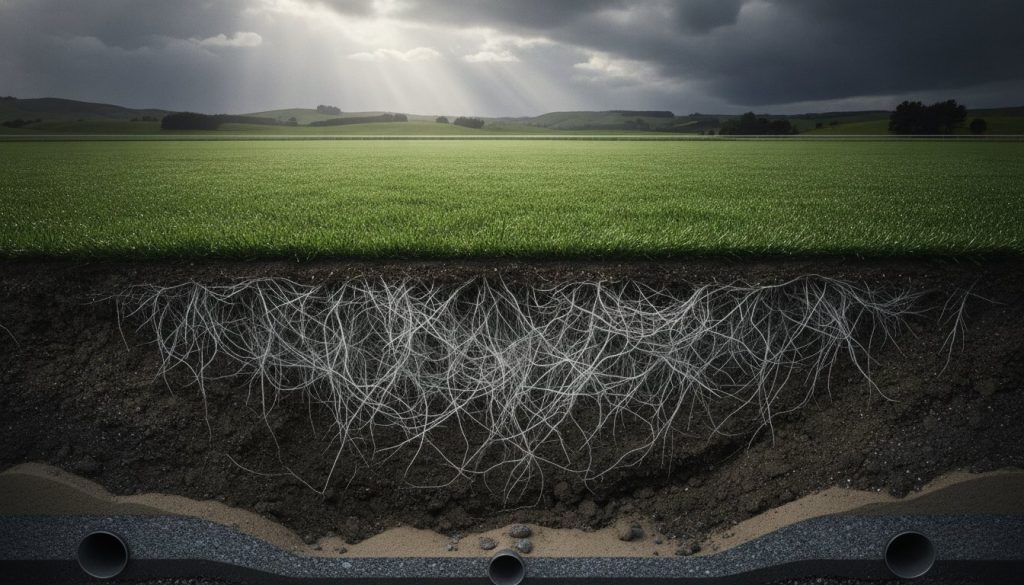
A single cancelled race meet in New Zealand doesn’t just disrupt the racing calendar; it can represent a massive financial blow to the industry and damage a club’s reputation overnight. When the Tasman weather turns, the difference between a successful event and a total washout often depends on the hidden engineering beneath the surface. For track managers, understanding how a superior root structure can help racecourse tracks by securing better turf, thereby limiting the risk of race cancellations, is no longer a luxury; it’s a vital strategy for operational stability. High-performance turf requires more than just green blades; it demands a biological foundation that can withstand compaction and maintain drainage during a sudden downpour.
We understand the pressure of maintaining a safe, consistent surface under the scrutiny of the public and the industry alike. This article reveals how advanced root architecture and microbial soil health can stabilise your turf, improve shear strength, and protect your revenue from the unpredictable Kiwi climate. We will explore the science of microbial colonisation and explain why moving away from synthetic fertilisers is the key to building a resilient, all-weather surface that stands up to the most demanding carnival days.
Key Takeaways
- Recognise the financial implications of race cancellations for New Zealand clubs and the critical role turf integrity plays in ensuring horse and rider safety.
- Explore the concept of root architecture as a “living mesh” that provides the structural engineering necessary to prevent track failure during high-traffic events.
- Gain insights into how better root structure can help racecourse tracks.limiting the risk of cancellations of races by securing better turf by fostering a symbiotic relationship between soil microbes and the rhizosphere.
- Learn how to implement a seasonal biological programme to build root depth reserves, which significantly improves drainage and reduces the risk of track “pugging”.
- Understand the benefits of using BioGro certified solutions to secure a resilient, all-weather racing surface without the structural weakening caused by excessive synthetic inputs.
The High Cost of Cancellation: Why Turf Integrity Matters
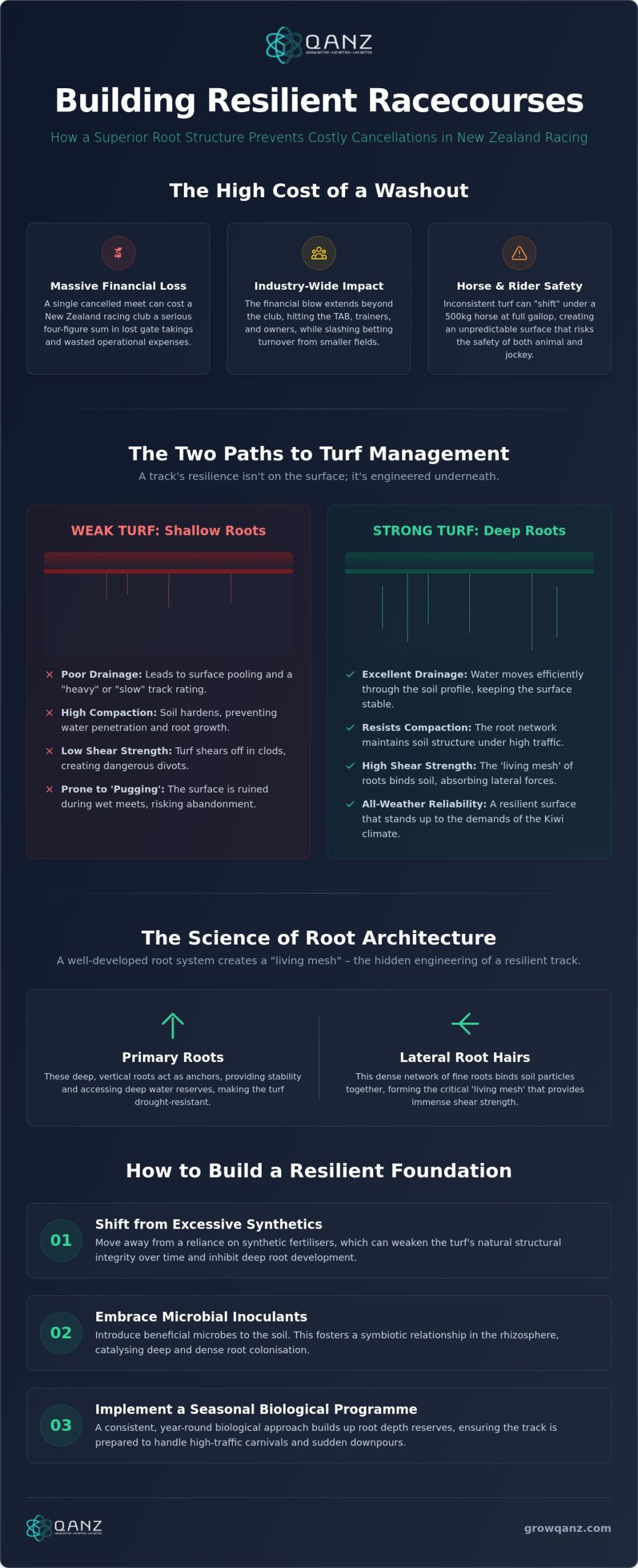
A cancelled race meeting is a financial disaster for New Zealand racing clubs. Beyond the immediate loss of gate takings, the ripple effect hits the TAB, trainers, and owners who’ve spent weeks prepping for that specific fixture. Industry data suggests that a single abandoned meet can cost a racecourse a serious four-figure sum in lost revenue and wasted operational expenses. Understanding how better root structure can help racecourse tracks.limiting the risk of cancellations of races by securing better turf is essential to mitigating these risks. When a track is downgraded to “Heavy” or “Slow” due to poor drainage, field sizes inevitably shrink, which slashes betting turnover and further erodes the club’s bottom line.
Safety remains the paramount concern for every official and participant. When turf density is inconsistent, the surface can “shift” under the weight of a 500kg horse at full gallop. This instability creates an unpredictable footing that often forces jockeys to request track inspections, frequently leading to late-minute scratchings or total abandonment. Surface-level fixes, such as extra rolling or sand top-dressing, are often just temporary measures. They fail to address the core problem: the lack of a deep, interconnected root system that binds the soil together during high-impact use.
The Pressure on Modern Track Curators
Curators today face immense pressure to deliver perfect conditions. They must manage high-traffic carnivals where the same track might host dozens of races over a few days. New Zealand’s unpredictable weather patterns, from flash floods in the north to sudden frosts in the south, make track preparation a constant battle. Balancing the demands of club committees for fast track ratings with jockeys’ demands for safety requires more than just traditional maintenance; it requires a scientifically robust turf profile that can recover quickly between races.
Surface Failure vs. Structural Integrity
The most critical metric for any racing surface is shear strength. This is the ability of the turf to resist the lateral force of a horse’s hoof. When the root system is shallow, the turf shears off in clods, creating dangerous divots and an uneven racing line. This failure is deeply linked to The Science of Soil Structure, where poor aggregation leads to soil compaction. Compacted soil prevents water from draining, causing surface pooling and the dreaded “pugging” that ruins tracks during wet meets. By prioritising root architecture, curators ensure the turf remains bound together as a single, stable unit that resists compaction and handles moisture efficiently.
The Science of Root Architecture: Engineering the Living Mesh
Root architecture is the structural scaffold of the racecourse. It describes the intricate three-dimensional distribution of roots throughout the soil profile, creating a complex underground network that determines how the surface responds to extreme pressure. Understanding how better root structure can help racecourse tracks.limiting the risk of cancellations of races by securing better turf involves looking past the green blades and focusing on this hidden engineering. A well-developed root system provides the necessary tension to hold the soil matrix together, ensuring that the track remains stable even when saturated by heavy rain. Without this internal framework, the turf is merely a decorative layer resting on unstable ground.
The ability of a track to withstand lateral shear forces is directly proportional to its root density and depth. When a horse gallops, it exerts immense horizontal pressure on the soil. If the roots are shallow, the turf simply slides off the underlying soil, resulting in the dangerous “shifting” mentioned earlier. By engineering a deeper root profile, curators create a living mesh that absorbs and distributes these forces, maintaining the integrity of the racing line even under the most demanding carnival conditions.
Primary Roots vs. Lateral Root Hairs
Vertical stability is primarily driven by deep primary roots that anchor the turf and provide access to deep-seated water reserves. However, the true strength of the “living mesh” comes from dense lateral root hairs. These fine structures act like millions of tiny stitches, binding individual soil particles together to prevent the surface from tearing under the lateral force of a horse’s stride. Traditional high-nitrogen maintenance programmes often prioritise rapid top growth at the expense of these roots, leading to a shallow, weak system that fails under pressure. Experts often refer to UMass Turfgrass Management Tips to highlight how balanced nutrition and proper mowing heights encourage the deep rooting necessary for high-performance surfaces.
Bio-Mechanical Stability in Turf
In structural engineering, rebar reinforces concrete to handle tension; in a racecourse, roots perform the same function for the soil. This bio-mechanical reinforcement increases the soil’s shear strength, allowing it to withstand the massive impact of racing without shifting or clumping. High root density also contributes to better “rebound” and shock absorption, which protects the horses’ joints and ensures a consistent “going” across the entire width of the track. When curators focus on building this internal strength, they create a surface that resists the “pugging” that often leads to race abandonments. For those looking to implement these biological principles, exploring specialised microbial solutions can provide the necessary catalyst for such deep-seated structural changes.
Microbial Inoculants: The Catalyst for Deep Root Development
The shift toward biological management represents a fundamental change in how New Zealand track curators approach turf resilience. Instead of relying on synthetic growth stimulants that often lead to shallow, weak roots, microbial inoculants like Quantum Organic-Total® act as a biological catalyst for the soil. These beneficial microorganisms establish a symbiotic relationship within the turf rhizosphere, significantly increasing the plant’s ability to forage for nutrients and moisture. This is a core component of how better root structure can help racecourse tracks.limiting the risk of cancellations of races by securing better turf, as it builds a self-sustaining system that doesn’t collapse under environmental stress. By improving nutrient uptake efficiency, clubs can reduce their reliance on synthetic salts, which typically degrade soil structure and inhibit deep rooting over time. For a deeper look at these technologies, curators can refer to Professional turf biological products.
Biological health is often the missing link in track stability. While synthetic fertilisers provide a quick green-up, they often bypass the natural processes that create long-term soil integrity. A robust microbial population ensures that the turf is not just “fed” but is actively building the structural foundation required for high-performance racing. This biological approach creates a track that is naturally more resistant to the heavy traffic of a carnival season, providing a viable alternative to the high costs of synthetic track conversions.
Photosynthetic Bacteria and Soil Vitality
Microbes are the invisible workforce of the soil. Photosynthetic bacteria, specifically, provide a unique energy source to the rhizosphere, helping to break down complex organic matter into plant-available nutrients. These organisms also secrete “glues” like glomalin, which are essential for soil aggregation and the creation of macropores for drainage. This process is vital for restoring soil life in tracks that have historically relied on heavy chemical use or fumigation. As noted in the Cornell Sports Field Management Guide, maintaining a diverse soil microbiome is critical for safe, high-quality playing fields that resist compaction and recover quickly from wear.
Liquid vs. Granular Biologicals for Racecourses
When managing vast track areas like Ellerslie or Riccarton, the application method is a practical consideration. Liquid biological treatments provide more uniform coverage compared to granular alternatives, ensuring that every square metre of the track receives a consistent microbial load. These liquid-based solutions allow for rapid microbial colonisation in the root zone, often showing results much faster than traditional soil amendments. Because they can be applied via existing irrigation or spray rigs, they integrate naturally into existing maintenance schedules without requiring additional specialised equipment or labour-intensive processes. This ease of use makes biological technology an accessible insurance policy for any New Zealand racing club.
Practical Strategies to Secure Better Turf and Limit Cancellations
Transitioning from reactive maintenance to a proactive biological programme is the most effective way to weather-proof a New Zealand racecourse. Building “reserve” root depth acts as an insurance policy against the sudden climatic shifts often seen in regions like Waikato or Canterbury. By establishing a seasonal application schedule of microbial inoculants, curators can ensure that the turf maintains a high root-to-shoot ratio, which is a critical KPI for track readiness. A high ratio indicates that for every centimetre of visible blade, there is a robust, supporting network of roots beneath. Practical application of how better root structure can help racecourse tracks.limiting the risk of cancellations of races by securing better turf involves shifting the management focus from purely aesthetic greening to subsoil structural integrity.
Improved soil porosity reduces surface runoff by allowing water to move vertically through the profile rather than pooling on the surface. This vertical movement is essential for preventing the “pugging” that occurs when saturated soil loses its weight-bearing capacity. When the soil is biologically active, it resists the compaction that usually leads to track downgrades, ensuring that the “going” remains consistent even after multiple races on a wet day. For clubs looking to start this transition, you can explore our range of turf microbial solutions to find the right fit for your track’s specific soil type.
Managing Drainage and Water Infiltration
Microbial activity is the primary driver of soil aggregation. These organisms create essential macropores, which are the highways for water movement within the soil profile. During heavy downpours, these channels prevent the track surface from “sealing,” a common issue where a fine layer of silt blocks water from entering the subsoil. By maintaining these natural drainage paths, curators can significantly reduce the recovery time required between a rain event and the first race, often making the difference between a late-morning inspection and a successful jump-off.
Enhancing Shear Strength for Carnival Season
The “living mesh” of roots must be at its peak density before the high-traffic carnival season begins. This preparation ensures the home straight maintains its integrity under the peak load of multiple galloping horses. Biological soil enhancers can also be used for rapid repair of divots between race days, as they stimulate lateral root growth to “stitch” the surface back together faster than traditional methods. This ensures that the track remains safe and consistent for every horse, from the first race of the carnival to the last. Focusing on these biological foundations allows clubs to deliver a world-class surface that meets the rigorous safety standards of the modern racing industry.
Securing the Future of Natural Turf with GrowQanz Solutions
The prestige of natural turf remains a cornerstone of New Zealand’s racing culture, yet the pressure to perform under adverse weather has never been higher. Quantum Organic-Total® serves as the premier biological solution for clubs that refuse to compromise on surface quality. By introducing a consortium of beneficial microbes, track curators can actively engineer the root zone for maximum stability. This biological investment is fundamental to how better root structure can help racecourse tracks.limiting the risk of cancellations of races by securing better turf, as it builds a track that’s naturally more resilient to the stresses of heavy rain and high traffic. For those evaluating the financial viability of this shift, a detailed Quantum Organic-Total cost-benefit analysis highlights how biological management often outperforms traditional synthetic programmes in long-term value.
BioGro New Zealand certification provides the assurance of organic integrity that modern curators and club committees demand. This certification isn’t just about environmental stewardship; it’s about using verified, high-performance technology that supports the long-term ecological health of the land. GrowQanz works alongside curators to provide the technical expertise and biological insights needed to transform a struggling track into a stable, all-weather asset. By prioritising the “biological engine” of the soil, clubs can secure their fixture lists and protect their revenue streams without the extreme capital expenditure of synthetic conversions.
A Holistic Approach to Track Health
Maximum resilience is achieved by combining the root-stimulating power of Quantum Organic-Total® with the soil-conditioning benefits of Quantum-VSC®. This dual approach accelerates the breakdown of thatch and improves natural soil fertility, which gradually reduces the need for expensive synthetic inputs. Over several seasons, this strategy lowers long-term maintenance costs while positioning the racecourse as a leader in sustainable, high-performance turf management. It creates a surface that doesn’t just look good on camera but possesses the internal strength to handle a full card on a wet Saturday afternoon.
Getting Started with GrowQanz
Taking the first step toward a more stable track doesn’t require an immediate overhaul of your entire maintenance schedule. Many New Zealand clubs find success by trialling microbial solutions on a high-wear training track or a specific “back straight” section to witness the increase in root density firsthand. GrowQanz offers dedicated technical support for local growers and curators, ensuring that every application is tailored to the specific soil profile of the course. By starting with these targeted trials, you can begin the journey toward a cancellation-proof track that delivers a safe and consistent racing experience for every participant. Our team is ready to help you implement these biological foundations to secure the future of your natural turf.
Building a Resilient Future for New Zealand Racing
The future of New Zealand racing depends on the stability of our natural surfaces. We’ve explored how moving beyond surface-level fixes toward a biologically active soil profile creates the shear strength and drainage capacity needed to withstand our unpredictable climate. By fostering a deep root system, curators ensure their tracks remain safe and consistent, even under the heavy pressure of a carnival schedule. Understanding how better root structure can help racecourse tracks.limiting the risk of cancellations of races by securing better turf is a practical necessity for any club looking to protect its revenue and reputation.
GrowQanz is a locally owned and operated partner committed to the long-term health of our agricultural and sporting sectors. Our BioGro NZ Certified technologies provide a scientifically proven method to enhance soil architecture without the structural weaknesses caused by chemical interference. We bring scientific authority in microbial soil health directly to the track, helping you build a resilient, all-weather surface that stands the test of time. It’s time to invest in the hidden foundation of your course. Secure your track turf with GrowQanz microbial solutions today and take the first step toward a more reliable racing season.
Frequently Asked Questions
How does root structure actually prevent a race from being cancelled?
Root structure prevents cancellations by providing the physical shear strength necessary to stop the turf from shifting under hoof. When roots are deep and dense, they act as a biological anchor that holds the soil matrix together even during periods of heavy rain. This stability ensures the racing surface remains safe and consistent, directly addressing how better root structure can help racecourse tracks.limiting the risk of cancellations of races by securing better turf.
Can microbial products really improve drainage on a heavy track?
Microbial products improve drainage by fostering the production of glomalin, which is a biological glue that aggregates soil particles. This process creates macropores, essentially tiny channels that allow water to move vertically through the soil profile rather than pooling on the surface. By increasing soil porosity, these solutions help a “Heavy” track return to a “Good” rating much faster after a significant rain event.
Is Quantum Organic-Total® safe for horses and the surrounding environment?
Quantum Organic-Total® is completely safe for horses, jockeys, and the surrounding environment. It contains naturally occurring microorganisms that are non-toxic and non-pathogenic, meaning there’s no risk of chemical runoff into local waterways. Because it’s a biological solution rather than a synthetic chemical, there’s no mandatory stand-down period for animals or staff after the application is completed.
How long does it take to see an improvement in turf shear strength?
You can often observe initial improvements in root hair development within three to four weeks of the first application. However, building the full structural “mesh” required for maximum shear strength is a cumulative process that typically takes a full growing season. Regular applications allow the microbial colonies to establish a permanent presence in the rhizosphere, providing long-term stability for the track.
Will using biologicals mean I have to stop using my current fertilisers?
You don’t need to stop using your current fertilisers immediately, as biologicals can be integrated into most existing maintenance programmes. In fact, microbes often improve the efficiency of your current inputs by making locked-up nutrients more plant-available. Over time, many curators find they can significantly reduce their reliance on synthetic salts as the natural soil fertility and root architecture improve.
Are these products BioGro certified for use on New Zealand racecourses?
Yes, GrowQanz products like Quantum Organic-Total® are BioGro New Zealand certified for organic integrity. This certification ensures that the products meet the highest standards for environmental safety and are verified for use in the New Zealand agricultural and turf sectors. Using certified biologicals allows racing clubs to demonstrate their commitment to sustainable track management with total confidence.
What is the best way to apply liquid microbial treatments to a large track?
The most efficient way to apply liquid microbial treatments to a large track is through existing boom sprayers or irrigation systems. Because the products are liquid-based, they provide exceptionally uniform coverage across vast areas like the home straight. This ensures every square metre of the turf receives a consistent microbial load, which is essential for maintaining uniform “going” across the entire width of the track.
Can better root structure help with track recovery after a multi-day carnival?
Better root structure significantly accelerates track recovery by providing the energy reserves and structural support needed for rapid repair. When a track has a dense network of lateral roots, it can “stitch” divots back together much faster than a shallow-rooted surface. This resilience is vital during multi-day carnivals where the turf must withstand intense, repeated use over a very short timeframe.
