
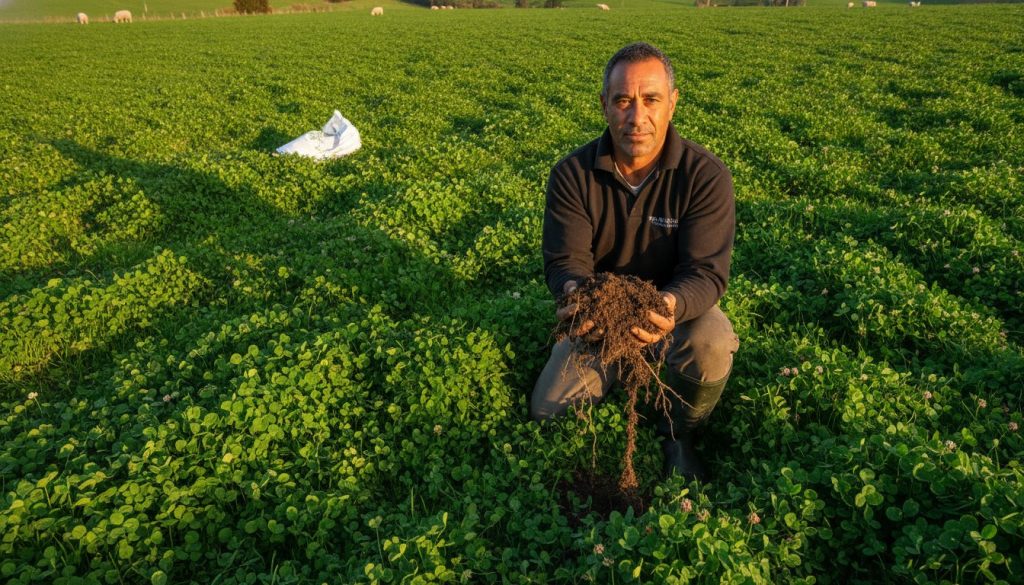
What if the most effective way to drive dry matter production wasn’t found in a bag of synthetic fertiliser, but in the biological engine already beneath your boots? You likely realise that the traditional reliance on heavy nitrogen applications is becoming increasingly difficult to sustain, especially with the 190kg/ha synthetic nitrogen cap and the mandatory reporting requirements due to regional councils every July. It’s a common struggle to balance the need for high yields with the reality of soil acidification and the rising costs of imported urea, which reached an average price of 487.71 US dollars per tonne between May 2025 and April 2026.
The good news is that increasing pasture growth without urea is not only possible but is becoming a preferred strategy for professional growers seeking long-term resilience. This guide will show you how to maintain your DM/ha targets and improve soil health by transitioning toward advanced microbial strategies. We’ll examine how BioGro certified technologies like Quantum Organic-Total® work alongside natural processes to restore your soil’s innate productivity and ensure your farm remains compliant with New Zealand’s evolving environmental standards.
Key Takeaways
- Navigate New Zealand’s 190kg N/ha/year synthetic nitrogen cap by leveraging biological alternatives that maintain high dry matter yields.
- Understand the mechanics of natural nitrogen fixation and how to support the symbiotic relationship between clover and rhizobium bacteria.
- Learn the strategic advantages of increasing pasture growth without urea, focusing on reducing leaching risks and building long-term soil structure.
- Follow a structured ‘tapering’ guide to safely reduce synthetic fertiliser applications while introducing high-performance microbial inoculants.
- Discover how BioGro certified technologies like Quantum Organic-Total® provide a scientifically verified pathway to sustainable, low-input farming.
Beyond the Bag: Why New Zealand Farmers are Reducing Urea Reliance
The traditional approach of applying granular urea to stimulate a quick green-up is facing unprecedented scrutiny. New Zealand’s pastoral landscape is undergoing a fundamental shift as the limits of synthetic inputs become clear. For many, the transition toward increasing pasture growth without urea isn’t just an environmental choice; it’s a necessary response to a more restrictive and volatile operating environment. Relying on global supply chains has become a significant risk to farm margins. With urea prices sitting at 422.50 USD/T in July 2026, the financial margin for error is slimmer than ever before.
Professional growers are now looking at the soil as a living engine rather than a passive reservoir. This shift in perspective prioritises biological productivity over chemical stimulation. By fostering a diverse microbial population, you can unlock nutrients already present in the soil profile, reducing the need for expensive, weather-dependent urea hits that often result in leaching or volatilisation.
The Environmental and Regulatory Landscape in 2026
The regulatory framework has tightened significantly, making “business as usual” a financial liability. Since the introduction of the 190kg N/ha/year cap, the room for error in nitrogen management has disappeared. By July 31st each year, dairy farmers must provide detailed reports to their regional councils, documenting every kilogram applied. Beyond local rules, international markets are increasingly demanding proof of low-input production. As global consumers prioritise regenerative practices, sticking to high-synthetic regimes can threaten the premium status of NZ meat and dairy exports.
The Biological Cost of Synthetic Nitrogen
Applying high volumes of synthetic nitrogen creates a paradox where the soil becomes dependent on the very substance that degrades its health. Urea is a salt-based fertiliser. Over time, its repeated use contributes to soil acidification and disrupts the delicate balance of microbial life. One of the most significant casualties is the clover plant’s ability to perform Natural Nitrogen Fixation. When the soil is saturated with synthetic N, Rhizobium bacteria cease their symbiotic work, effectively shutting down the farm’s free nitrogen factory.
This suppression forces a reliance on more chemical inputs to maintain dry matter, creating a cycle of declining soil structure and reduced earthworm activity. Increasing pasture growth without urea requires breaking this cycle by restoring the biological pathways that synthetic chemicals often bypass. A healthy soil profile, rich in beneficial microbes, provides a more stable foundation for growth than the temporary spike offered by a bag of fertiliser.
The Biological Engine: Understanding Natural Nitrogen Fixation
Natural nitrogen fixation is a precise biological process where specific microorganisms capture atmospheric nitrogen and convert it into ammonia, a form that plants can readily absorb. While the atmosphere is 78% nitrogen, plants cannot access it directly. They rely on microscopic mediators like Rhizobium bacteria to bridge the gap. When these microbes thrive, they provide a steady, slow-release supply of nutrients that avoids the erratic “boom and bust” cycle associated with synthetic applications. This biological delivery system ensures that the plant receives nutrition exactly when it’s needed, matching the growth rate of the pasture.
In a “living soil” system, the benefits extend well beyond nitrogen. Healthy microbial populations produce organic acids and enzymes that solubilise phosphorus and potassium already present in the soil profile but “locked” in mineral forms. This means increasing pasture growth without urea becomes an exercise in unlocking existing farm capital rather than purchasing fresh inputs. Scientific reviews regarding Microbial Inoculants for Pasture suggest that these biological additions significantly enhance the plant’s ability to forage for nutrients within the rhizosphere, leading to a more resilient and self-sufficient sward.
How Microbes Replace the Function of Urea
Microbes don’t just provide nitrogen; they manage it. High-quality microbial inoculants improve Nitrogen Use Efficiency (NUE) by ensuring that the nitrogen already present in the system is processed and delivered to the root zone without escaping as gas or leaching into waterways. Photosynthetic bacteria play a critical role by converting solar energy into chemical energy that fuels other soil microbes, effectively acting as a biological battery for soil vitality and carbon sequestration. By supporting these populations, you reduce the reliance on the artificial spikes provided by external nitrogen sources.
Clover Persistence: Your Free Nitrogen Factory
Clover is arguably the most undervalued asset on a New Zealand farm. It has the capacity to fix up to 200 kg of nitrogen per hectare annually through the nodules on its roots. However, high urea applications often cause clover to “lazy out,” as the plant stops investing energy in its symbiotic relationship with Rhizobium when synthetic N is abundant. When you reduce urea, you allow the clover to wake up and resume its role as your primary nitrogen source. This shift is essential for increasing pasture growth without urea while maintaining high-quality feed.
This synergy between clover-dominant swards and microbial treatments creates a self-sustaining loop. As clover persistence improves, so does the overall protein content and palatability of your pasture. If you are looking to transition your paddocks, exploring specialised microbial solutions can help kickstart this natural recovery process without sacrificing your immediate dry matter targets.
Comparing Strategies: Microbial Inoculants vs. Synthetic Fertilisers
Choosing between synthetic nitrogen and biological inoculants often comes down to a choice between a short-term “sugar hit” and long-term system stability. Synthetic urea provides an almost immediate growth response by flooding the plant with mineral nitrogen. However, this spike is often inefficient. Much of the applied nitrogen is lost to the atmosphere through volatilisation or leached into groundwater before the plant can utilise it. In contrast, increasing pasture growth without urea relies on microbial processes that release nutrients in a steady, controlled manner, matching the natural uptake rhythm of the grass and clover.
The stability of liquid biologicals offers a significant advantage over granular urea. While 60% of urea sold in New Zealand is now coated with urease inhibitors to meet strict 2026 regulations, these products often require a mandatory three-day withholding period before stock can graze. Microbial solutions don’t face these same restrictions. They integrate seamlessly into existing farm systems, whether applied through a standard boom spray, a tow-behind hungry board, or even via effluent irrigation systems. This flexibility allows professional growers to maintain productivity without the logistical headaches of chemical withholding windows.
A true cost-per-hectare analysis must look beyond the spot price of urea, which sat at 422.50 USD/T in July 2026. You must also factor in the hidden costs of synthetic reliance, such as the frequent need for lime to counteract soil acidification and the eventual loss of soil structure. For a detailed breakdown of these variables, review this Quantum Organic-Total cost-benefit analysis. Investing in biology is an investment in the farm’s underlying capital rather than a recurring operational expense that leaves the soil depleted.
Performance Under Stress: Drought and Cold
Urea-fed pasture often struggles when New Zealand’s weather turns extreme. Because synthetic nitrogen encourages rapid top-growth at the expense of root development, the grass can “burn off” quickly during a dry summer. Microbial solutions like Quantum-VSC® function differently by enhancing root depth and improving the soil’s water-holding capacity. This biological resilience allows the sward to remain productive longer into a drought and recover faster once the rain arrives. It also supports growth in the “shoulders” of the season, helping to maintain dry matter production during the cooler margins of early spring and late autumn.
Soil Health as a Financial Asset
Healthy soil biology directly influences the bottom line through improved pasture palatability and animal performance. Stock often prefer biologically grown forage because it tends to have higher brix levels and a more balanced mineral profile. Beyond the animals, improved soil structure leads to better drainage and a reduced risk of pugging during wet winters. This structural integrity can even lower your tractor fuel costs, as the soil becomes more friable and easier to manage. Transitioning to a biological model ensures that increasing pasture growth without urea becomes a pathway to a more profitable and resilient farming future.
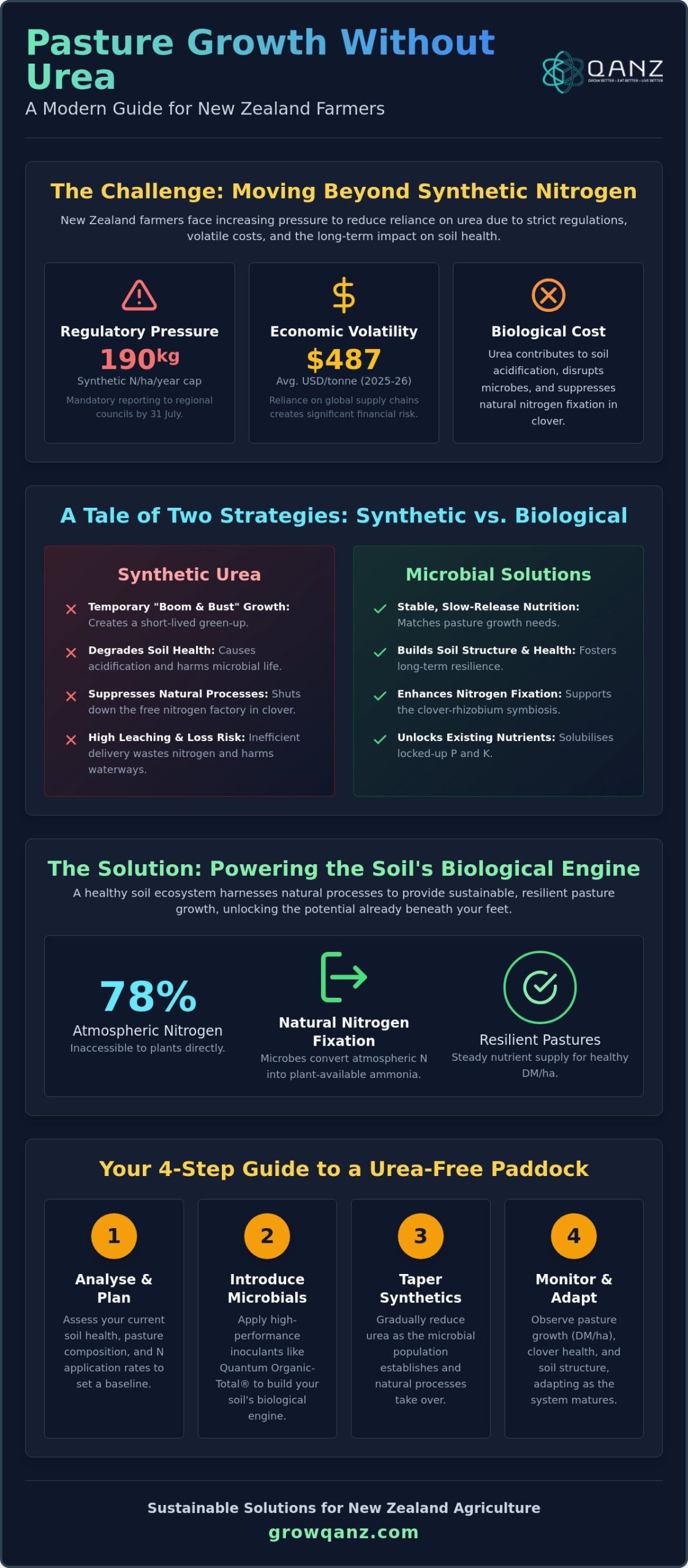
How to Transition Your Paddocks: A Step-by-Step Guide to Urea-Free Growth
Transitioning away from a high-nitrogen system isn’t an overnight event. It requires a methodical shift from chemical stimulation to biological activation. Increasing pasture growth without urea is most successful when you follow a structured framework that allows your soil’s natural “nitrogen factory” to resume its function without causing a yield crash. Start with the facts. A comprehensive soil and herbage test provides the necessary data to address limiting factors like low pH or trace element deficiencies that might otherwise hinder microbial activity.
The “tapering” method is the most reliable way to transition. Instead of stopping all synthetic inputs immediately, professional growers typically reduce urea applications by 20 to 30 percent per round while simultaneously introducing high-performance microbial inoculants. This gradual reduction gives the soil biology time to rebuild its populations and begin fixing nitrogen naturally. Monitoring tools like plate meters and Brix meters are essential during this phase; they provide real-time feedback on pasture quantity and the nutritional density of the forage.
Phase 1: Soil Preparation and Base Fertility
Microbes require a hospitable environment to thrive. If your soil pH is too acidic, beneficial bacteria will struggle to survive and multiply. Aim to correct pH levels and ensure that essential trace elements like molybdenum and sulphur are at optimal levels, as these are critical for clover performance and nitrogen fixation. Integrating liquid microbial treatments into your first application of the season helps to kickstart the biological engine when the soil begins to warm up.
Phase 2: Introducing Microbial Inoculants
Applying liquid biologicals like Quantum Organic-Total® is straightforward and fits into most existing farm routines. You can use standard boom sprayers or fertigation systems without needing specialised equipment. Timing is the most important factor for success. Apply your inoculants when there is adequate soil moisture and temperatures are mild, avoiding the heat of the day to ensure maximum microbial survival. For those managing a mix of pasture and cropping, understanding how microbial solutions for field crops function can provide additional insights into broadacre soil vitality.
Phase 3: Managing the New Sward
As the biology takes hold, you’ll need to adjust your grazing management. Increasing pasture growth without urea often involves extending round lengths slightly to allow the clover to complete its nitrogen-fixation cycle. Look for visual cues of success: a deeper green colour in the leaf, increased clover stolon density, and a more rapid breakdown of dung pats. If growth slows temporarily, it’s usually a sign that the soil biology is still catching up; don’t rush back to the urea bag. Instead, check your trace element levels and ensure your grazing residuals are leaving enough “solar panel” for the grass to recover. To begin your transition with a scientifically backed programme, explore our BioGro certified microbial solutions.
Scaling Sustainable Growth with GrowQanz Microbial Solutions
GrowQanz bridges the gap between laboratory microbiology and the practical reality of the paddock. Transitioning to a biological model requires a partner who understands the technical complexities of soil science while respecting the day-to-day requirements of a working farm. Increasing pasture growth without urea is a long-term strategy that depends on restoring the soil’s innate ability to cycle nutrients. Quantum Organic-Total® provides the biological infrastructure necessary for this shift. It is a liquid-based, multi-strain inoculant that introduces beneficial microorganisms, including proprietary photosynthetic bacteria, back into the rhizosphere. This creates a self-sustaining environment where plants can thrive without synthetic interference, ensuring that your dry matter yields remain consistent even as you reduce chemical dependencies.
Why BioGro Certification Matters for Every Farmer
BioGro New Zealand certification provides a level of verification that is essential in a regulated agricultural environment. While organic farmers rely on this certification to maintain their status, conventional growers increasingly use it as a benchmark for quality and environmental safety. Using certified natural inputs ensures that your farm remains ahead of the 190kg N/ha synthetic cap while protecting the long-term capital value of your land. This approach aligns your operation with the high standards of New Zealand’s export markets, where the demand for low-input, sustainable meat and dairy continues to grow. It offers the peace of mind that every application is 100% natural, non-toxic, and designed to enhance the ecological health of your property.
Partnering for Success
Moving toward biological productivity is a journey that benefits from scientific oversight and practical field experience. GrowQanz supports professional growers with technical expertise and evidence-based trial data gathered from across the country. This collaboration allows for the customisation of microbial programmes based on specific soil types, whether you are working with the peat soils of the Waikato or the lighter land in Canterbury.
By focusing on proven results rather than temporary gains, you can build a farm system that is both profitable and resilient. Increasing pasture growth without urea becomes a manageable and rewarding process when backed by a partner committed to long-term soil vitality. If you are ready to take the next step, you can contact GrowQanz to start your transition to biological pasture growth and secure the future of your soil health.
Securing Your Farm’s Biological Future
Transitioning away from a chemical-first model is a strategic move that protects your land’s value and ensures compliance with New Zealand’s tightening environmental standards. By prioritising soil biology, you’re not just meeting a regulatory cap; you’re building a system that is naturally more resilient to climate extremes and economic volatility. The shift towards increasing pasture growth without urea relies on the proven synergy between clover persistence and advanced microbial inoculants, allowing your soil to function as a self-sustaining nutrient factory once again.
GrowQanz provides the tools to make this transition both practical and profitable. Our BioGro NZ Certified solutions are used by professional growers nationwide to restore soil vitality through proprietary photosynthetic bacteria technology. It’s time to move beyond the temporary spikes of synthetic nitrogen and invest in the long-term health of your property. Request a technical consultation for your pasture transition today to see how biological productivity can transform your farm’s performance. With the right data and the right microbes, a more sustainable and productive future is well within reach.
Frequently Asked Questions
Will my pasture growth drop immediately if I stop using urea?
A sudden cessation of synthetic nitrogen can cause a temporary growth lag if the soil biology hasn’t yet been activated to fill the gap. We recommend a tapering approach, reducing urea by 20 to 30 percent per application while introducing microbial inoculants to bridge the transition. This method ensures you maintain dry matter yields while your soil’s natural nitrogen fixation cycles resume their function.
How long does it take for microbial inoculants to start working?
Microbial colonisation begins as soon as the liquid treatment reaches the rhizosphere; however, visible pasture responses typically appear within three to six weeks depending on soil moisture and temperature. You’ll likely notice a change in leaf colour and stolon density first. Because these are living organisms, their impact grows over time as they multiply and establish a stable population in your soil profile.
Can I use microbial treatments alongside small amounts of urea?
You can certainly integrate microbial treatments with low rates of synthetic nitrogen to improve overall efficiency. In fact, increasing pasture growth without urea often starts with this hybrid approach to ensure the plant has sufficient nutrition while the biological engine builds momentum. The microbes help to stabilise the applied nitrogen, reducing the risk of leaching and volatilisation that often occurs with high-input chemical regimes.
Are GrowQanz products compatible with my existing spray equipment?
GrowQanz microbial solutions are fully compatible with standard farm machinery, including boom sprayers and fertigation systems. The liquid formulations are designed for easy application and won’t clog nozzles or require specialised technical modifications. It’s simply a matter of ensuring your tank is clean and free from harsh chemical residues before you begin the application process.
What is the cost difference between urea and a microbial programme?
While the upfront cost of a microbial programme is often comparable to a standard fertiliser regime, the long-term financial benefits come from reduced hidden costs. By moving away from heavy urea reliance, you reduce the need for frequent lime applications to correct soil acidification. You’re also investing in soil structure and clover persistence; these are permanent assets that lower your overall input requirements over several seasons.
How do I know if my soil is ‘biologically active’?
You can identify biological activity through several practical field observations, such as the rapid breakdown of dung pats and the presence of high earthworm counts. A biologically active soil will also produce pasture with higher brix levels, indicating better sugar and mineral content in the leaf. Using a simple spade test to observe soil friability and root depth provides immediate evidence of how well your microbial populations are functioning.
Is Quantum Organic-Total® safe for grazing livestock immediately after application?
Quantum Organic-Total® is completely non-toxic and safe for livestock to graze immediately after application. Unlike many urease-inhibited fertilisers that require a mandatory three-day withholding period under 2026 regulations, our microbial solutions pose no risk to animal health. This allows for greater grazing flexibility, as you don’t need to coordinate stock movements around chemical safety windows.
Does cutting urea help with clover-root weevil or other pests?
Reducing urea reliance indirectly helps manage pests like clover-root weevil by fostering a more resilient and nutritionally balanced plant. High-nitrogen applications often result in “soft” growth that is more susceptible to insect attack. By increasing pasture growth without urea, you encourage thicker cell walls and higher brix levels, which makes the pasture less attractive to pests and better able to recover from grazing pressure.
