

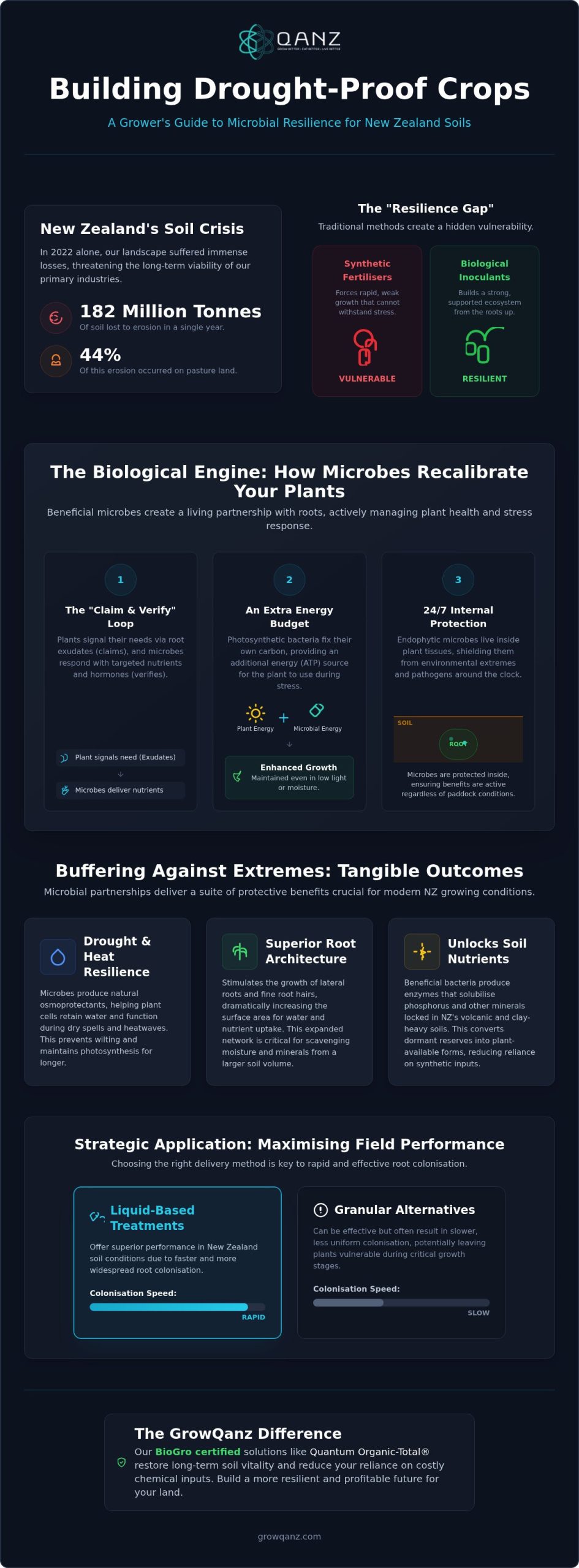
In 2022 alone, New Zealand’s landscape lost an estimated 182 million tonnes of soil to erosion, with 44% of that precious resource vanishing from our pasture lands. It’s a sobering reality for any grower watching their margins tighten as synthetic fertiliser costs climb while they seek to understand how microbial inoculants improve plant resilience against increasingly harsh drought cycles. Most professionals recognise that the old chemical-heavy playbooks aren’t delivering the same reliability they once did, leaving crops vulnerable when the summer heat sets in.
Shifting your focus toward the biological health of your soil is a vital strategy for protecting your land’s long-term value and ensuring crop survival. By integrating BioGro certified technologies into your management plan, you can move away from temporary chemical fixes and toward a self-sustaining biological engine. This 2026 guide examines the precise mechanisms that allow beneficial microbes to shield your crops from environmental stress. We’ll explore how these living fertilisers restore soil health, optimise nutrient use efficiency, and provide a verified insurance policy for your next harvest.
Key Takeaways
- Learn why traditional synthetic fertilisers often fail during extreme weather and how a biological approach bridges the critical “resilience gap.”
- Discover how microbial inoculants improve plant resilience by recalibrating internal physiology and boosting the plant’s energy budget through photosynthetic bacteria.
- Understand the role of natural osmoprotectants in helping field crops retain water and mitigate the damaging effects of salinity and heat stress.
- Identify why liquid-based microbial treatments offer superior colonisation speeds compared to granular alternatives in New Zealand soil conditions.
- Explore how BioGro certified solutions like Quantum Organic-Total® restore long-term soil vitality while reducing reliance on costly chemical inputs.
Understanding Microbial Inoculants and the Resilience Gap
To understand how microbial inoculants improve plant resilience, we must first view the soil as a living ecosystem rather than a simple chemistry set. Microbial inoculants are concentrated communities of beneficial bacteria and fungi that restore this ecosystem. They act as a biological bridge between the soil’s mineral wealth and the plant’s root system. These living organisms don’t just provide nutrients; they actively manage the plant’s physiological response to its environment.
Traditional synthetic fertilisers often create what agronomists call a “Resilience Gap.” This occurs when high nitrogen levels force rapid, lush growth that the plant’s internal systems can’t support during a crisis. When a New Zealand summer turns dry, these “luxury consumption” crops are often the first to wilt. They’ve grown too fast without developing the robust root-to-microbe communication required to manage water scarcity or heat shock effectively.
The rhizosphere, the thin layer of soil immediately surrounding the roots, functions as the plant’s “second gut.” Much like the human microbiome, these microbes manage immunity and nutrient processing. Through a process called Induced Systemic Resistance (ISR), beneficial bacteria prime the plant’s internal signalling pathways. This state of “biological readiness” allows the crop to respond to environmental stress or pathogens much faster than a plant growing in sterile, chemical-dependent soil.
Why Resilience is the New Yield Metric for 2026
Growing seasons across the country are no longer predictable. Peak yield means very little if a single heatwave or a prolonged dry spell wipes out the season’s profit margin. Resilience has become the primary metric for professional growers. Plants with strong microbial partnerships maintain higher photosynthesis rates during moderate stress periods. This means they keep producing and filling grain or fruit while non-resilient crops shut down to survive.
The Shift from Chemical to Biological Soil Management
Relying purely on NPK inputs has led to declining soil structure and increased acidity in many paddocks. Transitioning toward BioGro certified inputs represents a move toward long-term land value. Inoculants don’t just add more “stuff” to the soil; they help unlock the vast reserves of phosphorus and potassium already present in the soil profile. By converting these dormant minerals into plant-available forms, you reduce the need for synthetic top-ups and start restoring the natural harmony of your land.
The Biological Mechanics: How Microbes Recalibrate Plant Physiology
To move beyond the surface benefits of soil health, we must look at how microbial inoculants improve plant resilience at a cellular level. Plant Growth-Promoting Rhizobacteria (PGPR) are the primary biological drivers here. These bacteria colonise the root zone and enter into a sophisticated “Claim-and-Verify” relationship with the plant. The plant “claims” a specific need by releasing root exudates, which are chemical signals made of sugars and organic acids. In return, the microbes “verify” the request by providing the exact nutrient or hormonal stimulus the plant requires. This feedback loop ensures the plant doesn’t waste energy on unnecessary metabolic processes.
Recent advancements in microbial inoculants have highlighted the unique role of photosynthetic bacteria. Unlike traditional fertilisers that rely on the plant’s existing energy, these bacteria fix carbon and provide an additional energy budget. This extra ATP allows the crop to maintain growth even when sunlight or moisture is limited. Endophytic colonisation is the process where microbes live inside plant tissues to provide 24/7 protection. By living within the plant, these microbes are shielded from environmental extremes, ensuring their protective benefits remain active regardless of paddock conditions.
Root Architecture and Nutrient Scavenging
Microbes physically reshape the root system to maximise survival. By stimulating the growth of lateral roots and fine root hairs, they significantly increase the surface area available for water and nutrient uptake. This expanded network is particularly effective for solubilising phosphorus that is often locked in New Zealand’s volcanic or clay-heavy soils. These bacteria also form protective biofilms around the roots. These biological “skins” act as a filter, allowing beneficial nutrients in while keeping pathogens out. Using liquid microbial soil treatments during the early growth stages helps establish these biofilms before the first seasonal stress hits.
Hormonal Regulation and Stress Signalling
The internal chemistry of a plant is often dictated by its microbial partners. Soil bacteria produce essential phytohormones like auxins and gibberellins, which govern cell elongation and stress responses. One of the most critical functions is the modulation of ethylene. While ethylene is a natural growth hormone, too much of it during a drought causes premature wilting and leaf drop. Beneficial microbes produce enzymes that break down excess ethylene, keeping the plant hydrated and functional for longer. This microbial “early warning system” primes the plant’s immune response, allowing it to recognise and adapt to stress before physical damage occurs.
Buffering Against Extremes: Drought, Salinity, and Heat Stress
It’s a common misconception that increasing irrigation is the only way to manage a dry summer. While water is essential, the plant’s internal ability to retain that moisture is what determines its survival during a heatwave. This is where understanding how microbial inoculants improve plant resilience becomes a critical asset for the professional grower. Beneficial microbes produce osmoprotectants, which are small organic molecules that help plant cells maintain their internal water pressure. By balancing the concentration of solutes within the cell, these microbes prevent the “leakage” of moisture that typically leads to wilting and permanent tissue damage.
In irrigated horticulture, salt stress is a silent yield killer that often goes unnoticed until the damage is visible. High salinity interferes with nutrient uptake and creates a toxic environment for root development. Beneficial soil microorganisms for plants help mitigate this by physically sequestering sodium ions or by producing enzymes that neutralise oxidative stress. These microbes also create a thermal buffer within the soil. By improving the pore structure and increasing organic matter through their metabolic cycles, they help regulate the temperature of the root zone, protecting sensitive root hairs from the scorching midday sun.
Natural Drought Resistance for Field Crops
Microbes act as the primary architects of soil structure. They produce exopolysaccharides (EPS), a biological “glue” that binds soil particles into stable aggregates. This process creates a “moisture sponge” around the roots, significantly increasing the soil’s water-holding capacity. These EPS layers act as a protective sheath, ensuring that even as the surrounding soil dries out, the rhizosphere remains hydrated. Using bacterial inoculants for drought stress allows field crops to stay productive for longer between rainfall events. You can explore more about establishing natural drought resistance for crops through targeted biological interventions.
Restoring Soil After Chemical Disturbance
Years of heavy synthetic use or soil fumigation can leave the land biologically sterile. When native microbial populations are wiped out, the “balance of power” shifts toward opportunistic pathogens and soil degradation. Re-establishing a diverse microbial community is essential for restoring the land’s natural immunity. Inoculants act as a “starter culture” to jump-start the biological recovery process, filling the ecological niches left vacant by chemical treatments. For a detailed look at this process, refer to our case study on soil restoration after fumigation to see how biological recovery impacts long-term paddock productivity.
Strategic Application: Optimising Inoculants for Field Performance
Success in the paddock depends on more than just choosing the right product; it’s about the precision of delivery. When considering how microbial inoculants improve plant resilience, the speed of colonisation is paramount. Traditional granular forms often suffer from an “activation gap” where they require specific moisture and temperature thresholds to begin functioning. In contrast, liquid formulations provide immediate root access. This direct contact ensures that the beneficial organisms can begin establishing their protective biofilms before the plant faces its first environmental challenge.
Timing your application to align with soil moisture and temperature cues is vital. Most beneficial microbes are most active when soil temperatures are between 10°C and 25°C. Applying during a light rain or through irrigation helps the microbes move through the soil profile to reach the root zone. A “consortia” approach, using a diverse range of bacterial and fungal strains, is far more effective than relying on a single strain. Diversity provides a biological safety net, ensuring that at least some species will thrive regardless of fluctuating paddock conditions.
Before you start a tank-mix, follow this basic compatibility checklist to protect your biological investment:
- Ensure water pH is between 6.0 and 7.0 to prevent microbial shock.
- Avoid using highly chlorinated water or water with high heavy metal content.
- Never mix directly with concentrated bactericides or high-salt index fertilisers.
- Maintain gentle agitation throughout the application process to keep the microbes in suspension.
Liquid Delivery: Ensuring Microbial Survival
Liquid delivery systems offer unparalleled coverage within the complex architecture of the rhizosphere. This is especially true for photosynthetic bacteria for soil, which are often stabilised in liquid forms to maintain their metabolic readiness. These organisms provide a unique energy boost to the crop, but they must be delivered uniformly to be effective. You can read a more detailed comparison on why liquid microbial soil treatments outperform traditional methods in commercial settings.
Best Practices for Broadacre and Horticulture
Integrating these solutions into existing fertigation or boom spray setups is straightforward. For horticulturalists, a microbial drench is a proven way to reduce transplant shock in seedlings by priming the plant’s immune system before it hits the field. This early intervention establishes a robust root system that can scavenge for nutrients more effectively. Learn more about how to reduce transplant shock in seedlings to protect your investment during the critical establishment phase.
To start building a more resilient production system today, explore our full range of Field Crop Microbial Solutions.
The GrowQanz Difference: BioGro Certified Resilience for NZ Soils
Quantum Organic-Total® serves as the cornerstone for growers looking to implement the biological strategies discussed throughout this guide. It’s a comprehensive solution designed to bridge the resilience gap in New Zealand’s unique soil profiles. By providing a diverse consortia of beneficial bacteria, this technology ensures that the “claim-and-verify” relationship between roots and microbes remains active even during environmental stress. This direct approach is how microbial inoculants improve plant resilience by maintaining metabolic activity when traditional systems might otherwise fail.
Quantum-VSC® complements this by focusing on the breakdown of organic matter and the strengthening of the plant’s internal defence systems. It works naturally to enhance the energy budget of the crop, allowing for more robust growth in challenging conditions. These technologies aren’t just additives; they are foundational tools for a more stable and productive agricultural future. Every paddock has its own biological signature. We invite you to consult with our technical experts to develop a tailored soil health plan that addresses the specific needs of your land.
Why BioGro Certification Matters to Your Bottom Line
Purity is paramount in modern agriculture. BioGro New Zealand certification provides a verified trust signal that your inputs are free from synthetic contaminants and GMOs. This is particularly critical for professional growers targeting high-value export markets where zero synthetic residue is a non-negotiable requirement. Using BioGro certified soil inoculants protects the integrity of your produce and ensures long-term access to premium pricing tiers. It’s a principled choice that aligns ecological health with commercial viability.
Proven Results: From Pasture to Orchard
The efficacy of these microbial solutions is evident across a wide range of New Zealand’s primary sectors. In dairy operations, improved pasture density and nutrient use efficiency lead to better herd health and lower input costs. Vegetable and nut crop growers report more uniform establishment and a significant reduction in losses during dry spells. These Quantum technologies provide the biological engine required for a successful transition to regenerative agriculture. They allow you to restore soil vitality without sacrificing the productivity your business depends on. If you’re ready to secure your harvest against the volatility of the coming seasons, enquire about Quantum Organic-Total® today and discover how microbial inoculants improve plant resilience on your own farm.
Securing Your Harvest in an Unpredictable Climate
The shift toward biological management isn’t just an environmental choice; it’s a strategic necessity for the modern New Zealand grower. By understanding how microbial inoculants improve plant resilience, you can move away from the “resilience gap” created by synthetic dependency and toward a system that thrives under pressure. These beneficial organisms physically reshape root architecture and manage internal stress hormones, providing a natural buffer against the droughts and heatwaves that are becoming the new seasonal norm.
Restoring soil health with high-quality, liquid-based technology ensures that your land remains a productive asset for generations to come. Professional growers across the country are already seeing the benefits of prioritising biological diversity over chemical volume. It’s about working with the natural systems already beneath your feet to ensure every hectare reaches its full potential.
Optimise your crop resilience with BioGro certified Quantum Organic-Total®. Our 100% organic and natural solutions are BioGro New Zealand Certified (#4532) and trusted by professionals to deliver consistent results in our unique conditions. Take the first step toward a more stable and profitable season today.
Frequently Asked Questions
What is a microbial inoculant and how does it differ from fertiliser?
Microbial inoculants are concentrated solutions of beneficial bacteria and fungi that restore the soil’s biological activity. Unlike traditional fertilisers that provide direct chemical nutrients like nitrogen or phosphorus, inoculants work by colonising the root zone. They act as a biological bridge, helping the plant unlock existing soil minerals. This process is a core part of how microbial inoculants improve plant resilience, as it builds a self-sustaining system rather than relying on a temporary chemical spike.
How long does it take for microbial treatments to show results in the paddock?
You’ll typically see biological activity begin within days of application, especially with liquid formulations that provide immediate root contact. Visible changes in plant vigour or leaf colour often appear within two to four weeks. However, the true strength of these treatments lies in long-term paddock productivity. While a chemical fertiliser gives a quick flush of growth, microbes work steadily to build soil structure and root depth, providing lasting benefits throughout the entire season.
Can I use microbial inoculants alongside my existing NPK programme?
Yes, microbial solutions are designed to integrate with most existing management plans. They often improve nutrient use efficiency, allowing you to get more value from your NPK inputs. You should avoid mixing the concentrated inoculant directly with high-salt fertilisers or bactericides in the same tank, as these can harm the living microbes. Applying them as a separate pass or through a clean irrigation system ensures the beneficial organisms remain viable and effective in your soil.
Are GrowQanz products safe for use on dairy pastures and livestock?
GrowQanz products like Quantum Organic-Total® are entirely safe for dairy pastures and livestock. Because our formulations are 100% natural and BioGro New Zealand certified, there are no withholding periods for grazing animals. These microbes are naturally occurring in healthy soil ecosystems and pose no risk to animal health. Using them on pasture helps build a more resilient feed base, ensuring your stock have access to nutrient-dense forage even during dry summer spells.
How often should I apply microbial solutions for maximum plant resilience?
For most field crops and pastures, we recommend a primary application during planting or at the start of the spring growth flush. This establishes the microbial community when the plant needs it most. Follow-up applications during the season can help maintain the biological balance of power, especially before predicted periods of environmental stress like summer droughts. Regular seasonal use builds a cumulative benefit, steadily improving soil health and long-term land value with every application you make.
Do microbial inoculants require special storage or handling in NZ conditions?
While our formulations are robust, they contain living organisms that perform best when stored correctly. You should keep the product in a cool, shaded area away from direct sunlight and extreme frost. Quantum Organic-Total® has a stable shelf life of three years, making it easy to manage across different seasons. Always ensure your application equipment is clean and free from chemical residues to give the microbes the best chance of colonising your soil successfully.
Is Quantum Organic-Total® compatible with standard spray equipment?
Quantum Organic-Total® is fully compatible with standard boom sprays, fertigation systems, and aerial application equipment. As a liquid-based technology, it doesn’t have the activation gap or clogging issues associated with some granular or powder-based products. It flows easily through standard nozzles and filters. We simply recommend a gentle flush of your lines before and after use to ensure no chemical residues from previous sprays interfere with the living microbial consortia in the tank.
How do microbes help plants survive a drought or heatwave?
Microbes provide a biological insurance policy by physically and chemically altering the plant’s stress response. They produce exopolysaccharides that create a moisture sponge around the roots, helping the plant retain water for longer. Additionally, they produce osmoprotectants that help plant cells maintain internal pressure during a heatwave. This explains how microbial inoculants improve plant resilience by preventing the premature wilting and tissue damage that typically occurs when crops are left to fend for themselves in harsh conditions.
