
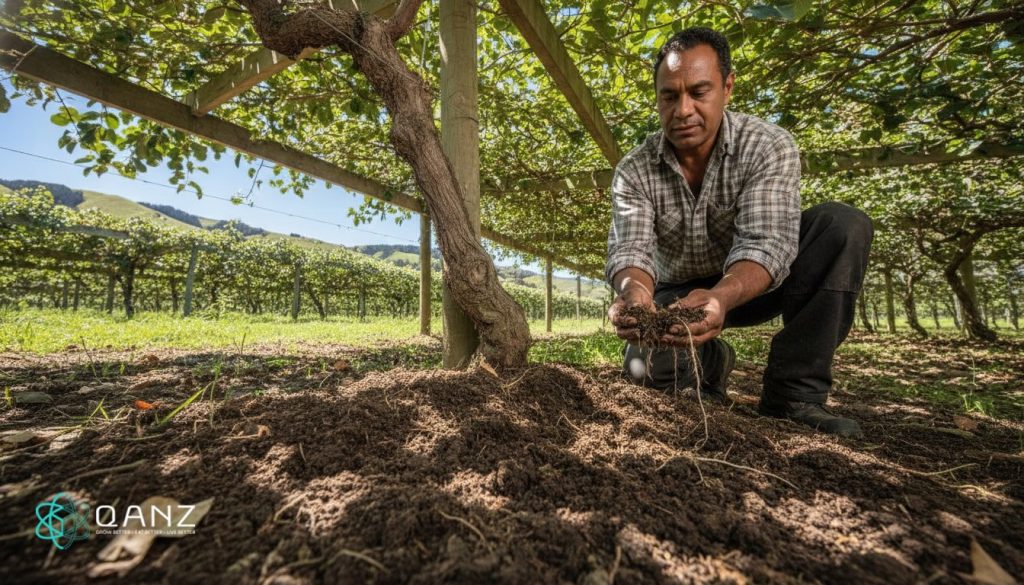
What if the secret to sustaining high-yielding organic orchards isn’t found in the volume of inputs you apply, but in the invisible life already present beneath your boots? Most growers recognise that historical chemical use has left a legacy of soil degradation. This makes it increasingly difficult to maintain vine vigour in organic systems. By partnering with GrowQanz, you can implement sustainable biological programmes to restore kiwifruit soil health and enhance natural nutrient cycling without relying on synthetic interventions. It’s about working with nature, not against it.
We’ll show you how managing soil microbiology can support the health and vitality of your organic kiwifruit orchard through structured, evidence-based programmes. This article explores the role of microbial agricultural inputs and the fundamentals of the rhizosphere. We’ll examine how growers can implement practical strategies to improve soil microbial activity. By the end of this guide, you’ll understand how to transition from traditional amendments to a more precise, biology-first orchard management system that delivers long-term results.
Key Takeaways
- Understand the specific certification requirements for BioGro in New Zealand and ACO in Australia to ensure your biological inputs remain compliant with local standards.
- Discover how fostering a diverse microbial community in the rhizosphere is essential for maintaining robust kiwifruit soil health and long-term vine vigour.
- Learn the distinction between carbon-based organic amendments and targeted biological inoculants to achieve more precise nutrient availability within the soil.
- Implement a year-round management strategy that prioritises monitoring microbial activity to ensure your biological programmes deliver consistent results across the season.
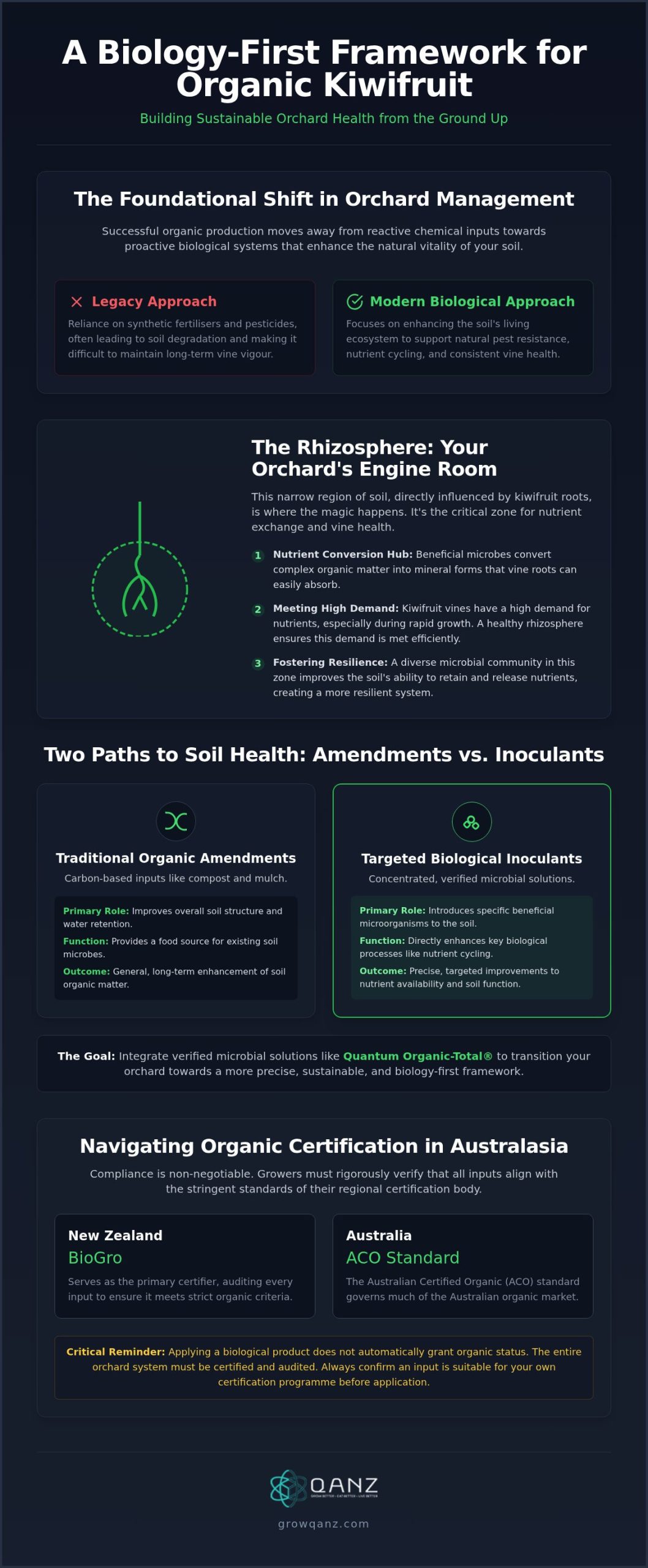
- Explore how integrating verified microbial solutions like Quantum Organic-Total® can help transition your orchard towards a sustainable, biology-first framework.
The Fundamentals of Growing Organic Kiwifruit in Australasia
Organic kiwifruit production in Australasia represents a deliberate shift from reactive chemistry to proactive biology. Success depends on a holistic orchard management strategy that replaces synthetic fertilisers and pesticides with natural, system-based solutions. Growers must focus on the biological integrity of the land to ensure kiwifruit soil health remains the priority for long-term vine vitality and fruit quality. Within this framework, microbial agricultural inputs can be integrated to support the underlying ecosystem. These biological tools function by enhancing the natural processes already occurring within the soil matrix, providing a principled alternative to traditional synthetic regimes. In New Zealand, GrowQanz works alongside growers to provide the technical expertise needed to implement these sustainable practices.
Certification Requirements and Standards
Maintaining compliance requires a rigorous understanding of regional standards. In New Zealand, BioGro serves as the primary certifier, while the Australian Certified Organic (ACO) standard governs much of the Australian market. These bodies audit every input to ensure they meet strict organic criteria. It’s essential for growers to verify product suitability against current technical documentation before any application. For New Zealand growers, GrowQanz provides technical support to help ensure that products like Quantum Organic-Total® align with their specific BioGro certification requirements. Simply applying a biological treatment doesn’t grant organic status; the entire orchard system must be certified and audited to meet the Organic Products and Production Regulations.
The Role of Soil Health in Organic Systems
The health of an organic orchard is inextricably linked to the efficiency of its nutrient cycling. Unlike conventional systems that rely on soluble synthetic nutrients, organic systems depend on microbial activity to unlock minerals. A look into kiwifruit cultivation history reveals that these vines have evolved to thrive in deep, well-aerated soils rich in organic matter. This makes kiwifruit soil health the cornerstone of any sustainable programme.
Healthy soil is a living community. When we talk about soil health, we’re referring to the synergy between soil structure, carbon availability, and microbial diversity. Organic growers prioritise long-term soil structure management to prevent compaction and ensure adequate oxygen reach for the roots. This biological foundation supports natural pest resistance and consistent vine vigour over many seasons. By fostering a robust microbial population, growers can create a self-sustaining environment where nutrients are recycled efficiently, reducing the need for external inputs. This principled approach ensures the orchard remains productive for decades while protecting the long-term ecological health of the land.
Understanding Soil Microbiology in the Kiwifruit Rhizosphere
The rhizosphere is the narrow region of soil directly influenced by root secretions and associated soil microorganisms. In a kiwifruit orchard, this zone acts as the engine room for vine productivity. Kiwifruit vines possess a high demand for nutrient availability, particularly during the rapid growth phases of spring and fruit set. This demand is mediated by microbial activity in the soil, which converts complex organic compounds into mineral forms the roots can absorb. Maintaining robust kiwifruit soil health requires a deep understanding of these invisible interactions within the root zone.
Microbial Communities and Nutrient Recycling
Beneficial soil microorganisms for plants play a critical role in breaking down organic matter into plant-available forms. This process of nutrient recycling is not a single event but a continuous cycle of decomposition and synthesis. Microbial diversity on the orchard floor is influenced by cultivation practices, mulch management, and the strategic use of biological inputs. When growers maintain a diverse community of bacteria and fungi, they create a more resilient system. Photosynthetic bacteria for soil health are particularly valuable here, as they can function in various oxygen levels to maintain a balanced ecosystem. Advanced soil microbes contribute to the overall biological activity of the orchard by improving the soil’s ability to retain and release nutrients.
Photosynthetic Bacteria and Soil Vitality
Modern microbial treatments introduce specific strains, such as photosynthetic bacteria, to support the wider soil community. These organisms are unique because they can utilise light energy or chemical energy to fix carbon, providing a vital energy source for other beneficial microbes in the rhizosphere. This biological synergy supports plant health and vine vigour, which are essential for long-term orchard viability. Adopting these technologies reflects the principles of New Zealand sustainable horticulture, which seeks to reduce environmental impact while improving resource use efficiency. Quantum Organic-Total® is a microbial agricultural input offered by GrowQanz to support these advanced biological programmes.
Success in organic systems isn’t about adding more volume; it’s about increasing the functional diversity of the soil life. If you’re looking to refine your rhizosphere management, you might talk to GrowQanz about integrating specific microbial strains into your current programme.
Biological Inoculants vs. Traditional Organic Amendments
Traditional amendments like compost and mulch provide the essential carbon base for an orchard, but biological inoculants introduce specific, high-performance microbial strains. This distinction is vital for kiwifruit soil health. While bulky granular organic fertilisers are excellent for building soil structure over time, liquid microbial soil treatments offer a level of precision that solid amendments simply can’t match. These inoculants don’t just add mass; they add functional diversity to the soil ecosystem, ensuring that the nutrients held within the organic matter are actually released to the vine.
BioGro certified soil inoculants are designed to complement existing organic matter by enhancing microbial activity. When growers use these tools together, they create a synergy where the compost provides the “housing” and the inoculants provide the “residents” that drive nutrient cycling. This integrated approach allows for more efficient management of the orchard floor and supports broader biological crop protection strategies.
The Benefits of Liquid Microbial Treatments
Liquid biologicals allow for uniform distribution across the orchard, which is often difficult to achieve with solid composts. Unlike solids that require manual spreading or heavy machinery, liquid formulations can be applied through existing irrigation or fertigation systems. This saves labour and ensures the microbes reach the rhizosphere directly. The Quantum technology approach focuses on stable, shelf-stable liquid microbial formulations that are easy to integrate into a standard spray or irrigation schedule. These treatments provide a predictable way to maintain microbial populations without the variability often found in raw organic fertilisers.
Integrating Inoculants with Compost and Mulch
Inoculants don’t replace compost; they activate it. Think of compost as the fuel and microbes as the engine. By introducing specific strains, growers can enhance the rate of decomposition, turning raw mulch into plant-available nutrients more efficiently. For this synergy to work, maintaining soil moisture and a balanced pH is critical. If the soil is too dry or acidic, even the most advanced microbes won’t perform optimally. Growers should monitor these conditions to ensure their biological inputs can colonise the orchard floor effectively.
- Compost: Provides long-term carbon and structural support.
- Inoculants: Provide immediate biological activity and nutrient cycling.
- Mulch: Protects the soil surface and feeds the fungal community.
Growers interested in how these principles apply to other sectors can read our guide on Microbial Solutions for Field Crops. Understanding these differences helps in selecting the right tools for your specific kiwifruit soil health goals.
Orchard Management Strategies for Sustainable Soil Vitality
Achieving consistent results in an organic system requires more than sporadic applications; it demands a structured, year-round strategy. Managing kiwifruit soil health involves aligning biological inputs with the natural rhythms of the vine and the seasonal shifts in soil temperature. By monitoring microbial activity throughout the year, growers can make informed adjustments to their programmes. This data-driven approach ensures that the soil ecosystem remains resilient enough to support high-yielding vines without the need for synthetic intervention. It’s also vital to avoid practices that disrupt this delicate balance, such as excessive cultivation that can lead to carbon loss and soil compaction.
Step 1: Soil Assessment and Programme Design
Before introducing any new biological input, you should conduct a thorough analysis of your current soil health indicators. This assessment should focus on organic matter levels and current microbial activity rather than just mineral content. You must also verify that any proposed treatment aligns with your specific certification requirements. It’s essential to review the technical documentation and BioGro status of each product. You can talk to QANZ to determine whether Quantum Organic-Total® is appropriate for your specific orchard conditions and existing soil profile.
Step 2: Seasonal Application Timing
Timing determines the efficacy of any biological programme. Early spring applications are critical as they support root activity and nutrient uptake precisely when the vines wake up from dormancy. This provides the biological momentum needed for a strong canopy development. Conversely, post-harvest applications play a strategic role in preparing the soil for the following season. These late-season treatments help break down orchard debris and restore the microbial balance before winter. Quantum VSC® is a biological product often utilised in these seasonal crop programmes to maintain soil vitality during these key transitions.
Step 3: Monitoring and Adjusting
Success is measured by the tangible outcomes in the field. Growers should use visual indicators, such as vine vigour, leaf colour, and soil structure, to gauge the effectiveness of their biological programme. If you notice signs of stress or poor drainage, it may be time to refine your application rates or timing. Maintaining detailed records of every input isn’t just a requirement for BioGro compliance; it’s a valuable management tool for tracking long-term progress. For a deeper look at the economics of this approach, you can explore our Quantum Organic-Total: A Cost-Benefit Analysis. This disciplined monitoring allows you to evolve from a reactive management style to a proactive, evidence-based framework.
Integrating QANZ Microbial Solutions into Your Organic Programme
GrowQanz functions as a professional partner for growers who prioritise a science-led approach to orchard management. We supply Quantum agricultural biological products specifically designed to support sustainable horticulture and fruit and nut production across New Zealand and Australia. Within these systems, Quantum Organic-Total® serves as a microbial agricultural input available for use in crop and soil programmes that aim to restore biological diversity. Our focus remains on providing stable, high-quality formulations that integrate seamlessly into existing organic frameworks without disrupting the natural equilibrium of the land.
Historical overseas evidence has provided valuable insights into the potential of these microbial technologies in various environments. For instance, a historical trial conducted at Nolt Farm in Pennsylvania, USA, reported a 39% yield increase in treated areas using Quantum-Light® and Quantum-VSC®. It’s important to understand that results from individual trials or commercial observations are specific to the formulation, crop, location, treatment and conditions tested and should not be interpreted as a guarantee of equivalent performance elsewhere. We encourage growers to evaluate these historical results as part of a broader evidence-based decision-making process.
The GrowQanz Approach to Biological Growing
Our methodology is grounded in scientific authority and the delivery of verifiable technical information. We understand that organic growers aren’t looking for temporary fixes or hyped-up results; they’re looking for reliable ways to maintain kiwifruit soil health over multiple decades. GrowQanz provides technical support to help you implement biological treatments that respect the complexities of soil microbiology. This approach prioritises the long-term ecological health of the orchard over short-term gains. By focusing on the underlying biological processes, we help you build a more resilient production system that relies on efficient nutrient cycling rather than high-volume external inputs.
Getting Started with Your Biological Programme
Transitioning to or enhancing an organic programme requires a methodical assessment of your current orchard status. You can begin by reviewing the historical trial data and technical specifications available through the GrowQanz website. These resources are designed to help you understand how specific microbial strains interact with the soil and the plant. Once you’ve established a baseline for your soil activity, the next step is to ensure your chosen inputs align with your certification requirements, such as BioGro. We recommend a structured approach to implementation:
- Review current soil health indicators and organic matter levels.
- Verify the BioGro certification status of all intended inputs.
- Align application timing with key vine growth stages.
- Monitor visual indicators of vine vigour and soil structure.
Talk to GrowQanz about whether Quantum Organic-Total® is appropriate for your organic kiwifruit orchard, your specific growing system, and your application programme. We’re here to provide the technical guidance necessary to ensure your biological programme supports the long-term vitality of your land.
Advancing Your Orchard Through Biological Precision
Restoring the natural equilibrium of your land requires a move away from reactive chemical interventions and towards a proactive biological framework. We’ve explored how the rhizosphere acts as the primary engine for vine productivity, highlighting the importance of functional microbial diversity in maintaining kiwifruit soil health. By integrating BioGro certified solutions like Quantum Organic-Total® with traditional organic amendments, you can activate nutrient cycling and support vine vigour more effectively. Success in the organic sector depends on this principled approach; it combines evidence-based microbial technology with disciplined seasonal management.
QANZ remains a dedicated partner for New Zealand and Australian growers, providing professional technical support to ensure your biological programme aligns with your specific orchard needs. Our commitment to scientific authority and verifiable results provides a stable foundation for your transition to a biology-first system. It’s about building a legacy of soil vitality that supports your vines for decades to come.
Investing in the invisible life of your soil today ensures a more resilient and productive orchard for the seasons ahead.
Frequently Asked Questions
Is Quantum Organic-Total® BioGro certified for organic kiwifruit?
Quantum Organic-Total® is BioGro New Zealand certified as a microbial agricultural input. This certification ensures the product meets the rigorous standards required for use in certified organic orchards across the country. Growers should always verify product suitability and specific application rates against current QANZ technical and BioGro documentation before use. This ensures that your input choices remain compliant with your specific certification programme and the requirements of your intended export markets.
Can biological inputs replace synthetic fertilisers in my orchard?
Biological inputs are not intended to be a replacement for fertilisers. Instead, they function as part of a comprehensive management plan to support kiwifruit soil health by enhancing natural biological processes. These products work alongside organic amendments like compost and mulch to improve the efficiency of nutrient recycling. In organic systems, the goal is to foster a self-sustaining ecosystem where beneficial microbes help unlock nutrients already present in the soil matrix.
How often should I apply microbial treatments to my kiwifruit vines?
Application frequency depends on your specific orchard conditions and the goals of your biological programme. Many growers find success with a seasonal approach, applying treatments in early spring to support root activity and again post-harvest to prepare the soil for the next season. It’s best to consult with QANZ to design a programme tailored to your vine growth stages. Regular monitoring of soil microbial activity can also help you adjust the timing for optimal results.
Will using Quantum products make my kiwifruit farm automatically organic?
Using a Quantum product doesn’t automatically make a crop or farm organic. Organic status is achieved through a rigorous certification process managed by bodies like BioGro in New Zealand or ACO in Australia. This process involves auditing the entire orchard system, including all inputs, land management practices, and record-keeping. While Quantum Organic-Total® is a certified input, its use is only one component of a fully certified organic management framework that must be independently verified.
What is the difference between Quantum Organic-Total® and Quantum VSC®?
Quantum Organic-Total® is a BioGro certified microbial agricultural input offered by QANZ specifically for use in organic crop and soil programmes. Quantum VSC® is another biological product in the range used to support various crop programmes. While both utilise advanced microbial technology, they may be applied at different stages or for different purposes within a biological growing programme. Growers should check the current technical documentation to determine which formulation best suits their specific orchard needs and certification requirements.
Are there any NZ-specific trials for Quantum on kiwifruit?
Historical overseas evidence, such as the Nolt Farm trial in Pennsylvania, has reported positive results using Quantum formulations. However, results from individual trials or commercial observations are specific to the formulation, crop, location, treatment and conditions tested and should not be interpreted as a guarantee of equivalent performance elsewhere. You should contact QANZ directly to discuss the most current technical information and any relevant data. We prioritise providing verifiable information to help growers make evidence-based decisions.
Can I apply liquid microbial treatments through my existing irrigation system?
Liquid microbial treatments like Quantum Organic-Total® are designed for easy integration into existing irrigation or fertigation systems. This allows for precise application directly to the rhizosphere, ensuring the microbes reach the root zone where they’re most effective. This delivery method is often more efficient than spreading bulky solid amendments. It’s important to ensure your system is clean and that the biological products are compatible with any other inputs being applied at the same time.
How do biological inputs help with nutrient recycling in the soil?
Biological inputs introduce specific microbial strains that accelerate the decomposition of organic matter on the orchard floor. These microbes break down complex compounds into plant-available mineral forms, which is the core of effective nutrient recycling. By enhancing the biological activity in the soil, these inputs help vines access nutrients more efficiently. This process is essential for maintaining kiwifruit soil health and ensuring long-term vine vigour without the need for synthetic soluble nutrients.
Disclaimer
Important: This article provides general agricultural information only. Product performance can vary according to crop, soil, climate, management practices and application conditions. Trial or research results discussed may have been obtained under specific conditions and should not be interpreted as a guarantee of equivalent results. Always follow current product directions and confirm suitability for your crop, growing system and organic certification requirements. Contact QANZ for current product and application information.
