
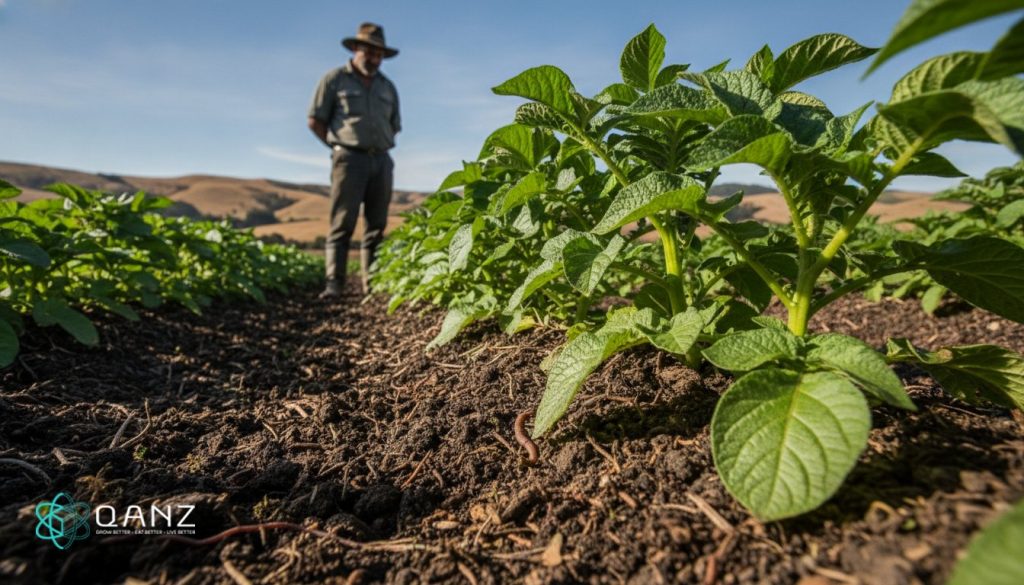
Natural drought resistance for crops is achieved by enhancing the soil’s biological capacity to retain moisture and the plant’s ability to manage water stress. By introducing specific microbial inoculants like Quantum VSC®, growers can improve soil structure and root-zone efficiency. This biological approach reduces reliance on intensive irrigation and synthetic inputs, ensuring stable yields even during low-rainfall years by fortifying the natural symbiotic relationship between plants and soil microbes.
What if the most effective way to protect your yields from a dry season isn’t found in a deeper bore or a more expensive irrigation system, but within the biology of the soil itself? Most New Zealand growers understand the frustration of watching paddocks brown off while water rights costs climb and legacy soil degradation makes every millimetre of rain feel wasted. This guide explores how you can build genuine natural drought resistance for crops using advanced microbial technologies that protect your yields without the need for synthetic interference. We’ll examine the role of photosynthetic bacteria in soil health, the specific benefits of Quantum VSC® for abiotic stress, and practical steps to improve your soil’s water-holding capacity for the seasons ahead.
Key Takeaways
- Understand how natural drought resistance for crops relies on the biological synergy between roots and soil microbes rather than just plant genetics.
- Learn how beneficial soil microorganisms produce osmoprotectants to prevent cellular collapse and signal crops to conserve moisture during dry spells.
- Evaluate the cost-benefit of using biological soil enhancers to reduce reliance on expensive irrigation infrastructure and synthetic fertiliser inputs.
- Discover a practical framework for identifying microbial depletion zones and choosing the right liquid treatments to manage abiotic stress.
- Explore how a combined programme of Quantum-VSC® and Quantum Organic-Total® can provide the foundational vitality required for long-term paddock resilience.
What is Natural Drought Resistance for Crops?
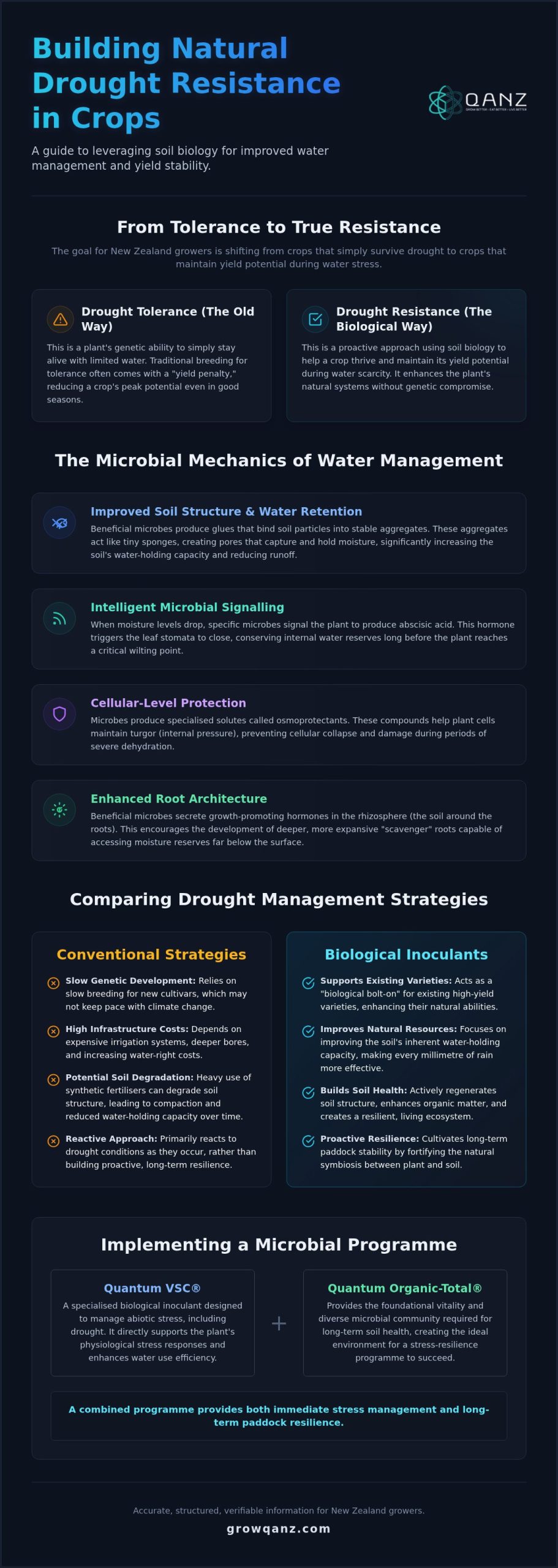
Natural drought resistance is a biological synergy that optimises water use efficiency. While natural drought resistance for crops is often discussed in terms of genetic survival, a more practical definition for the modern grower involves the symbiotic relationship between plant roots and soil microbes. It’s the difference between drought “tolerance,” which is simply the plant’s ability to stay alive, and true “resistance,” which allows a crop to maintain its yield potential even when moisture is limited. As we face the 2026 climate outlook, including heightened El Niño risks and more frequent extreme weather events, the move from reactive irrigation to proactive soil biology has become a priority for New Zealand growers.
The Limitations of Traditional Breeding
Waiting for the development of new drought-resistant cultivars is a slow process that often fails to keep pace with rapid environmental changes. Genetic breeding for drought traits often involves a trade-off where the plant sacrifices peak yield potential in exchange for survival mechanisms. This “yield penalty” can be a significant drawback during seasons with average rainfall. Microbial solutions offer a more flexible approach by providing a biological “bolt-on” for existing high-yield varieties. By using Quantum technology, growers can support the plant’s natural ability to handle water stress without committing to the permanent genetic compromises of specialised cultivars.
The Role of Soil Structure in Water Retention
The physical structure of the soil is the primary factor in determining how much water remains available to a crop. Healthy soil microbiology is responsible for creating stable aggregates that act like tiny sponges within the paddock. These aggregates are formed by microbial glues and fungal hyphae that bind soil particles together, creating pores that capture and hold moisture. When soil biology is healthy, it significantly reduces runoff and increases the soil’s overall water-holding capacity. In contrast, the heavy use of synthetic fertilisers can inadvertently degrade these structures, leading to compaction and a loss of organic matter. Prioritising soil life is the most effective way to build natural drought resistance for crops, ensuring that every millimetre of rain or irrigation is utilised to its maximum potential.
The Microbial Mechanics of Water Stress Management
While genetic traits provide a baseline for survival, the real work of natural drought resistance for crops happens at the cellular level through microbial signaling. Beneficial soil microorganisms don’t just inhabit the dirt; they communicate directly with the plant’s internal systems. When moisture levels drop, these microbes signal the crop to increase the production of abscisic acid, which triggers the stomata to close. This rapid response conserves internal water reserves before the plant reaches a critical wilting point. Specific microbes also produce osmoprotectants, which are specialised solutes that maintain cell turgor and prevent cellular collapse during periods of extreme dehydration.
Root Zone Colonisation and Protection
The rhizosphere, the thin layer of soil surrounding the roots, acts as a biological buffer zone. This “rhizosphere effect” is where microbes actively modify root architecture. By secreting growth-promoting hormones, they encourage the development of deeper, more expansive “scavenger” roots that can access subsoil moisture reserves. It’s vital for growers to distinguish between bio-fertilisers, which provide nutrients, and bio-stimulants, which trigger these physiological stress responses. This microbial protection is even more critical during early growth stages, and you can learn how to reduce transplant shock in seedlings by establishing these colonies early in the season.
Photosynthetic Bacteria: The Hidden Engine
Photosynthetic bacteria for soil provide a unique advantage by maintaining energy production when the plant’s own systems are under pressure. During a dry spell, plants often suffer from oxidative stress, a condition where sun-scorch and heat damage the internal machinery. These specific bacterial strains act as a microbial antioxidant, neutralising reactive oxygen species and allowing the plant to continue photosynthesising with less water. This process is a cornerstone of any Drought-Resilient Soil Programme because it prevents the metabolic shutdown that typically leads to yield loss.
Regular liquid microbial soil treatments don’t just solve a temporary problem; they build long-term soil vitality. By consistently replenishing these populations, you ensure the soil-root interface is always prepared for the next dry spell. You might consider exploring how photosynthetic technology functions at a molecular level to better understand its role in your existing management plan. This proactive approach allows the crop to thrive in conditions that would otherwise lead to significant paddock failure.
Comparing Biological Inoculants with Conventional Drought Strategies
Traditional responses to water scarcity often focus on capital-intensive irrigation infrastructure or the application of more synthetic fertilisers. While these methods provide a temporary reprieve, they don’t address the underlying soil health issues that contribute to moisture loss. In contrast, building natural drought resistance for crops through biological inoculants targets the soil’s physical and biological capacity to manage water. Liquid biologicals provide rapid nutrient delivery and immediate microbial colonisation, whereas granules often result in a slower, less precise release that depends heavily on external moisture to become plant-available. This distinction is vital when a crop is already under stress and needs immediate support to maintain metabolic functions.
The science of microbe-based plant biotechnology demonstrates that specific soil microorganisms can significantly improve yield stability without the high salt load associated with conventional fertilisers. During a dry spell, high salt concentrations from synthetic inputs can actually pull moisture away from the plant roots, worsening the effects of drought. Biological enhancers avoid this risk by improving soil structure and plant health through natural pathways. For those operating under organic standards, using BioGro certified soil inoculants allows for the protection of yields while maintaining premium status for international export markets.
Irrigation Efficiency and Soil Biology
Microbial life plays a critical role in stretching every millilitre of applied water. Beneficial bacteria produce natural surfactants that reduce soil hydrophobicity, or water repellency, which is a common issue in dry New Zealand paddocks. When water can penetrate the soil profile more effectively, irrigation efficiency increases and runoff decreases. Growers looking to maximise their return on investment should consider a Quantum Organic-Total cost-benefit analysis to see how biologicals compare to traditional infrastructure costs. These biological tools ensure that moisture reaches the root zone where it’s needed most.
The Organic Advantage: BioGro Certification
As international export markets increasingly demand 100% natural results, BioGro certification has become a mark of quality and compliance. BioGro approved plant stimulants allow growers to meet these stringent requirements without sacrificing the performance needed to survive a difficult season. Using verified, non-synthetic inputs ensures long-term farm sustainability by preserving the soil’s natural ability to recover after a drought. This principled approach to agriculture prioritises the ecological health of the land, ensuring it remains productive for future generations while meeting current commercial goals.
Implementing a Drought-Resilient Soil Programme on Your Farm
Transitioning to a biological approach requires a structured narrative that moves beyond reactive troubleshooting. Establishing natural drought resistance for crops is a multi-stage process that begins with understanding the current state of your soil’s living component. By following a methodical implementation plan, you can shift your management from high-cost survival to low-input resilience.
- Step 1: Baseline Assessment. Identify microbial depletion zones by reviewing historical synthetic use and testing for organic matter levels. These areas are often the first to show stress during a dry spell.
- Step 2: Solution Selection. Match your microbial inputs to your specific cropping system. Quantum-VSC® is specifically formulated to address abiotic stress, making it the primary choice for drought-prone paddocks.
- Step 3: Strategic Timing. Proactive application is essential. Aim for early-season colonisation to ensure the soil-root interface is fully fortified before the summer heat arrives.
- Step 4: Performance Monitoring. Use plant sap analysis and moisture probes to track how effectively the biological programme is managing water stress compared to untreated areas.
Application Techniques for Broadacre and Horticulture
Liquid microbial soil treatments are significantly easier to integrate into existing operations than bulky granules. These solutions are designed for use with standard boom sprays and fertigation systems, allowing for precise placement within the root zone. When mixing, ensure your tanks are clean and free from residual fungicides or harsh chemicals that might compromise microbial viability. For those managing large-scale operations, you can find specific microbial solutions for field crops that outline broadacre-specific protocols.
Restoring Soil Health After Heavy Inputs
Restoring natural drought resistance is particularly challenging in soils that have undergone heavy fumigation or prolonged chemical use. These “dead” soils lack the foundational biology needed to hold moisture or support root development. Re-inoculating these paddocks with Quantum-VSC® accelerates the recovery of the soil food web, kickstarting the natural processes that improve water-holding capacity. This restorative phase is a critical investment for long-term paddock viability. Talk to GrowQanz about a biological growing programme tailored to your specific soil recovery needs and application schedule.
Cultivating Long-Term Stability with GrowQanz Microbial Technologies
Quantum VSC® functions as the primary biological defence against drought and heat stress. While earlier sections explored the mechanics of moisture retention, this technology focuses on the plant’s physiological ability to withstand extreme conditions. By utilising proprietary photosynthetic bacteria strains, Quantum VSC® helps maintain energy production and cellular turgor when water is scarce. It’s a targeted solution for abiotic stress that allows crops to remain productive during the increasingly frequent dry spells expected in the 2026 season.
Quantum Organic-Total® complements this by providing the foundational soil vitality required for long-term resilience. This BioGro New Zealand certified liquid treatment restores the microbial diversity often lost through historical synthetic use or soil degradation. Together, these products offer a principled approach to building natural drought resistance for crops that prioritises soil integrity over temporary chemical fixes. This dual-action strategy ensures that the soil can hold moisture while the plant is biologically equipped to use it efficiently.
Professional growers require more than just a product; they need evidence-based results and reliable technical guidance. GrowQanz prioritises transparency by grounding recommendations in soil science and microbiology. This commitment ensures that every application programme is a building block toward a more efficient and ecologically stable farming system. Using 100% natural, BioGro certified solutions is no longer just an environmental choice but a commercial necessity for the future of New Zealand primary production.
Tailored Solutions for Different Crop Types
Managing water stress requires a specific approach for every unique growing system. For vegetable production, microbial solutions focus on rapid root colonisation to protect high-turnover crops from sudden moisture fluctuations. In high-value permanent plantings, growers can refer to our guide on microbial soil amendments for nut orchards to learn how to safeguard long-term investments. Even in pasture and dairy systems, maintaining soil health during summer dry spells is essential for preserving forage quality and accelerating paddock recovery speeds after the rain returns.
Partnering with GrowQanz for the 2026 Season
As we approach the 2026 season, accessing local technical support and trial data is a vital part of drought preparedness. GrowQanz works with New Zealand growers to organise seasonal microbial programmes tailored to the specific needs of their land and crop type. This partnership isn’t about short-term gains; it’s about cultivating a sustainable future for your farm through proven biological inputs. Talk to QANZ about whether Quantum Organic-Total® or Quantum VSC® is appropriate for your crop, growing system and application programme to ensure your paddocks are prepared for the year ahead.
Securing Your Paddock’s Future for the 2026 Season
Building natural drought resistance for crops is no longer a luxury; it’s a fundamental requirement for navigating the volatile climate patterns facing New Zealand growers. This guide has detailed how shifting from reactive irrigation to proactive soil biology can stabilise yields and reduce reliance on synthetic inputs. By establishing a robust microbial community within the rhizosphere, you’re giving your crops the biological tools they need to manage water stress and maintain energy production even when moisture is scarce.
GrowQanz provides 100% natural microbial technology that’s BioGro New Zealand certified and trusted by professional growers nationally. These liquid treatments offer a scalable, evidence-based way to restore soil vitality and protect your commercial viability. Whether you’re managing broadacre field crops or high-value horticulture, the path to long-term stability begins with a commitment to soil health and biological synergy.
Enquire about Quantum-VSC® and fortify your crops against drought today to ensure your operation is prepared for whatever the next season brings. Taking these steps now will help secure your productivity and the health of your land for years to come.
Frequently Asked Questions
How do microbes actually help crops survive during a drought?
Beneficial microorganisms support plant health by producing osmoprotectants that maintain cell turgor and prevent cellular collapse. These microbes also signal the plant’s internal systems to manage stomatal closure, which effectively conserves water during heat stress. By improving soil aggregation and structure, these biological inputs enhance the soil’s natural capacity to hold moisture. This multi-faceted approach is a core component of building natural drought resistance for crops in challenging climates.
Can I use microbial inoculants alongside my regular fertiliser programme?
Microbial inoculants are generally compatible with existing management practices, although high-salt synthetic inputs can sometimes suppress biological activity. It’s often recommended to apply biologicals separately or with a buffer to ensure maximum microbial viability. Integrating these solutions into your existing seasonal schedule helps improve nutrient use efficiency without requiring a total overhaul of your current inputs. Always check specific product compatibility before mixing in the tank to protect the living components.
Is Quantum-VSC® safe for use on BioGro certified organic farms?
Quantum Organic-Total® is BioGro New Zealand certified, making it a suitable choice for many organic operations. While Quantum VSC® is used extensively in professional crop programmes, growers should always verify the current certification status of any input against their specific organic standards. QANZ provides technical documentation to assist with these verification processes. It’s essential to confirm that any microbial product aligns with your programme’s intended use and compliance requirements.
How quickly will I see results after applying a microbial soil treatment?
Biological colonisation of the root zone begins shortly after application, but the timeline for visible results varies based on soil conditions and crop type. You might observe improved plant vigour and stress recovery within a few weeks as the microbial community establishes itself. Building long-term natural drought resistance for crops is a cumulative process. Regular applications over several seasons typically yield the most stable improvements in soil structure and overall paddock resilience.
What is the best time of year to apply drought-resistance microbes?
The most effective time to apply these microbes is during the early growth stages or before the onset of seasonal dry periods. Applying treatments in spring allows the beneficial populations to colonise the root zone and begin modifying soil structure before the summer heat arrives. This proactive timing ensures the biological buffer is fully functional when the crop faces the most significant moisture stress. It creates a stronger foundation for the entire growing season.
Do liquid microbial treatments require special equipment for application?
Most liquid microbial treatments don’t require specialised equipment and can be applied using standard boom sprays or fertigation systems. It is vital to ensure that all application machinery is thoroughly cleaned to remove residues from fungicides or harsh chemicals that could harm the living microbes. The ease of using liquid formulations makes them a practical alternative to bulky granules, allowing for precise placement and uniform distribution across both small blocks and large paddocks.
Can these products help restore soil that has been damaged by chemical fumigation?
Re-inoculating soil after fumigation or heavy chemical use is an effective way to kickstart the recovery of the soil food web. These intensive practices often deplete beneficial populations, leaving the soil structurally weak and prone to moisture loss. Products like Quantum VSC® and Quantum Organic-Total® are intended to restore this essential biology. This process helps the soil regain its natural ability to support plant growth and manage environmental stresses after biological degradation.
Are these microbial solutions suitable for both broadacre field crops and horticulture?
These microbial solutions are highly versatile and suitable for a wide range of agricultural sectors, including viticulture, horticulture, and broadacre cropping. Whether you are managing high-value orchards or large-scale grain production, the biological principles of soil health remain consistent. QANZ provides specific programmes for vegetables, fruit, nuts, and turf to ensure the application rates and timing are optimised for your specific crop type and local environmental conditions.
Disclaimer
Important: This article provides general agricultural information only. Product performance can vary according to crop, soil, climate, management practices and application conditions. Trial or research results discussed may have been obtained under specific conditions and should not be interpreted as a guarantee of equivalent results. Always follow current product directions and confirm suitability for your crop, growing system and organic certification requirements. Contact QANZ for current product and application information.
