

The standard practice of “feeding” seedlings with high-salt synthetic fertilisers might actually be the very thing stalling their long-term resilience. Most New Zealand growers understand the frustration of watching a promising tray of seedlings struggle with transplant shock or uneven establishment once they hit the soil. You’ve likely seen the toll that years of chemical inputs take on your land, leaving you searching for a more sustainable way to secure a productive harvest. This guide explores how to stimulate root growth in seedlings naturally by shifting the focus from external feeding to internal biological signalling.
By inoculating the rhizosphere with specific microbial partners, you can trigger a seedling’s innate hormonal signals to seek out moisture and nutrients more aggressively. We’ll show you how to move beyond synthetic shortcuts to establish robust, high-performing root systems that are BioGro-certified and drought-resilient. This professional guide details the scientific principles of microbial colonisation and provides practical strategies to achieve rapid strike rates and deeper soil foraging for your next crop.
Key Takeaways
- Understand why the first 14 days of seedling life are critical for establishing the root architecture that dictates final crop yields in the paddock.
- Learn how to stimulate root growth in seedlings naturally by leveraging beneficial bacteria that trigger internal Auxin production and signal the plant to expand its root tips.
- Optimise the physical growing environment by maintaining a precise air-to-water balance to prevent root stall and ensure adequate oxygen for deep foraging.
- Implement a professional-grade drenching protocol to inoculate seedling trays before transplanting, which significantly reduces shock and improves strike rates.
- Discover the benefits of using BioGro-certified microbial solutions like Quantum Organic-Total® to build a diverse, resilient rhizosphere without the need for synthetic inputs.
The Science of Seedling Establishment: Why Roots Come First
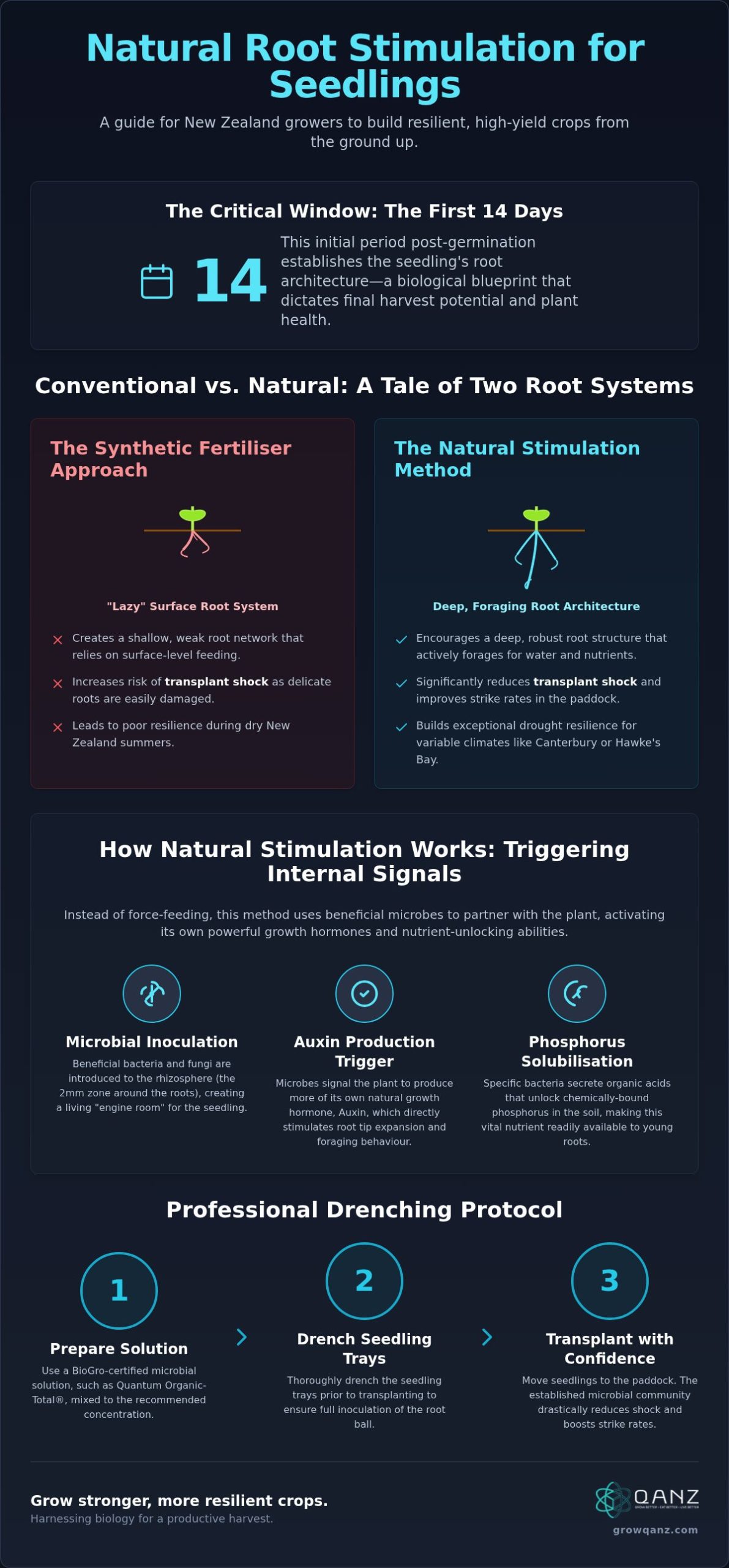
Success in the paddock begins long before the first leaf unfurls. The initial 14-day window following germination is the most critical period for any crop. During this time, the seedling’s early root architecture is established; it’s a biological blueprint that dictates the final harvest potential and overall plant health. Many growers focus on visible top-growth, but true productivity is anchored below the surface. Understanding how to stimulate root growth in seedlings naturally involves working with the plant’s internal biological clock rather than forcing it with synthetic inputs.
When seedlings are moved from the nursery to the field, they often face the “transplant shock” hurdle. This stall occurs because the delicate root hairs are damaged, and the plant must redirect its limited energy to repair this infrastructure. While synthetic “quick-fix” fertilisers might green up the leaves, they often suppress the plant’s natural urge to forage. High-salt fertilisers create a “lazy” root system where the plant stays near the surface for easy nutrients rather than developing the deep, resilient network required to withstand a dry New Zealand summer. This energy allocation is a zero-sum game. If the plant is forced to prioritise a heavy leaf canopy through nitrogen-heavy inputs, it does so at the expense of its underground foundation.
Defining the Rhizosphere: The Seedling’s Engine Room
The rhizosphere is a tiny, 2mm zone surrounding the root where the most complex nutrient exchanges occur. It’s essentially the seedling’s engine room. In many commercial operations, sterile potting mixes are used to prevent disease, but this sterility can actually hinder long-term health. Without a diverse microbial community, the plant’s root exudates (sugars and proteins) have no biological “partners” to hire. Natural stimulation relies on reintroducing these beneficial microbes to ensure the engine room is fully operational from day one, allowing the seedling to access minerals that would otherwise remain locked in the soil matrix.
Root Architecture vs. Root Mass
It’s vital to distinguish between mere root mass and effective root architecture. While a thick clump of roots looks healthy, a system balanced between fine lateral roots for nutrient uptake and a strong taproot for stability is far superior. Natural stimulants encourage “searching” behaviour, prompting the plant to explore the soil profile rather than waiting for a liquid feed. Root foraging is the plant’s ability to find moisture in deep soil layers. By prioritising architecture over sheer bulk, you ensure the seedling can access resources even when surface conditions are less than ideal, providing a significant advantage in the unpredictable climates of regions like Canterbury or Hawke’s Bay.
How to Stimulate Root Growth in Seedlings Naturally
Practical application of biological agents represents a significant shift from exogenous feeding to endogenous signalling. Natural root stimulants aren’t merely organic matter; they’re active biological partners that trigger the plant’s own developmental pathways. Instead of applying synthetic hormones that can lead to brittle, unsustainable growth, professional growers are now using microbial consortia to encourage a more balanced and resilient structure. This approach to how to stimulate root growth in seedlings naturally ensures the plant remains in control of its growth rate, which is vital for long-term health in the paddock.
One of the primary mechanisms involved in this process is phosphorus solubilisation. In many New Zealand soils, phosphorus is present but chemically bound to soil particles, making it inaccessible to tender young roots. Specific beneficial bacteria secrete organic acids that break these bonds, delivering a steady stream of available phosphorus exactly where it’s needed. This biological delivery system is far more efficient than applying high-salt phosphate fertilisers, which can actually inhibit the formation of essential mycorrhizal associations and damage delicate root hairs during the early establishment phase.
The Role of Photosynthetic Bacteria
While many growers are familiar with mycorrhizal fungi, photosynthetic bacteria offer a unique advantage in the early seedling stage. These microbes provide supplemental energy to the rhizosphere, even when light levels in a crowded nursery tray are low. This extra energy boost supports the high metabolic demands of rapid root cell division and strengthens the synergy between the plant and its microbial community. Using a BioGro-certified microbial solution in a liquid formulation allows these beneficial organisms to penetrate the entire root plug, ensuring every millimetre of the emerging system is protected and stimulated before transplanting.
Hormonal Signaling without Synthetics
Beneficial microbes don’t just provide nutrients; they act as tiny chemical factories. They produce natural Indole-3-Acetic Acid (IAA), a type of auxin that signals the plant to produce more lateral root tips and increase root hair density. Simultaneously, these microbes help regulate the production of ethylene, the plant’s primary stress hormone. By keeping ethylene levels in check during the transplanting process, the seedling avoids the typical growth stall and maintains its momentum. Natural microbial inoculants act as a biological “switch” for root expansion. This sophisticated signalling ensures the plant is physiologically prepared for the transition from the tray to the variable conditions of the open field.
Optimising the Physical Environment for Root Expansion
The physical structure of your growing medium provides the essential framework for all biological activity. While microbial inoculants provide the “software” for growth, the physical environment serves as the “hardware” that must support rapid expansion. Establishing a precise air-to-water balance is the most critical factor in this stage. When a substrate is waterlogged, oxygen is displaced, creating an anaerobic environment where beneficial microbes perish and root respiration ceases. To understand how to stimulate root growth in seedlings naturally, you must first ensure that the root system isn’t suffocating in a saturated tray or paddock.
Temperature management also plays a decisive role in establishment. Soil warmth acts as a catalyst for both microbial metabolism and root cell elongation. In cooler New Zealand regions like Southland or Central Otago, maintaining a consistent root-zone temperature ensures that the biological “engine” doesn’t stall. Additionally, substrate porosity determines the path of least resistance. Fine root hairs are delicate; if the soil is too compacted, the energy required to push through the medium is diverted away from lateral expansion, resulting in a stunted, inefficient root system.
Rhizosphere Aeration Strategies
Oxygen is often the most overlooked nutrient in seedling establishment. Without adequate aeration, the rhizosphere cannot support the high-energy demands of a developing plant. In heavy New Zealand clay soils, common in parts of Northland and the Waikato, poor drainage frequently leads to root rot and microbial decline. Improving soil structure through the addition of organic matter or by using specialised aeration techniques allows for better gas exchange. This increased oxygen level directly correlates with higher microbial colonisation rates, as beneficial aerobic bacteria require oxygen to thrive and produce the growth-signalling compounds your seedlings need.
Moisture Tension and Root Foraging
Managing moisture tension is a sophisticated way to encourage deeper root systems. The “Drought Stress” paradox suggests that allowing a seedling tray to undergo controlled, brief dry cycles can actually be beneficial. This slight stress signals the plant to invest more energy into downward foraging as it “searches” for more stable moisture levels. You can achieve this balance through:
- Pulse watering: Applying smaller amounts of water more frequently to keep the rhizosphere active without reaching saturation.
- Avoiding high-salt fertilisers: Synthetic salts can cause root hair desiccation, effectively burning the most sensitive parts of the root system.
- Biological surfactants: Using natural agents to ensure uniform moisture distribution across the root plug, preventing dry spots that can lead to uneven growth.
By maintaining high moisture tension without crossing into permanent wilting point, you train the seedling to build a more expansive and resilient foundation before it faces the full variability of the open paddock.
A Step-by-Step Protocol for Natural Root Boosting
Implementing a professional protocol ensures that your seedlings transition from the controlled nursery environment to the paddock with minimal disruption. Understanding how to stimulate root growth in seedlings naturally requires a methodical approach that starts well before the plant leaves its tray. By focusing on early inoculation, you ensure the rhizosphere is pre-populated with beneficial organisms that provide a protective biological shield. This proactive strategy is far more effective than trying to “rescue” a struggling plant once it’s already in the ground.
Seedling Tray Inoculation
The most efficient stage to introduce beneficial biology is while the seedlings are still in their trays. This allows for concentrated application and maximum microbial colonisation before the roots are exposed to the broader soil environment. Follow these steps for the best results:
- Step 1: Dilution and Preparation. Dilute your liquid microbial treatments in clean, non-chlorinated water. Liquid formulations are superior to granular alternatives because they penetrate the entire root plug, ensuring every millimetre of the emerging system is covered.
- Step 2: Timing the Application. Apply the solution early in the morning or late in the afternoon. This avoids high UV levels that can stress delicate microbes and ensures maximum absorption by the young root tissues while they’re actively transpiring.
- Step 3: Monitoring Development. Use leaf colour as a proxy for root-driven nutrient uptake. A deep, consistent green indicates that the root system is efficiently accessing micronutrients, which is a direct result of successful microbial colonisation.
Managing the Transplant Transition
The transition from the nursery tray to the open paddock is the most vulnerable moment in a plant’s life. To maintain the momentum of root expansion, you should integrate microbial support into your watering-in phase. The “Drench and Dip” method involves saturating the root ball with a microbial solution immediately before or during planting. This ensures the beneficial bacteria are present in high concentrations exactly where the new root hairs will emerge into the field soil.
This biological support is a core component of how to reduce transplant shock in seedlings. By maintaining high microbial populations during the first month, you create a stable environment that allows the plant to focus on downward foraging rather than stress recovery. For large-scale operations in regions like the Manawatu or Hawke’s Bay, these treatments can be easily integrated into existing irrigation programmes or fertigation lines without the need for additional equipment. To secure your crop’s future, explore our specialised vegetable crop microbial solutions today.
Enhancing Seedling Resilience with Quantum Organic-Total®
Establishing a high-performing crop requires more than just a single microbial strain; it demands a complex biological consortium that can adapt to the diverse conditions of New Zealand soil. Quantum Organic-Total® has become the preferred choice for professional growers because it provides a complete ecosystem in a bottle. While many products offer a single-strain inoculant, this technology utilises a diverse range of photosynthetic bacteria and beneficial microbes that work in synergy to protect the rhizosphere. Understanding how to stimulate root growth in seedlings naturally involves providing the plant with these diverse biological partners from day one.
The BioGro New Zealand certification ensures that every application meets the highest standards for organic production and environmental safety. This verification gives commercial growers the confidence to move away from synthetic inputs without compromising on performance or strike rates. Real-world results across the country show that this microbial technology scales effectively from the nursery tray to the largest broadacre paddocks, providing a consistent foundation for long-term soil vitality and nutrient cycling.
The GrowQanz Advantage: Science in the Field
The stability and shelf-life of these liquid microbial solutions provide a significant operational advantage over granular alternatives. Unlike many biologicals that degrade quickly, Quantum Organic-Total® remains active and ready for application when your planting schedule demands it. For growers looking to build long-term resilience, Quantum-VSC® often complements root growth by building long-term soil carbon and accelerating the formation of stable humus. These solutions are specifically designed to address New Zealand’s unique agricultural challenges, from the high-UV environments of the North Island to the varying moisture profiles of the South Island.
Sustainable Scaling for Commercial Growers
Integrating microbial treatments into large-scale broadacre or horticultural operations is straightforward and cost-effective. Whether you’re managing an intensive vegetable operation or looking for microbial solutions for field crops, these liquid formulations fit seamlessly into existing spray rigs and fertigation systems. This allows for uniform application across hundreds of hectares, ensuring every seedling receives the same biological advantage during the critical establishment window. To develop a custom establishment programme tailored to your specific soil profile and crop requirements, contact the GrowQanz technical team for a consultation.
Securing Your Crop’s Foundation with Biological Precision
Building a resilient agricultural system starts beneath the surface with the establishing roots of your seedlings. We’ve explored how the first 14 days dictate final yields and why maintaining a precise air-to-water balance is essential for microbial health. Moving away from high-salt synthetic inputs allows your plants to engage in natural foraging; this creates a deeper, more stable foundation that can withstand the unpredictable New Zealand climate. By following a structured inoculation protocol, you ensure your crop isn’t just surviving but is actively thriving from the moment it hits the paddock.
Learning how to stimulate root growth in seedlings naturally is a strategic investment in your land’s long-term vitality. GrowQanz offers 100% organic microbial technology that’s trusted by professional NZ growers to deliver consistent, evidence-based results. Our solutions are BioGro New Zealand certified, ensuring your growth protocols remain compliant and sustainable. Optimise your seedling establishment with Quantum Organic-Total® and give your next harvest the biological advantage it deserves. It’s time to work with nature to secure a more productive and reliable future for your farm.
Frequently Asked Questions
How long does it take for natural root stimulants to show results?
Microbial colonisation begins immediately upon application, though visible results in seedling establishment typically appear within the first 14 days. While the internal biological signalling starts within hours, you’ll generally notice improved turgidity and leaf colour as the roots begin accessing locked-up nutrients more efficiently. This rapid colonisation is a key part of how to stimulate root growth in seedlings naturally before they face the transition to the open paddock.
Can I over-stimulate root growth in my seedlings?
It’s virtually impossible to over-stimulate roots using natural microbial consortia because the plant maintains physiological control over the process. Unlike synthetic hormones that can force brittle, unsustainable growth, beneficial microbes like those in Quantum Organic-Total® act as biological partners. They respond to the plant’s own root exudates, ensuring that growth remains balanced and resilient. This biological feedback loop prevents the “lazy” or top-heavy growth often associated with high-nitrogen synthetic fertilisers.
Is phosphorus more important than microbes for new roots?
Phosphorus is essential for energy transfer, but microbes are the agents that make it plant-available. In many New Zealand soils, phosphorus is chemically bound and inaccessible to young seedlings. Beneficial bacteria perform phosphorus solubilisation, releasing these minerals exactly where they’re needed in the rhizosphere. Relying on high-salt phosphate fertilisers can actually damage delicate root hairs, whereas microbial solutions deliver the nutrient naturally without the risk of chemical desiccation or soil degradation.
Do natural root stimulants work in all types of New Zealand soil?
Microbial technologies are designed to function across New Zealand’s diverse soil profiles, from heavy clays to alluvial loams. These microbes are highly adaptable and work to improve soil structure and carbon levels regardless of the starting point. By building a robust rhizosphere, they help seedlings overcome local challenges like poor drainage or low organic matter, ensuring a consistent strike rate across different paddocks without the need for synthetic interference.
Are microbial inoculants compatible with organic BioGro standards?
Professional microbial solutions like Quantum Organic-Total® are fully BioGro New Zealand certified for organic use. This certification confirms that the technology is 100% natural and free from synthetic chemicals, meeting the rigorous standards required for organic production. Using these certified products allows commercial growers to maintain their organic status while achieving the high-performing root systems necessary for modern agricultural productivity and long-term ecological health across their entire operation.
How often should I apply natural root boosters to my seedlings?
A primary drenching in the seedling tray followed by a watering-in application at transplanting is usually sufficient for most crops. This initial double-dose ensures the rhizosphere is fully colonised during the critical 14-day establishment window. For long-season crops, a follow-up application through your existing irrigation system can help maintain microbial populations. This consistent support is a reliable method for how to stimulate root growth in seedlings naturally throughout their entire growth cycle.
Can I use natural root stimulants alongside liquid kelp or seaweed?
Natural microbial treatments are highly compatible with organic biostimulants like liquid kelp or seaweed extracts. These organic inputs often provide complex carbohydrates and trace minerals that act as a prebiotic food source for the beneficial bacteria. This synergy can accelerate microbial activity and enhance the plant’s overall stress tolerance. Combining these natural inputs creates a holistic establishment programme that supports both the biological soil community and the seedling’s immediate nutritional needs.
What happens if the soil is too cold for microbial activity?
Microbial activity slows down in cold soil, but the microbes remain present and ready to activate as temperatures rise. In cooler New Zealand climates, it’s beneficial to inoculate seedlings in the controlled environment of a nursery or greenhouse before transplanting. This gives the microbial consortium time to establish a relationship with the roots. Once moved to the field, the pre-colonised root system will be ready to forage as soon as soil warmth reaches the required threshold.
Disclaimer
Important: This article provides general agricultural information only. Product performance can vary according to crop, soil, climate, management practices and application conditions. Trial or research results discussed may have been obtained under specific conditions and should not be interpreted as a guarantee of equivalent results. Always follow current product directions and confirm suitability for your crop, growing system and organic certification requirements. Contact QANZ for current product and application information.
