
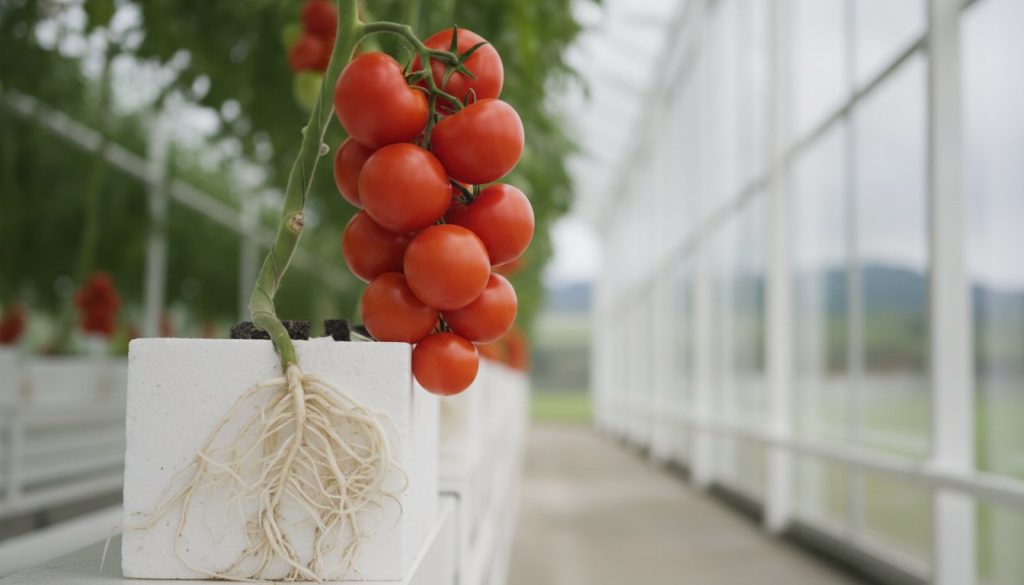
While stonewool offers unparalleled control over the root zone, its inherent sterility is often the silent bottleneck preventing New Zealand growers from reaching the true genetic potential of their crops. When growing tomatoes glass house stonewool systems provide the structural foundation, but they frequently lack the complex biological “immune system” found in healthy, living soil.
You likely appreciate the precision that inert media allows for nutrient delivery, yet the reality of sterile cultivation often involves inconsistent uptake and a constant vulnerability to root zone pathogens. By integrating advanced microbial technology, you can bridge the gap between technical precision and natural vitality. This guide explores how BioGro certified solutions, such as Quantum Organic-Total and Quantum-VSC, work to optimise nutrient efficiency and significantly reduce transplant shock. We will examine the methodical application of these liquid-based treatments to drive higher brix levels and increase fruit weight, ensuring your glasshouse remains both highly productive and ecologically resilient as New Zealand’s agricultural regulations continue to evolve.
Key Takeaways
- Learn why reintroducing beneficial biology into sterile media is essential for maximising the genetic potential of tomatoes glass house stonewool systems.
- Discover how BioGro certified microbial inoculants like Quantum Organic-Total® enhance nutrient uptake and lead to measurable increases in fruit brix levels and weight.
- Understand the strategic timing for liquid microbial applications, ensuring robust root development from seedling establishment through to full crop maturity.
- Explore how Quantum-VSC® builds root zone resilience, providing a natural defence against pathogens and environmental stress in intensive glasshouse environments.
- Transition towards a more sustainable production model that reduces the necessity for aggressive synthetic fertilisers while maintaining peak commercial performance.
The Evolution of Glasshouse Tomato Production in Stonewool
Commercial tomato production in New Zealand has undergone a significant transformation over the last few decades. The adoption of stonewool, often referred to as rockwool, changed the way we approach high-wire crops. This mineral wool substrate, manufactured from basalt rock, became the global benchmark for its ability to provide a consistent, inert environment. For those producing tomatoes glass house stonewool offers a level of predictability that traditional soil simply cannot match. Its unique structure facilitates rapid root penetration and maintains a precise balance between water retention and aeration.
However, this shift towards efficiency created a biological vacuum. By moving away from the soil, growers also moved away from the complex microbial communities that naturally protect and nourish plants. While an inert medium makes disease management easier by eliminating soil-borne pathogens, it also leaves the root zone vulnerable. Without beneficial microbes, any pathogen that does enter a closed system can spread with devastating speed. The challenge for the modern grower is to maintain the benefits of a controlled environment while recovering the biological resilience found in nature.
Precision Control in Stonewool Systems
The primary reason New Zealand growers rely on stonewool is the capacity for absolute precision. Because the medium contains no inherent nutrients or buffering capacity, every aspect of the plant’s diet is managed through the fertigation system. This allows for meticulous control over Electrical Conductivity (EC) and pH levels, ensuring that nutrient delivery is tuned to the specific growth stage of the tomato crop. In the intensive production of tomatoes glass house stonewool setups require constant monitoring of the root environment to prevent stagnation.
Modern Hydroponics systems in NZ utilise slab volume and drainage percentages to steer plant growth between vegetative and generative phases. This level of technical oversight is essential for maintaining high yields during our varied seasonal light levels. Yet, the reliance on purely synthetic inputs can lead to salt accumulation and erratic nutrient uptake if the root zone isn’t functioning at peak efficiency. When the biology is absent, the plant’s ability to process these inputs is often hindered.
The Shift Towards Biological Integration
We are now seeing a fundamental change in how glasshouse protocols are designed. New Zealand’s agricultural sector is facing increasing pressure to reduce nitrogen leaching and improve sustainability, particularly with upcoming amendments to the Agricultural Compounds and Veterinary Medicines Act. These regulatory shifts are encouraging a move beyond purely chemical management towards a more holistic, biological approach. By integrating specific microbial inoculants into systems growing tomatoes glass house stonewool becomes a more dynamic and forgiving medium.
Growers are increasingly seeking to create “living” hydroponic systems. The goal is to reintroduce the biological vitality of the soil into the sterile stonewool environment. This evolution represents the next frontier for the New Zealand tomato industry, where advanced biology meets technical engineering to ensure long-term productivity and environmental health.
The Biological Deficit in Sterile Glasshouse Substrates
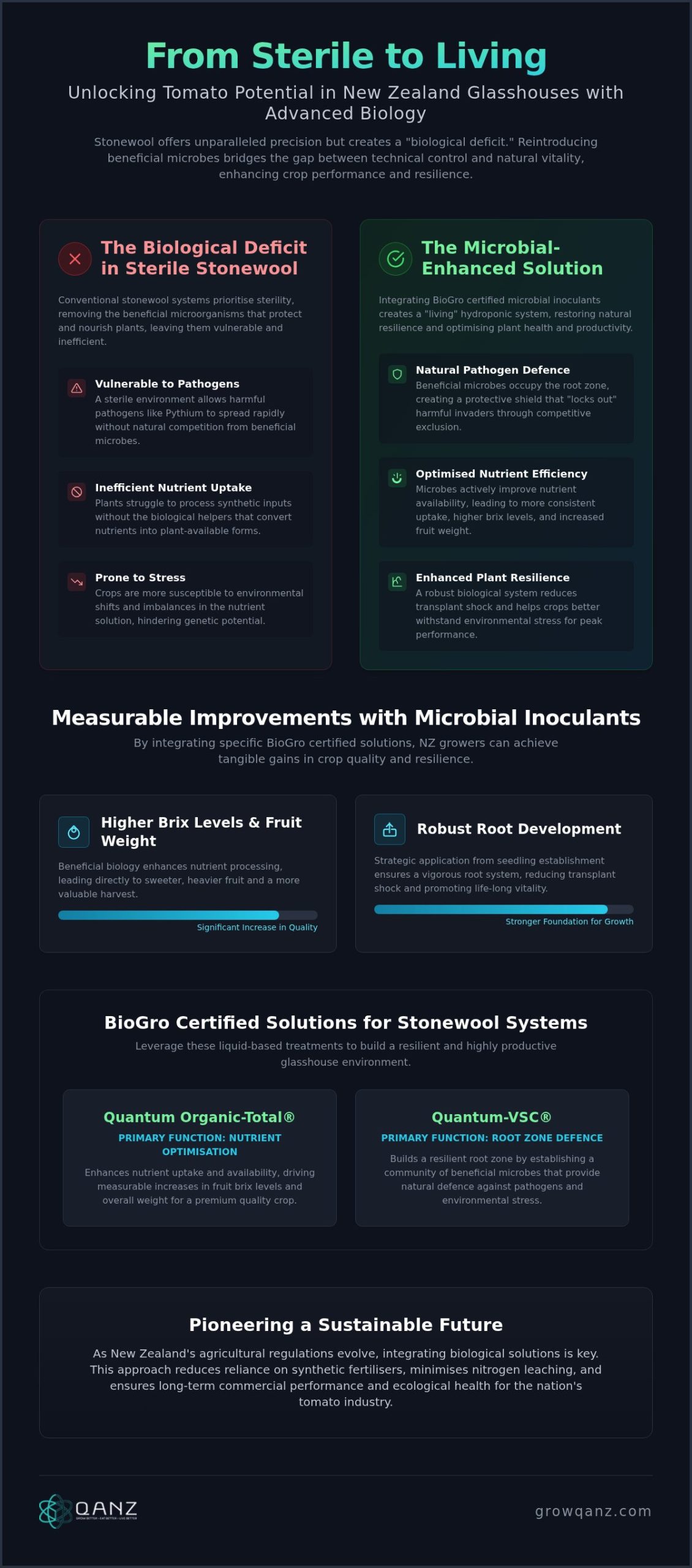
In the pursuit of high-efficiency production for tomatoes glass house stonewool systems have largely prioritised sterility. This deliberate exclusion of life creates what we term a “biological deficit.” While sterility helps prevent the introduction of soil-borne diseases, it also removes the beneficial microorganisms that have evolved alongside plants for millions of years. The biological deficit is the absence of a protective microbial shield in inert media. This lack of biology leaves the crop entirely dependent on the grower’s intervention for both nutrition and protection, often resulting in plants that are more susceptible to sudden environmental shifts or subtle imbalances in the nutrient solution.
The Vulnerability of Sterile Roots
Sterile environments are inherently unstable. When a pathogen like Pythium or Phytophthora enters a closed hydroponic system, it encounters no natural competition. In a healthy soil ecosystem, beneficial bacteria and fungi occupy the niches around the roots, effectively “locking out” harmful invaders through competitive exclusion. In a sterile stonewool slab, these niches are vacant. This allows opportunistic water-borne diseases to colonise and spread through the fertigation water with alarming speed, often before the grower notices the first signs of wilt or root discolouration.
Nutrient Bioavailability in Hydroponics
Delivering nutrients in a liquid form doesn’t guarantee the plant will absorb them efficiently. Standard Production of Greenhouse Tomatoes relies on highly soluble salts, but the plant’s roots still require biological assistance to manage this intake under stress. Photosynthetic bacteria and other beneficial microbes play a critical role in mineralising nutrients and enhancing absorption at the root hair level. Without these biological partners, the plant must expend more energy on nutrient transport, which can lead to reduced brix levels and lower fruit weight, even when fertiliser levels are technically optimal.
Reintroducing biology into these systems isn’t just about protection; it’s about metabolic efficiency. Microbes help break down organic root exudates that can otherwise build up in the media and lead to root zone stagnation or “sour” slabs. By addressing the biological deficit, you create a more resilient and productive environment that can better withstand environmental fluctuations. To begin restoring this natural balance and improving your nutrient use efficiency, many New Zealand growers are now implementing specialised microbial solutions specifically formulated for intensive tomatoes glass house stonewool operations.
Comparing Chemical Inputs with Microbial-Enhanced Hydroponics
Traditional glasshouse management often treats the plant as a simple machine, where inputs in equal outputs out. This chemical-heavy approach is standard when growing tomatoes glass house stonewool systems, but it frequently ignores the biological efficiency of the plant itself. While synthetic fertilisers provide the essential N-P-K, they do little to support the plant’s metabolic pathways or long-term resilience. By introducing microbial inoculants, growers can achieve a synergy that reduces the total reliance on aggressive chemical interventions. This shift is particularly relevant in New Zealand, where the 2026 amendments to the Agricultural Compounds and Veterinary Medicines Act are placing greater scrutiny on nutrient runoff and nitrogen leaching. Adopting a biological-plus model allows for a more precise and environmentally responsible use of resources.
Performance Metrics: Yield and Resilience
Microbial treatments like Quantum Organic-Total® directly influence the physical development of the root zone. In stonewool, where the physical space for root expansion is limited by the slab volume, increasing root biomass is vital for efficient nutrient capture. Observations in professional settings show that treated slabs develop a denser, more fibrous root network compared to untreated ones. This enhanced root architecture allows the plant to buffer against the environmental stress of summer temperature peaks, maintaining transpiration rates and preventing physiological disorders. High-performance Greenhouse Tomato Production is ultimately about consistency, and biology provides that steadying influence during peak production cycles.
Beyond total harvest weight, the impact on fruit quality is a key differentiator. Microbes assist in the mineralisation of secondary metabolites, which are the building blocks of flavour and aroma. Tomatoes grown in biologically active tomatoes glass house stonewool systems often exhibit higher brix levels and a more robust flavour profile. Improved mineral balance within the plant also leads to firmer cell walls, which helps maintain fruit weight and extends shelf life for both domestic retail and international export markets.
The Economic Case for Biologicals
The transition to biologicals is often viewed as an added expense, but a true ROI analysis reveals a different story. By improving nutrient use efficiency (NUE), microbes ensure that more of what you put in the nutrient tank actually ends up in the plant rather than being flushed as waste. This reduction in nutrient waste, combined with the decreased need for corrective chemical treatments and the gain in premium fruit quality, creates a compelling financial argument. For a detailed breakdown of the numbers, see our Quantum Organic-Total cost-benefit analysis. Investing in biology is a move towards a more stable and profitable production model that aligns with New Zealand’s evolving environmental standards.
Strategic Application of BioGro Certified Inoculants in Stonewool
Integrating BioGro certified inoculants into a commercial operation demands a methodical approach to ensure the beneficial biology thrives within the inert matrix. When producing tomatoes glass house stonewool systems act as a blank canvas, meaning the timing of microbial introduction is paramount. A successful programme begins in the nursery, where seedlings receive their first inoculation to establish a protective colony before they ever reach the production glasshouse. This early intervention ensures that the young root system is already “primed” for the high-intensity environment of the main cropping slabs.
Maintaining these populations throughout a long New Zealand growing season requires regular maintenance doses delivered via the fertigation system. Because stonewool doesn’t naturally support microbial life, periodic re-inoculation prevents the biological shield from thinning as the plants reach full maturity and peak fruit load. This consistent application ensures that the rhizosphere remains a dynamic environment, capable of supporting the plant’s increased metabolic demands during the heat of a Kiwi summer.
Reducing Transplant Shock in Stonewool Blocks
The transition from a nursery block to a large production slab is a period of significant physiological stress. The first 48 hours are critical; this is when the young roots are most vulnerable to environmental fluctuations and opportunistic pathogens. By applying a targeted drench of beneficial microbes during transplant, you provide an immediate “biological buffer” that encourages the roots to rapidly colonise the new stonewool volume. This rapid expansion is essential for establishing the water and nutrient uptake capacity required for high-wire production. For a deeper look at this process, you can read our guide on how to reduce transplant shock in seedlings.
Integration with Existing Fertigation Systems
Modern New Zealand glasshouses rely on sophisticated irrigation hardware that requires high-purity inputs. A common concern among growers is whether biological products will lead to biofilm buildup or clogged drippers. GrowQanz solutions are specifically engineered as high-quality, liquid-based treatments that remain in suspension, ensuring they won’t interfere with your system’s hardware. These treatments are fully compatible with common hydroponic fertilisers, though it’s best to optimise the pH and EC of the carrier water to maintain maximum microbial viability during the injection process.
To ensure your technical setup is delivering the full microbial advantage to your crop, we recommend consulting with a specialist to tailor an application schedule to your specific glasshouse parameters. You can explore our range of microbial solutions to find the right fit for your commercial fertigation programme.
Enhancing Glasshouse Productivity with GrowQanz Biological Solutions
Achieving peak performance in a commercial glasshouse requires more than just high-quality substrate and precise fertigation. While stonewool provides the structural foundation, GrowQanz offers the biological missing link necessary for truly exceptional results. Our approach focuses on reintroducing specific, beneficial microbial communities that have been stripped away by modern sterilisation processes. For those growing tomatoes glass house stonewool systems become significantly more productive when treated with our BioGro New Zealand certified technologies. These solutions don’t just add microbes; they restore the complex synergy between the plant and its environment.
Quantum Organic-Total® for Tomato Growers
Quantum Organic-Total® serves as our flagship solution for enhancing crop vitality. For Solanum lycopersicum, the benefits of this consortium are visible in improved fruit set, more vibrant colour, and greater size uniformity across the harvest. One of its most unique features is the inclusion of photosynthetic bacteria. These organisms function within the root zone and on the plant surface to maximise light use efficiency, a critical factor during the lower-light months of a New Zealand winter. Quantum Organic-Total® restores the natural microbial balance to sterile stonewool, ensuring the root zone functions as a living ecosystem rather than a purely physical matrix. By establishing this biological foundation, you ensure that your crop can process nutrients more effectively and maintain vigour throughout its life cycle.
While Organic-Total builds the foundation, Quantum-VSC® is engineered to strengthen plant resilience against environmental glasshouse stress. Intensive production often exposes plants to rapid temperature fluctuations and high humidity, which can lead to physiological fatigue. Quantum-VSC contains a diverse range of microorganisms that support the plant’s natural defence mechanisms, helping it to recover faster from stress events. This resilience is particularly important in closed systems where even minor imbalances can lead to significant yield losses if the biology isn’t present to buffer the impact.
Achieving Sustainable Excellence in Horticulture
Positioning your glasshouse operation as a leader in sustainable New Zealand agriculture is becoming increasingly vital for premium market access. Consumers and retailers alike are demanding transparency and a reduced chemical footprint. By utilising GrowQanz microbial solutions, you can maintain commercial-grade yields while aligning with these ecological expectations. Our BioGro certification provides the verification you need to access high-value organic or sustainable supply chains, ensuring your business remains competitive and future-proofed. We provide the technical expertise and evidence-based results required to transition your tomatoes glass house stonewool operation into a model of biological efficiency.
Ready to see the microbial advantage in your own facility? Enquire about GrowQanz microbial solutions for your glasshouse today.
Cultivating Resilience in Modern Glasshouse Systems
The transition from a purely chemical management model to a biological-plus approach represents the next evolution for New Zealand’s horticultural sector. By addressing the biological deficit inherent in sterile media, you can transform your operation into a more resilient and efficient ecosystem. We’ve explored how reintroducing beneficial microbes protects vulnerable root zones and significantly improves nutrient bioavailability, leading to measurable gains in fruit brix and total harvest weight. When growing tomatoes glass house stonewool systems no longer need to be sterile and vulnerable; they can be living environments that support peak genetic potential.
GrowQanz provides the scientific expertise and BioGro New Zealand certified solutions required to make this transition seamless. Our liquid-based treatments are designed for effortless integration into your existing fertigation setup, delivering 100% natural and sustainable results without risking dripper health. It’s about moving towards a future where high productivity and environmental stewardship work in harmony. Explore the GrowQanz range of BioGro certified microbial solutions for tomatoes and take the first step towards a more robust and profitable glasshouse harvest. We look forward to supporting your journey towards sustainable excellence.
Frequently Asked Questions
Can I use organic microbial products in a completely sterile stonewool system?
Yes, reintroducing biology into a sterile system is a core strategy for professional growers. When producing tomatoes glass house stonewool slabs provide the physical structure, but they lack the protective microbial shield found in nature. Applying BioGro certified products like Quantum Organic-Total® fills this biological deficit. This prevents opportunistic pathogens from colonising empty niches and helps your crop manage nutrient uptake more efficiently in an otherwise inert and sterile environment.
Will liquid microbial treatments clog my glasshouse irrigation drippers?
No, high-quality liquid microbial treatments like those from GrowQanz won’t clog your irrigation drippers. These solutions are specifically engineered for professional fertigation systems and remain in a fine liquid suspension. Unlike some raw organic additives, these refined microbial consortia pass easily through standard glasshouse filters and emitters. This ensures you can deliver beneficial biology directly to the root zone without risking the technical integrity of your high-precision irrigation hardware.
How often should I apply Quantum Organic-Total® to my tomato crop?
You should ideally apply Quantum Organic-Total® at the seedling stage and then maintain regular doses throughout the season. A common schedule involves an initial drench during transplant to reduce shock, followed by periodic applications through the fertigation system every two to four weeks. This consistent approach ensures that the microbial population remains robust as the plants reach full maturity and face the increased metabolic demands of the peak New Zealand summer harvest.
Is Quantum Organic-Total® compatible with standard hydroponic fertilisers?
Yes, Quantum Organic-Total® is fully compatible with standard hydroponic mineral fertilisers used in commercial glasshouses. The microbes are resilient and can thrive alongside typical N-P-K nutrient solutions. To maximise their effectiveness, you should ensure the carrier water pH and EC are within the standard range for tomato production. Integrating these biologicals into your existing fertigation programme is straightforward and doesn’t require you to abandon your proven nutrient protocols.
Does BioGro certification matter for commercial tomato growers in New Zealand?
BioGro certification is highly significant for New Zealand growers looking to access premium domestic and export markets. It provides independent verification that your inputs meet strict organic integrity standards and are free from synthetic contaminants. As agricultural regulations in NZ evolve, having BioGro certified products like those from GrowQanz helps you demonstrate environmental stewardship. This certification is a mark of quality that resonates with retailers and consumers who prioritise sustainable production.
How do microbes help tomatoes grow better in stonewool compared to soil?
Microbes act as a vital biological bridge in stonewool, which is naturally inert and lacks the nutrient-buffering capacity of soil. In a system for tomatoes glass house stonewool doesn’t provide nutrients; it only holds the solution. Beneficial bacteria mineralise these nutrients and improve their bioavailability directly at the root hair level. This mimics the nutrient-dense rhizosphere of fertile soil, allowing for more consistent uptake and better plant resilience against common glasshouse stressors.
What is the best way to apply microbial inoculants to stonewool slabs?
The most effective application methods are drenching during the transplant phase and fertigation for ongoing maintenance. For young plants, a targeted drench ensures the roots are colonised before they expand into the main slab. Once established, injecting the liquid microbes into your main irrigation line allows for uniform distribution across the entire glasshouse. This ensures that every plant receives a consistent dose of beneficial biology without the need for labour-intensive manual applications.
Can microbial treatments help reduce the use of synthetic fertilisers in glasshouses?
Yes, microbial treatments can help reduce your reliance on synthetic fertilisers by significantly improving Nutrient Use Efficiency (NUE). When the root zone is biologically active, the plant is better equipped to absorb and process the nutrients already present in the system. This reduces waste and leaching, allowing you to maintain or even increase yields while using lower overall fertiliser concentrations. It is a more precise and sustainable way to manage high-intensity crops.
