
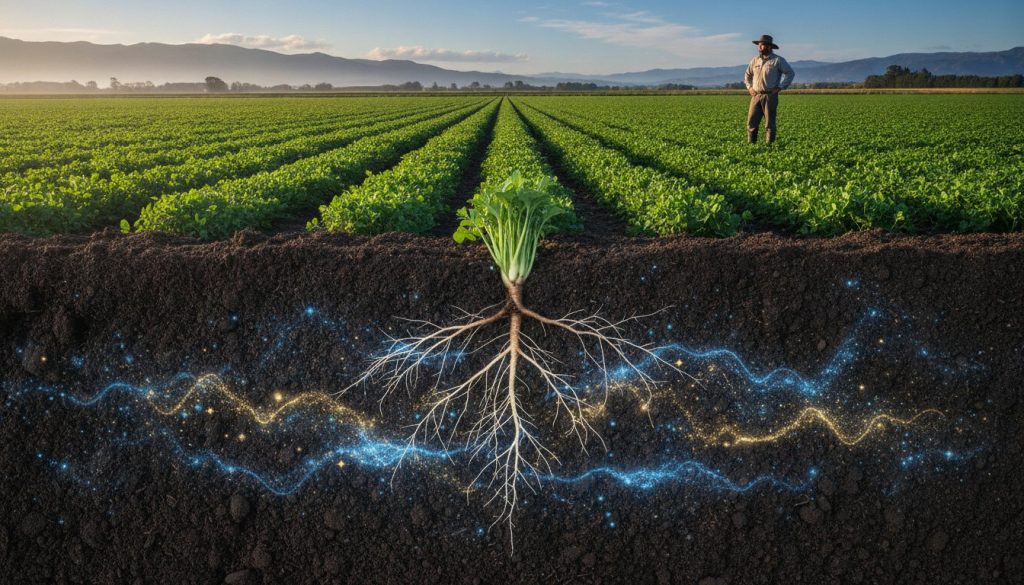
In 2022, New Zealand lost an estimated 182 million tonnes of soil to erosion, with 44% of that loss occurring on the very pasture lands that drive our primary sector. This staggering figure highlights a quiet crisis for Kiwi growers who are grappling with degraded soil health and the soaring costs of traditional synthetic inputs. Identifying the best microbial inoculants for farmers is no longer a niche interest; it’s a critical strategy for those looking to build resilience against climate variability and increasing drought stress.
You likely recognise that years of heavy chemical reliance have left your soil feeling depleted and less responsive than it was a generation ago. This guide provides a clear framework to evaluate and select the most effective microbial technologies to restore your soil’s microbiome, boost crop yields, and transition towards a more sustainable farming model. We’ll examine how BioGro certified liquid solutions, such as Quantum Organic-Total®, utilise photosynthetic bacteria to improve nutrient uptake and deliver a visible increase in root mass across your crops.
Key Takeaways
- Understand the transition from synthetic inputs to “living fertilisers” that prioritise long-term soil health and microbial restoration in New Zealand’s primary sectors.
- Learn how to identify the best microbial inoculants for farmers by looking beyond simple CFU counts to prioritise strain diversity and proven shelf-life stability.
- Discover the “activation gap” and why liquid-based microbial technologies offer more immediate and uniform root colonisation than traditional granular forms.
- Identify the critical growth periods for your specific crop type to ensure microbial applications are timed for maximum nutrient uptake and plant vigour.
- Explore how BioGro certified solutions like Quantum Organic-Total® provide a verified, professional-grade pathway to improving soil vitality without synthetic interference.
Navigating the 2026 Landscape: Why Microbial Inoculants are Essential for NZ Farmers
The 2026 agricultural season in New Zealand marks a turning point for many growers who are moving away from purely chemical interventions. For decades, the focus remained on “feeding the plant” through direct applications of NPK, but this approach often ignored the complex ecosystem beneath the surface. Today, forward-thinking farmers are prioritising soil health by reintroducing life into paddocks that have effectively become biological deserts. This shift isn’t just about environmental stewardship; it’s a pragmatic response to the rising costs of synthetic inputs and the need for more resilient production systems.
What are microbial inoculants? Essentially, these are “living fertilisers” containing beneficial microorganisms that colonise the rhizosphere, the narrow region of soil directly influenced by root secretions. By establishing these colonies, growers can unlock legacy nutrients tied up in the soil, reducing their reliance on increasingly expensive synthetic inputs. When searching for the best microbial inoculants for farmers, the focus must be on products that don’t just provide a temporary boost but actually rebuild the soil’s natural capacity to support life and productivity. Growers who are simultaneously exploring alternatives to chemical fertilisers for farms will find that microbial inoculants represent one of the most effective non-synthetic strategies for restoring the biological engine that unlocks nutrients already held within your soil.
The Role of Beneficial Soil Microorganisms in Plant Health
Plants and microbes share a sophisticated symbiotic relationship. Roots release carbon-rich exudates, which act as a food source for specific bacteria and fungi. In exchange, these microorganisms function as a biochemical factory, producing plant growth hormones and solubilising minerals that would otherwise remain inaccessible to the plant. Understanding how do microbial soil amendments work is essential for any grower looking to optimise this natural cycle. This biological partnership is what allows for the best microbial inoculants for farmers to deliver consistent results even under environmental stress or climate variability.
Restoring Soil Vitality After Intensive Cropping
Years of intensive cropping, heavy machinery use, and chemical fumigation have taken a toll on New Zealand’s soil structure. Soil compaction and the depletion of native microbial populations create a cycle of dependency on synthetic boosters that eventually yields diminishing returns. Restoring this vitality requires more than just resting a paddock; it requires “re-seeding” the soil with diverse, resilient strains. Photosynthetic bacteria are particularly foundational in this restoration process. They act as primary producers in the soil, capturing energy and creating a stable environment where other beneficial microbes can thrive. This biological “re-boot” is the first step in moving from a system of constant intervention to one of self-sustaining productivity.
Evaluating the Best Microbial Inoculants: Strains, Counts, and Colonisation
Many growers mistakenly equate high CFU (Colony Forming Unit) counts with superior performance. While quantity is a factor, the best microbial inoculants for farmers are defined by the quality, diversity, and stability of their strains. A product might boast billions of microbes, but if those strains lack the resilience to colonise New Zealand’s variable soil profiles or have a poor shelf-life, the investment is wasted. Success in a sterile laboratory setting rarely translates directly to the paddock; you need field-proven consortiums that can survive the transition from the container to the rhizosphere.
Multi-strain consortiums generally outperform single-strain products because they mimic the natural complexity of a healthy soil ecosystem. These “root-shielding” bacteria provide a biological buffer against environmental stressors like drought or sudden temperature fluctuations. For a deeper look at implementation, this practical guide to microbial inoculants outlines how these biologicals function in real-world agricultural settings. Choosing a diverse blend ensures that at least some populations will thrive regardless of the specific soil chemistry or moisture levels encountered during the season.
Key Bacterial Families: Bacillus and Photosynthetic Strains
Bacillus subtilis is often regarded as the workhorse of the microbial world. It’s highly effective at nutrient solubilisation and pathogen suppression, essentially clearing the way for healthy crop growth. However, the inclusion of photosynthetic bacteria offers a unique advantage that many standard products overlook. These strains capture light energy to drive carbon cycling and improve nitrogen use efficiency (NUE). This ensures that applied fertilisers are utilised more effectively by the plant rather than leaching into the environment, which is a critical consideration under current New Zealand water quality regulations. Growers looking to reduce their dependence on costly synthetic inputs can explore natural soil fertility boosters that harness these photosynthetic mechanisms to drive long-term biological success.
Fungal Powerhouses: Trichoderma and Mycorrhizae
While bacteria handle much of the biochemical work, fungi are the architects of soil structure. Trichoderma species are exceptional at decomposing organic matter and stimulating rapid root development, which is vital for establishing young plants. Arbuscular Mycorrhizal Fungi (AMF) form a physical extension of the root system, significantly increasing the surface area available for water and phosphorus uptake. This fungal network is essential for building the resilient soil structure needed to withstand erratic weather patterns. If you’re looking to integrate these specific strains into your seasonal programme, you might consider exploring the BioGro certified solutions designed specifically for local conditions.
Liquid vs. Granular: Choosing the Most Effective Delivery Method for NZ Conditions
Selecting the right delivery system is just as critical as the microbial strains themselves. While granular products are often marketed for their ease of storage, they frequently suffer from what we call the “activation gap.” In the variable climate of regions like the Waikato or Canterbury, granular microbes must wait for specific moisture and temperature thresholds to break dormancy. This delay can leave your crop vulnerable during early growth stages. In contrast, liquid formulations are ready to work immediately upon application, ensuring the microbes are active the moment they contact the soil.
Logistically, liquid biologicals offer superior flexibility for modern New Zealand operations. They integrate seamlessly into existing fertigation systems and boom sprayers, allowing for a highly precise application that granular counterparts simply cannot match. This precision ensures a more uniform colonisation across the entire root zone, preventing the “patchy” results often seen with solid fertilisers. When evaluating the best microbial inoculants for farmers, it’s essential to consider the scientific literature and practical recommendations for microbial inoculants, which suggest that liquid carriers provide a more stable environment for delicate live cultures during the critical transition to the field.
The BioGro New Zealand Certification Advantage
Trust is the foundation of any biological programme. In New Zealand, BioGro certification remains the gold standard for verifying that inputs are free from synthetic contaminants and GMOs. This isn’t just a badge of honour; it’s a commercial necessity for growers targeting premium organic export markets. Utilising certified biological soil enhancers New Zealand farmers can trust ensures that their soil restoration efforts align with international traceability standards, protecting both the land and their market access.
Maximising Bioavailability in Local Soils
The harsh UV light in New Zealand can be detrimental to microbial life if left exposed on the soil surface. Liquid carriers act as a protective buffer, helping to transport these delicate organisms safely into the soil profile where they are shielded from solar degradation. This delivery method also facilitates a “tank mix” strategy, where biologicals are applied alongside compatible liquid fertilisers to improve overall efficiency. Liquid microbial treatment is the most efficient way to deliver live cultures directly to the rhizosphere. This method ensures that the best microbial inoculants for farmers reach the target area in peak physiological condition, ready to support plant vigour and long-term soil health.

Matching Inoculants to Your Crop: A Practical Selection Framework
The best microbial inoculants for farmers aren’t just about what’s in the bottle; they’re about timing and placement. Every New Zealand agricultural sector, from the intensive dairy pastures of the Waikato to the high-value vineyards of Marlborough, operates on a unique biological clock. To get the most out of your investment, you must align microbial applications with the specific growth cycles of your crop. This ensures the beneficial colonies are established when the plant needs them most, particularly during the “critical period” of early root development or just before peak nutrient demand.
Application rates shouldn’t be static. If your paddocks have a history of intensive chemical use or low organic matter, the initial microbial populations may face more resistance. In these scenarios, a higher initial “loading dose” is often required to overcome the biological depletion and successfully re-seed the rhizosphere. This proactive approach is also vital for new plantings, where microbes play a significant role in reducing transplant shock by providing immediate hormonal support and improving water access for young root systems.
Solutions for Horticulture, Viticulture, and Orchards
In the horticultural and viticultural sectors, the focus is frequently on quality metrics such as sugar levels (Brix), fruit set, and shelf-life. Microbial nutrient balancing ensures the plant has consistent access to the trace elements that influence these outcomes. For those managing deep-rooted systems, using microbial soil amendments for nut orchards can provide the specific strains needed to maintain soil health and vigour over many seasons. A healthy soil microbiome acts as a buffer, protecting high-value trees and vines from the environmental stressors common in the New Zealand climate.
Broadacre, Field Crops, and Dairy Pasture
For dairy operations, the primary goal is often maximising dry matter production in clover and ryegrass pastures. Encouraging biological nitrogen fixation through the best microbial inoculants for farmers reduces the reliance on synthetic nitrogen while improving the nutritional profile of the forage. Similarly, in broadacre cropping, microbes enhance grain quality and yield by ensuring the soil remains productive throughout the growing season. You can find detailed strategies for these sectors in our guide to microbial solutions for field crops.
To find the specific formulation that matches your New Zealand operation and soil profile, explore our full range of BioGro certified microbial solutions.
Quantum Organic-Total®: The Benchmark for Professional NZ Growers
Quantum Organic-Total® represents the culmination of advanced microbiology tailored for the rigours of the New Zealand environment. As a comprehensive microbial consortium, it moves beyond simple nitrogen fixation to provide a holistic solution for both soil restoration and immediate plant vigour. For many searching for the best microbial inoculants for farmers, the challenge lies in finding a product that survives the transition from the container to the rhizosphere. This formulation addresses that gap by providing a stable, diverse community of organisms that begin colonising the root zone immediately upon application.
While the “Total” formulation serves as a foundational restorer, Quantum-VSC® offers specialised support for specific stress resistance and accelerated root development. Growers often observe a significant shift in root architecture after just one season, with a visible increase in fine root hairs and overall mass. These results aren’t just anecdotal; they are the tangible outcomes of re-establishing a functional soil microbiome that can withstand the climate variability currently affecting New Zealand’s primary sectors.
The Quantum Difference: Photosynthetic Stability
A key technical advantage of GrowQanz technology is the inherent stability of the microbial cultures. Unlike many biological products that require strict refrigeration to maintain viability, Quantum Organic-Total® maintains its efficacy through a proprietary stabilisation process. This ensures that the live cultures remain active and ready for the paddock, regardless of storage conditions on the farm. By adhering to a 100% natural, non-GMO approach, these solutions meet the highest environmental standards, making them the preferred choice for professional turf managers and commercial landscapers who require reliable, evidence-based performance without synthetic interference.
Implementing Your 2026 Microbial Programme
Integrating these biologicals into your existing operation is a straightforward process that requires minimal adjustment to your current spray diary. Most growers find that Quantum products can be easily incorporated into existing liquid application schedules, whether through fertigation or boom spraying. Success with the best microbial inoculants for farmers is often amplified by professional technical support. GrowQanz partners with growers to provide guidance on application timing and soil testing, ensuring that every litre applied contributes to long-term productivity. To understand the financial implications of this transition, you can review our Quantum Organic-Total cost-benefit analysis, which details the value proposition for professional operations.
Securing the Future of Your Soil Ecosystem
Restoring soil health isn’t a temporary fix; it’s a fundamental shift towards a more resilient and efficient farming system. We’ve explored how moving beyond simple CFU counts to prioritise strain diversity and liquid delivery can bridge the “activation gap” in local soils. By matching specific microbial consortiums to your crop’s growth cycle, you’re not just applying a product; you’re re-seeding the biological foundations of your land.
Identifying the best microbial inoculants for farmers requires a focus on verified stability and field-proven results. Quantum Organic-Total® provides a professional-grade pathway to improve nutrient uptake and plant vigour without the need for synthetic interference. With BioGro New Zealand certification, 100% natural microbial technology, and expert technical support for NZ growers, the transition to biological soil management is both practical and commercially sound.
Explore the BioGro-certified Quantum range for your farm today and begin the journey toward a more productive, biologically active future for your soil.
Frequently Asked Questions
What are the best microbial inoculants for farmers in New Zealand?
The best microbial inoculants for farmers in New Zealand are those that feature a diverse consortium of BioGro certified strains, such as Quantum Organic-Total®. These products prioritise photosynthetic bacteria and Bacillus species to ensure stable colonisation in our unique soil profiles. Selecting a multi-strain solution ensures that your biological programme remains resilient across different moisture levels and soil types, providing a more reliable return on investment than single-strain alternatives.
Can I use microbial inoculants with my existing synthetic fertilisers?
You can integrate microbial inoculants with many synthetic fertilisers, provided you follow specific tank-mixing guidelines to protect the live cultures. Many growers use biologicals to improve the efficiency of their existing NPK applications, as the microbes help solubilise legacy nutrients and reduce leaching. It’s essential to avoid mixing microbes directly with concentrated bactericides or certain high-salt fertilisers that might shock the microorganisms before they reach the rhizosphere.
How long does it take to see results from a microbial soil treatment?
Visible improvements in root mass and plant vigour are often observable within a single growing season after the initial application. While the immediate biological activity begins as soon as the microbes colonise the root zone, long-term restoration of the soil microbiome and improved soil structure typically develop over two to three years of consistent use. This gradual process reflects the natural timeline of soil regeneration and the rebuilding of organic matter.
Are liquid microbial inoculants better than granular ones for broadacre farming?
Liquid formulations are generally superior for broadacre farming because they eliminate the activation gap associated with granular products. Liquid microbes are applied in an active state, allowing for immediate and uniform colonisation across the entire root zone via existing boom sprayers or fertigation systems. This delivery method also protects the microorganisms from UV degradation more effectively than surface-applied granules, which often require specific rainfall events to become active.
Is Quantum Organic-Total® BioGro certified for organic farming?
Quantum Organic-Total® is fully BioGro New Zealand certified, ensuring it meets the rigorous standards required for organic production and premium export markets. This certification guarantees that the product is free from synthetic contaminants and GMOs, providing peace of mind for growers committed to sustainable practices. Using certified inputs is a critical step for maintaining your organic status while actively restoring the biological health and productivity of your land.
What is the best time of year to apply microbial inoculants to my paddock?
The most effective times for application are early spring and autumn, when soil moisture and temperatures are ideal for microbial activity. Applying inoculants during planting or alongside early-season liquid fertilisers ensures that the beneficial colonies are established when young root systems are most receptive. Avoiding application during extreme mid-summer heat or periods of waterlogging will help maximise the survival and colonisation rates of the live cultures.
Do microbial inoculants help with drought resistance in crops?
Microbial inoculants significantly enhance drought resilience by stimulating deeper, more extensive root systems that can access water from lower soil profiles. Specific strains, such as those found in Quantum-VSC®, help plants manage environmental stress by improving the soil’s water-holding capacity and regulating plant growth hormones. This biological buffer is essential for maintaining crop yields and pasture health during the increasingly frequent dry spells experienced across many New Zealand regions.
How should I store liquid microbial products to ensure they stay alive?
Liquid microbial products should be stored in a cool, dry place away from direct sunlight to maintain the long-term viability of the cultures. While Quantum technology is uniquely stable and does not require refrigeration, keeping the containers in a temperature-controlled environment helps preserve the shelf life of the consortium. Always ensure that lids are tightly sealed after use to prevent contamination and protect the purity of the microbial strains until their next application.
