
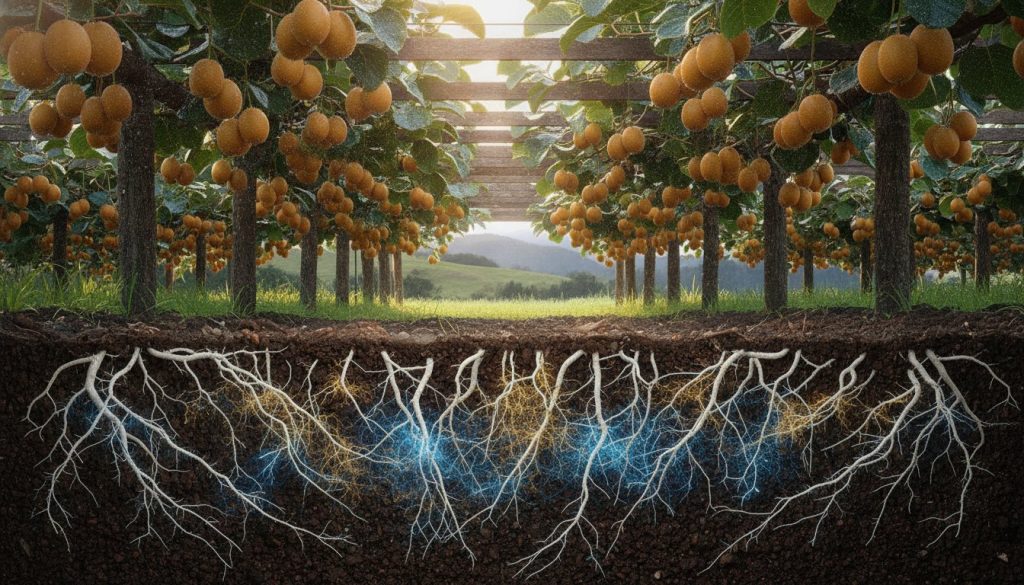
Success in the 2026/27 season isn’t found in the volume of fertiliser you apply, but in the microbial life you cultivate within your volcanic topsoil. With Zespri Organic SunGold returns forecasted at $181,234 per hectare for the 2025/26 season, the financial stakes for growing organic kiwi fruit have never been higher. Yet, many Bay of Plenty growers find themselves caught between declining soil vitality and the rigorous demands of BioGro audits. You’ve likely noticed that traditional organic inputs often struggle to deliver the nutrient uptake efficiency needed to compete with conventional blocks, especially when managing Psa pressure naturally.
We believe that maintaining a resilient orchard ecosystem requires more than just compliance; it requires a shift toward active soil microbiology. This guide will show you how to master the science of BioGro-certified microbial strategies to maximise your fruit size and dry matter. We’ll examine how specific liquid-based treatments like Quantum Organic-Total® and Quantum-VSC® restore the natural carbon cycle, ensuring your orchard remains both productive and profitable under the new Organic Products and Production Act 2023.
Key Takeaways
- Understand the evolving New Zealand regulatory framework and how to capitalise on the significant market premiums for organic SunGold and Hayward varieties in 2026.
- Master the essential biological science behind growing organic kiwi fruit by fostering a healthy rhizosphere where microbes unlock vital nutrients from volcanic soils.
- Discover how to overcome common yield hurdles by using beneficial microorganisms to establish competitive exclusion against pathogens and natural disease pressure.
- Follow a practical seasonal management calendar that aligns winter soil inoculation with the kiwifruit growth cycle to maximise fruit size and dry matter content.
- Explore the application of BioGro-certified liquid technologies like Quantum Organic-Total® and Quantum-VSC® to enhance root development and build a resilient orchard ecosystem.
The Landscape of Growing Organic Kiwi Fruit in New Zealand (2026)
The 2026 season marks a pivotal shift for Aotearoa’s orchards. With the implementation of the Organic Products and Production Act 2023, the industry has moved beyond simple “chemical-free” claims toward a strictly regulated, high-performance biological model. Growing organic kiwi fruit now requires a sophisticated understanding of soil ecology to meet the mandatory certification standards set for March 2028. While early organic efforts were often passive, modern growers are adopting active microbial management to bridge the yield gap between organic and conventional blocks. It’s no longer enough to simply withhold synthetics; you must actively cultivate the life within your soil.
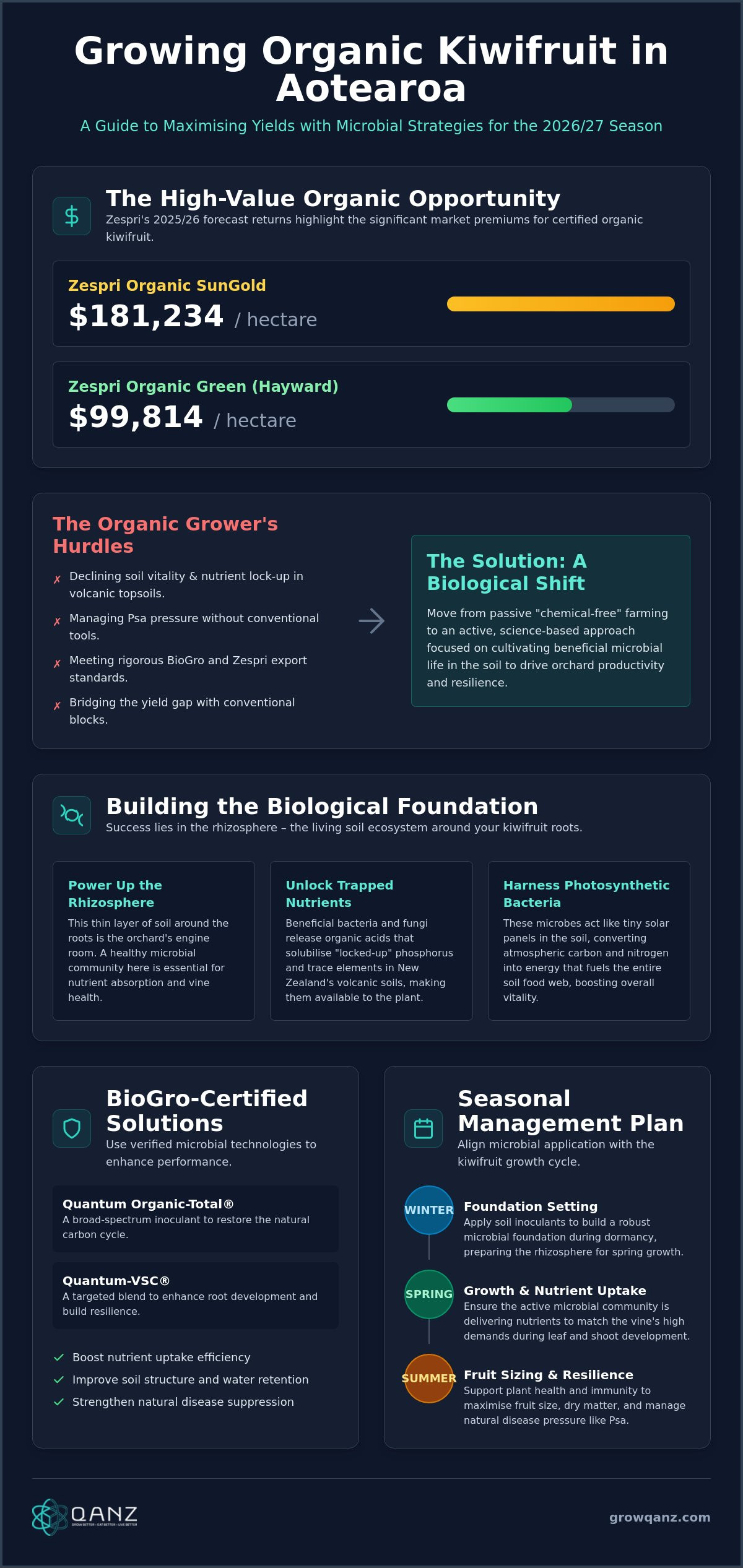
Global demand remains robust, particularly in European and Asian markets where consumers prioritise residue-free produce. Zespri’s 2025/26 forecasts highlight this potential. Organic SunGold is expected to reach $181,234 per hectare, while Organic Green (Hayward) sits at approximately $99,814 per hectare. These figures reflect the premium value of the Kiwifruit when grown under rigorous organic protocols. To capture these returns, growers must transition from a reactive mindset to a proactive biological strategy that focuses on long-term orchard resilience.
The BioGro Standard and Export Requirements
BioGro certification is the primary gatekeeper for New Zealand’s export success. It involves a rigorous three-year conversion period where growers must eliminate synthetic fertilisers and prohibited pesticides. During this transition, maintaining vine health is critical to prevent a “production slump.” Microbial solutions are now recognised under BioGro’s soil management category as essential tools for building soil structure and nutrient cycling. By using verified, 100% natural microbial strains, you ensure compliance with Zespri’s strict export requirements while actively regenerating the land’s natural fertility.
SunGold vs. Hayward: Organic Management Nuances
SunGold varieties are notoriously high-vigour and require precise nutrient timing to avoid canopy imbalances. In an organic context, this means you can’t rely on quick-fix nitrogen. Instead, you must foster a soil environment that releases nutrients in sync with the vine’s needs. While Hayward is generally more resilient, SunGold’s susceptibility to Psa requires a proactive approach to plant immunity. Growing organic kiwi fruit successfully in 2026 involves using biological diversity in the root zone to manage these variety-specific challenges while securing the higher tray returns offered by gold fruit.
Building the Biological Foundation: Microbes and Soil Vitality
The rhizosphere is the engine room of the orchard. This thin layer of soil surrounding the root system is where the most critical biological interactions take place, determining the vine’s ability to absorb nutrients. For those growing organic kiwi fruit, the health of this zone is paramount. Unlike conventional systems that use water-soluble salts to force-feed plants, organic production relies on a complex web of microorganisms to digest organic matter. These microbes convert bound nutrients into plant-available forms, ensuring the vine receives a steady, balanced diet throughout the growing season.
New Zealand’s volcanic soils, particularly in regions like the Bay of Plenty and Waikato, present unique challenges. While naturally rich in minerals, these soils often “lock up” phosphorus, making it unavailable to the plant. Beneficial bacteria and fungi bridge this gap. By secreting organic acids, these microbes solubilise phosphorus and other trace elements, moving them directly into the root system. This biological synergy is what allows organic orchards to maintain high dry matter levels without synthetic boosters. You can learn more about how beneficial soil microorganisms boost plant health through our technical resources.
The Role of Photosynthetic Bacteria
Photosynthetic bacteria are often the unsung heroes of soil vitality. They function as tiny solar panels within the soil profile, capturing energy to synthesise amino acids and sugars from atmospheric carbon and nitrogen. This energy doesn’t just benefit the bacteria; it fuels the entire microbial community, including mycorrhizal fungi. These fungi form a symbiotic relationship with kiwifruit roots, effectively increasing the surface area for water and nutrient absorption. When you follow the best practices for how to grow kiwi fruit, incorporating these biological drivers ensures your vines remain resilient against environmental stress and fluctuating moisture levels.
Restoring Soil Health After Conventional Management
Transitioning an orchard from conventional to organic management often reveals a “microbial void.” Years of synthetic fertiliser application and chemical weeding can leave the soil biologically stagnant. To restore productivity, growers must focus on re-inoculating the soil with diverse microbial strains while simultaneously building Soil Organic Matter (SOM). SOM acts as the “biological housing” that protects microbes from desiccation and temperature extremes. By shifting toward an active biological management strategy, you can rebuild this foundation, leading to improved soil structure, better carbon sequestration, and a more robust orchard ecosystem that supports long-term yield stability.
Overcoming Common Hurdles: Pests, Diseases, and Nutrient Uptake
The belief that growing organic kiwi fruit inevitably leads to lower yields due to pest pressure is a misconception rooted in old school passive farming. When an orchard relies on chemical intervention, the natural immune systems of the vines are often suppressed. In a biological system, the goal is to raise the plant’s brix levels. High brix readings indicate a dense concentration of sugars and minerals, which not only improves fruit quality but also acts as a natural deterrent. Many common pests have simple digestive systems that cannot process the complex proteins found in high brix sap, effectively making the vine an unattractive host.
A robust microbial community provides what scientists call competitive exclusion. By saturating the phyllosphere and rhizosphere with beneficial strains, you leave no room for pathogens like Psa-V to colonise. This biological shield reduces the need for heavy copper applications, which can eventually lead to metal accumulation in our sensitive volcanic soils. Managing disease naturally requires a shift from killing pathogens to outcompeting them through sheer biological volume.
Natural Defence Mechanisms and Systemic Resistance
Microbes do more than just feed the plant; they act as a biological alarm system. Specific beneficial bacteria trigger Induced Systemic Resistance (ISR), a state where the vine’s natural defences are “primed” to respond faster to fungal or bacterial attacks. This internal resilience is far more effective than reactive spraying. By maintaining balanced nutrition and high microbial diversity, you reduce the physiological stress that often precedes a disease outbreak. This approach allows growers to move away from heavy metals and toward a self sustaining orchard ecosystem.
Optimising Nutrient Uptake Efficiency
In an organic block, the total volume of fertiliser applied is less important than the plant’s ability to access it. If your soil biology is dormant, even the most expensive organic compost remains locked and unavailable to the roots. Liquid microbial treatments act as the key to this lock, producing the enzymes necessary to break down complex organic matter into ionic forms the plant can actually absorb. Evaluating the efficiency of these inputs is vital for maintaining margins. Our Quantum Organic-Total: A Cost-Benefit Analysis provides a detailed look at how high performance microbes deliver a return on investment through improved nutrient cycling and reduced waste. Growing organic kiwi fruit successfully requires this level of precision in nutrient management.
The Organic Orchardist’s Calendar: Seasonal Management for High Yields
Successful biological management relies on aligning your interventions with the vine’s natural phenology. Growing organic kiwi fruit is a year-round commitment to soil vitality, where each season presents a specific opportunity to enhance the microbial workforce. While conventional growers might focus on calendar-based chemical applications, the organic orchardist monitors soil temperatures and sap flow to time their biological inputs for maximum efficacy. This methodical approach ensures that nutrients are available exactly when the vine requires them for budburst, fruit set, and sugar accumulation.
Winter and Spring: Setting the Stage
Winter dormancy is the most effective time for soil inoculation. While the vines are quiet, applying liquid microbial treatments to your mulch and leaf litter accelerates the breakdown of organic matter, turning last season’s waste into spring’s plant-available nutrients. This is also the ideal window to integrate compost teas with proprietary microbial inoculants. While compost provides the “biological housing,” liquid inoculants ensure the most effective strains are present in high concentrations. As soil temperatures in the Bay of Plenty and Northland begin to climb toward 12 degrees Celsius, these microbes colonise the emerging root tips, providing a biological shield before the spring growth surge begins.
Summer Resilience and Harvest Quality
The summer months test the resilience of your orchard’s ecosystem. During dry spells, a healthy microbial community improves water use efficiency by maintaining soil structure and enhancing the root system’s reach. This is critical for growing organic kiwi fruit with high dry matter, as any moisture stress during the fruit-sizing phase can negatively impact tray returns. Beneficial bacteria also assist in the transport of calcium and boron, which are essential for firm fruit and a long storage life. Rather than reacting to heat stress with more water alone, focus on maintaining the biological health of the rhizosphere to keep the vines hydrated and productive.
Autumn management should begin before the first bin leaves the orchard. Post-harvest soil recovery is often overlooked, yet it is the most vital step for securing next year’s crop. Applying a final round of microbial solutions after harvest helps the vine store carbohydrates in its permanent wood and prepares the soil for the winter breakdown phase. To ensure your orchard is prepared for the coming season, explore our fruit and nut crop microbial solutions to find the right fit for your seasonal programme.
Optimising Orchard Performance with BioGro Certified Microbial Solutions
Quantum Organic-Total® serves as the essential biological foundation for any high performance orchard programme. This BioGro-certified technology is designed to restore the natural carbon cycle, ensuring that the soil remains a living, breathing asset rather than a sterile medium. For those growing organic kiwi fruit, the primary challenge is maintaining nutrient density as the vines age. Quantum Organic-Total® delivers a diverse consortium of 100% natural microbial strains that actively colonise the root zone, facilitating the consistent release of minerals that are often trapped in volcanic topsoils. This isn’t a temporary boost; it’s a long-term investment in the integrity of your orchard’s ecosystem.
Quantum-VSC® is specifically engineered to address the physiological stress of the vine, particularly during the high-demand summer months. While previous sections discussed the general importance of rhizosphere health, Quantum-VSC® targets root development and environmental resilience. It contains specialised microbes that assist the plant in managing oxidative stress caused by drought or temperature fluctuations. In an organic system where synthetic rescue treatments are prohibited, having a biological “insurance policy” within the soil is vital for protecting your fruit dry matter and ensuring the vines don’t shut down during critical sizing windows.
Liquid microbial soil treatments offer a distinct operational advantage over traditional granular composts or raw manures. They are easily applied through existing fertigation systems or orchard sprayers, providing uniform coverage across the entire block. This ease of use is particularly beneficial for large-scale operations in the Bay of Plenty or Northland, where labour costs and application timing are critical factors. Because these solutions are BioGro-certified, they integrate seamlessly into your audit trail, providing peace of mind during Zespri organic inspections and ensuring full compliance with the Organic Products and Production Act 2023.
Integrating GrowQanz Technologies into Your Regime
Our microbial technologies are designed for compatibility with standard organic management practices. They don’t require specialised equipment; you can apply them alongside existing organic sprays or through standard irrigation lines. For kiwifruit vines, we typically recommend applications during the key growth stages of dormancy, budburst, and post-harvest recovery to ensure the microbial population remains dominant. While this guide focuses on horticulture, the principles of biological soil vitality apply across all agricultural sectors. You can read more in our guide to Microbial Solutions for Field Crops to see how these strategies function at scale.
Technical Support and Verified Results
Transitioning to an active biological management model is a journey that requires technical precision. We provide dedicated support for New Zealand growers to help you calibrate your application rates based on your specific soil tests and orchard history. Evidence-based farming is at the heart of what we do. We rely on proven results and microbial science to help you achieve the resilient, high-yielding orchard you need to thrive in the 2026 market. Enquire about our Fruit & Nut Crop Microbial Solutions today.
Securing the Future of Your Organic Orchard
The path to growing organic kiwi fruit with record-breaking dry matter and resilience begins with a fundamental shift in perspective. You’ve seen how moving from passive compliance to active biological management allows your vines to thrive within the unique constraints of New Zealand’s volcanic soils. By prioritising the health of the rhizosphere and aligning your microbial applications with the seasonal growth cycle, you can outcompete pathogens and unlock nutrients that remain inaccessible in biologically stagnant blocks.
GrowQanz provides BioGro New Zealand certified solutions that represent the leading edge of 100% natural microbial technology. This evidence-based approach is trusted by professional NZ orchardists who require verified results and audit-ready compliance for their export operations. We invite you to request a technical consultation for your organic orchard to see how a structured biological programme can transform your yields. With the right microbial partners in your soil, your orchard is well-positioned to lead the industry in both sustainability and profitability for years to come.
Frequently Asked Questions
Can I use Quantum Organic-Total on BioGro certified kiwifruit orchards?
Yes, Quantum Organic-Total® is fully BioGro New Zealand certified for use on organic orchards. It meets all the rigorous standards required for certified kiwifruit production, ensuring you remain compliant with Zespri’s export protocols. This certification gives growers the confidence to apply high performance microbial technology without risking their organic status or international market access.
How does growing organic kiwi fruit differ from conventional methods regarding yield?
Modern biological management is rapidly closing the yield gap that once existed between organic and conventional systems. When growing organic kiwi fruit with a focus on microbial density, success depends on the efficiency of nutrient cycling in the rhizosphere rather than the volume of synthetic inputs. Orchards using active biological strategies often achieve tray numbers and fruit sizes that rival conventional blocks.
What are the best microbial solutions for managing Psa in organic orchards?
Quantum-VSC® and Quantum Organic-Total® are the most effective biological tools for managing Psa through the principle of competitive exclusion. By saturating the vine’s root zone and surfaces with beneficial microbial strains, you leave no room for the Psa-V pathogen to colonise. This approach builds the vine’s natural systemic resistance without the soil toxicity issues associated with repeated copper applications.
Do liquid microbial soil treatments work better than organic compost alone?
Liquid microbial treatments provide a concentrated and targeted inoculation that compost alone simply cannot deliver. While compost is an excellent source of organic matter, it often lacks the specific, high count microbial strains required for rapid nutrient cycling. Liquid solutions ensure these beneficial organisms reach the root zone immediately to unlock phosphorus and other minerals bound in volcanic soils.
How often should I apply microbial inoculants to my kiwifruit vines?
We recommend at least three applications per season to maintain a dominant and effective microbial population in your soil. The most critical timing windows are during winter dormancy for soil recovery, at spring budburst to support early growth, and post-harvest to prepare the vines for the following year. Consistent application ensures your orchard ecosystem remains resilient against environmental fluctuations.
Can I apply biological treatments through my existing irrigation system?
Yes, our liquid microbial solutions are designed for seamless integration with standard fertigation and irrigation systems. Because these products are finely filtered, they won’t clog emitters or filters, making growing organic kiwi fruit at scale much more labour efficient. This method ensures uniform delivery of microbes across the entire orchard block, reaching the root zone where they are needed most.
Is it possible to achieve high dry matter in organic SunGold kiwifruit?
Achieving high dry matter in organic SunGold is entirely possible when you prioritise the biological health of your soil. Beneficial microbes facilitate the uptake of essential minerals like calcium and boron, which are the primary drivers of fruit density and storage life. A robust microbial programme ensures your vines have the metabolic energy required to maximise sugar accumulation and fruit quality.
What is the cost-benefit ratio of using microbial stimulants in organic farming?
The cost-benefit ratio is highly positive when you account for improved nutrient uptake efficiency and the increase in premium tray returns. By using microbial stimulants, you reduce the volume of expensive organic fertilisers that would otherwise remain unabsorbed by the plant. The resulting increase in fruit size and dry matter directly translates to higher Orchard Gate Returns for the grower.
