
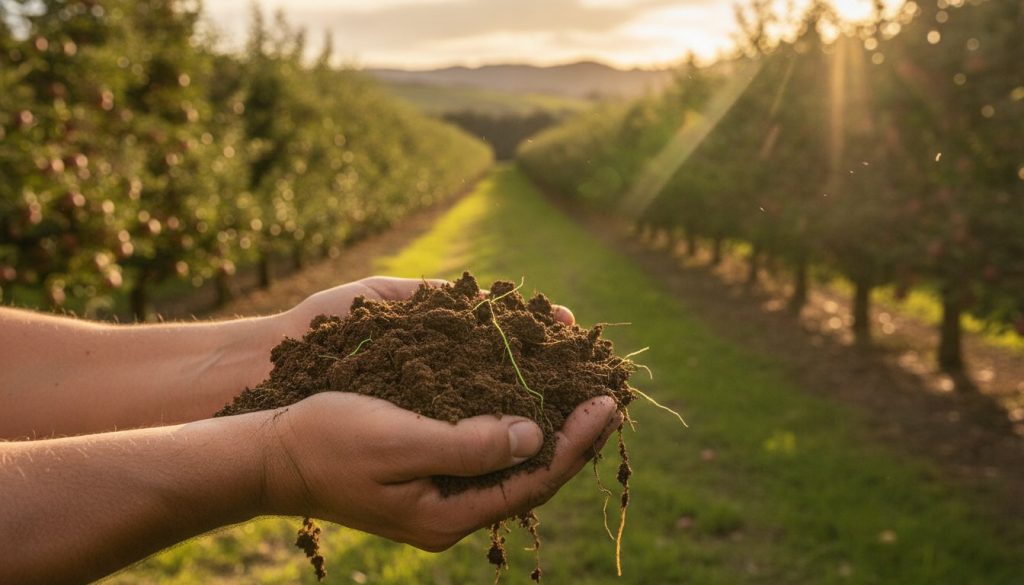
The longevity of your orchard isn’t determined by the volume of synthetic fertiliser you apply; it’s dictated by the strength of your microbial bank account. As we move through 2026, New Zealand growers are facing a critical turning point where traditional high-input methods are yielding diminishing returns against a backdrop of soil compaction and rising costs. Effective orchard soil health management has shifted from a narrow focus on chemistry to a deep investment in applied biology. By prioritising the living organisms beneath the surface, you can reverse the damage caused by heavy machinery and restore the natural vitality of your land.
You likely recognise that the current cycle of increasing inputs for stagnant yields isn’t sustainable for your bottom line or the environment. This guide will show you how to transform your orchard floor into a self-sustaining ecosystem that maximises tree longevity and fruit quality through advanced microbial management. We’ll explore the latest regulatory shifts in the ACVM Amendment Bill, the role of BioGro certified technologies like Quantum Organic-Total®, and a clear, actionable plan to build resilient trees that can withstand the unique challenges of the Kiwi landscape.
Key Takeaways
- Understand why perennial systems require a specialised biological strategy to combat “soil fatigue” and maintain long-term productivity in New Zealand blocks.
- Identify the critical physical and chemical indicators, such as infiltration rates and Cation Exchange Capacity (CEC), that signal the true vitality of your soil.
- Develop a structured, phased plan for orchard soil health management that addresses structural compaction before restoring the microbial ecosystem.
- Learn how to leverage “competitive exclusion” to build a natural microbial barrier against root-borne pathogens like Phytophthora.
- Discover how BioGro certified liquid inoculants, such as Quantum Organic-Total®, can be easily integrated into existing irrigation systems to enhance nutrient cycling.
The Foundation of Orchard Longevity: Why Soil Health Matters for Perennials
Perennial crops like apples, kiwifruit, or cherries aren’t like annual wheat or clover paddocks; they don’t get a reset button at the end of the season. A robust understanding of what is soil health in an orchard must account for the fact that these trees inhabit the same square metre of earth for decades. While an annual crop grower can cultivate and rotate to manage pests, an orchardist must maintain a stable, living environment that supports a massive root system year after year. This long-term commitment makes orchard soil health management a pursuit of ecological balance rather than simple chemical correction.
Many aging New Zealand orchards, particularly in established regions like Hawke’s Bay or Tasman, suffer from “soil fatigue.” This isn’t merely a lack of nitrogen; it’s a complex biological decline where the soil becomes hostile to its own inhabitants. Pathogens accumulate while the beneficial microbial populations that once suppressed them dwindle. This biological imbalance directly impacts the bottom line, leading to smaller fruit size, inconsistent colour, and reduced storage life, which can disqualify premium exports in 2026’s competitive global markets. The engine room for this productivity is the rhizosphere, the narrow zone of soil surrounding the roots where microbes and plants exchange nutrients for carbon.
The Perennial Mindset: Thinking in Decades, Not Seasons
Established fruit and nut blocks often develop “monoculture soil” profiles. Because the same species occupies the site for thirty years, the soil biology becomes specialised and often lacks the diversity needed for resilience. Relying on chemical quick fixes to mask these issues often leads to long-term degradation. Synthetic fertilisers can provide a temporary growth spurt but frequently bypass the natural symbiotic relationships in the rhizosphere, eventually leaving the soil structure brittle and the trees vulnerable to drought. True longevity requires a strategy that protects the soil’s physical integrity and biological diversity over the entire life of the tree.
Biological vs. Chemical Fertility
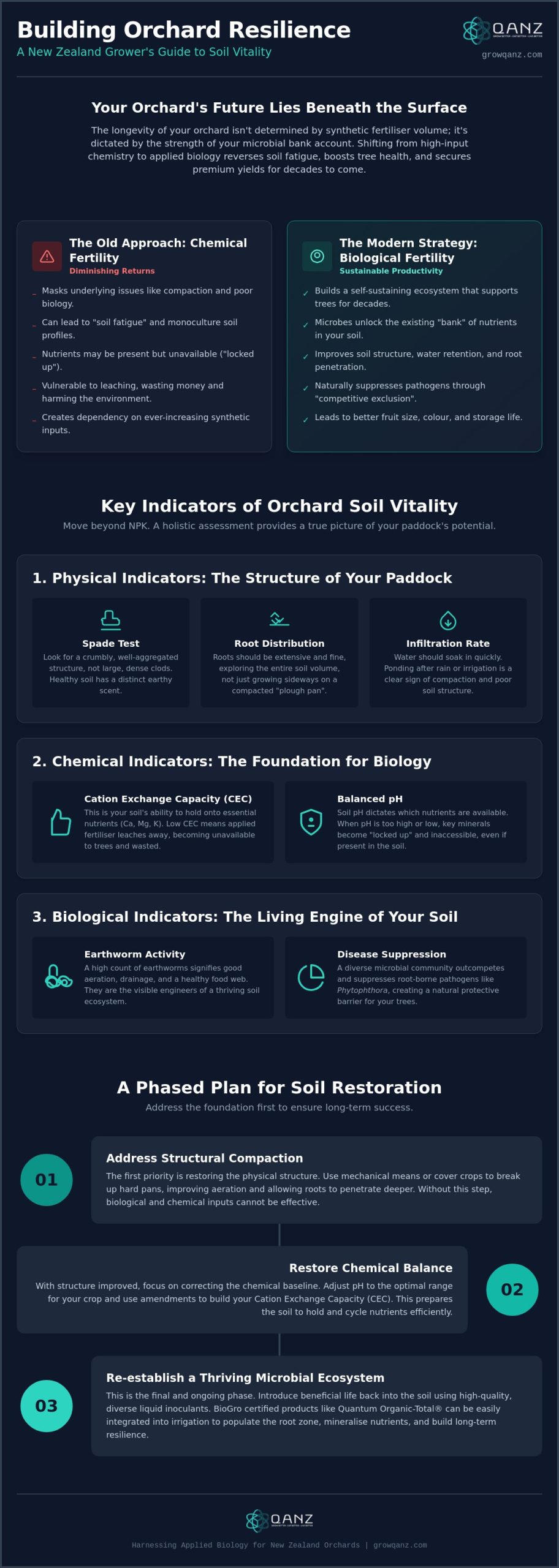
There’s a fundamental difference between nutrient presence and nutrient availability. Your soil test might show high levels of phosphorus, yet your trees could be starving for it if the biology isn’t there to solubilise those minerals. Microbes act as the primary agents for mineralising nitrogen and making locked-up elements accessible to the root system. In the context of New Zealand silt and clay loams, soil tilth refers to the physical condition of the soil in relation to its fitness for tree growth, characterised by a crumbly, well-aggregated structure that facilitates unhindered root penetration and optimal gas exchange. By shifting focus to biological fertility, growers can unlock the existing “bank” of nutrients already present in their soil.
Measuring Success: Key Indicators of Orchard Soil Vitality
Effective orchard soil health management requires looking past the surface and moving beyond simple NPK measurements. While traditional soil tests focus on chemical concentrations, a holistic assessment in 2026 evaluates physical and biological health to provide a complete picture of paddock potential. Identifying the challenges in orchard soil health often begins with a practical “spade test” in the tree line. By digging a 30cm cube of soil, you can immediately assess root distribution, aggregate structure, and earthworm activity. A healthy block should have a crumbly texture and a distinct earthy scent, indicating active aerobic decomposition and high microbial life.
Chemical markers still play a vital role, but they must be interpreted through the lens of availability. Cation Exchange Capacity (CEC) is a critical indicator of your soil’s ability to hold and release essential nutrients like calcium, magnesium, and potassium. If your CEC is low, even the most expensive fertiliser programme will result in leaching and waste. Maintaining a balanced pH is equally important, as it dictates the solubility of minerals. When soil becomes too acidic or alkaline, nutrients become “locked,” regardless of how much you apply. Monitoring these levels ensures your chemical baseline supports, rather than hinders, biological activity.
Physical Indicators: The Structure of Your Paddock
Heavy machinery used for harvesting and spraying frequently creates a “plough pan” or compaction layer that restricts root growth. This physical barrier prevents water from moving through the profile, leading to poor infiltration rates. During dry New Zealand summers, poor infiltration means irrigation water often sits on the surface or runs off, leaving trees stressed despite your best efforts. Improving soil porosity through biological activity or targeted mechanical aeration ensures that roots have access to the oxygen they need to drive nutrient uptake. High aggregate stability, where soil clumps resist breaking down in water, is your best defence against the erosion that claims millions of tonnes of New Zealand soil annually.
Biological Markers: The Invisible Workforce
The invisible workforce of microbes is your primary defence against soil-borne pathogens. High microbial biomass and a balanced fungal-to-bacterial ratio indicate a stable, resilient ecosystem. Fungi are particularly important for their production of glomalin, a sticky protein that acts as “biological glue” to bind soil particles into stable aggregates. When you receive a professional biology report, look for high species diversity. This diversity ensures that nutrient cycling continues even under environmental stress. For growers aiming to improve these biological markers, integrating fruit and nut crop microbial solutions into existing systems offers a verified method for restoring life to depleted blocks.
A Step-by-Step Guide to Orchard Soil Health Management
Transitioning from measuring soil vitality to active restoration requires a structured, multi-phase approach. Successful orchard soil health management isn’t achieved through a single application; it’s a systematic process of identifying constraints and then methodically rebuilding the biological infrastructure. By following a chronological plan, you can ensure that every intervention, whether mechanical or biological, supports the long-term goal of a self-sustaining ecosystem. This sequence is particularly vital in New Zealand’s diverse climates, where soil types can vary significantly from the stony alluvial flats of Central Otago to the heavy clays of Northland.
Step 1: Assessing the Microbial Bank Account
Before any physical work begins, you must establish a baseline through comprehensive soil and leaf tissue analysis. This data allows you to identify specific nutrient gaps and map the orchard to target high-priority blocks that exhibit low vigour or poor fruit set. Mapping these areas often reveals a strong correlation between tree decline and historical soil compaction. By understanding exactly what is missing from your “microbial bank account,” you can avoid the waste of unnecessary inputs and focus your resources on the areas that will provide the highest return on investment.
Step 2: Restoring Biology After Fumigation or Heavy Input Use
A common challenge for New Zealand growers is the biological “desert” left behind after soil fumigation or years of intensive chemical use. Sterilised soil is highly vulnerable to rapid recolonisation by opportunistic pathogens, as the natural competitors have been eliminated. There is a critical window following these treatments where introducing beneficial microbes is essential to prevent disease re-entry. Utilising BioGro certified technologies like Quantum Organic-Total® allows you to re-establish a diverse microbial community before harmful fungi can take hold. Liquid microbial formulations penetrate the soil profile and reach the root zone more effectively than granules, ensuring the beneficial strains are delivered directly to the rhizosphere where they can immediately begin supporting tree health.
Step 3: Orchard Floor and Tree-Line Management
The management of the orchard floor is a balancing act between providing ground cover and minimising competition for young trees. While permanent sod or diverse cover crops improve soil structure and water retention, they must be managed to ensure they don’t rob the trees of essential moisture during the height of summer. This practical guide to orchard soil management highlights how organic mulches can suppress weeds while slowly contributing to the soil’s carbon pool. You can further enhance this process by using microbial treatments to accelerate the breakdown of orchard prunings and leaf litter. This turns what was once waste into a valuable source of humus, further strengthening the soil’s physical and biological resilience.
Harnessing Biology for Disease Suppression and Nutrient Efficiency
Harnessing the biological potential of your paddock is the most effective way to reduce reliance on synthetic interventions. Advanced orchard soil health management relies on the principle that a diverse microbial community creates a hostile environment for pathogens while simultaneously streamlining nutrient delivery. These beneficial organisms don’t just exist in the soil; they actively colonise the root surface, forming a living shield that protects the tree from the ground up. By fostering this invisible workforce, you move beyond treating symptoms and begin addressing the root cause of tree decline.
Natural Defences Against Soil-Borne Pathogens
Competitive exclusion is the primary mechanism at play in a healthy rhizosphere. When beneficial microbes occupy the available space and consume the limited resources surrounding the roots, they leave no room for harmful pathogens like Phytophthora to establish. Specific microbial strains, including photosynthetic bacteria, also produce natural metabolites that act as biological buffers, suppressing the growth of root rot fungi. This biological presence triggers Systemic Induced Resistance (SIR), a process that essentially primes the tree’s own immune system. This heightened state of readiness allows the tree to respond more rapidly to environmental stressors and disease pressure across the entire canopy, from the roots to the highest fruit-bearing branches.
Maximising Nutrient Uptake and Water Efficiency
Microbes function as precision delivery agents for essential micronutrients that are often locked in the soil profile. Elements like Zinc and Boron, which are critical for fruit set and cell wall integrity in New Zealand stone fruit and pipfruit, are frequently present but remain immobile without biological intervention. Microbial activity solubilises these minerals, making them available for uptake even in challenging soil conditions. Nut crop growers facing similar productivity plateaus can explore how increasing nut yield with soil biology delivers measurable gains through the same principles of microbial nutrient unlocking. To understand the economic impact of this improved efficiency, you can review our Quantum Organic-Total cost-benefit analysis, which details how biological restoration pays dividends through reduced input waste and improved tree vigour.
Increasing soil organic matter through microbial action also enhances the “sponge effect” of your soil. Beneficial strains help build stable humus, which can hold significantly more water than mineral soil alone. This increased water-holding capacity is a vital insurance policy against the dry spells that increasingly affect New Zealand’s eastern growing regions. By investing in these natural processes, you ensure your trees remain resilient and productive throughout the season, regardless of external pressures.
Explore our Fruit & Nut Crop Microbial Solutions to start building a more resilient biological barrier in your orchard today.
Implementing a Microbial Strategy with GrowQanz Solutions
Integrating biological tools into a commercial operation shouldn’t be complicated. GrowQanz provides a structured framework for orchard soil health management through BioGro certified technologies that are easy to deploy and scientifically verified. Quantum Organic-Total® serves as a holistic restorer, re-establishing the microbial diversity required for efficient nutrient cycling and long-term soil vitality. For growers focusing on young blocks or those facing environmental stress, Quantum-VSC® offers targeted support for root development and enhanced resilience against drought and disease.
Why BioGro Certified Solutions Matter for NZ Orchards
New Zealand’s reputation for premium exports relies on the integrity of our production systems. Using 100% natural microbial strains ensures that your inputs align with the strict requirements of high-value international markets. BioGro certification provides the peace of mind that comes with verified strains and a complete lack of synthetic interference. This level of transparency is equally important for adjacent sectors, as seen with microbial solutions for field crops, where soil vitality is the foundation of commercial productivity. By choosing certified solutions, you protect your market access while building a more resilient paddock.
Practical Application and Technical Support
One of the primary advantages of GrowQanz solutions is their liquid format. This allows for seamless integration into existing fertigation systems, ensuring that microbes are delivered directly to the root zone without the need for extra labour or specialised equipment. Timing is critical for success. Applying treatments during periods of active root growth or immediately following soil disturbances like fumigation maximises the colonisation of beneficial strains. To achieve the best results, consider these practical steps:
- Strategic Timing: Apply treatments during the spring and autumn root flushes to support canopy development and post-harvest recovery.
- Fertigation Integration: Use your existing irrigation infrastructure to ensure even distribution across the entire block.
- Customised Planning: Work with GrowQanz technical experts to adjust dosages based on your specific soil tests and tree vigour.
Our technical team provides the professional support needed to customise an orchard plan that accounts for your unique soil types and crop requirements. This partnership ensures that your investment in biology translates into tangible improvements in fruit quality and tree longevity. By moving away from a reliance on chemistry and embracing a biological strategy, you secure the future of your orchard for decades to come.
Rebuilding Your Paddock’s Natural Vitality for the Decades Ahead
The transition toward a biologically active orchard is a strategic investment in the future of your land. By moving away from short-term chemical fixes and prioritising a living rhizosphere, you can effectively combat soil fatigue and ensure consistent fruit quality. Successful orchard soil health management requires a disciplined approach to restoring microbial diversity and improving soil structure. This guide has outlined how identifying limiting factors and introducing beneficial strains can create a resilient environment that supports tree health even under environmental stress.
GrowQanz provides the BioGro New Zealand Certified technologies and technical microbial expertise required to implement these changes with confidence. Our solutions are already used by professional NZ orchardists to restore soil vitality and enhance plant resilience through verified, 100% natural processes. We understand the specific challenges of the Kiwi landscape and offer the stable, evidence-based partnership needed to drive long-term productivity.
Optimise your orchard soil health with GrowQanz – Enquire today
Your soil is the foundation of your success. By working with nature rather than against it, you can build a more profitable and sustainable orchard for the generations to follow.
Frequently Asked Questions
How long does it take to see results from orchard soil health management?
You’ll often see measurable improvements in root vigour and nutrient uptake within the first growing season of a biological programme. While rebuilding physical soil structure is a longer process, the microbial activity in the rhizosphere increases rapidly after the initial applications. Most New Zealand growers report more significant gains in tree resilience and fruit consistency by the second or third year of consistent management.
Can I use microbial inoculants alongside my regular fertilising schedule?
You can absolutely integrate microbial treatments into your existing nutrient programme. These beneficial organisms actually improve the efficiency of your fertilisers by mineralising nutrients and reducing leaching. By prioritising orchard soil health management, you ensure that the chemical inputs you do apply are made bioavailable to the tree rather than remaining locked in the soil profile.
What is the best way to apply liquid microbial treatments in an established orchard?
The most efficient method is through your existing fertigation or irrigation system. Because GrowQanz solutions come in a stable liquid format, they distribute evenly through the soil profile and reach the root zone where they’re needed most. This approach ensures the microbes are delivered directly into the active rhizosphere without the need for additional labour or specialised machinery.
Is orchard soil restoration possible after decades of chemical use?
Restoration is entirely possible, even in older blocks that have experienced decades of intensive chemical inputs or soil fatigue. The process requires a phased approach that identifies current limiting factors before reintroducing the biological diversity that has been depleted. Rebuilding the microbial bank account is the only verified way to restore the natural vitality and long-term productivity of aging land.
How does BioGro certification affect the export value of my fruit?
BioGro certification provides a verified mark of integrity that is essential for accessing high-value international markets. Many global retailers in 2026 demand proof of sustainable, natural practices before they’ll stock New Zealand produce. Having a certified biological programme ensures your fruit meets these stringent standards, often resulting in premium pricing and more secure supply contracts.
Will managing soil health help my trees survive drought conditions better?
Effective orchard soil health management significantly improves drought resilience by increasing the soil’s water-holding capacity. Healthy soil with high organic matter acts like a sponge, retaining moisture for longer during dry New Zealand summers. Additionally, beneficial microbes encourage deeper, more extensive root systems, allowing trees to access moisture reserves that are unreachable in compacted or depleted soils.
Can microbial treatments help with specific diseases like root rot?
Microbial treatments are a highly effective tool for suppressing soil-borne pathogens like Phytophthora through the mechanism of competitive exclusion. By colonising the root zone with beneficial strains, you create a biological barrier that prevents harmful fungi from establishing. This natural defence reduces your reliance on chemical fungicides and triggers the tree’s own systemic induced resistance to disease.
Do I need special equipment to apply GrowQanz products?
No special equipment is required to implement our microbial technologies. GrowQanz products are designed for compatibility with standard orchard infrastructure, including fertigation units and most commercial sprayers. This allows professional growers to adopt advanced biological strategies seamlessly without the need for capital investment in new machinery or significant changes to their daily operations.
