

The granules sitting on your soil surface might be the very thing standing between your paddock and its true biological potential. While dry applications are a traditional staple from Northland to Southland, they often fail to deliver the immediate biological activity required to reverse plateauing yields. You’ve likely noticed that despite increasing your synthetic fertiliser spend, soil compaction remains a stubborn hurdle and drought stress continues to bite. This is particularly critical as New Zealand growers adapt to the 2026 Water Services Amendment Regulations, which place a higher premium on efficient nutrient management. Integrating a liquid microbial soil treatment allows for deeper penetration, ensuring that beneficial biology reaches the root zone where it is most effective.
In this guide, we explore why liquid biological delivery is the superior choice for restoring the total soil food web and improving nutrient bioavailability. We will examine how liquid application ensures instant rhizosphere colonisation, helping you maintain BioGro compliance while securing a better ROI on your total inputs. By moving beyond the limitations of dry pellets, you can foster a more resilient, aerated soil structure that supports long term sustainability. We will break down how these solutions integrate into your existing systems to protect delicate biology from the harsh effects of our local UV environment.
Key Takeaways
- Learn why liquid delivery provides immediate rhizosphere colonisation, avoiding the dormancy and uneven distribution issues common with granular alternatives.
- Understand how a liquid microbial soil treatment ensures that beneficial biology is active the moment it touches the soil, providing a more reliable return on your input investment.
- Discover the unique benefits of photosynthetic bacteria in Quantum Organic-Total®, which act as primary producers to fix carbon and nitrogen directly at the root level.
- Identify the best practices for applying biologicals in New Zealand, including how to time applications to account for local UV intensity and soil moisture.
- Explore how integrating BioGro certified technologies can help restore degraded soil structure and reduce your long-term dependency on synthetic NPK programmes.
The Biological Shift in New Zealand Agriculture
Decades of intensive production across New Zealand’s diverse landscapes have left a distinct mark on soil health. While high-analysis synthetic fertilisers once drove the “Green Revolution” in our paddocks, the long term cost to soil carbon has become impossible to ignore. Many growers now face a frustrating reality where traditional NPK programmes deliver diminishing returns. This shift isn’t just about ethics; it’s about the bottom line. Soil health has transitioned from a niche organic concept into a core commercial KPI for any serious agricultural operation. As New Zealand moves toward more regenerative practices, the focus is shifting from simply feeding the plant to nourishing the complex ecosystem that supports it.
Addressing the Plateau: Why More Synthetic Input Isn’t the Answer
Increasing the volume of synthetic inputs often ignores the “Law of the Minimum.” If soil biology is the limiting factor, adding more nitrogen won’t fix the problem. High-salt fertilisers can actually be detrimental, often dehydrating the very beneficial rhizospheric or endophytic microbes that plants rely on for nutrient uptake. When these native populations decline, physical soil structure suffers. This leads to the compaction and poor aeration so common in heavily worked ground from the Waikato to the Canterbury Plains. Transitioning to a liquid microbial soil treatment offers a methodical way to re-establish these vital colonies and restore the natural balance of the land. A healthy soil structure is the only true foundation for yield stability, especially when facing the increasing frequency of drought stress in broadacre and orchard crops.
The Rise of BioGro Certified Inputs
Modern environmental compliance is no longer a distant concern for New Zealand farmers. With the 2026 Water Services Amendment Regulations setting stricter standards for soil and water quality, the demand for verified sustainable inputs has surged. BioGro certification provides a trusted framework for land stewardship, ensuring that products are 100% natural and free from synthetic interference. Using certified biologicals isn’t just about meeting regulations; it’s about building a resilient asset for the future. These solutions allow growers to reduce their reliance on synthetic chemicals while maintaining the productivity required to compete on the global stage. By integrating a high-quality liquid microbial soil treatment into their existing programmes, growers can achieve higher nutrient bioavailability and long term sustainability without sacrificing their ROI.
Liquid vs. Granular: The Physics of Rhizosphere Colonisation
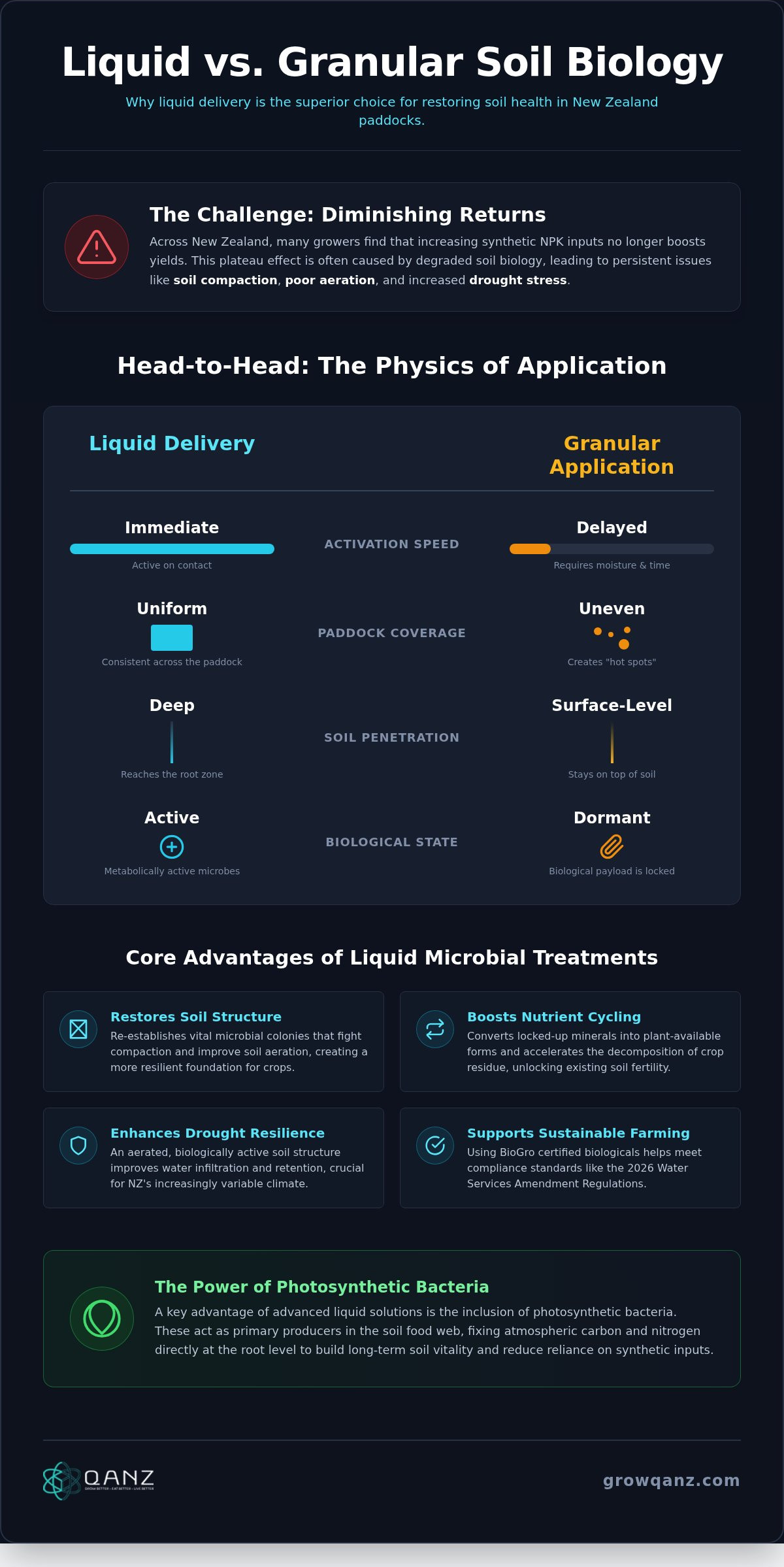
The physical form of a soil input dictates how quickly it integrates into the subterranean ecosystem. Granular microbial products rely on a solid carrier, which often requires specific soil moisture and temperature thresholds to dissolve and release its biological payload. This creates an “activation lag” that can last days or even weeks, depending on New Zealand’s often unpredictable weather patterns. In contrast, a liquid microbial soil treatment bypasses these mechanical barriers. By using water as the primary transport medium, the microbes are delivered in a metabolically active state, ready to begin colonising the rhizosphere the moment they touch the earth.
Immediate Bioavailability and the Root Zone
Rhizosphere penetration is a matter of physics. While a granule sits on the surface waiting for the next rain event, a liquid solution moves through the soil’s macropores and micropores via capillary action and gravity. This ensures that the beneficial organisms reach the area immediately surrounding the root, which is where the most critical biological interactions occur. These active populations are essential for accelerating residue decomposition and nutrient cycling, converting locked-up minerals into plant-available forms. Liquid delivery also solves the problem of uneven distribution. Granules can create “hot spots” of high microbial density while leaving other areas completely untreated; however, a liquid application provides a uniform biological footprint across the entire paddock. This level of consistency is vital for maintaining steady growth rates and avoiding the patchy performance often seen in degraded soils.
Integration with Existing Irrigation and Fertigation
Efficiency is a cornerstone of modern New Zealand agriculture. One of the most significant advantages of liquid biologicals is their ability to be “fertigated” through existing infrastructure. Whether you’re operating centre-pivots in Canterbury or drip lines in a Hawke’s Bay orchard, liquid microbes can be injected directly into your irrigation stream. This method reduces the need for extra tractor passes, which saves on fuel and prevents further soil compaction. It’s a streamlined approach that fits seamlessly into your current management cycle. Ensuring microbial survival during this process is straightforward, as the liquid medium protects the consortia from desiccation until they are safely tucked into the soil profile. Exploring field crop microbial solutions can help you determine how to best utilise your existing equipment to deliver these high-performance biologicals. By combining your nutrient and biological applications, you ensure that every drop of water helps build long term soil vitality and resilience.
Beyond Standard Probiotics: The Role of Photosynthetic Bacteria
While many biological products focus on lactic acid bacteria or simple decomposers, the inclusion of photosynthetic bacteria marks a significant advancement in soil science. These organisms act as the “primary producers” within the subterranean ecosystem. Unlike most soil microbes that rely on existing organic matter for energy, photosynthetic bacteria can harness light and chemical energy to create new carbon compounds. This unique capability allows them to function as a foundational energy source for the entire microbial community. Integrating these organisms through a liquid microbial soil treatment ensures they are delivered in a state where they can immediately begin driving these complex metabolic processes.
The Photosynthetic Advantage in NZ Soils
Photosynthetic bacteria serve as the primary engine of the soil food web, harnessing energy to drive nutrient cycling and carbon sequestration. In New Zealand, where soil compaction from heavy stock or intensive cropping is a frequent challenge, these bacteria play a critical role in restoring structure. They release specific microbial exudates, essentially biological glues, that bind soil particles together into stable aggregates. This process improves pore space, which enhances aeration and water infiltration from the winter-wet paddocks of Southland to the volcanic loams of the Waikato. Even in low-light conditions or beneath a dense crop canopy, these versatile strains continue to fix nitrogen and carbon directly at the root level, providing a steady stream of nutrition that synthetic NPK programmes often fail to sustain.
Quantum Organic-Total®: A Multi-Strain Approach
The strength of Quantum Organic-Total® lies in its sophisticated microbial consortium rather than a single-strain focus. Restoring the “Total Soil Food Web” requires a diverse workforce that can handle the varied environmental stressors common across New Zealand. A multi-strain approach is more effective than isolated probiotics because different organisms support one another through cross-feeding and synergistic metabolic pathways. This diversity offers several practical benefits for growers:
- Natural Pathogen Suppression: A robust, diverse microbial population leaves little room for soil-borne pathogens to establish, reducing the need for chemical interventions.
- Enhanced Resilience: Diverse consortia are better equipped to survive temperature fluctuations and moisture stress, ensuring the liquid microbial soil treatment remains effective through seasonal shifts.
- Improved Nutrient Uptake: Different strains specialise in solubilising various minerals, ensuring a more balanced delivery of phosphorus, potassium, and trace elements to the plant.
By utilising a verified, BioGro certified consortium, growers can build a self-sustaining biological system. This scientific innovation moves beyond temporary fixes, focusing instead on long term ecological health and consistent crop performance. The result is a more resilient paddock that can withstand the pressures of modern production while maintaining its natural vitality.
Best Practices for Applying Liquid Biologicals in the Paddock
Maximising the efficacy of a liquid microbial soil treatment depends on understanding the biological window of opportunity. Unlike synthetic salts, which are chemically stable, microbial consortia are living entities that respond to their environment. In the New Zealand context, where UV intensity is high and weather shifts are rapid, timing becomes a critical factor for success. Professional growers must align application with the natural rhythms of the soil and the specific needs of the crop to ensure the highest possible colonisation rates.
Strategic Application Timing
Microbial survival is highest when applications occur during periods of low UV radiation. Early morning or late evening are the preferred windows, as this protects the organisms from desiccation and light-induced stress until they can migrate into the soil profile. Soil moisture is equally vital; applying to bone-dry ground can trap microbes on the surface. Ideally, treatment should follow a light rain event or be integrated into a scheduled irrigation cycle to facilitate movement into the rhizosphere. Aligning these treatments with high-demand growth stages, such as root development or fruit set, ensures the biology is present when the plant’s nutrient requirements are at their peak.
Restoration After Fumigation and Heavy Chemical Use
Chemical fumigation, while effective at targeting specific pathogens, creates a “biological vacuum” that leaves the land vulnerable. Without a diverse microbial hierarchy, the first organisms to re-occupy the soil are often opportunistic pathogens. Restoring this balance requires a deliberate re-inoculation strategy. Quantum-VSC® is specifically formulated to help growers rebuild these populations, particularly in high-value vegetable crops in regions like Pukekohe or Horowhenua. By introducing a complex consortium immediately after the legal waiting period, you can speed up soil recovery and ensure that the next crop enters a supportive biological environment. This proactive approach prevents the “yield drag” often associated with sterile or degraded soils.
Verifying the success of your biological programme is essential for long-term progress. Monitoring brix levels in plant sap provides an immediate indicator of improved nutrient uptake and photosynthetic efficiency. Additionally, regular soil testing that includes biological markers can track the restoration of the total soil food web over time. For those managing intensive systems, choosing the right vegetable crop microbial solutions is the first step toward reclaiming soil vitality and reducing reliance on corrective chemical inputs. By focusing on these practical application standards, you ensure that every litre of product contributes to a more resilient and productive farming operation.
Cultivating Long-Term Vitality with GrowQanz Solutions
Sustainable agriculture in New Zealand requires a shift from short term corrections to a strategy of long term vitality. By positioning Quantum Organic-Total® as the cornerstone of your biological programme, you’re investing in the structural and microbial integrity of your land. This isn’t just about environmental stewardship; it’s a calculated economic decision. Reducing reliance on synthetic fertilisers lowers input costs while improving the nutrient density and quality of your yields. A high quality liquid microbial soil treatment provides the consistent results needed to transition from simple soil restoration to peak commercial productivity. It’s a principled approach that prioritises the health of the land alongside the profitability of the operation.
The Quantum Organic-Total® Advantage
This range offers a distinct biological edge by delivering a metabolically active consortia that begins working immediately upon application. Integrating these solutions into a 12-month farm management plan allows you to support the soil through every seasonal challenge, from the spring flush to winter dormancy. For a deeper look at the financial implications, read our Quantum Organic-Total: A Cost-Benefit Analysis for New Zealand Growers. This methodical approach ensures that your biological inputs aren’t just an expense, but a verified driver of paddock performance and BioGro compliant sustainability. By focusing on the total soil food web, you create an environment where plants can reach their full genetic potential without heavy synthetic interference.
Partnering for Sustainable Growth
GrowQanz isn’t just a product supplier; we’re a scientific partner with a deep connection to the New Zealand field. We understand that a dairy farm in Southland faces different biological pressures than a kiwifruit orchard in the Bay of Plenty. Our technical expertise helps you interpret soil data and refine your application strategies for maximum efficacy. Ensuring your land remains productive for the next generation of growers requires a commitment to natural harmony and evidence based progress. We provide the transparent, professional guidance needed to navigate modern environmental standards with confidence. It’s time to move beyond the limitations of granular inputs and embrace a more efficient, biological first way of working. Contact the GrowQanz team to organise a soil strategy for your paddocks and begin the journey toward true subterranean health.
Securing the Biological Future of New Zealand Soils
The transition toward biological first management isn’t just a trend; it’s a necessary evolution for the resilience of New Zealand agriculture. By prioritising the physics of rhizosphere colonisation through a high performance liquid microbial soil treatment, you ensure that beneficial biology is active the moment it reaches the root zone. This approach bypasses the dormancy issues of granular products and provides a uniform biological footprint across your paddocks, from the intensive market gardens of Pukekohe to the broadacre farms of Canterbury.
GrowQanz is committed to supporting this shift with scientific technical support and solutions that are field tested on local vegetable and broadacre crops. Our BioGro NZ certified range, including Quantum Organic-Total®, offers a verified pathway to restore soil structure and improve nutrient bioavailability. As you look toward the next season, focusing on the total soil food web will help you maintain productivity while meeting modern environmental standards.
Explore the GrowQanz range of BioGro certified microbial solutions and take the first step toward a more sustainable and profitable future for your land. With the right biological partners, you can build a legacy of soil health that lasts for generations.
Frequently Asked Questions
Can I mix liquid microbial soil treatments with my standard liquid fertilisers?
Yes, you can often mix a liquid microbial soil treatment with standard liquid fertilisers, provided the pH remains within a compatible range. It’s essential to avoid high-salt concentrations in the tank mix, as these can dehydrate the living biology. We recommend a jar test before full scale application to ensure physical compatibility. Integrating microbes with nutrients often improves the efficiency of the fertiliser by making the minerals more bioavailable to the plant roots.
How often do I need to apply liquid microbes to see a change in soil structure?
Visible changes in soil structure typically appear within one to two growing seasons of consistent application. For degraded paddocks with high compaction, we suggest an initial programme of three to four applications per year to establish a robust microbial hierarchy. Once the soil aggregates begin to stabilise and aeration improves, you can often transition to a maintenance schedule. Monitoring brix levels and root depth provides tangible evidence of these subterranean shifts in vitality.
Will these microbes survive if I apply them through a centre-pivot irrigator?
Microbial consortia are highly resilient and perform exceptionally well when delivered through centre-pivot or lateral move irrigators. This method provides an ideal transport medium, ensuring the organisms are washed into the soil profile where they are protected from UV exposure. You don’t need to worry about pressure damage in standard systems, as the microbes are microscopic and pass easily through nozzles. Fertigation is often the most cost-effective way to achieve uniform paddock colonisation.
Is liquid microbial treatment suitable for all soil types in New Zealand?
Yes, liquid biologicals are effective across all New Zealand soil types, from the volcanic loams of the North Island to the stony silt loams of the Canterbury Plains. Because these treatments focus on the rhizosphere, they work by improving the biological function regardless of the base mineralogy. In heavy clays, they help build aggregate stability to improve drainage, while in sandy soils, the increased organic matter and microbial glues help retain moisture and nutrients more effectively.
How does Quantum Organic-Total® differ from standard EM (Effective Microbes)?
Quantum Organic-Total® represents a significant scientific evolution beyond standard Effective Microbes (EM) by incorporating a proprietary photosynthetic bacterial consortium. While standard EM products often focus on lactic acid bacteria and yeasts, our multi-strain approach prioritises primary producers that fix carbon and nitrogen directly at the root level. This creates a more stable and diverse soil food web. These specific strains are chosen for their ability to thrive in the unique environmental conditions found across New Zealand paddocks.
Do I need special equipment to apply liquid biological treatments?
No special equipment is required to apply a liquid microbial soil treatment in most commercial operations. These solutions are designed to be compatible with standard boom sprayers, fertigation units, and even aerial application systems. We recommend ensuring that tanks and lines are clean of any residual fungicides or harsh biocides before use. Using your existing infrastructure makes it simple to integrate biologicals into your current management cycle without the need for additional capital investment.
Can liquid microbes help my crops recover after a period of drought stress?
Liquid microbes are a vital tool for helping crops recover from drought stress by restoring the biological pathways that manage water efficiency. Beneficial organisms improve soil porosity and water-holding capacity, allowing the rhizosphere to retain moisture longer during dry spells. By strengthening the symbiotic relationship between roots and microbes, plants can access deeper water reserves. This biological resilience is especially important for broadacre and orchard crops facing the increasingly unpredictable weather patterns across New Zealand regions.
Are GrowQanz products safe for use on BioGro certified organic farms?
Yes, our core technologies, including Quantum Organic-Total® and Quantum-VSC®, are BioGro New Zealand certified for use in organic production. This certification ensures that the products are 100% natural and free from synthetic interference or genetically modified organisms. Whether you’re running a fully certified organic dairy farm or a conventional orchard looking to reduce chemical reliance, these solutions meet the highest standards for environmental safety and long-term land stewardship in the New Zealand agricultural sector.
