
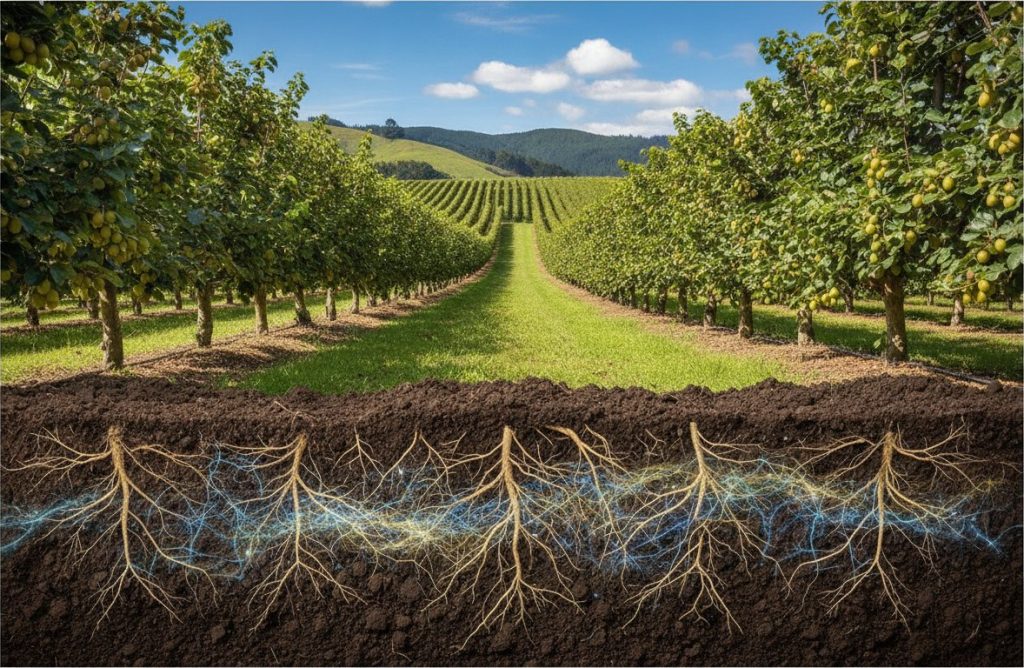
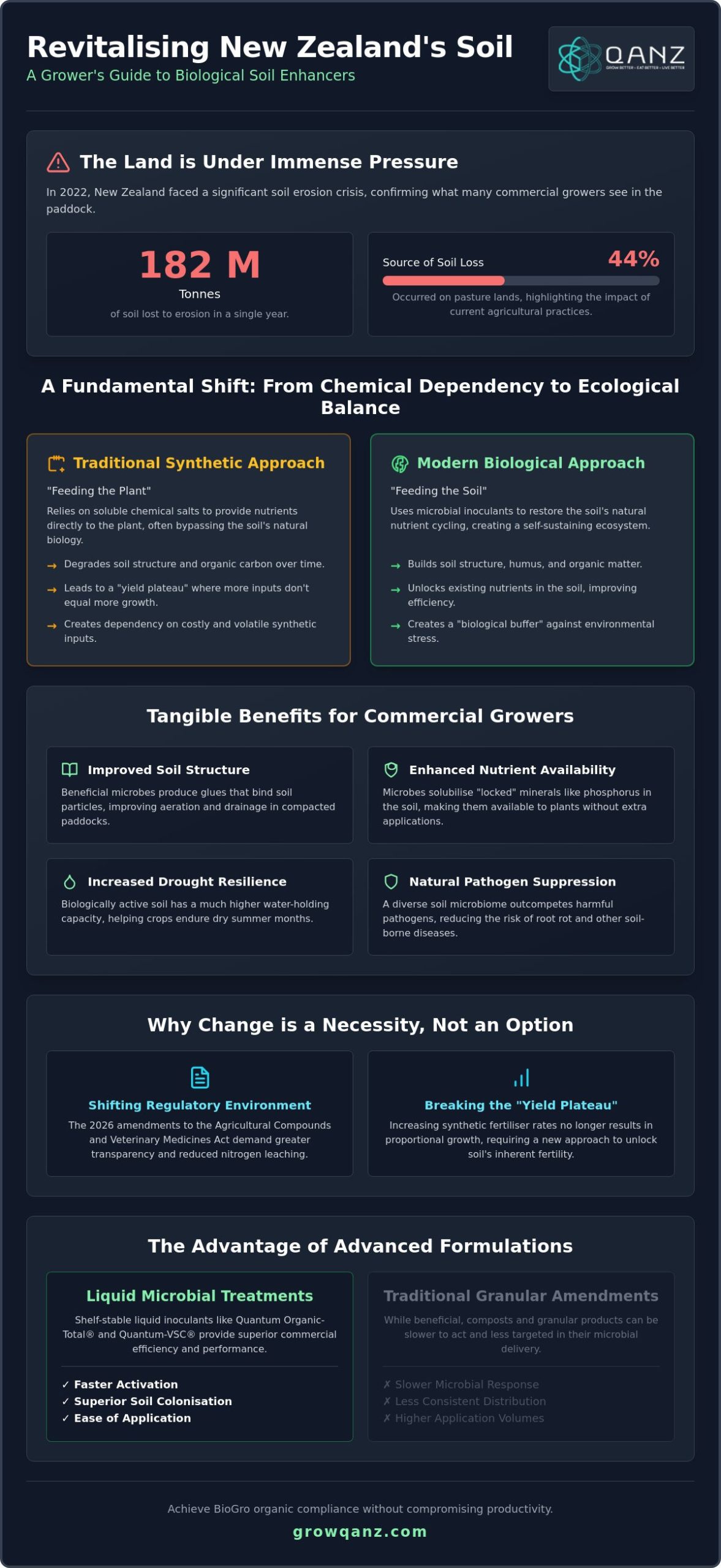
In 2022, New Zealand lost approximately 182 million tonnes of soil to erosion, with 44% of that loss occurring on our pasture lands. It’s a sobering figure that confirms what many commercial growers already feel in the paddock: the land is under immense pressure. You’ve likely noticed your soil structure degrading after decades of heavy synthetic fertiliser use, even as the costs of those traditional inputs continue to climb. Finding effective biological soil enhancers New Zealand growers can trust has become a necessity rather than an option. At the same time, the regulatory environment is shifting, with the 2026 amendments to the Agricultural Compounds and Veterinary Medicines Act demanding more transparency and reduced nitrogen leaching.
Transitioning to microbial technologies isn’t just about following a trend; it’s about re-establishing the biological engine of your farm. We understand that your priority is maintaining yield while meeting BioGro organic standards. This guide explores how certified solutions like Quantum Organic-Total® and Quantum-VSC® restore soil vitality to improve nutrient uptake and increase drought resilience. You’ll learn how these advanced microbial tools allow you to satisfy strict environmental compliance without sacrificing the commercial productivity your business depends on. We will examine the practical application of these technologies across fruit, vegetable, and field crops to ensure your land remains a productive asset for the long term.
Key Takeaways
- Understand the fundamental shift from feeding the plant to restoring the soil’s natural nutrient cycling through high-performance microbial inoculants.
- Discover the scientific role of photosynthetic bacteria in carbon fixation and how specific strains colonise the rhizosphere to build soil resilience.
- Learn why shelf-stable liquid microbial treatments provide superior commercial efficiency and faster activation compared to traditional granular amendments.
- Follow a structured, evidence-based framework for implementing biological soil enhancers New Zealand commercial growers use to address specific soil deficiencies.
- Explore how professional-grade solutions like Quantum Organic-Total® allow you to achieve BioGro organic compliance without compromising on crop yield or productivity.
Understanding Biological Soil Enhancers in New Zealand Agriculture
Biological soil enhancers are not merely additives; they are sophisticated microbial inoculants designed to restore the natural nutrient cycling processes that have been suppressed by decades of intensive land management. While traditional synthetic fertilisers focus on feeding the plant directly with soluble salts, biologicals focus on feeding the soil. This distinction is vital for the long-term viability of New Zealand’s primary sectors. By introducing specific consortia of beneficial bacteria and fungi, growers can move away from a model of chemical dependence toward one of ecological balance. For those investigating what are biofertilizers and how they function, it’s helpful to view them as the biological engines that drive soil health and productivity.
The state of our paddocks in 2026 reflects a growing crisis of soil compaction and microbial depletion. Years of heavy machinery use and high-input nitrogen regimes have left many soils structurally compromised and biologically inert. This has led to a “yield plateau” where increasing fertiliser rates no longer result in proportional growth. Choosing biological soil enhancers New Zealand certified for commercial use allows growers to break this cycle. These technologies are now a necessity as regulatory pressure to reduce nitrogen leaching intensifies and the cost of synthetic inputs remains volatile.
The Shift from Synthetic to Biological Inputs
Continuous reliance on synthetic nitrogen often leads to a decline in soil organic carbon. As carbon levels drop, the soil’s natural ability to retain moisture and nutrients diminishes, creating a fragile system that requires constant intervention. Biologicals help reverse this trend by stimulating the production of humus and stable organic matter. This creates a “biological buffer” against environmental stress. Over several seasons, this transition can significantly lower input costs as the soil’s inherent fertility is unlocked and the efficiency of every applied nutrient increases.
Key Benefits for Commercial Growers
The transition to a biological model offers tangible advantages that go beyond environmental compliance. In the varied terrains of New Zealand, from the volcanic soils of the Waikato to the alluvial plains of Canterbury, these benefits are measurable:
- Improved Soil Structure: Beneficial microbes produce glues like glomalin, which bind soil particles into aggregates, improving aeration and drainage in compacted paddocks.
- Enhanced Nutrient Availability: Many NZ soils contain significant “locked” phosphorus. Microbes help solubilise these minerals, making them available to the root zone without additional applications.
- Increased Drought Resilience: A biologically active soil has a much higher water-holding capacity, allowing crops to remain productive during the dry summer months common in the eastern regions.
- Natural Pathogen Suppression: A diverse soil microbiome outcompetes harmful pathogens, reducing the risk of root rot and other soil-borne diseases.
The Science of Microbial Inoculants: Strains and BioGro Certification
The efficacy of biological soil enhancers New Zealand growers deploy depends entirely on the specific microbial consortia within the bottle. It’s a common misconception that all “living soils” are equal. While generic compost teas might provide a broad range of organisms, professional-grade inoculants contain targeted strains selected for their ability to survive and thrive in our unique soil profiles. These microbes don’t just exist in the soil; they actively colonise the rhizosphere, the narrow region of soil directly influenced by root secretions. This colonisation creates a symbiotic relationship where the plant provides sugars in exchange for the microbes’ ability to solubilise minerals and protect against disease.
Photosynthetic Bacteria: The Powerhouse of the Paddock
Among the various microbes, photosynthetic bacteria stand out as a critical component for commercial productivity. These organisms are unique because they can utilise light energy to fix carbon and nitrogen, effectively acting as a solar-powered energy source for the entire soil microbiome. By producing bioactive substances like amino acids and vitamins, they stimulate the growth of other beneficial organisms such as mycorrhizal fungi and actinomycetes. This leads to significantly improved plant vigour and more robust seedling establishment, even in challenging conditions. Photosynthetic bacteria are the foundation of nutrient-dense soil.
Growers who integrate these specific strains often see a marked difference in the resilience of their crops. Because these bacteria provide the energy required for other microbial processes, they accelerate the restoration of degraded paddocks. The same microbial principles that restore farm soils also underpin professional turf biological products used to maintain elite sports fields and golf courses across New Zealand. If you’
Comparing Biological Treatments: Why Liquid Microbes Lead the Field
Choosing the delivery method for microbial technology is as critical as the strains themselves. While granular amendments remain common in domestic gardening, they often lack the precision required for high-stakes commercial agriculture. When applying biological soil enhancers New Zealand growers find that liquid formulations provide a level of uniformity that granules simply cannot match. A liquid medium allows the microbial consortia to move fluidly through the soil pores, ensuring that the beneficial organisms reach the root zone where they are needed most. This prevents the inconsistent “patchy” results often associated with dry applications.
Scientific advancements have solved the historical issues of shelf-stability in liquid products. Professional-grade inoculants maintain microbes in a state of metabolic dormancy. They remain inactive within the container, only “waking up” once they are diluted and introduced to the soil environment. This ensures that the population count remains high from the factory to the farm, providing a reliable and predictable response every time you spray. These stable liquids are the most efficient biological soil enhancers New Zealand commercial growers can utilise within their existing infrastructure. It is a mistake to think biologicals are more difficult to manage than synthetics; they fit seamlessly into modern farming workflows.
Liquid vs. Granular: Efficiency and Coverage
Liquid treatments offer a faster activation time. Because the microbes are already in an aqueous state, they begin colonising the rhizosphere immediately. Granular products require moisture to break down their solid carriers before the microbes can even begin to move. This delay can be a significant disadvantage during rapid growth phases. Liquids are also highly versatile. They can be applied through existing boom sprayers or fertigation systems, allowing for precise placement and reduced labour costs. This ease of application makes them an ideal choice for large-scale operations looking to improve efficiency.
Specific Strains for Specific Outcomes
A broad-spectrum microbial approach is nearly always superior to using single-strain products. Soil is a complex ecosystem. A diverse range of microbes creates a more resilient environment. There is a natural synergy between bacteria and fungi; bacteria often handle the immediate nutrient conversion while fungi build the long-term soil structure. Matching these solutions to your specific land use is essential for a high return on investment. Vegetable crops benefit from microbes that accelerate nutrient availability, while fruit and nut orchards require blends that focus on long-term root health and disease suppression.
Implementing Biologicals: A Framework for Commercial Success
Establishing a systematic approach is the only way to ensure a measurable return on investment when transitioning to biological systems. Successful implementation requires more than just a change in product; it demands a shift in management strategy. Commercial growers must move through a logical sequence to ensure the microbes they introduce can survive and perform in a high-production environment. By following a structured framework, you can integrate biological soil enhancers New Zealand soils respond to most effectively while maintaining the rigour required for export-grade operations.
- Step 1: Baseline Assessment. Use comprehensive soil analysis to identify microbial deficiencies and structural issues like compaction or poor drainage.
- Step 2: Product Selection. Choose a BioGro certified inoculant tailored to your specific land use, such as our Field Crop Microbial Solutions.
- Step 3: Integration. Incorporate the liquid microbes into your existing spray or fertigation schedules, ensuring they are applied during periods of active root growth.
- Step 4: Performance Monitoring. Track changes in plant vigour, root development, and soil friability over the growing season.
- Step 5: Input Rationalisation. As your soil’s natural nutrient cycling improves, begin a staged reduction of synthetic nitrogen and phosphorus to optimise your cost-per-hectare.
Integration with Irrigation and Fertigation
Liquid biologicals are designed for seamless delivery through centre-pivots, lateral moves, and drip lines. To maintain microbial viability, ensure your irrigation water is free from high levels of residual chlorine or harsh sanitisers. Timing is everything. Apply your biological soil enhancers New Zealand late in the afternoon or during overcast conditions to protect the microbes from UV degradation before they can wash into the root zone. This ensures maximum colonisation of the rhizosphere where the microbes provide the greatest benefit to the plant.
While managing irrigation quality is vital for soil health, ensuring pure water for your farm’s potable needs is equally important; you can check out Hydrokube for ecological water filtration and softening solutions that don’t rely on harsh chemicals.
Restoring Soil After Chemical Use
Intensive chemical regimes, particularly soil fumigation, can leave the land biologically sterile. Re-inoculating these paddocks is a priority for restoring long-term productivity. Microbes act as the primary agents in breaking down chemical residues and rebuilding the soil aggregates that provide structure. A consistent re-innoculation strategy allows for a faster transition toward regenerative practices without the sudden yield drop often feared by commercial growers. If you’re ready to design a custom programme for your operation, explore our Fruit & Nut Crop Microbial Solutions to see how these frameworks apply to high-value orchard environments.
Growing with Confidence: The GrowQanz Approach to Soil Vitality
GrowQanz understands the unique pressures facing the New Zealand agricultural sector. We don’t just provide products; we offer a partnership rooted in scientific innovation and a deep connection to the land. Our goal is to empower commercial growers with the tools they need to restore soil vitality and ensure long-term profitability. By delivering biological soil enhancers New Zealand producers can trust, we bridge the gap between advanced microbiology and practical, large-scale application. Our solutions are designed for those who view themselves as stewards of the soil, prioritising evidence-based results over temporary chemical fixes.
The foundation of our approach is a commitment to 100% natural results that don’t compromise on yield. We recognise that the commercial sector requires reliability above all else. Every microbial solution in our range is backed by rigorous testing and a transparent manufacturing process. This ensures that when you apply our technology to your paddocks, you’re introducing a stable, high-count population of beneficial organisms ready to colonise the rhizosphere. By focusing on the biological health of the land, we help you build a resilient asset that can withstand the evolving regulatory and environmental challenges of 2026 and beyond. This commitment to natural vitality often extends to the people behind the operation; for active women in agriculture who value strength and wellness, GREENDO offers premium natural supplements to support their physical performance.
Quantum Organic-Total®: The All-in-One Solution
Quantum Organic-Total® represents a significant leap forward in microbial technology. It features a proprietary blend of photosynthetic bacteria and other beneficial microbes that work in synergy to fix carbon and unlock essential nutrients like phosphorus and potassium. This formulation is highly versatile, making it an ideal foundation for vegetable crops, fruits, nuts, and broadacre field crops. It acts as the biological engine of the soil, driving the nutrient density and plant vigour required for high-yield, export-quality produce. It’s the primary choice for growers seeking a comprehensive, BioGro certified solution to restore depleted soils.
Quantum-VSC®: Natural Protection Against Stress
Environmental volatility, particularly drought and temperature extremes, can significantly impact seedling establishment and overall crop performance. Quantum-VSC® is specifically engineered to build resilience against these environmental pressures. This formulation focuses on enhancing root development, allowing plants to access deeper moisture and nutrient reserves during periods of stress. By strengthening the plant’s natural systems, it provides a biological safety net that reduces the risk of crop failure. It’s an essential tool for maintaining consistency in the face of New Zealand’s increasingly unpredictable climate. If you’re ready to enhance your operation’s resilience, contact GrowQanz for technical support and commercial pricing to discuss a tailored microbial programme for your land.
Securing the Future of New Zealand Primary Production
Restoring the biological integrity of your land is a long-term investment in both productivity and environmental stewardship. Targeted microbial strains, delivered through advanced liquid formulations, provide a faster and more uniform colonisation of the root zone than traditional granular methods. By integrating these technologies into your existing management programmes, you can satisfy the 2026 regulatory demands for reduced nitrogen leaching while simultaneously building soil resilience. Adopting professional-grade biological soil enhancers New Zealand commercial growers trust is the most effective way to unlock the inherent fertility of your paddocks.
GrowQanz remains your dedicated partner in this transition. Our solutions are built on proprietary Quantum technology and come with the assurance of being BioGro New Zealand Certified. We take pride in our proven results across NZ horticulture and viticulture, helping producers achieve 100% natural outcomes without sacrificing the yields their businesses depend on. It’s time to move beyond chemical dependence and start working in harmony with the natural processes of your soil.
Explore BioGro Certified Microbial Solutions for Your Farm and take the first step toward a more sustainable and profitable growing season. Your land has the potential to thrive; we’re here to help you unlock it.
Frequently Asked Questions
What are biological soil enhancers and how do they differ from fertilisers?
Biological soil enhancers are microbial inoculants that focus on restoring the soil’s natural ecosystem rather than providing direct plant nutrition. While traditional fertilisers deliver soluble NPK salts to the plant, these enhancers activate nutrient cycling and improve soil structure. They work by introducing beneficial bacteria and fungi that unlock existing minerals in the soil, making them available to the root zone through natural biological processes.
Are these products safe for use on BioGro certified organic farms in New Zealand?
Yes, professional-grade biological soil enhancers New Zealand growers rely on, such as Quantum Organic-Total®, are fully BioGro certified. This certification confirms that the products meet the rigorous BioGro Organic Standards and are free from synthetic contaminants or prohibited substances. It’s always best practice to verify the current certificate for any specific microbial solution before integrating it into your certified organic management plan.
How soon can I expect to see results after applying microbial inoculants?
You’ll typically observe improvements in plant vigour and root development within four to six weeks of the initial application. While the immediate boost to plant health is often visible, the more significant structural changes like improved water-holding capacity and humus formation develop over several seasons. Biological restoration is a cumulative process, and the benefits to soil friability and resilience tend to increase with consistent use.
Can I use biological soil enhancers alongside my existing fertiliser programme?
You can certainly integrate these enhancers into a conventional programme to improve nutrient use efficiency. The microbes assist the plant in absorbing applied fertilisers more effectively, which often allows for a staged reduction in total synthetic inputs over time. However, you shouldn’t mix microbial solutions directly with high-salt fertilisers or harsh fungicides in the same tank, as these chemicals can compromise microbial viability before they reach the soil.
Do liquid microbial treatments require special storage conditions?
Liquid inoculants should be stored in a cool, dry environment away from direct sunlight to maintain their shelf-stable dormancy. While professional formulations are designed to be robust, extreme heat or prolonged UV exposure can reduce the live population count over time. Keeping the containers sealed and protected from frost ensures that the microbes remain in peak condition until they are diluted and applied to your paddocks.
How do photosynthetic bacteria specifically help my crop yield?
Photosynthetic bacteria act as a solar-powered energy source for the soil microbiome by fixing carbon and nitrogen. This process provides the essential energy needed for other beneficial organisms, such as mycorrhizal fungi, to thrive and support the plant. By enhancing the overall activity in the rhizosphere, these bacteria directly improve nutrient uptake and seedling establishment, which leads to more consistent and higher-quality commercial yields.
What is the best time of year to apply biological enhancers to broadacre crops?
The most effective windows for application are during spring and autumn when soil moisture is present and root growth is most active. Applying biological soil enhancers New Zealand broadacre operations use during these periods ensures the microbes can move through the soil profile and colonise the root zone quickly. Avoid applying during mid-summer droughts or when the ground is frozen, as microbes require moderate conditions to establish effectively.
Will these products help restore soil health after heavy chemical fumigation?
Re-innoculating with beneficial microbes is the most effective strategy for restoring life to soil that has been sterilised by chemical fumigation. Fumigants eliminate both harmful pathogens and the beneficial organisms that maintain soil structure and health. Introducing a diverse microbial consortium helps fill this biological vacuum, accelerating the recovery of the soil’s natural suppressive qualities and preventing the rapid re-establishment of soil-borne diseases.
