
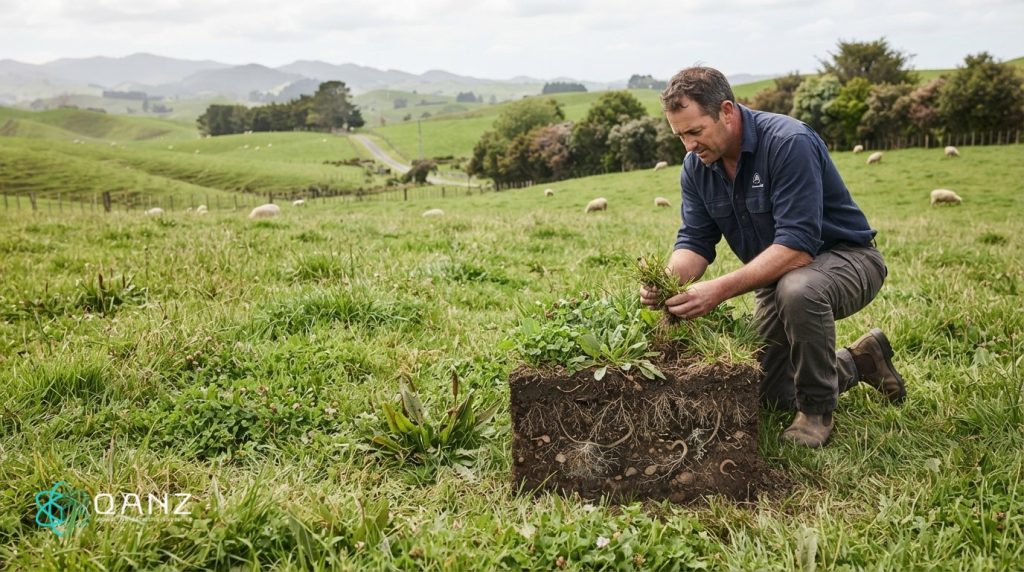
Graziers can naturally increase pasture density by maintaining post-grazing residuals at 3.5-4 cm, allowing ryegrass to reach the 3-leaf stage, and enhancing soil biological activity. By supporting the rhizosphere-the soil zone surrounding plant roots-growers improve nutrient cycling and soil structure. Implementing multi-species swards and using microbial agricultural inputs like Quantum Organic-Total® provides a biological foundation for denser, more resilient paddocks that withstand climatic extremes.
What if the answer to a thinning sward isn’t found in a bag of synthetic fertiliser, but in the biological engine room beneath your boots? Most graziers across Australia and New Zealand are all too familiar with the rising costs of traditional inputs and the struggle of maintaining paddock productivity under strict environmental regulations. You likely recognise that a healthy sward requires more than just a chemical quick-fix. This article explores natural ways to increase pasture density by focusing on regenerative grazing management and the science of soil microbiology. We will preview how rotational grazing, plant diversity, and microbial support work in harmony to build long-term paddock vitality.
Key Takeaways
- Learn how to monitor tiller density per square metre to identify the early causes of sward thinning, from soil compaction to overgrazing.
- Explore natural ways to increase pasture density by implementing rotational grazing and maintaining residual heights that protect the soil surface.
- Understand the biological role of the rhizosphere and how beneficial soil microbes support plant vigour and the natural tillering process.
- Discover the benefits of multi-species swards, using deep-rooting plants like plantain and chicory to exploit different soil layers and improve resilience.
- See how microbial agricultural inputs, such as Quantum Organic-Total®, can be integrated into comprehensive soil programmes to support long-term paddock vitality.
Understanding Pasture Density and Why Swards Thin Out
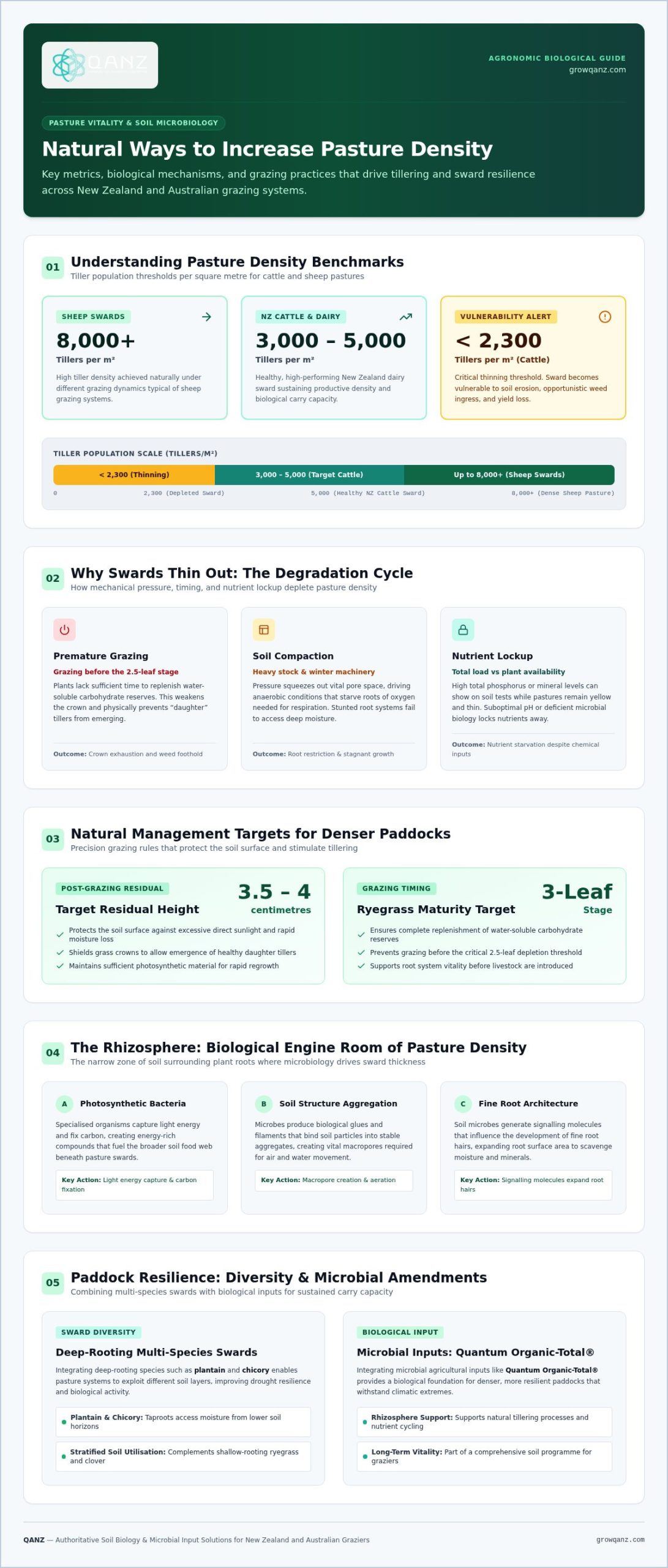
Pasture density is a critical metric for any grazier, defined simply as the number of individual plants and tillers occupying a square metre of soil. In high-performing New Zealand dairy systems, a healthy sward typically sustains between 3,000 and 5,000 tillers per square metre, while sheep swards can reach upwards of 8,000 due to different grazing dynamics. When these numbers drop below 2,300 in cattle pastures, the sward begins to thin, leaving the paddock vulnerable to erosion and productivity loss. Identifying natural ways to increase pasture density requires looking past the surface to understand why these tillers are disappearing in the first place.
Several factors drive this decline. Overgrazing is a primary culprit; when livestock are allowed to graze before the plant reaches the 2.5-leaf stage, the grass hasn’t had time to replenish its water-soluble carbohydrate reserves. This weakens the crown and prevents “daughter” tillers from emerging. Combined with soil compaction and nutrient imbalances, this triggers a vicious cycle. Bare ground attracts direct sunlight, which accelerates moisture loss and provides a foothold for opportunistic weeds. This degradation reduces the biological carrying capacity of the land, meaning the soil can no longer support the dense, productive growth it once did without excessive intervention.
The Impact of Soil Compaction on Sward Thickness
Heavy stock and machinery, particularly during wet AU/NZ winters, exert immense pressure on the soil profile. This force reduces pore space, squeezing out the oxygen necessary for root respiration. In these anaerobic conditions, root development is severely stunted, and the soil becomes a physical barrier rather than a medium for growth. Compacted soils struggle to support a dense, multi-species sward because the restricted root systems can’t access deeper moisture or nutrients during dry periods. Without adequate pore space, the biological processes that naturally aerate the soil are halted, leading to a stagnant and thinning pasture.
Nutrient Availability vs. Total Nutrient Load
We must distinguish between the total nutrient load in the soil and what is actually available to the plant. A soil test might show high levels of phosphorus, yet the pasture remains thin and yellow. This often occurs because the soil pH or a lack of microbial activity is locking those nutrients away in forms the roots can’t absorb. Relying on synthetic shortcuts can mask these underlying health issues, providing a temporary green flush while the long-term vitality of the sward continues to erode. Establishing rotational grazing practices and focusing on soil health are essential natural ways to increase pasture density by ensuring nutrients are cycled effectively within the paddock ecosystem.
The Biological Foundation: How Soil Microbes Support Pasture Thickness
The rhizosphere acts as the primary interface between the plant and the soil ecosystem. The rhizosphere is the engine room of pasture density. Within this narrow zone of soil surrounding the roots, a complex community of beneficial microorganisms works to support plant vigour and stimulate the natural tillering process. Supporting these biological processes is one of the most effective natural ways to increase pasture density because it addresses the root cause of sward thinning rather than just treating the symptoms.
Photosynthetic bacteria play a unique role in this subterranean world. These specialised organisms capture light energy and fix carbon, creating the energy-rich compounds that fuel the wider soil food web. Their presence acts as a driver for improved soil structure; as microbes produce biological glues and filaments, they bind soil particles into stable aggregates. This aggregation creates the vital macropores needed for air and water movement, ensuring a dense, well-tillered pasture that can withstand consistent grazing pressure. Focusing on the biological health of the paddock remains one of the most reliable natural ways to increase pasture density over the long term.
Microbial Interaction and Root Architecture
Soil microbes often influence the development of fine root hairs through the production of signalling molecules. These microscopic hairs significantly expand the root surface area, allowing the plant to scavenge for moisture and minerals more effectively. A robust root architecture, characterised by both deep taproots and dense lateral branching, enables plants to fill gaps in the sward naturally. When roots can penetrate deeper into the profile, they access subsoil moisture that keeps the plant active during the dry summer months common in Australia and New Zealand. This underground expansion provides the energy necessary for the plant to produce more tillers, directly increasing the thickness of your sward.
Nutrient Recycling and Soil Vitality
Effective nutrient recycling through microbial action ensures that the minerals already present in your paddock are actually bioavailable. As microbes decompose organic matter, they release nitrogen, phosphorus, and trace elements in forms the sward can immediately use for growth. This process creates a fertile, biologically active seedbed that encourages natural recruitment from existing seed banks. Maintaining a diverse microbial population is essential for resilient pastures, as these communities provide a biological buffer against environmental stress. You might consider how supporting your soil biology could enhance the long-term vitality and density of your grazing system.
Natural Management Strategies for Denser Paddocks
Effective management is a choice that directly impacts sward architecture. One of the most practical natural ways to increase pasture density is to align grazing schedules with the biological recovery cycle of the plant. When we move beyond set-stocking and embrace structured rotations, we allow the individual tillers the time they need to mature and multiply. This approach focuses on the physical health of the paddock, ensuring that the soil surface remains protected and the plants stay productive. By observing the growth stage of the tillers, graziers can make informed decisions that promote a thicker, more resilient sward.
Mechanical aeration serves as a useful temporary measure to kickstart biological activity in compacted ground. By creating vertical channels in the soil profile, aeration allows oxygen and water to reach the root zone, breaking the anaerobic cycle discussed in previous sections. This physical intervention should be paired with high stock density grazing for short durations. This “cell grazing” method ensures even manure distribution across the paddock, providing a natural fertilisation effect that avoids the creation of “nutrient islands” and bare patches. These combined management actions are essential natural ways to increase pasture density without relying solely on synthetic inputs.
Optimising Grazing Rotations for Tiller Development
Leaving enough leaf area after a grazing event is critical for rapid regrowth. Photosynthesis requires solar panels; in this case, the remaining green leaf. A common guide is the “rule of thirds,” where livestock graze the top third of the plant and leave the bottom two-thirds intact. This protects the plant’s crown and provides the energy needed for daughter tillers to emerge. In Australia and New Zealand, rest periods must be adjusted based on seasonal growth rates. During the cooler months, when growth might drop to 5kg of dry matter per hectare per day, rotations must slow down significantly to prevent scalping the sward and thinning the stand.
Strategic Paddock Rest and Recovery
Sometimes a paddock requires a complete biological reset to recover its former density. Identifying these areas early allows you to implement a long-term rest period, which is often enough to let natural seed banks germinate and fill stubborn bare spots. Monitoring leaf emergence stages is the most accurate way to time the next grazing event. For perennial ryegrass, the “sweet spot” is between the 2.5 and 3 leaf stage. Grazing before this point depletes the plant’s energy reserves, while waiting too long causes the older leaves to die off and decay. Precise timing ensures the sward remains dense, vibrant, and ready for the next rotation.
Diversifying the Sward: The Role of Multi-Species Pastures
Relying on a perennial ryegrass monoculture often leaves a paddock vulnerable to seasonal fluctuations and pest pressure. By integrating a diverse mix of grasses, legumes, and herbs like chicory and plantain, graziers can create a more resilient ecosystem that naturally resists sward thinning. This diversity is one of the most effective natural ways to increase pasture density because it allows plants to occupy different niches both above and below the ground. Legumes, such as white and red clover, act as a natural nitrogen source by fixing atmospheric nitrogen to support the growth of surrounding grasses. This biological synergy reduces the reliance on synthetic urea while maintaining the bulk required for high-performing grazing systems.
Different root architectures play a vital role in reducing competition for resources within the soil profile. While ryegrass roots are predominantly found in the top 100 mm of the soil, deep-taprooted species like chicory and lucerne can reach much further into the subsoil. This vertical stratification allows the sward to exploit moisture and minerals that are otherwise inaccessible to shallow-rooted species. During dry spells, these deep roots keep the sward active and dense, preventing the bare patches that typically appear when traditional pastures go dormant. Implementing these diverse mixes is a cornerstone of finding natural ways to increase pasture density while building long-term climatic resilience.
Which Species Best Support AU/NZ Pasture Resilience?
Choosing the right species requires a clear understanding of local climatic extremes, from the drought-prone Australian broadacre regions to the variable conditions found on pastoral farms across New Zealand. Deep-taprooted herbs do more than just scavenge for water; they physically break up subsoil compaction, creating natural pathways for oxygen and moisture to penetrate the profile. Many forward-thinking growers find that microbial solutions for field crops provide the necessary biological support when pairing multi-species overseeding with regenerative soil programmes. This combination ensures that new species have the vigour to establish themselves in challenging environments.
Should You Rely on Natural Recruitment or Over-Sowing?
The decision to rely on the existing seed bank or to actively over-sow depends on the current state of your sward and its history. If bare patches are extensive, direct drilling into the existing pasture is often the most efficient way to increase density without the risks associated with full cultivation. Success in these programmes hinges on achieving excellent soil-to-seed contact and ensuring that the biological environment is conducive to rapid germination. Supporting the establishment phase with appropriate microbial inputs can help new seedlings compete with established plants, ensuring a more uniform and thick sward. Talk to GrowQanz about whether Quantum Organic-Total® is appropriate for your crop, growing system and application programme.
Integrating Microbial Inputs: The GrowQanz Approach to Soil Vitality
While management practices and sward diversity establish the physical structure of a paddock, the biological processes within the soil often require targeted support to reach their full potential. Integrating microbial inputs is one of the natural ways to increase pasture density by enhancing the soil environment where tillering occurs. Quantum Organic-Total® is a microbial agricultural input available to New Zealand growers as part of a holistic approach to soil health. These inoculants are intended for use in comprehensive soil and plant programmes, providing a biological complement to the regenerative strategies discussed throughout this article. For growers prioritising organic standards, the BioGro certification of Quantum Organic-Total® ensures the product meets rigorous input requirements for certified systems.
Successful integration depends on careful application. Microbial populations are living entities that respond to their environment, so factors such as soil moisture and timing are essential. Applying these inputs during periods of active growth, typically when soil temperatures are above 6°C and moisture is adequate, helps the microbes establish within the rhizosphere. This approach ensures that the biological support is present when the plants are most capable of utilising it. By focusing on these natural ways to increase pasture density, graziers can move away from a reliance on high-salt synthetic inputs and toward a system that values long-term ecological stability.
How does Quantum Organic-Total® fit into a soil programme?
Quantum Organic-Total® is a microbial agricultural input offered by GrowQanz for use in crop and soil programmes. It’s designed to fit seamlessly into existing agricultural workflows, as the liquid formulation allows for easy integration into most standard spray or fertigation setups. This versatility means you don’t need specialised machinery to begin supporting your soil’s biological vitality. Growers should always check product suitability and application rates against current GrowQanz technical and BioGro documentation to ensure the best alignment with their specific growing environment and certification requirements.
What evidence exists for biological performance in pasture?
Evaluating the performance of biological inputs requires a methodical approach. GrowQanz provides Quantum product and application support to help growers monitor their soil health journey and understand how these inputs function within their specific systems. It’s important to ground these observations in a professional context. ‘Results from individual trials or commercial observations are specific to the formulation, crop, location, treatment and conditions tested and should not be interpreted as a guarantee of equivalent performance elsewhere.’
Historical evidence from overseas, such as the observations at Nolt Farm in Pennsylvania, provides interesting context for the development of microbial technology. It’s worth noting that these historical trials evaluated Quantum-Light® and Quantum-VSC® rather than Quantum Organic-Total®. While such overseas data informs the broader understanding of microbial interactions, it’s not a substitute for local New Zealand observations. Talk to QANZ about whether Quantum Organic-Total® is appropriate for your crop, growing system and application programme.
Building a Resilient Sward through Biological Vitality
Transitioning your paddocks from a reliance on synthetic shortcuts to a self-sustaining biological model is a long-term investment in land value. By understanding the natural ways to increase pasture density through managed rest periods and diverse root architectures, you move beyond simply treating symptoms of sward decline. As we’ve explored, the key lies in fostering a healthy rhizosphere where beneficial microbes can support the natural tillering process, ensuring your pasture remains productive even through climatic challenges.
GrowQanz provides the technical support and proprietary liquid microbial technology required to help you achieve these results. Our BioGro New Zealand certified inputs are designed to complement regenerative soil programmes without disrupting your existing workflows. Talk to GrowQanz about whether Quantum Organic-Total® is appropriate for your pasture, growing system, and application programme. Securing the biological health of your soil today creates the foundation for a denser, more resilient sward tomorrow.
Frequently Asked Questions
What is the fastest natural way to increase pasture density?
The most immediate natural ways to increase pasture density involve adjusting grazing management to protect plant crowns and encourage tillering. Implementing rotational grazing allows plants to reach the critical 2.5 to 3 leaf stage before defoliation, which preserves energy reserves for new tiller development. Maintaining a post-grazing residual height of 3.5 to 4 cm for cattle or 3 cm for sheep prevents scalping and ensures the sward can recover rapidly without leaving the soil surface exposed.
How do soil microbes actually help with grass growth?
Beneficial soil microorganisms function within the rhizosphere to support plant vigour by cycling organic matter and making minerals bioavailable. These microbes decompose complex materials into forms that roots can absorb, such as nitrate and phosphate. Microbial activity also creates biological glues that bind soil particles into stable aggregates. This process improves soil structure and macroporosity, allowing oxygen and water to reach the root zone, which is essential for sustaining a thick and healthy sward.
Can I use Quantum Organic-Total® on certified organic farms in NZ?
Quantum Organic-Total® is BioGro New Zealand certified, making it a suitable microbial agricultural input for growers prioritising organic standards. However, individual certification requirements can vary depending on your specific programme and intended use. We recommend that growers verify the product’s suitability against their own certification standards and current BioGro documentation before application. QANZ can provide the necessary technical information and certification details to assist with your farm’s compliance and soil health goals.
Does rotational grazing really help thicken the sward?
Rotational grazing is a fundamental management strategy for increasing sward thickness because it prevents the continuous defoliation that weakens plant crowns. By providing adequate rest periods, you allow daughter tillers to emerge and mature, which is the biological mechanism behind a dense pasture. Structured rotations also ensure more even manure distribution and reduce localised soil compaction. This management approach helps maintain ground cover, which is critical for preventing erosion and weed encroachment in productive paddocks.
What are the signs that my pasture needs a biological boost?
If you are investigating natural ways to increase pasture density, look for indicators like poor water infiltration or visible soil compaction. These signs suggest the soil’s natural nutrient cycling is insufficient to support high-density growth. Thinning swards and bare patches often occur when the biological carrying capacity of the land is compromised. Addressing these underlying soil health issues is essential for restoring the resilient, thick pasture coverage needed for sustainable long-term productivity in local grazing systems.
How much rest does a paddock need to recover its density?
The required rest period depends largely on seasonal growth rates and the specific climatic conditions of your region. In Australia and New Zealand, the goal is to allow the primary grass species to reach the 2.5 to 3 leaf stage before the next grazing event. During peak spring growth, this recovery might take only 20 days, whereas cooler winter months could require 90 days or more. Monitoring leaf emergence ensures that the sward has replenished the energy reserves needed.
Can microbial inputs replace my standard fertiliser programme?
Microbial agricultural inputs are intended to complement, not replace, a comprehensive soil and plant nutrition programme. While these products support natural nutrient cycling and soil vitality, they function differently from conventional NPK fertilisers. Quantum Organic-Total® is designed to be used in conjunction with your existing management practices to enhance the biological environment of the rhizosphere. Growers should evaluate their specific soil requirements and talk to QANZ about how biological inputs fit into their overall nutrient management strategy.
Is Quantum Organic-Total® suitable for both Australian and New Zealand climates?
Quantum Organic-Total® is available to growers in both Australia and New Zealand and is formulated for use across various soil types and climatic conditions. Its liquid-based delivery makes it easy to integrate into existing spray or fertigation setups, whether you are managing broadacre farms or intensive dairy pastures. Because microbial activity is influenced by soil temperature and moisture, application timing should be adjusted to suit the local seasonal growth patterns of your specific region.
Disclaimer
Important: This article provides general agricultural information only. Product performance can vary according to crop, soil, climate, management practices and application conditions. Trial or research results discussed may have been obtained under specific conditions and should not be interpreted as a guarantee of equivalent results. Always follow current product directions and confirm suitability for your crop, growing system and organic certification requirements. Contact QANZ for current product and application information.
