
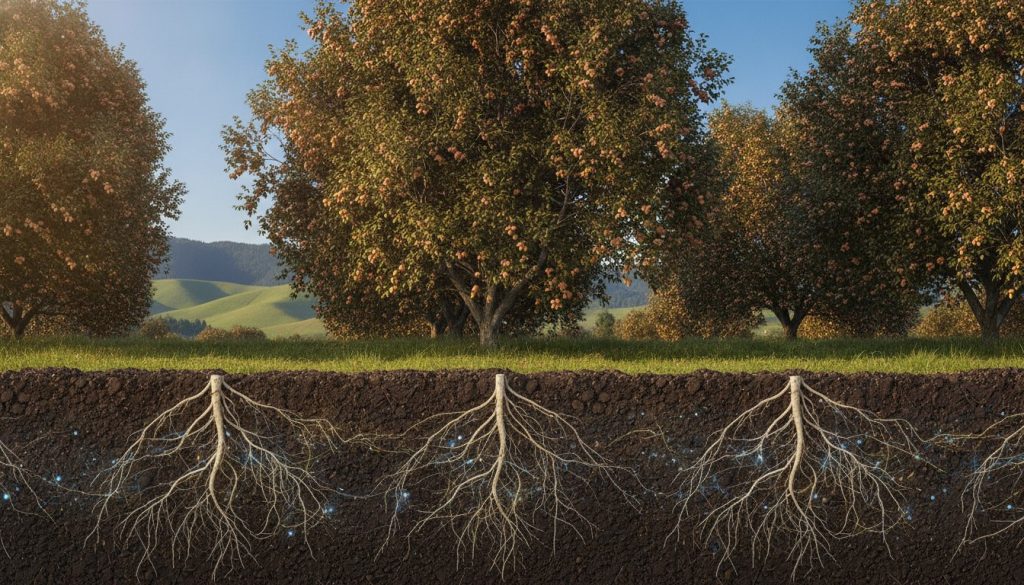
What if the secret to your biggest harvest yet isn’t found in a heavier application of synthetic nitrogen, but in the invisible workforce already living beneath your boots? If you’ve noticed your orchard’s productivity stalling despite fertiliser costs rising by an estimated 30% recently, you’re likely facing a “chemical ceiling” where soil minerals can no longer compensate for a lack of biological life. Many growers across New Zealand are finding that increasing nut yield with soil biology is the only sustainable way to break through these plateaus while protecting their long-term orchard asset value.
We understand the frustration of managing established trees in regions like the Waikato or Tasman when soil compaction and poor water infiltration begin to hamper performance. This 2026 guide provides a technical roadmap for leveraging advanced microbiology, such as BioGro certified Quantum Organic-Total®, to unlock nutrient availability and drive record-breaking nut weights. We’ll explore how restoring microbial diversity can reduce your reliance on synthetic inputs and ensure your trees remain resilient against environmental stress for seasons to come.
Key Takeaways
- Learn how to mobilise your orchard’s “biological labour force” to convert locked-up minerals into plant-available nutrients for superior kernel development.
- Discover the specific mechanisms for increasing nut yield with soil biology, focusing on how photosynthetic bacteria and nitrogen-fixers drive record-breaking harvests.
- Identify the common biological bottlenecks, such as residual fertiliser salts and soil compaction, that are currently suppressing your orchard’s productive potential.
- Master a step-by-step roadmap for optimising soil health, from initial assessment to the strategic application of BioGro certified liquid microbial inoculants.
- Explore how professional-grade solutions like Quantum Organic-Total® and Quantum-VSC® can strengthen tree resilience and enhance the long-term asset value of your land.
The Role of Soil Microbiology for Orchards and Nut Production
Soil microbiology for orchards is the primary engine of long-term fertility and yield stability. It encompasses the diverse community of bacteria, fungi, and protozoa that drive The Soil Food Web, facilitating the flow of nutrients from the soil to the tree. In a productive nut orchard, these organisms function as a biological labour force that processes raw minerals into plant-available forms. Healthy biology does more than just feed the tree; it fundamentally improves soil structure by creating stable aggregates. This allows roots to penetrate deeper into the profile and access critical moisture during dry periods, which is vital for maintaining tree health in regions like Canterbury or Hawke’s Bay.
Achieving consistent results requires moving beyond a simple chemical approach. Focusing on increasing nut yield with soil biology allows growers to tap into the natural mechanisms that have supported plant growth for millennia. This isn’t just about environmental stewardship. It’s about the commercial reality of producing more kilograms of high-quality kernels per hectare while managing rising input costs. In fact, increasing nut yield with soil biology is the strategic shift required to ensure applied fertilisers are actually plant-available during the critical nut-set window.
Why Biological Health is a Long-Term Orchard Asset
Orchards represent decades of capital investment. Maintaining robust soil biology ensures this asset remains productive over its entire 40 to 50 year lifespan. A healthy microbial community helps reduce the “boom and bust” cycles of nut production by providing a steady, reliable supply of nutrients. This stability protects the root zone from pathogens and buffers the trees against environmental fluctuations common in New Zealand.
The Difference Between Fertile Soil and Biological Soil
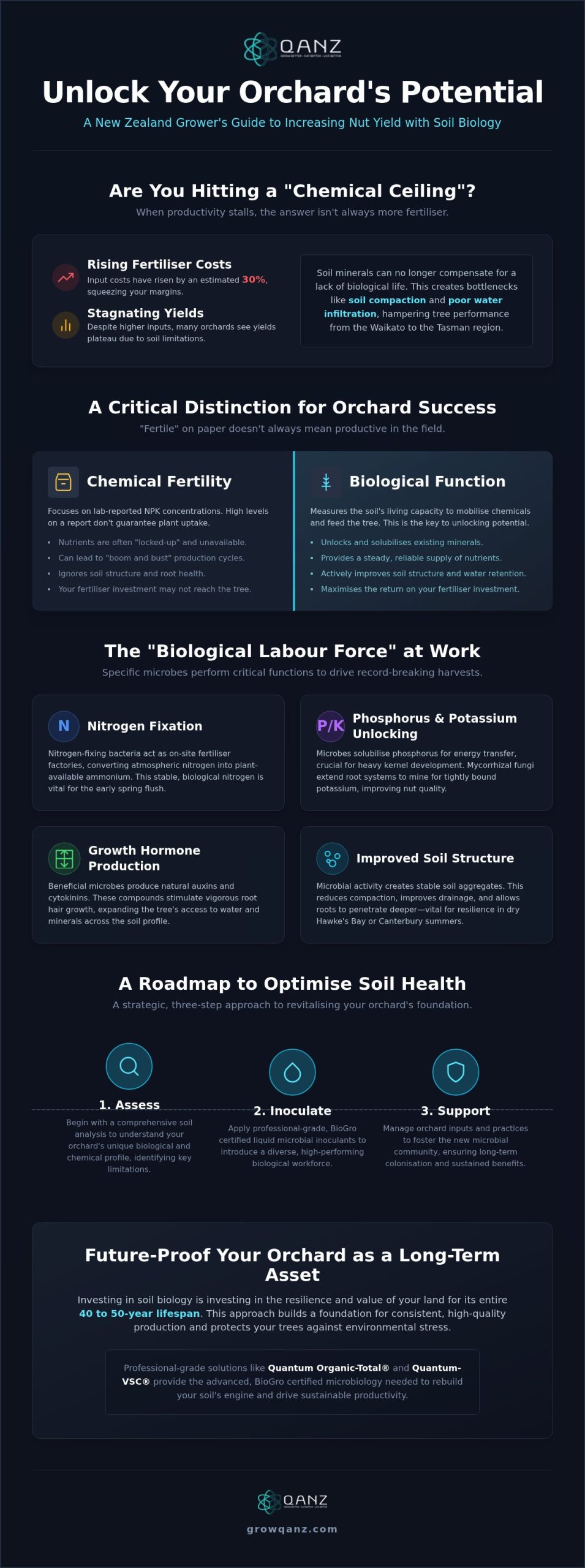
Traditional fertility is measured by chemical concentrations in a lab report. However, a “fertile” soil on paper isn’t always a productive one in the field. Biological soil focuses on the functional capacity to mobilise those chemicals. We often see high NPK levels in the soil that don’t translate to high levels in the leaf because nutrients are chemically “locked”. Microbes solubilise these minerals, ensuring your fertiliser investment actually reaches the tree.
Mechanisms for Increasing Nut Yield with Soil Biology
The biological machinery within the soil operates through several sophisticated pathways to drive productivity. When we discuss increasing nut yield with soil biology, we’re looking at the precise ways bacteria and fungi interact with tree roots to enhance physiological processes. Nitrogen-fixing bacteria, for instance, act as tiny on-site fertiliser factories. They convert atmospheric nitrogen into ammonium, a form the tree can readily absorb, which is particularly beneficial during the early spring flush when demand is highest. This biological nitrogen is often more stable and less prone to volatilisation than synthetic urea.
Specific microbes also produce growth-regulating hormones like auxins and cytokinins. These natural compounds encourage vigorous root hair development, expanding the tree’s reach for water and minerals. Phosphorus solubilising bacteria increase nut weight by improving energy transfer within the tree. By ensuring that phosphorus, a key component of ATP, is available during the critical kernel-filling stage, these microbes help the tree manage the high metabolic cost of nut production. This process is essential for achieving the heavy, oil-rich kernels that New Zealand exporters prize. By focusing on these mechanisms, growers can see a tangible pathway for increasing nut yield with soil biology while reducing their reliance on expensive chemical inputs.
Unlocking Phosphorus and Potassium for Kernel Quality
Nut trees, particularly walnuts and hazelnuts, have substantial demands for phosphorus and potassium as they fill their shells. Maintaining high Soil Health in Orchards requires a functional synergy between mycorrhizal fungi and the root system. These fungi extend far beyond the root’s reach, mining the soil for tightly bound potassium that is often inaccessible to the tree alone. This biological sponge effect also helps hold minerals in the root zone, significantly reducing nutrient leaching during heavy New Zealand rain events. It’s a natural way to keep your fertiliser investment where it belongs, near the roots.
Photosynthetic Bacteria: The Secret Energy Source
While most soil microbes rely on plant exudates for energy, photosynthetic bacteria are unique in their ability to fix carbon and generate energy independently. This adds a critical layer of soil energy that supports the entire microbial community. By improving the efficiency of the orchard’s nutrient cycle, these advanced strains allow trees to withstand heavy crop loads without the typical “alternate bearing” fatigue. Integrating these strains through Fruit & Nut Crop Microbial Solutions helps ensure the orchard remains a high-performing asset year after year. These microbes effectively provide a battery boost to the soil, ensuring energy is available even when the tree is under stress.
Identifying Biological Bottlenecks in Modern Nut Orchards
Many modern orchards in regions like the Hawke’s Bay or Marlborough have reached a productivity ceiling. This plateau occurs when adding more nitrogen or phosphorus no longer results in higher returns, a phenomenon often called the “plateau effect”. Decades of high-salt fertiliser applications can suppress beneficial microbial populations, creating a sterile environment where the soil serves as little more than a physical anchor for the tree. When these salts accumulate, they dehydrate delicate microbial life, effectively shutting down the natural nutrient cycling discussed earlier. Chemical fumigation also plays a role. While intended to clear out specific soil-borne issues, it often leaves a biological vacuum that is quickly colonised by opportunistic pathogens rather than beneficial species.
Physical barriers also play a significant role in suppressing orchard potential. Soil compaction from heavy harvesting machinery and regular tractor passes restricts the oxygen levels within the soil profile. Aerobic microbiology, which is essential for increasing nut yield with soil biology, cannot survive in these anaerobic conditions. This lack of pore space also prevents water infiltration, leading to pooling and runoff rather than deep-root hydration. Without a functional microbiome to create soil aggregates, the ground becomes increasingly dense, making it harder for trees to access the very nutrients you are applying.
The Impact of Chemical Dependency on Soil Resilience
Synthetic inputs often provide a temporary growth spurt, but they frequently come at the cost of long-term soil structure. Without microbes to produce glomalin and other biological “glues”, soil particles fail to aggregate, leading to the collapse of the infrastructure the tree relies on. Low microbial diversity also leaves the orchard vulnerable to increased pest pressure, as the natural checks and balances of a healthy soil ecosystem are removed. For a detailed strategy on maintaining fertility without compromising biology, see our guide on orchard soil health management. New Zealand’s broader horticultural sector is increasingly adopting these principles, and growers interested in how the same biological management approach applies across different crops can explore the parallels in organic viticulture soil health, where microbial vitality is equally critical for premium production.
Recognising the Signs of a Biological Imbalance
Growers can often spot a biological bottleneck through simple visual indicators. If organic matter like leaf litter or prunings isn’t breaking down over the winter, the biological labour force is likely absent. Another common sign is a disconnect between soil and leaf tests. You might see high nutrient levels in the soil report, yet the leaf analysis shows a deficiency. This indicates that the mechanisms for increasing nut yield with soil biology have stalled, leaving nutrients “locked” in the soil. Weak root development, characterised by a lack of fine feeder roots, further suggests the tree is struggling to navigate a sterile or compacted environment. Restoring the microbiome is the only way to bridge this gap and return the orchard to peak performance.
A Roadmap to Optimise Nut Yield through Microbial Inoculation
Transitioning from a chemical-heavy system to a biologically driven one requires a methodical approach. It isn’t about abandoning modern tools, but rather about integrating life back into the system to ensure those tools work more efficiently. When increasing nut yield with soil biology, your primary goal is to establish a self-sustaining ecosystem that reduces the need for emergency interventions. This roadmap provides a structured path for New Zealand growers to restore their orchard’s natural productive capacity.
- Step 1: Assess current soil health. Use specialised biological testing to establish a baseline of microbial activity rather than just measuring mineral levels.
- Step 2: Introduce liquid microbial inoculants. Apply high-quality formulations like Quantum Organic-Total® during key growth windows to re-establish the “biological labour force.”
- Step 3: Support the new biology. Provide organic carbon sources and maintain consistent moisture to ensure the introduced microbes can colonise the root zone effectively.
- Step 4: Reduce high-impact interventions. Gradually buffer or lower applications of high-salt fertilisers that can suppress the newly stabilised microbiome.
- Step 5: Monitor and track ROI. Compare leaf analysis and soil data against previous seasons to quantify the impact on nut weight and kernel quality.
Following this sequence ensures that the transition is stable and results-oriented. By focusing on increasing nut yield with soil biology, you’re building an orchard that is more efficient at turning sunlight and soil minerals into profit. View our Fruit & Nut Crop Microbial Solutions to see how these liquid formulations fit your seasonal spray or fertigation programme.
Timing Inoculations for Maximum Impact
Microbial applications are most effective when they align with the tree’s natural growth cycles. In New Zealand, the early spring root flush is a critical window; this is when the tree is most receptive to symbiotic relationships that drive nutrient uptake for the coming nut set. A second application post-harvest is equally vital. This helps the tree recover from the metabolic stress of production and begin storing energy for the next season. Delivering these solutions through fertigation ensures the microbes reach the active root zone where they are needed most.
Supporting the Microbiome with Cultural Practices
Inoculation is just the first step; the orchard environment must be managed to sustain this life. Growing diverse cover crops in the row middles provides a continuous supply of root exudates that feed the soil community. Managing irrigation to avoid both waterlogging and extreme dryness keeps the soil in the “goldilocks” zone for aerobic bacteria. These practices, combined with strategic mulching, create a stable habitat that allows the microbiome to thrive without constant re-application. It’s about creating a living foundation that supports the tree through every seasonal challenge.
Future-Proofing Your Orchard with GrowQanz Microbial Solutions
Securing the future of your orchard requires a shift from reactive chemical corrections to proactive biological management. Our core technologies, Quantum Organic-Total® and Quantum-VSC®, provide the technical foundation for increasing nut yield with soil biology by restoring the microbial diversity lost to years of conventional farming. Quantum Organic-Total® functions as a comprehensive inoculant, reintroducing the photosynthetic bacteria and nitrogen-fixers required for peak soil vitality. For trees facing environmental pressures, Quantum-VSC® strengthens natural resilience, helping your orchard manage moisture stress and temperature fluctuations without sacrificing kernel quality.
Maintaining export viability is a primary concern for New Zealand nut growers. Our formulations are BioGro certified, ensuring your produce meets the stringent organic standards required for high-value international markets. Unlike traditional granules that can be slow to break down and unevenly distributed, our liquid formulations offer superior coverage. They integrate seamlessly into existing fertigation systems, delivering a precise dose of microbiology directly to the active root zone. This delivery method ensures that the biological labour force is established exactly where it can have the greatest impact on nut set and weight.
The GrowQanz Advantage: Science Meets the Field
Our proprietary microbial strains aren’t just laboratory curiosities; they’re selected for their proven ability to perform in commercial orchard environments. We understand the specific soil profiles of the South Island’s alluvial plains and the volcanic soils of the North Island. This local expertise allows us to provide solutions that work with the New Zealand landscape rather than against it. To understand the long-term financial returns of this shift, explore our Quantum Organic-Total cost-benefit analysis, which details how these biologicals pay for themselves through reduced synthetic inputs and improved yields.
Getting Started with a Biological Programme
Every orchard is a unique ecosystem. Our technical team works closely with growers to tailor a microbial programme based on your specific nut variety, soil type, and current management practices. We often recommend starting with a trial block. This allows you to witness the biological difference in root development and tree vigour firsthand before a full-scale rollout. By committing to increasing nut yield with soil biology, you’re investing in the long-term health of your trees. Transition your orchard to a high-performance biological system today and ensure your land remains a productive, high-value asset for the next generation.
Securing Your Orchard’s Productive Legacy
The path to increasing nut yield with soil biology is a transition from chemical dependency toward ecological efficiency. We have explored how a functional microbiome acts as an essential labour force, unlocking phosphorus and potassium while buffering trees against environmental stress. By identifying biological bottlenecks and following a structured roadmap for inoculation, you can break through yield plateaus and significantly improve kernel quality. These results aren’t just theoretical; they are the tangible outcomes of working with nature’s existing systems.
GrowQanz is a dedicated partner for the New Zealand agricultural sector, providing BioGro New Zealand certified solutions that deliver proven results in commercial fruit and nut crops. Our team offers expert technical support to help you integrate advanced microbiology into your specific orchard management programme. Investing in soil health isn’t just a seasonal strategy; it’s a commitment to the long-term vitality and asset value of your land. We’re here to ensure your orchard remains a stable and profitable enterprise for decades to come.
Optimise your orchard yield with BioGro certified Quantum Organic-Total® and start building a more resilient, high-performing system today. We look forward to helping you unlock the full biological potential of your soil.
Frequently Asked Questions
How quickly can I expect to see a yield increase after starting a biological programme?
You can often observe improvements in root hair development and soil aggregation within the first season, though increasing nut yield with soil biology typically becomes most visible over a two-year period. This timeline allows the trees to build the necessary carbohydrate reserves for larger harvests and better kernel filling. Initial benefits are frequently seen in the tree’s ability to withstand environmental stress, followed by a measurable increase in nut weight and consistency.
Are microbial inoculants compatible with my existing fertiliser schedule?
Microbial inoculants are compatible with most fertiliser schedules, provided you avoid high-salt concentrations that can dehydrate beneficial bacteria. We recommend buffering synthetic applications with carbon sources to protect the living microbiome from chemical shock. It’s often most effective to apply biologicals separately through fertigation or as a soil drench to ensure the organisms remain viable and can colonise the root zone without interference.
Can soil biology help with biennial bearing in nut trees?
Soil biology helps mitigate biennial bearing by providing a more stable and continuous supply of nutrients across both “on” and “off” years. By reducing the metabolic fatigue that follows a heavy crop, microbes help the tree maintain the energy levels required for consistent floral bud initiation. This leads to a more balanced production cycle and reduces the extreme yield fluctuations common in varieties like walnuts and pistachios.
Is Quantum Organic-Total® safe for use in certified organic orchards?
Quantum Organic-Total® is BioGro New Zealand certified, making it fully compliant for use in certified organic orchards. This certification provides assurance that the product meets the highest standards for purity and environmental safety required for organic production. Using these certified solutions allows growers to drive productivity and soil health while maintaining their organic status and access to premium export markets.
What is the best way to apply liquid microbial treatments in an established orchard?
Fertigation is the most effective way to apply liquid treatments in established orchards because it delivers the microbes directly to the active root zone. This method ensures uniform distribution and minimises the loss of organisms to UV exposure or dehydration on the soil surface. If your orchard doesn’t have fertigation, a targeted soil drench or a high-volume boom spray applied before a rain event can also achieve good results.
How does soil microbiology improve the drought resistance of my nut trees?
Microbiology improves drought resistance by creating stable soil aggregates that increase the soil’s overall water-holding capacity. Beneficial fungi also extend the tree’s effective root surface area, allowing it to mine moisture from deeper in the soil profile during dry Canterbury or Hawke’s Bay summers. This biological “sponge” effect keeps the root zone hydrated for longer, reducing the physiological stress that often leads to premature nut drop.
Do I need to re-apply microbes every year, or will they establish permanently?
Annual applications are recommended to maintain a high-performing microbial population, especially in high-production orchard systems. While some microbes will establish, environmental stresses like extreme frost, drought, or residual chemical applications can deplete their numbers over time. Regular inoculation ensures that the biological labour force remains at peak capacity to support increasing nut yield with soil biology through every critical growth stage of the season.
Can beneficial microbes help reduce my overall fertiliser costs?
Beneficial microbes help reduce fertiliser costs by significantly increasing the efficiency of nutrient uptake from the soil. Since microbes solubilise “locked” minerals like phosphorus, you can often achieve superior growth with lower rates of synthetic inputs. This shift reduces the amount of fertiliser lost to leaching or volatilisation, ensuring that more of your nutrient investment actually reaches the tree rather than being wasted.
