
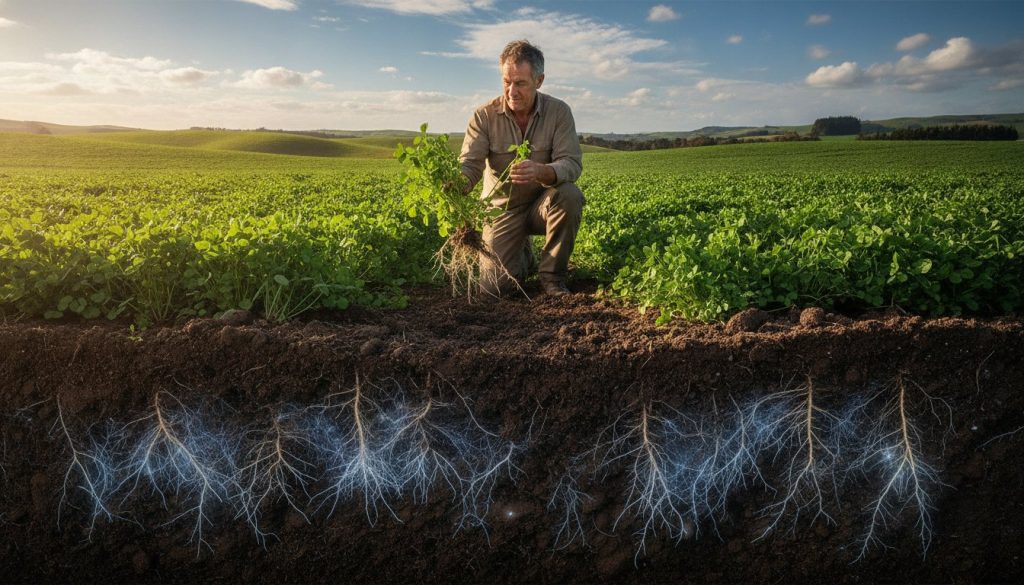
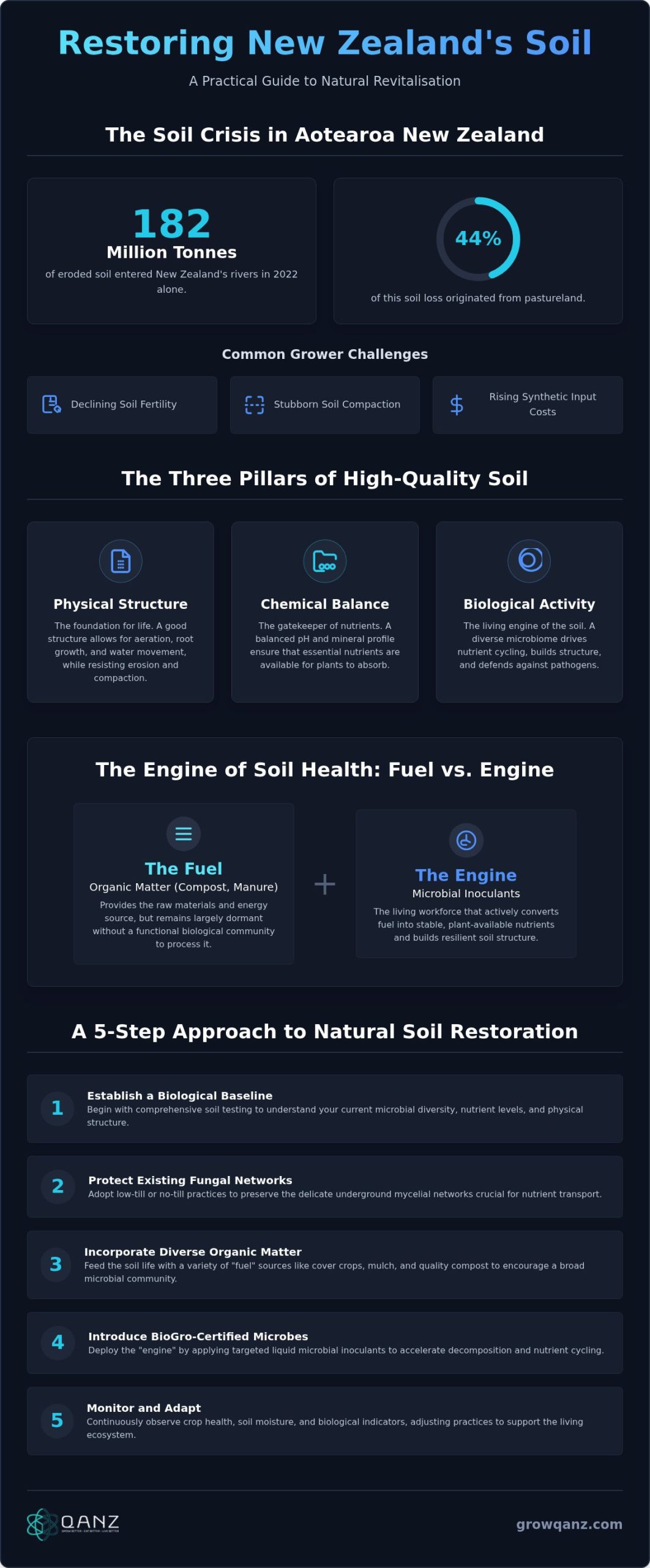
Did you know that an estimated 182 million tonnes of eroded soil entered New Zealand’s rivers in 2022, with pastureland accounting for roughly 44 per cent of that total? This staggering loss highlights why so many local growers feel trapped by declining fertility and stubborn soil compaction, even as input costs continue to rise. If you are wondering, “how do i improve my soil quality naturally” without risking your seasonal yields, it’s time to look beneath the surface at the biological health of your land. Relying on synthetic interventions often masks deeper issues like lost biodiversity and poor water retention.
True soil restoration is about more than just adding nutrients; it is about revitalising the living systems that make those nutrients available to your crops. By integrating advanced microbial technology with proven organic practices, you can restore soil structure and significantly increase nutrient uptake. This guide explores science-backed methods to transition toward a BioGro-certified production system that prioritises long-term ecological health. We will show you how to leverage natural biological processes to boost crop resilience and ensure your farm remains productive for generations to come.
Key Takeaways
- Understand that soil health is a three-way synergy between physical structure, chemical balance, and a thriving biological ecosystem.
- Find the answer to the common grower’s question, how do i improve my soil quality naturally, by focusing on the microbial activity that restores structural integrity and water retention.
- Distinguish between organic matter as ‘fuel’ and microbial inoculants as the ‘engine’ that drives nutrient cycling and crop productivity.
- Adopt a methodical five-step approach to soil restoration, beginning with biological baseline testing and protecting fungal networks through low-till practices.
- Leverage BioGro-certified liquid microbial technology to achieve sustainable yield gains and reduce long-term dependency on synthetic inputs.
What Defines High-Quality Soil in a Natural System?
High-quality soil is far more than a simple growing medium; it is a complex, living ecosystem. When growers ask, “how do i improve my soil quality naturally”, they are really asking how to restore the functional integrity of this subterranean network. According to the foundational definition of What is soil quality?, it is the capacity of the land to function as a vital living ecosystem that sustains plants, animals, and humans. This functionality is not a static trait but a dynamic state of health that requires constant biological maintenance.
Natural soil health relies on three pillars: physical structure, chemical balance, and biological activity. These pillars are interdependent; you cannot have one without the others functioning correctly. Key indicators of a healthy system include high water-holding capacity, a stable aggregate structure that resists erosion, and diverse microbial populations that drive nutrient cycling. Central to this process is humus, which serves as the stable end-product of organic matter decomposition by microbes, acting as a long-term reservoir for nutrients and moisture.
The Physical and Chemical Markers of Success
Physical health begins with aeration. Soil must have adequate pore space to allow for root respiration and the free movement of water. Avoiding compaction is vital because squeezed soil lacks the oxygen required for both plant roots and aerobic microbes to thrive. Chemically, a balanced pH is the gatekeeper of nutrient availability. Even if the soil is rich in minerals, an acidic or overly alkaline environment can lock those nutrients away. Resilient soil acts as a buffer, allowing crops to withstand environmental stressors like the intense droughts or heavy rainfall frequently seen across New Zealand.
The Biological Breakthrough
While the presence of earthworms is a positive sign, they are merely the tip of the iceberg for soil health. The real engine of productivity is the rhizosphere. This is the critical zone where plant roots and diverse microbial populations interact in a constant exchange of nutrients and signals. It’s here that the question of how do i improve my soil quality naturally finds its scientific answer. Natural systems don’t just hold carbon; they sequester it through biological processes. Microbes convert atmospheric carbon into stable soil organic matter, creating a self-sustaining cycle that enhances fertility without the need for synthetic interference.
The Role of Microbiology: The Natural Engine of Soil Quality
While many commercial operations focus on the bulk application of compost or manure, these inputs remain dormant without a functional biological community to process them. Microbes are the primary decomposers. They function as the natural engine of the land, converting raw organic matter into stable, plant-available nutrients. When considering how do i improve my soil quality naturally, the answer lies in the microscopic life within the rhizosphere. These organisms do not just feed the plant; they build the very ground it stands on.
Beneficial bacteria and fungi produce extracellular polysaccharides, often described as “biological glues.” These substances bind individual soil particles into stable aggregates. This structural improvement is a critical component of sustainable soil management, as it directly reduces the risk of erosion. Given that New Zealand loses millions of tonnes of pastureland soil annually, establishing these biological foundations is a practical necessity. A diverse microbiome also acts as a natural defence system, outcompeting soil-borne pathogens and reducing the need for chemical interventions.
Photosynthetic Bacteria and Nutrient Cycling
Photosynthetic bacteria represent a significant breakthrough in natural fertility. These specialized microbes harness light energy to drive nutrient cycling directly in the root zone. They facilitate the nitrogen cycle by “pulling” nitrogen from the atmosphere and fixing it into the soil, providing a consistent supply of fertiliser without the environmental risks associated with synthetic urea. This biological diversity serves as an insurance policy. It ensures that even when environmental conditions fluctuate, the soil continues to provide for the crop. Growers looking to optimise these natural cycles can explore microbial solutions tailored for New Zealand conditions to jumpstart this process.
Improving Nutrient Uptake Naturally
The relationship between plants and microbes is deeply symbiotic. Mycorrhizal fungi, for example, extend the reach of root systems, allowing plants to access water and minerals far beyond their physical limits. These fungi are particularly adept at phosphorus solubilisation. In many New Zealand soils, phosphorus is present but “locked” in a form the plant cannot use. Microbes release organic acids that dissolve these bonds, making the nutrient available once more. You can learn more about this process in our detailed guide on How Beneficial Soil Microorganisms Boost Plant Health. By focusing on these biological interactions, you address the root cause of declining fertility rather than just treating the symptoms. It is the most effective way to answer the question: how do i improve my soil quality naturally while maintaining high productivity.
Organic Matter vs. Microbial Inoculants: Which is Better?
Many commercial growers assume that the answer to “how do i improve my soil quality naturally” begins and ends with the application of bulk organic matter. While compost, manure, and crop residues are essential, they represent only the fuel for the system. Without a robust community of microorganisms to act as the engine, these materials cannot be effectively converted into plant-available nutrients. The true breakthrough in sustainable production comes from understanding the synergy between these two components.
The choice between bulk amendments and microbial inoculants often comes down to efficiency and risk management. Consider the following factors:
- Decomposition Speed: Raw organic matter can take months or even years to break down in cold or compacted soils. Microbial inoculants accelerate this process by introducing the specific “engineers” required for decomposition.
- Biosecurity Risks: Spreading tonnes of manure or green waste can inadvertently introduce weed seeds or pathogens if the material has not been properly heat-treated.
- Nutrient Precision: Bulk amendments vary wildly in their nutrient profile. Concentrated biologicals provide a consistent, measured dose of beneficial life to the root zone.
The most effective strategy involves using both in tandem. By inoculating organic matter with specific microbial strains, you ensure rapid decomposition and immediate nutrient release. This turns raw waste into active fertility much faster than natural weathering alone.
The Logistical Reality for Professional Growers
For a large-scale operation, the cost-per-hectare of sourcing, transporting, and spreading bulk compost can be prohibitive. Concentrated microbial treatments offer a more streamlined alternative. These liquid biologicals integrate seamlessly into existing irrigation or fertigation systems, allowing for precise application without the heavy machinery requirements of traditional spreading. This is one reason Why Liquid Microbial Soil Treatments Outperform Granules in professional settings. By using liquid solutions, you ensure that the beneficial microbes reach the rhizosphere immediately, where they can begin improving soil structure and nutrient cycling without delay.
BioGro Certification and Market Advantages
In the New Zealand market, the ‘clean green’ reputation is a vital commercial asset. Choosing BioGro-certified inputs protects the long-term value of your land and ensures continued access to premium organic export markets. Purity is a non-negotiable standard for professional growers. Unlike some synthetic fertilisers that may contain trace heavy metals, natural microbial solutions maintain the integrity of the soil profile. Improving your soil health through verified natural means supports the broader goals of New Zealand agriculture. It ensures that our primary production remains world-class, sustainable, and free from synthetic interference. When you ask, “how do i improve my soil quality naturally”, you are making a choice that benefits both your bottom line and the national environmental legacy.
5 Steps to Restore Soil Quality Naturally on Your Property
Transitioning from a high-input synthetic model to a biological one requires a methodical approach. For commercial growers, the process must be scalable and evidence-based to ensure that productivity remains stable during the shift. If you’re asking, “how do i improve my soil quality naturally” across hundreds of hectares, the answer starts with moving away from reactive treatments and toward proactive ecosystem management.
Follow these five foundational steps to revitalise your land:
- Step 1: Establish a Baseline. Conduct a comprehensive soil test that includes both biological and chemical markers. You cannot manage what you haven’t measured; knowing your current fungal-to-bacterial ratios is just as important as knowing your nitrogen levels.
- Step 2: Minimise Mechanical Disturbance. Transitioning to low-till or no-till practices protects the delicate fungal networks mentioned in previous sections. Excessive ploughing shatters soil aggregates and oxidises organic matter, leading to the very compaction you are trying to avoid.
- Step 3: Maintain Living Roots. Use diverse cover crops to ensure the soil is never left bare. Living roots provide a constant supply of exudates that feed the microbial community, keeping the biological engine running between primary cash crops.
- Step 4: Re-establish Microbial Populations. Apply high-quality microbial inoculants to introduce beneficial bacteria that may have been lost to historical chemical use. This is the most direct way to answer the question of how do i improve my soil quality naturally, as it provides the biological workforce needed to restore nutrient cycling.
- Step 5: Monitor Brix and Structure. Use a refractometer to monitor plant brix levels, which serve as a real-time indicator of nutrient density and photosynthetic efficiency. Regularly check your soil structure for improved friability and deeper root penetration.
Restoring Soil After Chemical Fumigation
Identifying “dead” soil is often the first step toward recovery for many intensive operations. Soil that has been over-sterilised by synthetic inputs or harsh fumigants often appears pale, lacks structure, and shows zero earthworm activity. To jumpstart life in these environments, specific interventions are required. Our proprietary Soil Restoration Techniques After Chemical Fumigation focus on re-introducing the diversity needed to break the cycle of dependency. In these scenarios, Quantum-VSC® plays a vital role by aiding the rapid recovery of the microbial workforce, ensuring that the ground can once again support healthy crop growth without an endless cycle of synthetic additives.
Managing Water and Erosion Naturally
Improved soil carbon levels create a “sponge effect” that is the best defence against New Zealand’s unpredictable weather patterns. High-quality soil with stable aggregates allows for significantly better water infiltration, which reduces the risk of surface run-off and the loss of valuable topsoil during heavy rain. In broadacre or high-traffic settings, maintaining ground cover is essential for protecting this structure. By increasing the organic carbon content through biological activity, you improve the land’s water-holding capacity, making your operation far more resilient to drought. To begin your transition toward a more resilient system, you can view our full range of BioGro-certified microbial solutions designed for professional NZ growers.
GrowQanz Solutions: Quantum Organic-Total® for Soil Vitality
Addressing the question of how do i improve my soil quality naturally requires a shift from passive observation to active biological management. While the five steps outlined previously provide a roadmap, Quantum Organic-Total® serves as the high-performance engine for that journey. This comprehensive microbial solution is specifically engineered for professional growers who require consistent, science-backed results without the environmental toll of synthetic chemicals. As a BioGro-certified technology, it meets the highest standards of purity and verification in the New Zealand agricultural sector.
The efficacy of our liquid formulations lies in the proprietary blend of photosynthetic bacteria and other beneficial microorganisms. Unlike bulk amendments that rely on slow, environmental weathering, these microbes are ready to work the moment they reach the rhizosphere. This liquid delivery system ensures maximum biological efficacy and ease of use, allowing for rapid integration into existing infrastructure. GrowQanz has become a trusted partner for farmers across the country because we prioritise long-term ecological health over temporary, artificial gains. We provide the technical expertise needed to transition toward a truly regenerative and self-sustaining production system.
Tailored Solutions for Every Crop Type
Natural soil improvement is not a one-size-fits-all process. High-value horticulture, including orchards and nut crops, requires specific microbial strategies to support the heavy nutrient demands of fruit production. Similarly, dairy and pasture operations benefit from enhanced soil health through improved clover fixation and more resilient grass growth, which directly translates to better livestock outcomes. Understanding the financial implications is also a key part of professional management. You can explore a detailed Quantum Organic-Total: A Cost-Benefit Analysis for New Zealand Growers to see how biological investments compare to traditional synthetic inputs over the long term.
Getting Started with a Biological Program
Integrating GrowQanz solutions into your current seasonal management plan is a straightforward process. Our liquid treatments are designed to be compatible with most standard fertigation and irrigation setups, meaning you don’t need to overhaul your entire operation to start seeing results. We believe that evidence-based progress is the only way to ensure the future of New Zealand’s primary industries. By providing ongoing technical support and focusing on measurable improvements in soil structure and plant brix levels, we help you move beyond the uncertainty of how do i improve my soil quality naturally. Take the next step toward a more resilient, productive, and BioGro-certified paddock by choosing a partner that understands the deep connection between microbiology and the land.
Securing the Future of Your Land Through Biological Excellence
Restoring the health of your property is a long-term commitment that yields significant dividends in both crop resilience and soil stability. By understanding that microbes are the primary engine of fertility, you move beyond the surface-level question of how do i improve my soil quality naturally and begin building a truly self-sustaining ecosystem. We have explored how the synergy of physical structure, chemical balance, and biological activity creates a resilient foundation that withstands environmental pressures while reducing dependency on synthetic inputs. Using targeted liquid biologicals allows you to achieve these results with greater precision and lower logistical costs than bulk amendments alone.
Transitioning to these regenerative practices is simplified with 100% natural and sustainable technology. Our solutions are BioGro New Zealand Certified and have delivered proven results across horticulture and field crops nationwide. By prioritising the living component of your land, you protect your market access and the long-term value of your estate. Restore your soil’s natural vitality with Quantum Organic-Total® and ensure your operation remains productive and profitable for generations to come. Your land is your most valuable asset; treating it with scientific integrity is the surest path to lasting success.
Frequently Asked Questions
How long does it take to see improvements in soil quality naturally?
When people ask how do i improve my soil quality naturally, they should expect visible biological activity to shift within weeks, though structural restoration typically requires one to three growing seasons. Initial improvements often manifest as better residue breakdown and increased root branching. These early signs precede larger, more permanent changes in soil porosity and organic carbon levels that define a truly healthy ecosystem.
Can I use natural soil improvers alongside my current fertiliser program?
Integrating natural improvers with existing programs is common and often increases the efficiency of traditional inputs. Many growers find that biologicals help solubilise “locked” nutrients, which allows them to eventually reduce synthetic application rates without sacrificing yield. This transitional approach ensures that production remains stable while the land’s natural fertility engine is being rebuilt.
What is the best way to test my soil’s biological health?
A combination of laboratory biological assays and practical field observations provides the most accurate picture of your land’s vitality. While standard chemical tests are a necessary baseline, adding a PLFA (Phospholipid Fatty Acid) analysis helps quantify the microbial biomass and diversity active in your paddocks. Monitoring plant brix levels and earthworm counts provides immediate, cost-effective feedback on these laboratory results.
Is it possible to improve heavy clay soil without digging?
Improving heavy clay without mechanical disturbance is achieved by fostering biological activity and using deep-rooted cover crops. Microbes produce the biological glues necessary to aggregate fine clay particles into larger crumbs. This process creates natural channels for air and water movement, effectively “opening up” the soil in a way that mechanical tilling often fails to sustain.
How do microbial inoculants survive in the soil after application?
Microbial inoculants survive by colonising the rhizosphere or entering a dormant state when environmental conditions become unfavourable. High-quality formulations include robust strains selected for their ability to persist in diverse New Zealand soil profiles. Provided there is sufficient moisture and organic carbon for them to feed on, these populations will continue to cycle nutrients throughout the growing season.
Are natural soil improvement methods suitable for large-scale broadacre farming?
Biological methods are highly effective for broadacre operations when applied through existing liquid infrastructure like sprayers or fertigation systems. Using concentrated inoculants solves the logistical challenges of transporting bulk amendments, making the question of how do i improve my soil quality naturally a practical reality for large-scale New Zealand farmers. This scalability allows for consistent treatment across hundreds of hectares without excessive labour costs.
What are the signs that my soil is lacking in beneficial microorganisms?
Signs of a biological deficit include stubborn soil compaction, slow decomposition of crop residues, and an increased reliance on fungicides to manage disease. If your soil feels “tight” or lacks visible earthworm activity, it’s a strong indicator that the microbial engine has stalled. These symptoms suggest that the natural nutrient cycling processes are no longer functioning at their peak capacity.
Does improving soil quality naturally really help with drought resistance?
Natural soil improvement is a primary defence against drought because it significantly increases the land’s water-holding capacity. Every one per cent increase in soil organic matter allows the ground to hold significantly more water per hectare, creating a vital buffer during dry New Zealand summers. This “sponge effect” ensures that moisture remains available to the crop for longer periods between rainfall events.
