
In 2026, the era of treating New Zealand soil as a passive container for synthetic fertilisers has ended; the future of our agricultural productivity now relies on the invisible life thriving within the rhizosphere. Many growers are finding that traditional inputs no longer yield the same results, especially as the Organic Products and Production Act 2023 mandates stricter standards for the sector. If you’re struggling with degraded soil structure or the prohibitive logistics of moving bulk humates across the country, you’re not alone. Finding effective certified organic soil conditioners NZ wide is now a commercial necessity for those targeting the $606.7 million organic export market.
We understand that maintaining BioGro compliance while trying to improve nutrient uptake and root development is a complex balancing act. This guide will show you how BioGro certified microbial soil conditioners are revolutionising New Zealand agriculture by restoring biological health and boosting crop resilience naturally. You’ll discover how liquid-based microbial technologies like Quantum Organic-Total® and Quantum-VSC® provide a precise, scientific way to activate your soil’s biological engine. This approach ensures your crops can withstand our increasingly variable climate while securing your place in the global organic economy through verified, evidence-based soil vitality.
Key Takeaways
- Understand how BioGro certification and the 2023 organic legislation protect your farm’s integrity and access to high-value export markets.
- Learn why photosynthetic bacteria act as the biological engine for certified organic soil conditioners NZ farmers rely on to improve nutrient cycling and soil structure.
- Discover the logistical benefits of liquid microbial treatments, which eliminate the high transport costs and labour intensity of traditional bulk compost applications.
- Gain practical insights into integrating biological amendments into your existing seasonal spray programme for precise, even application across any terrain.
- Explore how evidence-based solutions like Quantum Organic-Total® build long-term crop resilience against New Zealand’s variable climate conditions.
What Defines a Certified Organic Soil Conditioner in NZ?
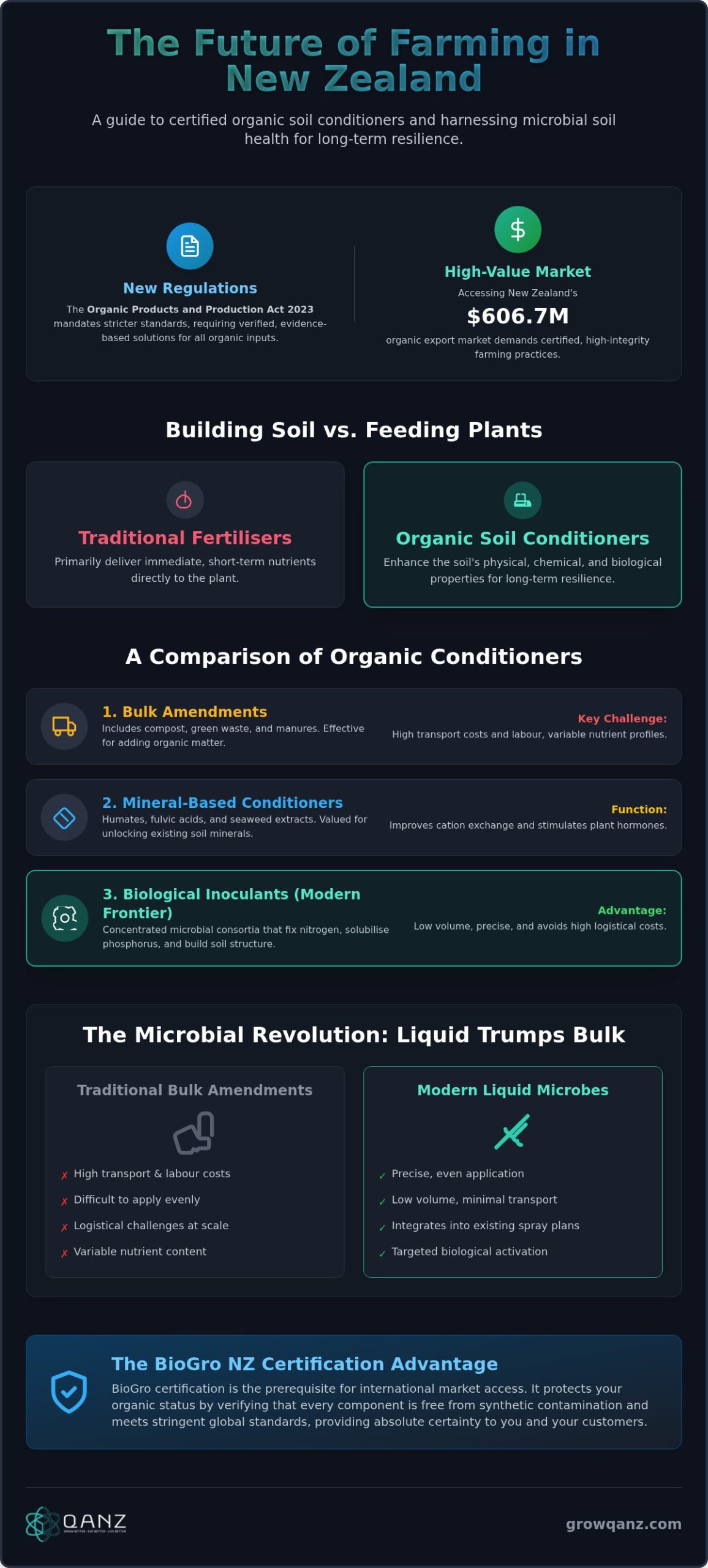
Understanding the fundamental mechanics of your paddock begins with a clear grasp of what soil conditioners are and how they function within a biological system. Unlike fertilisers, which primarily deliver immediate nutrients to the plant, soil conditioners are natural amendments designed to enhance the physical, chemical, and biological properties of the soil itself. They focus on the environment where roots live. By 2026, the distinction between feeding the crop and building the soil has become critical. Growers now face a regulatory environment that demands higher transparency regarding biological inputs. It’s a shift from chasing short-term yields to investing in long-term resilience.
The Organic Products and Production Act 2023 has fundamentally changed how we view soil health. This legislation requires that any product making an organic claim must be verified by an MPI-recognised body. For the professional grower, this means moving away from unverified “home-brews” toward standardised, evidence-based solutions. High-quality certified organic soil conditioners NZ producers utilise are now evaluated not just for what they contain, but for how they interact with the native soil microbiome to improve structure and water retention.
The BioGro NZ Certification Advantage
Third-party verification is no longer just a badge; it’s a prerequisite for international market access. BioGro New Zealand provides the most recognised certification framework, ensuring that certified organic soil conditioners NZ growers use meet stringent international standards. This certification protects your organic status by verifying that every microbial strain or mineral component is free from synthetic contamination. For professional-grade products, the BioGro logo represents a rigorous audit process that includes testing for heavy metals and ensuring the efficacy of microbial soil inoculants. It’s about maintaining the integrity of the $606.7 million organic export market and providing certainty to your customers.
Common Types of Organic Conditioners Found Across NZ
New Zealand growers typically categorise these amendments into three distinct groups based on their primary function and origin. Each has a role to play, but their efficiency varies significantly:
- Bulk amendments: These include compost, green waste, and animal manures. While effective for adding organic matter, they often involve high transport costs and variable nutrient profiles that can be difficult to manage at scale.
- Mineral-based conditioners: Humates, fulvic acids, and seaweed extracts are valued for improving cation exchange capacity and stimulating plant hormones. These are often used to “unlock” existing soil minerals.
- Biological inoculants: This represents the modern frontier of regenerative farming. These products use concentrated microbial consortia to fix nitrogen, solubilise phosphorus, and build soil structure from the ground up.
By focusing on biological health, growers can achieve better results with lower volumes. Liquid microbial technologies are becoming the preferred choice for those wanting to avoid the logistical nightmare of hauling tonnes of compost across the country while still meeting strict BioGro compliance.
Microbial Power: The New Frontier of Soil Conditioning
Soil health isn’t merely a measurement of chemical inputs; it’s a reflection of the biological activity occurring beneath the surface. While traditional farming focuses heavily on N-P-K ratios, modern regenerative practices recognise that microbes are the true engine of nutrient cycling. In New Zealand’s unique volcanic and alluvial soils, many nutrients remain locked up in forms that plants cannot readily absorb. High-performance certified organic soil conditioners NZ growers use today leverage microbial power to bridge this gap, converting mineral wealth into plant-available nutrition through natural enzymatic processes.
A significant breakthrough in this field is the use of photosynthetic bacteria. These remarkable organisms don’t just wait for organic matter to decompose; they actively harness solar energy to drive soil health from the ground up. By fixing nitrogen and carbon directly into the rhizosphere, they provide a constant energy source for other beneficial microbes. This biological synergy is supported by the international recognition of NZ organics, ensuring that our microbial standards meet the expectations of global markets. Products like Quantum Organic-Total® are designed with this specific science in mind, offering a stable microbial population that survives and thrives in the field.
How Microorganisms Improve Soil Structure
Biology builds structure. When microbes are active, they produce sticky substances like glomalin, often described as microbial glue. These compounds bind soil particles together into stable aggregates, which is the foundation of a healthy soil profile. This process creates natural pores, significantly reducing soil compaction and improving aeration without the need for intensive mechanical tillage. For those managing paddocks in regions with variable rainfall, this enhanced structure is vital. It dramatically increases water-holding capacity, allowing the soil to act as a sponge during heavy rain and a reservoir during dry spells.
BioGro Certified Microbial Consortia vs. Single Strains
Nature doesn’t work in isolation, and neither should your soil amendments. A microbial consortium, or “team” of microbes, consistently outperforms single laboratory-isolated strains because the species support one another. This diversity creates a more resilient ecosystem that can better defend against pathogens and environmental stress. When choosing certified organic soil conditioners NZ farmers must also consider stability. Professional liquid inoculants are engineered for a long shelf-life, ensuring the biology remains viable from the container to the root zone. If you’re looking to transition your pasture to a more biological approach, exploring Quantum microbial solutions can provide the evidence-based start your land requires.
Comparing Liquid Microbes to Traditional Bulk Amendments
For decades, the standard approach to soil conditioning involved hauling cubic metres of compost or humates across the country. While this adds physical mass, the logistical burden is significant. In contrast, modern certified organic soil conditioners NZ growers use are increasingly liquid-based. These concentrates provide high-density microbial life without the need for heavy machinery or massive storage footprints. This shift allows for a more agile management style that responds to soil needs in real time.
Transporting bulk amendments requires multiple truckloads, which increases both labour costs and carbon emissions. A single pallet of microbial concentrate can treat the same area as dozens of tonnes of compost. This efficiency aligns with the evolving New Zealand’s organic regulations, which encourage sustainable management practices that reduce on-farm environmental impact. By choosing liquid biologicals, you aren’t just saving on transport; you’re reducing the overall energy footprint of your primary production.
Precision is where liquid biologicals truly excel. Growers can apply these treatments through existing spray rigs or fertigation systems. This ensures even distribution across the entire paddock, reaching the rhizosphere directly. Bulk amendments often suffer from uneven spreading, leading to “hot spots” of nutrients and areas of neglect. A liquid application provides a consistent biological blanket that integrates quickly into the soil profile.
When to Use Bulk Compost vs. Liquid Inoculants
Physical organic matter is essential when soil volume is severely depleted or when starting with raw, sandy substrates. However, for established orchards, dairy pastures, and vegetable crops, liquid microbes are the superior choice for maintenance. They provide a rapid biological boost that bulk amendments can’t match. Many regenerative managers now adopt a holistic approach; they use minimal bulk matter for structure and rely on liquid consortia to drive the biological engine. This combination ensures long-term carbon sequestration while maintaining immediate nutrient availability.
The ‘Weed-Free’ Guarantee and Biological Integrity
One overlooked risk of uncertified bulk compost is the introduction of invasive weed seeds or soil-borne pathogens. Maintaining biosecurity is a top priority for any professional operation. High-purity liquid microbial soil treatments eliminate this risk entirely. Because these solutions are fermented in controlled environments, they provide a sterile, concentrated start. This ensures you are only adding beneficial biology to your land, rather than creating a future weeding problem. Using certified organic soil conditioners NZ farmers trust ensures that every drop contributes to soil vitality without compromising the cleanliness of the paddock. It’s a professional approach that prioritises integrity and results.
Practical Implementation for New Zealand Growers
Integrating certified organic soil conditioners NZ wide requires more than a simple application; it demands a strategic alignment with the natural cycles of your land. Successful growers incorporate microbial treatments into their existing seasonal spray programmes to ensure consistent biological pressure. Timing is paramount. For New Zealand conditions, microbes perform best when soil temperatures are rising and moisture is adequate, typically during the spring flush or early autumn. Applying biologicals during these windows allows the inoculants to establish themselves before extreme summer dry or winter cold sets in.
Monitoring success involves looking beyond traditional N-P-K soil tests. While standard tests remain useful, adding biological activity markers and conducting regular plant tissue analysis provides a clearer picture of nutrient uptake efficiency. You should observe improved root architecture and a gradual darkening of the soil profile as organic matter begins to cycle more effectively. Adjusting your application rates based on crop type is also essential. Dairy pastures may require broad, frequent applications to support rapid regrowth, whereas high-value nut orchards benefit from targeted root zone drenching during key phenological stages.
Restoring Soil After Intensive Conventional Farming
Transitioning away from heavy chemical use is a gradual process. Many properties require specific soil restoration after fumigation or years of synthetic fertiliser application, which often leaves the soil biologically dormant. Re-establishing microbial populations is essential to jumpstart natural nutrient cycles. It’s a journey that requires patience. While some chemical properties may shift quickly, physical changes like improved aeration and structure often take two to three seasons to become visually apparent. Consistency in application is the key to overcoming historical degradation and building a self-sustaining soil environment.
Maximising Yield in Horticulture and Orchards
Precision is vital in high-value sectors where fruit quality and size dictate commercial success. We provide specialised microbial soil amendments for nut orchards and fruit crops to target root zone health during critical growth stages. Enhancing the rhizosphere directly improves fruit set and quality, which is essential for meeting the stringent export requirements of organisations like Zespri. Using certified organic soil conditioners NZ growers can trust ensures that your produce remains compliant with international standards while boosting the natural resilience of the trees against pathogens and environmental stress.
To begin optimising your seasonal programme and restoring the biological integrity of your land, explore our range of microbial solutions designed specifically for New Zealand’s unique agricultural landscape.
The GrowQanz Solution: Quantum Organic-Total® for NZ Agriculture
GrowQanz serves as a professional partner for growers who demand scientific precision in their biological programmes. We understand that the shift toward regenerative practices requires reliable, evidence-based tools that fit into existing commercial workflows. Our role is to provide the technical expertise and high-performance inputs necessary to navigate the complexities of modern agriculture. By offering certified organic soil conditioners NZ producers can depend on, we help secure the future of our primary industries through improved soil vitality and crop resilience.
Our approach centres on the belief that soil health is a long-term asset. We don’t just supply products; we provide a framework for biological success. This commitment to integrity means every solution we offer is backed by rigorous testing and a deep understanding of New Zealand’s diverse growing environments. Whether you are managing a large-scale dairy operation or a boutique orchard, our goal is to help you achieve sustainable productivity through the power of microbiology. We stand as a stable partner for those who value proven results over temporary gains.
Quantum Organic-Total®: More Than Just a Conditioner
Quantum Organic-Total® represents a significant advancement in microbial technology. It’s a comprehensive consortia designed to restore the biological balance that intensive farming often disrupts. Unlike single-strain inoculants, this formulation contains a diverse range of microbes, including unique photosynthetic bacteria. These organisms are vital because they function as solar-powered energy producers within the soil, fixing carbon and nitrogen even in low-nutrient environments. This activity provides a steady energy source for the wider soil food web, accelerating the restoration of soil structure and enhancing nutrient cycling.
For broadacre and horticultural crops, the benefits are clear. You’ll see enhanced root development and improved nutrient availability, which leads to more resilient plants capable of withstanding environmental stress. Many professional managers are already seeing how the Quantum Organic-Total cost-benefit analysis translates into real-world value. By reducing the reliance on bulk amendments and improving the efficiency of existing inputs, this technology provides a high return on investment for those prioritising long-term soil health.
Getting Started with GrowQanz
We provide national delivery across New Zealand, ensuring that professional-grade biologicals are accessible to every corner of the country. Ordering is a straightforward process designed to meet the needs of commercial operations. Our technical team is available to consult on custom application rates, helping you integrate our solutions into your specific seasonal programme. This tailored support ensures you get the maximum benefit from our certified organic soil conditioners NZ range. Joining the GrowQanz network means partnering with a team that values evidence and sustainable progress, ensuring your land remains productive for generations to come.
Securing the Future of New Zealand Soil Health
The transition toward a more biological approach to farming is no longer just a trend; it’s a fundamental requirement for maintaining export integrity and long-term productivity. We’ve explored how shifting from bulk amendments to precision liquid technology can solve logistical headaches while significantly improving soil structure. By focusing on the microbial engine, particularly through photosynthetic bacteria, you can unlock existing soil minerals and build a resilient rhizosphere that withstands environmental stress.
Integrating certified organic soil conditioners NZ wide allows your operation to meet the rigorous standards of the Organic Products and Production Act 2023 without sacrificing yield. Our 100% natural microbial consortia are BioGro New Zealand Certified and have delivered proven results in both NZ horticulture and broadacre sectors. It’s about working with nature to ensure your land remains a productive asset for the next generation.
Ready to see the data? Request a technical data sheet for Quantum Organic-Total® today and take the first step toward a more vibrant, biologically active farm. We look forward to partnering with you on your journey toward sustainable soil vitality.
Frequently Asked Questions
Are all soil conditioners in NZ certified organic?
No. Many products use the term “organic” loosely to describe their carbon-based origin, but only those with a verified seal from a body like BioGro or AsureQuality meet the legal standards of the Organic Products and Production Act 2023. Professional growers should always verify the certification number on the label to ensure compliance for export markets. Using unverified inputs can jeopardise your farm’s organic status and international market access under the strict 2026 regulatory framework.
How do microbial soil conditioners differ from organic fertilisers?
Fertilisers are designed to feed the plant directly with specific nutrients like nitrogen or phosphorus, whereas conditioners focus on building the soil environment. Microbial soil conditioners improve the physical and biological structure of the rhizosphere. They help unlock existing mineral wealth already present in the ground, making it plant-available. This distinction is vital for long-term soil health and reducing the need for high-volume external inputs. It’s about creating a self-sustaining system rather than relying on constant nutrient injections.
Can I use BioGro certified conditioners alongside conventional fertilisers?
Yes, you can integrate these biologicals into a conventional programme to improve nutrient use efficiency. Many NZ growers use certified organic soil conditioners NZ wide to mitigate the soil-degrading effects of synthetic fertilisers. The microbes help process chemical inputs more effectively, reducing leaching and runoff. However, it’s essential to check compatibility with specific fungicides or bactericides, as some synthetic chemicals can temporarily suppress the beneficial microbial populations you’re trying to establish. Always consult technical data for specific tank-mix advice.
How long does it take to see results from a microbial soil conditioner?
While biological changes begin immediately at a microscopic level, visible physical soil improvements typically take two to three seasons of consistent application. You might notice subtle changes earlier, such as improved water infiltration or a slight darkening of the soil as organic matter cycles. Plant tissue analysis often shows improved nutrient uptake within the first season, but the true structural benefits of stable soil aggregates require time for the biology to colonise the root zone effectively and permanently.
Are liquid microbial treatments safe for all NZ crop types?
These treatments are highly versatile and safe for use across all major New Zealand agricultural sectors, including dairy, orchards, and vegetable production. Because they are 100% natural microbial consortia, they don’t carry the risk of phytotoxicity associated with some synthetic concentrates. Whether you’re managing broadacre pastures or high-value nut orchards, liquid certified organic soil conditioners NZ provide a clean, pathogen-free way to stimulate the rhizosphere without introducing the weed seeds often found in uncertified bulk compost.
What is the best way to apply liquid organic soil conditioners to large paddocks?
The most efficient method for large-scale application is through existing boom sprayers or fertigation systems. Liquid concentrates are designed for easy integration into your seasonal spray programme, ensuring even distribution across the entire paddock. This precision application reaches the root zone directly, providing a consistent biological blanket. Unlike bulk amendments that require heavy spreading equipment, liquid treatments can be applied quickly using standard farm machinery, significantly reducing labour and fuel costs while ensuring total coverage.
Does BioGro certification expire, and how do I check a product’s status?
BioGro certification requires annual renewal and a rigorous audit process to ensure ongoing compliance with organic standards. You can check a product’s current status by looking for the BioGro number on the packaging or by visiting the BioGro New Zealand website to search their certified products database. It’s important for growers to verify this annually, as certification ensures the product remains free from synthetic interference and meets the transparency requirements of 2026 standards, protecting your export integrity.
Can microbial conditioners help my crops survive drought better?
Yes, by improving soil structure and increasing stable organic matter, microbial conditioners significantly enhance a soil’s water-holding capacity. Beneficial fungi and bacteria create a porous soil architecture that acts like a sponge, retaining moisture for longer periods during dry spells. This biological resilience allows crops to maintain better turgor and nutrient uptake when rainfall is scarce. It’s a critical strategy for NZ growers facing increasingly variable climate conditions and prolonged summer droughts, ensuring long-term viability.
