
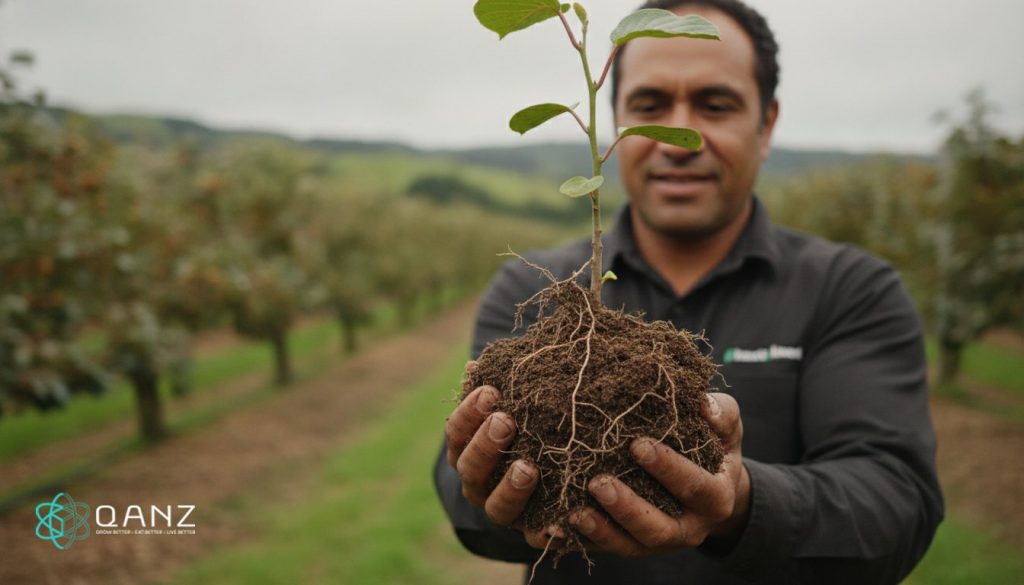
What if the most sophisticated defence system for your crops isn’t found in a chemical drum, but is already residing within the soil profile? Enhancing plant immunity with soil microbes involves fostering beneficial bacteria and fungi that trigger a plant’s natural defence pathways, such as Induced Systemic Resistance (ISR). This partnership improves nutrient uptake and builds a biological shield. It allows Australian and New Zealand growers to reduce synthetic reliance while maintaining health in kiwifruit, viticulture, and horticulture.
Many local growers recognise that heavy synthetic use can leave orchards and paddocks vulnerable to environmental stress. It’s a frustrating cycle where increasing inputs don’t always yield resilient results. This guide explores how managing soil microbiology can support natural plant defence mechanisms and long-term crop resilience in New Zealand and Australian conditions. We’ll examine the biological mechanisms of microbial colonisation and provide a structured overview of how these tiny partners build sustainable soil health and a more robust application programme for future seasons.
Key Takeaways
- Understand how the rhizosphere serves as a critical first line of defence by facilitating a symbiotic relationship between root systems and beneficial soil organisms.
- Explore the scientific principles of enhancing plant immunity with soil microbes to foster natural resilience against environmental stressors in local horticulture and viticulture.
- Identify the specific roles of beneficial bacteria in colonising roots and producing secondary metabolites that naturally inhibit pathogen development.
- Compare the long-term effects of conventional synthetic inputs against biological soil enhancers to determine the most sustainable path for soil vitality.
- Learn how to incorporate microbial inputs like Quantum Organic-Total® and Quantum VSC® into a structured biological growing programme for improved crop resilience.
What is the Relationship Between Soil Microbes and Plant Immunity?
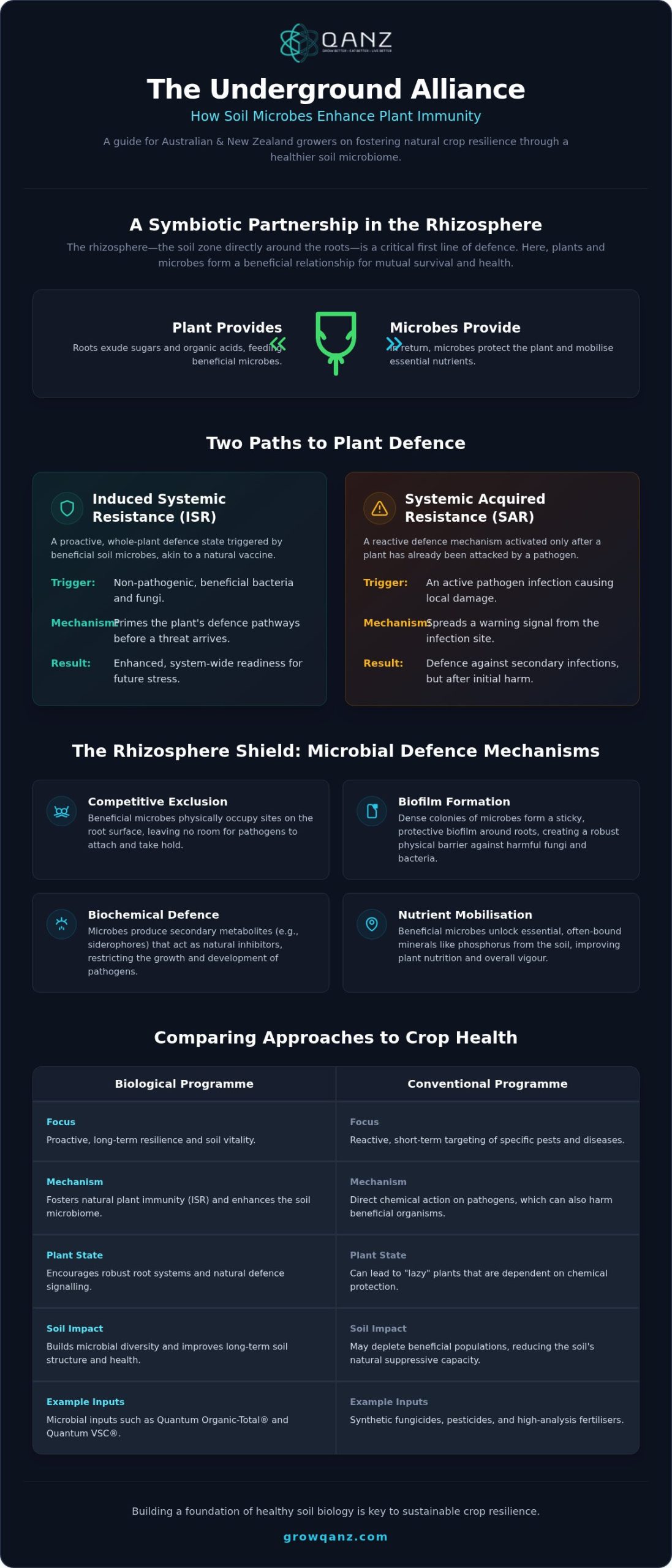
Soil microbes and plant immunity share a symbiotic link where beneficial organisms prime the plant’s natural defence systems. By colonising the root zone, these microbes trigger physiological changes that enhance the plant’s ability to resist pathogens and environmental stress. This biological partnership, known as Induced Systemic Resistance (ISR), creates a proactive microbial shield. It reduces reliance on reactive chemical treatments while fostering long-term resilience in diverse Australian and New Zealand growing conditions.
The rhizosphere acts as the primary interface between the plant and the plant microbiome. It’s the narrow region of soil directly influenced by root secretions. Within this zone, plants exude sugars and organic acids to recruit specific beneficial bacteria and fungi. These organisms form a physical and biochemical barrier against soil-borne pathogens. Unlike reactive chemical protection that targets specific pests after an outbreak occurs, this biological foundation provides a broad-spectrum, constant state of vigilance. Healthy soil biology isn’t just an optional extra; it’s the fundamental baseline for high-performing crops.
Induced Systemic Resistance (ISR) vs. Systemic Acquired Resistance (SAR)
Induced Systemic Resistance is a microbe-mediated defence response. Non-pathogenic soil bacteria trigger a plant-wide state of readiness, similar to how a vaccine primes a human immune system. It prepares the plant’s internal pathways without the stress of an actual infection. In contrast, Systemic Acquired Resistance (SAR) typically relates to pathogen-induced responses, often triggered after a plant has already been attacked. By focusing on enhancing plant immunity with soil microbes, growers can activate ISR early. This ensures the crop is biologically prepared for future biotic or abiotic stress before any visible damage takes place.
Why Chemical-First Approaches Can Mask Soil Vulnerability
Over-reliance on synthetic inputs can lead to “lazy” plants that fail to establish robust microbial associations. When high levels of readily available nutrients are applied, plants often stop exuding the carbon signals required to attract beneficial microbes. This bypasses natural immunity and leaves the crop vulnerable if chemical protection fails or environmental pressures increase. Restoring biology is essential after soil fumigation or intensive fungicide regimes. These practices often deplete the specific microbial populations required for natural resilience. Transitioning toward a biological application programme helps rebuild these lost connections, ensuring the plant isn’t left standing alone against pathogens.
How Specific Microbes Support Natural Defence Mechanisms
Beneficial bacteria don’t just inhabit the soil; they actively seek out and colonise the root architecture. This process is the cornerstone of enhancing plant immunity with soil microbes. Once established, these organisms produce secondary metabolites. These biochemical compounds, such as siderophores and lipopeptides, act as natural inhibitors that restrict the growth of harmful pathogens. It’s a proactive biological strategy that prioritises natural prevention over reactive synthetic treatments, ensuring the plant’s internal systems are primed before a threat arrives.
The Rhizosphere Shield: Physical and Chemical Barriers
Beneficial microbes physically occupy the specific sites on the root surface where pathogens would otherwise attach. This competitive exclusion ensures that harmful fungi and bacteria have no room to take hold. By forming dense biofilms, these microbes create a sticky, protective layer that serves as a robust physical barrier. Photosynthetic bacteria play a critical role here too. They contribute to overall soil vitality by fixing carbon and providing energy to the wider microbial community. This collective effort is why high microbial diversity is more effective than relying on a single-strain solution. A diverse population ensures that if one strain faces environmental stress, others are present to maintain the shield.
Nutrient Mobilisation as a Foundation for Resilience
Long-term resilience is built on a foundation of plant vigour. Microbes facilitate the uptake of essential minerals like phosphorus, which is frequently “locked” in Australian and New Zealand soil profiles due to high iron or aluminium content. When plants access these minerals efficiently, they develop thicker, stronger cell walls. This physical reinforcement makes it significantly harder for pathogens to penetrate the plant tissue. This process, often linked to induced systemic resistance, ensures the plant is physiologically prepared for challenges. In New Zealand’s volcanic soils, microbes are particularly vital for recycling nutrients from organic matter, turning unavailable compounds into plant-ready forms. Growers can support these natural processes by integrating specialised microbial inputs into their biological growing programmes to ensure consistent microbial activity throughout the season.
You can learn more about establishing these populations with Quantum Organic-Total® as part of a balanced crop management strategy.
Comparing Conventional Inputs and Biological Soil Enhancers
Choosing between conventional inputs and biological enhancers isn’t an “either/or” decision for most professional growers. It’s about understanding the specific roles they play in a comprehensive crop programme. While synthetics provide a targeted response to acute pressure, enhancing plant immunity with soil microbes focuses on building systemic resilience. Biologicals don’t replace fertilisers; they optimise the plant’s ability to utilise existing soil nutrients and applied inputs. By fostering a diverse microbial community, growers create an environment where plants are active partners in their own protection rather than passive recipients of chemical treatments.
| Feature | Synthetic Protection | Biological Support |
|---|---|---|
| Primary Strategy | Reactive; targets specific pests after arrival. | Proactive; builds internal plant defences. |
| Soil Impact | May leave residues that deplete biology. | Builds microbial diversity and organic matter. |
| Longevity | Immediate but temporary effect. | Cumulative benefits over multiple seasons. |
| Plant Interaction | Bypasses natural plant pathways. | Triggers induced systemic resistance. |
The Impact of Synthetic Residues on Beneficial Biology
Continuous use of certain fungicides and pesticides can inadvertently suppress the beneficial organisms required for natural defence. This suppression often creates a “vicious cycle” where a lack of biological competition allows pathogens to rebound more aggressively. This leads to an increased dependency on chemical interventions to maintain yield. Transitioning to an integrated biological growing programme helps break this cycle by restoring the specific microbial populations that inhibit pathogen development naturally. It’s a shift from reactive firefighting to a more stable, evidence-based management style.
Long-Term Soil Vitality vs. Short-Term Crop Protection
Building soil organic matter through biology is a long-term investment in orchard and field health. Short-term crop protection often focuses solely on the current season’s yield, but biological inoculants like Quantum Organic-Total® contribute to the soil’s structural and biological integrity for future years. This cumulative effect is essential for maintaining productivity in New Zealand’s horticultural sectors, where soil health directly impacts export quality. For a deeper look at the economics of this transition, see our Quantum Organic-Total: A Cost-Benefit Analysis. Fostering these microbial networks ensures the land remains productive for future seasons without the constant need for increasing synthetic inputs.
Best Practices for Managing Soil Biology in Australia and New Zealand
Transitioning from a chemical-centric model to one that prioritises biological vitality requires a shift in management practices. For growers in Australia and New Zealand, the goal is to create a soil environment where microbial populations can thrive year-round. Enhancing plant immunity with soil microbes isn’t a one-off application; it’s a result of consistent cultural choices that protect the delicate biological infrastructure of the paddock or orchard.
Implementing these five key strategies helps optimise soil microbiology across diverse local climates:
- Minimise soil disturbance: Excessive tillage breaks up fungal networks and destroys the physical pores where microbes reside. Moving toward no-till or minimum-till systems preserves these established biological communities.
- Maintain living roots: Microbes rely on root exudates for energy. Using cover crops or permanent swards between rows ensures a constant food supply for the soil microbiome during the off-season.
- Diversify plant species: Monocultures tend to recruit a narrow range of microbes. Diverse rotations or multi-species cover crops encourage a broader, more resilient microbial population.
- Manage organic matter: Retaining crop residues or applying high-quality compost provides the carbon sources needed to “feed” beneficial bacteria and fungi.
- Strategic microbial inoculation: Applying specific biological inputs during periods of high root growth helps establish beneficial populations before pathogen pressure peaks.
Timing is critical for success. In New Zealand and Southern Australia, microbial activity typically peaks in spring and autumn when soil moisture and temperatures are moderate. Applying biologicals during these windows allows for better colonisation compared to the extreme heat of mid-summer or the dormant winter months.
Cultural Practices that Foster Microbial Diversity
In New Zealand viticulture and kiwifruit orchards, inter-row management is a powerful tool for biological health. Maintaining a diverse understorey rather than bare earth prevents soil temperature fluctuations and moisture loss, both of which can kill off surface-level microbes. Using organic mulches in the drip line not only suppresses weeds but also provides a slow-release nutrient source for the rhizosphere. These practices ensure that the soil remains a functioning ecosystem rather than just a medium for holding plants.
Evaluating Soil Health Indicators on the Farm
Monitoring progress requires looking beyond standard N-P-K chemical tests. Growers should observe physical and biological indicators such as soil structure, aggregation, and root depth. Healthy soil should feel friable and have a distinct earthy smell, indicating active actinomycetes. If roots are clean, white, and show good branching, it’s a sign of a healthy relationship with the local microbiome. When soil has been through significant stress, such as flooding or heavy fumigation, using targeted microbial inputs is an effective way to restore these natural systems. You can talk to QANZ about whether our biological programmes are appropriate for your specific soil type and crop requirements.
Integrating Quantum Biological Products into Your Crop Programme
Successfully moving from theory to field application involves selecting the right biological tools for your specific environment. Enhancing plant immunity with soil microbes is achievable through the strategic application of concentrated microbial formulations designed to colonise the rhizosphere effectively. These products provide a stable, diverse population of beneficial organisms that support the natural processes of nutrient cycling and systemic resilience. For Australian and New Zealand growers, this means moving away from a purely reactive model toward a structured biological growing programme that prioritises long-term soil health.
Historical overseas evidence provides a useful point of reference for the potential efficacy of these microbial inputs. For example, the Nolt Farm trial in Pennsylvania showed a 39% yield increase when using a combination of Quantum-Light® and Quantum-VSC®. Results from individual trials or commercial observations are specific to the formulation, crop, location, treatment and conditions tested and should not be interpreted as a guarantee of equivalent performance elsewhere. Each growing system has unique variables, such as soil type and climate, that influence biological outcomes, which is why GrowQanz focuses on evidence-based management.
The Role of Quantum Organic-Total® in Soil Application
Quantum Organic-Total® is a microbial agricultural input available to New Zealand growers that carries BioGro New Zealand certification. This formulation is designed to support soil vitality and is suitable for a wide range of horticultural applications, including viticulture, kiwifruit, and vegetable production. By introducing a broad spectrum of beneficial microbes directly to the soil, it helps establish the biological foundation necessary for resilient growth. This is particularly relevant for New Zealand’s volcanic or alluvial soils where microbial activity is key to unlocking mineral potential. Detailed information on application rates and compatibility is available on the Quantum Organic-Total product page.
Managing Crop Stress with Quantum VSC®
Quantum VSC® is often utilised within comprehensive biological programmes to specifically target crop stress and strengthen resilience throughout the season. This formulation contains specialised microbial strains selected for their ability to function in diverse soil conditions and support the plant during critical growth stages. Choosing the right formulation for the specific crop is essential, as the microbial requirements of a kiwifruit orchard differ from those of a broadacre field crop or a vineyard. You can find technical specifications and application support on the Quantum VSC product page.
Talk to GrowQanz about whether Quantum Organic-Total® or Quantum VSC® is appropriate for your crop, growing system and application programme.
Strengthening Your Biological Foundation for Future Seasons
Transitioning to a biological management model provides a sustainable path for Australian and New Zealand growers to secure long-term productivity. By focusing on enhancing plant immunity with soil microbes, you move from reactive chemical dependency to a system where the plant is an active participant in its own defence. This shift relies on fostering a diverse rhizosphere through cultural practices and strategic inoculation; it ensures your soil remains a vital asset rather than a depleted medium. Building this microbial shield today prepares your orchard or farm for the environmental stresses of tomorrow.
Quantum Organic-Total® is BioGro New Zealand certified, offering a verified solution grounded in scientific microbial technology. GrowQanz provides professional technical support to help you integrate these biological inputs into your specific programme, whether you’re managing kiwifruit, viticulture, or broadacre crops. We understand the unique challenges of local soil profiles and provide the expertise needed to foster natural resilience. It’s a principled approach that values proven results and sustainable progress over temporary gains.
We’re here to help you cultivate a more resilient and productive future for your land.
Frequently Asked Questions
How do soil microbes enhance plant immunity naturally?
The process of enhancing plant immunity with soil microbes involves non-pathogenic organisms triggering a state of readiness known as Induced Systemic Resistance (ISR). When beneficial bacteria colonise the root zone, they send biochemical signals throughout the plant, priming its natural defence pathways. This doesn’t stress the crop like an active infection would; instead, it ensures the plant’s internal systems are prepared to respond more rapidly to future environmental pressures or pathogen attacks.
Can microbial soil treatments replace synthetic fungicides?
Microbial soil treatments are not designed to be direct replacements for synthetic fungicides or other conventional crop protection chemicals. They function as a proactive management tool within a broader biological programme to build systemic resilience. By fostering a diverse and competitive soil microbiome, growers can often reduce their reliance on reactive chemical interventions over time. These biological inputs support the plant’s natural ability to withstand stress rather than providing an external curative effect.
Is Quantum Organic-Total® safe for use on BioGro certified organic farms?
Quantum Organic-Total® is a BioGro New Zealand certified microbial agricultural input, which confirms its suitability for use in certified organic systems. It’s important to note that using this product doesn’t automatically grant organic status to a farm or its produce. Growers must always verify their specific application programme against current GrowQanz technical documentation and BioGro standards. This ensures the input aligns with the specific certification requirements of your horticultural or broadacre operation.
How long does it take to see the benefits of microbial soil inoculants?
The time required to see measurable benefits depends on your specific soil conditions, crop type, and management history. Some growers observe improvements in root architecture or soil friability within a single season, while other benefits are cumulative and develop over several years. Results from individual trials or commercial observations are specific to the formulation, crop, location, treatment and conditions tested and should not be interpreted as a guarantee of equivalent performance elsewhere.
Can I apply microbial treatments through existing irrigation systems?
Liquid formulations like Quantum Organic-Total® are compatible with most standard irrigation setups, including drip lines and fertigation systems. Enhancing plant immunity with soil microbes through these systems ensures the biology is delivered directly to the active root zone for maximum colonisation. You should ensure the system is flushed and free of incompatible residues before application. Talk to GrowQanz about the specific technical requirements for integrating these biologicals into your existing irrigation and application programme.
Are overseas trial results applicable to New Zealand and Australian conditions?
Overseas historical evidence, such as the Pennsylvania Nolt Farm trial that reported a 39% yield increase with Quantum-Light® and Quantum-VSC®, provides an important scientific baseline. However, these figures are specific to that trial’s unique conditions and shouldn’t be seen as a future guarantee. Results from individual trials or commercial observations are specific to the formulation, crop, location, treatment and conditions tested and should not be interpreted as a guarantee of equivalent performance elsewhere.
What is the best time of year to apply microbial soil enhancers?
Applications are most effective when soil temperatures and moisture levels support active root growth, typically during the spring and autumn windows. Applying microbial enhancers when the plant is actively recruiting biology ensures better colonisation of the rhizosphere. This timing allow the microbial populations to establish a protective shield before the onset of extreme summer heat or winter dormancy. GrowQanz can provide guidance on the most appropriate timing for your specific regional climate and crop cycle.
How do I know if my soil microbiology is improving?
Growers can monitor biological progress by observing physical indicators such as soil aggregation, moisture retention, and the presence of healthy, white root systems. A distinct, earthy aroma in the soil often indicates a thriving community of beneficial organisms. While chemical tests provide a snapshot of nutrient levels, these visual and sensory cues offer a practical way to gauge the success of your biological programme. Consistent observation helps you understand how your soil is responding to microbial support over multiple seasons.
Disclaimer
Important: This article provides general agricultural information only. Product performance can vary according to crop, soil, climate, management practices and application conditions. Trial or research results discussed may have been obtained under specific conditions and should not be interpreted as a guarantee of equivalent results. Always follow current product directions and confirm suitability for your crop, growing system and organic certification requirements. Contact QANZ for current product and application information.
