
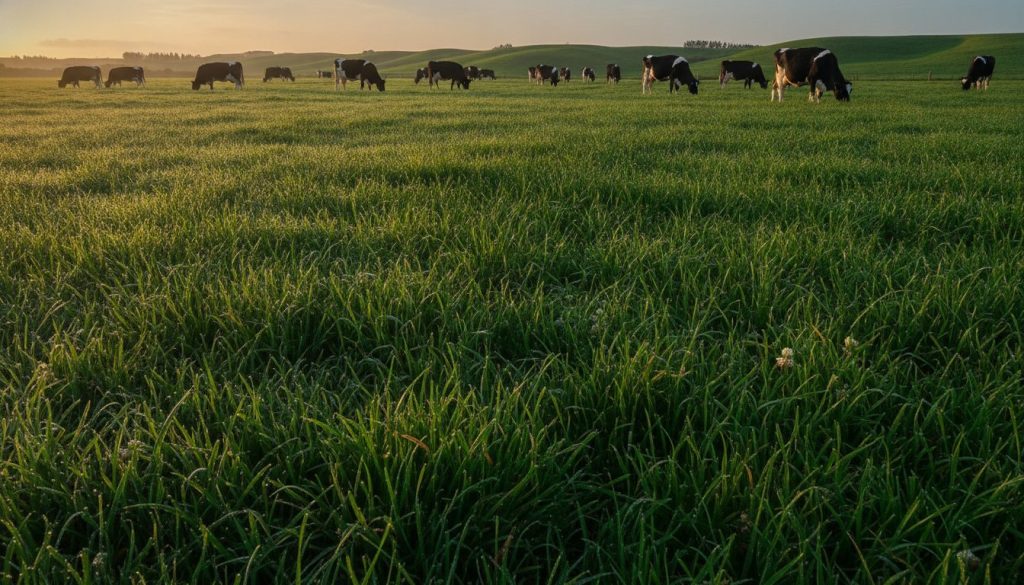
With the 2026/27 organic milk price forecast sitting at a midpoint of $14.00 per kgMS, the financial argument for transitioning your herd has never been more compelling. However, for many New Zealand producers, the shift toward organic dairy farming often brings a quiet anxiety about declining pasture vigour and the complexity of maintaining milksolids without synthetic nitrogen. It’s a common challenge to watch your paddocks struggle during the transition period, especially when you’re navigating the rigorous requirements of BioGro certification and managing soil health in high-rainfall regions.
We understand that true success in the organic sector isn’t just about what you stop using; it’s about the biological life you choose to cultivate. This guide will show you how to optimise your production and pasture health by leveraging advanced microbial science to replace traditional synthetic inputs. You’ll discover how to build resilient, drought-resistant pastures that recover quickly, ensuring you capture higher premiums without sacrificing the long-term health of your herd. We will explore the practical application of BioGro certified solutions like Quantum Organic-Total® and how these natural technologies provide a methodical pathway to a more profitable, sustainable farming future.
Key Takeaways
- Understand the shift towards biological resilience in the New Zealand dairy sector and why market demand for certified organic milk is surging.
- Learn how beneficial soil microorganisms function as a biological engine to unlock phosphorus and potassium already present in your soil.
- Navigate the three-year transition period for organic dairy farming by restoring the biological debt left by decades of synthetic fertiliser use.
- Discover how BioGro certified microbial solutions like Quantum Organic-Total® enhance nutrient density in pastures to support higher milksolids.
- Streamline your compliance with BioGro standards using liquid-based microbial treatments that integrate easily into existing spray or irrigation systems.
The Evolution of Organic Dairy Farming in New Zealand
The landscape of New Zealand dairy is undergoing a fundamental transformation. For decades, the industry relied on a high-input model defined by “super and urea” to drive pasture growth. Today, that approach is being replaced by a focus on biological resilience. Farmers are recognising that the heavy application of synthetic nitrogen often masks underlying soil deficiencies rather than curing them. By shifting towards organic dairy farming, producers are rediscovering the power of natural nutrient cycling. This shift aligns with foundational Organic farming principles that prioritise long-term soil health over temporary chemical boosts. Our pasture-based system, where cows graze outdoors year-round, provides a natural foundation for these standards, making New Zealand uniquely positioned to lead the global market in high-value organic exports.
Environmental stewardship is no longer optional. Reducing nitrogen leaching and improving water quality are now core components of the “social licence to operate” in regions like Waikato and Canterbury. Organic systems naturally mitigate these risks by eliminating synthetic fertilisers that often bypass the plant and leach into groundwater. Instead, organic farmers cultivate a robust microbial community that holds nutrients in the root zone, ensuring that every kilogram of milksolid is produced with a lower environmental footprint. This biological approach builds a more stable ecosystem that can withstand the increasingly volatile weather patterns seen across the North and South Islands.
The Economic Case for Organic Conversion
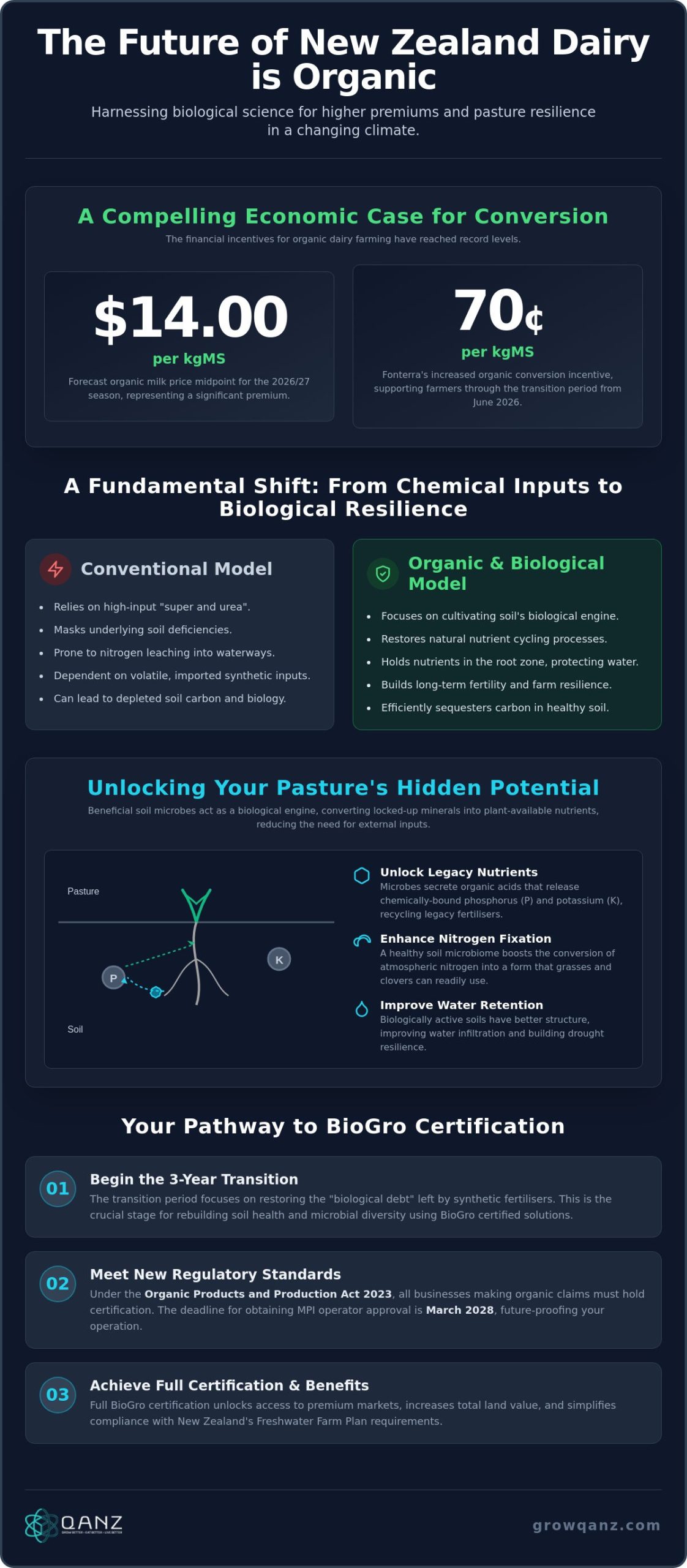
The financial incentive for making the switch has reached record levels. For the 2026/27 season, the forecast midpoint for organic milk is $14.00 per kgMS, which represents a significant premium over conventional prices. To support this transition, Fonterra increased its organic conversion incentive to 70 cents per kgMS as of June 2026. Beyond the farm gate price, the long-term economic benefit lies in reducing reliance on volatile, imported synthetic inputs. By building soil fertility through biological means, farmers can insulate their businesses from global supply chain shocks while increasing the total value of their land through BioGro certification and verified sustainability credentials.
Regulatory and Environmental Drivers
New Zealand’s regulatory environment is tightening. Under the Organic Products and Production Act 2023, all businesses making organic claims must hold certification and obtain MPI operator approval by March 2028. This move provides a clear, legal framework for farmers to meet stringent Freshwater Farm Plan requirements. Organic dairy farming plays a critical role in achieving carbon-neutral goals, as healthy, microbially active soils are far more efficient at sequestering carbon than those depleted by repetitive chemical use. This proactive approach ensures that NZ farmers remain ahead of both domestic legislation and international consumer expectations for pure, ethically produced dairy.
The Biological Engine: Understanding Soil Microbiology in Pasture
The success of organic dairy farming relies on a fundamental shift in perspective: treating the soil as a complex, living biological engine. While conventional systems often rely on soluble salts to feed the plant directly, an organic approach focuses on the microbial community to facilitate nutrient cycling. These beneficial soil microorganisms act as mediators, converting atmospheric nitrogen and mineral-bound elements into forms that grasses and clovers can readily absorb. This transition is mirrored in Pāmu’s organic dairy farming operations, where the focus on ecological health drives commercial viability across large-scale New Zealand landscapes.
One of the most significant advantages of a microbially active soil is the ability to unlock “locked-up” phosphorus and potassium. Many New Zealand paddocks contain high levels of total phosphorus that remain unavailable to plants because they are chemically bound to soil particles. Specific strains of bacteria and fungi secrete organic acids that dissolve these bonds, effectively recycling legacy fertilisers and reducing the need for external inputs. This synergy is further enhanced in multi-species pastures. Diverse root exudates provide a varied “buffet” for different microbial populations, creating a more stable and productive sward. Ultimately, this soil vitality is the primary driver of cow health. When plants have access to a full spectrum of micro-nutrients, the resulting forage is more nutrient-dense, which naturally supports the herd’s immunity and reduces the need for reactive veterinary interventions.
Photosynthetic Bacteria and Nitrogen Fixation
Nitrogen is the cornerstone of pasture growth, yet in an organic system, we must look beyond the bag. Photosynthetic bacteria and other free-living nitrogen fixers play a vital role by capturing nitrogen from the atmosphere and making it available in the rhizosphere. By enhancing this biological activity, farmers can maintain high dry matter production without synthetic urea. These microbial populations also contribute to deeper root systems, which increases the soil’s capacity for carbon sequestration and long-term fertility. For those looking to boost these natural processes, exploring specialised microbial solutions can provide the necessary catalyst for a successful transition.
Quantum-VSC® and Root Zone Resilience
Resilience begins beneath the surface. Quantum-VSC® is specifically formulated to strengthen the rhizosphere, the critical zone surrounding the plant roots. By colonising this area, beneficial microbes improve soil structure and aggregate stability, which significantly enhances water-holding capacity. This is vital for New Zealand farmers facing increasingly frequent summer dry spells or heavy rainfall events. A robust root zone helps pastures withstand drought longer and recover faster after pugging, ensuring consistent growth across all seasons. This structural integrity is a hallmark of a mature organic dairy farming system, where the soil acts as a buffer against environmental extremes.
Transitioning to Organic: Restoring Soil Microbes
Transitioning a New Zealand farm to a certified organic system requires more than just stopping the use of synthetic inputs. It requires a methodical approach to addressing the “biological debt” accumulated through decades of intensive fertiliser application. When urea and superphosphate are removed, the soil’s natural nutrient-cycling systems often fail to engage immediately because the microbial populations have been suppressed or depleted. This three-year transition period is a critical phase for soil stabilisation. During this time, farmers must manage shifting pasture compositions and potential weed pressure as the ecosystem rebalances itself. Monitoring progress through comprehensive soil health tests that measure microbial activity, rather than just basic chemistry, is essential for a successful conversion.
The shift to organic dairy farming is as much a mental transition as it is a biological one. You’re moving from a system of external control to one of internal facilitation. Weeds often appear as “pioneer species,” attempting to correct soil imbalances or compaction issues. Instead of reaching for a chemical spray, a biological approach uses microbes to improve soil structure and nutrient availability, naturally making the environment less hospitable for opportunistic weeds. This process takes time, but the result is a resilient paddock that can maintain productivity without the need for constant, expensive interventions.
The Microbial Restoration Framework
Restoring soil life isn’t a matter of chance. It’s a structured process that begins with understanding your baseline. Traditional tests often overlook the biological component, so the first step involves assessing current microbial density and diversity. Once the baseline is established, reintroducing specific, high-functioning microbial strains is necessary to jump-start the ecosystem. Using BioGro certified solutions like Quantum Organic-Total® ensures that you’re adding beneficial life back into the root zone without compromising your certification status. Finally, adjusting grazing management is vital. Leaving higher residuals and avoiding overgrazing protects the burgeoning soil life from exposure and temperature fluctuations, allowing the “biological engine” to gain momentum.
Overcoming the “Transition Slump”
A common hurdle in organic dairy farming is the “transition slump,” where production levels may dip as the soil adjusts to the absence of synthetic nitrogen. To mitigate this risk, many successful NZ farmers use liquid biological treatments to provide immediate support to struggling pastures. Unlike granules that require moisture to break down, liquid microbial solutions like Quantum Organic-Total® can be applied through existing spray or irrigation systems for rapid uptake. Insights from those who have successfully transitioned highlight that maintaining milksolids during these initial years is possible when you actively support soil biology. By replacing chemical crutches with advanced microbial science, you can bridge the gap between conventional dependency and profitable organic resilience.
Maximising Milksolids through BioGro Certified Strategies
In a certified organic dairy farming system, the volume and quality of milksolids are direct reflections of pasture nutrient density. High-performing pastures are not just about dry matter production; they are about the complex sugars and minerals concentrated within the plant. By monitoring “Brix” levels, which measure the dissolved solids in plant sap, farmers can gauge the photosynthetic efficiency of their sward. Higher Brix levels correlate with superior cow performance, as the herd receives more energy and mineral value per bite. This biological efficiency is supported by Quantum Organic-Total®, which enhances the plant’s ability to synthesise nutrients and store energy, leading to a more consistent milk fat and protein profile throughout the season.
Superior biological nutrition also serves as a preventative strategy against high animal health costs. When pastures are grown in a microbially active environment, they are naturally more balanced in their mineral composition. This reduces the reliance on expensive mineral supplementation and reactive veterinary care. By focusing on the soil-to-cow pathway, farmers can maintain high production levels while ensuring their herd remains resilient and productive for more lactations. This holistic approach ensures that the premiums gained from organic certification aren’t eroded by high on-farm expenses.
Nutrient Uptake and Herd Performance
Bioavailability is the critical factor in herd nutrition. In many conventional systems, trace elements like cobalt, selenium, and iodine are applied as inorganic salts that can be easily leached or locked away in the soil. Microbial solutions improve the bioavailability of these essential elements by incorporating them into organic compounds within the soil-root interface. This natural delivery system reduces the incidence of metabolic issues, such as milk fever or ketosis, particularly during the high-stress calving period. Beyond immediate health, this biological approach supports long-term cow longevity and fertility, ensuring that the most productive animals remain in the herd for more seasons.
Liquid Application: Efficiency in the Paddock
Precision is paramount when applying microbial inoculants. Unlike traditional granules that can result in uneven distribution, liquid treatments provide uniform coverage across the entire paddock. This is especially advantageous for New Zealand farmers who can integrate these solutions into existing effluent or irrigation systems for a streamlined workflow. Timing the application is equally important; applying during late afternoon or on overcast days ensures maximum microbial survival by avoiding high UV exposure. For those aiming to capture the highest possible premiums, using BioGro certified microbial solutions ensures that your production gains are fully compliant with organic standards while simplifying on-farm application.
Future-Proofing the Paddock with GrowQanz Biologicals
Transitioning to a certified system is a significant commercial commitment that demands a stable, evidence-based partner. With the Organic Products and Production Act 2023 making certification mandatory for organic claims by March 2028, organic dairy farming is entering a new era of transparency and professional rigour. GrowQanz projects the persona of an authoritative expert who remains a practical guide, providing BioGro certified microbial solutions that are grounded in advanced science yet built for the realities of the field. We prioritise reliability over hype, offering a principled approach to soil health that values long-term ecological viability. This quiet confidence allows farmers to focus on their primary goal: producing high-value milksolids while acting as knowledgeable stewards of the land.
The role of biological inputs in modern agriculture is to replace synthetic interference with natural harmony. By choosing a partner that understands the New Zealand landscape, farmers can navigate the complexities of BioGro compliance with certainty. Our commitment to integrity and environmental earnestness ensures that every solution we provide is designed for holistic, long-term progress. We avoid flashy trends in favour of proven results, ensuring that your farm’s transition is supported by a steady and reassuring professional presence.
Quantum Organic-Total®: The All-in-One Solution
Quantum Organic-Total® represents a sophisticated microbial consortia designed to address the specific biological needs of New Zealand dairy soils. This 100% natural technology includes photosynthetic bacteria, nitrogen fixers, and carbon-cycling organisms that work together to restore natural fertility. It’s specifically formulated to help farmers overcome the biological debt left by synthetic fertilisers, ensuring that the transition to organic isn’t defined by a loss in productivity. Because it’s a liquid-based treatment, it offers easier application and more uniform coverage than traditional granules, fitting seamlessly into existing spray or irrigation systems. For a detailed breakdown of the financial and biological advantages, view our Quantum Organic-Total cost-benefit analysis.
Partnering for Long-Term Soil Vitality
Our support for professional growers extends far beyond the point of sale. We understand that restoring soil vitality is a methodical process that requires ongoing monitoring and technical expertise. By partnering with GrowQanz, you gain access to a team that understands the technical complexities of microbiology but speaks the language of those who work the land. This evidence-based approach ensures that your investment in biology yields tangible results in pasture resilience, cow health, and milksolid premiums. We believe that sustainable progress is built on proven results rather than temporary gains. To take the next step in your biological journey, contact GrowQanz to organise a soil health consultation for your dairy farm and ensure your paddocks are future-proofed for the seasons ahead.
Cultivating Long-Term Resilience in the NZ Dairy Sector
Transitioning to a biological system represents a strategic move toward higher profitability and environmental stewardship. We have explored how the modern New Zealand producer can capture the record midpoint forecast of $14.00 per kgMS by focusing on soil vitality rather than synthetic inputs. Success in organic dairy farming requires a methodical restoration of the soil’s microbial engine, ensuring that nutrients like phosphorus and potassium are unlocked naturally to drive higher milksolids and superior herd health.
GrowQanz provides the technical expertise and BioGro New Zealand Certified (#5832) technology needed to navigate this transition with confidence. Our specialised microbial strains are specifically selected for New Zealand soil conditions, offering a reliable pathway to broadacre and dairy pasture management that prioritises long-term ecological health. By integrating these advanced biologicals into your system, you’re not just meeting regulatory standards; you’re building a resilient farm that can thrive in a changing agricultural landscape. Enquire about Quantum Organic-Total® for your dairy pasture today to begin optimising your soil’s natural potential. The future of your paddock starts with the life you cultivate beneath the surface.
Frequently Asked Questions
How long does it take to transition a dairy farm to certified organic in NZ?
Full BioGro certification typically takes three years of strictly adhering to organic standards. During this period, your farm progresses through different conversion statuses before achieving full organic recognition. This timeframe allows for the clearance of synthetic residues and the restoration of natural biological processes in the soil. It’s a structured journey that ensures the integrity of the final certified product.
Will my milksolids (MS) production drop significantly during the transition?
Production dips, often called the “transition slump,” can occur if you remove synthetic inputs without supporting soil biology. However, organic dairy farming remains profitable when you actively replace chemical crutches with microbial solutions. By leveraging Fonterra’s 70 cents per kgMS conversion incentive and capturing biological efficiencies, many farmers maintain steady production while their pastures adjust to the new system.
Are GrowQanz products like Quantum Organic-Total® fully BioGro certified?
Yes, Quantum Organic-Total® and Quantum-VSC® are fully BioGro New Zealand certified under registration #5832. This certification provides the necessary verification for your organic audit trail and ensures your inputs meet the highest international standards. Using these certified microbial solutions allows you to enhance soil health and pasture vigour without compromising your farm’s compliance or organic status.
Can I use microbial inoculants alongside lime or organic fertilisers?
Microbial inoculants are highly synergistic with lime and organic fertilisers like reactive phosphate rock. While these inputs provide the raw materials, microbes act as the “engine” that processes them into plant-available forms. This biological activity ensures that your soil amendments are utilised efficiently rather than remaining inert, leading to better nutrient uptake and more resilient pasture growth.
How do I apply liquid microbial treatments to large-scale dairy paddocks?
Liquid treatments are easily applied through existing on-farm infrastructure such as boom sprays or effluent irrigation systems. This method ensures uniform coverage across your paddocks, which is difficult to achieve with traditional granules. For maximum efficacy, it’s best to apply these living treatments during late afternoon or on overcast days to protect the microbes from UV exposure until they reach the root zone.
What are the main requirements for BioGro organic dairy certification?
The core requirements include a total prohibition on synthetic fertilisers, pesticides, and GMOs for at least three years. Farmers must also maintain high animal welfare standards and keep rigorous records for annual audits. Meeting these standards is essential for capturing the significant price premium for organic milk, which currently has a forecast midpoint of $14.00 per kgMS for the 2026/27 season.
How do microbes help with nitrogen leaching on dairy farms?
Microbes reduce leaching by incorporating nitrogen into their own cellular structures and the soil’s organic matter. Unlike synthetic urea, which is highly soluble and easily washes into waterways, biological nitrogen is held within the root zone in a more stable form. This process helps organic dairy farming operations meet New Zealand’s stringent freshwater farm plan requirements while keeping nutrients where the plants need them.
Can biological farming help my pasture survive a dry New Zealand summer?
Biological farming significantly improves drought resilience by increasing soil organic matter and enhancing water-holding capacity. Microbial activity builds better soil structure, which allows roots to penetrate deeper into the profile to access subsoil moisture. This means your pastures remain productive for longer during dry spells and recover much faster once the rain returns, providing a critical buffer against climate volatility.
