
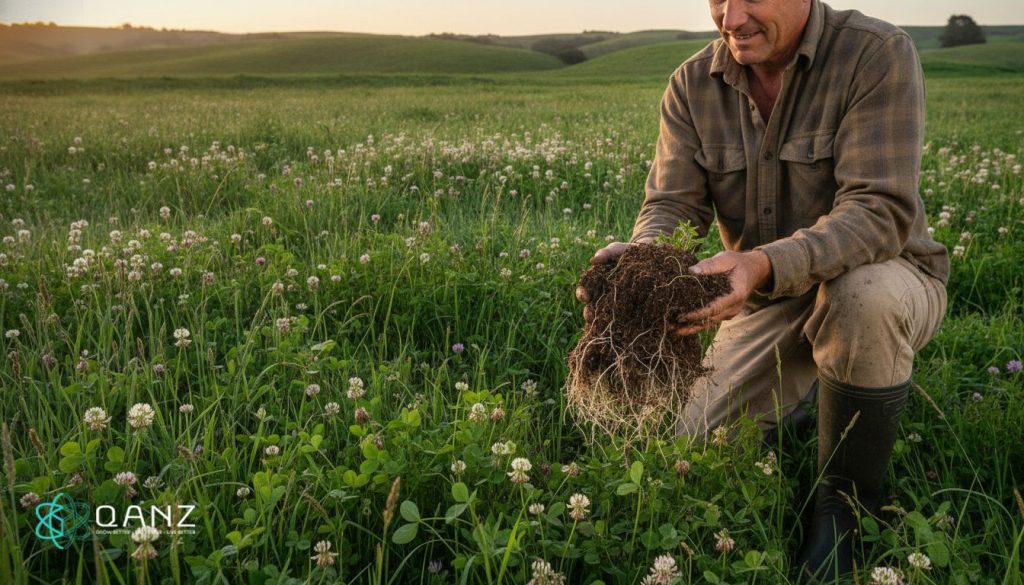
Can a dairy pasture truly thrive once the synthetic nitrogen tap is turned off? Maintaining soil health for organic dairy pasture isn’t just about avoiding prohibited chemicals; it relies on fostering a diverse microbial ecosystem to facilitate natural nutrient cycling. By prioritising biological function, growers can maintain high-quality forage and build resilience against climatic stress while adhering to BioGro or Australian organic standards.
You likely recognise that your soil is a living asset, yet achieving consistent productivity without synthetic fertilisers remains a complex challenge. It’s often difficult to balance the demands of high-performing stock with the strict requirements of organic certification, especially when facing unpredictable seasonal shifts and soil compaction issues.
This article explores how to manage and enhance soil biological function to support a resilient, high-quality dairy operation. We will examine the mechanics of microbial diversity, the role of soil structure in moisture retention, and how certified inputs like Quantum Organic-Total® can be integrated into your management programme to support long-term productivity.
Key Takeaways
- Understand how to define and monitor soil health for organic dairy pasture by viewing the soil as a vital, living ecosystem rather than a static medium.
- Learn why beneficial microbes are the “engine room” of nutrient cycling and how they colonise the rhizosphere to support plant growth without synthetic inputs.
- Discover the role of diverse pasture species in stimulating soil microbial diversity and enhancing the resilience of your forage against climatic stress.
- Identify practical management strategies, such as biological soil testing and reduced disturbance, to protect established microbial networks.
- Explore how to integrate BioGro-certified microbial inputs like Quantum Organic-Total® into your existing spray or fertigation programmes.
Defining Soil Health for Australian and New Zealand Organic Dairy
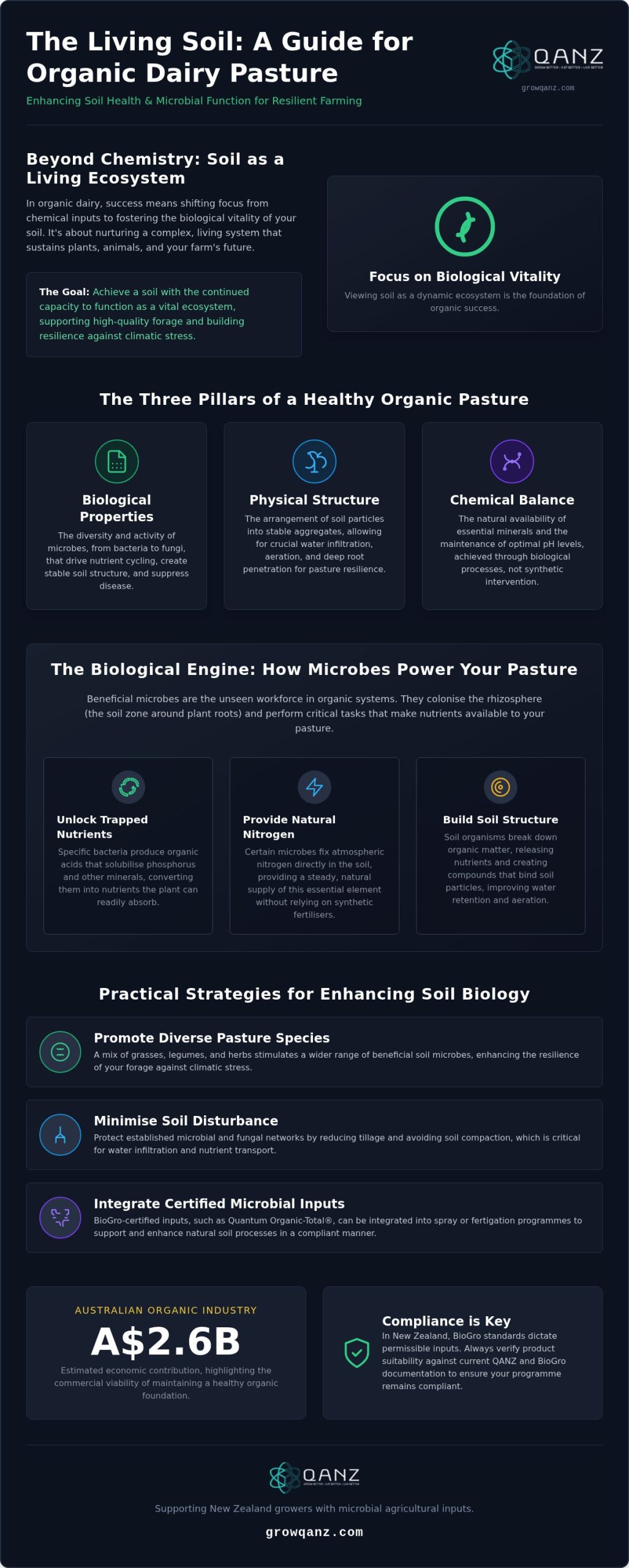
Soil isn’t merely a medium for holding plants upright; it’s a complex, living ecosystem. For those managing soil health for organic dairy pasture, this definition shifts from a focus on chemical inputs to the active maintenance of biological vitality. It’s about the soil’s continued capacity to function as a vital living system that sustains plants, animals, and humans alike. In the context of the Australian organic industry, which contributes an estimated A$2.6 billion to the economy, maintaining this foundation is critical for long-term commercial viability. Understanding what is soil health? requires looking beyond simple NPK ratios to the holistic interaction of biology, physics, and chemistry.
In organic systems, you can’t rely on synthetic nitrogen to mask poor soil structure or low biological activity. Instead, productivity depends on the synergy between three core pillars:
- Biological properties: The diversity and activity of microbes that drive nutrient cycling and disease suppression.
- Physical structure: The arrangement of soil particles into stable aggregates that allow for water infiltration and root penetration.
- Chemical balance: The natural availability of minerals and the maintenance of pH levels without synthetic intervention.
The Role of Biological Function in Pasture Systems
Biological function is the engine room of a dairy farm. Soil organisms, from earthworms to microscopic bacteria, drive the breakdown of organic matter into plant-available nutrients. This process is essential for creating nutrient-rich forage that supports stock welfare and milk quality. When soil biology is flourishing, it creates natural compounds that maintain soil aggregation. This structure prevents erosion and improves water retention, which is vital for resilience against drought and climatic stress. Healthy soil vitality directly correlates with the nutritional profile of your pasture, ensuring cows receive the minerals they need through the plants they graze.
Meeting Organic Certification Standards
Compliance is a non-negotiable aspect of organic dairy. In New Zealand, BioGro standards dictate which inputs are permissible to ensure environmental integrity. As the country moves towards mandatory organic standards by March 2028, verifying product suitability is becoming increasingly important for every grower. Quantum Organic-Total® is a microbial agricultural input available to New Zealand growers that is BioGro certified. When transitioning paddocks or restoring biological function, it’s vital to check suitability against current QANZ and BioGro documentation. This ensures your soil management programme remains compliant while you work to restore the natural microbial networks necessary for a high-performing organic system.
The Biological Engine: Microbial Activity in Pasture Soils
Microscopic organisms are the primary drivers of nutrient availability in organic systems. Without synthetic nitrogen, soil health for organic dairy pasture depends entirely on the efficiency of this biological engine. Beneficial bacteria actively colonise the rhizosphere, the narrow region of soil directly influenced by root secretions, where they facilitate a critical exchange of resources. These organic farming practices in New Zealand emphasise the importance of nurturing this subterranean workforce to ensure long-term pasture productivity. Microbial inoculants are biological tools intended to support natural soil processes by introducing specific beneficial microorganisms into the environment.
Microbial activity significantly influences how nutrients move through the soil profile. While phosphorus is often present in the soil, it’s frequently tied up in insoluble forms. Specific bacteria produce organic acids that solubilise these minerals, making them accessible to pasture grasses. Similarly, certain microbes are capable of fixing atmospheric nitrogen, providing a steady supply of this essential element without the need for urea. This natural recycling loop is the cornerstone of a self-sustaining dairy operation.
Photosynthetic Bacteria and Soil Vitality
Photosynthetic bacteria (PSB) play a specialised role in supporting the soil food web. Unlike most soil microbes that rely solely on organic matter for energy, PSB can utilise light to drive metabolic processes, often producing beneficial byproducts like amino acids and vitamins. Incorporating advanced microbial technology into a management strategy can be an effective way to enhance these natural biological functions. You can explore the specific biological mechanisms behind these processes at the QANZ Technology page. Understanding these microscopic interactions allows for more precise management of pasture health.
Overseas Historical Evidence and Trial Context
Historical evidence from overseas trials provides insights into the potential of biological inputs. At Nolt Farm in Pennsylvania, USA, a trial documented a 39% yield increase in treated areas using Quantum-Light® and Quantum-VSC®. These results highlight how targeted microbial support can influence pasture performance in specific environments. Results from individual trials or commercial observations are specific to the formulation, crop, location, treatment and conditions tested and should not be interpreted as a guarantee of equivalent performance elsewhere.
If you’re looking to refine your biological approach, consider exploring a tailored Quantum biological growing programme for your pasture.
Strategies for Enhancing Nutrient Cycling and Pasture Resilience
Transitioning to a system that prioritises soil health for organic dairy pasture requires a fundamental shift from chemical dependency to biological management. Instead of relying on synthetic fertilisers to provide a quick hit of nutrition, organic systems depend on natural nutrient cycling. This process involves the decomposition of organic matter by soil organisms, which slowly releases minerals in a form that plants can readily absorb. You can manage grazing patterns to maximise this return; by ensuring stock distribute manure evenly and allowing for sufficient pasture recovery periods, you feed the soil’s biological engine. This returned organic matter serves as the primary fuel for the microbes that maintain the paddock’s long-term fertility.
Conventional vs. Organic Soil Management
Conventional dairy systems often rely on high-solubility synthetic nitrogen to drive rapid leaf growth. While this provides immediate results, it can lead to a decline in soil structure and a reduction in long-term carbon storage. In contrast, organic management leverages biological nitrogen fixation through clovers and associative microbes. This approach doesn’t just feed the plant; it builds soil aggregates and enhances the soil’s ability to hold water. Liquid microbial treatments are particularly valuable in this context, as they help maintain biological fertility during transition periods or when environmental conditions might otherwise suppress natural microbial activity. This helps ensure that the soil remains a productive asset rather than one that requires constant external correction.
Managing Pasture Diversity and Microbial Synergy
Multi-species pastures, incorporating a mix of herbs, clovers, and grasses, offer significant benefits for soil health for organic dairy pasture. These diverse systems require a robust soil microbiome to reach their full potential. Each plant species produces unique root exudates, which are chemical signals that attract and feed specific microbial groups. This synergy creates a more resilient ecosystem that can better withstand environmental pressure. Microbial inputs like Quantum Organic-Total® may support soil resilience during seasonal dry periods by helping maintain these microbial networks when moisture is scarce. For a broader perspective on maintaining broadacre vitality, you might find our guide on Microbial Solutions for Field Crops useful in understanding these complex biological interactions.
Best Practices for Organic Soil Management and Maintenance
Effective management of soil health for organic dairy pasture requires a shift from reactive problem-solving to proactive ecosystem stewardship. Consistent soil testing is the foundation of this approach. Rather than seeking a single snapshot of nutrient levels, growers should monitor biological and chemical trends over several seasons. This longitudinal data allows for the calculation of inputs that complement natural biological supply rather than overriding it. By understanding the baseline of your soil’s natural fertility, you can make informed decisions that support the long-term sustainability of your dairy operation.
Protecting established microbial networks is just as important as feeding them. Avoiding excessive soil disturbance, such as heavy cultivation, prevents the physical disruption of fungal hyphae and bacterial colonies. Implementing rotational grazing patterns further supports this by allowing soil biological fertility to restore naturally between grazing events. When stock are moved systematically, the soil has time to recover from compaction and the plants have the opportunity to pump carbon back into the rhizosphere through root exudates.
Erosion Control and Organic Matter Retention
Minimising bare soil is critical for protecting the delicate soil organisms that drive your pasture’s productivity. Exposed earth is vulnerable to UV radiation and temperature extremes, which can effectively sterilise the top layer of soil and halt microbial activity. Implementing cover crops or “green manure” during pasture renovation programmes ensures the soil remains covered, cooled, and fed. Retaining plant organic matter in this way maximises nutrient cycling and encourages the formation of stable soil aggregates. This physical structure is what allows your soil to breathe and hold moisture during the dry periods common in Australian and New Zealand summers.
Composting and Natural Amendments
Integrating farm-sourced compost is an excellent method for introducing stable carbon and diverse biology back into the paddock. For broad-scale pasture coverage where spreading bulk compost may be logistically challenging, liquid microbial applications offer a practical and efficient alternative. Quantum Organic-Total® is a microbial agricultural input that can be integrated into existing spray or fertigation systems to support soil vitality. It’s essential to check certification requirements for all external inputs against current BioGro or Australian standards before application to ensure compliance remains intact. Using these amendments to support, rather than replace, natural soil processes ensures a more resilient and self-sustaining pasture system.
Integrating Microbial Inputs into Your Dairy Programme
Successful management of soil health for organic dairy pasture requires practical tools that fit into a busy operational schedule. Quantum Organic-Total® is a microbial agricultural input offered by QANZ for use in crop and soil programmes, providing a streamlined way to support biological function. These liquid biologicals are designed for easy incorporation into existing farm infrastructure, including boom sprayers and fertigation systems. By using current equipment, you can distribute beneficial microorganisms across large areas without the logistical burden of spreading bulk solids. The objective is to ensure these microbes reach the rhizosphere, where they can begin supporting the natural nutrient cycling processes discussed earlier in this article.
Timing is a critical factor for microbial efficacy. Biology isn’t a static input; it’s a living system that requires specific conditions to thrive. You should aim to match applications with active pasture growth phases and adequate soil moisture levels. Applying microbial inputs during the spring flush or following autumn rains ensures the organisms have access to the root exudates and water they need to establish. Conversely, applying during periods of extreme midday heat or when the soil is completely saturated can limit the survival and activity of the introduced microbes.
Utilising Quantum Organic-Total® and Quantum-VSC®
Quantum Organic-Total® is intended for soil and plant applications to support biological function and is BioGro certified in New Zealand. This certification is vital for maintaining compliance with organic standards while actively managing soil vitality. For growers looking to expand their biological approach, Quantum-VSC® can be considered as part of a wider biological growing programme. This formulation is often used to support the breakdown of organic matter and improve soil structure. It’s essential to check product suitability, application rates, and certification requirements against current QANZ technical and BioGro documentation. You can find detailed Quantum Organic-Total® specifications to help determine how it fits your system.
Developing a Seasonal Application Programme
A robust application programme is tailored to the unique seasonal pressures of Australian and New Zealand dairy environments. In the spring, the focus is on supporting rapid root development and nutrient availability to meet the demands of peak lactation. During the autumn, the priority shifts to biological restoration and preparing the soil for the cooler months. By monitoring pasture response and conducting regular soil tests, you can adjust your application rates as part of an integrated management plan. This ensures your biological inputs are working in harmony with your grazing cycles and climatic conditions. Talk to QANZ about whether Quantum Organic-Total® is appropriate for your crop, growing system and application programme.
Building Long-Term Resilience in Your Dairy Pasture
Proactive stewardship of soil health for organic dairy pasture is essential for maintaining productivity without the use of synthetic inputs. By prioritising microbial diversity and protecting soil structure through rotational grazing and organic matter retention, you build a system that is naturally resilient against climatic stress. Success in the organic sector depends on this shift from reactive chemical dependency to a principled, biological approach that treats the soil as a living asset.
Utilising professional microbial technology provides a verified pathway to support these natural cycles. Quantum Organic-Total® is BioGro New Zealand certified, offering a reliable tool for growers who require transparency and performance. QANZ supports this technology with technical expertise tailored specifically for the Australian and New Zealand agricultural landscape, ensuring your soil management is grounded in science.
Focusing on the biological vitality of your paddocks today ensures a productive, nutrient-rich forage foundation for the future of your dairy operation.
Frequently Asked Questions
What is the most important factor for soil health in organic dairy?
The primary factor for maintaining soil health for organic dairy pasture is the active management of biological function. Unlike conventional systems that rely on external chemical inputs, organic dairy depends on the soil’s capacity to function as a living ecosystem. This involves fostering a diverse microbial population that can efficiently cycle nutrients from organic matter into plant-available forms. Healthy biological activity supports stable soil structure, which is the foundation for resilient forage and long-term paddock productivity.
Can microbial inoculants replace synthetic fertilisers in a dairy system?
Microbial inoculants are biological tools intended to support natural soil processes rather than serve as a direct replacement for conventional fertiliser products. In an organic dairy system, these inputs work to enhance the efficiency of nutrient cycling and biological activity already present in the soil. They help maximise the utility of organic matter and natural minerals, assisting the pasture to thrive within the constraints of organic certification by fostering a self-sustaining nutrient loop.
Is Quantum Organic-Total® certified for use on organic farms in New Zealand?
Quantum Organic-Total® is a microbial agricultural input offered by QANZ that is BioGro New Zealand certified. This certification ensures that the product meets the rigorous standards required for use as an input in organic systems. However, growers should always verify current product suitability, application rates, and specific certification requirements against the latest QANZ technical and BioGro documentation before use to ensure their programme remains fully compliant with national standards.
How do soil microbes improve pasture resilience during a drought?
Soil microbes improve pasture resilience by enhancing soil aggregation and structure, which significantly affects water infiltration and retention. A healthy microbial population produces natural glues that bind soil particles together, creating pores that hold moisture more effectively during dry periods. This improved structure allows roots to penetrate deeper and access water reserves, helping to maintain soil health for organic dairy pasture when moisture levels are low and climatic stress is high.
What are the benefits of liquid microbial treatments over granular options?
Liquid microbial treatments offer several practical advantages, primarily the ability to be integrated into existing spray or fertigation infrastructure. This allows for uniform, broad-scale coverage across large dairy paddocks without the logistical challenges of spreading bulk granular amendments. Liquid formulations also ensure that the microbes are delivered in a hydrated state, which can facilitate better movement into the soil profile and quicker colonisation of the rhizosphere where they are most effective.
How often should I apply microbial products to my dairy pasture?
Application frequency should be tailored to match specific pasture growth phases and soil moisture levels rather than following a rigid calendar. Generally, microbial products are applied during the spring flush and autumn rains when soil temperatures and moisture are conducive to biological activity. Monitoring your pasture’s response and conducting regular soil tests will help you determine the optimal timing for your specific location and management goals as part of an integrated biological programme.
Does using Quantum products automatically make my farm certified organic?
No, using Quantum products doesn’t automatically make a farm, crop, or produce certified organic. Organic certification is a comprehensive process managed by bodies like BioGro or AsureQuality, involving strict audits of all farm management practices, land history, and inputs. While Quantum Organic-Total® is a certified input suitable for such systems, achieving and maintaining organic status for your dairy operation requires full adherence to the relevant national organic standards across all aspects of production.
How do I verify if a soil input meets BioGro standards?
To verify if a soil input meets BioGro standards, you should consult the current official BioGro certificate or registration documentation. QANZ provides technical support and documentation for its products to help growers confirm compliance. It’s essential to check the specific registration number and ensure the product is listed for the intended use. Always refer to the most recent certification data before application, as standards and product registrations can be updated periodically.
Disclaimer
Important: This article provides general agricultural information only. Product performance can vary according to crop, soil, climate, management practices and application conditions. Trial or research results discussed may have been obtained under specific conditions and should not be interpreted as a guarantee of equivalent results. Always follow current product directions and confirm suitability for your crop, growing system and organic certification requirements. Contact QANZ for current product and application information.
