
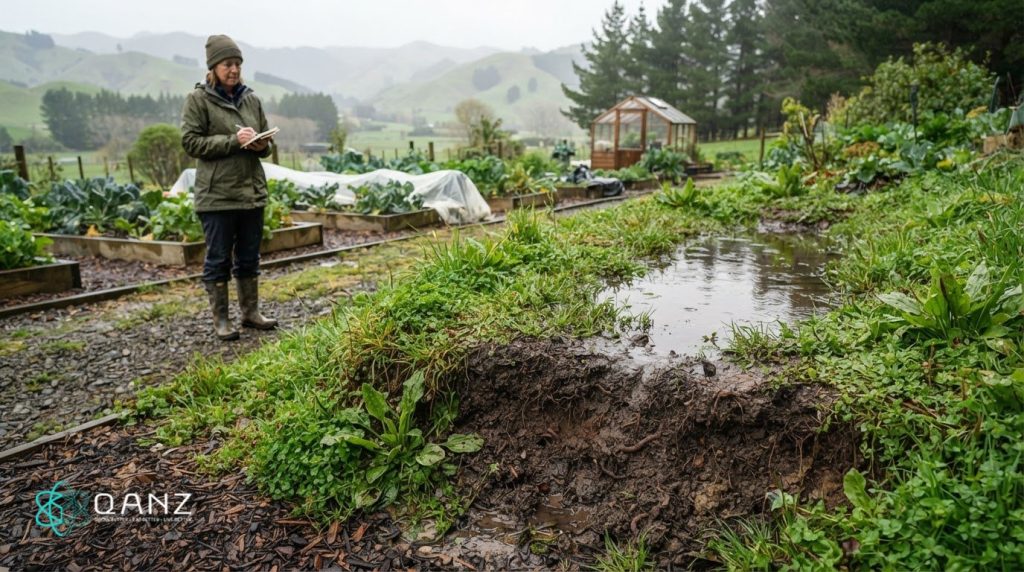
A waterlogged winter lawn needs time to drain and less pressure on already wet ground. Natural solutions for waterlogged soil include preventing further compaction, improving soil structure with organic matter and using plants to support water movement. These steps can help, but persistent pooling may also point to a drainage issue that needs a broader solution.
If your lawn stays soggy after rain, it’s tempting to aerate it or add something to the soil straight away. But working wet ground can worsen compaction and restrict the pathways water needs to move through the soil.
This article explains what causes waterlogging, how to tell whether compaction may be a factor and which practical steps can help. You’ll also learn how living plant cover supports soil structure, when raised beds may be useful and why quick fixes such as adding sand to clay can backfire.
Key Takeaways
- Identify whether pooling follows heavy rain or persists, and observe how water moves across the site before choosing a response.
- Keep off saturated ground until it is workable; traffic on wet soil can deepen compaction and restrict drainage.
- Use living plant cover and suitable wet-tolerant plants to support soil structure and help remove water through plant growth.
- Avoid adding sand to clay soil, as it can create a dense layer that makes drainage worse.
- Match your approach to the cause: improving soil structure may help, while persistent waterlogging can require a broader drainage solution.
1. What is waterlogging and flooding?
Waterlogging occurs when water cannot drain down through soil, leaving roots in saturated ground. Flooding describes water covering land that is usually dry, whether from heavy rain or overflowing water. In a New Zealand garden, low-lying ground, heavy clay and compacted soil can all slow drainage. A simple test hole can help you assess how well the soil drains. If water takes more than an hour to drain, the soil is poorly drained; drainage in 10 minutes to an hour indicates better drainage.
Natural solutions for waterlogged soil start with protecting its structure. Keep vehicles, people and animals off saturated ground, and wait until it is workable before cultivating. Add mature compost through the soil rather than leaving it only on the surface. Over time, organic matter can support soil structure and aeration, helping create connected pathways for water. In garden beds, apply it regularly and observe whether puddles clear more readily after rain.
Improving infiltration helps rain enter the soil; improving drainage helps water move through or away from it. After rainfall, note where water gathers and address the likely cause, such as compaction, a low point or runoff from elsewhere. Keep soil covered with plants where practical, and avoid working it while wet. If a lawn or bed stays wet year-round, or water threatens buildings or affects neighbouring land, seek professional drainage help.
A French drain is an underground drainage system with a perforated pipe that collects and redirects water. For gravity-fed flow, the pipe needs a minimum downhill slope of 1%. Its route must lead to a suitable place for water to drain; without an outlet, a pipe cannot remove surplus water. A French drain can help move surface water or groundwater away from a wet lawn, but major excavation or drainage near a structure calls for professional assessment.
Rain gardens and swales manage runoff by slowing and holding water rather than letting it flow straight across the ground. A rain garden is a shallow planted basin that collects surface runoff and lets it soak in gradually. A swale is a shallow planted channel that guides runoff while slowing its movement. Either can help reduce pooling if positioned to intercept water and the soil can absorb it. Choose plants suited to wet conditions, then observe how water moves through the site after rain.
In New Zealand, council requirements for garden drainage work depend on the work involved and where the water goes. Earthworks, connections to public stormwater systems and changes affecting waterways may involve council requirements. Don’t direct runoff onto neighbouring land. There is no single cost for a rain garden or drainage solution: the area, site access, soil, excavation, materials and outlet all affect the work involved.
2. Reducing soil compaction
Compaction squeezes soil particles together, reducing the pore spaces that carry water and oxygen. Footsteps, vehicle tyres and livestock hooves can press wet soil into a denser layer, restricting root growth and slowing drainage. Clay soil is particularly vulnerable because it holds water and drains slowly. After repeated rain, a compacted lawn may develop puddles, thin grass and firm patches underfoot. Reducing pressure on wet ground is one practical natural solution for waterlogged soil.
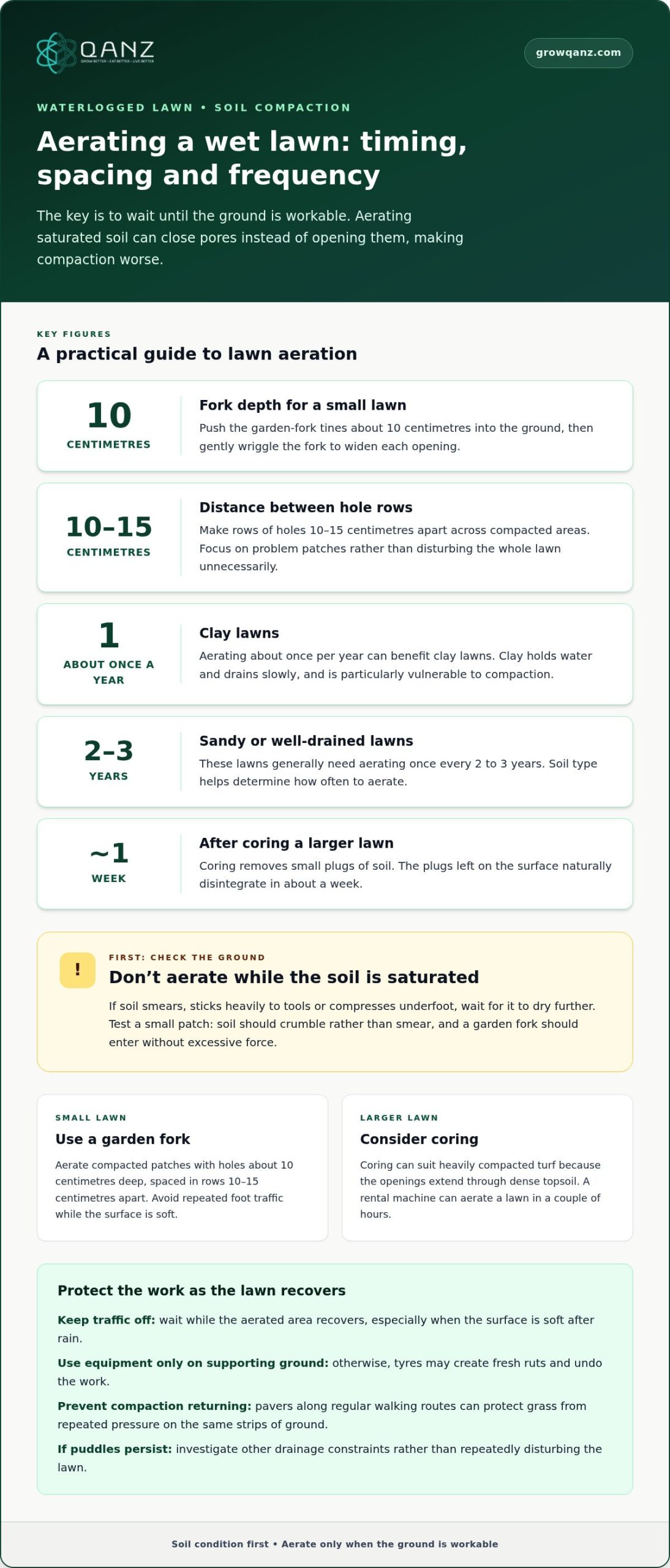
Aerate or cultivate only when soil is workable, not saturated. If it smears, sticks heavily to tools or compresses underfoot, wait for it to dry further. Working wet soil can close pores rather than open them, worsening compaction. Test a small patch first: soil should crumble rather than smear when handled, and a garden fork should enter without excessive force.
For a small lawn, use a garden fork to make aeration holes. Push the tines about 10 centimetres into the ground, then wriggle the fork gently to widen each opening. Make rows of holes 10–15 centimetres apart across compacted areas. This creates channels for air and water to enter. Avoid repeated foot traffic on the treated patch while the surface remains soft, particularly after rainfall.
For larger lawns, coring removes small plugs of soil and leaves them on the surface. It can suit heavily compacted turf because the openings extend through dense topsoil. A rental machine can aerate a lawn in a couple of hours, and the plugs naturally disintegrate in about a week. Use equipment only when the ground can support it; otherwise, tyres may create fresh ruts and undo the work.
Aeration frequency depends on soil type. Clay lawns benefit from aerating about once per year, while sandy or well-drained lawns generally need it once every 2 to 3 years. Focus on areas with repeated foot traffic rather than disturbing the entire lawn unnecessarily. Pavers along a regular walking route can protect grass and reduce pressure on the same strips of ground.
After aerating, keep traffic off the area while it recovers. Compost can support soil structure over time, but incorporate it only when the ground is workable. In garden beds, avoid digging through wet soil; wait until it loosens and crumbles. These natural solutions for waterlogged soil work best when they also prevent compaction from returning. If puddles persist despite reduced traffic and careful aeration, investigate other drainage constraints.
3. Using plant growth to remove water from soil
Plants move water from the ground into the atmosphere through transpiration. Roots absorb water from the soil, and leaves release it as water vapour through tiny pores. Vigorous living plant cover can use some available soil moisture while protecting the surface from raindrop impact. This helps manage water, but plants cannot drain a site faster than prolonged or extreme rainfall replenishes it.
Prolonged saturation affects roots differently from a brief puddle after a downpour. Water fills soil pores that would normally contain air, leaving roots with less oxygen for respiration. As root function declines, plants struggle to absorb water and nutrients, even in wet ground. Wilting, poor growth and rot near the plant base can signal water damage. Adding water while the soil remains saturated worsens the stress.
Living ground cover also benefits soil below the surface. Roots create channels, while decaying roots and leaves add organic matter that supports soil organisms. These organisms help maintain soil structure and water movement. Ground cover also reduces exposed patches where rainfall can strike directly. In a vegetable plot, use suitable living cover between growing periods, then manage it so it doesn’t compete with the next crop.
Where lawn grasses repeatedly fail in damp areas, consider plants suited to wet conditions. Sedges and rushes, for example, can suit persistently moist locations. Choose plants according to how long water remains, the site’s light and the available growing space. Avoid placing plants that dislike wet roots in depressions where water regularly pools. Matching plants to ground conditions is more sustainable than repeatedly replacing damaged turf.
Raised beds can keep crop roots above saturated ground. Beds 20–30 cm high provide a raised growing zone, while mounds offer a similar option for individual plants. Build them where surface water can still move safely, rather than blocking its route and shifting pooling elsewhere. Raised soil also dries differently from the surrounding ground, so monitor moisture before watering established plants.
When planting in heavy, wet soil, set the root ball slightly higher than usual so new roots sit above the wettest layer. Avoid smearing the sides of the planting hole, which can create a smooth barrier to water movement. Choose vegetation suited to damp conditions. If seasonal saturation persists, plants may help manage moisture but won’t resolve every underlying drainage constraint.
4. Causes and effects of waterlogged soil
In New Zealand gardens, prolonged rainfall, clay soil and construction-related compaction can all restrict drainage. A compacted layer may sit beneath loose topsoil, trapping moisture above it even when the surface appears open. Sloping ground can also funnel runoff into a low garden bed or lawn. Hard landscaping changes the pattern further: non-porous surfaces can increase rainwater runoff by as much as 50 percent.
To distinguish poor drainage, a high water table and downpipe overflow, map where wet patches appear and when. Pooling beside a downpipe after rain points to concentrated roof runoff; widespread saturation that persists between rain events may indicate a high water table. If water collects in a low area and drains slowly, soil structure or site drainage may be limiting its movement.
Waterlogged soil deprives roots of oxygen because water fills the air spaces between soil particles. Stressed roots become less able to absorb water and nutrients, so plants can wilt even when the ground feels wet. Look for poor growth, yellowing, soft roots or rot around stems. Lawn puddles that remain for more than a day can drown grass, leaving bare patches where weeds may establish.
Soil organisms also need oxygen to function. Saturation can create low-oxygen conditions in which some pathogens thrive, increasing pressure on vulnerable roots. This risk is especially relevant during warm growing conditions, when roots and soil microorganisms need more oxygen than in cold winter soil. A short-lived flash flood after a downpour seldom harms most plants; prolonged saturation is more damaging.
Inspect the site after rainfall rather than guessing from one visit in dry weather. Note whether water comes from a roof outlet, runs off a paved area, gathers in a hollow or remains across the whole plot. Check whether the same patch stays wet during dry periods. These patterns help distinguish local runoff from slow-draining soil or a persistently high water table.
Match your response to the cause. Keep traffic off saturated ground to avoid worsening compaction, and don’t aerate soil while it smears underfoot. If water comes from a downpipe, manage the concentrated flow without shifting it onto another bed or neighbouring property. Where the whole site remains wet, surface changes alone may not address the underlying drainage constraint.
In growing areas, track plant health alongside water movement. Compare a healthy section with the affected patch, noting root condition, plant growth and how quickly puddles clear. If conditions don’t improve and crop growth declines, the area may need a drainage assessment. Extreme rainfall can overwhelm soil and drainage measures, so observe the site again after major weather events.
5. Why sand can worsen clay soil
Clay soil contains fine particles that pack closely together, limiting air spaces and slowing water movement. Adding sand may seem like a simple way to loosen it, but a small, casual addition can create a dense layer instead. Rather than opening reliable drainage channels, sand can fill spaces between clay particles and make the soil difficult to work. Water may then sit near the surface after rain.
The result depends on the existing soil and how amendments are incorporated. A handful of sand mixed into a heavy clay garden bed won’t transform it into freely draining soil. It may instead create a dense mixture that roots struggle to penetrate. The practical lesson is simple: don’t use sand as a quick drainage fix for clay ground.
Instead, focus on gradual improvement. Add compost as organic matter and incorporate it through the area being improved, rather than creating a thin, isolated layer. Organic matter supports soil structure as it breaks down, helping create conditions for water and air to move. Apply it when the ground is workable; mixing amendments into wet clay can smear the soil and damage its structure.
Before changing a bed, compare the affected area with nearby ground. Check where puddles form after rain, whether the same spot stays wet and whether the surface feels dense. A shallow planting hole may reveal a compacted layer beneath the topsoil, but one small patch may not represent the whole garden. Note the location and pattern before choosing a soil-improvement method.
When planting in heavy clay, avoid smoothing or smearing the sides of each hole with a spade. Roughen compacted sides with a garden fork so roots can grow into the surrounding soil. This won’t correct poor drainage across a whole site, but it avoids creating a slick boundary around an individual plant. During a wet New Zealand winter, postpone planting or cultivation if soil sticks heavily to tools.
Sand may have a place in specific soil mixes, but it isn’t a dependable remedy for waterlogged clay garden beds. Treat drainage as a whole-soil issue: protect the ground from compaction, add organic matter over time and observe how water moves after rain. If a bed remains saturated, investigate site drainage rather than adding more sand. A targeted response is less likely to worsen the soil you’re trying to improve.
GrowQanz: Quantum Organic-Total®
Quantum Organic-Total® is a microbial agricultural input offered by QANZ for use in crop and soil programmes. It may form part of a wider soil health programme alongside practical drainage management, but it is not a substitute for addressing persistent pooling, compaction or restricted water flow. Those conditions need appropriate physical and growing-practice responses.
GrowQanz can discuss how Quantum Organic-Total® relates to your growing needs and application programme. For growers working within an organic certification programme, confirm that any input suits the programme and intended use.
To discuss Quantum Organic-Total®, contact GrowQanz.
Build a soil plan that adapts over time
Soil improvement is ongoing, not a single intervention. Keep a simple record of where wet patches appear, how they change through the seasons and which areas support healthy growth. This can help distinguish a recurring site issue from a temporary response to unusual weather and guide decisions for future plantings.
A practical plan for natural solutions for waterlogged soil should connect soil care with the needs of each crop and growing system. If biological inputs form part of that plan, consider how they fit alongside cultivation, plant cover and other management choices. Focus on decisions that support long-term soil function rather than chasing a quick fix that leaves the underlying conditions unaddressed.
For a considered discussion about soil biology and your growing system, contact GrowQanz. Steady observation and thoughtful management can help you build a more resilient growing environment over time.
Frequently Asked Questions
Waterlogged Winter Lawn?
Keep off a soggy winter lawn until the soil can support foot traffic without being squashed or smeared. Mark soft patches and note whether they dry between rain events; this helps identify persistent trouble spots. Avoid adding water or fertiliser to stressed grass while the ground remains wet. Once conditions are workable, address compacted areas and check whether runoff from paths or roofs is concentrating in the lawn.
What Is Poor Garden Drainage?
Poor garden drainage means water moves away too slowly, leaving soil saturated or puddles that linger after rain. A practical check is a test hole 30–40 cm across and deep: drainage taking more than an hour indicates poorly drained soil. Compare results from different parts of the garden, as a compacted path, low corner or clay bed may drain differently from nearby ground.
What is waterlogging and flooding?
Waterlogging is soil saturation that restricts air around roots; flooding is water covering ground that is usually dry. Floodwater may recede quickly, while saturated soil can remain a problem after visible water disappears. In a vegetable plot, assess soil condition before sowing or replanting. Cultivating muddy ground can damage it, and struggling roots may not recover simply because the surface looks clear.
How can compost and organic matter improve drainage in clay soil?
Compost adds organic matter that can improve soil aggregation and create a more open structure over time. For a garden bed, incorporate a 2 to 4 inch layer of compost at least 6 inches deep, working only when clay is dry enough to crumble. Add organic material regularly rather than relying on one application; avoid mixing it into sticky soil, which can smear and compact the bed.
How can raised beds help with waterlogged soil, and how should they be built?
Raised beds lift the crop’s root zone above saturated ground, creating a higher growing surface. Place the bed where it won’t block existing runoff or send water towards neighbouring property. Use soil and compost suited to the crop, and keep the bed open underneath so roots can grow into the native soil. On persistently wet sites, raised beds improve planting conditions but don’t correct the underlying water source.
What natural drainage methods work for waterlogged lawns?
For a small compacted patch, use a garden fork once the soil is workable, then reduce repeated pressure by laying pavers along busy walking routes. If water runs onto the lawn from a roof or paved area, manage the flow at its source. A planted rain garden or swale can hold runoff and let it soak in gradually, provided it is suitably placed and the soil can absorb the water.
What are the risks of adding sand, gravel, or gypsum to waterlogged clay soil?
Adding sand to clay can create a dense layer that restricts drainage, so it isn’t a reliable quick fix. Gravel can form part of a designed drainage route, but adding it to a planting hole won’t provide an outlet for surplus water. Gypsum is pH-neutral and doesn’t significantly alter soil acidity or alkalinity, so it shouldn’t be treated as a general-purpose drainage amendment.
Disclaimer
Important: This article provides general agricultural information only. Product performance can vary according to crop, soil, climate, management practices and application conditions. Trial or research results discussed may have been obtained under specific conditions and should not be interpreted as a guarantee of equivalent results. Always follow current product directions and confirm suitability for your crop, growing system and organic certification requirements. Contact QANZ for current product and application information.
