

Can conventional synthetic fertilisers rescue a crop when extreme heat and moisture deficit shut down root function? Most commercial growers know the frustrating answer: applying more chemical inputs to a struggling crop often delivers diminishing returns. True resilience against abiotic pressure requires an active rhizosphere ecology rather than reactive chemical rescue. Evaluating genuine microbial solutions for plant stress has therefore shifted from an experimental curiosity into an essential consideration for growers managing increasingly variable seasons.
Distinguishing authentic biological formulations from unverified marketing hype isn’t easy when margins and yields are on the line. In this guide, you’ll discover how beneficial soil microorganisms support crop resilience during environmental stress and learn how to evaluate biological programmes with confidence. We examine the biological mechanisms that modulate heat, drought, and salinity stress, provide a practical framework for assessing stabilised microbial inputs, and outline field methods to protect crop establishment and productivity naturally.
Key Takeaways
- Understand how environmental factors like moisture deficit, heatwaves, and soil salinity disrupt root physiology, and why active rhizosphere biology serves as a primary buffer against these shocks.
- Discover the specific biological mechanisms behind microbial solutions for plant stress, including how bacterial exopolysaccharides assist root zones in maintaining moisture retention.
- Learn a practical framework for comparing biological inputs, contrasting shelf-stable liquid suspensions with dry powders to ensure organism viability during field delivery.
- Identify key management considerations for integrating biologicals into standard spray programmes, focusing on proactive preventative timing rather than reactive rescue attempts.
- Gain clear criteria for independently evaluating biological inputs like Quantum VSC® to build systematic resilience across commercial cropping systems.
Understanding Abiotic Plant Stress and Rhizosphere Ecology
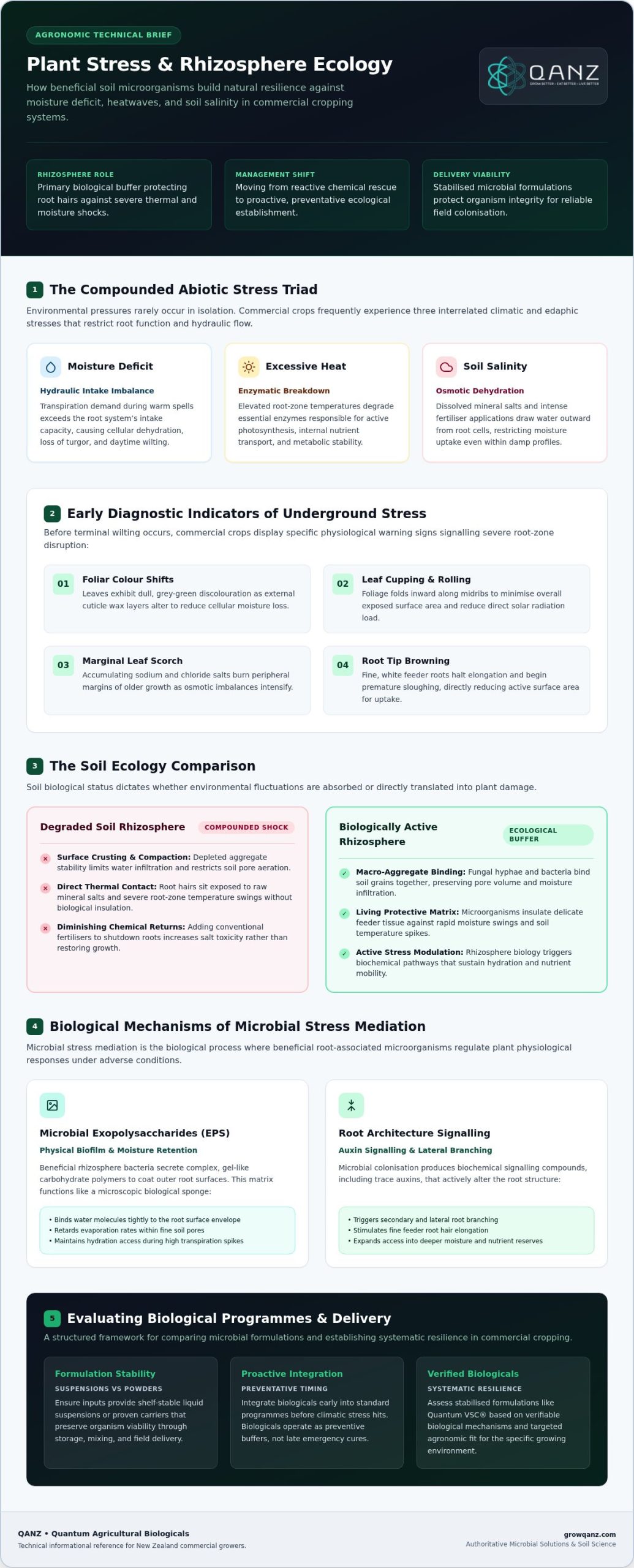
Abiotic stress refers to the non-living environmental pressures that disrupt a plant’s normal physiological functions and biochemical pathways. Unlike biotic threats from fungal pathogens or insect pests, abiotic pressures stem directly from climatic and soil extremes. When heatwaves or prolonged dry spells hit commercial crops, the immediate casualty is root function. Living rhizosphere microorganisms act as the primary biological buffer around root systems, insulating fine root hairs against sudden physical fluctuations in the soil profile. Applying effective microbial inoculants helps re-establish this protective zone, transforming bare root surfaces into active ecological interfaces.
The Triad of Moisture, Heat, and Salinity Pressures
Commercial crops frequently face a compounded triad of moisture deficit, excessive heat, and increasing soil salinity. Sustained transpiration demand during warm periods quickly exceeds the root system’s hydraulic intake capacity. This imbalance causes cellular dehydration, loss of turgor, and visible daytime wilting.
Simultaneously, extreme root-zone temperatures degrade the enzymes responsible for photosynthesis and nutrient transport. When paired with high fertiliser application rates or poor drainage, soil salinity creates severe osmotic stress. The dissolved ions draw water outward, preventing roots from absorbing adequate hydration even in damp profiles.
Before terminal wilting occurs, crops present subtle diagnostic indicators signalling severe underground stress:
- Foliar colour shifts: Leaves display dull, grey-green discolouration as cuticle wax layers alter.
- Leaf cupping and rolling: Foliage folds inwards along midribs to minimise exposed surface area.
- Marginal leaf scorch: Accumulating sodium and chloride salts burn the peripheral margins of older growth.
- Root tip browning: Fine, white feeder roots stop elongating and begin sloughing off prematurely.
Why Degraded Soils Compound Seasonal Crop Shock
Soil degradation dramatically magnifies the severity of environmental shocks. Intensive cultivation and repetitive synthetic applications often deplete aggregate soil stability. Without stable macro-aggregates, heavy irrigation or rainfall causes surface crusting and compaction, substantially reducing water infiltration capacity and pore aeration.
Furthermore, depleting native biological populations strips the rhizosphere of its buffering properties. In healthy ground, beneficial fungal hyphae and bacteria bind soil grains together and cushion sensitive feeder tissue against moisture swings. When soil organic matter declines, root hairs sit in direct contact with harsh mineral salts and fluctuating thermal extremes. Incorporating targeted microbial solutions for plant stress allows growers to rebuild this missing biological cushion, supporting root integrity before seasonal extremes take hold.
How Microbial Inoculants Aid Plant Stress Tolerance
Microbial stress mediation in field crops is the biological process where beneficial root-associated microorganisms regulate plant physiological responses to environmental deficits, maintaining cellular hydration, root function, and nutrient transport under adverse growing conditions. Peer-reviewed soil microbiology indicates that plant root systems don’t exist as isolated straws pulling water from sterile dirt. Instead, they operate within an interactive ecological web. When soil moisture drops or ambient temperatures spike, beneficial bacteria initiate biochemical pathways that actively modulate plant stress signalling.
Rhizosphere Moisture Management and Root Architecture
A primary physical defence against dehydration involves the production of microbial exopolysaccharides (EPS). Beneficial rhizosphere bacteria secrete these complex, gel-like carbohydrate polymers to coat outer root surfaces, forming a protective biofilm. This biological matrix acts like a microscopic sponge, binding water molecules closely to the root surface and slowing evaporation within the root envelope.
Concurrently, biological colonisation stimulates root architecture changes. Soil microbes produce signalling compounds, including trace auxins, that trigger lateral root branching and fine root hair elongation. This structural expansion allows roots to explore deeper soil layers, accessing water reserves that shallower systems cannot reach. Research into more resilient plants highlights how functional microbial communities also help manage internal stress hormones. Specifically, beneficial bacteria produce the enzyme ACC deaminase, which metabolises the precursor of ethylene. Preventing excess ethylene accumulation stops early leaf drop and premature root senescence during dry spells.
Sustaining Nutrient Mobility Under Hostile Soil Conditions
Drying soils severely restrict standard mass flow and nutrient diffusion. When moisture disappears, minerals like phosphorus, potassium, and trace elements become tightly bound to soil mineral surfaces. Rhizosphere bacteria release organic acids and siderophores that chelate and solubilise these locked nutrients, keeping essential minerals available even under low water availability.
Certain specialised organisms, including photosynthetic bacteria, contribute to this mutualism by cycling carbon compounds and supporting general plant vitality without requiring synthetic intervention. Growers interested in the biological processes behind these mechanisms can explore an educational overview of Quantum technology to understand how diverse microbial functions operate within the root zone.
Distinguishing Independent Research from Product Performance Claims
Academic research provides valuable mechanistic proof, yet laboratory success doesn’t automatically ensure paddock performance. A microbial strain showing exceptional osmo-protectant production in a sterile petri dish may fail when exposed to variable field soils, harsh UV light, or indigenous competition. Evaluating genuine microbial solutions for plant stress requires growers to examine formulation stability, carrier viability, and practical application compatibility rather than relying solely on abstract scientific papers.
If you’re considering biological amendments for your seasonal programme, talk to QANZ about how systematic microbial formulations fit alongside existing crop inputs.
Comparing Microbial Solutions: Formulations, Strains, and Delivery
Selecting reliable microbial solutions for plant stress requires looking beyond marketing claims to evaluate physical delivery methods, strain diversity, and formulation stability. Commercial biological inputs generally fall into two broad packaging categories: dry carrier powders or shelf-stable liquid suspensions. Both formats present distinct operational realities when integrated into broadacre boom sprayers or horticultural fertigation setups.
Liquid Suspensions Versus Dry Granular Formulations
Dry formulations typically rely on bacterial endospores coated onto peat, talc, or water-dispersible granules. While dry spores offer resilience in long storage, they require time to rehydrate and germinate before colonising the rhizosphere. Dry carriers can also present filtration headaches, blocking fine inline mesh filters or settling out if spray tank agitation drops.
In contrast, stabilised liquid suspensions deliver active vegetative organisms suspended in protective media. Liquid biologicals flow seamlessly through standard boom spray nozzles and drip emitters without leaving gritty residues. Upon application to moist soil, active cultures colonise root surfaces immediately, bypassing the lag phase required by rehydrated powders.
Single-Strain Isolates Versus Diverse Biological Consortia
Paddock conditions fluctuate constantly across seasons. An isolated single-strain inoculant, such as a solitary Bacillus species, might excel under neutral pH and moderate temperatures but stall completely when cold wet spells or high soil salinity hit. Multi-species consortia offer built-in functional redundancy.
A balanced consortium combines complementary organism types working alongside each other:
- Spore-forming bacilli: Tolerate wider thermal swings and produce durable biofilms.
- Photosynthetic bacteria: Support carbon cycling and general rhizosphere activity across variable soil depths.
- Nutrient-solubilising organisms: Maintain mineral release even under shifting moisture regimes.
This ecological diversity ensures that if environmental shifts suppress one organism group, others continue active metabolic work around the plant root system.
Verifying Quality, Registration, and Certification Standards
Evaluating commercial formulations means demanding verified manufacturing transparency. Reputable suppliers provide comprehensive safety data sheets, clear batch tracking numbers, and rigorous shelf-life data rather than vague promises. Regulatory scrutiny is increasing across Australasia, and biological products should meet recognised regional compliance standards.
For certified organic enterprises, third-party verification is essential. Inputs carrying independent approval, such as BioGro certification for organic growing programmes, ensure that carriers, stabilisers, and bacterial strains meet strict input criteria. Growers managing large broadacre operations can cross-reference practical application considerations outlined in our guide on microbial solutions for field crops (field crop programmes) to assess how stabilised formulations perform at scale.
Integrating Biological Inputs into Farm Management Programmes
Biological inputs deliver the greatest value when treated as proactive establishment tools rather than emergency rescue treatments. Attempting to revive a severely heat-stressed, collapsing crop with a sudden biological drench rarely succeeds. The rhizosphere microbial community needs time to colonise root tissue and establish its protective biofilm before environmental pressure arrives. Successful deployment requires aligning application windows with key plant physiological milestones and adhering to strict equipment hygiene.
Application Timings Across Key Crop Growth Stages
Establishing early root contact ensures microorganisms multiply alongside expanding root architecture. Practical field applications generally target three strategic operational windows:
- Planting and establishment: In-furrow sprays or liquid seedbed applications introduce beneficial organisms directly to germinating seedlings, shielding emergent roots from initial soil friction.
- Early vegetative expansion: Applying formulations via fertigation or directed boom spray ahead of seasonal heat periods builds biological density before transpiration stress peaks.
- Post-harvest conditioning: Applying biologicals to perennial orchards or post-harvest soils supports residue breakdown, maintaining active microbial food webs into dormancy.
Tank Mixing, Water Quality, and Delivery Logistics
Living microbial suspensions require clean application environments. Residues of synthetic fungicides, bactericides, or harsh chemical descalers lingering in spray booms can diminish living bacterial counts before droplets hit the soil. Equipment should be thoroughly flushed with clean water prior to biological use.
Water quality matters. Highly chlorinated municipal water should be allowed to dissipate, and tank water pH should ideally sit between 6.0 and 7.5. Always conduct a physical jar test before co-applying with complementary liquid inputs. To protect living suspensions from mechanical damage, use coarse nozzles, maintain operating pressures below 40 psi, and avoid filters finer than 50 mesh.
Environmental conditions during spraying also dictate field viability. Ultraviolet radiation degrades unshielded bacteria rapidly. Applying treatments during early morning, late afternoon, or overcast conditions, ideally into moist soil profiles or immediately ahead of light irrigation, facilitates rapid downward migration into the root zone.
Measuring Field Outcomes and Biological Response
Evaluating the impact of microbial solutions for plant stress requires disciplined paddock monitoring. Always leave a dedicated untreated control strip within the same management block to assess physical differences under identical weather pressures. Conduct regular shovel excavations to inspect root system architecture, looking for white feeder roots, increased lateral branching, and intact soil sheaths around the root hairs. Measuring foliar brix alongside seasonal laboratory soil testing provides an objective view of how biological programmes influence crop vigour over time.
Explore structured Quantum crop application programmes to see how disciplined biological schedules integrate into commercial horticultural and cropping rotations.
Evaluating Quantum Biological Formulations for Resilient Systems
QANZ supplies Quantum biological technologies to commercial growers seeking verified, stable inputs to integrate into broader soil health programmes. Establishing resilient root systems against environmental shock requires selecting biological formulations backed by consistent manufacturing standards. When managing microbial solutions for plant stress, growers require clarity regarding formulation composition, certification credentials, and realistic agronomic expectations.
The Role of Quantum VSC® and Quantum Organic-Total®
Quantum VSC® is a liquid microbial agricultural input designed for integration into commercial soil and foliar management programmes across horticultural and broadacre operations. It delivers a stabilised biological consortium suited for standard fertigation and boom spray equipment without clogging nozzles or lines.
For certified organic operations, Quantum Organic-Total® provides an approved microbial agricultural input carrying BioGro certification in New Zealand. While application doesn’t automatically convert a farm or crop into an organic status, it gives certified producers an independently verified biological tool. Specific application rates, delivery timings, and water volumes should always align with current technical documentation and crop stage requirements.
Interpreting Trial Data with Scientific Discipline
Scientific integrity requires careful evaluation of trial evidence. Documented historical evaluations, such as the overseas Nolt Farm trial examining Quantum-Light® and Quantum-VSC®, offer valuable observational context on biological dynamics in specific environments. However, overseas historical datasets must never be confused with local Australian or New Zealand field evaluations.
Results from individual trials or commercial observations are specific to the formulation, crop, location, treatment and conditions tested and should not be interpreted as a guarantee of equivalent performance elsewhere. Paddock variability, ambient weather, and soil chemistry dictate biological responses, which is why commercial biologicals are never positioned as guaranteed fixes or complete fertiliser replacements.
Collaborating with Technical Specialists for Custom Regimes
Every commercial block features unique physical and biochemical variables. Soil texture, organic carbon levels, compaction depth, and regional seasonal pressures all influence how applied microbes interact with roots. Before deploying microbial solutions for plant stress, growers should review their baseline soil fertility and seasonal objectives.
QANZ offers technical programme guidance to assist farm managers in structuring seasonal biological schedules. Working alongside your local agronomist ensures that biological applications complement existing fertiliser and crop protection programmes, establishing systematic soil resilience across every hectare.
Advancing Paddock Resilience for Coming Seasons
Managing environmental extremes requires moving beyond reactive chemical interventions toward active rhizosphere management. Effective microbial solutions for plant stress establish protective biofilms and encourage branching root systems that buffer crops against moisture deficits, heatwaves, and soil salinity before climatic pressure takes hold. Prioritising shelf-stable, multi-strain liquid formulations ensures living organisms withstand field delivery and integrate smoothly with standard farm machinery.
With specialised liquid microbial technologies designed for regular agricultural sprayers and fertigation lines, building biological resilience into your seasonal rotation is practical and repeatable. Operations adhering to organic standards can also utilise verified inputs like Quantum Organic-Total®, which holds BioGro certified organic status in New Zealand. Supported by dedicated technical support for growers throughout New Zealand and Australia, adopting a planned biological schedule provides a grounded, reliable pathway to safeguard crop establishment and vigour.
Frequently Asked Questions
What are microbial solutions for plant stress in commercial agriculture?
Microbial solutions for plant stress are liquid or dry biological formulations containing beneficial bacteria and fungi that colonise the crop root zone. These living inputs assist plants in coping with non-living environmental pressures such as moisture deficit, high temperatures, and soil salinity. Rather than supplying macro-nutrients directly, they produce protective biofilms, modify stress signalling, and improve natural nutrient availability around fine root hairs.
Can beneficial soil microorganisms prevent crop damage during severe drought?
Beneficial microorganisms cannot provide total immunity against severe drought, nor do they replace the physical requirement for water. Instead, active rhizosphere populations buffer root hairs by secreting exopolysaccharides that hold moisture close to cellular tissues. They also encourage root branching, helping crops draw upon moisture stored deeper in the soil profile during dry spells.
How do liquid biological inputs differ from conventional chemical fertilisers?
Liquid biological inputs supply living cultures that enhance soil ecological activity, whereas chemical fertilisers supply concentrated synthetic mineral salts directly to plant tissues. Synthetic fertilisers don’t build soil biological buffering capacity and can elevate osmotic stress in dry ground. Stabilised biological suspensions work alongside baseline fertility programmes to support long-term soil structure and biological cycling naturally.
Will beneficial microbes survive in high-salinity or chemically treated soils?
Survival depends heavily on formulation diversity and application hygiene. Isolated single strains often struggle in high electrical conductivity soils, but multi-species consortia provide greater ecological resilience under adverse conditions. To ensure survival, growers should flush chemical residues from spray tanks before application and avoid tank-mixing living biologicals directly with concentrated bactericides or harsh descalers.
Is Quantum Organic-Total® certified for use in organic farming programmes?
Quantum Organic-Total® is a microbial agricultural input holding BioGro certification in New Zealand. This status confirms the input meets established organic criteria for commercial production. However, applying the product doesn’t automatically confer organic certification upon a grower’s farm or produce. Growers should confirm product suitability and application compliance with their individual organic certifier before use.
How should growers apply microbial inputs through existing boom spray or fertigation equipment?
Growers can apply stabilised liquid biologicals using standard agricultural boom sprayers, directed ground rigs, or drip irrigation networks without specialised machinery. To protect living suspensions, maintain system pressures below 40 psi and use coarse nozzle tips with filters no finer than 50 mesh. Spraying during low-UV periods, such as early morning or late afternoon, ensures optimal bacterial survival.
How quickly can a grower expect to observe responses following biological soil inoculation?
Biological responses develop over weeks rather than delivering overnight visual shifts. Because microbial solutions for plant stress function by colonising expanding root systems, physical changes appear progressively. Growers evaluating treated test strips generally observe improved feeder root development, better soil adherence around root hairs, and steady foliar vigour during seasonal stress periods as the biological population establishes.
Disclaimer
Important: This article provides general agricultural information only. Product performance can vary according to crop, soil, climate, management practices and application conditions. Trial or research results discussed may have been obtained under specific conditions and should not be interpreted as a guarantee of equivalent results. Always follow current product directions and confirm suitability for your crop, growing system and organic certification requirements. Contact QANZ for current product and application information.
