
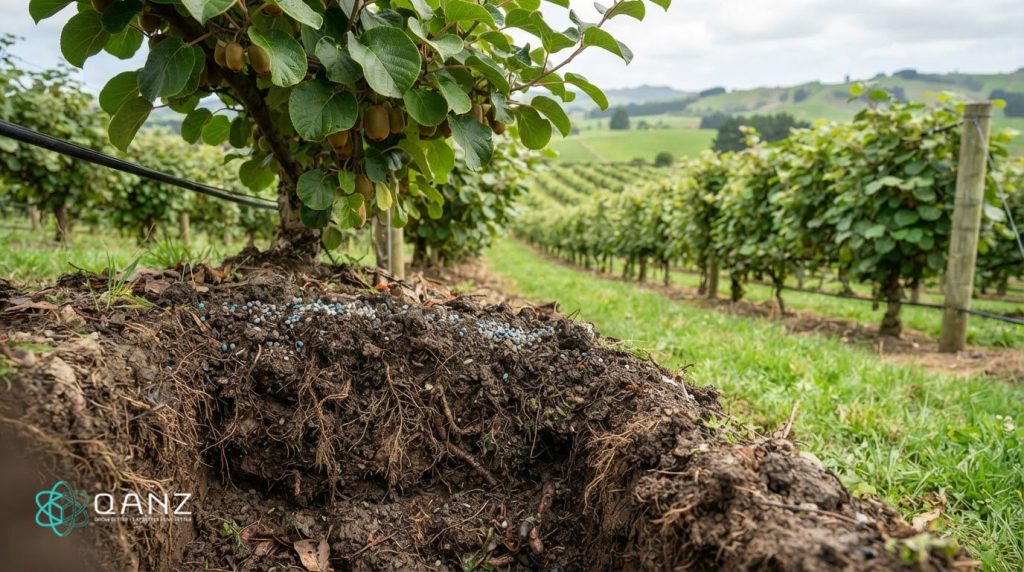
Synthetic fertilisers don’t automatically damage soil. Their long-term effects depend on application rates, soil conditions and how the wider growing system is managed. The long term effects of synthetic fertilizers on soil can include changes in pH and reduced organic matter inputs if fertilisers replace organic amendments. Over-application may also affect soil structure, water retention and nutrient loss.
It’s reasonable to ask whether conventional fertilizer harms soil health, especially when a crop depends on regular nutrient inputs. The answer isn’t simply yes or no: fertilizers can support plant growth, while soil fertility and quality also rely on organic matter, soil structure and active microbial communities.
This article explains how repeated fertiliser use can influence soil fertility, microbes, pH, erosion and water retention over time. It also covers how balanced nutrient management, organic inputs, crop rotation and cover cropping can support productive soils in New Zealand.
Key Takeaways
- Fertiliser effects depend on how it is applied and managed alongside organic matter, crop rotations and other soil-building practices.
- Repeated ammonium-based fertiliser use can lower soil pH, while replacing organic amendments can reduce the carbon and organic material returned to soil.
- Soil microbial communities respond to nutrient inputs as well as pH, moisture, cultivation and other conditions; nutrient balance matters.
- Protect soil structure and water retention by considering organic inputs, cover crops and reduced tillage as part of an integrated approach.
- Assess soil fertility through its chemical, physical and biological properties, rather than relying on crop growth alone.
Does Conventional Fertilizer Harm Soil Health?
New Zealand soils respond differently to fertiliser depending on soil type, crop and management. Findings from SRUC Craibstone in Scotland offer a useful comparison, but they are not New Zealand trial results.
Organic Matter and Carbon Changes
Soil organic matter is decomposed plant and animal material. Its carbon helps support soil structure and biological activity. Synthetic NPK fertilisers supply nutrients but don’t add organic matter. If they replace compost, manure or plant residues, less carbon may return to the soil over time. At SRUC Craibstone, organic matter was highest under fertilised oats and roots, showing that fertiliser use alone doesn’t determine the outcome. Crop choice and organic additions matter too.
NPK Effects on Soil Conditions
NPK fertilisers supply nitrogen, phosphorus and potassium, but their effects on soil depend on formulation and use. When ammonium nitrogen undergoes nitrification, it releases hydrogen ions that can lower soil pH. Changes in pH can affect nutrient availability to crops. Soil moisture also depends on organic matter and structure: fertiliser doesn’t replace the organic inputs that help soil retain water.
Long-term effects aren’t uniform across soils or crops. In an October 2019 assessment at SRUC Craibstone, researchers measured topsoil properties across four crops and two fertiliser treatments. All assessed crop types scored good or moderate, and none received a red score requiring investigation. The same assessment found no pH effect from long-term fertilisation in those crops. These findings caution against treating every fertilised soil as damaged.
Management still matters. Repeated nitrogen application can alter pH, while crop removal and limited organic additions can reduce the material returned to soil. If pH shifts, nutrients may become more or less available to roots. Less organic matter may also reduce the soil’s capacity to hold water. Crop residues, cover crops and compost address different parts of this cycle by returning plant material or organic matter.
Organic amendments such as compost and manure add organic matter and nutrients; compost can also add beneficial microbes. Biofertilisers are biological inputs, distinct from nutrient-rich amendments, and are used to support processes such as nutrient availability. Neither category makes conventional fertiliser harmful by definition. The practical question is whether a programme supplies crop nutrients while maintaining organic inputs and soil function.
For growers, compare crop performance with soil conditions over time. Track pH, organic matter, nutrient availability and moisture behaviour across comparable parts of a block. Consider whether harvested crops remove more material than the system returns. Then assess whether rotations, cover crops or organic amendments could address that gap alongside nutrient applications. This recognises the useful role of fertilisers and the wider conditions that sustain soil fertility.
Integrated nutrient management and sustainable farming
In New Zealand, nutrient management needs to account for crop demand, soil conditions and the risk of nutrient loss. Requirements can vary by location and land use, so one fertiliser rate won’t suit every farm.
Acidification and Nutrient Availability
Soil acidification is a decline in pH that can change how readily plants access nutrients. Nitrification of ammonium releases hydrogen ions, which can lower soil pH over time. As pH shifts, nutrient availability can also change, affecting crop nutrition even when nutrients remain in the soil. Track pH alongside crop response and nutrient status. A fertiliser programme should account for soil condition, not just immediate crop demand.
Leaching, Runoff and Eutrophication
Leaching moves dissolved nutrients down through soil, while runoff carries them across the surface into waterways. Nitrates from fertilised fields can reach groundwater or flow into rivers, lakes and oceans. Excess nutrients in aquatic environments can drive eutrophication, affecting water quality and aquatic life. Rainfall, soil drainage, slope, crop cover and application timing all influence these pathways. Matching nutrient timing to plant growth and avoiding applications before heavy rain can help limit losses.
Nutrient Imbalances and Contamination
A nutrient imbalance occurs when the supply of an element is out of proportion to crop demand or other nutrients. For example, repeated use of nitrogen-rich fertiliser without accounting for phosphorus and potassium removal can leave the soil nutrient profile poorly matched to the next crop. Soil testing and monitoring can identify these patterns and guide more precise applications. They can also detect unwanted accumulation, rather than assuming that more fertiliser will always support better yields.
Plants require 16 key nutritional elements, with 13 supplied by soil. Chemical fertilisers provide selected nutrients in forms plants can access, while manure adds nutrients and organic material. Soil bacteria and other microbes also help convert nutrients into soluble forms plants can absorb. These sources perform different roles; one doesn’t automatically replace the others. A vegetable crop, for instance, may need nutrient inputs timed to its growth stages, while the soil’s existing nutrient supply still matters.
Integrated nutrient management combines nutrient sources with crop and soil practices. The 4R approach offers a practical framework: choose the right fertiliser source, rate, time and place. Soil monitoring can guide those choices, while grid sampling can support variable-rate applications where field conditions differ. Crop rotation and cover crops can complement nutrient planning by returning plant material and keeping living roots in the system. Together, these steps help growers support yields while managing nutrient availability and potential losses.
Changes in soil microbial activity and communities
Soil microbes contribute to nutrient cycling and plant-root relationships, while fertiliser effects depend on application rates, soil chemistry, tillage and environmental conditions. The Food and Agriculture Organization’s 2020 report, State of Knowledge of Soil Biodiversity, describes soil biodiversity’s role in supporting soil functions. That broader evidence helps explain why microbial responses matter, but does not establish the effect of a particular product or input in every field.
Microbial Diversity and Phosphorus Cycling
Microbial diversity is the range of organisms in soil, including organisms involved in phosphorus cycling. Their activity can affect how phosphorus becomes available to plants, so community changes may influence soil function. In a 10-year greenhouse vegetable production trial, replacing half of soluble NPK inputs with organic nutrient sources enhanced microbial diversity and phosphorus cycling. This is a greenhouse-trial finding, not a New Zealand field result, and it should be interpreted within that study’s production system.
Mycorrhizal Fungi and Soil Microbes
Mycorrhizal fungi associate with plant roots and can help plants take up nutrients such as phosphorus and zinc. Over-applying synthetic nitrogen fertiliser may reduce their abundance, potentially affecting this part of the root-zone community. The response depends on growing conditions and management. Consider nitrogen inputs alongside crop demand, soil chemistry and cultivation, rather than treating microbial abundance as a standalone measure of soil health.
Acidification and Microbial Diversity
Soil acidification is a fall in pH that changes the chemical environment microbes experience. Because microbial communities respond to soil chemistry, a pH shift can alter which organisms are active or abundant. Nitrification of ammonium releases hydrogen ions and can lower soil pH. Track pH and microbial indicators together over time, so changes in biological activity are considered alongside shifts in soil conditions.
Herbicides are another potential influence on soil organisms, distinct from fertilisers. A field study reported that glyphosate applications at one-quarter and the recommended rate reduced arbuscular mycorrhizal fungal spore viability by more than 80% in samples collected 10 or 30 days after application. Laboratory studies reported that mixtures of mesotrione and S-metolachlor affected microbial biomass and activity ten times more than either herbicide alone. These findings describe specific field and laboratory conditions, not universal outcomes.
Estimates indicate that one gram of soil can contain 6 to 10 million organisms, but abundance alone does not describe diversity or biological function. For practical interpretation, consider pH, fertiliser rates, cultivation and other inputs together. The greenhouse trial suggests nutrient management can coincide with shifts in microbial diversity and phosphorus cycling; its result does not establish performance for a specific input or farming programme.

Soil structure, erosion, compaction and water retention
Soil structure affects how air, water and roots move through agricultural land. Fertiliser is one influence among several, so distinguish nutrient inputs from cultivation, soil texture and traffic.
Compaction, Porosity and Texture
Compaction occurs when soil particles are pressed together, reducing the pore spaces that hold air and water. Texture matters too: clay, silt and sand differ in drainage and water-holding capacity. Over-applying synthetic fertilisers can disrupt soil aggregates and contribute to compaction, but fertiliser alone doesn’t explain every structural change. At SRUC Craibstone, structure was marginally poorer on the fertilised grass ley. That finding applies to the site, not every farm.
For a practical field comparison, examine soil behaviour across headlands, gateways and cropped rows. Repeated machinery traffic on wet ground can compact soil, while cultivation can break aggregates and alter pore continuity. These effects influence root penetration and water movement. Consider inputs alongside traffic, tillage and organic matter management when assessing soil structure and overall balance.
Compaction can reduce infiltration, leaving more water at the surface and less available in the root zone. A compacted layer may also restrict roots from reaching moisture deeper in the profile. The outcome depends on soil texture, drainage and compaction depth. Compare water entry and crop rooting in trafficked and less-disturbed areas to identify whether physical constraints may be limiting plant access.
Erosion and Runoff
Erosion is the movement of soil particles by water or wind, while runoff carries water across the soil surface. When aggregates break down or compaction limits infiltration, runoff can increase and carry soil and nutrients away. Over-applied fertiliser may add to this risk by contributing to aggregate disruption and reduced water retention. Consequences include lost topsoil and nutrients moving into waterways.
Ground cover affects the risk. Bare cultivated soil is more exposed to raindrop impact and surface flow than soil protected by crop residues or growing plants. On sloping blocks, runoff can carry sediment downhill, especially where water follows wheel tracks or compacted headlands. Cover crops and reduced tillage can help maintain soil structure and resilience, while agroforestry may contribute to soil protection in suitable farming systems.
Long-term observations show why site context matters. At SRUC Craibstone, earthworm numbers were highest in grass ley and lowest under roots, probably reflecting differences in soil disturbance. Earthworms create channels and mix organic material, so cultivation intensity can shape their contribution to soil structure. Healthy soils can conserve water, limit erosion and support biodiversity, making physical condition relevant to crop production and environmental outcomes.
Assess structure using several field indicators, not fertiliser history alone. Check aggregate stability, rooting depth, infiltration and visible runoff after rain, and compare areas with different traffic or cultivation histories. Where structure is poor, reduced tillage, protective cover and careful traffic management address physical pressures directly. Nutrient planning still matters, but works best alongside practices that protect soil pores, water retention and topsoil.
Effects of synthetic fertilizers on soil fertility and soil quality
Synthetic fertilisers can supply nutrients that support productivity, but crop yield alone doesn’t describe soil quality. Assess chemical, physical and biological properties together, then compare them across crops and management history. Results from one location provide context, not a universal verdict for every New Zealand soil.
SRUC’s account of its Craibstone assessment reports that researchers measured topsoil in October 2019 across four crops and two fertiliser treatments. All assessed crop types scored good or moderate for soil properties, and none received a red score requiring investigation. Craibstone is in Scotland, so this was not a New Zealand trial. Its findings describe the measured crops, treatments and site conditions.
The same SRUC account reports fertilised plots yielded 1.2-2.5 times more than the unfertilised control, with particularly large increases for hay. This result shows that fertiliser inputs can support productivity in the conditions assessed. It doesn’t, by itself, establish whether soil quality was maintained or how another crop or soil would respond. A productive harvest and healthy soil are related considerations, but they are not interchangeable measures.
SRUC also reported poorer phosphorus and potassium availability in unfertilised crop types than in fertilised types, while magnesium availability scored similarly across both groups. These distinctions matter: fertiliser effects can differ between nutrients, crops and soil indicators. For growers, interpret nutrient results separately rather than treating “fertility” as one number. Crop requirements and management history help make those results meaningful.
In New Zealand, farmers can assess soil fertility through a set of connected measures. Consider nutrient availability alongside crop performance, then view the results with physical condition and biological activity. Use consistent sampling areas and timing to track a block, so a result from one location isn’t mistaken for a whole-farm trend. Interpret each result against crop needs and field management history.
SRUC’s Craibstone findings also show why comparisons need context: fertilised and unfertilised treatments differed in some measured outcomes, but not all. Farmers should avoid inferring broad soil damage or improvement from a single indicator. A nutrient result, crop yield or soil-property score each describes a different part of the system. Consider them together, while keeping the Scottish study distinct from evidence gathered under New Zealand conditions.
The practical takeaway is to manage fertiliser as part of a broader soil programme. Match nutrient supply to crop demand, monitor soil properties and maintain suitable organic inputs through rotations, cover crops or manure. Where soil quality declines, identify which indicator has changed before adjusting inputs. This helps protect productivity while recognising that chemical, physical and biological soil functions may respond differently.
GrowQanz: Quantum Organic-Total®
Quantum Organic-Total® is a microbial agricultural input offered by QANZ for use in crop and soil programmes. Growers may consider it as part of soil management alongside nutrient planning, organic matter management and crop practices. It doesn’t replace the need to manage nutrient supply, soil pH, structure or moisture according to the growing system.
Choosing an input should fit the crop, production system and wider application programme. For growers weighing biological options alongside conventional fertiliser practices, Quantum Organic-Total® is one product to explore. Contact GrowQanz or visit growqanz.com to discuss its relevance to your growing system.
Make soil care part of the next growing decision
The long-term effects of synthetic fertilisers on soil are best understood through ongoing observation, not a single season’s result. As you plan the next crop, use what you know about your block to set a baseline and identify the soil conditions you want to protect. This gives future decisions a practical reference point, whether you’re adjusting nutrient management or considering biological inputs.
Keep the approach grounded in your growing system: crop requirements, soil conditions and existing management practices. The right combination will differ between farms, so consider how each input fits the broader plan rather than treating it as a standalone solution. For growers exploring biological options, QANZ provides Quantum product and application support to connect soil-health priorities with relevant options.
Contact GrowQanz to discuss soil health and the options that may suit your crop and growing system. Thoughtful, measured decisions can help you keep building a productive foundation for the seasons ahead.
Frequently Asked Questions
Does too much fertiliser also disturb the biology of the soil?
Excessive fertiliser can change conditions that soil organisms depend on, so biological effects are possible. To investigate a paddock, compare areas with different fertiliser histories and look for differences in crop rooting, residue breakdown and soil fauna. Consider cultivation, crop type and sampling conditions when interpreting observations. These comparisons can help distinguish fertiliser-related patterns from other changes in field management.
What has caused this decline in soil quality?
A single observation rarely identifies one cause. A useful diagnosis considers land use and management over time, including crop changes, periods of bare ground, machinery access and the return of plant residues. Compare affected areas with parts of the same farm that have a different history. This can help narrow down which pressures need closer assessment before changing the management programme.
What are the long-term effects of synthetic fertilisers on soil fertility and nutrient balance?
Long-term use can leave nutrient supply poorly matched to a crop’s needs if inputs and removal aren’t considered together. Review fertiliser records alongside harvest history and crop performance, then check whether the next crop has different nutrient demands. This can identify where a programme may need adjustment. Avoid interpreting one nutrient result in isolation: it describes only part of the fertility picture.
How do synthetic fertilisers affect soil pH and acidification over time?
Some nitrogen fertilisers can contribute to lower soil pH over time. For a useful comparison, sample the same management zones and soil depth each time, and record fertiliser history alongside the results. This helps distinguish a developing trend from differences caused by sampling location or depth. Interpret pH with crop requirements and the wider nutrient assessment, not on its own.
What are the effects of synthetic fertilisers on soil microbes, fungi and earthworms?
Responses differ among organisms and field conditions, so no single biological observation represents the whole soil community. Record earthworm presence, root condition and residue breakdown in consistent locations, then compare the notes with management records. Treat these observations as clues, not a full measure of microbial diversity. They’re most useful when repeated under similar conditions and considered alongside crop and soil context.
How does long-term synthetic fertiliser use affect soil organic matter and carbon?
The key consideration is whether the farm system returns enough plant material and other organic inputs to balance what crops remove. Review residue management, fallow periods and amendment records across the rotation. For monitoring, use comparable sampling areas and depths, and interpret organic matter results as a trend rather than a standalone verdict. This gives growers a clearer picture of how the whole production system influences soil carbon over time.
Do synthetic fertilisers cause soil salinity or nutrient leaching, and what are the risks?
Nitrate from fertilised fields can leach into groundwater or move in runoff to rivers, lakes and oceans. Risk depends on nutrient supply, crop uptake, drainage and rainfall. Salinity is a separate soil issue and shouldn’t be assumed from fertiliser use alone. To assess nutrient-loss risk, consider application timing alongside crop growth and periods when water may move through or across the soil.
How does long-term synthetic fertiliser use affect soil structure, aggregation and water retention?
Over-application can contribute to aggregate disruption and poorer water retention, but field symptoms need careful interpretation. Look for surface crusting, uneven emergence or restricted root growth, then compare these signs with cultivation and traffic patterns. A compacted layer or damaged surface can have several causes. Recording where symptoms occur, and whether they follow machinery routes or cultivation zones, helps guide a targeted investigation.
Disclaimer
Important: This article provides general agricultural information only. Product performance can vary according to crop, soil, climate, management practices and application conditions. Trial or research results discussed may have been obtained under specific conditions and should not be interpreted as a guarantee of equivalent results. Always follow current product directions and confirm suitability for your crop, growing system and organic certification requirements. Contact QANZ for current product and application information.
