
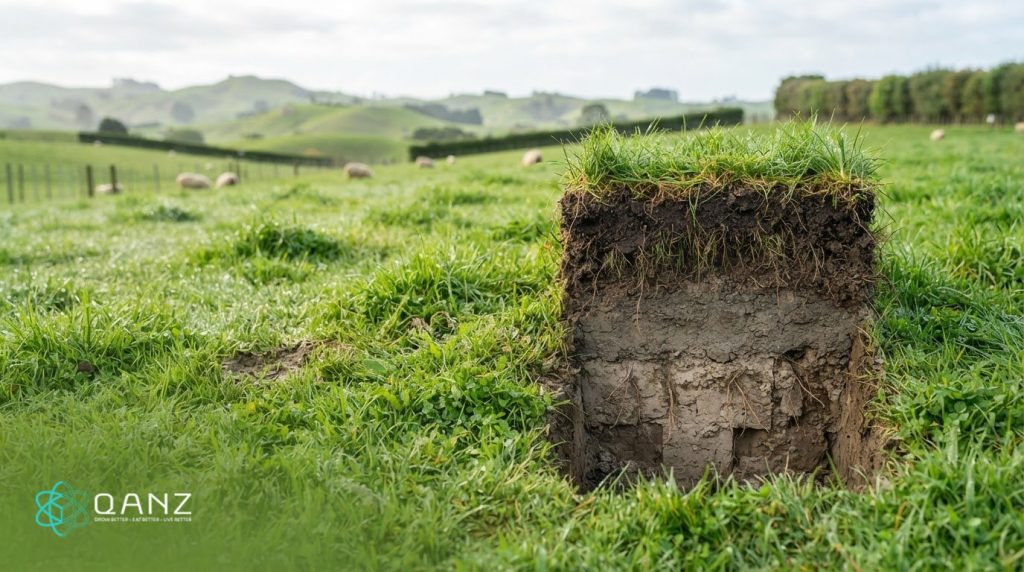
A plough isn’t always the first answer to compacted pasture. How to fix compacted soil in pasture depends on the severity: encourage roots and soil biology, build organic matter and reduce further treading. Where damage is severe or a hard layer persists, mechanical treatment or drainage management may also be needed.
If pasture is patchy, slow to recover after grazing or holding water on the surface, compaction may be restricting root growth, water movement and air in the soil. It’s tempting to look for a quick way to break up hard ground, but working wet soil or repeating the pressure that caused the problem can worsen the damage.
This article explains how compaction affects pasture soil, how biological approaches may support soil structure, and when other management may be appropriate. It also covers practical ways to protect recovering paddocks and maintain ground cover and organic matter, so you can make decisions suited to your pasture and conditions in New Zealand.
Key Takeaways
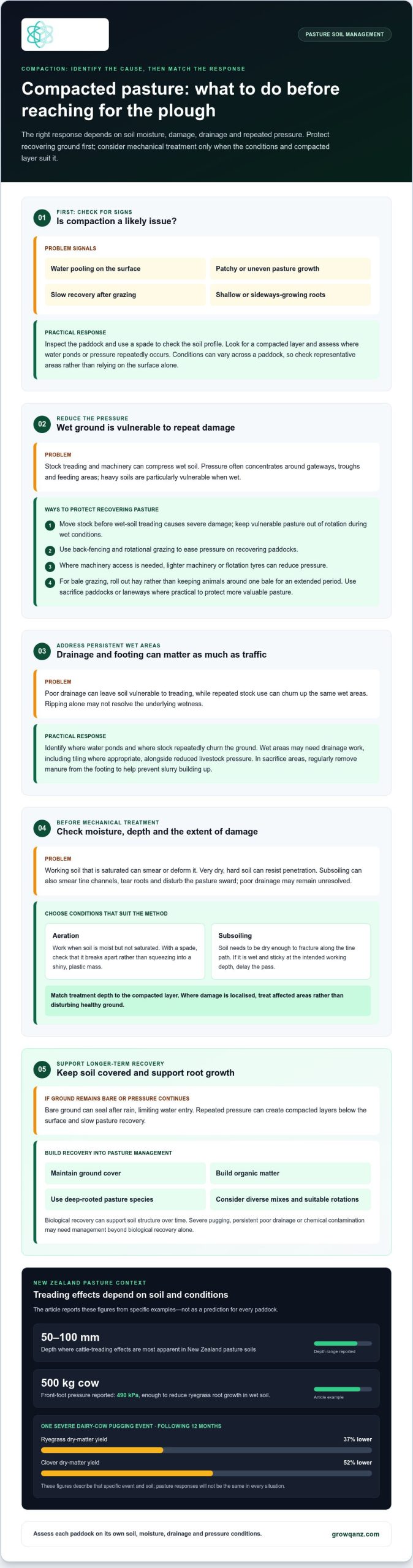
- Look for signs such as surface ponding, uneven pasture growth and shallow or sideways-growing roots to help identify possible compaction.
- Use deep-rooted pasture species and diverse mixes to support soil structure and biological activity over time.
- Reduce further damage by limiting stock and machinery pressure on wet, vulnerable ground and protecting recovering paddocks.
- Maintain ground cover and build organic matter with suitable pasture and crop rotations to help soil recover and resist future compaction.
- Choose mechanical aeration or deeper soil treatment according to the compaction’s severity and depth, and work when soil conditions suit the method.
Conditions that may need additional management
Better grazing and traffic management can support biological recovery, but some paddocks also need mechanical treatment or drainage measures. The right response depends on soil moisture, the extent of damage, drainage and the source of repeated pressure.
Grazing and Machinery Traffic
Manage grazing and machinery to limit repeated pressure where soil is wet or already damaged. Heavy machinery on moist ground can compact soil, while livestock often concentrate treading around gateways, troughs and feeding areas. Move stock before wet-soil treading causes severe damage, and keep vulnerable pasture out of rotation during wet conditions, particularly on heavy soils. Back-fencing and rotational grazing can ease pressure on recovering paddocks. Where machinery access is necessary, lighter machinery or flotation tyres can also reduce pressure.
Severely pugged pasture can remain vulnerable to further pugging for months after the initial event. During bale grazing, roll out hay rather than leaving animals around one bale for an extended period. Where practical, designate sacrifice paddocks or laneways to protect more valuable pasture from concentrated stock movement. If horses are present, remove them from the paddock or fence off the section being restored.
Drainage and Footing
Drainage and footing management can help address persistent wet areas and heavily used surfaces where compaction keeps recurring. Poor drainage leaves soil vulnerable to treading, so identify where water ponds or stock repeatedly churn the ground. Wet areas may need drainage work, including tiling where appropriate, alongside reduced livestock pressure. In sacrifice areas, regularly remove manure from the footing to prevent slurry building up and worsening the surface.
Across New Zealand, compaction risk depends on soil properties, wetness and stock pressure, not a single regional pattern. Heavy soils are particularly vulnerable when wet, and repeated pressure can create compacted layers below the surface. Assess each paddock on its own conditions rather than relying on regional assumptions. After rain, inspect gateways, troughs and low-lying areas to see whether drainage or traffic management needs attention.
Soil Moisture for Subsoiling and Aerating
Soil moisture affects whether mechanical treatment fractures soil or smears it. For mechanical aeration, work when soil is moist but not saturated; saturated ground can deform under machinery instead of opening cleanly. Check the profile with a spade before entering the paddock: soil should break apart, not squeeze into a shiny, plastic mass. Avoid treating very dry soil too, because hard ground can resist penetration and limit the implement’s effect.
For subsoiling, soil also needs to be dry enough to fracture along the tine path rather than smear against the implement. Conditions vary across a paddock, so inspect representative areas after rain instead of relying only on the surface. If soil is wet and sticky at the intended working depth, delay the pass. This helps avoid creating a smooth, compacted layer beneath the surface.
Risks of Subsoiling Pasture
Subsoiling risks include smearing, poor drainage and damage to the pasture sward. A tine working through wet soil can smear the sides of its channel, leaving a compacted surface that restricts water movement. If the paddock already drains poorly, ripping alone may not resolve the underlying wetness and can leave water collecting in disturbed areas. Assess the cause before choosing mechanical treatment.
Mechanical work can also tear roots and disrupt established pasture, leaving the sward more vulnerable during dry spells. Match treatment depth to the compacted layer and avoid unnecessary passes across the whole paddock. Where compaction is localised, treat affected areas rather than disturbing healthy ground. Severe pugging, persistent poor drainage or chemical contamination may require management beyond biological recovery alone.
What is Soil Compaction?
Soil compaction occurs when pressure presses particles together, reducing pore space for air and water. In pasture, this can restrict roots and slow recovery, particularly after repeated treading on wet ground.
Causes and Effects of Pasture Compaction
Compaction develops when stock, machinery or other pressure compresses soil, especially when it’s wet. Bare ground can also seal after rain, further limiting water entry. Shallow or restricted roots then have less access to water and nutrients, which can make pasture growth uneven and regrowth slow.
For mechanical treatment, tine depth should match the compacted layer, and spacing should suit the implement and soil profile. There’s no single setting for every paddock: use a spade to help locate the layer before choosing a treatment. The cost per hectare of aeration or subsoiling depends on the area treated, machinery access, working depth and method.
Cattle Treading and Soil Compaction
Cattle treading transfers hoof pressure into the soil, compressing pore spaces and potentially restricting root growth. In New Zealand pasture soils, effects are most apparent at depths of 50 to 100 mm. A 500-kg cow can exert front-foot pressure of 490 kPa, enough to reduce ryegrass root growth in wet soil.
A severe pugging event can leave lasting effects. In one New Zealand pasture event, severe dairy-cow pugging reduced ryegrass dry-matter yield by 37% and clover dry-matter yield by 52% over the following 12 months. These figures describe that specific event and soil, rather than every pasture’s response.
Water Infiltration and Surface Pooling
Compacted soil absorbs water less readily because compressed particles leave fewer connected pores. Rain can pool on the surface or run off instead of moving through the root zone. Bare, sealed ground can intensify this pattern, while saturated areas remain vulnerable to further treading damage.
Aeration is best timed when soil is moist but not saturated. For subsoiling, soil needs to be dry enough to fracture rather than smear along the tine path. Check conditions at working depth with a spade: sticky, plastic soil is too wet for a clean pass. The soil profile, drainage and implement all affect suitable timing.
Soil Oxygen and Microbial Activity
Reduced pore space limits air movement through compacted soil, lowering oxygen availability around roots. This can slow beneficial microbial processes involved in nutrient cycling. As roots struggle to extend through dense layers, pasture may become patchy and recover slowly, even where nutrients are present.
After rain, use a spade to compare compacted and less-disturbed areas. High resistance, shallow roots or roots growing sideways can indicate restricted growth. A probe can also reveal changes in resistance through the profile. These checks help distinguish a shallow surface problem from a deeper layer before you choose biological recovery or mechanical treatment.
Biological approaches to improving compacted soils
Biological recovery uses living roots, soil organisms and plant residues to rebuild structure over time. It works best alongside management that prevents further damage, rather than treating compaction as a one-off problem.
Comparing Compaction Relief Methods
Aeration, subsoiling and cultivation disturb soil differently, while biological approaches build structure through roots and organic inputs. Aeration can improve topsoil porosity, but studies described in the research found performance differences lasting only 1-2 years in forage and hayfields. Subsoiling can break a hardpan, while cultivation loosens soil more broadly and can disturb the pasture sward.
Choose an approach based on where the restriction sits and how much of the paddock it affects. Deep-rooted plants can gradually open soil as they grow, without mechanical intervention. If roots cannot readily penetrate a compacted layer, mechanical treatment may be considered alongside biological recovery, not instead of restoring ground cover and limiting pressure.
Restoring Pasture Growth
Restoring pasture means re-establishing active roots and ground cover after relieving compaction. Where practical, let compacted pasture grow tall enough for hay harvest; taller plants can develop longer roots that help loosen soil. Deep-rooted options include lucerne, chicory, plantain, tillage radish and fodder beet. A multi-species mix adds roots at different depths rather than relying on one root type.
After treatment, protect new growth from grazing pressure so roots can establish and the surface stays covered. Keep living roots in the soil where possible: they can penetrate dense areas, contribute carbon to the soil profile and support soil organisms. Worm activity, plant roots and freeze-thaw cycles can also contribute to natural loosening.
Progress depends on the severity and persistence of compaction. Visible growth changes from biological approaches may appear within weeks, while fuller soil resilience may take a season or two. Track specific areas rather than judging the whole paddock at once: compare pasture cover, root depth and water movement in treated patches with nearby ground.
Biological recovery also depends on supporting soil microbes and nutrient cycling. Retain plant residues where suitable, maintain living roots and avoid exposing bare soil after cultivation. Where pasture remains thin, identify whether poor establishment reflects a dense layer, continued treading or another constraint before choosing the next intervention. This keeps your response focused on the cause, not just visible symptoms.
Biological approaches are not an instant substitute for every mechanical treatment. They build soil structure through roots, organic inputs and biological activity, while aeration or subsoiling can address physical restrictions directly. Combining approaches thoughtfully can support pasture recovery and reduce reliance on repeated disturbance.
Long-term prevention through ground cover, organic matter and crop rotation
Long-term prevention keeps soil covered and roots active while reducing the pressure that damages pasture structure. Knowing how to fix compacted soil in pasture also means planning for the next grazing or crop cycle, not just responding to visible damage.
Ground cover shields the soil surface from raindrop impact and helps limit sealing. After grazing or harvest, retain suitable plant residues or establish a diverse cover rather than leaving vulnerable ground bare. Reduced tillage can encourage earthworm activity and soil biology by disturbing the profile less. For example, avoid unnecessary cultivation during pasture renewal if it would leave exposed soil ahead of wet weather.
Organic matter supports soil biological functions and contributes carbon that helps build structure and water-holding capacity. Low organic matter can leave soil more prone to compaction and less able to recover. Add suitable compost or manure, and include diverse crops or pasture species in the rotation. Match inputs to paddock conditions and avoid concentrating heavy traffic where material has been spread.
Mulch can protect exposed ground, but placement matters. Apply carbon-rich material in thin layers, with compost or manure between layers where appropriate. Wet the mulch to start decay and help keep the surface layer from blowing away. Check the pasture beneath as the mulch breaks down, so the cover protects soil without suppressing establishing plants.
Crop and pasture rotation brings different root systems and residues into the soil over time. A suitable crop phase followed by pasture can diversify root activity and maintain cover across the growing cycle. Choose plants to suit paddock conditions and intended use. A diverse mix, for instance, can provide roots at different depths, while bare fallow removes living cover and leaves soil exposed.
Grazing and traffic decisions remain central to prevention. Use back-fencing and rotational grazing to limit repeated pressure on recovering areas. Where practical, keep machinery on established laneways and designate sacrifice areas to protect productive pasture. In paddocks with wet patches, plan stock access to avoid repeatedly treading those areas and breaking down the surface.
Monitor the same locations over time. Compare ground cover, regrowth, water movement and soil structure with less-affected parts of the paddock. If bare patches return after grazing, adjust the rotation or pressure; if organic matter remains on the surface, review how it is spread. These observations help show whether your prevention plan addresses the cause. A practical approach to how to fix compacted soil in pasture combines these checks with ongoing care for roots, cover and organic matter.
Best ways to relieve compaction in pasture soil: aeration, subsoiling, or cultivation
Choose mechanical treatment based on the depth and extent of compaction and the soil condition. Aeration can address surface porosity, while subsoiling targets a deeper compacted layer. Cultivation disturbs more of the pasture profile and can damage established plants.
Aeration uses tines or spikes to create openings that improve topsoil porosity and water movement. It suits surface restrictions, but don’t assume a pass will provide lasting relief. Studies described in the available research found performance differences lasting only 1-2 years in forage and hayfields, with results varying between situations. Aerate when soil is moist but not saturated, and avoid working ground that smears under pressure.
Subsoiling or ripping can fracture a hardpan beneath the surface, especially in cropping paddocks or flat pasture. First use a spade to locate the compacted layer; set the working depth to target that layer, not to disturb soil unnecessarily. On dryland Templeton soil, subsoiling increased root length below 30 cm depth by 36%. That result relates to the named soil and trial context, not every New Zealand paddock.
Cultivation loosens and mixes a wider zone of soil, which can help where compaction extends beyond a narrow layer. It also disrupts pasture roots and exposes soil, so consider whether the sward needs renewal before choosing it. Timing matters: root damage can leave pasture more vulnerable during dry spells. Follow mechanical work with suitable pasture establishment and protect new growth from grazing pressure.
Some approaches use Keyline ploughing, with three to four passes described for decompaction and soil health. This system-specific method is not a universal prescription. The first pass should be shallow, allowing roots to penetrate the initial compacted layer; a deeper pass follows in the second season. Check soil depth, stones, slope and drainage before considering this approach.
Before entering a paddock, inspect the soil at the intended working depth. It should be moist enough for a tine to fracture the profile, but not saturated enough to smear, and not so dry that the implement cannot penetrate effectively. Check several parts of the paddock, as gateways, wet hollows and firmer slopes may call for different treatment decisions.
Mechanical treatment works best as part of a broader recovery plan. Reduce the pressure that caused compaction, maintain ground cover and allow roots to re-establish after disturbance. If a hard layer affects only a small area, targeted treatment can avoid unnecessary disruption elsewhere. Compare treated ground with an untreated strip, then assess root penetration, pasture regrowth and water movement before repeating a pass.
Set the tines deep enough to reach the compacted layer, locate it with a spade first, and avoid disturbing soil unnecessarily.
GrowQanz: Quantum Organic-Total®
Quantum Organic-Total® is a microbial agricultural input for growers considering biological inputs within crop and soil programmes. It may complement practices that maintain living roots and soil cover, but it doesn’t address persistent drainage problems or repeated treading on its own.
Growers following an organic certification programme should check that any input is suitable for their programme and intended use. Biological inputs are one part of pasture management, alongside grazing decisions, organic matter and mechanical treatment where needed.
To discuss whether Quantum Organic-Total® suits your pasture system and application programme, contact QANZ or visit growqanz.com.
Build a pasture recovery plan that lasts
Compaction management is most effective when each intervention suits the paddock’s condition and the pressure causing damage. As you plan how to fix compacted soil in pasture, treat recovery as ongoing management: observe how the ground responds, then adapt grazing, cover and soil treatments accordingly.
Biological inputs can form part of that plan, alongside practical measures that maintain living roots and protect soil structure. QANZ supplies Quantum agricultural biological products to growers in New Zealand and Australia, including Quantum Organic-Total® and Quantum VSC®. Consider them as part of a biological programme, while also addressing persistent drainage problems or repeated treading that requires separate management.
For a practical discussion about biological inputs and your pasture programme, contact GrowQanz about pasture support. A considered plan can help you protect the ground while building a stronger foundation for future pasture growth.
Frequently Asked Questions
How can I tell whether pasture soil is compacted, and how deep the compaction is?
Look for a combination of weak pasture growth, shallow roots and soil that resists a spade, rather than relying on one surface clue. To locate the affected depth, dig a hole about 25-30 cm deep and examine where roots thin out or change direction. Compare that profile with a nearby, less-trampled patch; a distinct dense layer helps identify where the restriction begins.
How do I test pasture soil compaction with a penetrometer or spade?
Use a penetrometer to compare resistance at several points, then use a spade to check what the readings mean in the soil profile. Take readings in affected ground and nearby pasture with similar moisture, since dry soil can also feel resistant. Digging after rain can reveal shallow roots, dense layers and soil that breaks into clods rather than crumbling readily.
What causes soil compaction in New Zealand pastures?
Compaction commonly follows repeated pressure from livestock or heavy machinery, particularly when soil is wet. The pattern often points to the cause: stock concentrate pressure around gateways, troughs and feeding spots, while machinery creates traffic lines across paddocks. Bare soil can also seal after rain. Identifying where damage recurs helps distinguish a localised traffic problem from compaction across a wider area.
Can grazing management and avoiding wet-soil traffic prevent pasture compaction?
Yes. Keeping stock and machinery off saturated, vulnerable ground reduces the pressure that compresses wet soil. For example, shift stock before a wet gateway becomes badly pugged, use back-fencing to limit access to recovering pasture, and route machinery along established laneways where practical. These steps won’t undo an existing hard layer, but can help prevent renewed damage while pasture recovers.
How deep and how far apart should pasture subsoiler tines be set
Set tine depth to match the compacted layer and choose spacing to suit the implement and soil profile. Use a spade to locate the layer before treatment.
Disclaimer
Important: This article provides general agricultural information only. Product performance can vary according to crop, soil, climate, management practices and application conditions. Trial or research results discussed may have been obtained under specific conditions and should not be interpreted as a guarantee of equivalent results. Always follow current product directions and confirm suitability for your crop, growing system and organic certification requirements. Contact QANZ for current product and application information.
