
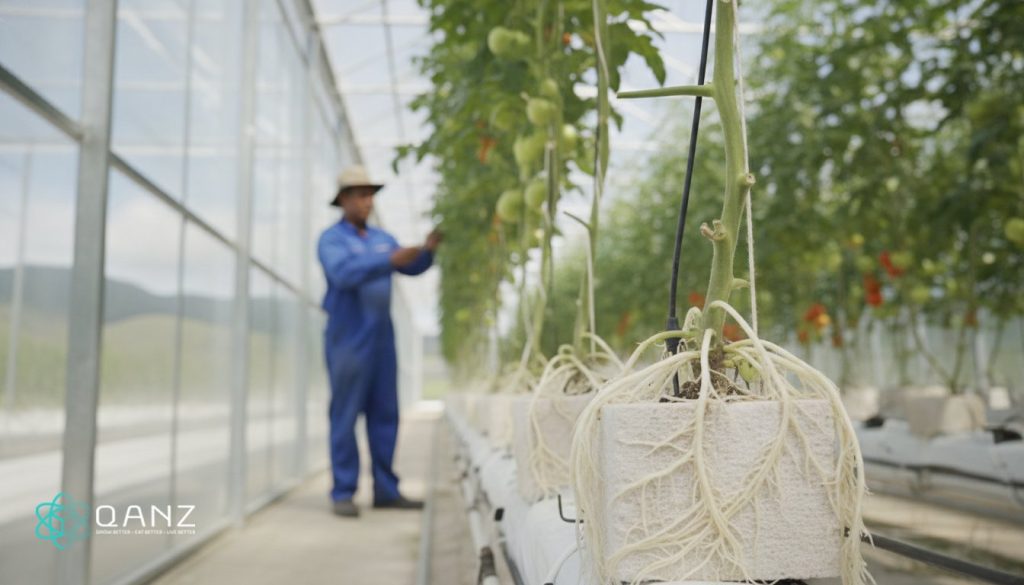
Can a sterile growing medium ever truly support the complex biological needs of a high-yielding tomato crop? Most professional growers rely on the precision of stonewool for its exceptional water retention and structural consistency. However, when growing tomatoes glass house stonewool presents a specific technical challenge. It is a biologically inert environment. Without a natural community of beneficial microorganisms, the root zone can become a biological void, leaving plants entirely dependent on synthetic delivery and potentially vulnerable to environmental fluctuations.
You likely recognise that achieving consistent yields requires more than just precise irrigation; it requires a stable, functioning ecosystem at the root level. This article explores how integrating microbial agricultural inputs into your existing programme can support root zone health and improve nutrient management. We will examine the science of microbial colonisation in inert substrates, practical application through fertigation systems, and how to ensure your inputs align with BioGro or Australian organic standards. This guide provides a methodical look at bridging the gap between sterile substrates and natural biological efficiency.
Key Takeaways
- Understand how to manage the biological void in sterile substrates when growing tomatoes glass house stonewool systems to maintain root zone stability.
- Learn how liquid microbial agricultural inputs support nutrient cycling and root health within high-intensity hydroponic environments.
- Discover the role of Quantum Organic-Total® in sustainable programmes and its relevance for BioGro-certified operations in New Zealand.
- Gain practical insights into integrating biologicals directly into your existing glasshouse fertigation and application schedules.
- Access technical support tailored for Australian and New Zealand growers to help optimise microbial programmes for protected cropping.
Managing Tomato Crops in Glasshouses: The Role of Stonewool and Biology
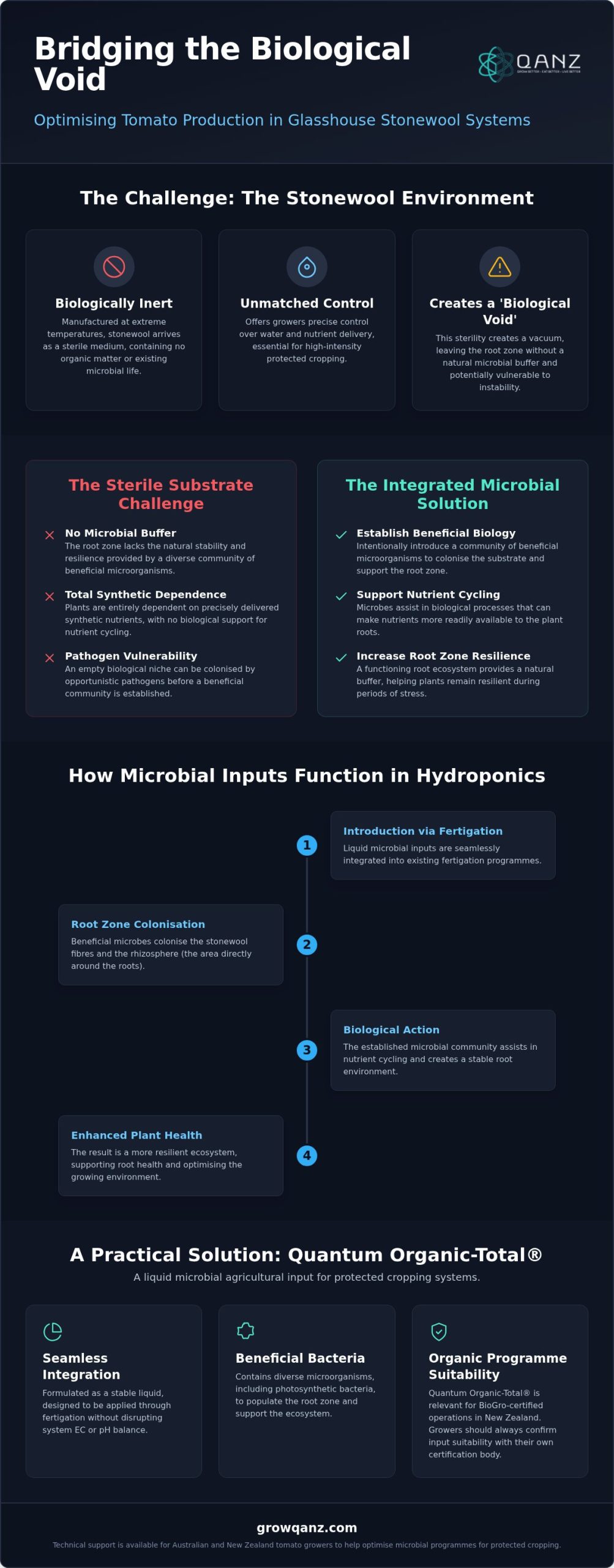
Stonewool, often referred to as rockwool, has become a cornerstone of modern protected cropping in Australia and New Zealand. It is a type of mineral wool produced by melting basaltic rock and spinning it into fibres. Understanding What is Stonewool is essential for growers who want to master their substrate. For those growing tomatoes glass house stonewool offers unmatched control over water and nutrient delivery. However, because it is manufactured at extreme temperatures, it arrives on the farm as a sterile medium. It contains no organic matter and no existing microbial life.
While this sterility prevents the introduction of soil-borne pathogens, it also creates a biological vacuum. In a high-intensity tomato glasshouse, plants are pushed to their physiological limits. The New Zealand fresh tomato industry has a farm gate value of over $161.6 million, reflecting the sophisticated nature of these operations. Managing nutrient uptake in these systems is complex; without a beneficial microbial community, the root zone lacks the natural buffer found in soil-based systems.
Why Stonewool Requires Biological Management
The transition from a sterile slab to a functioning root zone ecosystem is a critical phase in the crop cycle. Biology supports the stability of the root environment by colonising the substrate before opportunistic pathogens can take hold. A healthy microbial presence assists in maintaining the balance between moisture and aeration. Microbes don’t just exist in the water film; they interact with the physical structure of the fibres. This relationship is vital for ensuring that roots remain resilient during periods of high transpiration or temperature fluctuations. By introducing specific biologicals, growers can turn an inert slab into a proactive growing environment.
Horticultural Benefits of Microbial Diversity
Microbial diversity plays a significant role in nutrient cycling within hydroponic systems. Even in highly controlled vegetable programmes, plants benefit from biological processes that make nutrients more readily available. This is particularly important during the seedling and establishment phases. Strong early root development sets the foundation for the entire season’s yield. Establishing these populations early helps standardise the root zone’s performance. The ‘biological void’ in stonewool is the absence of naturally occurring beneficial microorganisms, a gap that growers address by intentionally introducing microbial inputs to create a more resilient and efficient production system. Optimising the performance of tomatoes glass house stonewool systems requires a move from a purely chemical perspective to one that includes microbial technology.
The Function of Microbial Inputs in Hydroponic Stonewool Systems
Liquid microbial inputs provide a practical method for introducing life into inert substrates. While some growers believe biologicals belong solely in traditional soil-based farming, the high-performance environment of tomatoes glass house stonewool systems actually benefits significantly from a managed microbiome. These inputs are formulated as stable liquids, allowing them to be seamlessly integrated into existing fertigation schedules without disrupting the precise EC or pH balance required for hydroponic production. By introducing beneficial bacteria into the mineral wool, growers can move beyond a purely chemical approach to a more holistic nutrient programme.
The misconception that biologicals are incompatible with hydroponics often stems from concerns about clogging or nutrient lockout. However, when using refined microbial agricultural inputs, these issues are largely mitigated. Photosynthetic bacteria, for instance, function as versatile metabolic specialists. They can operate in the varying light and oxygen levels found within a stonewool slab, contributing to the overall resilience of the root zone ecosystem. This isn’t about replacing mineral nutrition; it’s about enhancing the environment in which those nutrients are absorbed.
Microbial Interaction with Tomato Roots
In a glasshouse setting, the rhizosphere remains the primary site of biological activity. This is the narrow region of substrate directly influenced by root secretions. Tomato roots naturally release exudates, including sugars and organic acids, even when growing in mineral wool fibres. Beneficial microbes utilise these exudates as a food source to establish colonies on the root surface. This biological presence supports the plant’s natural ability to manage nutrient uptake, which is especially critical during high-demand fruiting periods when the plant’s metabolic requirements are at their peak. A colonised root system is better equipped to handle the stresses of a high-production cycle.
Biologicals in Liquid Fertigation Programmes
Integrating biologicals into liquid fertigation programmes requires attention to system compatibility and hygiene. High-quality microbial agricultural inputs are designed to be compatible with standard mineral fertilisers, ensuring they reach the root zone via existing dripper systems. It’s important to monitor system hygiene to prevent excessive biofilm buildup, although professional-grade formulations typically minimise this risk. Consistent application ensures that the microbial population remains stable throughout the crop cycle. You can explore more about how microbial technology functions in these closed systems to support long-term plant vitality. Maintaining this biological balance ensures the irrigation system remains efficient while the plants receive the full benefit of the microbial inputs.
Evaluating Quantum Organic-Total® for Protected Tomato Cropping
Quantum Organic-Total® is a microbial agricultural input available to New Zealand and Australian growers through QANZ. Its liquid-based formulation is a central feature for modern glasshouse operations, allowing for precision delivery through existing irrigation infrastructure. For those managing tomatoes glass house stonewool programmes, the product offers a way to introduce verified microbial life into the root zone without the risk of physical blockages or sediment buildup. The ability to apply biologicals via fertigation ensures that the microbes are delivered directly to the slab where they are most active.
It’s important to recognise that Quantum Organic-Total® holds BioGro New Zealand certification. This status confirms the product meets the standards required for sustainable and organic production systems. Growers should check the current technical documentation to ensure suitability for their specific glasshouse environment and intended use. This principled approach to input selection ensures that the biological component of the programme remains as verified and reliable as the mineral nutrition.
Quantum Organic-Total® in Vegetable Programmes
This formulation is intended for use in intensive horticultural systems where biological stability is often compromised by sterile substrates. Integrating Quantum Organic-Total® into the tomato crop cycle typically involves scheduled applications during the establishment and high-production phases. By supporting the biological health of the root zone, the input functions as a technical component of professional vegetable programmes. It’s designed to work alongside standard fertilisers, providing a biological layer to the existing nutritional strategy without requiring significant changes to the irrigation setup.
Evidence and Observations in Protected Cropping
QANZ evaluates microbial agricultural inputs across various horticultural contexts to understand their role in different environments. It is essential to distinguish between general peer-reviewed scientific research on soil microbiology and the specific performance data of commercial formulations. When reviewing trial results or observations, growers must consider the specific conditions of the study to evaluate how they might relate to their own glasshouse. QANZ prioritises accuracy and transparency in all technical reporting.
Results from individual trials or commercial observations are specific to the formulation, crop, location, treatment and conditions tested and should not be interpreted as a guarantee of equivalent performance elsewhere.
This evidence-based approach allows growers to make informed decisions based on technical documentation rather than marketing hype. By focusing on verified results and practical application, QANZ acts as a technical partner for those looking to optimise the performance of tomatoes glass house stonewool systems through biological innovation.
Practical Application: Integrating Biologicals into Glasshouse Fertigation
Successful integration of microbial inputs begins with a clear understanding of the physical layout of your irrigation system. For those managing tomatoes glass house stonewool programmes, the objective is to ensure the microbial population reaches the root zone without being compromised by system sanitisers or poor mixing practices. Because stonewool is an inert medium, the delivery of biologicals must be as precise as the delivery of mineral nutrients. This requires a methodical approach to mixing, injection, and monitoring to ensure the ‘biological void’ is effectively managed throughout the season.
To introduce microbial agricultural inputs into a commercial glasshouse, growers typically follow these steps:
- Verify the compatibility of the microbial input with the current fertiliser concentrate in the day tank.
- Prepare a stock solution using clean water, ensuring it is free from high levels of residual chlorine or other oxidising agents.
- Inject the solution into the fertigation line via a high-precision dosing pump or venturi system during a scheduled irrigation cycle.
- Monitor the slab drainage and substrate EC to ensure the biologicals are distributed evenly across the entire glasshouse block.
Application Rates and Timing
Timing is as critical as the application itself. The first priority is often the ‘initial charging’ of the stonewool slabs before or immediately after transplanting. This helps establish a beneficial microbial presence before the plants enter their most rapid growth phases. Following this, maintenance doses are typically scheduled to support the root zone as the crop matures. During the generative phase, when the plant is under high stress from fruit load, maintaining microbial activity can support the plant’s natural resilience. You can find more detail on managing high-production crops on our Vegetable crop page. Application schedules should always be adapted based on specific growth stages and environmental conditions.
System Maintenance and Hygiene
Maintaining system hygiene is essential when working with biologicals in a tomatoes glass house stonewool environment. While professional liquid formulations are designed to be dripper-friendly, growers must organise their application schedules to avoid conflict with harsh line sanitisers. If you use hydrogen peroxide or chlorine-based cleaners, ensure the lines are thoroughly flushed before and after applying microbial inputs. Proper storage of liquid microbial products is also vital; they should be kept in a cool, dark area of the glasshouse away from direct UV light to maintain the integrity of the formulation. Talk to QANZ about whether a specific microbial programme is appropriate for your existing irrigation and hygiene protocols.
Technical Support for Australian and New Zealand Tomato Growers
QANZ operates as a serious professional partner for the agricultural sector across Australia and New Zealand. As the hydroponics market in Australia reaches a projected value of AUD 684.39 million in 2025, the need for precise, evidence-based management has never been higher. For those growing tomatoes glass house stonewool systems require more than just off-the-shelf products; they require technical integration. We provide support that prioritises reliability over hype, ensuring that microbial agricultural inputs are correctly applied to support the long-term ecological health of the glasshouse. With approximately 140 registered tomato growers in New Zealand managing a high-value industry, the stakes for crop stability and nutrient efficiency are significant.
Our approach is grounded in environmental earnestness and scientific authority. We understand that navigating the regulatory landscape, such as the Biosecurity Act in New Zealand or Australian Standard AS 4454-2012 for soil conditioners, is a vital part of modern farming. By providing clear, structured information, we help growers make independent evaluations about how biologicals fit into their unique operations. This commitment to transparency ensures that every application is backed by a methodical explanation of the natural processes at work.
Customised Biological Programmes
Every glasshouse has its own unique set of environmental variables and technical constraints. QANZ works directly with growers to tailor microbial applications to their specific infrastructure and crop needs. This collaborative approach supports the transition from a purely mineral-based strategy to one that incorporates advanced Quantum technology. By assessing the existing fertigation setup and crop cycle, we help organise a programme that introduces beneficial biology without disrupting established operational flows. This methodical guidance helps growers bridge the gap between advanced microbiology and practical, everyday agricultural needs. It isn’t just about supplying a product; it’s about providing a framework for biological success.
The Future of Glasshouse Tomato Production
Looking toward 2026, the trends in protected cropping point toward an increased focus on sustainable inputs and biological health. Growers are increasingly seeking ways to support plant vitality while navigating strict organic certification requirements and market access standards. Using certified inputs like Quantum Organic-Total®, which is BioGro New Zealand certified, provides assurance that the products meet rigorous standards for sustainability. This move toward biological-focused management reflects a broader commitment to reducing synthetic reliance and improving nutrient cycling efficiency. As a stable, evidence-based partner, QANZ remains committed to helping growers achieve these long-term gains through verified science and local expertise. We understand the technical complexities of microbiology but speak the language of those who work the land.
Talk to QANZ about whether Quantum Organic-Total® is appropriate for your crop, growing system and application programme.
Advancing Biological Efficiency in Protected Cropping
Integrating microbial life into sterile substrates transforms a passive growing medium into a proactive ecosystem. We’ve explored how establishing a beneficial microbiome within the root zone helps manage the physiological demands of high-intensity production. For those growing tomatoes glass house stonewool systems don’t have to remain biologically inert; they can become stable environments for efficient nutrient cycling and plant resilience.
Relying on verified, BioGro New Zealand certified inputs ensures your programme remains compliant with market standards while supporting long-term substrate health. By combining proprietary microbial technology with professional technical support, you can navigate the complexities of modern protected cropping with confidence. This methodical approach to biology ensures your glasshouse remains productive and ecologically sound for seasons to come.
Talk to QANZ about integrating Quantum Organic-Total® into your glasshouse tomato programme.
We’re here to help you build a more resilient and biologically balanced future for your crop.
Frequently Asked Questions
Can I use Quantum Organic-Total® in a hydroponic stonewool system?
Yes, Quantum Organic-Total® is intended for use in intensive horticultural systems, including stonewool. It is a liquid microbial agricultural input designed for soil and plant applications. Growers using tomatoes glass house stonewool setups often use it to address the biological void in sterile substrates. You should always check suitability against current QANZ technical documentation before starting a new programme to ensure it aligns with your specific infrastructure.
Will microbial products clog my glasshouse irrigation drippers?
Refined liquid microbial inputs are designed to be dripper-friendly and suitable for modern irrigation systems. Because Quantum Organic-Total® is a high-quality liquid formulation, the risk of physical blockages is minimal compared to unrefined biological products. It’s essential to maintain good system hygiene and avoid applying biologicals immediately before or after using harsh line sanitisers like hydrogen peroxide. This ensures the microbes reach the root zone without compromising your equipment’s efficiency.
Is Quantum Organic-Total® BioGro certified for tomato production?
Quantum Organic-Total® is BioGro New Zealand certified. This certification confirms the product is suitable for use in organic and sustainable programmes for various crops, including tomatoes. Growers should verify the current certification status and registration number against official BioGro documents. While the input is certified, its use doesn’t automatically make the final produce organic; growers must comply with the full requirements of their specific certification body and intended market.
How often should I apply microbial inputs to my tomato slabs?
Application frequency depends on your specific crop cycle and growth stage. A common approach involves an initial charging dose during slab preparation or transplanting, followed by maintenance applications throughout the season. Maintenance doses help sustain microbial populations as plants move from vegetative to generative stages. Talk to QANZ about whether a specific application schedule is appropriate for your glasshouse environment, as rates can vary based on your existing nutrient programme.
Do microbes survive in an inert medium like stonewool?
Beneficial microbes can survive and colonise the rhizosphere within a stonewool slab. While stonewool is an inert mineral wool, the root exudates from tomato plants provide the necessary sugars and organic acids for microbial life to persist. By intentionally introducing microbial agricultural inputs, growers create a stable biological community where one wouldn’t naturally exist. This biological presence supports the root zone ecosystem throughout the high-intensity production cycle of a commercial glasshouse.
Can I mix biological inputs with my standard liquid fertilisers?
Quantum Organic-Total® is generally compatible with standard mineral liquid fertilisers used in hydroponic systems. It’s designed to be integrated into existing fertigation programmes without disrupting the precise nutrient balance. Always perform a jar test for physical compatibility if mixing concentrates for the first time. Ensure your stock solution is free from high levels of residual chlorine, as this can affect the viability of the microbial population before it reaches the substrate.
What is the difference between Quantum Organic-Total® and Quantum VSC® for tomatoes?
Quantum Organic-Total® is a broad-spectrum microbial agricultural input often used as the foundation for biological health in vegetable programmes. Quantum VSC® is a Quantum biological product also used in crop programmes, sometimes as a specific addition depending on the grower’s technical objectives. While both are liquid formulations, they serve different roles within a managed biological programme. Detailed performance claims for either product should be tied to current QANZ technical information or specific evidence.
How do I store liquid microbial products in an Australian or New Zealand glasshouse?
Liquid microbial products should be stored in a cool, dark environment to maintain the integrity of the formulation. In Australian and New Zealand glasshouses, this means keeping containers away from direct UV light and extreme temperature fluctuations. Ensure lids are tightly sealed when not in use to prevent contamination. Proper storage ensures the microbes remain viable and ready for application, supporting the long-term success of your tomatoes glass house stonewool programme.
Disclaimer
Important: This article provides general agricultural information only. Product performance can vary according to crop, soil, climate, management practices and application conditions. Trial or research results discussed may have been obtained under specific conditions and should not be interpreted as a guarantee of equivalent results. Always follow current product directions and confirm suitability for your crop, growing system and organic certification requirements. Contact QANZ for current product and application information.
