
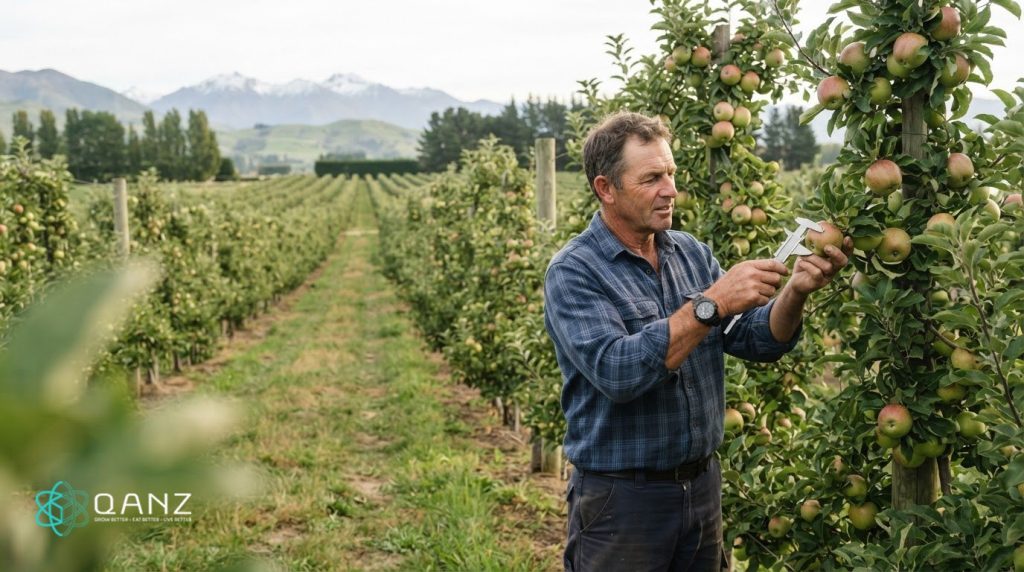
Increasing fruit size and firmness naturally starts with identifying what may be limiting the crop, rather than adding an input by default. The factors involved can differ between blocks, seasons and crops. Before changing a programme, look at crop load, water availability, canopy conditions and nutrition, then decide which measures will help you assess the issue.
Size and firmness are separate fruit-quality measures. Fruit growth involves development after flowering and fruit set, while firmness is also affected by crop stage and the way fruit is assessed and handled. A practice that may influence one measure will not necessarily affect the other.
This guide outlines practical checks for fruit development and ways to compare management options. Because growing conditions and recommendations differ across New Zealand regions, use guidance that fits your local conditions, crop and growing system. Treat biological inputs as one possible part of a programme, and assess any product claim against evidence for the exact formulation and use.
Key Takeaways
- Fruit size and firmness are different quality measures. No single practice guarantees improvement in both.
- Review crop load, water availability, canopy function and nutrition together to identify conditions that may be limiting fruit development.
- Match options for increasing fruit size and firmness naturally to the crop, growth stage and local conditions.
- Record crop stage, fruit measurements, water management and programme changes to make on-farm comparisons more meaningful.
- Quantum Organic-Total® is a microbial agricultural input for crop and soil programmes. Consider its suitability within the wider management plan, without assuming a specific fruit-quality result.
What affects fruit size and firmness during crop development?
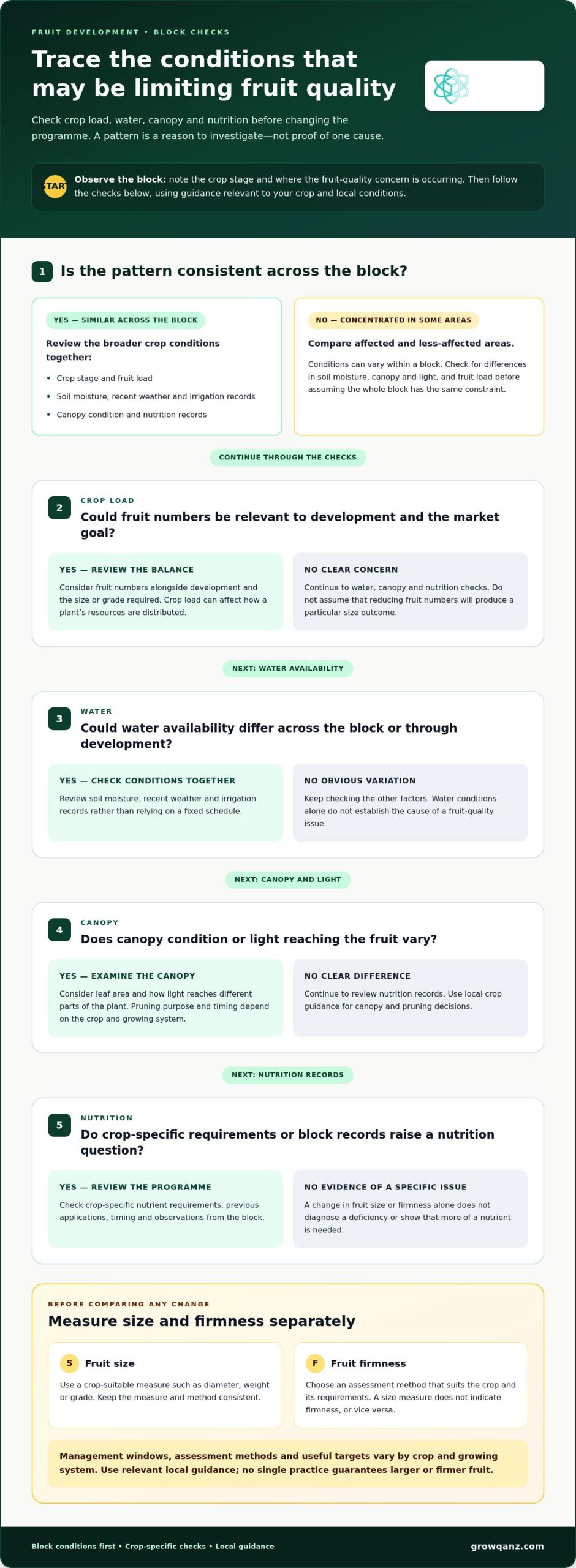
No single practice guarantees larger or firmer fruit. Size develops through fruit set and subsequent growth, while firmness is a separate quality characteristic. Crop management can influence the conditions in which fruit develops, but what to assess depends on the crop, growing system and market requirements. Measure size and firmness separately rather than treating one as a reliable indication of the other.
How do fruit size and firmness differ?
Fruit size describes the dimensions or weight of an individual fruit, or its crop-specific grade. Which measure matters depends on the crop and destination market. For practical monitoring, use the same measure and method each time, such as diameter, weight or grade.
Firmness describes how fruit responds to pressure or how it feels and holds together, depending on the crop and assessment method. It can matter for handling, storage, eating quality and market acceptance, but the relevant measure varies between crops. Larger fruit is not automatically firmer, and a firmness reading does not tell you its size. Choose assessment methods that suit the crop and the requirements you are growing for.
When does fruit development make management relevant?
Fruit development begins around flowering and fruit set, then continues through growth and maturation. Early and later stages involve different aspects of development, but their timing and importance vary by crop. Do not transfer management windows from one crop or growing system to another without relevant local guidance.
Canopy structure and fruit load are practical factors to review as development progresses. Pruning shapes plant growth and canopy structure; for background, see pruning techniques. Its purpose and timing depend on the crop and system, so consider pruning as part of the wider crop plan, not as a guaranteed sizing treatment.
In brief: General crop science helps explain how development and growing conditions can influence fruit characteristics. It does not establish that a named product will increase fruit size or firmness. Product-specific outcomes require evidence for the exact formulation and use. A sound agronomic principle is not, by itself, proof of a particular input’s performance.
Which crop conditions may limit fruit size and firmness?
Crop load, water availability, canopy function and nutrition can influence development together. A small or soft crop does not point to one cause on its own. A heavy crop may increase demand on available resources, while water stress, uneven light or an imbalanced nutrition programme may also be relevant. Treat these as factors to investigate, not proof of a particular limitation or a reason to apply a universal treatment.
Identify a likely limiting factor before changing the programme. Review what is happening in the block, the crop’s stage and current conditions. Check whether the pattern is consistent across the crop or concentrated in particular areas.
How can crop load, water and canopy management matter?
Consider fruit numbers alongside development and the size or grade your market requires. Crop load can affect how a plant’s resources are distributed, but the appropriate balance depends on the crop, variety, growing system and production goals. Do not assume that reducing fruit numbers will produce a particular size outcome.
Water availability is another consideration during development. Conditions can vary within a block, so review soil moisture, recent weather and irrigation records together rather than relying on a fixed schedule. Canopy condition also shapes the growing environment around fruit: consider leaf area and how light reaches different parts of the plant. For an example of a stone-fruit training approach, Penn State Extension describes an open-center pruning system. This is a specific overseas example, not a universal recommendation for New Zealand or Australian orchards. Use local crop guidance to inform pruning decisions.
What should growers review in the nutrition programme?
Start with crop-specific nutrient requirements and available records, including previous applications, timing and observations from the block. Nutrients support plant functions, but a change in fruit size or firmness alone does not diagnose a deficiency or show that more of a particular nutrient is needed. Nutrient balance, water status and crop load may interact. Adding an input without establishing the constraint can miss the issue.
Growing conditions and crop calendars vary across New Zealand and Australia, including flowering, fruit set and development timing. Use locally relevant guidance and assess conditions in your own block before adapting a practice from elsewhere. For related crop-programme context, explore GrowQanz fruit and nut resources. This helps keep decisions about increasing fruit size and firmness naturally tied to the crop and its actual conditions, rather than to assumptions about a single input.
How should growers compare natural approaches to fruit sizing?
Compare each approach with the crop constraint it is intended to address, the stage when it would be used and the evidence for that specific practice or input. Crop-management changes, nutrition reviews and biological inputs have different purposes. They are not interchangeable, and their suitability depends on the crop, growth stage and local conditions. Do not assume that a natural input will reliably produce larger, firmer fruit.
| Approach | Purpose to consider | Evidence to look for |
|---|---|---|
| Crop-management changes | Review crop load, water management and canopy conditions in relation to observed development. | Crop-specific guidance and on-farm records showing what changed, when it changed and how fruit measurements responded. |
| Nutrition review | Assess nutrient requirements and the existing programme before considering an adjustment. | Crop-relevant guidance and supporting records or analyses. A fruit-quality observation alone does not establish a nutrient deficiency. |
| Biological inputs | Consider whether an input fits the crop and wider soil or crop programme. | Evidence for the exact formulation, crop, treatment and intended outcome, assessed under relevant growing conditions. |
What evidence should growers look for before comparing inputs?
Look beyond a headline result. Check the crop, product formulation, treatment, location, season and conditions described. Consider how the work was conducted and whether it measured the outcome you care about, such as fruit diameter, weight or firmness. Evidence for a change in size does not establish an effect on firmness.
Different evidence types answer different questions. Laboratory studies examine processes under controlled conditions, while field trials assess treatments in crops and growing environments. Independent trials, manufacturer trials and commercial grower observations should be identified accurately. An overseas result is not a New Zealand result, and differences in climate, crop management or growing system may affect its relevance. General research about biological inputs also does not demonstrate the performance of a specific product. Results for another formulation must not be transferred to Quantum Organic-Total®.
How can growers assess fit with their existing programme?
Match a proposed input to the constraint you have identified, rather than adding it in the hope it will address several unrelated issues. Review crop suitability, application guidance and relevant certification requirements in current product and programme documentation. Consider biological inputs within the wider programme, without assuming they replace fertiliser or other conventional inputs.
For growers assessing a microbial agricultural input for a crop and soil programme, Quantum Organic-Total® product information from QANZ provides formulation-specific details. Consider whether the product guidance and evidence fit your crop, stage and conditions. This makes comparisons more grounded than relying on broad claims about increasing fruit size and firmness naturally.
How can growers assess fruit-size and firmness practices on-farm?
A consistent review helps distinguish a measured change from a good or poor season. Define the crop and market goal, review conditions in the block, record suitable fruit measures and management changes, then interpret the observations in context. Records alone do not prove cause and effect, but they provide a stronger basis for deciding what to investigate or adjust next.
- Define the goal: Specify whether you are reviewing fruit size, firmness or both, and which crop or market measure matters.
- Review the block: Note crop stage, crop load, canopy condition, water management and relevant nutrition records.
- Record measures: Use a consistent, crop-appropriate method and sampling approach each time.
- Assess changes: Compare observations alongside season and block conditions before drawing conclusions.
What should growers record through fruit development?
Choose a measurement method before sampling. Depending on the crop and market, record size by diameter, weight or grade; assess firmness using a crop-appropriate method. Keep the timing and method consistent, as changes to either can make comparisons misleading.
Record dates and crop stage alongside fruit measurements. Note management changes, water availability or irrigation activity, and relevant weather conditions. If comparing areas of a block, describe where observations came from and use the same approach in each area. A single reading or a grower’s impression can raise a useful question, but does not prove that a particular practice caused a change.
How should New Zealand and Australian growers adapt the review?
Record the country, crop, region and growing system before interpreting results. Seasonal timing and conditions differ between New Zealand and Australia, and can also vary between regions and seasons within each country. Do not assume a calendar date or programme used in one location is suitable elsewhere. Use current, locally relevant crop guidance to interpret development stages and management changes.
Input suitability and certification requirements may also depend on the country, crop and growing programme. Refer to current, country-relevant documentation rather than relying on an old record or a recommendation from a different system. For relevant crop-programme context, see QANZ’s fruit and nut information.
Consistent records make decisions about increasing fruit size and firmness naturally more useful, even when results vary. To discuss how a biological input may fit your crop and programme, read more about QANZ’s products and support.
Where does Quantum Organic-Total® fit in a fruit-growing programme?
Quantum Organic-Total® is a microbial agricultural input offered by QANZ for use in crop and soil programmes. It can be considered as one part of a wider programme after reviewing the crop, growing system and management priorities. Its description alone does not establish that it will increase fruit size or firmness. Assess the product information and any evidence specific to the formulation and intended use.
What can be said accurately about Quantum Organic-Total®?
When considering options for increasing fruit size and firmness naturally, separate general crop science from product-specific evidence. The fact that crop conditions influence fruit development does not show that a particular input changes fruit size or firmness. Claims about those outcomes require appropriate evidence for Quantum Organic-Total® itself, including the crop and conditions assessed.
Review current Quantum Organic-Total® product and technical information for crop suitability, application rates and certification requirements. Use those details to assess whether and how the input fits a programme. Do not infer the product’s composition, mechanism, certification status or crop-specific performance from its general description.
What is a sensible next step for growers?
Before evaluating an input, define the crop, growing system and objective. Are you reviewing fruit size, firmness or another crop priority? Consider the conditions and management records already discussed, then assess whether the input is relevant to the identified need and suitable for the programme. A microbial input should be considered within the wider crop and soil plan, not assumed to replace fertiliser or other conventional inputs.
When reviewing trial information, check the exact formulation, crop, location, treatment and growing conditions. An overseas result, a study on another formulation or a general finding about microbial agriculture is not evidence of a specific Quantum Organic-Total® outcome in a New Zealand crop. Keep observations and trial results tied to the conditions in which they were collected.
QANZ supplies Quantum agricultural biological products to growers in New Zealand and Australia. For product information and support with your crop programme, visit QANZ.
Make your next crop decision evidence-led
Improving fruit quality starts with understanding the crop, rather than assuming one practice or input will solve every constraint. Fruit size and firmness are distinct measures, and crop load, water availability, canopy function and nutrition can interact as fruit develops. Review these factors in the context of your crop, growth stage and local conditions.
A clear goal and consistent records make it easier to assess changes over time. Track fruit measurements alongside crop stage, water management and programme adjustments, then interpret the results in the context of the season. This supports more informed decisions about increasing fruit size and firmness naturally, without treating a promising observation as a guaranteed outcome.
QANZ supplies Quantum agricultural biological products to growers in New Zealand and Australia. Quantum Organic-Total® is a microbial agricultural input for crop and soil programmes, and its suitability depends on the crop and wider programme. Talk to QANZ about whether Quantum Organic-Total® is appropriate for your crop, growing system and application programme.
Continue observing, recording and refining your approach. Each season provides new information to consider when making crop decisions.
Frequently Asked Questions
How can I increase fruit size naturally?
There is no single guaranteed method for increasing fruit size naturally. First review crop load, water availability, canopy condition, crop stage and the existing nutrition programme to identify a likely constraint. Then choose crop-appropriate measures, such as diameter, weight or grade, and compare them consistently. Use locally relevant agronomic guidance, and make changes to address an observed issue rather than assuming a natural input will deliver a particular fruit size.
What affects fruit firmness during development?
Fruit firmness is a crop-specific quality measure influenced by growing and handling factors. It is separate from fruit size, so do not assume larger fruit is firmer. Avoid attributing firmness to one nutrient or product without evidence for the crop and conditions. Use an appropriate, consistent measurement method and interpret readings alongside crop stage and handling. This is especially useful when comparing observations across seasons or growing conditions.
Can natural methods make fruit both larger and firmer?
Management choices may affect fruit size and firmness differently, so improvement in one does not guarantee improvement in the other. Depending on the crop, relevant considerations can include crop load, water availability, canopy condition, nutrition and harvest factors. Define the target first, then assess evidence for the specific crop and growing conditions. Do not assume that a natural method or a single input will reliably increase both size and firmness.
Does potassium increase fruit size?
Yara New Zealand discusses potassium in relation to stone-fruit size or weight, but that is not a universal recommendation or proof that potassium alone determines fruit size. Nutrient requirements depend on the crop and its growing conditions. Review crop-specific guidance and existing programme records before changing an application. A size observation by itself does not establish a nutrient need, so avoid applying potassium without a sound basis or crop-relevant advice.
When should growers assess fruit size and firmness?
The useful assessment window depends on the crop, its development stage and market requirements. Decide on the measurement method before monitoring, then record crop stage and relevant growing conditions consistently. There is no universal date or schedule for every fruit crop. For growers in New Zealand and Australia, timing and local recommendations may differ by crop and growing system, so use current, relevant guidance when planning assessments and comparing results.
Can microbial agricultural inputs guarantee larger or firmer fruit?
No. The general category of microbial agricultural inputs does not guarantee larger or firmer fruit. Consider evidence and suitability for the exact formulation, crop, location, treatment and growing conditions. Quantum Organic-Total® is a microbial agricultural input offered by QANZ for use in crop and soil programmes. That description does not establish a fruit-size or firmness outcome; any such claim requires relevant evidence for this specific formulation and use.
Is Quantum Organic-Total® suitable for fruit crops?
Assess suitability for a particular fruit crop, application rates and certification requirements against current QANZ technical and BioGro documentation. Do not infer proven results for a specific fruit crop from the product description alone. Using an input also does not make a farm, crop or produce organic; certification programme requirements remain relevant.
Do New Zealand and Australian growers use the same fruit-growing recommendations?
Not necessarily. Recommendations can vary with crop, season, growing conditions, certification programme and product guidance. Do not automatically apply an overseas trial result to New Zealand or Australian production. Identify the country and crop when consulting current agronomic sources and product documentation, and consider how local conditions affect relevance. Keep evidence tied to its formulation, location and tested conditions, rather than treating results from different products or regions as interchangeable.
Disclaimer
Important: This article provides general agricultural information only. Product performance can vary according to crop, soil, climate, management practices and application conditions. Trial or research results discussed may have been obtained under specific conditions and should not be interpreted as a guarantee of equivalent results. Always follow current product directions and confirm suitability for your crop, growing system and organic certification requirements. Contact QANZ for current product and application information.
